So Then Maybe Sesshoumaru is Darkseid?

Warning: Inuyasha Spoilers

Despite the fact that Inuyasha: The Final Chapter ended recently, I have not seen very many people talking about it. I know that can’t possibly be the trend across anime fandom as a whole, though. It’s Inuyasha after all, the show so popular it all but defined Adult Swim anime alongside Cowboy Bebop.

I already know about the ending from having read the manga, but remembering just how long and encompassing Inuyasha is, and how much detail that is ideal for a fan-made Wikipedia about the subject exists, I took a look over at the Inuyasha Wiki, reading up on what swords Sesshoumaru uses, what the heck people’s attacks are, as well as the character who deservedly has one of the longest and most complicated entries on the Wiki, Naraku.

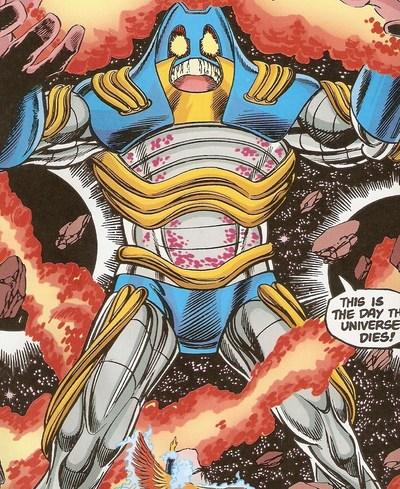
As I read Naraku’s entry, his description started to remind me of another famous villain. He’s powered by negativity. His power is seemingly infinite. He increases his power and transforms thoughout the series. He has a vast army of demons under his control which he can absorb in order to regenerate and heal (which the heroes manage to turn against him). At the very end, in a desperate situation, he switches to a strategy of pure revenge and destruction, abandoning his tendency towards elaborate scheming.

Naraku is like the manga equivalent of DC Comics’ Anti-Monitor.
Let Sleeping Dogs Lie: The End of Inuyasha

I’m not a fan of Inuyasha, so I really haven’t kept up with it this whole time. I do recall buying a single issue from a store back when manga was still being sold like monthly comic books, and I did watch Inuyasha at my college’s anime club. When the heads of the anime club decided to stop showing Inuyasha, I wondered why. One of the last episodes we watched had Inuyasha and Sesshoumaru working together to defeat a common enemy while using their respective blades as intended (Inuyasha for destruction, Sesshoumaru for healing), so I thought that it was finally getting somewhere good and would conclude soon after.

Ha.

Many jokes have been made concerning the “never-ending” nature of Inuyasha, but finally we can stop cracking wise about it and switch to humor based on the fact that as of this week, Inuyasha finishes with 558 chapters.

Inuyasha ends with a final battle with the demon Naraku, after which Kagome makes a decision to choose what’s right over her heart’s desire. The battle itself is pretty nice and conclusive, but it’s the kind of final battle you know that Takahashi could have pulled out at any moment and it would have still made sense. Sesshoumaru wielding his Nendou Bakusai Ken Bakusaiga with its endless destructive capabilities, it could have been a cheese wedge forged by destiny instead.

Inuyasha thankfully concludes with an ending and all that, as opposed to the abrupt stop that occurred with its anime counterpart. It’s not the best ending I’ve seen, but I doubt it’ll displease too many people or get accused of being a cop-out/Gainax Ending/any other conclusion-themed perjorative.

Really, Inuyasha will ultimately not be remembered for its plot, so having an actual ending doesn’t hurt or help too much, though I think it leans towards the latter. I’m not a fan of Inuyasha like I said, but I think its fans will continue to have adventures with Inuyasha and friends for a long time.

Inuyasha is finished, but it’s still endless.

In conclusion, I just want to point out that I was the first person to say that Inuyasha is “Dragon Ball Z for girls.” If anyone says otherwise, they’re wrong.