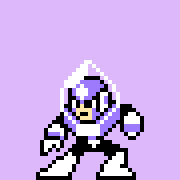
Easy Doesn’t Mean Boring

After having beaten and reviewed Megaman 10 on its Normal difficulty, today I revisited the game on Easy Mode, playing alongside someone who doesn’t have quite as much experience with the series and so doesn’t quite have the same tolerance for abuse built in. What I discovered was that even for someone who had already finished the game on a more difficult setting, Megaman 10 is still a very fun game and having my mind somewhat at ease (though not entirely of course!) let me more fully appreciate the finer aspects of the gameplay, particularly the controls. It just really reminded me how Megaman is known for good controls despite the titular character’s sub-par leaping abilities.

I think it’s very easy to make the mistake of thinking that the fun of Megaman games is in its challenge when the NES-hard style only plays a partial role in the overall experience. It might be the one you remember the most, but it’s the rest of the game which keeps you coming back.

The fact that easy mode is fun to play with multiple people has gotten me to thinking about other games which have tried to encourage people of varying skill levels to play together without fear of reprisal, be it from those same friends or from the computer. A recent popular example is New Super Mario Bros. Wii, which allows for 4-player simultaneous action and a unique system which allows players to “skip” sections while other players handle a particularly troublesome area should they choose to do so. It’s not perfect, but it keeps things moving along, and you can tell that they put a lot of consideration into this mechanic. A more classic example is introducing luck into a game. With just the right amount, it can make things exciting, and cries of “unfair!” can sometimes just entice those same complainers to play even more. I should know, mahjong can have that effect.

One really good example of a game that fosters play between beginners and experts is the Smash Bros. series. With its 4-player simultaneous action, you can get a lot of people in on it at once. More importantly though, its “Time” setting, which has everyone fight until a preset time limit, allows everyone, win or lose, to play the same amount per match. Contrast this with “Stock,” where once you lose all of your lives you are unable to play anymore. For a new player, this can be very boring as you watch the better players continue to have fun while you just sit there unable to participate in any manner except verbally (or blocking the TV and knocking away controllers if you want your ass kicked).

What’s kind of funny though is that a good deal of people, particularly overly competitive individuals, seem to have trouble understanding this idea of having games and game modes which allow everyone to derive enjoyment in roughly equal portions, as if they don’t comprehend enjoying the game as anything but a bloody battle to the top. While there are games which take the balancing factor too far (recent Mario Kart games are kind of notorious for this), I think overall games can benefit from just having things everyone can enjoy, even if it’s having both COMPETITIVE PRO KOREA MAPS and BIG GAME HUNTERS for Starcraft.

Speaking of competitive gamers and such, it seems like almost every community makes the same mistakes, but I’ll leave that topic for another time.

10 Will Get You 10: Megaman 10

Highly anticipating its arrival, I was quick to nab the newly-released Megaman 10 off of WiiWare. After some hard-fought battles, I have emerged victorious and I am now here to tell my tale and give what the fleshnoids call “impressions.”

Just like its immediate predecessor, the 10th game in the classic series is a retro remake, resembling the 8-bit, pixelated style that was once necessitated by technology limitations of the NES era but now exists as a stylistic choice. The wait between games wasn’t nearly as long as the period between games 8 and 9 (which is even longer if you’re counting from the last NES release, 6), so its arrival isn’t quite as impactful, but a welcome addition nonetheless.

What can be said about Megaman 10? Well it’s frustrating, for one, but you already knew that. So did Capcom. That’s why they put in an Easy Mode. But my foolish pride would not let me play Easy Mode, though it was still weak enough to make me succumb to purchasing Energy Tanks to make the trip through the game less aggravating at certain points.

One interesting feature of 10 is the range of playable characters available. Megaman of course is there, and this time Protoman is available from the start instead of being a $2 download. Megaman can’t slide or charge his shots, but has more health than Protoman who can use those techniques, who also sports a new, larger shield than in the previous game. Not content to let the whole “paid downloadable content” thing go, they’re providing a third character in the form of Megaman’s Dr. Wily-created rival, Bass. The angry, villainous Megaman counterpart apparently has the ability to rapid-fire in seven directions, and will be available for purchase on April 5th, 2010. It should be noted that this is the first time that Bass has made a full appearance in 8-bit form, and I must say that his design doesn’t exactly translate well to the NES graphics, especially because he was designed in the SNES era, possibly to take advantage of the technology of the time.

Speaking of which, Bass isn’t the only character to get a retro “downgrade,” but I won’t say anymore.

Megaman 10 bears a lot of resemblance to Megaman 9 in terms of the way stages are laid out, which I think is both a good and a bad thing when compared to the original NES games. In the original games, stages were a series of hazards that came one after the other, getting more difficult along the way overall, but still providing the occasional run-and-gun moments. The recent remakes however, but especially 10, treat the level as almost a puzzle of sorts, where it introduces a basic gameplay concept earlier in the stage and then has you use it later. This is a welcome sophistication which would be all good except that the game is poor at giving moments of respite to you the player.

Let’s look back at (almost) everyone’s favorite, Megaman 2, particularly the Crashman level. The stage is well-designed, but it has no real “gimmicks” to it, and there’s not much danger of falling down a deadly pit. It’s mostly an empty stage but it’s still fun. Compare that to any of the levels in 10, which will consist of tons of enemies attacking, crazy traps, and other such obstacles, and 10 stands as a more exhausting game overall. Again, still fun though.

If you’re really masochistic, there’s a Hard Mode once you beat the game on Normal. I’d personally avoid it, but I hear that the bosses get new attacks in Hard Mode, so I’m highly tempted to work my way through it.

Speaking of the bosses, all of whom can be seen here, I consider them successes on both a gameplay and design level. The bosses are difficult opponents, some significantly moreso than others, but none of them seem outright unfair. Each of them has an effective strategy that can be broken down (or at least worn out via attrition, i.e. Energy Tanks), but it takes time to learn their patterns and tendencies. Some Robot Masters, such as Blademan, primarily fight by reacting to Megaman’s movements, while others such as Pumpman kind of do their own thing. What’s also a nice touch is that having the Robot Master’s weakness isn’t always enough; you have to know how to use it as well. For example, the boss weak to Commandoman’s Commando Bomb is not weak to the projectile itself, but the shockwaves it generates on impact, and in defeating Nitroman with the proper weapon you have to exploit his motorcycle form. It’s a really nice touch, I think. Better yet, once you engage each boss in battle, you get the ability to face them over and over again in the new “Challenge Mode.” As someone who loves bosses in video games but especially Megaman, this is a dream come true.

As for the visual design of the Robot Masters, I think they make perfect sense when you realize that they’re not designed to be Dr. Wily’s minions but rather just random robots that went berserk because of a virus. They’re mostly non-threatening because they’re supposed to seem harmless. Even the most dangerous-looking ones, Blademan and Commandoman, are a museum robot and a minesweeper, respectively.

9 has catchier tunes and better aesthetics overall I think, but Megaman 10 is overall a very fun game and no slouch in those categories either. It’s less difficult than its prequel in certain respects but also much more difficult than others. Again, it’s not quite as big a deal as 9, but it’s got that classic crisp Blue Bomber action, and the ability to fight just the bosses is a very welcome addition, in my opinion making Megaman 10 very much worth the $10, even if it makes you want to punch someone every-so-often.

I Was Right About the Megaman 10 Robot Masters

A few days ago I made a post about how the eight primary bosses of Megaman 10 looked quite different from their predecessors, most of which were in-story creations of either Dr. Light or Dr. Wily, and thus felt that these new robots were the work of neither. What I did not know was that the magazine which announced the eight robot masters, Coro Coro, also included basic information about them, and it turns out that all of them are robots who had normal jobs who were then affected by a virus which made them go berserk. In other words, none of the Robot Masters were designed by Wily or Light, and  my suspicions based on their designs turned out to be true.

“Congratulations,” I said to myself as my right arm patted my left shoulder, “You figured out a plot point in a game meant to evoke the nonsense plots of the NES-era.”

Megaman 10 Robot Master Analysis

These are the 8 Robot Masters of the recently announced Megaman 10. If you haven’t seen their sprites yet, you can consult my post from yesterday. As promised, I will be talking about their designs more today, laying out what I feel are key aspects of the latest set of eight.

When I look at the bosses of Megaman 10 I can sense a difference between them and their predecessors. While the game’s designs are still in-line with the overall classic Megaman aesthetic of cute and simple anime-style characters, there’s a consistent theme throughout their designs which only occurred sparingly in previous Megaman games.

The most prominent one is that the descriptor in their name dictates a lot more of their design in general than in previous games. Strikeman’s torso is designed to look like a baseball. Commandoman is a tank on legs. Sheepman needs no explanation. The properties that define them are more explicitly incorporated into their designs. The closest we get to more orthodox designs are Solarman and Chillman, and even they have somewhat unusual bodies.

While you have a few Robot Masters from previous games which do follow this trend seen in Megaman 10, such as Heatman having a Zippo Lighter for a body, they’re more the exception than the rule. When you compare Metalman to Blademan, Metalman is merely adorned with sharp spinning blades, whereas Blademan has swords for arms and a sword for a head.

Overall, these robots do not look quite like any bosses from the past. They do not resemble any of Dr. Light’s designs, nor Dr. Wily’s or Dr. Cossack’s. I think this is intentional. My suspicion is that, in actuality, none of these Robot Masters are Dr. Wily’s, and that they’re coming from another source entirely or from multiple different sources. In a way, they remind me of Megaman 6 because that game also had Robot Masters who didn’t seem all that Wily-esque, which made sense seeing as all of them were supposed to have come from different countries.

So I’m throwing it out there: I don’t think Dr. Wily is responsible for the Robot Masters in Megaman 10, and in fact I bet he was planning to attack with his own set of 8, but his minions also got affected by the “Roboenza” virus. That doesn’t mean he won’t be the villain, but I think it’ll be more him taking advantage of a bad situation. Or maybe once you figure out the cause of Roboenza and find the cure, then he’ll make his move.

Megaman 10 Robot Master Pixelization

The 8 Bosses of Megaman 10 were announced recently, and IGN had the courtesy to showcase both the character art and the sprites. The only problem is that they saved the sprites as jpg’s, and in doing so reduced some of the quality of the sprites. Wanting to see how they “really” look, I decided to reverse-engineer the sprites based on those screenshots and such, and in doing so I developed a greater appreciation for them than I had previously.

As a disclaimer, while I used an NES palette to determine colors, I was not able to 100% figure out the colors for the sprites based on the source jpg’s. If anyone knows the proper colors, please tell me so I can fix them.


Blademan


Solarman


Sheepman


Commandoman


Pumpman


Strikeman


Nitroman


Chillman

Upon closer look, I’d say there’s something very interesting and different about these designs compared to previous Megaman games. I’ll go in-depth into my thoughts about these new Robot Masters tomorrow, so for now just enjoy the pixeled goodness.

MMM… Megaman 10

Megaman 10. That’s 10 Megamen. Actually, more like 50 or so, but hearing news that last year’s retro revisit of the classic franchise is getting a sequel brought joy and happiness to this anime blogger. There’s a lot of positivity and negativity floating around because of the announcement, and I want to just talk a little about it, go through some of the things that pop up in my head when I read these conversations.

The Megaman series is very special to me. If I had to pick a favorite classic NES series, the Blue Bomber’s exploits would be it. I even wrote an entire post about it  where I talked about the way its graphics affected me.

Two of the most frequent criticisms I saw leveled towards Megaman 9 were that its mode of play and concept of difficulty was a relic of older times that should have stayed buried and that it was a cheap cash grab that fell back on a tried-and-true formula with little innovation and a gimmick to tug at older player’s feelings of nostalgia. While there’s no way to play Megaman 10 at this point, it’s a fairly safe bet that the former complaint will resurface, while the latter’s already being tossed about.

Is there any merit to these criticisms? Well sure, Megaman‘s idea of difficulty falls under the banner of “NES-difficult,” an unofficial term which describes the days where games could be brutal and unforgiving and would often require you to play many times over before you started to get the hang of it. Megaman was particularly cruel. Whereas a game like Super Mario Bros. would place an item somewhere in order to give you some respite, Megaman had a somewhat frequent tendency to deceive, placing items as bait to lure you into inescapable death traps. That’s how Dr. Wily rolled, and whether you could handle that or not was key to whether or not you enjoyed those games.

As for the whole cash-grab thing, I can totally believe that, but that doesn’t diminish the amount of effort that was put into 9 and that I assume will be put into 10. It’s also easy to attack the use of 8-bit sprites as a “gimmick,” but when you actually sit down with a Megaman game you realize just how significant the graphics are towards the gameplay. Yes, what I’m saying is that in this case graphics matter, just not the advancement of graphics. And this is coming from someone who played the hell out of Megaman 8 on his Sega Saturn. I loved how bright and lush that game was, I loved how hitting the bosses with their weaknesses would cause unique effects and animations. I even tolerated the JUMP JUMP SLIDE SLIDE rocketboard sections. But when I went back to the NES Megaman games and Megaman 9, I could really feel the difference that those simple (yet still very good-looking) 8-bit graphics made. They were graphics that assisted the gameplay immensely. Same goes for the music. Try as they might, I’ve never heard a remix of an NES Megaman song that I liked more than the original, and that includes live bands like “The Advantage.” They’re songs that work best as video game music.

Megaman 9 was a look back at things that the series did right. While constantly moving forward in the name of progress is great and all, sometimes a look backwards can be just as important, as it can teach you what to keep and what to discard. Many people called it the best Megaman since 2 and I’m inclined to agree.

So yeah, I’m looking forward to Megaman 10. I hope they make Protoman more unique, rather than just him being the “challenge” character, and I’m eager to see who the third playable character will be. Maybe it’ll be Roll, hot off her victory over Gold Lightan. Or maybe it’ll be Bass making his first non-cameo 8-bit appearance. Better yet, let’s get some multiplayer up in here. If New Super Mario Bros. Wii can do it, why not?