
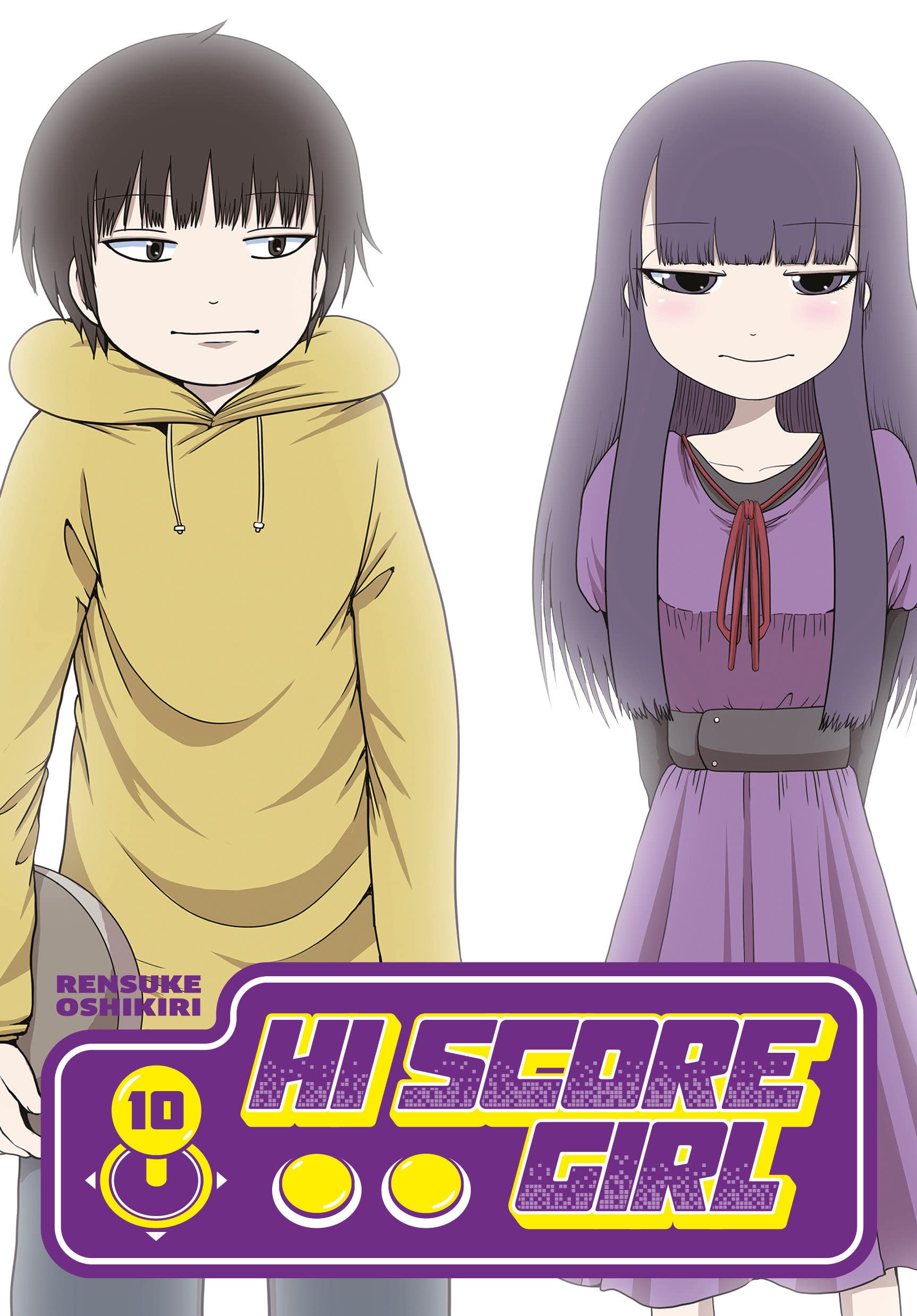
I’m happy and grateful that the full Hi Score Girl manga series by Otoi Rekomaru is out in English. It’s one of those manga where, once upon a time, a US release would have been a pipe dream. A nostalgic nerd love story premised around Street Fighter II and the 90s Japan arcade scene? As significant as that era was in Japanese gaming history, it’s a niche among niches. And yet, here we are.
I first discovered the series eight years ago, and was immediately won over by two things. First, there was the eccentric nature of its main duo: the obnoxiously loud gamer kid Haruo and his friend/rival/love interest, the reticent and rampaging Akira. They initially meet at an arcade and feud over a Guile vs. Zangief matchup, and though they never stop butting heads, it’s silly and sweet how they essentially communicate through gaming. That’s not metaphorical either; Akira pretty much never talks. Second, the portrayal of the 90s games and the way Haruo based his very outlook on life on them could have only come from a genuine place. Otherwise, jokes like “messing up the secret select code for Akuma” and “Akira having sympathy for big grappler characters because she feels bad about how little they get chosen” wouldn’t land so well.
The characters age over the course of the 11 volumes, going from elementary to high school and growing alongside the rapid developments in gaming technology. Their transition into adulthood is concurrent with continuous upgrades to Street Fighter II, the advent of 3D fighting games like Virtua Fighter, and so on. A nice narrative device to be sure, but it’s actually surprising seeing how much Haruo actually matures as he comes to understand responsibility in his own way. He’s not the sharpest tool in the shed, but his convictions are real.
Hi Score Girl reminds me a lot of one of my all-time favorites, 81 Diver. The art is similarly rough, and the core relationship is as much a rivalry as it is a love story (if not moreso). That’s actually pretty rare in manga focused on het romance, and is usually the domain of fujoshi-adjacent works. But it’s convincing here because of how Otoi portrays the genuine desire for connection, and the way that gap is bridged through gaming. Sure, the premise of a boy meeting an ultra rich mega gamer girl is unrealistic in many ways, but the portrayal makes me want to believe in their love.
In addition to the authenticity of the passion for fighting games, I think what ultimately makes Hi Score Girl work is that while Haruo kind of exists primarily in his gaming-obsessed mental space, the life lessons he draws from games are ultimately his own. He’s a guy with an imaginary friend who gives him pep talks and acts as his conscience, and that friend is often just Guile. Haruo and Akira imbue greater meaning into games, and the games reciprocate by providing them the thrill of victory, the agony of defeat, the comfort of friendship, and the joy of love.
 OGIUE MANIAX