Scott Pilgrimage

I have never read Scott Pilgrim.

I’ve definitely heard about it, and I plan on reading it eventually, but as of this point I have never done more than glimpse a few pages. Regardless however, I know that Bryan Lee O’Malley has become a household name among geeks, and with the final volume of Scott Pilgrim out, he’s going to be well-remembered.

Imagine my surprise then when I discovered that the covers of Scott Pilgrim are not the first place I had seen Mr. O’Malley’s name.

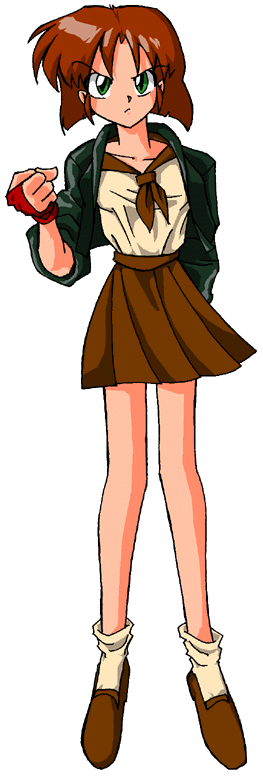
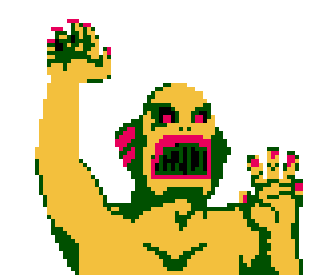
Years ago I enjoyed reading the stories over at Improfanfic, a site dedicated to both fanfics and original stories with an anime flair. Each chapter of a story was written by a different person, providing the “improvisation” in the site’s name. Of these improfanfics, my favorite was probably Furniture Warriors, a parody  of shounen fighting tournaments and the like where all of the characters wielded chairs and tables with deadly precision. Feeling nostalgic, I decided to look at the page for Furniture Warriors at Improfanfic, where in the middle of the fanart section one name in particular caught my eye.

Could it be the same person? Could the “Bryan O’Malley” who drew these images and wrote various chapters of Improfanfic be the same Canadian whose work has had the honor of being adapted into a feature-length film?

All signs point to “yes.”

Bryan has mentioned at conventions that he is inspired by anime. Not only that, but if you look at the fanart there and compare it to the artwork in Scott Pilgrim, even though there is a markable difference in style, skill, and experience, I think you can definitely see small inklings of what the man would become.

Not only that, but going to the archive.org record of the website listed with his name and e-mail address on the FW page, it says:

In real life, incidentally, they call him Bryan L. O’Malley. And the L, of course, stands for Lunacy. He happens to be the only Canadian member of Maison Otaku.

So there you have it.

Keep in mind that my reason behind this post was not to show off my internet detective skills or anything, but to simply be amazed that the person whose artwork I saw way back would become responsible for such a phenomenon. It makes the world feel so much smaller, and yet also so much grander.

Now, time to get reading.

Heartcatch Precure Gettin’ All Self-Referential

Over the past few episodes, big things have happened in Heartcatch Precure. During this time, the show has made some references to past Pretty Cure series, and here’s a couple I’ve spotted.

Again, this is towards the end of the first half of the series, so there are spoiler-worthy things happening. I’d highly recommend you go watch the show before you read any further.

In episode 21, new fairy mascot creature Potpourri asks a number of characters if they could be the third Cure to go alongside Blossom and Marine, with one of the candidates being female soccer player Sayaka. When Sayaka mentions that her only skill is soccer, Potpourri assures her that in the past there have been Precure who were also good at soccer.

This refers to Natsuki Rin, aka Cure Rouge, the third in a line of Cures who are good at Sports (Cure Black = Lacrosse, Cure Bloom = Softball).

The bigger event of course is when Myoudouin Itsuki transforms into Cure Sunshine. Unlike Blossom and Marine who use “Heart Perfumes,” Sunshine uses a “Shiny Perfume.”

This is in reference to the character Kujou Hikari, aka Shiny Luminous, who was first introduced in Futari wa Pretty Cure Max Heart.

Further supporting this is the fact that the powers of Cure Sunshine are mainly defensive in nature, which was also the role Shiny Luminous provided to the original Pretty Cure girls.

However, the big difference here is that while Luminous never shed her protective role on the team, Itsuki comes into the team as the only trained martial artist to become a Cure, which means she balances her barriers with actual physical combat experience.

So that was just a small observation. If you’ve made it this far, congratulations on watching an excellent show and may I hope to see you once the series is over.

Enter Animefan

A couple of days ago I made a post discussing the way in which the purchase of anime-related goods often transcends the purchase of anime itself. I didn’t concentrate much on the act of buying anime, and was planning a follow-up post, but Omo over at Omonomono beat me to the punch. He brings up some good points that I want to touch upon while also elaborating on this whole idea of what it means to “buy anime.”

First, a story.

I once told someone that I pretty much only buy DVDs of things with which I’m already familiar, to which he simply responded, “Why would you buy something you’ve already seen?”

Whereas I saw my ownership of DVDs as a testament of sorts to the shows I felt were good and enjoyable enough for me to have them in my collection, the other person saw DVDs simply as a way to try new things out. In the end, we agreed to disagree.

While this person was not what you’d call a hardcore fan of any kind of media, I think his philosophy applies to a lot of how anime fandom sees anime: Why spend money to see something that isn’t new to you?

Omo hit upon a simple, yet profound idea: the act of purchasing DVDs is “meta.” Anime fans generally love anime because it presents a world to them with a story and characters to whom they can relate or from which they can derive some kind of enjoyment or escapism. They become fans of the anime, but not necessarily fans of the anime as a creative work. If most anime fans find some way of watching their favorite anime for free, and they subscribe to the idea of not paying for shows already viewed, then it is difficult to see why they would purchase a DVD of it, as that would require them seeing their favorite show not necessarily as a window into another world, but as an endeavor born out of the thoughts and efforts of its creators. In other words, on some level, they would have to appreciate their favorite anime as a work of art, which I have to ask, how often does that happen with entertainment in general, let alone anime?

Are anime fans actually less likely to appreciate their favorite shows as works of art? I believe so, and I use anime conventions as an example. When it comes to anime convention guests, the people who get by far the biggest crowds are the voice actors. On the one hand this tells us that a lot of fans can at least see past the character the actor portrays to the individual performer, but on the other hand the voice of a character is directly a part of the show itself. The influence a producer or a director or even a writer has upon a work is less readily noticeable by someone viewing a show, and as such these guests tend to get fewer sheer numbers. Is this any more or less than the audiences who see actors over directors for live-action movies? I don’t think so, but I wanted to show that as far as anime is concerned, this is the kind of thing that happens.

My words bring up another potential conflict: is there something bad about being one of those fans who sees anime purely as a window into another world? My answer is that I do not find anything necessarily wrong with not engaging one’s favorite shows on that “meta” level. Nor is seeing the strings necessarily a good thing; it’s pretty much all subjective in the end. Actually, if you want to see a good example of a fandom which balances the meta with the immersive, then look no further than professional wrestling.

In pro wrestling, there traditionally have been two terms used to describe people who enjoy it: marks and smarts. Marks are people who believe wrestling is 100% real, that the Hulk Hogan in the ring is actually who he’s supposed to be. They see pro wrestling as a venue for good to defeat evil, or at least for bad-good to defeat namby-pamby-evil. Smarts on the other hand are fans who know that wrestling is all staged. They know that there are writers and scripts and politics behind the facade of Nothern Light Suplexes and Shining Wizards, and having a keen understanding of the backstage actions is where they derive their enjoyment.

But those are the two extremes, and in this age where the cat is completely out of the bag about wrestling being “sports entertainment,” there arises a new category of fan: the “smart mark,” otherwise known as the “smark.” Like smarts, they seek the truth of what goes on with the wrestlers as actors, but are also eager to suspend their disbelief just long enough for them to cheer for the good guys and boo the bad guys.

So who is the “better” fan? Is it the mark for his genuine immersion, or is it the smart who appreciates the performance?  Or is it the smark who tries to combine both worlds, arguably at the expense of either side?

And how do you get all of them to buy your stuff to keep you afloat?

The Soul of Doujinshi: Why I Like the Comic Party Anime

As more and more dating sims and visual novels have gotten adapted into anime, the question of what makes a good adaptation frequently comes up. When I’m asked this, the title I most often mention is Comic Party.

I’m going to get into specific story details to express the strengths of Comic Party, so I’m going to be spoiling a good deal. Also, I have never played the original game, so while I am aware that a number of differences between the source and the adaptation exist, I do not know to what extent, aside from the very fact that the main characters seem to have been de-aged from college to high school.

Based on the dating sim by To Heart creators Leaf/Aqua Plus, the first Comic Party anime is not that different from a number of similar titles. A single guy finds himself surrounded by a variety of girls, including one childhood friend, one bespectacled jokester, one quiet girl, and so on, only this time the guy is a fledgling doujin creator and the girls are fellow doujin artists, cosplayers, and otaku. But what sets apart Comic Party from other dating sim adaptations is its approach to that single guy, that protagonist around whom the story revolves.

Kazuki, amateur artist, is introduced to the world of doujinshi by his enthusiastic otaku friend, Taichi. Although a rocky start, Kazuki ends up being inspired by a number of other doujin artists and eventually creates his very first doujinshi. A square-jawed violent tale of gangs and guns called “Not Hundred,” Kazuki’s isn’t exactly a crowd pleaser, but still manages to sell a few.

The joy of having his own artistic work purchased and read by others gives Kazuki a new determination. For his second attempt, he would do some serious research, learning what people wanted in doujinshi and how he could best incorporate all of it into a single work. Full color, twice the size (and price) of his first doujinshi, and featuring a big-breasted giant robot pilot as its main character, Kazuki was confident that his follow-up would be a smash hit, but failed to realize that in his attempt to make a big seller, his work lost its soul in a way that was recognizable to anyone who picked it up.

Feeling dejected, Kazuki abandons the world of doujinshi. However, with the help of the friends he made along the way, Kazuki is able to regain inspiration and draw again. Though his third work is rougher than the last two, even being made by xeroxing copies at the local convenience store, it is clear that his enthusiasm and spirit are stronger than ever. Kazuki learns what it means to be an artist of doujinshi.

Kazuki’s character is remarkable, particularly when you compare him to other dating sim heroes, where most protagonists of these adaptations are primarily viewer surrogates who act as guardian angels of sorts to help solve the problems of the girls around them. While this exists to some extent in Kazuki, what’s more important is that Kazuki has a significant character arc. He finds a goal, grows, falters, and recovers, and comes out of it a better person. I know that dating sim anime are not exactly where people look for anything more than wish fulfillment, but I was glad to have gotten an actual story and a much more active main character. This is also exactly the reason why I dislike Comic Party Revolution, as the anime went from being a tale of artists to just a nudge and a wink to the existing fans and an excuse to see all of the characters together.

Comic Party was also the first anime which introduced me to the concept of doujinshi (incidentally, also the concept of moe). It told me that doujinshi were comics created by fans for fans to celebrate the joy and love that comes with being a creator who sees himself not above his readers but as a peer. It wasn’t about money, it was about loving anime. And while I know that there are many doujin artists out there who do manage to work for profit, that doesn’t tarnish the ideal Comic Party presents.

Left-Handed Basis for Purchase of Anime Goods

For many anime companies in the US, the million dollar question is, “Why are so many fans willing to spend so much money on anime-related merchandise but not anime itself?”

One avenue of thought says that because a lot of people download these shows or obtain them for free and do so for so long, a lot of them simply take having free shows for granted. Figures and posters and such, however, cannot be obtained for no money. But I think this is looking at things on too narrow a level. I believe there’s something that manifests itself in different ways according to different types of fans, from moe fans to Naruto devotees to mech heads.

I think there’s a strong desire to get closer to the characters and the world of the anime, beyond what an anime shows. Even if it’s not real, we want to get as close to real as possible. By buying that left-handed bass, a person can feel like they have a bond with Akiyama Mio. By buying that Temari fanart at a convention, a person can affirm their fondness for the sand kunoichi, and in a much more direct and efficient way than simply buying the Naruto anime (which as a whole has like, 2% Temari content tops). By buying that Master Grade Qubeley MK II, a person can bring the fantastic realism of a mobile suit into the actual reality of their home, with the tactile nature of model kit building also contributing.

For the most part, anime fans definitely enjoy the anime they watch, but the anime itself remains in its own world behind the TV screen or computer monitor. Fans want to pull that world past the 4th wall and engage it more directly. But it’s impossible to make the world of anime our own, so the best we can do is buy tangible products that let us get as close as possible.

You Mean There’s More than One?

Kransom pointed me over to the Amazon page for the Genshiken novel, where one review in particular caught our eyes.

I really like Genshiken. I mean, REALLY like it. I own the comics in both Japanese and English, I have all the DVDs, and I regularly read blogs with the names of the characters in the titles. I’m prepared to give a LOT of slack to anything with the official seal of Genshiken on it, because they’ve earned that credit.

Now who could they be talking about, hmm?

By the way, I can’t really recommend the Genshiken novel to Genshiken fans either. It’s more Twilight Zone than it is a story about otaku.

If you’re reading this post, Gen Felal, then I’m here to give you an internet high five.

Otakumonogatari

Today it occurred to me that there is more to Bakemonogatari than what’s on the surface. No, I’m not talking about the occult subject matter or the Nisio Isin writing which can give even Japanese people pause, or even that Shinbo touch that the director puts into most of his works. Instead, what I’m referring to is the way Bakemonogatari treats otaku, or more broadly, anime and manga fans.

Now I want to ask, who in Bakemonogatari is an anime fan? The answer is no one and everyone. In this story, everyone is able to just mention obscure manga titles and make equally esoteric references with the assumption that somebody else out there will get them, almost like how everyone in Beyblade knows about tops.

Within the confines of its own story, Bakemonogatari normalizes the otaku, something that is exceedingly rare. In titles about otaku such as Genshiken and Mousou Shoujo Otakukei, the otaku is still seen as something special or at least different. Other works take aspects of reality and soften them through layers of otaku filters. Bakemonogatari on the other hand assumes otaku to be the starting point and moves the story forward from there, adding in all of those supernatural elements.

It’s kind of like how superhero comics are traditionally a power fantasy, taking the real world and making it a little more fantastic, but titles like Watchmen take the fantasy and inject reality back in. Not that I’m comparing Alan Moore to Nisio Isin, mind you.

There Sure is a Lot to Talk About

When it comes to presenting, while nothing truly prepares you for the main event, you still get a lot of mileage from just practicing in front of an invisible audience. That’s what Sub and I did for our mahjong panel today, and it really helped us a lot.

From the very start, we were well aware of one of the big problems of running a mahjong panel: there is simply too much information for an hour. But even after cutting a number of things from the presentation, important ones mind you, we still found ourselves eating up too much time. We really had to get down to the meat and bones of what we wanted to convey, but at the same time were conscious of the fact that being too boney-meaty might not get across some of the fun of mahjong. Still, after practicing a few times, I think we pretty much have it down. In addition to letting us adjust the slides for better flow and such, it also gave us a much better idea of what we really wanted to say.

Compared to the Ogiue panel, the content of the mahjong panel has to be razor-sharp in its focus. It does not forgive going off on tangents. But I think we’re ready for the challenge.

Showcase Your Manga Abilities: Manga as/in Essay

This is a call-out to all of you artists, writers, and scholars who believe in the power of manga to convey ideas, and want to spread this belief to others.

The Modern East Asia Research Centre at Leiden University is sponsoring a new series of competitions for the next five years, with the goal of exploring the creative and expressive power of manga.

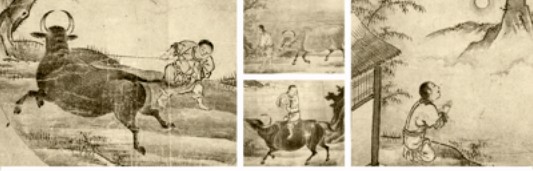
The first project up is  “Manga as/in Essay,” wherein contributors will create graphic essays about the theme of “ox herding” as a metaphor for the path towards Enlightenment in Zen Buddhism. It’s a heady and perhaps difficult topic, but that’s part of the fun, and I think it’ll be quite  interesting to see what happens when the imaginations and ideas of thousands(?) of contributors are focused upon a single specific idea such as this.

For the most part, contributors are free to interpret the topic however they choose. One page or 50 pages, verbose or silent, all manners of writing and drawing styles are welcome.

Of course, this is a competition, and there will be prizes for the winners: 1000 Euros for 1st place, and 500 Euros apiece for 2nd and 3rd place. On top of that, the winners will be published in an academic journal. According to the promotional material, the criteria for winning is as follows:

-originality of expression
-power of expression
-style of expression
-quality of imagery
-overall effectiveness

So keep them in mind as you create your projects.

I’m going to link you the project page one more time because there is a lot of stuff to read about it and I don’t want anyone jumping into it only to realize they made some serious error. It also explains what exactly the “ox herding” thing is if you’re completely unfamiliar with it like I am.

The deadline is October 31st, 2010, so get cracking!

The Hidamari Sketches

While looking through my recently-acquired volumes of Hidamari Sketch, I found myself enjoying the comic well enough, but gravitating more towards the interstitial drawings that populate the pages in between the 4-panel comics.

“Wow,” I thought to myself upon first noticing them, “These drawings are really nice and and have excellent line quality to them. I kind of wish the whole comic was drawn this way.”

But then I wondered about how that would actually affect Hidamari Sketch. Part of why I like a looser, heavier brush style is that it gives off a good sense of vibrancy and energy; it’s really visceral in a way but also can be extremely elegant. However, all of that has to do with the drawing itself and connecting to the artist, as opposed to the art style being a way to connect with the characters. Given that Hidamari Sketch is a pleasant slice-of-life story, soothing like a spoonful of honey, drawing that much attention to the hand behind the art might not be the best thing for it.

I can still hope though.