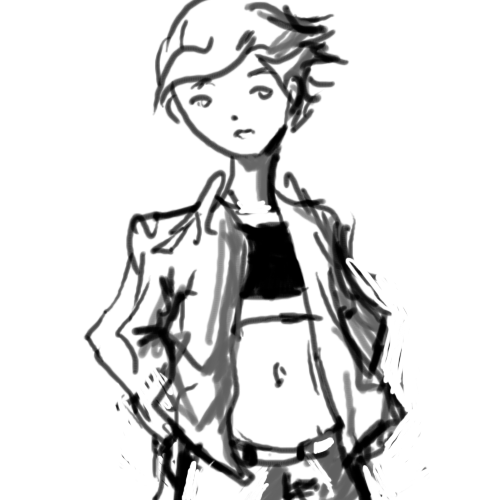
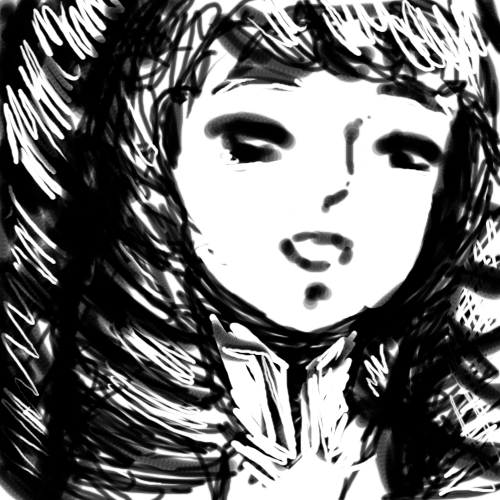
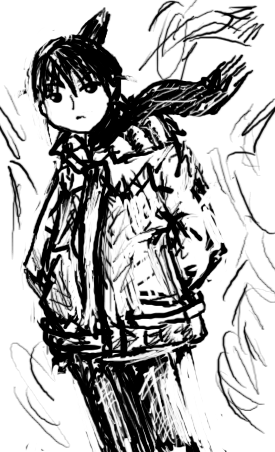
I was having a conversation with OGT about what is it in the standard American comics-style that makes people either attracted to it or not. We talked about how the characters in American comics tend to look much more posed, like a figure occupying space, while in manga, the characters are much more a part of the image.
I’m aware that there are plenty of exceptions on either side and many of them are outstanding such as Wil Eisner, Art Spiegelman, and Ryoichi Ikegami. I’m also aware that manga derives its appearance from Tezuka who loved American cartoons and French films. Still, I believe that these strong respective art histories play a significant role in just how these styles evolved. While Wil Eisner commanded the flow of each page masterfully, he still placed great emphasis on how the figures occupied the space making sure to show exactly where each person is positioned. Riyoko Ikeda, whose Rose of Versailles manga is itself set in France, shows the environment but focuses primarily on the emotions of each page.
That’s all well and good, but then I began to wonder about why this is the case, and I realized that the reason why these styles are so different is as simple as tracing the history of Eastern and Western Art.
I know that these days the barrier has lessened thanks to the internet and other forms of constant international communication, and I know that use of terms such as Eastern and Oriental may have an air of cultural bigotry, but let’s face it: Art between America and Japan have been interacting with each other heavily only for about the past 200 years or so, and of course comics even less than that, and for the longest time these two cultures WERE more or less independent of each other. This is where the discussion stands.
Non-abstract human representation in the West derives its history from Ancient Greece and Rome, and the desire to portray the physical body perfectly, on to the Renaissance and beyond. A careful study of anatomy, the invention of things such as the golden ratio, and the notion that empty space is a waste of space are all a part of the history of Western art. The toned muscular bodies of super heroes can also be seen as the latest version of the pursuit of ideal physical beauty. Meanwhile Eastern art, from China, Japan, and other locations, particularly that which represents the human figure, has never placed nearly as much emphasis on portraying the body realistically. When Europe and Japan began interacting with each other on an artistic scale, one thing Europe took away from Japan was their strong use of negative space. Not drawing, not painting in an area turned out to be able to have equal if not greater impact than what was the standard method of filling the canvas as much as possible. Combine this with use of line widths to denote depth, as well as heavy use of flat colors, and I think it begins to become apparent just why and how these histories have influenced the art of comics in Japan and America.