
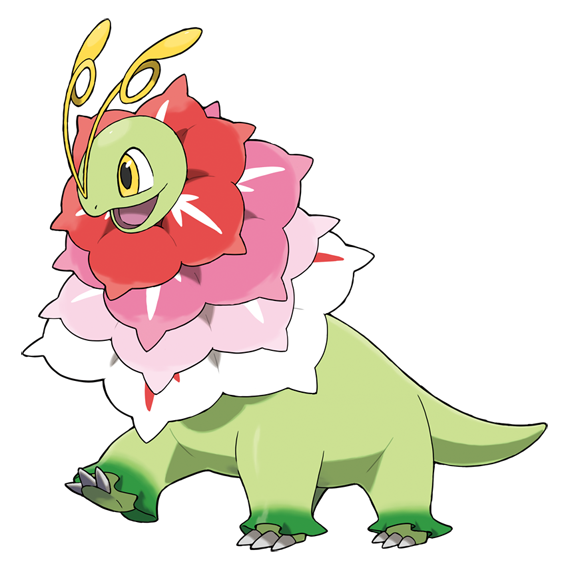
Pokémon Champions is a new game focused on competitive battling, and it has included an old and beloved mechanic that’s been mostly absent for a decade or so: Mega Evolution. I’ve been thinking about why it’s still among the most popular additions to the series, and I think it has to do with the fact that it makes individual Pokémon feel special in terms of both gameplay and aesthetic.
Introduced 13 years ago in Pokémon X and Y, Mega Evolution is a temporary transformation that greatly boosts a Pokémon’s abilities in battle. It can make historically weak Pokémon stronger, while also potentially addressing some of the power creep that had afflicted the series over time. However, not every Pokémon can do it, so it can come across as bias or favoritism from the developers.
Because Mega Evolutions from the start were reserved for only a chosen few, one could not truly call it a universal game mechanic, and later generations replaced it with more all-encompassing ones. While there were some special attacks exclusive to specific Pokémon and some exceptions, pretty much everyone could perform a Z-Move (Generation 7), Dynamax (Generation 8), and Terastillize (Generation 9). However, even if they might be considered better mechanics in terms of gameplay and balance, none of them seemed to capture people’s imagination the way Mega Evolutions did.
Ironically, I think that the aspects that make Mega Evolutions a problem are also the very things that make it appealing. The other mechanics are in many ways fairer, but having them be so fleeting or so universally applied means a cool factor is lost in the process. Z-Moves are flashy attacks but only last for one turn. Dynamax goes for three turns and just enlarges the existing 3D model, and the few who get unique Gigantamax versions are only truly differentiated in gameplay with a single unique attack (called a G-Max move). Terastillization is more enduring and has lots of depth in terms of player interaction, but it also uses generic animations with the notable exception of Terapagos.
The exclusivity of Mega Evolutions makes them more exciting, and the anticipation over who gets one reminds me a bit of character reveals in fighting games. The fact that they get unique designs contributes to their special feel, and this specialness is expressed through significant stat upgrades and often new Abilities that enhance their specific identities. I also don’t think it’s a coincidence that the last truly enduring generational mechanic was Abilities from Generation 3, as they felt like further expressions of the Pokémon instead of a layer applied on top of them. Of course Gyarados can Intimidate opponents—look how scary it is!
This difference somewhat reminds me of two things. First, there are the changes in the depiction of techniques from Avatar: The Last Airbender and its sequel, Avatar: The Legend of Korra. In the first series, a technique like lightning bending is the exclusive domain of Fire Nation, but by the time decades have passed, it’s used by regular skilled workers in car factories. This is meant to show the march of progress and the proliferation of knowledge, but it’s not a change all fans enjoy. Rather, they prefer when characters are special in ways others can’t hope to duplicate because it emphasizes each character’s identity more. If something like Dynamaxing actually gave each Pokémon a distinctive improvement instead of just doubling HP and creating more variety in the actual Dynamax attacks, I think it would be more highly regarded.
The second is that classic player categorization of Timmy, Johnny, and Spike created by Magic: The Gathering developers in the past. Timmy gets the most joy out of attacking with powerful creatures, Johnny thinking up interesting strategies, and Spike winning and overcoming the competition. The other generational mechanics outside of Mega Evolution have clear appeal to Johnny and Spike, but not so much to Timmy. And while we might see Timmy as not as serious as the others, he’s a reminder of how much presentation can matter (and I don’t mean in terms of graphical quality, like you often see people complain about).
Nowadays, Mega Evolution is quite an old topic of discussion, but I never put in my two cents because I had fallen out of Pokémon during this time. I think the mechanic’s popularity in terms of general perception compared to its successors is a real lesson in how gameplay and aesthetics intersect. Maybe in Pokémon Winds and Waves, we’ll see something capture that spirit more successfully.
 OGIUE MANIAX