It’s All Right to Be Weak

Though no one has ever said it to me before, I sometimes feel that my stance on various related topics concerning women in media may come across as hypocritical. I write a fair amount on the depiction of women in visual media, whether that’s anime or American comics or video games, but at the same time I’m also one to defend the concept of moe, often seen as the nadir of female representation in particularly Japanese media. It can be seen as a contradiction which ultimately compromises the arguments I make, but I would argue differently.

While I cannot reasonably argue that moe is faultless, the reason I don’t find my relative fondness for moe and my criticisms of misogyny to be all that contradictory has to do with the way in which characters impact a viewer. I believe that one of the core components of moe, that sense of weakness or perhaps even helplessness in a character (typically a girl), is not necessarily experienced solely as something external, a third party on whom the viewer acts as voyeur. That may factor in, certainly, but there is also a component of personal empathy, the depiction of weakness as a relatable point for those who may feel weak themselves, that is capable of being far more significant than simply the girl being cute or needing an older brother.

The capacity to portray weak characters is a good thing, in my opinion, and the problems of moe aren’t relegated simply to how girls are depicted but also how guys often aren’t allowed to be depicted. For whatever reasons there is a relative dearth of male characters targeted at men who are truly allowed to be weak and who are allowed to rely on others without having their worth as a man called into question either inside the works or by the viewers. This is why I’m fond of the supportive male character type you sometimes see in anime, because they manage to acknowledge their own limitations without issues of pride, and can both provide and receive emotional support. This is not to invalidate the more aggressive images of men of action, your Golgo 13s and Charles Bronsons, but I think there is room to expand both what can be done with men and women in entertainment media. In the mean-time, though, moe is having its positive effects.

That is not to say that moe is without its negatives and its problems in portraying women, and one thing that I have to acknowledge is that there are viewers, including moe fans themselves, who may bristle at the idea of a weak, helpless man (as opposed to girl), or might even be really aggressively sexist anyway. It is certainly not without its problems. In that regard, however, it actually reminds me of an essay titled “Never Trust a Snake: WWF Wrestling as Masculine Melodrama” by fandom and media scholar Henry Jenkins. In it, Jenkins argues that through the imagery of intense competition with a clearly defined goal (winning the title, beating the villains), pro wrestling provides a safe haven for the expression of “weak” emotions such as sadness and betrayal by couching it within the context of a hyper-masculine (and often extremely racist, sexist, and homophobic) setting, to which men in the US would be more willing to relate. They appear on stages and in front of cameras and audiences to loudly proclaim how others made them feel, driving home their characters in a conceivably therapeutic process. They’re shown to be physically superhuman, but prone to the same emotional scars as their audience.

Like pro wrestling, moe has its recurring issues, but I think sweeping it all aside under the single banner of “sexism” is over-simplifying some of the cultural and psychological dynamics at work. This is why I criticize certain portrayals of girls in moe without condemning it as a whole.

Definitions of Lolicon

If you’re into anime and aware of the concept of lolicon, then you probably have an idea of what the word means and the kinds of characters associated with it. Lolicon, after all, means the eroticization of very young characters, particularly female ones, right? It turns out to not be so simple, and I don’t mean in terms of “she looks 10 but is actually 500.”

I’ve been re-reading Sharon Kinsella’s Adult Manga lately (which is one of the best academic texts on manga and the manga industry), and in one chapter she writes about lolicon and doujinshi creators, as well as their relationships to professional manga In it, she gives the definition of “lolicon manga” as manga which “usually features a young girlish heroine with large eyes and a childish but voluptuous figure, neatly clad in a revealing outfit or set of armour.” It’s still pretty consistent with the current general conception of lolicon, but the “voluptuous” trait might seem a little strange.

Kinsella points out Gunsmith Cats as a lolicon title, but unlike the idea that it’s lolicon because of Minnie-May Hopkins and her child-like figure (see above), the example given is of the older-looking Rally Vincent.

Furthermore, she discusses the lolicon-esque qualities of Ah! My Goddess, but like Gunsmith Cats she isn’t just talking about the younger Skuld but also Belldandy and Urd, who, Urd especially, seem to go almost entirely against the current conception of lolicon used by people. Other titles from Monthly Afternoon (home of Genshiken!) mentioned as lolicon which seem to defy that definition further are Seraphic Feather and Assembler 0X.

Ah! My Goddess

This could be considered merely a rather broad definition of “lolicon,” but there are three things keep me from drawing that conclusion. First, according to Kinsella the influence of lolicon-style on the manga industry is somewhat acknowledged by professionals. Second, the character designs of Azuma Hideo, the “father of lolicon,” are very much in that blurry territory of the “child-like but voluptuous.” Third, is a conversation I’ve had with ex-manga editor and current Vertical Inc. editor and frontman, Ed Chavez.

According to Ed, one of the most significant lolicon characters ever is Lum from Urusei Yatsura, a character known for her sexy figure, and he also considers the origin of lolicon to actually be Maetel from Galaxy Express 999, a character notable for her mature and motherly qualities. I remember finding his categorization a little out of the ordinary, but when taking Kinsella’s words into account as well, it starts to make sense. It is that intersection of youthful but in certain ways adult, where for example the body is more developed but the face remains youthful, though neither is necessarily at any extreme.

Lum (left), Maetel (right)

Given this idea of lolicon, one of the most fascinating lines of thought to come out of this can be summarized with the following: if we go by this older definition of lolicon, even many of the fans who consider themselves vehemently against lolicon, who try to avoid it like the plague, would be categorized as lolicon fans themselves. Again, characters like Rally Vincent and Belldandy have been presented among fans for years and years now as the positive counterpoint to their respective series’ younger-looking characters, but they too now fall under the same umbrella.

Taking that into further consideration, the question becomes: given the anime of the last 20 years or so, what female characters wouldn’t be considered lolicon? It seems to encompass a large majority, where even characters defined by their mature, sexual bodies like Miura Azusa from THE iDOLM@STER and Fukiyose Seiri from A Certain Magical Index are grouped in, not to mention characters like Lina Inverse from Slayers.


Miura Azusa (left), Fukiyose Seiri (right)

I am not using this as a platform to invalidate people’s opinions, or to accuse anyone of being hypocrites. The term lolicon seems to have transformed over time, and the current generally accepted definition of it isn’t somehow less valid than its origins discussed above, though it may make for some inconsistencies in communicating, and at the end of the day Minnie May is still there. Rather, I think it shows a clear example of how words can change over time, that the boundaries by which we categorize things may not simply be about what traits are and aren’t present, but how those traits interact with each other (though that subtlety makes it susceptible to being more narrowly defined), and furthermore, how those traits are then perceived by those viewing.

In the end, Kinsella provides a quote from a senior editor of Monthly Afternoon:

The form of the manga is the same, but the themes have been changed to make them easier to read and understand for lots of people. Aah! My Godesss is a good example. It looks like otaku manga, but the content is different, the story has been changed so it can be read by a wider audience.

Could it be that, by taking the styles originally associated with lolicon, and putting them into contexts more relatable to a broader audience, this lolicon aesthetic no longer exists in that form? Where once the term referred to a broader range created by the interaction of certain traits, by having that larger readership claim one end of that spectrum, does the lolicon genre as we currently know it come into the forefront?

Language, Insults, Slurs

In online communication, whether it’s on a forum or in a video game, it isn’t uncommon to see some strong insults (racist, sexist, etc.) being thrown about, and the ubiquity of such language has created a lot of debate on the subject among fans and others concerned. What I see from those arguing, however, is a tendency to take a rather extreme stance in one direction or the other, which ends up avoiding much of the nuance of such a complicated topic which goes well beyond video games and technology and into the deep recesses of human history. I’m no expert on the matter myself, and I’m bound to have my own oversights, but I wanted to lay out my own thoughts, as well as my own personal philosophy on the matter.

One of the stereotypes of being on the internet is that, in order to successfully participate, one must have or develop a thick skin. Behind the safety of a computer screen and at least a few hundred miles, it’s easy to say what you want, when you want. People will take anything they can to put you down, whether it’s because they want to seem tough, or they want to psych you out, or because they actually feel that way, and race, gender, and sexuality factor into that equation as well. However, while it’s true that listening to what every single random person has to say about you online and taking it to heart is a bad idea and that having an impermeable hide can help deflect the insults away, there’s still the problem of the very fact that words such as “n****r,” “f****t,” and “slut,” are considered viable as insults.

How often do you see someone try to put down another person by calling them white, heterosexual, or masculine? We take these values to be in may ways a societal default on practically a subconscious level. When you call someone a n****r online to try and get under their skin, even if you don’t really mean it seriously, even if they’re not actually black, you’re implying that being black is in itself a terrible thing. It’s one thing to trash talk to get a mental edge, and it’s another to even unknowingly reinforce the idea that some people are perpetually inferior on some inaccessible level simply because of the color of their skin or whom they find attractive.

That said, I am very much against censoring or removing slurs from the English language.

While I do not believe that words are necessarily innocent in and of themselves, as they may have elaborate backgrounds rooted in hatred and intolerance, I am a firm believer in freedom of expression, whether that’s artistic or verbal or any other form, and that includes the nastier side of how we speak. If the writer of a story wants to convey hatred through strong language, then that option should be available to them, just as the option to deride them for doing so is available to everyone who chooses to read (or not read) their work. If people feel the desire to express themselves using that language, then I do not think it’s right to deny them their own feeling. To simply say that we need to erase these words is like layering bricks over a massive sinkhole.

The problem with “f****t” isn’t that it originally meant “twig” or whatever and that we polluted its meaning, but rather that we allowed ourselves to believe that homosexuality is a quality worth insulting in the first place. This is also why I think people using words like n****r and f****t in a positive fashion, or at least trying to do so, is not necessarily reinforcing the negativity associated with these words, but that is a topic I will leave for another time.

One thing I am well aware of is the way such language can be so commonplace that those who are exposed to it frequently while growing up can wind up having it as a part of their subconscious mind and not realize the potential strength of these words. Using them becomes habit, as simple as saying “good morning.” I’ll admit it myself: when I was younger, I would use the word “gay” to mean “awful,” as in “You got a 50 on a test? That’s so gay!” If you had stopped me and asked whether or not I actually thought homosexual were inherently worse as human beings or that I actually hated them, I would’ve said of course not, but still, “gay” was in my vocabulary as an adjective to describe mundane areas of life. Eventually, I stopped using the word in that fashion altogether, but it didn’t come from me declaring that “from this day forward, I will no longer use the word ‘gay’ in a way which implies negativity!” It simply happened gradually and almost unconsciously, and if I had to attribute it to anything, it would be to meeting and becoming friends with people who are gay, the act of which likely educated me into thinking of them not as some distant idea or label, but as fellow human beings. Just as easy as it was to start using the word “gay” in that particular meaning, it became just as easy to stop after the fact.

In contrast, when I was even younger, I made the active decision to stop cursing, and while I’ve gotten somewhat more lax since, I still try to avoid such words as much as possible. I never mind if others use them and use them often, but I have knowingly limited my own regular vocabulary because I think it serves me better, and I will still use them when I’m quoting another person who’s used a word like “fuck,” or if I’m discussing it as a topic and feel that ideas get too obfuscated through the use of euphemisms.

The fact that I’ve consciously removed some insults from my language and unconsciously removed others can seem rather contradictory I realize, because it might seem as if I’m saying that people should consciously remove certain words from their vocabulary while also claiming that it happens naturally and we should just let nature take its course. The difference here, however, is that I am not claiming a solution wherein everyone eliminates offensive language from their vocabulary or society deems it fit to consider the use of those words a crime in and of themselves. Nor am I claiming that people should use only the words that I use. Rather, I think the key to addressing the use of slurs, whether the user did not consider the weight of those words, is simply education, and not on a didactic level.

If we can show people about how words can and do have power, or encourage people to realize that those they see as “others” are not some nebulous concept but as a group of individual human beings, then we can give them the power to shape their own language usage from an informed position, instead of an ignorant one. This way, when someone unconsciously uses a word that encourages intolerance, they can be shown the potential problems of doing so without forcing upon them a false paradigm of “right and wrong,” or trying to instill shame into them. Thus, if they stop using a word, it isn’t because the word never existed or that it has some vaguely defined negativity, but because they felt that, on some level, whether conscious or unconscious, that it isn’t how they would like to express themselves. Vocabulary is avoided but it isn’t removed.

Gender IS Performative in “They Were 11!”

Recently, I finished reading Hagio Moto’s shoujo science fiction classic, They Were 11! Focused around a group of eleven individuals trapped on a spaceship, the manga was adapted into an animated movie, which is probably how most people are familiar with the title. However, in addition to the story covered in the film, They Were 11! also had a sequel titled They Were 11! Continues, as well as a handful of short gag comics. Altogether, the manga creates a more thorough and often lighter view of the world portrayed in the story, especially when factoring in the younger-looking character designs of the manga in comparison to the anime.

The character who catches my attention the most, which I assume is the case for just about everyone else who’s read or seen They Were 11!, is Frol, the sexless love interest of the protagonist. On Frol’s home planet, people remain neither male or female until they reach adulthood, when they must choose what to become. Given that men enjoy more privileges there, Frol wishes to be a male, though looks quite feminine in contrast. At the end of the original story, Frol falls in love with the main character Tada and decides to someday become female so that they can marry.

There’s a famous phrase coined by feminist philosopher Judith Butler, which is that “gender is performative.” In other words, things we associate with a certain gender are not as natural and set in stone as we think, and are instead reinforced constantly by society in such a way that, at all times, we are in a sense acting out our genders. To kind of simplify it down, consider the phrase “be a man” and how it implies a certain set of behavior involving courage and sacrifice. What I find really interesting about Frol’s whole situation is that without a definitive sex, Frol has no natural, biological basis for acting out her (I’ll be using “her” as a pronoun for the sake of convenience) gender. For Frol, gender is, above all else, performative.

In the first story, when Frol still desires to be a man, she consistently goes out of her way to assert her masculinity, mostly in comparison to the somewhat wiry Tada. Frol continually points out that she is taller, her limbs are longer, she knows how to fight better, is tougher, and so on. In the second story and in the Space Street gag comics, however, when Frol has decided that she will become a woman (though it hasn’t actually happened yet), she acts how she thinks a woman should act, being more emotionally open to Tada, behaving like a teenager in love. Because it wasn’t so long ago that Frol was presenting herself as a man, it’s clear that this is all conscious on her part, a point reinforced by the way she deals with her jealousy. In They Were 11! Continues, when Frol sees a bunch of girls flirting with her now-partner Tada, her reaction is to once again become a man herself, and to “beat” Tada at what she perceives to be his own game by becoming a suave guy who gets all of the ladies herself. In the end, Tada did still love her and it was all a misunderstanding, but it’s also clear that Frol’s decision to fight fire with fire is facilitated by her very own sexless existence.

Frol: “I’ve had enough! I won’t become a girl!”

There are somewhat similar characters in anime and manga, notably Ranma from Ranma 1/2 and Sapphire from Princess Knight, but in both cases their sexes are decided by forces beyond their control and they must deal with acting like men when they’re women and vice versa. Frol’s situation is different. For Frol, the only reason why she decided to become a woman and to start behaving “like a woman” was because of her love of Tada. When she felt that this was no longer the case, she had the power to do the very opposite, and when it was resolved she was able to switch right back. In this sense, Frol and the freedom she has to decide her sex and gender on her own terms represent the very fluidity of gender as a concept.

Created Equals

Warning: Spoilers for Aquarion EVOL in this post

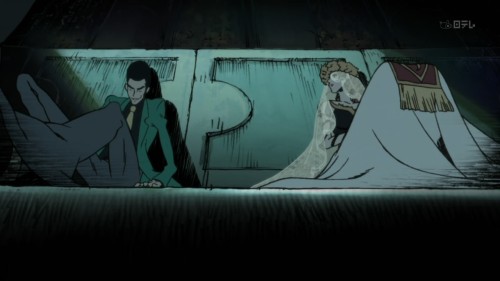
Amidst fears that a television series starring the matron saint of anime femme fatales would be mired in an inescapable well of sexism, Lupin III: The Woman Named Mine Fujiko manages to assuage those worries through extremely sharp characterization. Say what you will about nudity or Fujiko as an object of sexual desire, but the show makes it clear that they all have the skills and the smarts to succeed in their mutual world of thievery. Even if trust is at a premium (as is often said), there is no shortage of respect between Fujiko, Lupin, and the rest, and with mutual respect comes a sense of equality.

I’m not about to decry anime and manga as being polluted with unequal male-female relationships, as I can think of many examples to counter that idea, enough so that they don’t collectively turn into “the exception that proves the rule,” but this very idea of representing gender-egalitarianism has me thinking about what goes into portraying such relationships. For example, if a boyfriend and girlfriend each alternate being “dominant,” then is that “equal” or is it merely just multiple instances of inequality? Does breaking things down for comparison defeat the idea of equality between a guy and a girl by putting too much emphasis on haves and have-nots, or is ignoring it a bigger mistake?

As far as recent anime goes, the other show besides Lupin: Fujiko which has me really considering the concept of equality among opposite sexes is Aquarion EVOL, particularly that of Yunoha and Jin, the (literally?) star-crossed lovers who seem to have taken Pixiv by storm. Yunoha is an extremely quiet girl whose very shyness translates into her power (invisibility), and when she meets Jin (an enemy spy whose power is to keep others away), the two form a bond which gradually grows stronger.

Between Yunoha’s diminutive size in multiple respects (in a series full of toned and busty girls, her proportions are significantly more subdued) and her personality, Yunoha can seem to carry a potential problem that is similar, yet in a certain sense opposite to that of Fujiko in the sense that she can come across as the girliest girl, harmless and pleasant and easy to dote upon. Yet, despite the awkwardness of some of her interactions with Jin which can come across as her being dominated (notably the part where he tries to kidnap her out of love so that she can be the mother of his children and save his woman-less population from dying out), I don’t get that sense from their relationship.

While Yunoha can seem weak, and even her willpower and inner strength aren’t particularly impressive, Jin in many ways seems even weaker despite the basic idea that he’s an extremely skilled pilot and a deadly fighter. There’s something to his personality, perhaps a combination of naivete and extremely subtle yet numerous emotional scars, which make even his “domination” seem weak. In that sense, I find their relationship to be a very equal one, but in the sense that the two seem to grow to understand each other, a resonance between similar, yet complementary individuals.

One of the big ideas I keep running into when it comes to portraying a character well with respect to their gender is “the right to be a weak character.” By that, I mean how weakness (mental, physical, emotional, etc.) is generally thought of as a trait which makes one character “lower” than another, and which implies that their appeal is in their “lower” status, but at the same time that weakness can resonate on a more “equal” level with those who perhaps find themselves similarly weak. I think this is probably part of what makes arguments over moe so volatile, but let’s leave that for another time.

(Please don’t argue over moe.)

Maybe I Don’t Read Enough Manga

Given the fact that I dedicate an entire blog to anime and manga, it might be strange for me to think that one of my problems is that I don’t read enough manga. Many burned-out bloggers cite the activity of blogging itself ends up taking a chunk out of their actual enjoyment time with the stuff they love, but that’s not really what I’m feeling here. My posting rate is consistent but light enough for me that, while I do sometimes feel the pressure of thinking of something to say, I don’t treat it as a chore.

Part of it may have to do with the fact that, although I can read Japanese, I do have my limitations and one of them is speed. I just can’t read fast enough. That’s only a part of it, though. Instead, I have this strange sense that I don’t quite have a proper pulse on manga as it currently is, and by extension manga as it has been. When I’m reading a bunch of manga in the same genre or for the same demographic, I get this strange sensation that I’m continuously boxing myself in too much, that I need to keep expanding my horizons. And so I do, I keep reading more, I keep trying new things out, but it’s like I can’t try them fast enough. I want to feel everything manga has to offer, to understand it as well as I possibly can, but somehow it’s just not enough, like I’m losing my connection to it.

What I’m experiencing may be somewhat the opposite of burn-out, though not in the way that you feel when you initially dive head first into a new obsession, where you have to consume every little bit that you can possibly find, good or bad. Rather, it’s this unusual melancholy where instead of feeling like way too much, it feels like not enough.

Superhero Comics and Being Sexy on an Individual Basis

Introduction

When it comes to the controversial approach to sexuality in superhero comics, probably nothing is more exemplary than the oft-seen exaggerated pose where a female character twists her torso such that both her butt and her breasts are facing at the reader directly. Known as the “brokeback,” the pose is frequently the target of criticism as an example of sexualization gone wrong. Generally, the criticisms concern the fact that, as action-based stories, the pose is a completely impossible and extremely impractical thing to do in fighting. The idea is that, by showing them as such, comics communicate the idea that when it comes to female characters the T&A is more important than their identities as heroes or characters in general.

The point at which I might diverge from other opinions is that I believe strongly in freedom of artistic expression and think that such works have a right to be drawn and a right to be enjoyed by readers on a sexual level. While I think that the disparity in idealization between genders can definitely be too much, something has to be said for the fact that the visual arts in general can make the impossible happen in the first place. If people are literally physically incapable of contorting themselves into the “brokeback” pose, then mediums such as comics are the only places where it is possible at all.

I also think people have the right to admire a character while simultaneously desiring her or the pose that she’s taking. Again, the fact that forms of fiction such as comics make it more than possible for the portrayal of a female character to be an effective fighter while doing the least physically sensible thing possible is not an inherent negative, as long as we’re being honest about the fact that it is indeed done for sex appeal. No matter how much we’re able to point out that those contorted positions would shatter someone’s spine, or that other poses come straight out of pornography, they successfully generate sexual attraction. Individual tastes may vary, but they’re also called “porn poses” because they work, and at the end of the day pornography drawn or otherwise does not automatically turn people into misogynists.

But while the act of making or consuming such products causes no harm in and of itself, when the brokeback pose becomes the default method for portraying sexual attractiveness, it creates two major problems in particular. First, while anyone has the right to enjoy any type and degree of sexualization, if the goal is to try and attract a larger female readership, then no one should be surprised when such portrayals lessen their desire to pick up superhero comics. Second, and what will be the primary concern in this article, is that by having that style of sexualization be so ubiquitous, it creates a singular image of how a female (character) is supposed to look when they’re being “sexy.”

Sex as Character

Over the month of February, comics news and editorial site Comics Alliance published a series of articles on sex in comics. One of the articles discussed Adam Warren’s Empowered, where writer David Brothers argues that, even though Empowered is more sexually explicit and has more overt fanservice than regular superhero comics, it still approaches the topic of sex in a much healthier and more mature fashion.

Although a majority of commenters have voiced their understanding of David’s points and explanations, there are a few dissenting responses which I found interesting for what they imply. The recurring criticism, which not only appears in David’s article on Empowered but also many of the other posts, basically calls out the writers for having a double standard, praising the portrayal of sex in indie comics, while lambasting the presence of sexuality in superhero comics, in something of a high art, ivory tower, porn vs. erotica-type argument. Another criticism leveled at Empowered in particular, is that its crass displays of actual sexual content and juvenile-sounding dialogue make it worse than the other superhero comics to which David compares it.

I think David actually addresses this well in the article itself when he describes the primarily sexual relationship in Empowered, that of the main heroine, Emp, and her ex-henchman boyfriend, Thugboy:

Empowered‘s eponymous heroine is a superhero with issues. Her costume is too skintight and ineffectually fragile, and neither her teammates nor her nemeses respect her. She gets tied up way too often for her liking.

They both get different things out of the relationship, aside from just sex. Thugboy clearly loves Emp, and expresses that in a way that’s both a little paternal and a lot touching. He gets her issues with her body and career, and when she doubts herself, he’s there to point out how wonderful she is. He supports her, and the reverse is true, too.

More important than that, though, is the fact that she’s comfortable expressing her insecurities to him.

The thing to take away from their relationship is that when Emp has sex, it’s not simply a display of sex but rather shows the specific scenario of “sex with Emp.” It takes all of the various bits and pieces of her characterization and doesn’t forget them even during moments of titillation. The trouble with how sexuality is frequently visualized in superhero comics then, assuming the goal is to show female characters in a sexual manner in the first place, is that this level of specificity doesn’t exist in most portrayals. Rather than a female character making a sexy pose, it becomes a female character conforming to a sexy pose template, no matter her personality, history, or quirks. When combined with the way that superhero comics can grow and reinforce bad ideas, we end up in the current situation where this approach to sexuality generates an entrenched position that causes people to staunchly defend it as if it is simply the way that comics communicate “sexy,” as if there is little alternative.

The issue of posing isn’t confined to just “bad” artists, as the above example from Jim Lee demonstrates. Taken from his famed X-Men run in the 90s, the image is well-drawn and the women are idealized without necessarily going off the deep end, but aside from Jubilee (front) all of them are taking the same sexy stance. Psylocke (left), Rogue (center), and Dazzler (right) all have very different backgrounds and personalities, so it seems strange that they would all be in the same pose. This goes double when you compare them with all of the male characters, each of whom showcase their individuality in the way they’re standing or sitting, or Jubilee once more, whose “attitude” comes across in her slouched position.

Again, there’s nothing wrong with showing attractive girls in exaggeratedly attractive poses in and of itself, nor is there any fault in enjoying them, but superhero comics are in the business of creating unique, iconic characters. This is why they have different origin stories, different costumes, and different powers. The goal is to be able to see how a particular character stands out from the rest, and if sexuality is involved, then comics can benefit from making sure that the erotic is also made to fit the characters.

Alternatives from Anime and Manga

I’m going to steer away from superhero comics and take a look at anime and manga, a territory I’m much more familiar with, and one which I find provides some strong examples of works where the sexuality of their characters is both emphasized and individualized. This is not to say that anime and manga are devoid of sexism, or that any of the examples shown below are perfect in their portrayal of women. Instead, I want to show how these works go out of their way to portray their characters’ sexuality in ways which also reflects their unique characteristics, and to point out how the issue with pushing just one type of sexuality can be an issue even when the goal is to portray characters in a sexual fashion.


Senjougahara Hitagi (above) and Kanbaru Suruga (below) from Studio SHAFT’s Bakemonogatari/Nisemonogatari

The first title is Bakemonogatari (and its sequel Nisemonogatari), which features a number of attractive and highly-sexualized female characters. The characters depicted above are both the same age and both attracted to the main character. However, Senjougahara’s seductive body language is fed by her sardonic personality, whereas the athletic Kanbaru, a self-admitted pervert and an exhibitionist, shows a more forward and aggressive approach. What isn’t as clear from these screenshots is that the show banks on their sex appeal being highly individualized down to the very way that conversations happen.

Left to right: Ran, Madoka, and Muginami, from Rinne no Lagrange by Studio XEBEC/Production IG

Next is the recent Rinne no Lagrange. The three main characters depicted above are all clearly meant to be attractive, but in addition to having varying styles of dress which set them apart at the same time that they emphasize their figures, the three girls also literally sit differently. Just having them relaxing on chairs in unique manners suggests the differences (as well as differences in physical appeal) between them, and I might even go so far as to say that a person could get a rough idea of their personalities based on this image alone.

What of the brokeback itself, then? Is the pose forced to contain only one connotation, such that it cannot become a characterization factor? I believe the answer is that any way of posing a character, even the brokeback, does not automatically void its own potential to be a factor in showing a character and their particulars. The easy answer here is that if some seductress character wanted to stand that way to entice men sexually (and I’m assuming heterosexuality here mainly because that is the site of this debate), then it would make sense, but it doesn’t require that the character herself to be hypersexual, provided that it does not take over her overall portrayal or the view of sexuality in the comic itself.

Akashi Kaoru (right), heroine of Zettai Karen Children by Shiina Takashi

In these pages from Zettai Karen Children, we have its main heroine Akashi Kaoru standing in a way that emphasizes both her chest and her rear. It’s in the context of “stretching for a run,” which lends some practicality to it, but as I said in the introduction, I find arguing from a point of realism as if to say that once you undermine the physics of the pose, you break its spell to be a flawed one, somewhat like arguing that Superman shouldn’t fly with one arm out because that would just create unnecessary wind resistance. Instead, the reasons I see Kaoru’s pose as being be different on some level compared to the typical broke back are that first, the twist of the torso isn’t quite as exaggerated, and second, it is shown to be just one pose among many within these two pages, let alone the rest of the book. Her stance is neither the primary display of athleticism nor the primary display of Kaoru herself, and on top of that she contrasts with the other girls shown.

To re-emphasize, my goal with these examples isn’t to assert some kind of general superiority of manga over American comics, but to say that the problem with having the brokeback and what it represents be the default for comics in general is problematic for more reasons than simply “sexism.” Comics and other media don’t necessarily have to go so far as to possess the highest quality of characterization, nor do they have to be the most tasteful or thought-out. Rather, if the goal is to create unique characters, then that uniqueness shouldn’t be subsumed by some generic template, sexual or otherwise.

Conclusion

The topic of poses and how they emphasize female sexuality in certain ways almost inevitably leads from the action of the body to the body itself. That is, the idea of “defaults” and “templates” can also encompass specific body types, and even a cursory glance at superhero comics shows that certain proportions on women are far more prominent than others. To address the issues of “body” and “body image” would make for an entire essay (or several) in and of itself, so I won’t touch on it except to acknowledge it, and to state that, like the brokeback for poses, the “big-breasted porn star” look isn’t inherently valueless, but it can be abused. Instead, the real problem lies not in the porn poses or the porn star bodies in and of themselves, but in their sheer ubiquity, as the singular image of sexuality that they create winds up narrowing the overall perception of beauty and idealization in comics. However, by broadening the approach to sexualization and showing that different forms of “erotic” exist, it is possible for even female characters with extremely similar bodies to show a greater degree of variety as characters, and can help to expand the number of ways a woman’s sexuality can be portrayed.

Real Life Isn’t Graded

A while ago, I was linked by a blog which laments the state of anime fandom as a kind of “frivolous space” in which those without confidence try to shelter themselves, those with confidence try to assert a paper-thin authority in the form of blogging, and that in general geekdom is tending away from originality and towards imitation. Going into detail, it links to one of my old posts, in which I talk about a time when I was having difficulty engaging in a conversation because the people I was speaking to seemed to be without interests, and states that I am an example of the problem with geeks, who define people by their interest first and their actual selves second. Seeing as I am being pointed out as an example of what’s wrong with “nerds,” I feel I should respond to this “manifesto” and to take it as sincere (even if it might not be entirely so), not simply to act as a counter-argument but to clarify some of my own views on the ideas proposed by the post in question.

First, I’d like to address the accusation directed at me in particular, where the blogger points out that people should not be defined by their interests and that geeks should not think that having a hobby is priority one. For one thing, I agree. I think that it is a trap a lot of nerds fall into, thinking that their friendships and relationships should be predicated on common hobbies and tastes. However, that does not mean that it is an illegitimate way to begin to know someone, and the original point of my post was not to say that people who did not come prepared to talk about their interests were somehow lesser as individuals. Rather, as Starcraft commentator Day[9] once said, I like hearing people talk about things they’re passionate about.

It’s not about a specific hobby or activity or some kind of material substance, but that I find the best conversations to be ones where people are expressing something they love so much that you can see it in their faces. The “interests” in that sense are just a conduit to seeing the manifestation of joy and drive and desire, and it is how I personally connect with people best. While in hindsight I am aware that I could’ve approached that original conversation better in the first place, if wanting to hear people be passionate about something is a problem, then I am glad to be problematic. Perhaps I need to improve my own conversational abilities further, but I never claimed to be perfect.

Second, I’d like to respond to the title, “Real Life Isn’t Graded On a Curve.” And once again, I agree. Real life isn’t graded on a curve. That’s because real life isn’t graded at all unless you want it to be. Barring extreme situations like poverty leading to malnutrition, there is no rubric that the whole of mankind can reference for an exchange rate between money, health, passion, friends, family, whatever. But if you want to rank your life to see if you’ve hit a passing mark, then that “world” opens up to you, for better or worse. That’s not to say that people shouldn’t try to improve their lives or that they should be content to just coast along in life, but accomplishments are self-defined.

So when the post accuses artists on Deviantart of using art as an excuse for social interaction rather than a desire to perfect their craft, I have to simply ask, what is wrong with that? Yes, Deviantart has a sizable population of people who draw but may not have the training, talent, or desire to learn that will allow them to improve upon their mistakes and grow increasingly adept at making art. However, art, whether you believe in divisions of high and low and whether or not you believe it should have some higher purpose, is not so narrow and simple as to not have room for both those looking to perfect their craft and those who are using it as a conduit for social interaction and many other types of people as well. For some, it is an ends, for others, a means to an end, and it is short-sighted to believe that the only type of artist that should exist is one who seeks only perfection, or seeks only originality.

This applies more broadly to fandom (and people) in general. Occasionally I find myself wishing that anime and manga fans would engage their hobby more actively, with a greater desire to learn and to grow, and in that I can find some common ground with a person who wishes to see only the best of fandom and the best in fandom. However, I think it is a big mistake to disregard the ability for an online space to make people feel comfortable as some kind of “hugbox.” Competition is fantastic, but it is not the end-all be-all, and there is no absolute need to inject competition into a space where people do not need to be graded for performance.

Manga and Women in Refrigerators

Introduction

If you were to ask an avid and informed fan of superhero comics about controversies surrounding the portrayal of women in the cape-and-mask genre, you might get answers having to do with the male gaze, or the number of female protagonists, or perhaps even whether or not comics need to do more to attract female readers. In every case though, the focus can potentially lead to the phenomenon known as “Women in Refrigerators.”

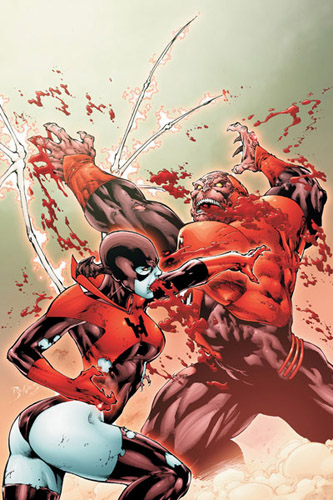
Coined in 1999 by comics writer Gail Simone (probably most famous for her work on Birds of Prey, a series starring a team of female superheroes), “Women in Refrigerators” refers to a tendency for female characters in superhero comics to be either killed, abused, raped, or depowered in what seems to frequently be a move to anger or inspire a male superhero into action, or to intensify the hatred between the hero and his nemesis. Named after the Green Lantern character Kyle Rayner depicted above (who not only literally finds one of his girlfriends in a fridge but has also lost a number of significant others in his career), WiR has been an on-going discussion among comic fans for the past 12 years. In spite of the age and scope of the topic though, the conversation has not really penetrated the realm of anime and manga.

Given arguments over things like moe and lolicon and how Japanese society treats women, what of “Women in Refrigerators in Manga?” Furthermore, whether they’re informed or ignorant, with the number of people who have spoken or written about WiR in the superhero comics community, what would happen if they all focused their attention more towards manga?

Casca from Berserk, a strong female character horribly traumatized by brutal rape

When initially thinking about the topic, a number of questions came to mind. Would they look at manga and find it to be more sexist than superhero comics? Is the lack of a similar phrase or concept in manga a potential problem for it and any movements towards improving manga? However, I soon realized that WiR and its surrounding discourse are very much shaped by the superhero genre itself; evidence of this includes the whole idea of being “depowered,” something which holds a lot more weight in a setting where super powers are the x-factor in the story.

Of course, comparing one genre to the entirety of manga makes things quite unfair, but even when you narrow it down to, say, shounen fighting and action series, or even a single magazine such as Shounen Jump, the setup of superhero comics has particularly unique consequences.

Conceptual Paradox in the Superhero Genre

The basic superhero (of which Superman is probably the most well-known example) is someone who is somehow stronger, faster, and overall better than the average human, and this allows them to right wrongs. Where the regular authorities falter, the superhero-as-vigilante can come in and thrash the bad guys and make the world a better place. These settings rely on an environment fairly close to our own, one grounded in a similar default reality so that we can compare the ideal of the superhero to the everyday, but it also makes for a world that can start to unravel if the concept is pushed too far.

Adding a superhero to an otherwise normal world can transform it entirely, and when you begin to really question the effects a particular superhero can have on his environment,  you wind up with questions like “If Mr. Fantastic is so smart, why hasn’t he found a cure for cancer?” While there are comics which do explore in detail the influence superheroes can have on society (Watchmen, for instance), and the Mr. Fantastic question isn’t some magic contradiction that destroys the superhero genre, it does point to the idea that a typical superhero story has to set its boundaries if it doesn’t want such questions jumping out at its readers.

The idea of boundaries isn’t limited to superheroes, as just about any story which adds something “superhuman” while wishing to maintain a semblance of normalcy has to draw the line somewhere. The tricky thing with superhero comics, however, is that the manner in which they have developed over the years encourages readers to find those limits through the prominent usage of a shared universe. When a comic is just about Batman, you can see how he fights crime and strikes fear into the seedy underbelly of Gotham City. When you cross him over with Superman though, suddenly Batman is put in contrast with a near-omnipotent alien who can outclass him fifty different ways. The reason to join them together is not to just make Batman look bad but rather to afford both heroes sufficient respect, so it requires Batman to have something extra to make up for it.

Where once he could just be a clever and ingenious individual, Batman is now the smartest man on Earth, armed with the most complex contingency plans ever conceived by man, all to make him Superman’s equal. In manga terms, this would be the equivalent of putting Monkey D. Luffy and Son Goku in the same universe and having to find a way for Luffy to be as powerful and influential as the Dragon Ball protagonist, like saying that Luffy’s rubber body makes him more resistant to ki blasts or something. As Marvel and DC actively promote their shared universes, this type of comparison becomes almost inevitable, and when you’re comparing, then the superhero universe comes under at least a certain degree of scrutiny.

If you then add the on-going saga aspect that is “continuity” to that mix, then the world of the hero can be scrutinized not just in terms of space, but also time. Superhero comics encourage a long-term view of its characters, where the events build on top of each other to create a loose history. And given the longevity that some of these characters possess, an action 30 years ago can continue to be associated with that character. In a comic from 1981, Avengers character Hank Pym hit his wife Janet , and it became a recurring topic all the way up until she died a few years ago. If they were to just ignore it and have the two characters act like nothing had ever happened, then it would have been perhaps silently condoning spousal abuse. However, because they kept it, it wound up defining the characters in certain respects. Although one can argue that this enriched their characters, it also meant that once it was done, neither of them could return to what they were prior to it. And while things are re-written or counteracted on a somewhat regular basis in superhero comics, this shared universe setup means that just one bad decision by one creator can potentially define a character to the point that no amount of reboots or retcons can undo its influence.

One Woman, One Refrigerator, One Universe

Let’s go back to manga for a little bit and pick a title that most definitely has female characters that are WiR candidates: Fist of the North Star. Now I love this series and consider it among my all-time favorites, but its female characters range from essentially cheerleaders to useless. Going in the style of the original Women in Refrigerators post, I’m going to list them with a list of ways they’ve been “fridged.”

Yuria (above) abused, forced to become Shin’s lover, kills herself (not really), contracts a fatal illness from long-term radiation exposure

Mamiya turned into a sex slave, her lover Rei dies, stops fighting entirely

Lin almost forced to have Kaioh’s baby, brainwashed into falling in love with another man

And so on and so forth.

Women are kind of a non-factor in Fist of the North Star no matter what they say about love and no matter how many women nobly sacrifice themselves. But at the same time, the fact that Fist of the North Star ran in Shounen Jump doesn’t mean that its portrayal of women exists in the same environment as One Piece or Toriko or City Hunter. Misogyny can exist, and it can even exist in multiple titles from the same publisher in the same magazine to the extent that you could call the whole thing sexist, but there is less of a risk of the comics congealing into an entrenched, constantly self-reinforcing “super misogyny.”

With superhero comics and their long continuity and shared universes, it can be incredibly easy to permanently “poison the well.” In this environment, a single instance of a WiR does not stand alone in its own conceptual space, but ends up existing in a greater universe, and then stays there in the timeline potentially forever. While this is not inherently a bad thing, it means that more innocent and simplistic stories and concepts have a harder time maintaining that innocence. If someone said The Cat in the Hat and Schindler’s List occupied the same continuity, it would be very hard for Dr. Seuss’s characters to be quite the same when the idea of genocide hangs over them.

This can even apply to the degree to which women are sexualized in comics. Somewhat like how “Hollywood Ugly” requires you to believe that the attractive celebrity in baggy clothes and glasses is meant to be homely, if you take a title where the aesthetic portrayal of women is geared primarily towards the sexual gratification of men and put it in the same world as a comic where the attractiveness of women is depicted in a more neutral fashion, then there is bound to be a conceptual clash, especially if the two were to cross over directly. Either the overt “butt and breasts out” poses would have to be acknowledged directly with respect to how a woman would normally pose herself (accounting of course for stylistic flourish), or the more neutral design would have to be subsumed by the overtly erotic aesthetic. If respect is supposedly afforded to both portrayals, then there winds up being a compromise, much like Superman and Batman’s situation, that generates at least a certain degree of schizophrenia.

It can also be easy to poison the well of a shared universe because once that idea takes root in one corner of the world, it becomes easier for it to spread to other parts as well, and I think this is what ends up really shaping Women in Refrigerators in terms of the superhero genre. While I may be assuming things too much, I think it’s far easier to corrupt an innocent idea than it is to make a corrupted idea turn innocent, and so every time another woman gets killed or raped or depowered, it means less and less of a chance for that whole thing to be turned around entirely, which means the rate at which the universe becomes “darker” winds up being far faster than the rate at which it becomes “lighter,” unless deliberate steps are taken to work against it.

Given everything I’ve said about the danger of a shared universe, does this mean that any sort of shared universe will lead to similar problems? Not necessarily, but I think that regardless of which direction that universe goes, compromise is almost inevitable. When Neon Genesis Evangelion with its emphasis on psychological turmoil enters the crossover environment of the Super Robot Wars games, its story and characters end up less traumatized overall. When Lupin III meets Detective Conan, his role is more of a lovable scamp than a hardened thief. Even taking darker series and making them lighter to fit in another work is a form of compromise. However, neither of those bother to maintain their continuities for prolonged periods. Moreover, while a shared universe does not guarantee Women in Refrigerators, the way that superhero comics have turned out means that it is constantly poised to do so, and as far as I can tell, the discussion surrounding WiR is very much about a concerted effort to turn things around, to deal with what may very well be a case of inertia.

Towards Methods for Manga?

A quote from Gail Simone in 1999 clarifies one of the original purposes of Women in Refrigerators:

My simple point has always been: if you demolish most of the characters girls like, then girls won’t read comics. That’s it!

This is not as much of a problem for manga, even titles and magazines designed for boys, as many publishers in Japan have learned ways to court a female audience. Some titles in Shounen Jump are especially known for their sizable female readerships: Saint Seiya, Katekyou Hitman REBORN!, and The Prince of Tennis, to name a few. Granted, most of these titles have primarily male casts and so the portrayal of female characters is not the primary draw, but that is also getting into another more complex issue of gender-based character identification. I’ll leave this as something of an aside for the sake of not going too off-course, but will say that this might mean that it doesn’t take outstanding portrayals of women to attract a female audience, but at the very least ones that won’t make them feel uncomfortable to be women.

As it is, the “Women in Refrigerators” discourse is especially suited for the superhero genre. Its concerns and the manner in which it can quickly spread to other stories are at least partly predicated on the structure set out by decades of development. If WiR is to be applied to manga, or even a certain genre or magazine/publisher, then it likely needs to be modified to fit a very different history, both in terms of manga itself and the Japanese culture surrounding it. Personally, I’m not entirely sure what changes need to be made. It’s probably an endeavor that is too big for one post, but I can throw out some possible directions.

I think the killing, rape, and abuse aspects probably translate adequately as is, but to go back to the “depowered” aspect of WiR as something very particular to superheroes, perhaps it would be a good idea to find something that is not quite so specific. If we’re dealing with a genre like shounen action, your Dragon Ball‘s and Naruto‘s and such, then maybe it’s not so much a matter of depowering as it is being quickly outclassed or made irrelevant. A lot of characters in these works often get some kind of improvement to their abilities, but that is made obsolete by the fact that every other hero gets stronger at a quicker rate. While this is not exclusive to female characters, it may be something worth tracking among female characters to see how they’re made to be functionally useless.

If we’re looking more at sexually-charged (but not necessarily pornographic) titles, maybe it would be wise to keep an eye out for degradation or humiliation. For example, how often are characters made to do something or wear an outfit that not only embarrasses them, but sexualizes them in the process? What of humiliation as a sexual tool, even when it’s meant to be light-hearted prodding and not something more extreme like torture?

Maybe it would also be a good idea to take a look at one popular title and to note where the female characters are mistreated solely to advance the male characters’ stories. After that is done, the next step would be to look at works that may have come about as the result of its popularity, whether it was because there was a clear influence, there was a blatant attempt at riding the wave, it was the next title readers flocked to, or even if there was some kind of editorial mandate to feature more of those stories. Do some of those WiR-esque ideas and portrayals still exist? Are they getting weaker or stronger? This may be a way to track things across one magazine or one genre without having the shared universe of superhero comics.

Of course, this is all assumes that WiR is not an issue when the female readership has been established and sustained sufficiently, but what about the possibility that the phenomenon not only exists in shoujo and josei, but that such events might occur in greater numbers compared to manga geared towards male readers?

What I’ve provided in the ideas above would not comprise a complete framework, but then again neither did the original list of Women in Refrigerators. There is a distinct possibility that with each genre of manga, even if you were to narrow it to titles somehow similar to superhero comics, that it would require its own adjustments be they subtle or broad. It may even be the case that in the end, we find out that WiR cannot be applied to manga no matter how many modifications are made, but I think it would still be a worthwhile endeavor to figure that out in the first place. I’m sure we’d learn something along the way.

Utena via Gurren-Lagann

This isn’t really anything mind-blowing, but I find that one of the themes of Tengen Toppa Gurren-Lagann can be used to explain a certain aspect of the ending to Revolutionary Girl Utena in a rather straightforward fashion. As I’ll be discussing the ending to Utena, I think a spoiler warning is more than implied, but I’ll put one here anyway because I think both Utena and Gurren-Lagann have final conclusion that shouldn’t be experienced in the form of a paragraph. I advise you not to read this post unless you’ve seen both.

In the “epilogue” of Revolutionary Girl Utena, we see Ohtori Academy only nearly everyone has forgotten about Utena. At first, it seems like Utena ultimately had no impact on the students there despite everything that happened in the series, but little by little the show reveals subtle differences in the characters’ behavior, such as the fact that Wakaba now has a friend who looks up to her as much as Wakaba herself looked up to Utena. Then we see Anthy with Akio, where Akio is trying to revive the rose duels once more. Anthy, however, ends up walking away and (we presume) permanently out of Akio’s life.

If we look at Gurren-Lagann, the drill is one of the very overt themes of the series. The titular robot pulls them out of thin-air, the concept of the infinite power source that is “spiral energy” is derived from the same shape, and it appears in the show’s most famous quotes (“Your drill is the drill that will pierce the heavens!”). From that whole drill motif (though I can’t remember if it’s from a production interview or if it’s said in the actual show) comes the following idea: humanity is like a drill in that it moves forward with every revolution.

Now I believe that the Japanese word Gurren-Lagann uses for “revolution” is different from the one that Utena uses (回転 kaiten, revolving vs. 革命 kakumei, life-changing), but I think it explains the ending to Utena quite well. In the end, Utena did not defeat Akio, she did not permanently undo the rose duels, Ohtori Academy still stands, and Utena is gone from the world. However, it’s clear that she did indeed bring forth a revolution, and in that one revolution all of the characters were able to grow a little. All of the characters, that is, except for Akio. While Anthy is able to finally will herself to break free of the cycle that Akio has built up, Akio himself is shown to be a man who can no longer learn, who is doomed to repeat the mistakes of the past. Like the drill of the  Gurren-Lagann, for the revolution that Tenjou Utena induces, (nearly) everyone moves one step forward.