Is Shoujo Manga Becoming More Varied?

This is a follow-up to my previous post, A Sexy Star is Born: Thoughts on the History of Romance in Shoujo Manga.

While romance has been the dominant force in shoujo manga for over 40 years, lately I’ve begun to wonder if a quiet revolution is occurring within the shoujo manga industry, or at least within the publisher Kodansha.

For example, recently there has been a comedy manga about young girls who use model guns and play in survival games. “But Stella Women’s Academy C³-Bu isn’t shoujo!” you might say. You’d be right, except that I’m actually talking about the shoujo manga Survival Game Club! by Matsumoto Hidekichi.

What’s remarkable about Survival Game Club! is not only that it’s a manga which eschews romance in favor of firearm gags, but that it runs in Nakayoshi, a magazine whose primary demographic is 5-10 year old girls and whose alumni include Cardcaptor Sakura and Sailor Moon. These aren’t jaded manga experts looking for the next big thing, they’re readers who just want to enjoy their comics (and their free goodies). That said, the expectations for 10 year old readers might be surprisingly different, given that Survival Game Club! starts with one of its characters threatening a train molester.

Survival Game Club!

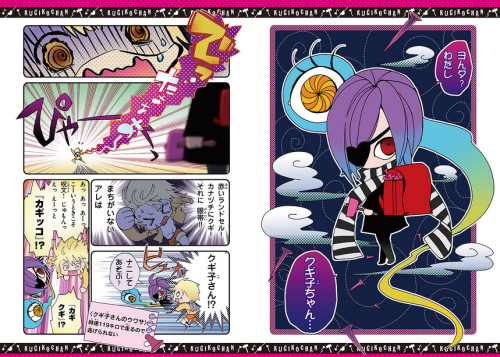
Other titles currently running in Nakayoshi include No Exit/Deguchi Zero by Seta Haruhi, about a school for aspiring actresses which becomes a survival horror story, and Kugiko-chan by PEACH-PIT (Rozen Maiden, Shugo Chara!), a gag spinoff of a manga about a ghost who is said to drive nails into people’s eyes. Both of these series not only revolve around a horror theme but are fairly unorthodox when it comes to art style.

No Exit

Kugiko-chan

According to Wikipedia (so take it with a grain of salt), the shoujo magazine Bessatsu Friend began to shift away from romance because of manga by artists such as Suenobu Keiko. Notably, her 2009’s manga Limit, a story about a group of girls in a life or death situation where the social statuses afforded to them by their school cliques no longer matter and feelings of betrayal and revenge run high, stands out as being very far from the romance-centered stories associated with shoujo. While Bessatsu Friend targets an older age group compared to Nakayoshi, I wonder if its influence slowly bled down to the younger audience.

The sense that there’s a quiet revolution isn’t just coming from shoujo manga which de-emphasize romance, however, as there’s a sense that titles about love and relationships are approaching them with greater mindfulness and breadth of topics. For instance, 3D Kanojo by Nanami Mao, about a popular girl and her otaku boyfriend, deals with the lack of respect that sexually active girls can get. One story from the girl’s past involves her trying to express her feelings of frustration and loneliness to her then-boyfriend, only to realize that he wasn’t really listening and was trying to just make out with her. Pochamani by Hirama Kaname, about a chubby girl and her handsome boyfriend, looks at body image issues and the ability to be confident in an appearance which does not fit the social standard. In both cases, these manga are about relationships already in motion as opposed to the journey towards one, and so bring to attention the challenges which can confront couples.

Of course, this is all more or less a hunch, and while I read a good deal of shoujo manga I’m not as well-read in it as other bloggers like Magical Emi or Kate from Reverse Thieves. If anyone can provide examples to further prove (or even disprove) the idea that shoujo manga has begun to move somewhat against its long-standing conventions of love and romance, I’d be more than welcome to hear it.

A Sexy Star is Born: Thoughts on the History of Romance in Shoujo

A common complaint against shoujo manga is that it’s too obsessed with romance. When you look at shoujo as a whole, love is not just a major factor in a lot of series, often times it’s the only factor. It all boils down to a simple question: “Why can’t shoujo manga be more ambitious?”

To a fair extent, this criticism is justified, but I finished reading the English-language release of Hagio Moto’s The Heart of Thomas recently and the afterword by Matt Thorn provided an interesting context to the romance-heavy nature of shoujo as we know it. Thorn writes about how, in contrast to the shoujo manga of the time which assumed that girls had no interest in stories in the more adult side of relationships, manga like The Heart of Thomas were revolutionary because they introduced the thrill of romance and sexual desire to shoujo manga. This is not to belittle the shoujo manga before Hagio and her contemporaries as somehow inferior as that’s certainly not the case, but it’s clear there was a trend of chaste stories about daughters reuniting with their mothers and such, which was supplanted by shoujo manga as love story. Romance in shoujo is the 800 lb. gorilla now, but it wasn’t always that way.

It actually reminds me about one of the biggest difficulties in discussing depictions of women with respect to feminism, which is that both the denial and exploitation of women’s sexuality have been used to control women in the past, and good and bad intentions exist within various a complex array of cultural contexts. Romance in shoujo manga is  a way for readers to learn about their own desires, but perhaps at the same time also a way to control their interests.

On a certain level, the reason behind the proliferation of romance-based shoujo is obvious: money. Girls liked romance, it sold a lot, and so it became de rigueur for an entire industry. It’s understandable, as is the criticism against it. While romance is just the thing that many fans (including myself) look to shoujofor, at this point, it could stand to have some more variety.

The funny thing is, I’ve recently begun to suspect shoujo manga is undergoing just such a transformation, but I’ll leave my thoughts on that for a follow-up post.

Shounen Sports and Girl Appeal

I’ve been watching two shounen anime adaptations as of late, Yowamushi Pedal and Kuroko’s Basketball. The former runs in Weekly Shounen Champion, the latter in Weekly Shounen Jump. When you look the contents of each series, it’s almost obvious, as if they embody the general direction each magazine has taken, but not in a way which denies either their contemporary nature or their shounen-ness.

In this age where the definition of shounen manga has been in flux, Shounen Champion is the most primary source of classic, old-fashioned shounen manga where a boy does his best to fight and improve. It fits the basic goal of that magazine quite well, which is to be a boys’ magazine for boys, though Yowamushi Pedal isn’t without its modern flairs, including having a more handsome rival for the main character.

Shounen Jump on the other hand is arguably the mainstream boys’ magazine which has embraced its female audience the most, outside of Jump variations which specifically target that audience. Kuroko’s Basketball, like Prince of Tennis before it, is filled with good-looking guys handsomely showing their best. Even if they’re not fujoshi, there’s a clear appeal to girls in it, though overall the series still has in common with Yowamushi Pedal the thrill of sports and competition.

One thing that both series share is the female manager archetype, who more broadly fits into the “knowledgeable supporter” role as well. The idea is that, while they’re not participants in the main activity of each series, they bring an enthusiasm and a set of knowledge that helps the reader understand the sport better while also acting as a cheerleader for the main character and maybe providing a bit of eye candy, though I don’t think either Miki from Yowamushi Pedal or Riko from Kuroko’s Basketball are quite the characters you’d go to for cheesecake. At the same time, I think there’s a certain substantial difference between Miki and Riko, which is that Miki is clearly a love interest for the main character, whereas Riko if she has any romantic involvement at all is with a side character in the series.

I think the fact that Riko is not a love interest, and arguably that Kuroko’s Basketball has no main female love interest for its main character at all (Momo is ostensibly one but her connection to Aomine seems stronger) speaks a lot to the difference in their magazines.  I don’t think this just has to do with Kuroko’s Basketball having a fujoshi fanbase which prefers pairing the guys together, either. If anything, I get an almost shoujo manga-esque impression of Riko’s relationship with Hyuuga and Teppei due to their interactions, not in the sense of hearts and sparkles in the background, but from its use of Riko as a character in her own right.

The Spectacle of Salty Bet and VGCW

At this point a lot of people know that it’s fun to watch other people play video games, whether it’s a Let’s Play or a competitive esports event. A subsection of these people additionally know that it’s crazy fun to watch AI opponents fight each other, provided the right context surrounds it. That’s what we get with Video Game Championship Wrestling, a gaming stream where various gaming culture icons fight each other inside of a WWE video game, and with Salty Bet, a place where you bet fake money on fighting game characters.

Though similar in that they both involve having non-human-controlled characters duke it out, they’re opposites in terms of how these AIs are used. VGCW is a curated experience where, much like actual pro wrestling, a single person writes the story and decides the overall direction of his “show,” but ironically is missing the most crucial pro wrestling component of having match results predetermined. Instead, the show clearly alters its path from week to week according to the results of its own matches. For me, the highlight of the entire thing so far has been when Little Mac came back from getting hit by a car and had an amazing match with Dracula that ended with Mac landing a powerful Star Punch counter on Dracula and then throwing him inside a coffin.

Salty Bet on the other hand is not about “story,” it’s about seeing how different characters crafted by M.U.G.E.N. creators across the world fare against each other, a complex interaction of not just who the characters are but the skills of their makers, their desires to make the strongest or the weakest characters, and even sometimes their desires to be in video games, as many of the self-insert avatars in Salty Bet show. Largely, the “drama” is created at random when two strangely appropriate opponents face each other, or a clash of gods occurs. The exception is that once every Thursday the owner of Salty Bet holds custom tournaments, often around a certain theme (the week of Pokemon X & Y‘s release there was a Pokemon character tournament).

In either case, what I find most amazing about their experiences is the necessity of the audience. Sure, audience matters at a Starcraft or Street Fighter IV tournament in that it livens up the mood and makes things just feel special, and in a Let’s Play of course you the viewer are the audience, but with VGCW and Salty Bet watching them is substantially worse when there is no chat available. The chats, with all of their memes and running jokes, make the fights feel “real” because real emotions are being poured into them. Scholars like Henry Jenkins talk about active fandom and audience participation, but with these “shows” the audience is in many ways the reason to watch. That’s not to say the work the owners of VGCW and Salty Bet don’t matter, as they’re of course important, but their successes are also tied into the image created by the very people viewing them.

Call from Mighty No. 9, a Focal Point of Projected Ideals

mightyno9-call-e

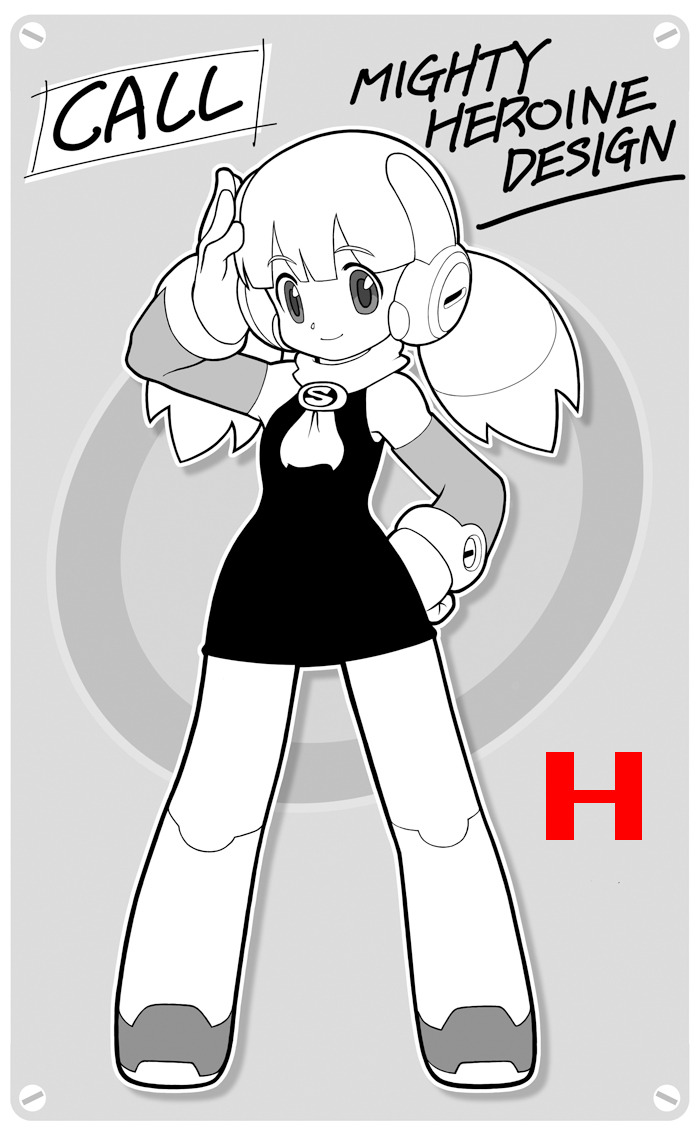
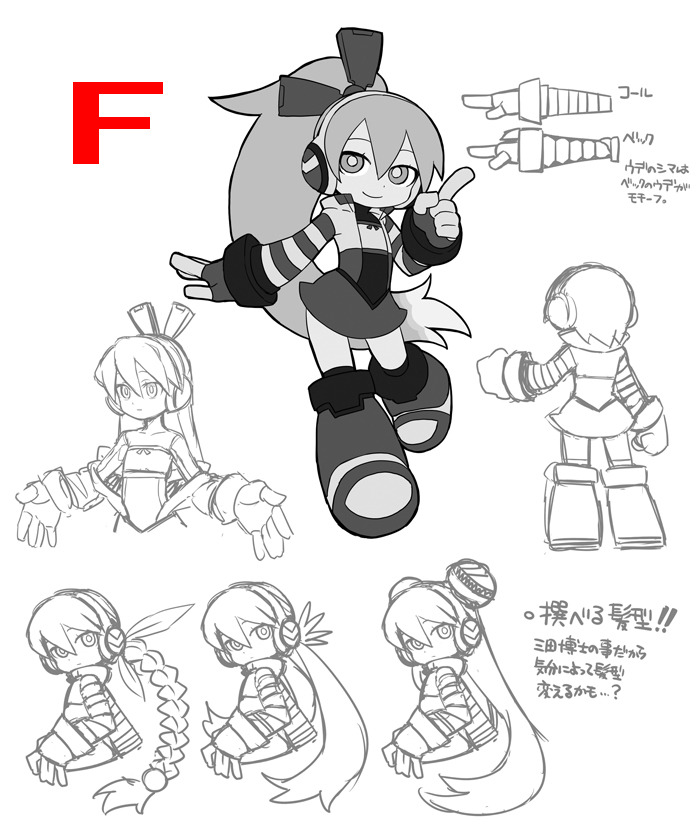
Given the success of its Kickstarter, it’s highly likely that you’re already aware of Mighty No. 9. The brainchild of Inafune Keiji, co-designer of Mega Man, it’s very much a successor to Mega Man, starring a robot with variable powers named Beck. While there are plenty of things to discuss when it comes to Mighty No. 9, one of the more fascinating topics is the “Roll” of the game, a female character named Call. Garnering enough fan support for a “Call gameplay stage” stretch goal to be reached, what is curious about Call is that her popularity was achieved well before we knew really anything about her.

From the very beginning of the Mighty No. 9 project, it was announced that there would be this female supporting character. However, she had no definitive design (though a few possibilities were shown), no determined color scheme, and very little information about her background or personality. Even her actual name was a later addition to the campaign, while these were the only notes eventually provided about her:

  • Call is a female robot originally created by Dr. White’s friend, Dr. Sanda, to help assist him with his research; she somehow avoided being infected by the virus causing all the other robots to go berserk and has pledged to help Beck.

  • Call was not imbued with the human characteristics that make Beck unique, so she’s more of a pure robot — as you might imagine, this contrast can lead to some interesting differences and misunderstandings whenever they interact!

And yet, even with this utter lack of information about Call, she developed a fanbase, such that the vote to decide what will become her finalized look has become a big deal among Mighty No. 9 fans.

mightyno9-call-f

A common answer these days for this sort of thing involves referencing Hiroki Azuma’s database narrative concept in a reductive fashion by pointing to how disparate features such as blue hair or a tsundere personality act as patchwork parts to create characters appealing to otaku, but I don’t think you can even refer to Call’s initial concept as a “database character.” It was less of a database and more of a less-than-1kb .txt file, and I think Call’s popularity actually comes from something else entirely.

mightyno9-call-h

My own guess is that the reason Call gained fans before we really knew anything about her is that her basic position, as a female character in a new video game which has as one of its guiding principles heavy interaction with the community during development, made her an open canvas for fans’ perspectives. Whether fans see Call as someone to potentially relate to, or an opportunity to establish a strong female character who can go a step beyond Roll in Mega Man, or even just as “the cute girl,” Call’s initial lack of features combined with faith in Inafune and the staff of Mighty No. 9 allowed people to project onto Call their various ideals. In this prototype state Call fans see in her the very best.

Kill la Kill = Exploitation + Empowerment?

Kill la Kill for all of its visual creativity is a pretty controversial show, if only for its main heroine’s outfit and how it’s used in the series.  Whether Ryuko’s uniform (or lack thereof) is a symbol of feminine power or yet another case of women being objectified in media is the point of contention. I find that it can be difficult to navigate the intersection between “exploitation” and “empowerment” in Kill la Kill, partly because when we think of those ideas we usually find them mutually exclusive to the extent that one can only grow at the expense of the other, whereas I actually believe Kill la Kill is honestly and genuinely trying to do both at once.

Kamui_Senketsu

One of the key examples of this duality is in Ryuko’s transformation sequence, which ends in the pose shown above. Her uniform is ridiculously skimpy, but her actual stance exudes power and confidence, sharing more in common with the type of posing done by a tokusatsu hero rather than the almost fashion model-esque poses common to magical girl shows (and also JoJo’s Bizarre Adventure). It’s showing her body off to the world at the same time it shows off her will and determination.

Outside of Kill la Kill, of all the series I’ve seen which attempt this combination the one that tries the hardest is probably Shinkon Gattai Godannar. There, the fanservice is arguably more extreme and pretty impossible to avoid in its own right, but I find that its ideas and themes resonate with a desire for women to be the heroes of their stories. With either Kill la Kill or Godannar, it’s possible to “look past” the sexualization (or not), but neither the image of exploitation nor empowerment are necessarily merely in service to the other, as if one is an “excuse” and the other is the underlying true meaning.

It’s easy to think of the people who made Kill la Kill as perverts, and it’s maybe even true, but I wonder if the show is actually saying something along the lines of, “Hey, perverts can be feminists too!” Whether this approach is okay or not is of course still up for debate, and differs from show to show, or perhaps even episode to episode. Personally, I’m pretty okay with it but recognize the potential, positive or negative, in combining this imagery in that it can be appropriate and used according to the viewer’s wishes.

The Ending of The Legend of Korra Season 2, or Let’s Talk About Setup

With the recent conclusion of season 2 of Avatar: The Legend of Korra, I’ve seen a number of complaints that a lot of the finale seemed to come from “out of nowhere.” Notably, the two aspects fans appear to take issue with involve Jinora and Korra herself. While I have my own issues with the writing, characterization, and pacing of the series, I find that Korra set up the pieces in fairly obvious ways which make me find it so surprising that people are accusing the show of employing Deus Ex Machinas.

Before I go on, obviously there’s a spoiler warning here.

First, in regards to Jinora, she was shown throughout the second season to have a strong connection to the spirits. When Tenzin rescues her, she disappears as a spirit separated from her body, then reappears during Korra and Unalaq’s fight still as a spirit, and uses her strong affinity for the spiritual realm to locate and draw out Raava’s diminished being from Vaatu where Korra (who is not as spiritual as Jinora) could not. There’s no need for an elaborate explanation as to “how she did it,” except perhaps that one needs to remember that neither Raava or Vaatu can truly destroy each other and that there must always be the tiniest fragment of one in the other. Yin and yang and all that.

Second, when it comes to Korra I find that people think that Korra as a giant blue spirit somehow didn’t make sense or work as a part of Korra’s narrative. When Tenzin explains to Korra that before people bent the elements, they bent the energy within themselves, it’s a callback to the The Last Airbender and how Aang learns how to energybend from the last lion-turtle. Korra’s spirit has become imbued with that very same energy, and it’s no coincidence that the shade of blue that Korra’s spirit becomes in order to fight Vaatu is the same blue that can be seen within Aang when he takes someone’s bending away.

The other crucial component of Tenzin’s explanation is that Korra needs to find within herself not Raava but her own spirit, the very core of who she is. This giant spiritual form of Korra wears her standard outfit instead of the coat she came in, showing that this is her default self-perception, but what’s even more notable is the way that Spirit Korra fights. Rather than doing any sort of elaborate bending moves or showing any signs of formal training, Korra is a brawler at her roots, and there’s probably nothing more indicative of this than the fact that giant blue Korra performs an Argentine backbreaker on Vaatu/Unalaq. Korra from the very beginning of her show is portrayed as a very direct, confrontational individual, and though her spiritual side is lacking, by the end she is able to connect to it in a way that suits her, a way which strengthens her identity.

I think the other elements of The Legend of Korra Season 2 are more contentious, but I hope that people critical of those two aspects of the show look back and see that they were not so sudden after all.

The Legend of Korra and the Conflict of Fighting Styles

Avatar: The Last Airbender was an enormously popular show, but its sequel The Legend of Korra has been a bag of mixed opinions among fans. Although there are many reasons for this discontent towards the new Avatar, including the writing, characterization, and the different format (seasons are shorter), the one that I find most intriguing is the general complaint that the quality of the fighting went downhill in the transition. I find that it speaks a lot to the difficulties of creating a sequel which is trying to progress the world of its story, to change its status quo, but also maintain the status quo which brought fans to it in the first place.

The Last Airbender exhibits Wuxia-esque action scenes, informed by many classic Chinese martial arts styles (waterbending is tai chi for instance), which gives the fights in the first series an overall grandiose quality. Movements are elaborate, meant to evoke a sense that the very motions benders take are part of what give them such mystical strength.

The Legend of Korra, however, involves much more straightforward uses of bending. Here, amidst the large population of Republic City and the popularity of pro-bending, the manipulation of the elements comes across more as a sport, a structured system within the bounds of the law (though still easily abusable in its own way), much like what judo is to jujitsu. Gone are the classical gestures and poses, replaced by simple and direct actions.

Given that the new series is meant to take place 70 years after the original and highlights how a number of social and technological developments have impacted everyday life, it’s clear that the less majestic qualities of “modern” bending are meant to also be a sign of this change. Even when I mentioned that on Twitter, however, one of the responses I received basically said that it didn’t matter if there was a story reason for the change, if it’s less fun to watch then that’s the end of it.

Certainly the guy had a point, and the new type of fighting could be seen as a kind of downgrade, but of course this depends on your definition of what a good fantasy martial arts fight scene should be like. Contemplating this aspect of individual perception, I’ve come to realize that perhaps part of the difficulty The Legend of Korra faced in its bending was that it had established a way of visual presentation which captured the hearts of fans in the previous series, but then tried to fight against the very entrenchment of accepted visual style they created. The wuxia style in The Last Airbender is one of the many reasons the series garnered fans, defining for many what “cool fight scenes” are meant to be, and to remove that aspect is to undo in their eyes the very identity of Avatar‘s combat.

Essentially, if fighting in The Last Airbender is classic Chinese martial arts, then fighting in The Legend of Korra is modern mixed martial arts. Though I can’t say to what extent the fanbases between Avatar and MMA overlap, the disagreements over the style in Korra remind me a lot of the arguments I’ve seen concerning MMA as an optimized style ideal for the very sport it created and fostered, a scientific approach to what has for a long time carried an almost metaphysical connotation. Though effective, neither modern bending nor standard MMA look “pretty” by the standards of fans of the more classical styles. Consider that good old question of  MMA: “why are those fighters humping each other on the ground?” Probably if The Legend of Korra were less modern Ultimate Fighting Championship and were more like the first UFC, which was meant to be a clash of various martial arts styles from Karate to Greco-Roman Wrestling, then perhaps it would have found greater appeal.

Scattered Thoughts on the View of Anime and Manga as Sexist

I’ve been thinking a lot about female characters in anime and manga recently (not exactly a surprise, I know), and it’s something where, even if I don’t have a fully formed argument or point to make, I feel compelled to write something down. Forgive me as I meander through my own thoughts in an attempt to piece it all together.

About a month ago I was reading the comments section on polygon.com in regards to the portrayal of female characters in video games. I can’t remember which game they were talking about, but one commenter said something along the lines of, “You shouldn’t bring up Japan when trying to show strong women in video games because it’s such a sexist culture. Just look at anime and manga,” and it made me bristle. I do think Japanese culture is sexist in many ways, but the idea that this perception of Japan as sexist made it impossible for Japanese fiction to have really good female characters in this person’s eyes bothered me because I’ve seen plenty from every period of anime and manga.

I know it was just one comment on a video game article, but it got me thinking more broadly about what people see in anime and manga, and to what extent the image of anime and manga as sexist is fueled by what people want to see. I recently saw a comment that criticized Heartcatch Precure! for encouraging girls to be stereotypically feminine by having the character of Itsuki, who normally dresses like a boy, express a desire to be more girly. While I know there are plenty of examples of tomboy characters who end up feeling like they need to dress like girls to attract their male love interest, Itsuki’s story is more about how she suppressed the side of her which enjoys cute things out of a somewhat misguided sense of duty and responsibility. Yet, rather than taking this as the message, it was like as soon as the person saw the rough outlines of the stereotype, surely it would play out the same as always.

There are most certainly a good deal of works which go out of their way to objectify women for male consumption, but I just find that there are also plenty of instances of well-portrayed women and girls in anime and manga. Whether it’s Princess Jellyfish or RidebackKekkaishi or Gowapper 5 Godam, it seems like these female characters get ignored because they’re, somewhat ironically, not as eye-catching as a Queen’s Blade or an I Wanna Be the Strongest in the World! There seems to be this idea that anime = sexism, and while even the works I mentioned as strong examples aren’t entirely devoid of sexism themselves, I also don’t think it’s as simple as just slapping the misogynist label on Japanese media as a whole. Messages regarding women in anime and manga can be so diverse and divergent.

At this point I’ve seen a lot of 60s and 70s shoujo, and I’ve noticed a clear trend of mischievous tomboy heroines from that time period. Even putting aside an extreme example such as Oscar from Rose of Versailles who was raised as a man to uphold her family’s proud military tradition, you have Candy from Candy Candy, who’s adventurous and constantly challenging the conceitedness of the upper class, and Angie from Petite Angie, who is portrayed as an extremely clever detective. You have Ayuko from Attack No.1, whose aggressive desire to win at volleyball inspires the rest of her teammates, and Yumi from Sign wa V! who initially plots to sabotage her teammates because of how much she despises volleyball. Hiromi from Aim for the Ace, Lunlun from Hana no Ko Lunlun, Masumi from Swan, the list goes on and on. All of these characters have their fair share of personal agency (even if it’s not always an ideal amount). Given that the trend of the strong, mischievous tomboy was clearly a “thing,” and I do believe it continued in some form well beyond the 70s (Utena is an obvious one, but perhaps Lina Inverse from Slayers counts too, for example?), I just have to wonder about the disconnect between that and the perception of anime and manga as inherently misogynistic and where it may have come from.

Is it a matter of age of these older titles, that if people were able to access the works these characters are from, that they would change their minds? Is it that shoujo doesn’t act enough as the “face” of anime and manga? Could it be that, as much as we’d like to think we’ve gone beyond the stereotype, anime is still viewed as essentially “porn or Pokemon?”  If the ratio were different, and there were just fewer fanservice titles or works where girls are basically a cheerleading squad for the heroes, would detractors be more charitable towards anime and manga, or is it inescapable as long as some titles are still like that? For that matter, to what extent does the western image of the submissive Asian woman affect and interact with how people see all female characters coming from Japan, and how does it differ from the similar stereotype as viewed by Japan (I can of course admit that it’s there too)?

What shapes people’s views of female characters in anime and manga? I guess that’s the question I want to explore the most.

Robotech, Voltron, Nostalgia

When the Robotech/Voltron crossover comic was announced a few months ago, my immediate response was, “Why?” Of course the answer is “nostalgia grab,” but there’s something strange about both of these works and their continued presence in the geek public eye (and perhaps even beyond that). Unlike Transformers which not only has a huge variety of toys both old and new, as well as a long history of cartoons both from America and Japan (not to mention the live action films), both Robotech and Voltron do not really renew themselves, aside from the occasional thing like the The Shadow Chronicles or The Third Dimension.

Though this speaks more about the people I associate with, I can’t say I’ve ever talked to anyone, online or offline, who is hardcore into either Robotech or Voltron. I know that there’s a Robotech community of course (they even have an official site for it), though I have little interest in it. With Voltron, I know people who have fond memories of it, myself included, but the foundation that Voltron has in geek culture seems not only deeper than Robotech‘s but to the extent that, when you say cool giant robot with a signature finisher, Lion Voltron is just the default, or it shares that spot with the Megazord from Power Rangers. It’s like Voltron as a source of nostalgia goes so far beyond itself that the vague perception of it exceeds the influence of the actual anime. 

What’s funny about a show like Voltron and its emblematic presence in US geek culture as de facto super robot is that the process of dubbing and adaptation that turned the anime King of Beasts Golion and Armored Fleet Dairugger into Voltron: Defender of the Universe happened with different anime in different countries to similar effect. In the Philippines, Voltes V exploded with popularity. In France and Italy, UFO Robo Grendizer captured attention as Goldorak and Goldrake respectively (with success in the Middle East to boot). In Brazil, Gloizer X became O Pirata do Espaço, the country’s first real exposure to giant robots. While it’s possible say that this was all a matter of timing and that they’re all interchangeable in that respect, I do think that the specific properties of each show had a major impact on how each country perceived giant robots from that point forward (I’m less sure about Gloizer X so if any Brazilians want to help, feel free to leave a comment).

One thing that I do believe plays a role in how these series become more specific in their nostalgic output is the level of support the original works have in Japan. I visited France recently, and when I went into the comic stores I would regularly see displays of Grendizer merchandise. Whether it was the Super Robot Chogokin or the Soul of Chogokin or a chibi version, it was all straight from Japan, sitting prominently in the store. Grendizer has enough cultural presence in Japan that it can continue to get these toys and even a fairly stable presence in Super Robot Wars, whereas Golion has had to content itself with just one Nintendo DS appearance. In lieu of support from Japan, Voltron‘s had to carve its own place, and often times it’s not even from the company World Events which holds the Voltron license but from fans conjuring it up in their own minds. And while Robotech is an utter legal mess due to the way it stifles the presence of Macross in the US, if you put that aside part of Robotech‘s prolonged presence comes from the fact that its fans want new Robotech to constantly feel like old Robotech, whereas Macross changes according to the whims of its dark lord Kawamori Shouji.

Actually I wouldn’t mind at all if Voltron got a revival with a solid piece of fiction to support it which doesn’t rely too much on nostalgia. I know we got Voltron Force, but the less said about that the better.