The Destiny of Kicking Ass

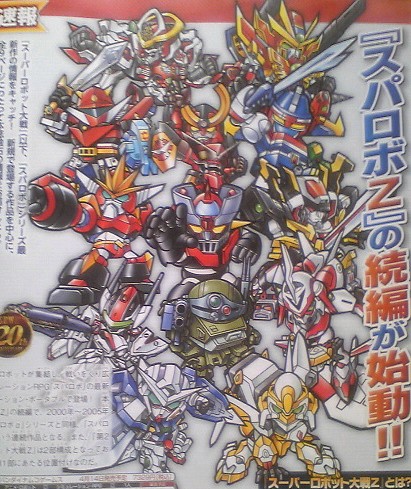
In very exciting news, Super Robot Wars Z 2 (Part 1) has been announced. Subtitled Break the World, the game has some surprising new entries into the world of SRW, from both recent and not-so-recent anime. Before I start elaborating on my thoughts concerning the lineup, I’m showing the complete series list uses for the game.

Italics means this anime has been in SRW before but was not in SRWZ.
Bold means this anime is brand new to the SRW franchise.

Muteki Choujin Zambot 3
Muteki Koujin Daitarn 3
Muteki Robo Trider G7
Space Emperor God Sigma
Space Warrior Baldios
Rokushin Gattai Godmars
Sentou Mecha Xabungle
Armored Trooper VOTOMS
Armored Trooper VOTOMS: The Last Red Shoulder
Armored Trooper VOTOMS: Red Shoulder Document – Roots of Treachery
Armored Trooper VOTOMS: Pailsen Files
Super Dimension Century Orguss
Mobile Suit Z Gundam
Mobile Suit Gundam: Char’s Counterattack
New Mobile Report Gundam W
After War Gundam X
Turn A Gundam
Mobile Suit Gundam SEED Destiny
Mobile Suit Gundam 00 1st Season
Choujuu Kishin Dancougar
Juusou Kikou Dancougar Nova
Shin (Change!!) Getter Robo: Armageddon
Shin Mazinger Shougeki! Z Saga
Earth Defense Corp. Dai-Guard
The Big O
Overman King Gainer
Choujuushin Gravion Zwei
Genesis of Aquarion
Code Geass: Lelouch of the Rebellion
Tengen Toppa Gurren-Lagann the Movie: Gurren Saga
Macross F
Macross F the Movie: The False Songstress
Psalms of Planets Eureka Seven: good night, sleep tight, young lovers

There’s a lot to talk about here, especially with shows like Code Geass, Gundam 00, and a major curveball in the form of Dai-Guard, but probably the two newest entrants which are the biggest deals are VOTOMS and Gurren-Lagann, though for somewhat different reasons.

VOTOMS hails from early 1980s and is considered among the “realest” of real robot anime. It has a grittiness to its robots and overall setting that is rarely seen in mecha, let alone anime in general, as can be seen from my reviews of the series (though I must apologize for never actually writing my final review). For years people thought it was a shoe-in for the SRW series, but when years and years went by and VOTOMS still wasn’t included, fans started coming up with excuses. Oh, maybe the robots would be too weak and bland, or Chirico would be too strong of a pilot, or it somehow wouldn’t fit in among the earth-shattering forces that populate the roster. But as if to lay those possibilities to rest, SRWZ2 puts it into the same game as Gurren-Lagann, one the biggest example of escalating power levels and over-the-top, universe-rending attacks in a robot anime ever (which is the “problem” with Gurren-Lagann), as if to say that while all of those possible reasons may have once been valid, they’re history. Sure this first part of SRWZ2 is going to avoid having to deal with the really crazy stuff, but it’s inevitably going to have to confront the big guns of Gurren-Lagann by the next game. And it’s the movie version on top of that!

I understand that the reason this lineup works is that the plot of the game is based heavily on Orguss, which involves going to different dimensions and universes, so they can even do things like have Shin Mazinger where they once had Mazinger, and the Eureka Seven movie to replace the TV series, but that’s all right. Plot was never exactly the strong suit of the SRW games, after all, as the latest anime proves.

So to conclude, various fanboyish notes:

-Can’t wait to see Zeus in action.
-Mazinger Z is going to get not one but two crazy powerful finishers. No need for the Kaiser here!
-I wonder if Zambot, Daitarn, and Trider are going to have a Final Muteki Special. Sun, Moon, and Phoenix?
-Re: Godmars – ポゥーン
-I wonder how much Dai-Guard will cost to replace if it blows up in battle?
-I’m looking forward to the VOTOMS BGM.
-I know I’m jumping the gun and putting expectations on the next game, but Amuro vs Ribbons? Hell yes.
-Setsuna F. Seiei gives the best (worst) pep talks.
-I think movie Eureka and Fyana from VOTOMS will get along swimmingly.
-I wonder if the geass will factor into gameplay in any way, shape, or form?
-Aquarion and Shin Getter better not accidentally deface the moon too much or they’re going to make Loran Cehack sad. They’ll also make Garrod upset but for a different reason.

My Anime Regions

Born and raised in the US, having studied in Japan about 5 years ago, and currently living in the Netherlands, I consider myself quite fortunate to have been on three different continents for long periods, enough to say that I wasn’t simply a tourist. The benefits have been many, but the one that is perhaps most important to me is that I’ve gained a bit of perspective on how things work differently from country to country. As an otaku, this of course applies to my pursuit of anime and manga as well, and so I want to just talk about my own firsthand experiences in this regard.

Before I go into detail though, I think it’s important to highlight a few points about myself:

First, my English is my native language, and I have studied Japanese for a number of years and am reasonably fluent in it. I cannot read any other languages to any decent extent, and I can only understand one other when spoken.

Second, my available “access points” varied from place to place, meaning television, internet, etc. Also, I was in Japan before streaming anime became a big deal, whereas currently I am living through the age of the official streaming simulcast alongside everyone else. Well, sort of, but I’ll get into that later.

United States

Now because I’m native to the United States, I’ve seen my fair share of how anime/manga and its surrounding fandom and industry have changed over time, but as I’m not looking to make this a history lesson I’m going to mainly focus on the state of obtaining anime from about 2005-2010. In that period, whether it was in college or back home, I had cable television and high-speed internet, as well as the fortune of living in a city with Japanese book stores (or at least a Japanese grocery when it came to college). I used the TV and internet to varying degrees to satiate my desire for anime, and as my Japanese improved I was encouraged to start buying manga in Japanese as they tended to be less expensive even with import mark-up, especially if they were used books.

Even ignoring the untranslated titles, anime and manga have been quite accessible, whether it’s through downloading, Cartoon Network’s (increasingly sparse) anime line-up, or just going to the Barnes & Noble to pick up a volume of something. Companies are currently trying to increase their internet presence, with more and more titles, including older ones that are no longer available otherwise, being streamed on sites such as Hulu and Crunchyroll. The genres available were and are surprisingly diverse, particularly when it comes to manga, though they don’t cover everything Japan has to offer, just because some things simply do not sell in the US (and some titles that were released certainly did not either).

It’s important to note that anime took quite a long time to get big, and it was only really with the advent of Pokemon that it became such a big deal. While it’s come quite a long way, it’s still considered quite a “niche” thing, and a lot of works which can survive in Japan based on overall higher readership there will most likely tank in the US. Anime as “anime” is still quite young compared to the rest of the world. Anime and manga are definitely accessible in the America, it just takes a bit of effort to really sink yourself in, and although it takes a while to feel the limitations in genre, you may eventually feel it. Also remember that the US is big, and that my experience can be quite different from someone living in, say, the Midwest.

Japan

In Japan I had television but no reliable internet, and while I hear that most otaku in Japan use a Tivo, I unfortunately did not own one, which meant that I had to follow the official schedule in order to keep up. While it could be trying at times, there was a certain thrill in planning my days around the TV broadcasts. The fact that Futari wa Pretty Cure Max Heart and Zoids: Genesis ran simultaneously on two different stations meant I had to choose, which is something that has never really been an issue with anime fandom in the US, at it was rare that two stations would be showing anime at the exact same time. I myself didn’t have to deal with this since the days when Pokemon would chase Digimon out of its time slots. If there was a show on late at night that I really wanted to catch, say, Glass Mask, I would go to sleep early so that I could wake up at 1 or 2am, watch it, and then go right back to sleep. I also remember getting home from a trip to Akihabara, pedaling hard as I could so that I wouldn’t miss the beginning of Gundam SEED Destiny. That also reminds me of when I had faith in Gundam SEED Destiny. Those were innocent times.

(By the way, I chose Pretty Cure).

Manga though, it’s hard to live in Japan and not see comics available for sale. In addition to larger bookstores and specialty shops, you could find the latest manga magazines in convenience stores, your Jumps and Sundays and such. While those stores didn’t carry everything, you could still find some surprising titles; it was through a convenience store that I found the Hulk Hogan manga. The ubiquity of manga was especially advantageous for just sheer exposure: by buying just a few magazines you could get a pretty wide range of works, from good to otherwise.

One unique advantage I had while in Japan was that I had access to the library of the school at which I was studying abroad, which meant access to their extensive collection of anime on DVD. Nowadays it’s not that hard to go online and find all these obscure titles, but back in 2005 this library’s DVD collection went well beyond what was fansubbed (and probably still does today), with series such as Zambot 3 and Tetsujin 28 in their entirety. I know I just picked two robot titles too, but trust me when I say there was more.

So when it came to anime or manga, despite my internet situation I probably had more titles available to me than I ever had before or since. The only trouble of course is that it’s all in Japanese, and while my Japanese is good I’m still not comfortable with it, let alone comfortable with it five or six years ago despite the rapid improvement that living in Japan itself caused. In any case, the main point to take away here is how easy it was to just be surrounded by the stuff.

The Netherlands

A few months ago, Irish anime podcaster Eeeper wrote this letter where he pointed out the difficulties in being a European anime fan, particularly in this current age where anime is officially streamed. Before I arrived in Europe, I could see his point and could agree, but it was only after I actually started living here that I could really feel it.

Having high-speed internet but no TV here, online is mainly how I watch things. When it comes to the streaming of anime, Europe seems to get left out pretty often. The entirety of Hulu is off-limits save for a single, terrible-looking show (not anime in case you’re wondering). Funimation’s video site automatically redirects to a generic company page. This is something I previously only really experienced when I couldn’t watch the official Japanese-only episodes of Bakemonogatari on their official site. It’s not all bad, as some shows on Crunchyroll work just fine. However, others do not, and you get these really odd situations, like how Naruto Shippuden is available for me to watch but the original Naruto is region-blocked. The fact that I just came from the US, where I recently watched all of Kekkaishi and Slayer Revolution (and Evolution-R) on Hulu, makes me very aware of this disparity. That said, internet here is quite fast and what I can watch I get in a flash.

Manga is a bit of a different situation. In terms of the internet, no official sites as far as I can tell have blocked their manga from European access. In terms of actual physical books, comic stores aren’t amazingly common in the Netherlands, but cities are generally small enough that you don’t need too many, and cities with more comic stores are only a short train ride away. Going to Amsterdam takes about half an hour, which is longer than it took me to get to Manhattan, and the selection of manga (as well as European comics) can be surprisingly extensive, usually taking the form of English-translated titles  imported from the US or Dutch-language books. One interesting thing to note is that some titles get translated into Dutch before they are translated in English, possibly owing to the fact that manga and anime have had a strong presence in Europe way before the “anime boom” ever hit the United States. In fact, a friend told me that Urasawa’s works were available in Dutch way before they were in US bookstores. It might also have to do with the proximity to Belgium, which has its own rich comics history and influences the regions around.

On that note, one big difference with the Netherlands and Europe more generally is that everything is more packed together. While traveling by train in Japan is somewhat comparable to doing so in the Netherlands, Japan is still an island, while going from where I live to Belgium, an entirely different country, is a mere 3-hour train ride. Europe also gets a good deal of titles that the US does not, but they’re mainly for people who speak French and alas neither I nor Eeeper (I assume) are capable of this feat.

Final Thoughts

So there’s a bit of my anime experience across three countries. I of course cannot speak for every anime fan who has lived in the countries I have, let alone the countries where I have never set foot, but I hope that this post helps to bring a bit of understanding to fans around the world, to see the varying circumstances that affect our fellow fans. If you want to chime in with your own experiences for any country/area that I did not cover, feel free.

Best Anime Characters of 2010

BEST MALE CHARACTER

Koibuchi Kuranosuke (Kuragehime)

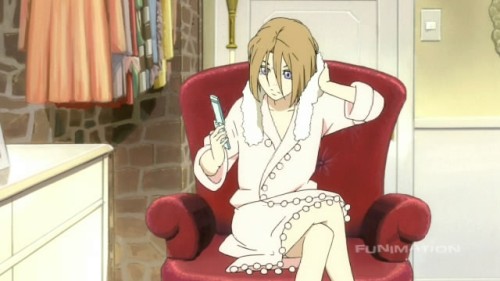
A handsome ladies’ man from a wealthy background with a talent for crossdressing, Koibuchi Kuranosuke is larger than life, the kind of character who you would almost be able to say is “too unrealistic” if weren’t for how natural and convincing he is as an individual, and if you’re used to this sort of thing via extensive experience with shoujo and josei, he stands out that much more. Straightforward yet enigmatic, helpful yet selfish, intelligent and savvy yet frightfully naive at times, Kuranosuke is equal parts intriguing stranger and close personal friend, and it makes him both fascinating to watch and easily relatable.

From the very first time he saves Clara the jellyfish and enters Tsukimi’s life, you know that Kuranosuke is a man you can respect, even before you know that he’s a man. He’s not a saint and he won’t solve everyone’s problems as he has his own to deal with, but he tries hard to help others, in particular working to help Tsukimi and the rest of the “Sisterhood” recognize that their stereotypes of themselves are self-imposed. It’s a fight I can definitely get behind.

BEST FEMALE CHARACTER

Kurumi Erika, Cure Marine (Heartcatch Precure!)

Though I can describe Kurumi Erika by her general traits — talkative, friendly, clever, energetic– I feel that it doesn’t quite do her justice. With Erika you have someone who is much more than the sum of her parts, an endearing character whose traits cannot simply be divided into “strengths” and “flaws,” but are aspects of Erika that have both positives and negatives. Erika’s gift of gab is tempered by the perils of being a motormouth. She is incredibly hardworking and focused when it comes to her interests and will go out of her way to accomplish her goals, but can be incredibly lazy and ignorant towards anything that fails to inspire her passion. All of this stems from Erika’s sense of emotional honesty and her full-speed, no-brakes approach to life.

In a series with particularly strong characterization, Erika stands out in a big way, and I hope that she and her fellow Cures have a positive impact on not just the way characters are written for anime, but also how they are received by the fans and how they may influence those watching to better themselves. Erika feels real, not in the sense of evoking reality or being a simulation for it, but in that she is an emotionally complete individual. She is an inspiration for anyone who has every hesitated due to fear of being unable to grow as an individual.

Final Thoughts

Though not intentional on my part, I realized while writing my thoughts on Kuranosuke and Erika that the two have much in common. Both are outgoing with sunny dispositions. Both are highly passionate about fashion and believe in the positive transformative effects it can have on people. And both are eager to meet and help others, but their enthusiasm and extroverted natures can make them seem abrasive to those who can’t keep up with their pace. They feel human. On an additional storytelling level, both are able to show that you can have incredibly straightforward and simple characters that are also complex and fully developed, whether it’s a show for adults (Kuragehime) or for children (Heartcatch Precure!). Perhaps most importantly, having people who can encourage you to grow for the better can be incredibly uplifting, whether they’re real or fictional, and that’s exactly what they do.

Have You Heard About the Yaoi Role Playing System

It’s called “Big Eyes, Big Mouth.”

Secret Santa: Patlabor: The Movie, Where Oshii Mamoru Says, “Trick or Treat!”

This review is a part of the Reverse Thieves’ Secret Santa Project for 2010.

Mobile Police Patlabor: The Movie is a film by Oshii Mamoru, director of Ghost in the Shell. Though it predates Oshii’s most famous film by a few years, there is no mistaking its pedigree.

In the world of Mobile Police Patlabor, mankind has embraced the use of giant robots to help with large-scale construction and manual work. Referred to as “Labors,” it wasn’t long until some people started using them for less altruistic purposes, creating a new problem in the form of Labor-related crimes. In response, the police begin deploying their own Patrol Labors, or “Patlabors” for short. One such force is the Tokyo Metropolitan Police Special Vehicle Section 2, Division 2, a group of misfit officers whose ranks include a tomboy who names all of her pets Alphonse (her Patlabor being the latest), an overly aggressive gun nut, and a seemingly dull and lazy division chief. Nevertheless, they do their best to serve and protect despite their spotty reputation.

Given this scenario, you’d probably expect some combination of cop show drama and ensemble comedy with a dash of mecha, and you’d be right, normally. But while most of the Patlabor franchise falls along those lines, Patlabor: The Movie is instead a cerebral mystery. A recent string of “berserk” Labors threatens the completion of an important project and the most likely suspect, programmer Hoba Eiichi, is already dead, confounding Shinohara Asuma, the Division 2 member who has taken it upon himself to investigate. All the while, the film explores the continuing onset of technology and the eternal struggle of new vs old, with numerous biblical references strewn throughout. Given the tone and content, Patlabor: The Movie is like a stepping stone towards Ghost in the Shell and the eventual direction Oshii’s oeuvre would take.

The film still has a lot of the requisite elements of Patlabor; it has those same goofy characters (all of whom act as they should), robot fight scenes, and a personal feel to the setting. In fact, you need not have watched any of the previous material to understand the movie or to get an idea of the personality quirks and relationships of the characters. However, those aspects of Patlabor are either more subdued or less frequent in the film, instead putting the spotlight on the mysterious culprit, “E. Hoba” (Jehovah), and his motives. In this respect, it reminds me of another movie, Sengoku Majin Goshogun: The Time Étranger, a sequel to a super robot anime featuring a decidedly different tone and absolutely no giant robots, only Patlabor: The Movie is somehow both more extreme and less in its deviation. Patlabor: The Movie really feels as if Oshii (who also directed the Patlabor OVAs) was trying to push the franchise beyond the limits of its basic premise and bend it to his own personal will. It actually works pretty well overall, maintaining suspense throughout and giving quite a bit to think about, but I’m not sure if Patlabor was the place to do it.

In short, imagine Oshii Mamoru trapped in a giant paper bag called Patlabor, trying to punch his way through until he ends up wearing the bag like a Halloween costume, and you have Mobile Police Patlabor: The Movie. He’s pretty dashing in that getup.

What is Soul Society Captain Yamamoto-Genryuusai’s Favorite Sentai Series?

JAKQ

Yes, I Heart You Too

The Powder Keg That is Three-Player Mahjong

Looking to take a break from my typical online mahjong sessions without straying too far, I’ve begun dabbling in 3-Player Japanese Mahjong. It is arguably both more stressful and less stressful than 4-Player, and I wanted to just jot down my thoughts on the gameplay and dynamics of 3P mahjong.

Just to get my bias out of the way upfront, I find 3P mahjong to be inferior to 4P, and its primary strength is as a backup measure in case you can’t get a fourth player. Despite that, it is still very fun and captures much of the mahjong spirit, especially when you’re playing with some rad personages.

3P Mahjong is an incredibly volatile game, and this is primarily due to three reasons. First, is the revised role of the North (Pei) tiles. With no fourth player, North is considered a “neutral” wind, and now carries with it an additional property: if you have a Pei in your hand, you can exchange it for another tile. In doing so, you also gain an additional dora for every Pei you come across. Like all dora, these North dora cannot be the catalyst for a winning hand, but they can bolster one that’s already able to win. Incidentally, if you draw your winning tile due to exchanging a Pei, it counts as Rinshan Kaihou, only it’s better because you also have the inherent dora from the Pei itself. Rinshan Kaihou being her signature move and all, I’m sure Miyanaga Saki would have a blast with 3P.

Second, is that the game removes the Character (Man) tiles numbering 2 through 8.  With only the 1-man and 9-man remaining, this makes players far more likely to draw tiles of the same suit, a high probability made even higher when you remember that there is 1 less player than normal. Honitsu (Half Flushes) are incredibly common, and the normally fairly difficult-to-achieve and more valuable Chinitsu (Full Flush) is often well within the range of possibilities. It’s also the only time I have ever seen anyone get a Honroutou (only 1’s, 9’s, and Honors) or a Chinroutou (only 1’s and 9’s), as the removal of 2-Man through 8-Man means they don’t get in the way of those hands from forming.

Third, is the fact that 3P mahjong indeed has one less player than normal, so useful tiles have a higher likelihood of reaching you. When combined with the comparative ease of forming high-value hands and the boost given by North dora, and you have the volatile scenario of which I spoke. The game almost always reaches a situation where everyone’s sitting there with an absurdly valuable hand and everyone has the tiles everyone else needs to win. Of course, that means that just as you poised and ready to declare your victory and watch your score skyrocket, so are your opponents, and greed can definitely be your undoing. Also, as everyone has a greater chance of achieving tenpai generally, if you happen to have a particularly worthless hand in a round it hurts a lot more than it does in 4P mahjong.

The game does have some factors to balance out the precariousness of 3P mahjong, namely the prohibition of stealing tiles to complete a straight (chii), and the fact that everyone starts off with 35,000 points instead of 25,000 points. The former keeps hands from being completed too easily, and the latter acts as somewhat of a buffer against the frequency at which powerful hands appear. Just to give you an idea, I actually got a yakuman (32,000 point) hand once, and I still ended up placing in 2nd by the end. Still, I feel like these countermeasures aren’t quite enough, and while I generally enjoy having luck be a factor in my games, 3P mahjong feels like it has just a little too much luck and not enough things to mitigate damage in a bad luck situation the way 4P mahjong does. It gets your blood pumping.

The last thing I want to mention is the modification to scoring, where you get more points for having someone deal into your hand than you do from drawing the tile yourself, which never happens in 4P mahjong (Ron haneman is worth 12,000 while Tsumo haneman is only 9,000). In addition to being an interesting contrast with Chinese mahjong styles where self-draw is way more powerful than winning off of someone else’s discard, it also enhances the high-pressure feeling of 3p mahjong.

The Man in the Moe

“If the emphasis in moe anime is on the female characters, where does that leave the male characters?”

I asked myself that question, and after some deliberation it turned into, “What do you look for in male characters in moe anime?” I want to turn the question to you the reader as well, provided you’re someone who has enjoyed moe anime in the past, even if you’re not necessarily a fan. Keep in mind that I don’t mean that the male characters themselves have to be “moe,” but just that they exist within those types of anime. If you want to extend the question to yuri shows as well, that is also okay.

For me, the first thing that popped into my head was Maria-sama ga Miteru, namely the all-male student council that exists outside of the all-girl school where Marimite primarily takes place. Marimite has a heavy emphasis on female characters, so when one of those male council members, Takada Megane, talks about how he loves to work out and eat meat all while flexing at the girls, it really stands out. It’s as if Takada and his muscles are inadvertently shattering the yuri-heavy atmosphere of Marimite, and the first time I saw him I thought, “Yes, you are the best male character in this show.” Applying that back to my own question, it makes me think that while I definitely enjoy Marimite for what it is (and own almost all of it on DVD), I like the idea that there exists something a little beyond the world of the girls, even if it’s not that far removed, and male characters who act kind of contrary to that setting actually serve to emphasize the feel of Marimite.

One concern I have is a possible philosophy that the male characters in such series don’t matter, as I feel that even if they’re out of the spotlight they can have a huge impact on the work itself.

So what do you think?

Aokimura Would Be Proud of My Mahjong

Three months after my unceremonious descent in online mahjong rankings, I have managed to not only claw my way back to my original ranking, but also surpass it and move up to the next level. I am now a “3-Dan” on Tenhou, and I’ve learned a few lessons since September. Hopefully I keep them in mind so I don’t drop down again.

As much as it would appall Akagi, trying to go up the ranks on Tenhou encourages fairly safe and conservative play. The only way to actually lose points and risk dropping down is to get last place, so while being 1st is ideal, being 3rd isn’t so bad either as it means you are as far as you were last game. At the end of the day, if 1st place is way out in front, it’s generally not worth it to try and make a desperate counterattack, as it might just land you in 4th, something that has happened to me on many, many occasions.

In one match I was in 4th place in the last round. However, I was less than 1000 points behind 3rd place, and in this final round 3rd place was also East, meaning that if he wins he gets more but if another player wins by self-draw then he pays a higher price. So after seeing another player Reach, I simply abandoned my chances of winning and counted on that player drawing his winning tile, as it would allow me to barely get 3rd without doing anything. That’s exactly what happened in the end and I got away without losing any ranking points just by, as Sub likes to put it, “playing to not lose.” It was kind of dirty, but that was the reality of the situation.

Watch out though, as aiming for not-4th can be a trap in itself, as you can end up in a situation where you’re behind and desperately aiming for anything to keep you in the game, which in turn can make you prone to rash decisions. This is pretty much what killed me when I first dropped back down to 1-Dan, as you have the disadvantage of not only of letting your emotions get in the way but also giving up too soon. Doing so may even blind you from the fact that you could win if only you had the patience and clarity of mind to see that.

Though it might seem to contradict what I said about aiming to not lose, it’s actually all just a part of gauging your situation at all times. Let’s say you’re in 4th place. Ask yourself, in my current situation, what would it take to get in 1st? What’s the point difference? How likely is it for me to get a hand that can overcome that difference? If there’s no hope, what are my options then?

Now keep in mind that this is doesn’t have to be cold, hard logic. You don’t have to be calculating statistics, and can even be based on how the game feels at the moment. A small loss in points isn’t as bad as losing a lot of points, and if you’ve lost a lot of points you could always potentially drag down 3rd place. And if you drag down 3rd, you might be in range to get 2nd. There’s room for optimism, however small.

So while Akagi obviously scoffs at “digital” mahjong, that is, a style based on analyzing ratios instead of playing based on “feel,” it’s clear that going up the ranks in Tenhou isn’t all related to probability. Just as you’re trying to claw your way up to 1st, so is everyone else, and inevitably there are human traits to exploit, be they greed, fear, or even relying too much on statistics.

Though deep down, I feel like this is my limit when it comes to online mahjong. At 3-dan, getting 4th place actually makes you lose more points than you would gain if you had gotten 1st. Whether I can overcome such odds is something I’ll just have to see. Still, that I’m here in the first place is something I can be proud of, even if I’m not the best mahjong player out there.

Lastly, to celebrate: