“Makai” Fushigi Adventure: Dragon Ball Daima

The untimely passing of Toriyama Akira was one of history’s biggest blows to the world of manga and anime. While he had long since taken more of a backseat role for his most famous titles, knowing that he was there to provide some guidance for the Dragon Ball franchise lended some reassurance that his vision was included. So when the anime Dragon Ball Daima was announced, there was a real weight to its very existence: It’s the last work in the franchise Toriyama had his hand in and an inadvertent farewell message as a result.

According to reports, Toriyama was more involved with Dragon Ball Daima than he had been with other anime in years, but regardless of the exact amount, I think the end result manages to successfully capture his spirit and the spirit of Dragon Ball as a whole. Daima celebrates what has come and expands the world of its characters in a way that fascinates the imagination. 

Dragon Ball Daima takes place after the climactic battle with Majin Buu in Dragon Ball Z. Unbeknownst to Goku and friends, King Gomah of the Demon Realm has been observing them, and is alarmed at how powerful they are. Majin Buu, it turns out, actually comes from the Demon Realm, and was a force so menacing that he was thought impossible to defeat. Gomah gets so paranoid that they might come over to his side and overthrow him, so he uses the Demon Realm’s Dragon Balls to make a wish to turn Goku and the others into children to reduce their power, and kidnaps a now-infant Dende (current guardian of Earth’s Dragon Balls) to prevent them from undoing the wish. Unfortunately for Gomah, this actually becomes the motivation for the crew to travel to the Demon Realm and fix everything that’s gone awry.

Or to put it a little differently: This is Dragon Ball GT except instead of traveling to different planets, Kid Goku visits a magical world of demons. In a sense, it’s “What if Toriyama did GT?,” and it’s wonderful. 

Dragon Ball Daima strikes a nice balance for itself that incorporates the whimsy of the early stories and the action of Dragon Ball Z, resulting in an anime that’s fun and lighthearted but also knows how to crank up the tension and excitement at key moments. 

One of my favorite things about Daima is that in addition to the excellent action (some of the best Dragon Ball has ever seen), it’s also about the thrill of exploring a new world. There are unusual creatures and environments, insights into the culture of demons, and even revelations on series lore. Notably, it turns out that Namekians are originally from the Demon Realm, and that’s also where the first Dragon Balls come from. This reveal is very amusing because Piccolo was originally supposed to be a demon in the mystical sense, only to later be retconned into an alien. But actually, Daima says, they’re actually demons who emigrated to the universe we know, and settled on a world that became Planet Namek! In other words, they’re demons and aliens.

Brilliant.

Another aspect that Daima highlights is that martial prowess alone isn’t always enough. One of Goku’s travel companions is actually the Supreme Kai—a character who didn’t really get much attention in the rest of the series. Here, though, his wisdom, knowledge, and cleverness are on display; and it gives me a new appreciation for him. We even learn his real name! Another character on the antagonists’ side is also more about brains than brawn, and is severely underestimated even by their own side. To have someone like that in a fairly major role in Dragon Ball of all things is kind of amazing.

Dragon Ball Daima is only 20 episodes, and so it doesn’t suffer from needing a huge time investment or endless filler or any of the things that can make Dragon Ball intimidating to get into (or get back into, as the case may be). This is a short and sweet work where the meandering elements, the focused battles, and everything in between are truly a joy to experience.

A Bird Among Dragons: Remembering Toriyama Akira

On a recent trip to Japan, I walked past a shrine. Next to that shrine were statues of Dragon Quest monsters. Seeing them reminded me of the sheer impact of those games and the artist whose memorable designs helped to entrench the series in Japan’s popular imagination.

We now live in an age where Toriyama Akira is no longer with us. As the creator of Dragon Ball and Dr. Slump, as well as the iconic artist of Dragon Quest and Chrono Trigger, his influence is nigh-unmatched. There are maybe two or three other series that are as pivotal to shounen manga as Dragon Ball, and Toriyama even casts an enormous shadow on the isekai and fantasy genres: The Dragon Quest series is what established the “Hero” (Yuusha),  the “Demon Lord” (Maou), and the “weak Slime” as archetypes in Japan’s popular imagination, and it’s Toriyama’s designs that inform the aesthetic of all successors.

In light of Toriyama’s tragic death at only 68 years old, I’d like to just talk about how my life has been touched by his work. My story is nothing special compared to the millions of voices mourning Toriyama, but I wanted to at least personally add to the well wishes pouring out.

Dragon Ball

Dragon Ball Z was the very first anime that I knew to be “anime.” While I had loved things like Voltron, they were still just “cartoons” to me. But when a relative started bringing home tapes of DBZ, it was a sight unlike any other. I remember just being amazed at the rapidfire punches, the zooming around, the ki blasts—I’d never realized animation could be this way! I cheered for Piccolo, watched characters (gasp) die, saw Son Goku turn Super Saiyan, and witnessed his son step up and defeat Cell. I wondered if anything could ever top this story. I wanted to be Gohan.

It was also a time when I got to play the first two fighting games for the Super Famicom, and when I’d re-read over and over a small guide to the first game that showcased all the playable characters. “What does Jinzoningen (“Android”) mean?” I recall wondering.

So when I first found out that DBZ was coming to US airwaves (for real, and not just finding a random channel that sometimes had Korean episodes of the original Dragon Ball), I was elated at the prospect of Dragon Ball Z getting big. Imagine: more American DBZ fans! While the English adaptations have had their differences with the original (as well as the non-English dub I first watched), Goku ultimately succeeded in reaching into the hearts of countless viewers. (I still wish those early US viewers got the chance to hear “Chala Head Chala,” though.)

Ironically, I was one of those people who’d go on to poo-poo the Dragon Ball franchise. As I got more into anime and manga, I viewed the series as a thing you’re into when you’re just a “beginner,” or obsessed with just macho violence and watching muscle-bound dudes power up endlessly, and I felt good that I knew there was more out there. It took a number of years to get through that embarrassing phase, but I’d eventually come back around to appreciate Dragon Ball for its outsize influence on culture, as well as for just being a work of art in itself. More recently, it’s been great seeing Dragon Ball Super be a thing, and for Toriyama to have worked to bring back the essence of Goku—as well as the balance of action and humor that Dragon Ball and Toriyama himself had been known for.

Dragon Quest

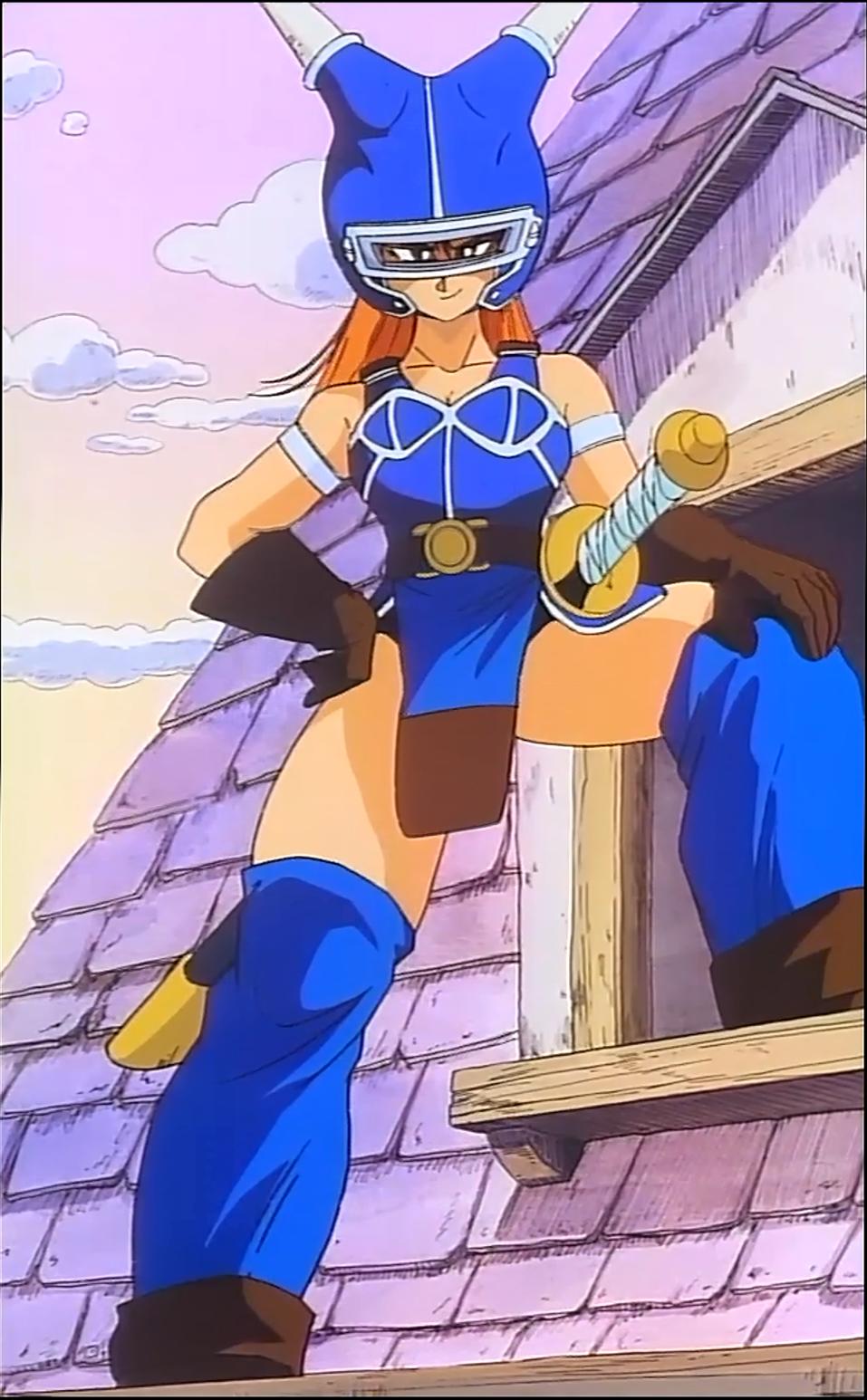
Dragon Ball Z was actually not my first encounter with Toriyama, and not even the first anime from Toriyama that I had seen. I was one of the kids who watched Dragon Warrior (aka the English dub of the anime Dragon Quest: Legend of the Hero Abel) as it aired. I remember having to wake up very early—around 5:30 or 6am on weekends. I don’t think about it very often, but in hindsight, the show was likely very formative for me, and I wouldn’t be surprised if Daisy (the girl in blue armor) ended up influencing my taste in characters.

My family also subscribed to Nintendo Power, and we received a free copy of Dragon Warrior (aka the first Dragon Quest) as a result. Today, RPGs are a popular and beloved genre of video game, but back then, they were entirely new territory to most kids, and pretty unapproachable. However, the same relative who brought home DBZ tapes had decided that they were going to beat Dragon Warrior, and spent hours getting through the game as a young me would watch along. In the final battle, the evil Dragonlord reveals his true form as a giant bipedal dragon, and I remember just being in awe.

This was at a time when the Super NES had already come out, and I thought the Dragonlord looked almost on par with the graphics I saw there. The fact that his foot covered part of the dialogue box, and the way the screen froze instead of shaking every time he landed a blow made it feel like this was the ultimate adversary. It wasn’t until at least a decade later that I got to see Toriyama’s drawing of the Dragonlord that I realized just how closely the sprite graphic matched his original art, and I appreciated that memory all the more.

If Dragon Warrior was the game that pushed the boundaries of what an NES game could look like, then Chrono Trigger was a revelation. The 16-bit graphics and the greater color palette of the Super NES really brought Toriyama’s designs to life, and the game conveyed an intensity to RPG battles unlike any I’d seen up to that point. The only thing they paled in comparison to was Toriyama’s actual drawings of Chrono, Frog, Magus, and the others. While Chrono very obviously looked like a redheaded Goku, he was still unbelievably cool. And just as the Dragonlord was a mindblowing antagonist, so too was Lavos. The eeriness of music and visuals in the climactic confrontation with him is hard to match even to this day. 

Years down the line, Dragon Warrior finally became known as Dragon Quest just like in Japan, and I was one of the folks who bought Dragon Quest VIII. It wound up being one of my favorite RPGs ever. In addition to its classic feel  (Dragon Quest is famous for not trying to reinvent the wheel), the game really felt like stepping into the world of Toriyama’s art. It was a triumph of the PlayStation 2, but also a treat for those who always wanted to see an interactive environment that embodied his imagination and aesthetic.

A Farewell

Toriyama Akira’s life was a spark that inspired creators to bring their ideas to life, bridged culture gaps through the sheer power of his work, and even pushed people to exercise and train so that they could be like Goku. His name is synonymous with anime, manga, video games, and even indirectly light novels. And while I can’t call myself the most diehard Toriyama fan, he clearly took my life on a course that would embrace the wonders of Japanese popular culture—a path I still pursue to this day. Rest well, King. To say you deserve all your praise and accolades is the understatement of a lifetime.

His Characterization is Maximum: “Dragon Ball Super: Broly”

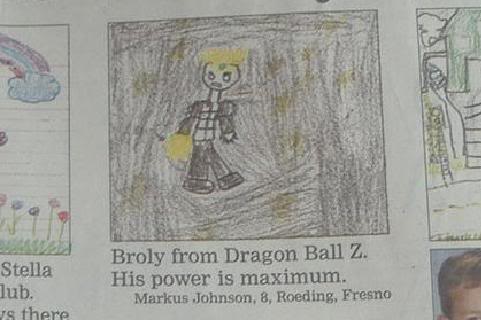
There’s an old and famous picture from a newspaper’s children’s section, where they asked kids, “If you could be a superhero, who would you be?” In response to this question, a boy named Markus answered, “Broly from Dragon Ball Z. His power is maximum.” But while people online have gotten lots of laughs from this innocent answer over the years, Markus’s words almost perfectly encapsulate the character of Broly, the Legendary Super Saiyan.

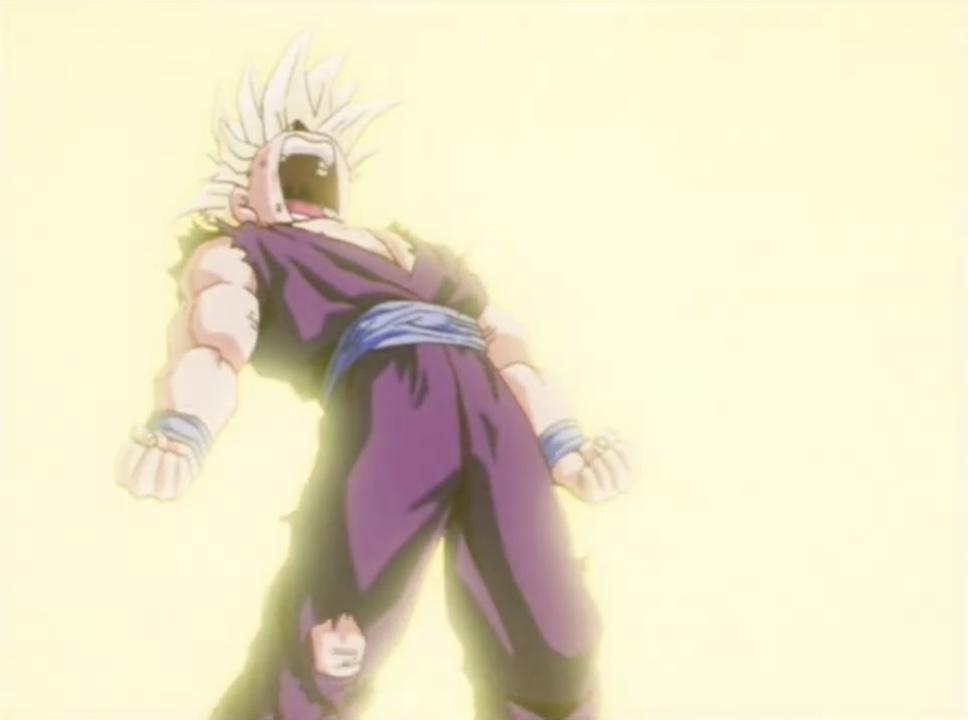
As an antagonist, Broly was always a one-dimensional character whose primary trait is being ridiculously and impressively powerful. To be fair, the way it’s portrayed in his appearances leaves a lasting impression, and has a clear, primal appeal to Dragon Ball Z fans. However, he’s ultimately a simplistic villain to be overcome by blasting him harder.

The character is also non-canon, appearing only in Dragon Ball Z anime films, which is why it’s rather significant that the creator of Dragon Ball himself, Toriyama Akira wrote the script for Dragon Ball Super: Broly. It not only means introducing Broly into the Dragon Ball universe proper, but also an opportunity to transform this flimsy rage machine into a fully fleshed character.

On a skeletal level, Super Broly is basically the same character: an instrument of revenge for his father, Paragus, against Vegeta  (the son of the man he hates most, King Vegeta), who goes berserk and must be stopped by Son Goku and his allies. There are a couple of crucial changes, however.

First, in the original Broly film, Broly is shown as having an inadvertent deep-seated trauma caused by Goku when they were fellow infants, which causes him to wantonly attack Goku. This no longer is a thing, and when he and Goku fight as adults, they’re meeting for the first time. Second, in the new film, Broly is shown as being ridiculously strong and terrifying but ultimately innocent inside—as if his personality isn’t inherently that of a fighter.

Both are smart choices that lay the groundwork for making Broly a properly three-dimensional character. The Goku grudge used to come across as largely a flimsy device to get Broly in direct conflict with the hero of the story, and it kind of punks out Vegeta in the process. Without it, his background focuses more on him being unfairly raised by his own father to be a tool for revenge, and the different ways in which Goku, Vegeta, and Broly have been shaped by their upbringings and experiences. An extensive background story in the first half of the film highlights these differences.

That being said, I don’t want to make this film sound like a deep look into character psyches, as it’s mostly one gigantic fight scene full of the fast and frenetic combat Dragon Ball is known for. However, those crucial differences between Goku, Vegeta, and Broly come out even as they’re pummeling each other. Goku’s Earth-bases martial arts background, Vegeta’s elite Saiyan training, and Broly’s mostly unrefined berserker rage are all conveyed in the action, which does a lot of showing instead of telling somewhat reminiscent of Mad Max: Fury Road.

A few bits of welcome comedy alongside some new characters help keep Dragon Ball Super: Broly from feeling too heavy—a clear indication of Toriyama’s hand in the process. Overall, it ends up being a really solid film, and one that manages to give depth and meaning to a pure power fantasy character like Broly without taking away the strength that made him popular in the first place.


The Best Argument for Creationism: Dragonball Evolution

Dragonball Evolution, what can be said about it? Well,  I can certainly call it a “movie.” It is a series of scenes placed one after the other on a film strip and shown in a sequential order. Dragonball Evolution: People involved in a production to put a form of entertainment in theaters.

Upon first hearing that a live-action Dragon Ball movie was being made, I had an image in my head full of cheesy lines and attempts to bring stories full circle, revisions to existing aspects of Dragon Ball designed to make it seem “cooler” and less “cartoony,” unfaithfulness to the source material’s characters and their personality, and awkward special effects. When the first trailer was released, and then the second, this prediction still appeared to hold true. Now, after having seen the whole thing, I can say that the movie was exactly what I expected it to be.

Where to start with this, “Evolution” of Dragon Ball as it wishes to be known? Well, how about the way in which it relates to Charles Darwin’s theory, or rather the attack on it by certain religious groups?

Proponents of Intelligent Design commonly state that there is evidence in the bedrock that shows that the Earth’s history is not a continuous chain of events, and that there are mass extinctions and sudden increases of certain types of animals, as if the history of the Earth and its wildlife are a series of islands connected by a higher power. This is in fact how Dragonball Evolution feels. You know it’s a story mainly because you’ve been told that it’s one, but while the events of the movie follow a chronological order, there is almost nothing which smoothly connects one scene to the next. Master Roshi will claim that going to the tournament is vital to their quest to defeat Piccolo. Then no one will participate in the tournament and then we never find out what going to the tournament actually accomplished. Yamcha and Bulma hate each other in one scene and in the very next they’re already falling in love. There isn’t even at the least a generic scene where Yamcha catches Bulma while she’s falling or something. Goku is in high school for some reason, and he gets picked on by jocks. He meets Chi Chi there. Then high school is never ever mentioned again. Master Roshi, the narrator, and Piccolo will all mention that Piccolo was responsible for nearly destroying the Earth until he was sealed 2000 years ago, but now he’s free and looking to enact revenge on humanity. How exactly did he break free from his confinement? Apparently NOBODY KNOWS OR CARES, at least not enough to tell the audience.

That’s not to say EVERYTHING is bad about this movie. Characters are occasionally true to their manga portrayals in certain ways. Goku is always naive, gets one or two nice lines to show how dumb he is. Master Roshi’s introduction feels very much like Master Roshi except in every scene after that he turns into generic old master. Also, sometimes the action scenes make it feel like a generic action movie, which is to say not super awful. Also my friends and I burst out laughing practically every minute at one bad line after another until we lost count.

An interview with the people who made Dragonball Evolution has members of the cast and crew defending the production, saying that the director succeeded in keeping the spirit of Dragon Ball alive and adapting it just enough to appeal to a wider audience. The problem is that they’re totally wrong and Dragonball Evolution is not faithful to the spirit of Dragon Ball at all. I can go into the many reasons why this is the case, but I’ll just give one: the core of Dragon Ball is represented by its main character Son Goku and his personality: goofy, often very dumb, loves to fight, and has a strong sense of justice when it comes down to it. There’s a certain kind of whimsy and humor that never leaves the series even when planets are being destroyed and limbs are being chopped off. That is to say, Dragon Ball is all about having serious fights never be too serious because it’s always been about the comedy as well. Dragonball Evolution throws all of this out and decides to be an action movie and coming-of-age story like so many others out there. Even if it succeeded in being a well-constructed story with brilliant direction, it would still not be Dragon Ball.

Giving Shounen Jump Fans the Bird

Weekly Shounen Jump is celebrating its unbelievable 40th anniversary, and as part of the festivities Shounen Jump has all-new episodes of three of its series. By downloading their own proprietary media player, you can actually watch these episodes subtitled for free until January 2009. One of the titles is One Piece, another is Letter Bee (which I know nothing about). I’ll get to One Piece and Letter Bee’s exclusive episodes another time; this is all about perennial favorite Dragon Ball.

Akira Toriyama’s most famous work is by far the most popular Shounen Jump properties of all time, its worldwide success is rivaled by few other. This is made all the more impressive by the fact that there hasn’t been any new Dragon Ball anime for a long, long time. Even in America the final episodes of GT aired years ago. But some would argue that at some point the Dragon Ball series took a bit of a detour and lost some of its original spirit. Among these critics might be Toriyama himself as this new Dragon Ball anime special feels very much like a return to form, and it’s written by Toriyama too. “Yo! The Return of Son-Goku and Friends!!!” is like a combination of everything that made Dragon Ball popular throughout its incarnations rolled into one.

The story is about Mr. Satan opening up a new hotel to celebrate his victory over Majin Boo and inviting Goku and Friends over for a sumptuous banquet. Some new characters show up, stuff blows up and things get eaten. Really, the story is just a flimsy excuse to get everyone together and for chaos to happen, and it’s the type of chaos which combines the fighting of Z with the humor of the original. Kamesennin is back to wearing his old turtle shell and making lewd comments towards Chi-chi, Goku powers up to Super Saiyan just because, and the fate of the world hangs in the balance but not really. It’s just a single-episode adventure dedicated to the fans and it really shows.

The most notable addition is the introduction of Vegeta’s little brother, Tarble. I’ll let the pun sink in for a second before I move on.

Man, Toriyama.

Tarble would be a spoiler except he’s right there on the front page and in the character descriptions, so he’s fair game. Tarble was sent away long ago by King Vegeta because Tarble lacked any sort of fighting prowess. Having avoided much of the events of Dragon Ball, Tarble even still has his tail. With the existence of Tarble now revealed, it just makes me think that every time Vegeta said something like “WE ARE THE LAST SAIYANS IN THE UNIVERSE KAKARROT!” he was murmuring under his breath, “exceptforthatotheronehrmrmrmr.”  Well Dragon Ball was never super big on maintaining canon anyway so it’s no big deal. It’s just another way of humanizing Vegeta just a little because you’d have expected him to fly over to Tarble at some point and punch him in the face for being so weak. Then again, Vegeta might respect the fact that Tarble tries to fight even when he sucks at it. I’m thinking too much about this, but how could I not when I now know that Vegeta is also Reinhard Von Lohengramm?

If you’re a Dragon Ball fan, I really don’t have to tell you to go watch this, but go watch this. If you’re not a fan of Dragon Ball, or you’re the kind who complains about powering up taking too long, keep in mind that this is just one 20-something minute episode and there’s no time to waste on powering up excessively and standing around. There isn’t even an deserted area in the middle of nowhere to fight and blow things up in! There’s only Mr. Satan’s hotel.

Poor, poor Mr. Satan.