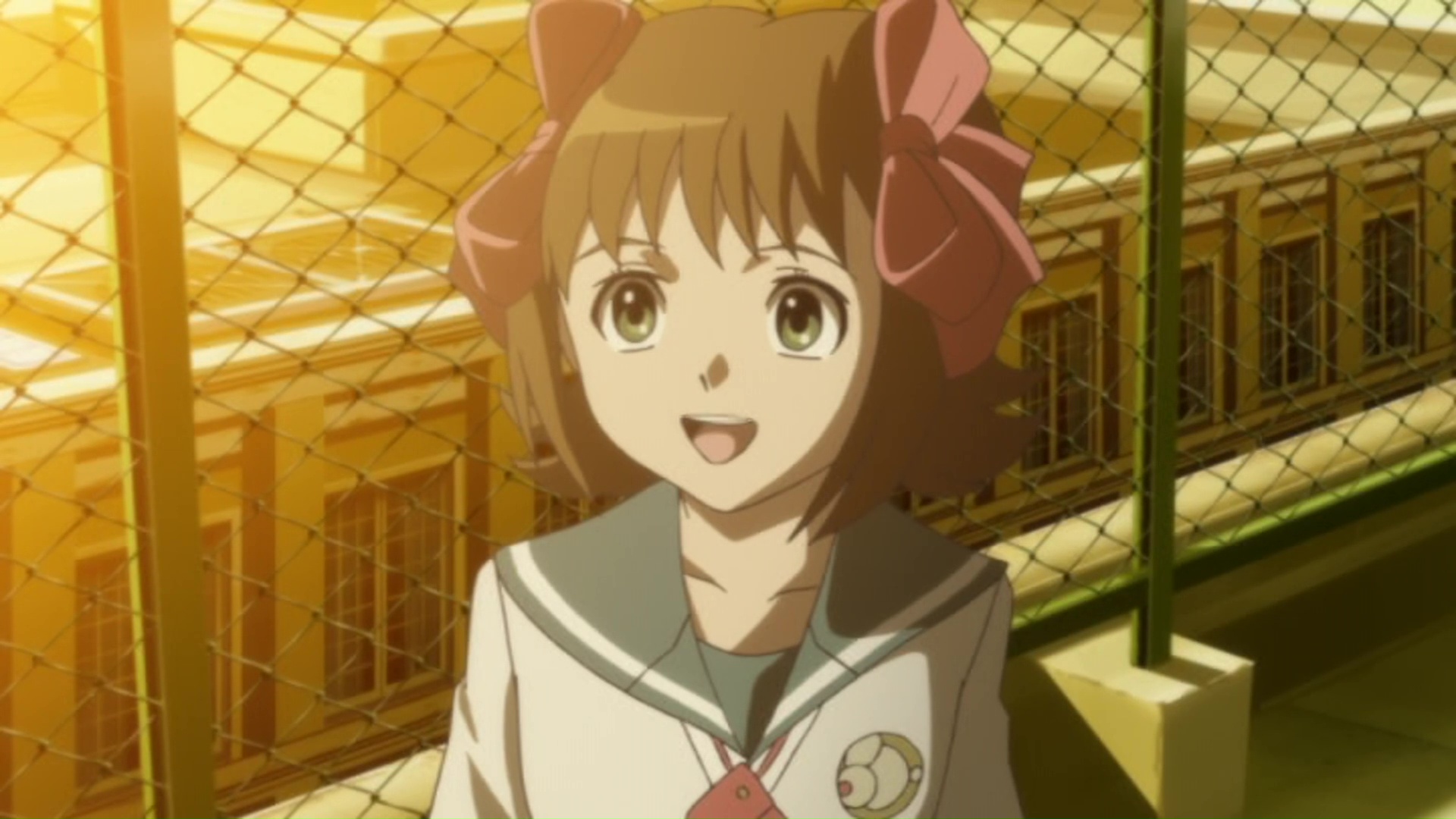
[Anime Central 2025] Nakamura Eriko, Voice of Amami Haruka in The iDOLM@STER

I am not a hardcore fan of The iDOLM@STER, but I understood what a big deal it was to have Nakamura Eriko and Imai Asami as guests, aka the respective voices of first-gen “765 Pro” members Amami Haruka and Kisaragi Chihaya. I was able to attend one of the panels for Eriko, but sadly couldn’t make it for any of Imai Asami’s.

Because I’m not an iM@S Producer or anything, there are things I probably got wrong. Nevertheless, I still want to post my notes from this panel. In this day and age, simply having information out there on the internet to find can be difficult. Also, The iDOLM@STER just celebrated its 20th anniversary, so I figured it would be a good time to post this.

Eriko was in Chicago for the first time, and the panel was a Q&A. She turned out to be quite the jokey type, or at least that’s how she presented herself. She mentioned getting lost trying to get to the Opening Ceremony, and that her dream was to be “more biggest,” i.e. taller, so she can see further back.

When asked how she decided to become a voice actor, Eriko said she thought it was the field where she thought she could stand out most as a performer. She described her path there as being haran banjou, a Japanese term that means a life of many ups and downs, but can also mean life is something where surprising things can happen. Someone followed up by asking what it was like to audition for Haruka, to which she first pretended she couldn’t remember, then elaborated that it actually didn’t involve any singing. She received a script and a storyboard, and played Haruka looking out from the train. She said that this was the first and only time she had such a free-feeling audition. 

Later, Eriko elaborated on being a part of that first generation. They recorded their parts individually: just her, the script, and the sound engineer. Back when it was just that original game, she had to imagine what it was like for everyone to be together, and the first time she heard it all together, it was like 765 Pro had come to life.

When she got the chance to perform songs from a different branch many years later, and for others to perform songs from hers, she responded that seeing others build on the foundation they laid was a valuable experience.

The audience of fans got her to say the line, “Producer-san, Dome desuyo! Dome!” in reference to Haruka being an idol and the importance of the Tokyo Dome as a major landmark for idol performers. Eriko said the last time she was able to say that was in fact  two years ago at the Tokyo Dome.

When asked what advice she would give a voice actor, Eriko revealed that there’s a concert in August, and her answer is in that pamphlet.

As for what has changed, Eriko mentioned that she chats a lot more with people after recordings because she’s been doing it for 20 years with all the staff and everyone else supporting them. Eriko is also always sending messages on LINE, especially stickers, to the point that the others tell her to stop. The members of Million Stars tell her that they need to sleep.

One person asked Eriko what she thinks about when she’s out there as a major representative of The iDOLM@STER. Her response: “I don’t think about that at all. Haruka is just a 15-year-old girl, she can’t have the wait of the franchise on her shoulders.”
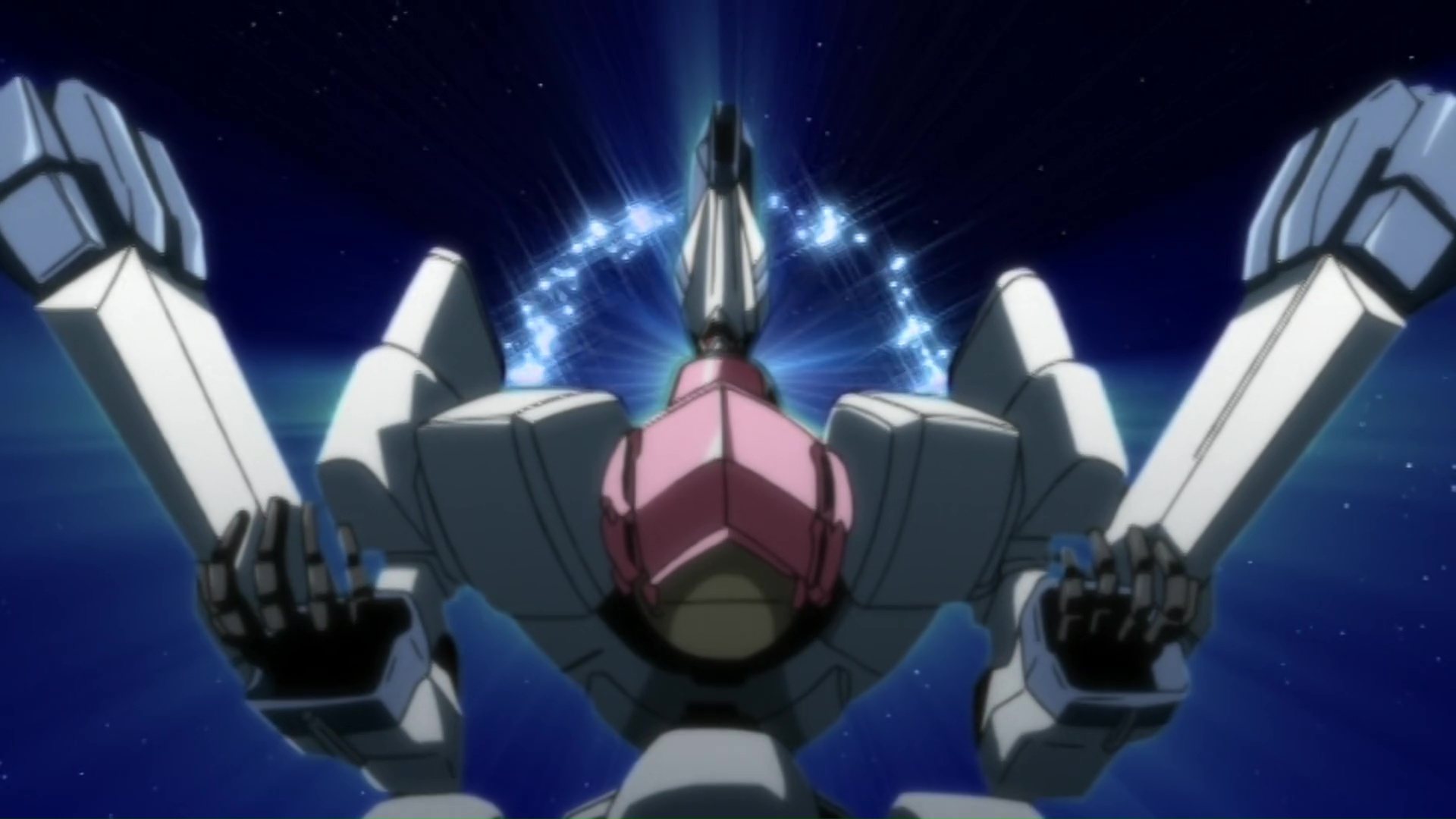
Gattai Girls 12: “Idolmaster Xenoglossia” and Amami Haruka

Introduction: “Gattai Girls” is a series of posts dedicated to looking at giant robot anime featuring prominent female characters due to their relative rarity within that genre.

Here, “prominent” is primarily defined by two traits. First, the female character has to be either a main character (as opposed to a sidekick or support character), or she has to be in a role which distinguishes her. Second, the female character has to actually pilot a giant robot, preferrably the main giant robot of the series she’s in.

For example, Aim for the Top! would qualify because of Noriko (main character, pilots the most important mecha of her show), while Vision of Escaflowne would not, because Hitomi does not engage in any combat despite being a main character, nor would Full Metal Panic! because the most prominent robot pilot, Melissa Mao, is not prominent enough.

— 

At face value, Idolmaster: Xenoglossia is a perplexing title. Why in the world would the very first anime for The iDOLM@STER, a video game about managing Japanese idols, be a mecha series where the girls strive to save the Earth rather than give successful stage performances? When you get under the surface, though, it results in an even greater cognitive dissonance between the franchise’s origins as an idol sim franchise and this science fiction story ostensibly built on its foundation.

The confusion begins from the very basis of Xenoglossia. The premise is that high schooler Amami Haruka is unexpectedly recruited to potentially become one of the “Idolmasters,” pilots of world-defending robots called iDOLS. Outside of Xenoglossia, the name of the franchise refers to the player as an idol producer. That’s a simple enough change to accept given the story’s setting, but where the show throws the hardest curveballs is the portrayal of its characters.

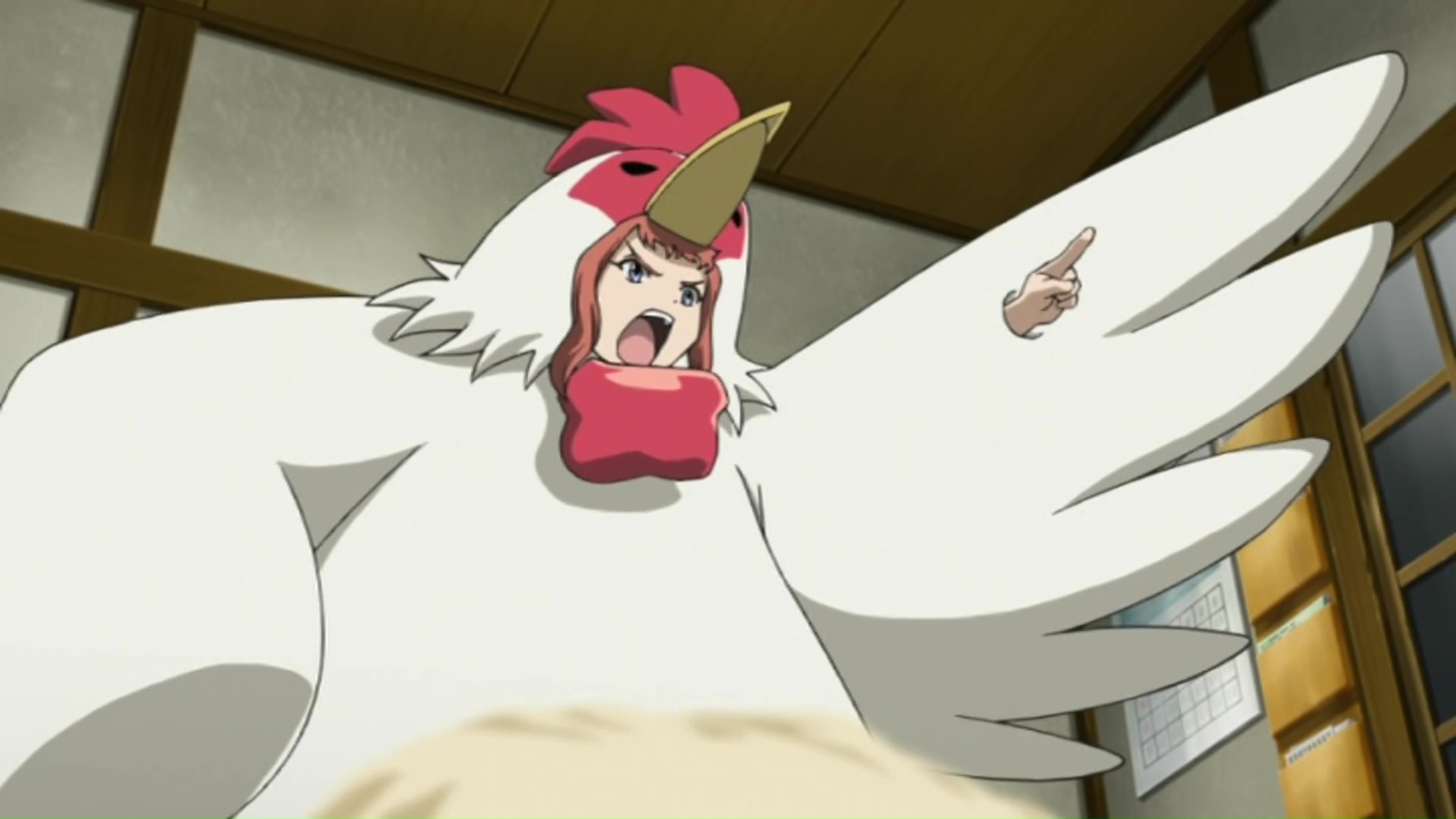
Despite this being a franchise where fans support the actors who play their favorite idols, the entire voice cast was changed for Xenoglossia. It’s an extremely odd decision in hindsight, but what makes it all the more strange is that the changes don’t stop there: age, size, personality, and more are drastically altered to the point that many characters become almost unrecognizable. The best example is the character of Takatsuki Yayoi. In The iDOLM@STER proper, she’s a small and energetic girl in her early teens known for her high-pitched voice and signature squeal of excitement. In Xenoglossia, she’s noticeably taller and bustier, is the only actual conventional idol in the show, loves to wear mascot outfits), and is much more antagonistic towards Minase Iori. 

I’m not a huge The iDOLM@STER fan, but I’ve watched the anime and have a decent idea of the core cast and their personalities. On some level, it’s impossible for me to fully divorce my preconceived notions, but this level of change is beyond rare. The closest example I can think of is the first Comic Party anime, where a high schooler got aged up and a middle schooler got aged down for seemingly no reason. It’s as if the creators of Xenoglossia just looked at some preliminary character sketches and just went their own way without regard for the source material. 

Funnily enough, the only character who’s mostly like her original self is the franchise’s flagship heroine and Xenoglossia protagonist, Amami Haruka. Her personality remains optimistic and hard-working, though tinged here with a bit of self-doubt as to what she’s capable of. But when she’s surrounded by an endless parade of bizarre doppelgangers, something always feels a little off. If one can ignore that to a degree, the show gets more enjoyable.

In terms of Haruka or any other character’s portrayal as giant robot pilots, they’re never upstaged by any male characters swooping in to save the day; in fact, there aren’t any male pilots at all. Different characters struggle with different aspects of being Idolmasters, and much of the plot is built around striving to overcome those challenges. There’s also a great deal more nudity and sexual behavior (including possibly incest?!) than would be expected of something based on The iDOLM@STER—which might be a dealbreaker for those who strongly believe in the whole “idol purity” concept, but still feels kind of odd for even those of us who don’t.

The relationship between the Idolmasters and their iDOLS also arguably runs counter to “idol purity” because the way they talk about the robots makes them seem on some level like giant mechanical boyfriends—especially the main iDOL, Imber. The robots are shown to be sentient on some level, and the way some characters work to become worthy of and accepted by the mecha while others treat them like companions comes across more like romantic fiction at times. The entire setup of Xenoglossia is conducive to this, showing itself to be the kind of anime where the requisite to becoming Idolmasters has angst-filled drama baked in.

Idolmaster Xenoglossia we got could never be made today. It came out at a time when The iDOLM@STER was a much smaller deal, as evidenced by the fact that the girls are all based on their designs from the first game rather than the revised versions from The iDOLM@STER 2 that have since been codified. This early on, Xenoglossia followed in the fine (?) tradition of titles like Lunar Legend Tsukihime, where it was assumed that a fledgling idol manager franchise needed a boost in star power and storytelling from the anime industry. Now, the shoe’s on the other foot, and if they were to attempt this again, it’d be all but inevitable that the characters would adhere much more closely to their original selves. It’s a historical curiosity, indeed.