
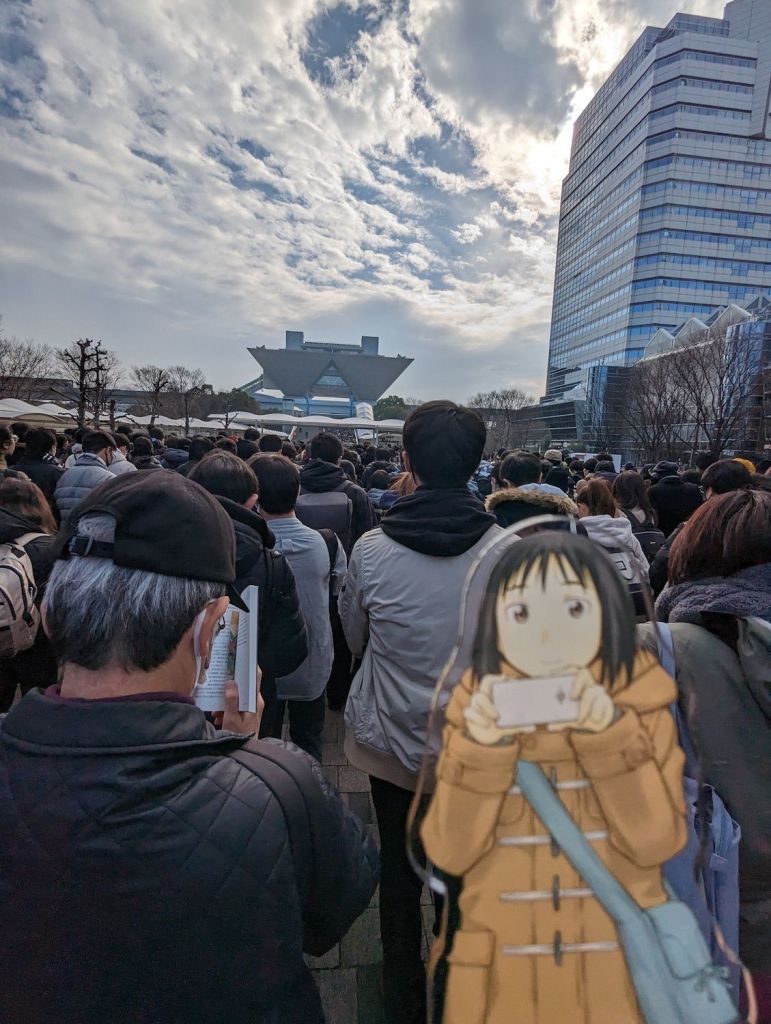
I can count on one hand the number of times I’ve been to Japan, and every stay has been memorable in the best ways. However, there’s was always one item on the bucket list that I could never quite fulfill: going to Comic Market (aka Comiket), Japan’s—and likely the world’s largest comics-related event in the world.
That’s now changed. In an adventure that felt like nearly two decades in the making, I am proud to say that I am (technically speaking) a Comiket veteran.
My Feelings Going In
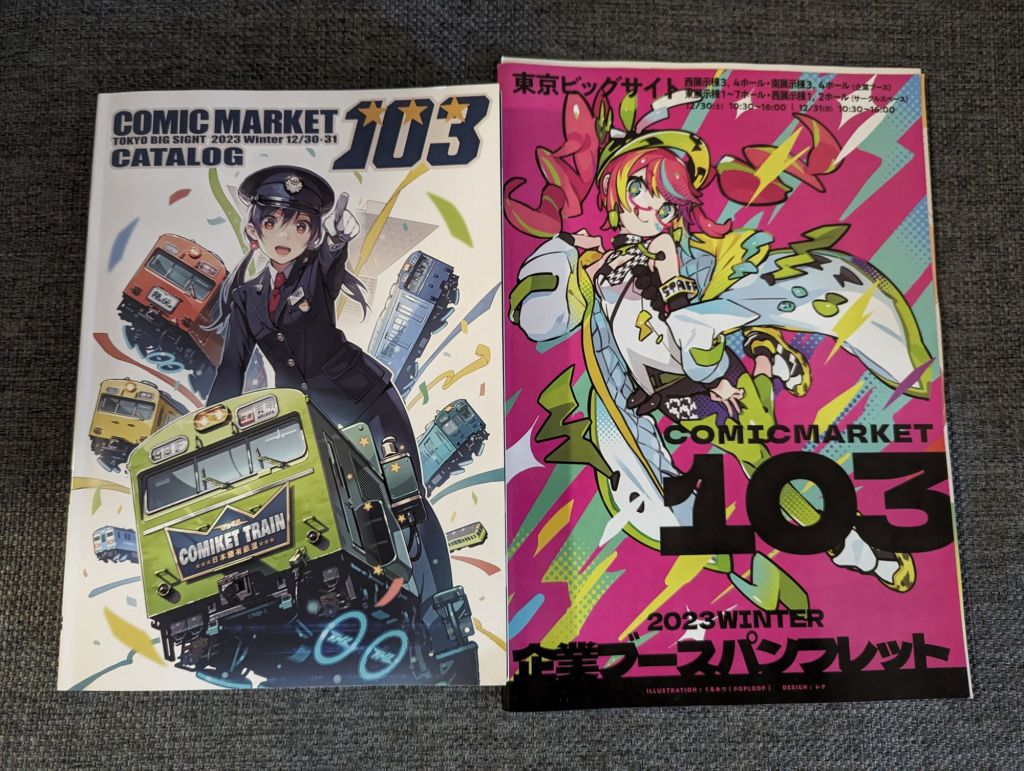
I’ve read a lot about and related to Comiket over the years. I’ve had friends and acquaintances tell me about the times they went and the money they burned. The event also looms large in my favorite manga, Genshiken—scenes such as Sasahara losing every inhibition his first time attending, Madarame breaking his hand but choosing to try to stay anyway, and an incognito Ogiue spilling her BL all over the floor are all downright iconic. But I’ve also seen comments that the event is some combination of overrated and overhyped, so I wanted to make sure I came to Comic Market 103 with expectations that were neither ridiculously lofty nor blatantly unfair.
A classic cautionary tale is that of the anime fan who gets disillusioned upon visiting Japan, because they had previously been viewing the country and its culture through the inherently distorted lens of anime. My first time there, I was prepared for everyone I met to actually dislike anime because I didn’t want to make that mistake, only to have a different experience. While Japan wasn’t quite like my animes, it was also not that far removed, and I could still appreciate it as a fan. I approached Comiket with all this in mind.
Downside
I want to start by laying out some of the negatives I ran into.
First and foremost, there were no Genshiken doujinshi, as far as I could tell. Boooo.
Second, getting to and from the venue, Tokyo Big Sight, can be an ordeal—especially depending on what time you decide to travel. On Day 1 (of 2), I ended up in a classic sardines-in-a-can situation in the morning, had to wait in line for about two hours before I could actually get into the exhibition space, and made the mistake of staying to the very end. In that last instance, it meant that a walk back to the train station that should have taken five minutes ended up being about an hour. Comiket is literally the most highly attended comic event in the world, and the approximately 30,000 circles (i.e. doujinshi vendors) would itself be considered a large convention. When you have to walk back with that many people, the pedestrian traffic jam is intimidating.
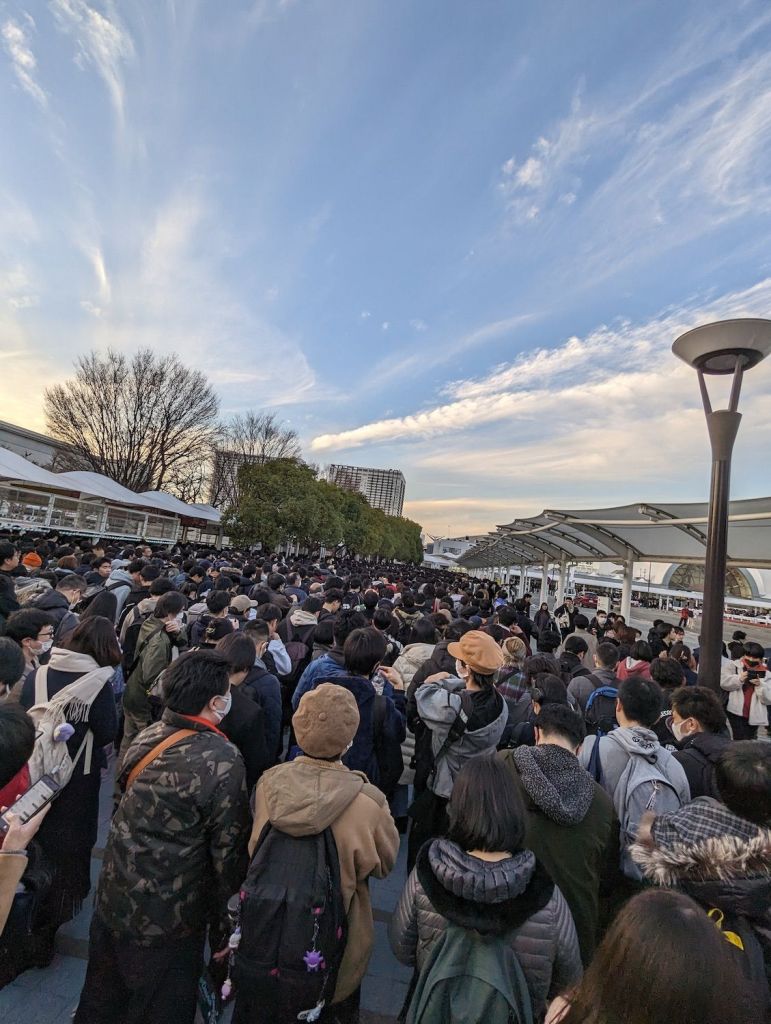
I was very fortunate that, despite Comiket taking place in late December, the weather was surprisingly pleasant. Had things not been so nice, the wait (and my overall experience) might have been more miserable.
Third is that there is very limited time to get anything, and nothing is guaranteed. A small fraction of tickets are for early entry (the doors open at 10AM), and are sold at a premium while also being lottery only. Otherwise, most people (including myself) have regular morning or early afternoon entry tickets, and can only get in later. On top of that, each day ends at 4pm, circles typically are there for only one day, and the most popular artists (especially the 18+ ones) will have massive lines. For example, I tried to get something from Mika PikaZo (character designer of Hakos Baelz and Fire Emblem Engage), and ended up going through three lines only to discover she had sold out of everything. There is a serious sense of FOMO that can make the losses sting—if something is popular, you basically have to impulse buy, or else it might be gone.
But This Is Accounted For!
There may be inevitable issues at Comiket, but that’s all the more reason I have to commend the staff for their excellent organization and crowd control. While things took time, they still progressed smoothly. And once inside, the crowds were not difficult to manage—about comparable to a large-ish anime convention. This is also owing to the attendees and circle members themselves, both of whom generally tried to follow the rules. On a few occasions, I had inadvertently blocked one table while looking at the content of another, and was asked to avoid doing so in consideration of others. The sense I got was that a lot of people involved, be they staff or otherwise, were very familiar with both Comiket and Tokyo Big Sight itself.
Something that helped with the crowds was that halls could open up to the outside, which prevented massive lines for certain artists from clogging up the aisles. I heard from a friend that this seems to have started since 2020 as a COVID precaution, and that this is an added side benefit. There’s a chance I might have felt somewhat differently if the weather hadn’t been so good, but I would have appreciated the improved ventilation regardless.
And as for FOMO, it turns out that a lot of artists sell their stuff in stores after the event, in places like the popular doujin shop Melonbooks. So not all hope is lost (though for buyers outside of Japan, you likely have to spend more on shipping fees and third parties).
What this all means is that negatives do exist, but they are accounted for and mitigated to a decent degree.
Upside

Although Comiket is not perfect, it’s still a great event that showcases what makes the otaku spirit special. There are drawbacks to being so massive, but the sheer amount of stuff both ultra popular and extremely niche, all in the same space, is a sight to behold.
The biggest categories this year were VTubers and various mobile games (or at least mobile game–adjacent works). But even if you’re into none of that, there’s still a chance you can find creators with which you share a common interest—and that’s even putting aside the 18+ stuff.
Here is some of what I ran into over the course of two days.
- Srungle fanfiction
- Guides to NYPD call signs and insignia
- Illustrated food guides
- Andy Hole x MIX from Aquarion EVOL in the year 2023
- Original mecha drawings
- Pilgrimage guides for fans of particular franchises
- A book dedicated to events for Kawamura Maria, the voice of Naga from Slayers
- Guides to bootleg ZOIDS
- Cure Precious x Black Pepper Precure het shipping
- Illustrated collections from actual VTuber character designers/collaborators
- Cosplay model photo collections
- Initial D BL
- Yotsuba& parodies of Zambot 3 and Daitarn 3
- Both het and LGBT Gundam: The Witch from Mercury shipping
- Literally Sonoda Ken’ichi
It might be easier to find smaller events throughout the year that are hyper-focused on your particular interests, but nowhere is the sheer diversity of fandoms more on display than at Comic Market, even if certain specific titles dominate the majority of the physical space. It’s wonderful.
Vs. Conventions
The sense of discovery at Comiket is second to none, and I can’t help but contrast it with anime conventions in the US. One of my biggest problems with artist alleys is that it’s hard to find fanart of more obscure titles. This is because con tables are expensive (Otakon is $375 USD as opposed to Comiket’s 8000 yen, around $60–$80), and artists tend to display what’s most popular, probably out of the need to recoup the expenses. It’s not impossible, but sussing out the weird stuff involves going through artist portfolios or asking, which can be awkward or time-consuming. On the other hand, because Comiket tables are generally grouped together by interest, and their specific interests are front and center, you can know at a glance what to expect.
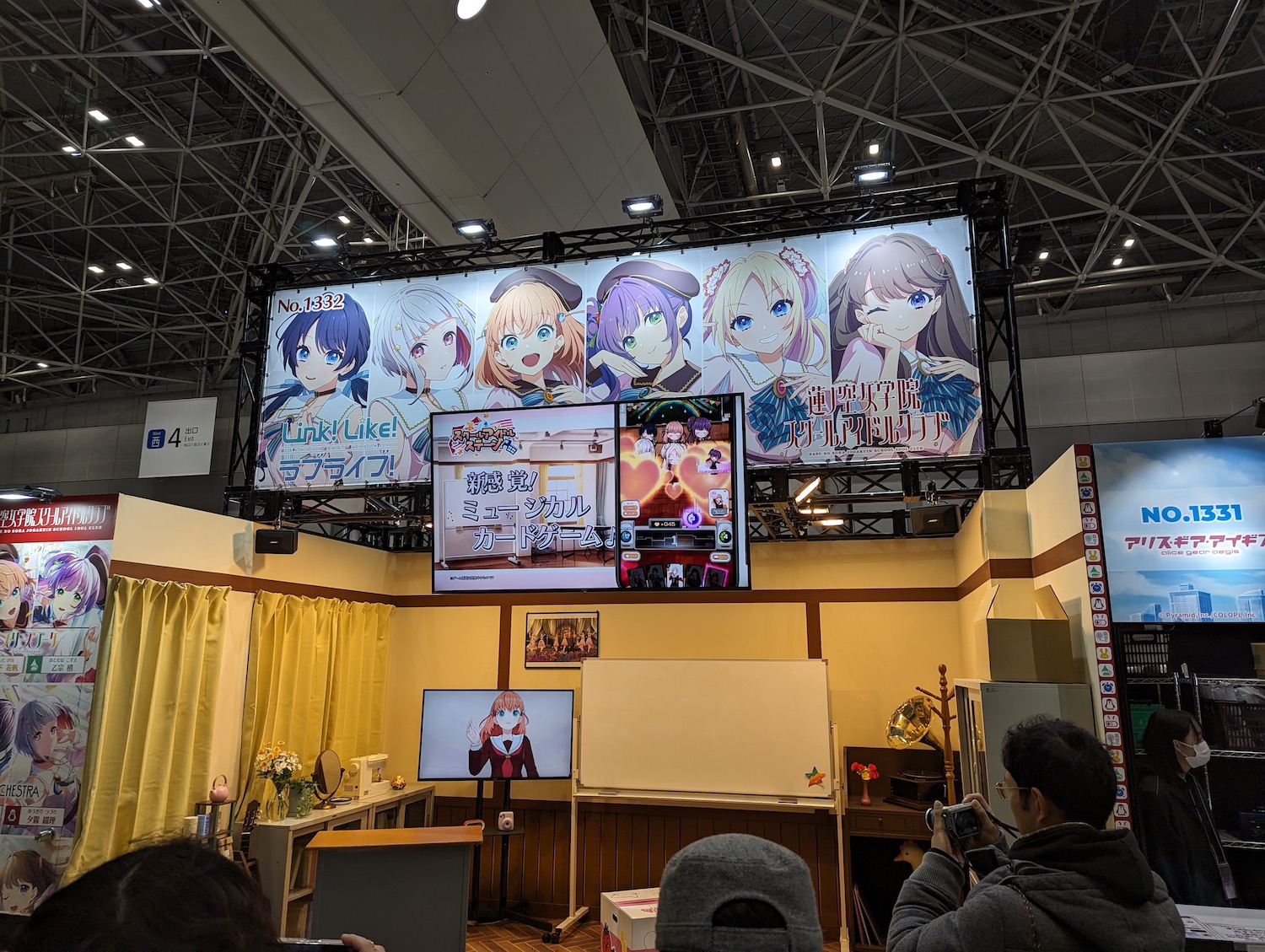
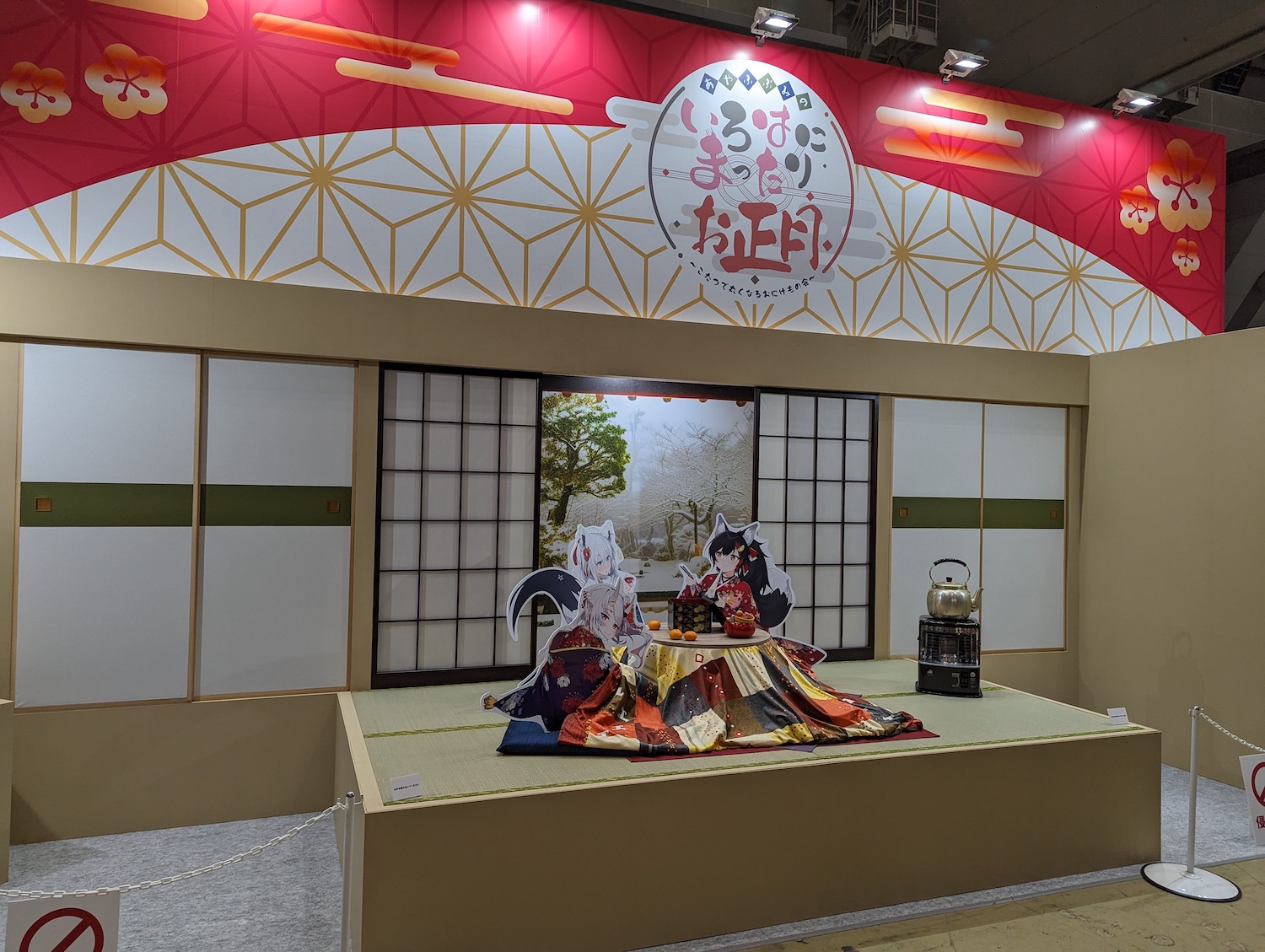
There was an industry presence at Comic Market 103, but it was much smaller than the space dedicated to doujin works. This is actually the opposite of American conventions, where the official booths and merch usually take up the majority of floor space. One thing I found interesting is that most of them, more than being manga-related, were more otaku-focused. That is to say, they were properties that attract hardcore dedicated fans—things like VTubers, Love Live!, The iDOLM@STER, mobile games, etc. One interesting presence was a booth for My Youth Romantic Comedy Is Wrong, As I Expected, which is celebrating its 10th anniversary. I saw quite a line for merch there, and as a fan of the series, I’m glad to see it get some real love.
Another difference is that con-style panels and talks, be they fan-run or professional, are non-existent. They’re typically one of my favorite things, so their absence is a tad disappointing, but I also already knew that would be the case. All this goes back to time being a precious resource. No one really lingered or tried to socialize either, and the fact that the food truck lines were short (unlike an anime con) encapsulated one important fact: Attendees had priorities, and only a few hours to get what they wanted.
Overall Thoughts
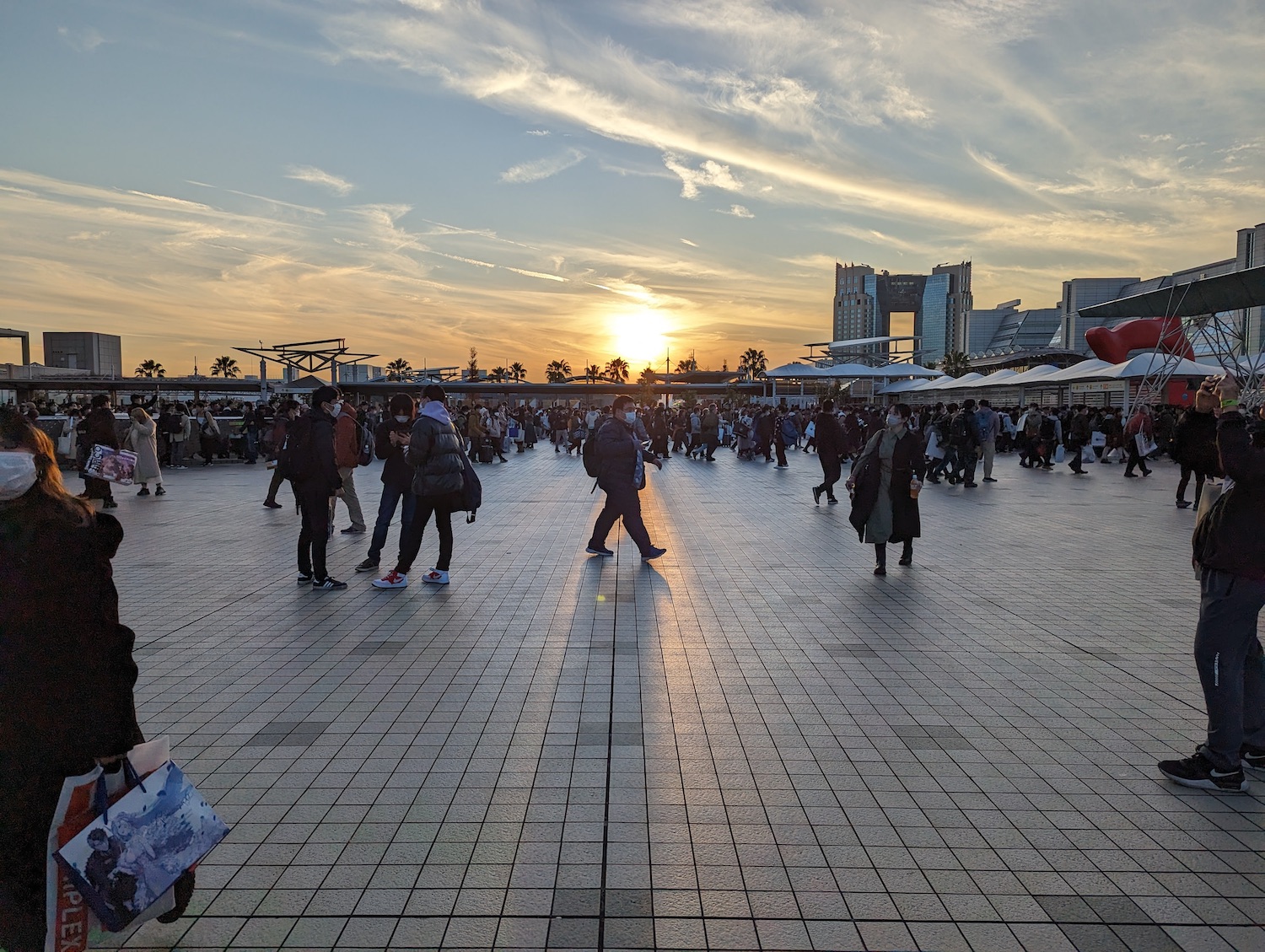
Comic Market isn’t really one fandom, but rather dozens side by side in the same space. This approach has its strengths and weaknesses, and both are magnified by the sheer size of the population attending it. But while there are disparate groups, they all have the same general goal of finding the books that resonate on a personal level, and I think this gives the entire event a certain focused energy.
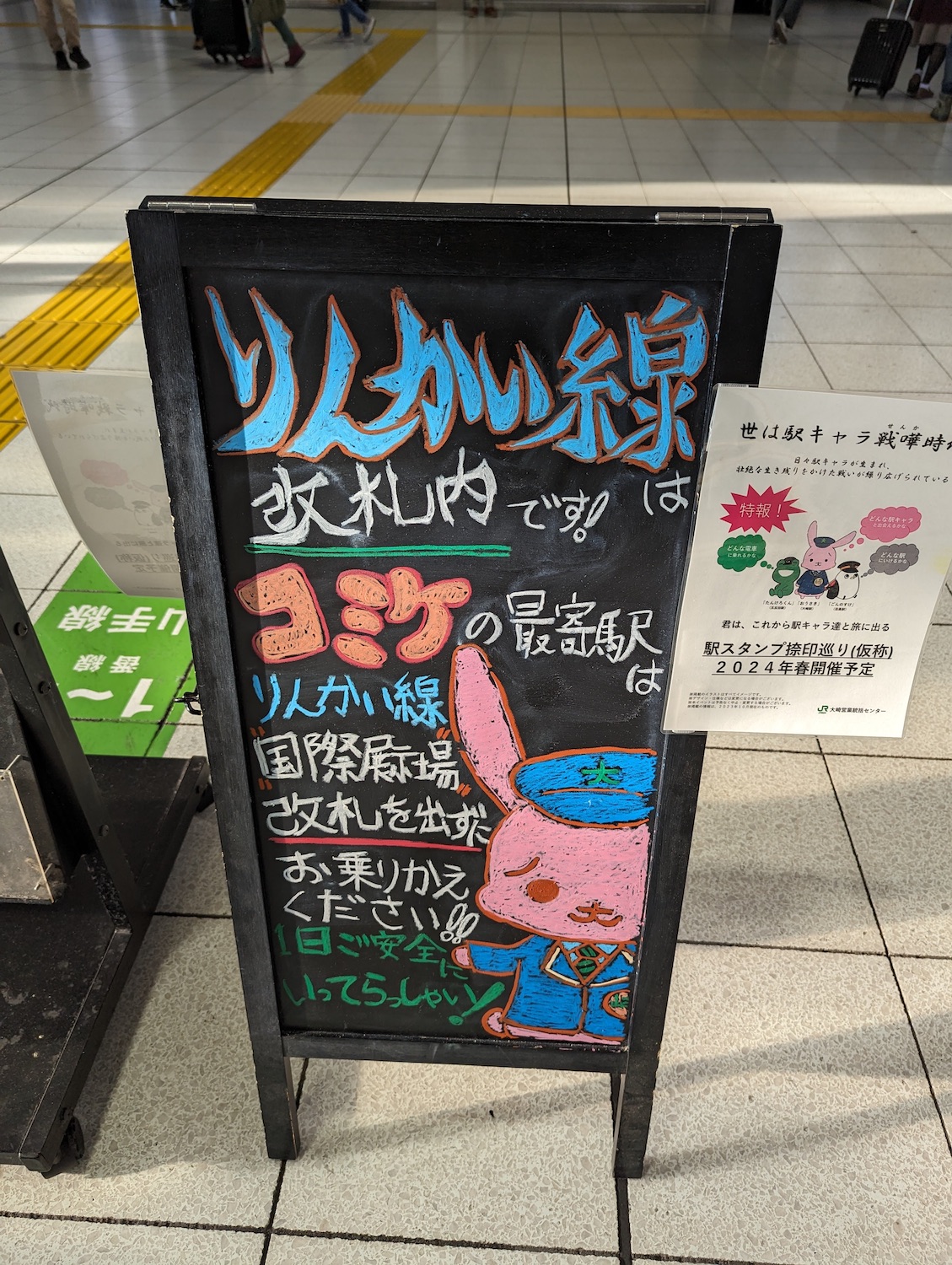
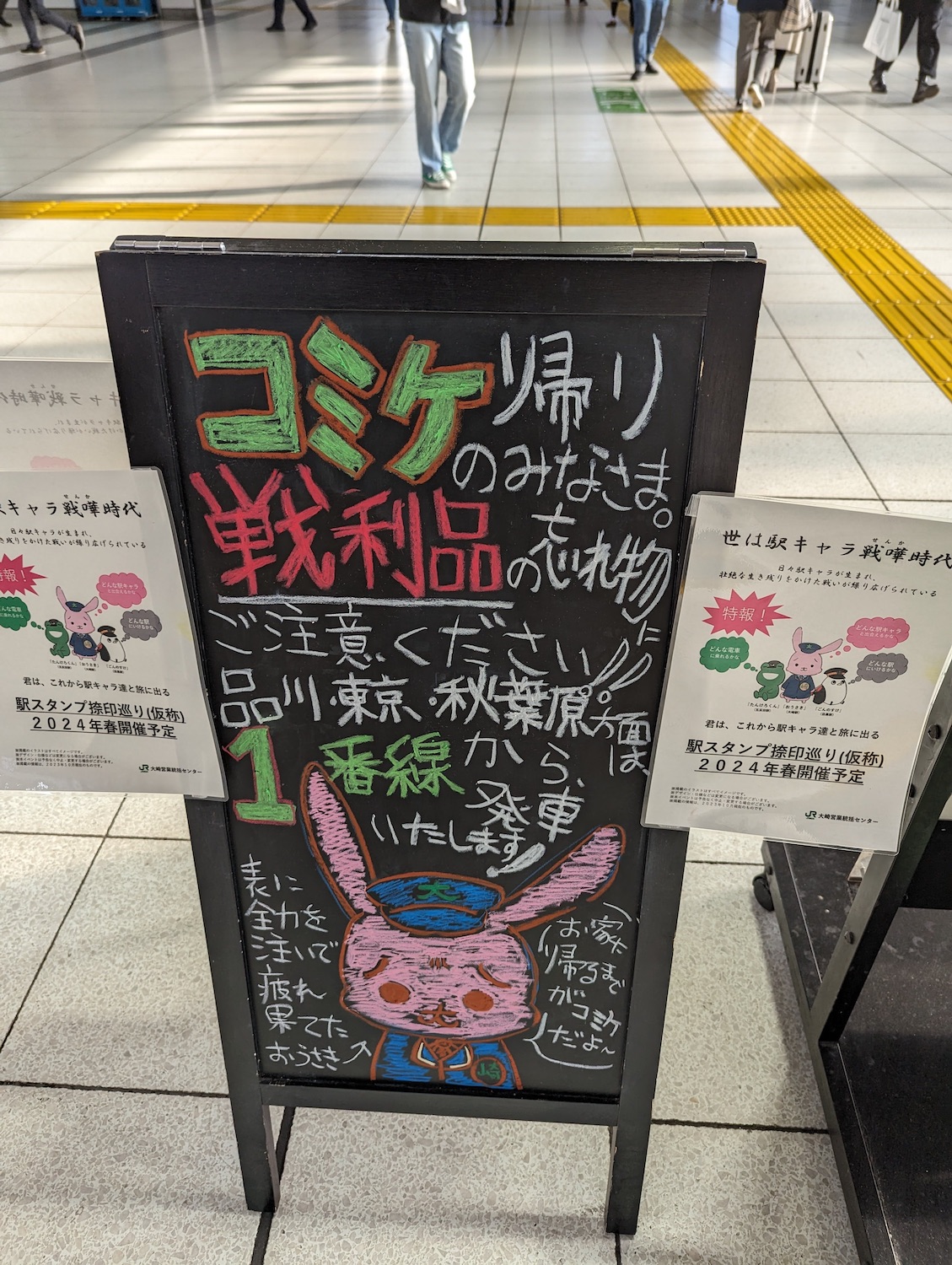
At the Osaki train station, one of the transfer points to get to Tokyo Big Sight, there was a chalkboard sign both welcoming people to Comiket and thanking everyone on the way back, depending on which direction you were coming from. It’s a small gesture in the grand scheme of things, but this double-sided sign’s presence really hit home for me the fact that the majority of hardcore fandom in Japan descends on a small strip of land.
I can’t say if this should be the first doujin event a person should visit, and it might not even be the best choice, depending on what one values. However, I can personally say that I had a great time, I’m happy to have done it, and if the stars align, I’d be more than willing to go again.
 OGIUE MANIAX