
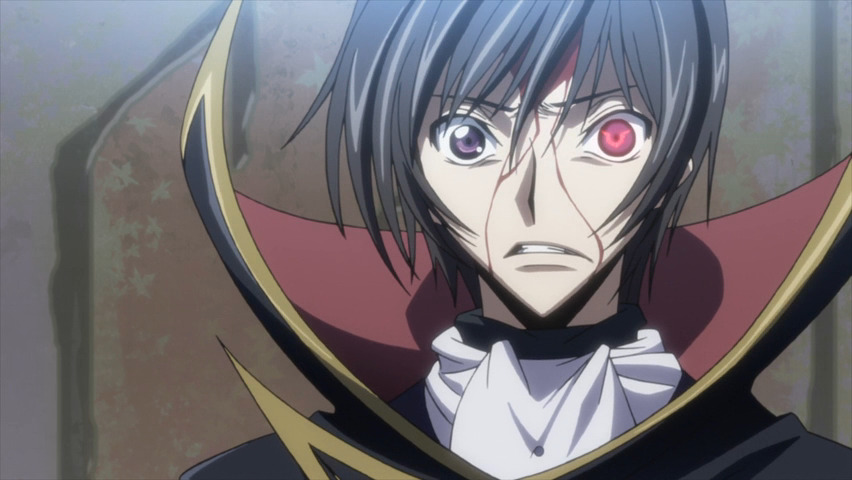
Tabata Hisayuki is an animator and animation director with over 20 years of experience in the industry. He’s best known for his work on anime from the Fate franchise, as well as being involved with works such as Code Geass.
What was supposed to be a group press conference at Anime Central ended up being a one-on-one session, which resulted in a longer interview than is typical.
You started working in anime during a time when the transition from cel to digital, as well as to widescreen, was occurring. Looking back on that period, what do you think about it now?
For me, the digital media was actually much better. All the frustrations I had with analog were solved by digital. So I think I transitioned to digital much quicker than most other people.
In your career, you’ve worked on multiple projects involving Kimura Takahiro, namely Godannar, Code Geass, and Gun x Sword. In light of his unfortunate passing this year, do you have any stories you’d like to share about working with him?
Kimura was a lot older than me—by 12 years—so I wouldn’t dare say he was my friend, but during Code Geass, our desks were next to each other. He was always a great mentor to me, and he treated me as an equal colleague. As for all the memories I have of him, there’s so much that I don’t know if I have enough time to talk about it here.
As director on Warm, Winter Canada, did you work closely with the Canadian Tourism office? What kind of feedback did you receive from them?
Let’s start by saying that they brought me to all the cities they wanted me to promote, and that made a huge difference because it meant I could incorporate all my personal experiences into the videos.
What do you think are your strengths as an artist and animator?
That would be my attitude towards work, but as for my actual professional skill, it would be subtle character acting. I like to put acting into my characters, and I do believe I am considered for those kinds of skills.
There aren’t too many animators who are interested or capable in animating characters according to their personalities rather than giving them flashy actions, so I think that’s a selling point that I can give.
What motivated you to get into animation? Were there any works that really influenced you and your style?
I’m just one Japanese otaku, and for my generation there is just one influential show, and that would be Evangelion and all the other GAINAX shows. So I think my influences are the same as everyone else’s.
And this is hard to say in the open, but I got to know Kimura Takahiro’s work not through his anime, but rather one of his pervy games.
Between being an animator and an animation director, which do you prefer and why?
Animator.
Are there any projects, specific scenes, or any other work that you feel most proud of?
I think all the projects went well, and it’s hard to single out just one. But when I talk to overseas fans, they always bring up Fate and Code Geass, so I’m glad I worked on those two shows.
Being an animator in Japan can be a very difficult and laborious job. What do you think would help make “animator” a more stable profession?
I do think the working conditions of animators have improved a lot over the years. But if you look at the general flow of capital, it’s structured so that those at the top of the rights pyramid take all the pay, and it’s up to us production staff to make it with the spillover from that. And so without fundamental change in that structure, I don’t think there would be any big change. Recently, though, I do think there have been some moves towards changing that structure as well.
For example, individual animators don’t have any rights, so even if I want to draw Tohsaka Rin or Saber for someone at Anime Central, I wouldn’t be able to do that. So even if it were just free permission for a visiting animator to draw these IP characters for the public, I think that would be a big change.
I deeply regret that even though I might be the character designer, I can’t draw these characters that I’ve designed, for fans at locations like Anime Central. If I draw these IP characters without permission, Crunchyroll might get upset.
Are there any upcoming projects of yours that you think anime fans should know about?
There was supposed to be a project I could have announced here. Two months ago, it was permanently canceled.
But the next project I’m involved in should be due for announcement soon. I’m not the character designer for it, but I am the animation director, and it’s a wonderful project. So I look forward to it being announced.
It seems we have more time than expected, so would you be able to talk a bit more about your experiences with Kimura-sensei?
As an example of how we got along, we would exchange New Year’s greeting cards every single year, and the sketches on both of our cards would be very pervy. Would you like to see some examples?
Sure! [Note: Image cannot be shown]
(Chuckles) I don’t have the ones that I drew for him.
In my fond memories, since I was in charge of all the pervy scenes in Code Geass, Kimura would be grinning and correcting all my work next to me.
And since our desks were so close, I would always see how hard Kimura worked. I worried for his health, but he kept assuring me that he would be okay. He did leave us early, though. But I can’t forget all the times I had with him back then. I learned everything from him, and I enjoyed all those times. My attitude as an animator, as well as my skills, are things that I learned from him.
I know that I’m going to just start tearing up if I recall everything in a proper perspective.
You said you’re a fan of Evangelion. Did you have a favorite character?
Asuka. Back in the old theatrical release, the one from way back, the presale tickets would come with a prepaid telephone card. So I started lining up the day before to get it.
So I really am a living example of an otaku who went professional.
Have you been able to see the recent Shin Evangelion movies? What did you think of them?
I think the remakes of Evangelion have really mellowed out. Personally, I’m much more fond of the original films that were much less mellow.
You just described yourself as one of the otaku who became animators. I think lots of people have aspirations to become animators—what do you think made you different?
Well, I don’t know if I was “successful,” but I have been able to continue for 23 years, and I think it’s because I’ve been able to deliver and gain trust. This is the same as any professional job.
You mentioned being in charge of pervy scenes in Code Geass, and you also mentioned being very good at character acting. Are these two things related?
Yes and no, but technically speaking, they’re not related because those are different modes. But I gave my best to both.
Before, you preferred being an animator over being an animation director. Why is that?
As an animator, I don’t have to correct other people’s works.
As you said, people know you for your work on the Fate franchise. What is it like seeing it get so big over the past 10 years?
I do feel lucky that I was involved with Fate. But after Fate/Stay night, Unlimited Blade Works, and Heaven’s Feel, I haven’t really followed up on the franchise, and I’m not so familiar with the game’s expansions such as the mobile game, but I just think it’s impressive.
Do you have a favorite route of those three?
Of course, it’s Unlimited Blade Works.
Are there any anime or manga from growing up that you would like to see revived—maybe even with you work on it?
I’m not so interested in revivals, so I’m stuck for an answer.
Is there any anime genre that you haven’t been able to work on that you would love to be involved with?
There may not be so many missed opportunities for me, since if there was a genre I wanted in on, I could always find a friend to refer me to it.
Having noticed that Code Geass and Fate are popular among fans outside of Japan, have you noticed any differences in tastes and preferences between fans in Japan and fans abroad?
For me, the reaction from overseas fans is limited to occasions such as conventions. But seeing the fan reaction to Code Geass, I don’t see much of a difference. Is that something you feel is different?
I find Code Geass was popular both in Japan and especially here a few years ago. Fate has become very popular over time here as well, very much thanks to the mobile game, Fate/Grand Order.
I do think it’s very much the same between Japan and overseas because the lack of time lag due to streaming has brought things to the same place.
Speaking of that, there’s talk these days about how anime production is increasingly international, involving Crunchyroll, Netflix, etc. Do you feel there is a difference between creating anime that is primarily targeted towards Japan vs. a more international audience?
This is a question best answered by a producer rather than a line animator, but for the Japan-side shows, I do think there is much more emphasis or interest in hitting ratings for the Japanese domestic market. That might be the sole focus.
Do you have any advice for aspiring animators?
To become an animator in Japan?
Let’s say yes.
There are a lot of animators who work overseas remotely with Japanese studios, so borders are starting to become irrelevant. There are issues about this, but time will solve them. Perseverance is the best advice.
Was this remote work because of the pandemic or was it even before that?
This was a trend that started before the pandemic, but I do think the pandemic accelerated it.
Are there any other workflow/production changes that have occurred because of the pandemic as well?
Digital production has really accelerated. Or rather, COVID really separated it into two layers: the ones who succeeded in digitizing their workflows and those studios that were left behind.
You don’t have to name names, but for the studios left behind, does that mean that they are no longer around or that they’re just having to catch up?
This really depends on the sense of urgency at each studio. Some will be able to catch up and others will end up disappearing just because the digital workflow is inevitable, and everyone needs to move on.
Going back to the topic of Canada, the Tourism office sent you to a lot of places. Did you have a favorite?
I like cold climates, so there are plenty of favorites, but I ended up liking Yellowknife. Since this was my first visit to Canada, I liked it so much that I went there again two years later for a personal visit. For that trip, I revisited Vancouver, and also Banff and Yellowknife.
Did you grow up in a cold area in Japan?
Not at all!
Haha, I see.
Thank you so much for the interview!



 OGIUE MANIAX