The Question of Strength—Demon Slayer: Kimetsu no Yaiba -Infinity Castle- Part 1

It is a hell of a move to conclude Demon Slayer, one of the biggest anime and manga of the past 10 years, with a trilogy of movies. I have to assume that putting it in theaters is a way to both create hype and make lots of money in the process, and dang it, it’s working. Not only is Demon Slayer: Kimetsu no Yaiba Infinity Castle- Part 1 an overall compelling watch, but it’s apparently the biggest box office weekend in the US for an anime film since Pokémon: The First Movie

Despite being the finale, the premise of the Infinity Castle movies is a simple one: After a costly confrontation against Kibutsuji Muzan, protagonist Kamada Tanjiro and the rest of the Demon Slayer Corps seemingly have the villain cornered. However, the heroes suddenly find themselves teleported into the heart of enemy territory. Here in the infinitely expanding castle that Muzan calls his home base, they must face his strongest lieutenants while dealing with a space that defies logic and reason. If they don’t take out the demons here, all will be lost.

The setting is pretty much perfect for a shounen battle anime: an array of elaborate and intense fight scenes that also tell interesting stories about the characters involved. Some clashes are culminations of previous storylines, others reveal previously unknown sides of characters, and everything remains pleasantly hard to predict. It’s a little bit Ninja Scroll and a little bit Girls und Panzer films in terms of never letting up on the tension, with the occasional requisite backstory flashback being the main way to calm things down.

But while Infinity Castle Part 1 is pretty much all “fight, fight, fight,” I think it still portrays compelling and often tragic dramas involving both the beauty and ugliness of humanity in a satisfying manner. Through it all, the film emphasizes ideas that have been core to Demon Slayer: Mutual cooperation can overcome obstacles, compassion is a strength, and humanity is built on helping the weak and paying it forward to the next generation. 

One issue with this movie is that while it has not yet been adapted for TV episodes, it still feels like a series of episodes or chapters stitched together. There was little attempt to structure it as a feature-length film, especially when it comes to the positioning of flashbacks (of which there are many). Moreover, Part 1 is over two and a half hours long, and while I enjoyed every minute, it did feel a little bloated and awkwardly paced at times.

Every battle in the movie are amazing, but I do want to give particular attention to the main fight of this first movie, so there will be SPOILERS AHEAD.

As Tanjiro and the others try to make their way through, he and Giyu the Water Hashira are attacked by Akaza, Muzan’s third strongest minion, and the one with whom Tanjiro has the most history. It was Akaza who killed a valiant Rengoku Kyojuro during the Mugen Train arc, and when they last met, Tanjiro was far outclassed by the demon and his hand-to-hand fighting skills. However, Tanjiro also left a searing impression in Akaza’s mind, calling him a coward for fleeing at dawn when Demon Slayers have to fight demons in the dark of night all the time. 

In this violent reunion, Tanjiro manages to accomplish what he couldn’t before when he slices through Akaza’s body. While this is only a temporary setback for the demon, it’s the first sign that Tanjiro has grown as a warrior. Unfortunately, Akaza quickly adapts to both Tanjiro and Giyu, and it isn’t until Tanjiro manages to piece together various thoughts and memories related to Akaza, the nature of battle and conflict, and his own childhood with his father that he manages to tap into a higher plane of martial expression (the “transparent world,” where killing intent is absent and only movement remains) that he deals a catastrophic blow to his opponent.

While Akaza somehow survives and even starts to regenerate from the brink of demise, the fact that Tanjiro surpassed him in battle, if only for an instant, helps jog Akaza’s faded memories. Remembering his turbulent past life as a child thief trying to get medicine for his gravely ill father, and the second chance he received from a martial artist and daughter before Akaza’s happiness was ripped from him by a petty local clan, Akaza realizes that Tanjiro is exactly the kind of person he wanted to be. The bloody pursuit of strength that has defined him as a demon is revealed to be a corruption of his own desire to live honorably and protect his loved ones. Akaza willingly defeats himself (literally), and visions of his departed fiancee, adoptive father, and birth father help him to shake off Muzan’s control and pass on for good. 

I am utterly impressed by the way this fight plays out. It just encapsulates so much of what makes Demon Slayer a great series, especially the way Tanjiro’s heart breaks through even the toughest obstacles, including the very demons he fights. Akaza is shown to be a human who struggled with the unfairness of the world that punishes the poor for merely existing, and that much of the trauma he suffered came from human hands. Yet, he also recalls a lesson from his old life that it’s never too late to start over, and this puts him on the path to relinquishing his demonhood, even at the cost of his life.

END OF SPOILERS

As someone who was there in the theater to watch Mewtwo Strikes Back back in 1999 and remember the buzz surrounding it, this record-breaking achievement says a lot about how far anime has come. This is maybe the biggest sign that anime has truly, truly arrived on American shores, and the long-time fan in me rejoices in this development. And given what a great watch Infinity Castle Part 1 is, I wouldn’t be surprised if fans are going to watch it multiple times. 

Now it’s time to see how the next film plays out. 

The Dawn of the Sports Boys: Captain Tsubasa

Tsubasa, the spiky-haired hero of Captain Tsubasa, delivering a powerful midair kick to a soccer ball that looks more like he's launching a laser beam from his foot.

As an anime and manga fan, I enjoy checking out the big fan favorites of yesteryear. It helps broaden my perspective on these artforms, and gives me an opportunity to form my own opinions on a work and not rely solely on the views of others. And who knows—maybe I’ll get a new favorite. In this spirit, I recently familiarized myself with a manga that is not only beloved worldwide for its portrayal of soccer but also the father of the modern shounen “team sports boys” format. Before Blue Lock, Yowamushi Pedal, Haikyu!, Prince of Tennis, and Slam Dunk, there was 1981’s Captain Tsubasa by Takahashi Yoichi.

Regarding reading older major titles, Shounen Jump has been a consistent resource of works for me to tap, such as Saint Seiya and Hunter x Hunter. But while these titles are huge in their own right, Captain Tsubasa’s influence is really something special.

In Japan, Captain Tsubasa helped propel the popularity of soccer nationwide, even being published in a time when “World Cup” wasn’t even a commonly known phrase. Abroad, it gained popularity anywhere soccer was. On my most recent trip to Japan, I watched an episode of Why Did You Come to Japan?, a well-known program that interviews foreigners who are in Japan. This particular episode followed a German fan who made a pilgrimage just out of love for the series, during which he got to visit the real inspiration for the school in the series, among other things. There’s also a famous story about the occupation of Iraq by the US military, where water trucks were covered with images from Captain Tsubasa to show that they were friendly vehicles.

Creating love for soccer at home and garnering praise internationally for its portrayal of the sport are parts of the legacy of Captain Tsubasa. But it was also important in another area that has become a prominent part of anime and manga culture: doujinshi. In my review of the giant robot anime God Mars (also from 1981), I described it as one two series fundamental to the establishment of the fujoshi fandom as we know it today—the other was Captain Tsubasa. Having read the entirety of the first manga series, I now feel that I understand exactly why this story of young soccer athletes achieved the hat trick of domestic influence, international acceptance, and subculture proliferation.

Let’s talk about the actual story: Captain Tsubasa kicks off with a hell of an introduction to its main character, Ozora Tsubasa. As a small child, Tsubasa is literally saved from a truck by a soccer ball (avoiding the isekai protagonist fate, in the modern parlance), and his life is forever changed. The boy falls in love with the sport, treating the ball like an extension of his body. And as Tsubasa grows from impetuous kid to adult with soccer in his heart (though I only read up to the point where he finishes middle school), he influences every other player he meets, be they friendly or adversarial or both.

Those looking at Captain Tsubasa, especially from a modern perspective, might be surprised by its aesthetic, expecting a title known for its various fandoms to either have characters who look impossibly cool or incredibly beautiful. Instead, Takahashi’s designs feature ridiculously long and stilt-like legs, squashed craniums, and bird-like eye placement that makes it seem as if the characters can see in two different directions at once. How could this possibly be the series that helped spark soccer fandom and spawned shounen sports BL shipping? Yet, despite the odd look of the characters themselves, two things become clear even from the very beginning. 

First, the manga is fantastic at depicting action and tension. When portraying things like passing, dribbling, and goal attempts, the art is very clear and easy to follow while still creating excitement. When the athletes use their ridiculous signature moves (that aren’t meant to be supernatural but still play fast and loose with the laws of physics), there’s a satisfying sense of weight and emotion. The paneling frequently takes advantage of the double page spread to portray very wide shots, especially when points are being scored. It almost feels as if Takahashi made some kind of pact that made him a genius at depicting characters in action in exchange for being bad at drawing them standing still. 

A bunch of manga characters who are elementary school boys in soccer uniforms. Most of the kids look to be realistically young, but the one in front is weirdly lanky and muscular.
Kojiro as a gigantic grade schooler

They’re also all weirdly mature-looking. Some 10-year-olds look like they’re 16, while some 14-year-olds look like they’re 30—something we see in later titles like Prince of Tennis.

Second, many of the tropes of the shounen sports boys genre—namely having a wide-ranging cast of passionate guys engaging in intense forms of camaraderie and rivalry—are on full display here. Wakabayashi Genzo the goalkeeper starts off as Tsubasa’s first antagonist while later developing a nagging ankle injury that stymies him at dramatic moments. Misaki Taro is a student from out of town who becomes Tsubasa’s most reliable partner on offense, but who can only play for their school for a year before his family has to move away. Ace striker Hyuga Kojiro sees Tsubasa as the man he must take down, and his violent, win-at-all-costs mentality comes from a heartfelt desire to support his family. Wakashimazu Ken is a reliable goalkeeper for Kojiro who utilizes his karate background to defy what should be possible in soccer. Matsuyama Hikaru emphasizes teamwork above all else as the captain of his team. Misogi Jun is a handsome and noble all-around genius who would be the greatest youth player in Japan if not for his congenital heart disease that limits his playtime. And there are other characters.

If you were to ask who is Tsubasa’s greatest rival/partner, there really is no clear answer, making the series ripe for explorations of the imagination of various kinds. All the ingredients are there, whether one is reading for the competitive soccer or the bromances, and it’s doubly powerful when you realize how these very characters fueled their archetypal descendents in the following decades. 

It’s also worth noting that all the female characters are the kinds of managers and sideline supporters typical of sports boys series, except that this was an era when they were clearly intended to be romantic partners down the line instead of mainly audience-perspective characters. For example, Tsubasa’s main love interest, Nakazawa Sanae, starts off as a tomboyish ouendan-style cheer squad leader but becomes more “feminine” over time. I actually got a little miffed that the story couldn’t even keep that fun aspect of Sanae’s character. It’s no wonder why the female fans gravitated towards guy-guy pairings, regardless of their inclinations towards BL in the first place.

Two spiky-haired teenage manga boys (who look unusually tall and mature) trying to kick a ball at the same time in midair, which makes them look like they're clashing as martial artists.

But when Captain Tsubasa is at full strength, the excitement jumps off the page. The matches start off as exaggerated depictions of actual soccer before transforming into something that looks more like a battle manga at times. Many scenes feature opposing players clashing in mid-air like they’re Fist of the North Star characters who happen to have a soccer ball between them, and while it does start to feel ridiculous, I can’t deny the infectious energy. Though its tropes are old hat in the realm of sports boys at this point, the series holds up very well. There’s so much manly passion in this manga that it’s no wonder it formed so many different fandoms and even played a part in making soccer a national sport in Japan. 

Personally speaking, the ball is not my friend, but maybe Captain Tsubasa is now.

Demon Slayer: Kimetsu no Yaiba and Kibutsuji Muzan’s Great Flaw

Demon Slayer: Kimetsu no Yaiba’s Hashira Training Arc has just finished, acting as the prelude to the end. There’s a controversy over its pacing (namely that it streeetches out what is a brief section of the manga despite relatively little source material), but I’d like to put that aside to talk about what I think is the most important moment from the season—one that highlights a core aspect of the main antagonist, Kibutsuji Muzan.

In the final episode of the Hashira Training Arc, Muzan confronts the head of the Demon Slayer Corps, Ubuyashiki Kagaya, who is bedridden and not long for the world. The eternally youthful Muzan mocks Ubuyashiki for his physical deterioration, only for Ubuyashiki to speak about Muzan’s obsession with his own immortality. The demon slayer leader juxtaposes this obsession with the driving animus of the Demon Slayer Corps: though it may consist of mortals, their collective will to defeat the demons lives on. In contrast, the demons rely entirely on Muzan for their continued existence. If he perishes, so too will they.

There lies the inherent opposition between the group structure of demon slayers vs. demons. Muzan has created a system where he alone holds all the cards, going beyond even the most tyrannical despot. And not only does he view his minions as property, he is unwilling to cede any degree of power to them if it is not under his full control. Whereas Ubuyashiki’s followers come to respect him for his compassion and determination, the demons cower in abject fear of Muzan because they are nothing without him. The Demon Slayer Corps legacy carries on, and not simply through childbirth. Instead, it is accomplished primarily through teaching and raising the next generation to be better.

The difference between Ubuyashiki and Muzan comes down to selfishness. It’s the boss who expects everyone to be at their beck and call, the narcissistic parental figure who demands their children listen to them just because, the political leader who passes laws to benefit themselves rather than their citizens. It didn’t have to be the case that toppling Muzan ends the demons, but the man set it up that way, mistakenly believing his weakness to be strength. As we now await the final movie trilogy to conclude Demon Slayer, I’m interested in seeing how this all plays out.

Why It’s So Hard for Shounen Battle Manga to End on a High Note

The author of One Piece, Oda Eiichiro, once stated that he always wanted to make a manga series where the ending is the most exciting part. Right now, it looks like his flagship series could very well be heading in that direction. However, when I thought about whether this is possible, I couldn’t help but think about the fact that the graveyard of shounen manga is strewn with series that failed to hit that goal—if they even had a chance at all.

So many shounen manga, particularly popular battle manga, usually peak well before the end. While taste is subjective, I think it’s a common opinion across various titles. In Kinnikuman, the tournament to determine the king of Planet Kinniku is actually pretty good, but it kind of pales compared to the Akuma Daishogun arc. Fist of the North Star peters out after Kenshiro’s climactic clash with Raoh. Naruto and Bleach have many possibilities as to the best arc, but it’s definitely not their finales. L in Death Note is remembered far more fondly than other rivals. Even with Oda’s beloved Dragon Ball, Majin Buu is not usually the villain people would regard as the best or most memorable.

That’s not to say it’s impossible. Two answers I received when I asked on Twitter were anything by Fujita Kazuhiro (Ushio & Tora, Karakuri Circus) and Yu-Gi-Oh! Funnily enough, these two examples also came up in a private conversation I had on the same subject. Nevertheless, the odds are not in One Piece’s favor.

The reason for this hurdle is pretty simple, I think: Most successful shounen series end up getting somewhat zombified, as they’re expected to keep going for as long as they’re popular in the hopes of bringing in more readers. No matter how creative manga authors might be, or how well they can plan, it just gets increasingly difficult to run on all cylinders. On top of that, even if an author has a brilliant ending in mind, they might still get canceled early, or their attempts to force a finale are ignored. Toriyama, for example, clearly tried to finish Dragon Ball in the Freeza and then the Cell arcs, only for the manga to keep going.

One big X-Factor is that Oda is on another level in terms of long-term planning. His signature series is basically an armory full of Chekhov’s guns situated next to a clothing store dedicated to alternating shoe drops. If anyone can pull it off, it’s surely him, but when your manga has been going on for almost 30 years (!!!), that is a whole lot of anticipation to live up to. Good luck, man.

So…Can you think of any shounen battle manga that was at its best and most exciting by the end?

I Finished Reading the Saint Seiya Manga

Five teenage boys all clad in extremely ornate, shining armor, joining fists while shouting, "Time to unite our lives and cosmos, and strike at Hades!!"

I can finally say that I am hip to the trends of 20th-Century South American anime and manga fandom, as well as other fandoms worldwide. I have continued my reading of the original Saint Seiya all the way to the end, and I now know who the characters are, where their appeal lies, and what makes the series so memorable. At least, I think I do.

Saint Seiya (also known as Knights of the Zodiac) is a 1980s Shounen Jump manga about Seiya, a teen orphan who earns the power of a mystical armor called the Bronze Pegasus Cloth in order to find his missing sister. However, taking this path results in him having to fight rival Saints, before eventually teaming up with them to take on greater threats—including the forces of Greek gods. The series takes a while to find its footing, but once it all coalesces, the result is a work full of passionate pretty boys with intense camaraderie whose many battles take readers through a roller coaster of emotions as one shocking development leads continuously to the next.

It’s very clear to me that the series plays things by ear rather than possessing a more concrete long-term plan. Many seemingly important plot points fall by the wayside, as if the author, Kurumada Masami, wasn’t always sure what Saint Seiya should be. It takes a circuitous path to becoming the tales of Athena’s Saints protecting the Earth, and even after that, many arcs conclude feeling like they might be the last. Characters frequently come back to life or have their armor seemingly irreparably broken only to be restored in some never-before-seen way. According to George Horvath, a big Kurumada fan, the author actually let the readers decide who would join the team, and the series does really feel like it was built in part off fan input in a manner similar to pro wrestling.

But what carries the manga through is just the sheer spectacle and excitement built around its core cast, the Bronze Saint, all of whom have very distinct personalities and appeal. Pegasus Seiya is brave and clever, as is befitting a shounen protagonist. Dragon Shiryu is wise and righteous like a kung fu master. Cygnus Hyoga is cool yet fierce. Andromeda Shun is gentle and compassionate. Phoenix Ikki is headstrong and stoic, his sparse appearances akin to a much less merciless and infinitely more effective Tuxedo Mask who throws traumatic hallucinations instead of roses. Every time one of them gets to shine, their most prominent qualities are on full display and add to the drama of the moment.

One thing that increasingly stood out to me is how every character is extremely willing to sacrifice themselves for others. Again and again, warriors both major and minor try to throw their bodies into the jaws of doom to help save the day. At one point, in what’s called the Poseidon Arc, a critical moment goes from Seiya willing to attack in a way that could cost him his life; to the female character Eagle Marin using her body to shield Seiya; to Seiya trying to shield Marin instead; to Shiryu shielding both; to Shiryu, Hyoga, and Shun forming a wall. It’s a whole lot of wreckless selflessness.

Saint Seiya is the origin of the once-notable “boys in armor” genre, but its reach extends beyond that immediate purview of Samurai Troopers and Brave Command Dagwon. The series is known for being huge with BL fans in the 1980s, and was a major force in the doujinshi scene at that time. It really is no wonder, what with all these fit-looking guys with expressive eyes acting passionate and emotional as they get bloodied and bruised in combat. Without even knowing beforehand, Shun and Shiryu would seem incredibly popular in this regard, the former with his soft and feminine aura, and the latter with his sharp features and long black hair. I don’t know for sure how aware Kurumada was about this fandom, but there are multiple times where Saint Seiya seems to try to get more hetero (are those sparks flying between Seiya and Athena???)—though it always ends up receding into the distance. Call it a template for future works in shounen.

Famously, the manga artist group CLAMP got their start drawing Saint Seiya BL doujinshi. When I think about that fact, I feel like I can tell that the CLAMP aesthetic owes itself in some part to the look of Saint Seiya. Especially in something like RG Veda, the handsome and beautiful characters, the detailed yet confusing full-page attacks, and the general atmosphere evoke the struggles of Seiya and his allies to a certain degree. 

Speaking of art style, I know that there is some debate among the fandom about Kurumada’s art style, which tends to be less conventional than the anime adaptation’s character designs. I can see why this divide exists, but I think there’s a certain charm to the manga’s look—an extension of its overall nonstop intensity. Even if the characters’ faces look kind of lopsided, it still carries an energy befitting Saint Seiya.

Although it rushes to wrap up a few dangling plot threads, Saint Seiya ends pretty decisively, making the reading experience satisfying overall. As is the case when I check out big titles from the past, it’s both entertaining and helps give me greater context for both manga history and manga fandom. As both a standalone work and a series that would inspire so much, it stands the test of time.

I Started Reading the Saint Seiya Manga

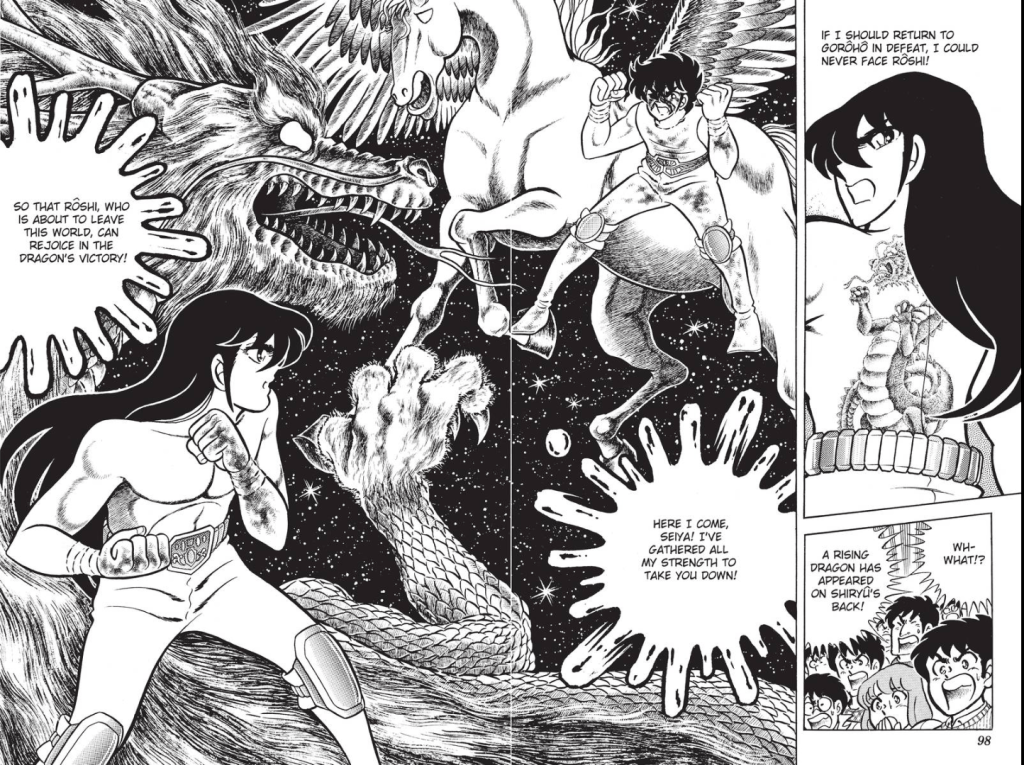
Pegas Seiya and Dragon Shiryu facing off with their armors shattered, their respective constellation animals prominently shown in the background

Saint Seiya is a series I’ve long known about, but one I’ve never really engaged with at its core. Sure, I loved Saint Seiya Omega. The opening theme and anthem of the franchise, “Pegasus Fantasy,” is always great at karaoke. When the characters came around on SaltyBet, things were bound to get interesting. And years before all that, I caught episodes of the English dub that committed the sin of replacing the aforementioned anthem with a middling cover of “I Ran.” Yet, I put off experiencing the original works—until now. I began to read the manga (available in English on the Shonen Jump app), and I certainly have Some Thoughts.

Because of subcultural exposure and the fact that I explore and research a lot about manga, I already have an image in my head of Saint Seiya as a work about guys teaming up to fight gods from Greek mythology using special celestial armors called “Cloth.” I know it is the pioneering work in the “boys in armor” subgenre from which spawned works like Samurai Troopers, Shurato, and Reideen the Superior. I’m fully aware that in terms of worldwide popularity, the US is the exception rather than the norm: the franchise is a beloved classic. And as for its reputation for featuring pretty boys engaging in passionate battles rife with blood and tears—a combination that has made it a hit with all genders—that really says it all. Intensity, thy name is Saint Seiya. What I wasn’t prepared for is just how different the manga feels at the beginning, and how many twists and turns it takes even in the first handful of chapters.

Nothing says a certain series or franchise has to stay the same forever. Consistency can be good, but it’s not the only path to greatness. When it comes to classic Jump manga especially, there’s more than a few examples of significant pivots. Kinnikuman starts as an Ultraman parody and ends up as a wrestling story. The card game that defines Yu-Gi-Oh! in pop culture was originally a one-off story. YuYu Hakusho goes from detective mysteries to tournament arcs galore. While Saint Seiya doesn’t stray quite that far from its early roots of armored boys fighting fiercely, there are definitely points at which it feels like the author, Kurumada, was playing it by ear. 

There’s a lot about different characters defying established order without readers having knowledge of what that order is, exemplified by the protagonist Seiya. He’s trying to find his sister, and in order to do so, he has to get this magical Greek armor, but then he refuses to play by the rules and instead escapes to Japan to…enter a tournament? But even that ends up being a pretense to meet the other “Bronze Knights,” who are adversaries turned eventual allies. And the incarnation of the goddess Athena, whom they’re apparently meant to fight for, begins the story as a snobby rich girl whose dad has adopted like a hundred orphans to be potential Cloth bearers. Well, okay.

Saint Seiya seems more built on spectacle than anything else, or perhaps its plot is just a pretense for putting on display these cool guys in hot fights. I say that not as a criticism but more as an observation, because I think that such an approach does make for a memorable work, as it’s more about the aura of excitement than trying to dot every “i” and cross every “t.” This early on, I know that Saint Seiya hasn’t reached the pinnacle of its power level yet, and I think I’m going to appreciate that journey. 

2010–2019 Part 3: Looking Forward

Having reviewed my predictions for the 2010s and looked back on the decade as a whole, it’s time to try and peer into the future of anime and manga in the 2020s!

Tokyo 2020 Olympics

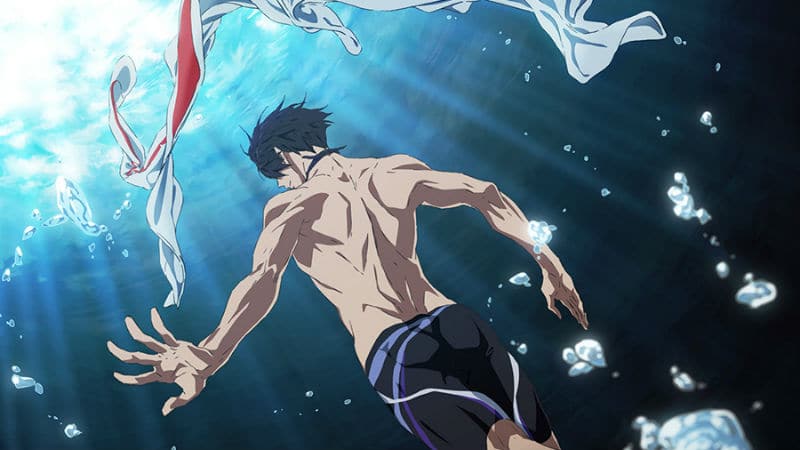
Preparation for the 2020 Tokyo Olympics has already affected Japan in different ways, from the moving of the historic Tsukiji Market to the heavier policing of manga content. Like with any Olympics, there’s a desire to put forward the best possible appearance to the world. In the short term, there is most definitely going to be an effect on anime and manga production, as studios and artists are either hired to hype up the Olympics or do it of their own volition. It’s sad that Kyoto Animation, originally poised to contribute with a new Free! movie to highlight competitive swimming, won’t be making it short of a miracle. I predict there’s going to be some Olympics-mania fatigue, but not enough to make a big dent in the overall attitude at first.

I do have a long-shot prediction, though: Japan is going to do surprisingly well in some unexpected event, and it’s going to kick off a mini-boom in anime and manga. Whenever Japan achieves in a sport, there’s a strong chance that manga and anime are either pushing for the sport or are a response to succeed—volleyball in the 1964 Tokyo Olympics and Japan’s recent success in rugby are two examples. I’m not going to try to guess what event will trigger this trend, but I’m cheering for Greco-Roman wrestling.

Fighting Climate Change as a Core Theme

The Earth is not in a great place. Scientists are warning that if nothing is done in the next few years, climate change will send us toward long-term and lasting changes that will affect everything. While not perfect, Japan is very environmentally conscious in many respects, and is a major player in the Paris Climate Accord. There are even little things like “Cool Biz,” a public awareness campaign for companies to encourage better energy efficiency by reducing air conditioner usage and having its employees dress in more heat-friendly suits.

To that end, I think there are going to be more and more anime and manga centered around environmentalism. Also, they will primarily exist in two areas: super mainstream-popular anime films and kids’ shows. So someone like Shinkai Makoto is going to hit the subject of saving the environment full steam, and I feel pretty confident that there’s going to be an environmentalist Precure at some point in the next ten years. I don’t know what effect this will have, but if anime tourism can merge with saving our planet in some way, then maybe there’s hope.

Hardening of Shounen Protagonists

There’s a certain kind of shounen protagonist that’s been popular lately: the “good boy.” These heroes are gentle and kind-hearted, though never lacking in bravery or perseverance—think Sei from Gundam Build Fighters, Tanjiro from Demon Slayer, or Sakamichi from Yowamushi Pedal. But as positive an effect as I think this is having, I feel like there’s going to be a backlash at some point. At some point, hard and angry heroes will come into the limelight (albeit temporarily) as a kind of reaction to the softer heroes we’ve been seeing in the 2010s.

It’s not just that angry rival characters have their own dedicated fanbases (and thus would probably enjoy a story centered around them), or that Eren Yeager from Attack on Titan is a walking rage factory, but that their attitudes and focus on power have a primal appeal that’s hard to deny. While I don’t think we’ll ever quite get back to the ultimate convergence point between compassion and violence—Kenshiro from Fist of the North Star—I predict we’re going to see the soft hero and the hard hero archetypes flip back and forth from one series to the next. In other words, in the future, there will be a time when the “Bakugos” of the world take center stage and the “Dekus” will be the rivals.

More Diverse Body Expression

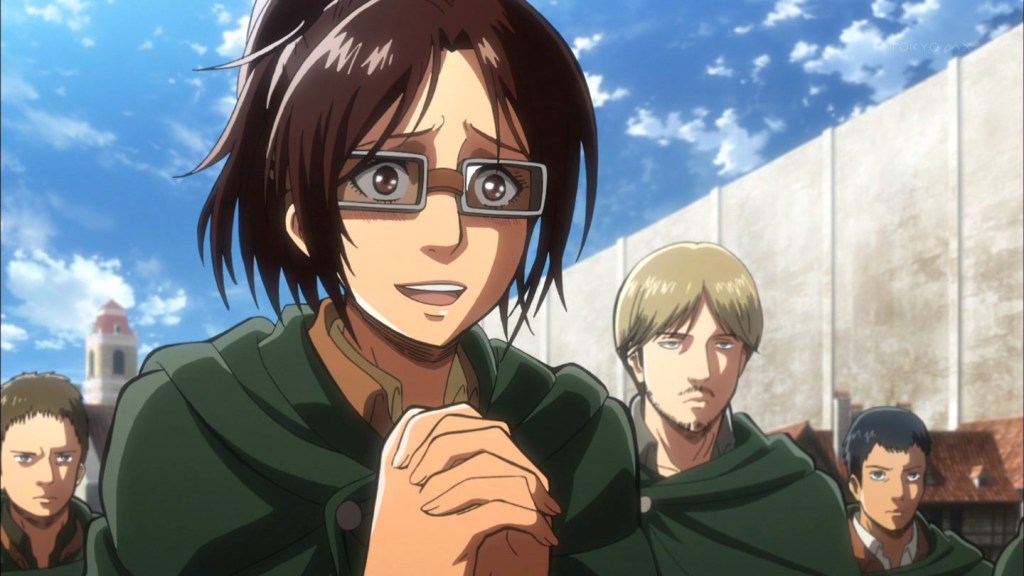
In the past ten years, I think we’ve seen a greater range of body types, especially with female characters. It’s true that a good deal of it veers hard into fetish territory, but even so, there have been many moves towards broadening notions of beauty. Attack on Titan both showed the world an anime heroine with a six pack in Mikasa Ackerman and pushed a gender nonbinary character in Hange Zoe. Pochamani centered on a bigger girl as a shoujo heroine. Even something as simple as big butts being attractive in Japan is a relatively recent phenomenon.

I think this diversity will only continue to increase because more and more, people will start to assert that their standards for attractiveness and self-identity don’t have to be beholden to what society traditionally says is okay. More and more artists and creators will be inspired to make works of their own, and enough of them will achieve success that it’ll encourage the producers and publishers themselves to go even further. The only caveat is that I think both the normalizing and the fetishizing will ramp up, and this may cause some conflict as a result.

The New Power Fantasy

Power fantasies are practically part and parcel with media as a whole, and anime and manga are most certainly included. However, I think we may be seeing a trend towards power fantasies that are less about escapism and more about fighting the feeling of powerlessness. The new power fantasy won’t just be about getting the girl and living in another world where your knack for video games gives you the edge, but rather about being able to exert lasting change on a world that seems immovable. To this end, I think we’re going to be seeing a heavier mingling of the power fantasy genres that permeate anime and manga today: harem, isekai, American-style superheroes, Japanese-style superheroes, and more. People will want to be inspired and not just placated—especially when it comes to the younger generations.

Greater Acknowledgement of Production Conditions and Gender Inequality

Through projects like the Animator Dormitories and news articles on animator wages, the 2010s end with at least some awareness that the people who make our beloved anime often don’t even have enough to put food on the table. It’s a decades-long problem—Miyazaki blames Tezuka for the current status quo—but I think the next decade might just be a turning point. I don’t know if it’ll ever reach mainstream awareness given that lots of people prefer not to know how their hot dogs are made, but I think that new sources of funding may create greater vocal desire to see wages change, especially if all that profit isn’t going to the workers themselves.

Similarly, we’ve seen more and more women this decade in prominent positions—writer Okada Mari and director Yamamoto Sayo are a couple of prominent examples. There’s still a ways to go before women directors and such will be commonplace, but I think that the women of today will be role models for the next generation. The Kyoto Animation tragedy is an unfortunate setback given their dedication to paying workers fairer wages, but I am somewhat optimistic that things will get better regardless overall.

Let’s See What the Future Holds

In some ways, I feel these predictions (and how they differ from the predictions of ten years ago) reflect not just where the anime and manga industries are in 2019 but also where I personally am at this point in life. If somehow Ogiue Maniax reaches 2029, I’ll be glad to reflect on where everything will be. Hopefully we’ll all be in a better place.

There’s actually one more 2010–2019 post left, so I hope you’re looking forward to Part 4!


Shounen Sports and Girl Appeal

I’ve been watching two shounen anime adaptations as of late, Yowamushi Pedal and Kuroko’s Basketball. The former runs in Weekly Shounen Champion, the latter in Weekly Shounen Jump. When you look the contents of each series, it’s almost obvious, as if they embody the general direction each magazine has taken, but not in a way which denies either their contemporary nature or their shounen-ness.

In this age where the definition of shounen manga has been in flux, Shounen Champion is the most primary source of classic, old-fashioned shounen manga where a boy does his best to fight and improve. It fits the basic goal of that magazine quite well, which is to be a boys’ magazine for boys, though Yowamushi Pedal isn’t without its modern flairs, including having a more handsome rival for the main character.

Shounen Jump on the other hand is arguably the mainstream boys’ magazine which has embraced its female audience the most, outside of Jump variations which specifically target that audience. Kuroko’s Basketball, like Prince of Tennis before it, is filled with good-looking guys handsomely showing their best. Even if they’re not fujoshi, there’s a clear appeal to girls in it, though overall the series still has in common with Yowamushi Pedal the thrill of sports and competition.

One thing that both series share is the female manager archetype, who more broadly fits into the “knowledgeable supporter” role as well. The idea is that, while they’re not participants in the main activity of each series, they bring an enthusiasm and a set of knowledge that helps the reader understand the sport better while also acting as a cheerleader for the main character and maybe providing a bit of eye candy, though I don’t think either Miki from Yowamushi Pedal or Riko from Kuroko’s Basketball are quite the characters you’d go to for cheesecake. At the same time, I think there’s a certain substantial difference between Miki and Riko, which is that Miki is clearly a love interest for the main character, whereas Riko if she has any romantic involvement at all is with a side character in the series.

I think the fact that Riko is not a love interest, and arguably that Kuroko’s Basketball has no main female love interest for its main character at all (Momo is ostensibly one but her connection to Aomine seems stronger) speaks a lot to the difference in their magazines.  I don’t think this just has to do with Kuroko’s Basketball having a fujoshi fanbase which prefers pairing the guys together, either. If anything, I get an almost shoujo manga-esque impression of Riko’s relationship with Hyuuga and Teppei due to their interactions, not in the sense of hearts and sparkles in the background, but from its use of Riko as a character in her own right.

Stand Aside, Book Smarts: The “Knowledgeable Girl”

While reading the Drops of God recently. I took notice of the supporting character Miyabi, a sommeliere-hopeful who assists the hero Shizuku, bolstering his seemingly supernatural sense of taste (literally tasting things with his mouth) with a larger knowledge of the wine world. In this setting, Shizuku’s genius, though achieved through years of work and forced training, comes across as of a deeper quality than Miyabi’s superior book smarts.

Miyabi falls into a character type I might refer to as the “Knowledgeable Girl,” a trope I see most often in shounen manga. This character is different from someone who’s simply smart or studious or is a bookworm. Instead, it is the character who seems to play two roles: the first is to have a solid foundation of knowledge so as to be useful when exposition is necessary, and the second is to have that knowledge contrasted with the hero’s more impressive abilities, as if to say that, while the hero lacks conventional knowledge, he is such a radical that he can overcome it, or that it’s only a matter of time before he picks up that knowledge as well. In a way, she is meant to be surpassed.

Probably the most prominent example I can think of is Sakura from Naruto, who, like Miyabi, criticizes the male hero for not knowing the basics, and whose book smarts are ultimately shown to be less powerful and important than the unique flavors Naruto himself provides. I bet you can think of many others as well.

I don’t think this is a character type doomed to mediocrity, as the key, I feel, is to actually give a true advantage to book smarts, something that just isn’t waiting to be trivialized. Female coach Riko from Kuroko’s Basketball (AKA THE BASKETBALL WHICH KUROKO PLAYS), for example, while very much in that supporting role, at least shows a strategic knack owing to her intense study lacking in the players. Tokine in Kekkaishi, more knowledgeable than her counterpart Yoshimori, is better at refining her abilities than at simply making things bigger and more powerful.

I wonder if it’s possible to argue that no character type is truly terrible and that it’s all in the execution? I’m sure I’ll be corrected rather immediately.

Heel is Showing

Shounen, particularly Shounen battle manga, is probably the most well-known type of manga today. In it you have your Dragon Ball‘s, your Naruto‘s, your Kenichi‘s. You have good shounen fighting series, you have bad or mediocre shounen fighting series, and you have ones that start off as one but gradually turn into the other.  I won’t say which is which, and the above titles are not respective examples of each category.

The odd thing about the descent in quality in a lot of shounen series (or even titles which are already poor from the start) is that the same mistakes seem to happen over and over again. The most prominent mistake is that long stretch where the series just drags on and the series appears to have lost all direction. Why does this happen? That’s the thought I want to get at today.

There are certain essential characteristics for a modern shounen battle manga. You need a main character to whom the young boy readers can relate but whom they can also idolize. You need a rival or at least a series of antagonists to continually provide challenges to the hero and to act as measuring sticks for the hero’s progress. And of course you need fighting and lots of it, or at least the story’s concept of “fighting,” even if it’s throwing chickens off of rooftops to see which one flies the furthest. And then you need that extra X-factor, the thing which makes a series different (but not too different). With few exceptions, I think that shounen fighting series have to capture a feeling of action, excitement, and change, and it starts from essentials such as these.

However, I think these same ingredients for success are also what potentially drag titles down to the depths, acting as the hand which dipped Achilles into the River Styx, simultaneously giving a series its strengths but also establishing its weaknesses. As a series continues, it becomes more difficult to maintain those qualities in the right proportions and to also incorporate all of the elements which exist between those essentials. After a while, because the people behind these manga and anime are well aware that their readers look to them for certain specific things, the series start to run on auto-pilot, and that is where the seams start to really show.

For example, I think this is why the most painful filler tends to be the fight which lasts for seemingly an eternity. The manga’s staff know that they need a hefty amount of combat in their series, but they don’t quite have the vision at that point to guide the battles, to have them work towards a definite direction which inspires the readers. As a result, they stall. Battles which should have lasted two volumes last ten. Here, a quick breather chapter or two might solve the problem, but that small break might be unacceptable for a series which relies so much on continuous battles which mark the characters’ progress.

You sometimes  get people who criticize shounen fighting manga for being shounen fighting manga, hating these series for the very same reason people love them. But to some extent they have a very valid opinion, as even those things that the people who follow shounen series list as positives can eventually lead to the negatives.