
Spectacle and Success: Spy x Family Code: White

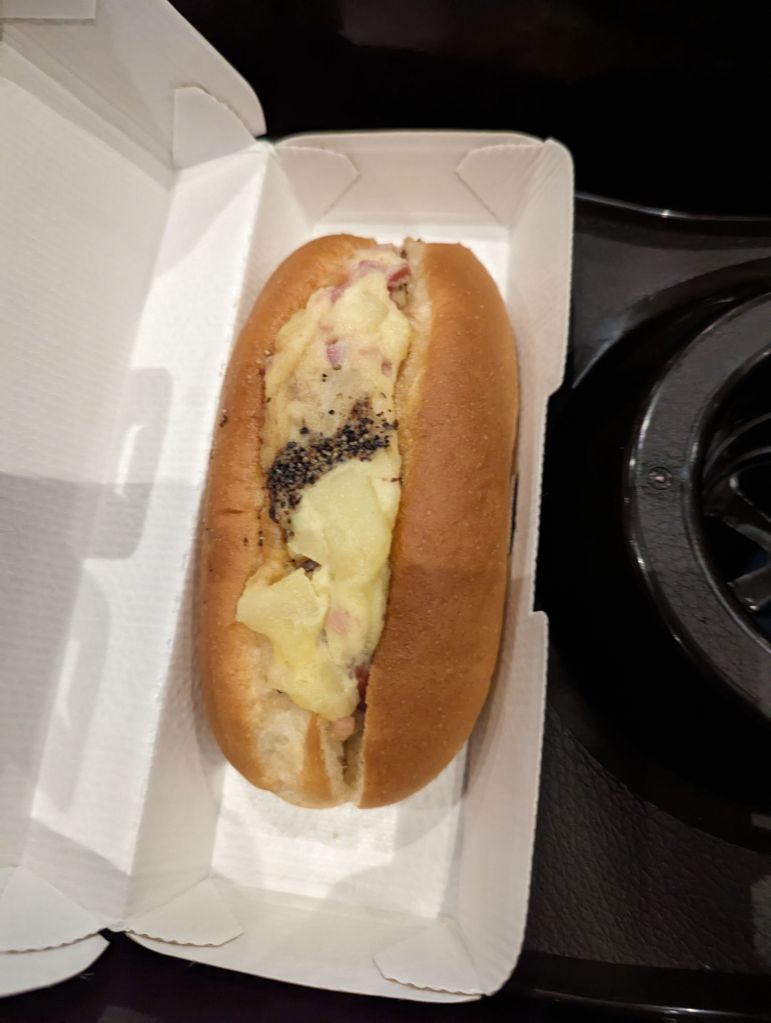
My winter trip to Japan last year gave me the opportunity to see Spy x Family Code: White, the very first Spy x Family movie. As a fan who has kept up with both the manga and the anime, I was curious to see how they would approach a theatrical release. I sat down with my buttered-potato-topped hot dog and my sour-cream-and-onion popcorn, ready to find out.
Spy x Family is the story of Twilight, an unrivaled master of espionage whose latest mission is to create a false family so that he can get close to a former prime minister, all with the goal of preventing another war from breaking out. To this end, he marries an office worker named Yor and adopts a girl named Anya. Unbeknownst to him, Yor is really one of the deadliest assassins alive. And while neither husband nor wife know the truth about the other, Anya certainly does because she’s actually a psychic. Despite all the secrets, though, the three manage to form a family that on the surface is the envy of all, yet also increasingly seems to be motivated by genuine love and affection.

The recent trend with some Jump series (such as Demon Slayer and Jujutsu Kaisen) has been to adapt an arc or major plot point into a feature-length work, and I wondered if Spy x Family would do the same. However, it turns out that the makers went with a different tack. Rather than going for something canonical, they created an original story. It’s the common choice for mega franchises, e.g. One Piece, Precure, Doraemon, Detective Conan.

In fact, Code: White is pretty much a Detective Conan movie with way less mystery solving and way more action. The story is all right, but spectacle is the name of the game: gorgeously animated chase scenes and fights, a story that takes the trio to ridiculous(ly cool) places, wild stunts, and plenty of explosions. The actual plot developments stretch the limits of what would plausibly keep Twilight and Yor from suspecting each other and wouldn’t be feasible if the movie wasn’t standalone. But given what it is, the makers are allowed to go ham, and they have enough for ten Christmas dinners. It’s a short but sweet popcorn flick.

I think the fact that Spy x Family Code: White is a non-canon entry says a lot about how the franchise is regarded in Japan. Basically, it’s a pop culture hit, almost on par with the heavy hitters. That much was clear even when discounting all the merch available in chains and other big stores to promote the movie. At one point, I stopped in a stationery store that barely sold five manga, and one of those titles just happened to be Spy x Family

It doesn’t look like the hype will be dying down anytime soon.

When Comedy Goes Nuclear: Spy x Family

Comedies based on perpetual misunderstandings can be really hit or miss. Characters misunderstanding one another’s intent and motivations can work as an endless source of humor, or it can eventually lead to frustration over a lack of progress. The manga series Spy x Family by Endo Tatsuya falls square into this category of humor, but it’s able to achieve a nice place between its overarching plot and its chapter-to-chapter antics that keeps it fresh, enjoyable, and even a little heartwarming.

Spy x Family tells the story of Twilight, an unparalleled spy who is given an order to start a family in order to get close to this next target. In order to make the charade seem as real as possible, he takes on a new identity (Loid Forger), adopts a daughter named Anya, and finds a woman willing to pretend to be his wife (Yor Forger). However, while Loid is extremely good at his job, what he doesn’t realize is that his new family members have their own secrets. Anya is actually a telepath, and Yor is actually a top-class assassin known as “Thorn Princess.” They all have their own reasons for wanting to keep this act going, with only Anya knowing the full truth but loving every minute of these bizarre circumstances.

In both story and presentation, this manga is superb. The character designs are excellent and the artwork is consistently solid no matter the situation or setting. The characters themselves are endearing and memorable. Every time I finish a chapter, I find myself wanting more. Spy x Family juggles a lot of balls in the air, whether it’s shifting settings between its three core characters, switching between comedy and action (or a mix of both), or portraying the way they grow closer even as they continue to keep their respective cards close to their chests.

The closest manga I can think of in terms of being this good at the “comedy of misunderstandings” shtick is Monthly Girls’ Nozaki-kun, but that title is far more extreme when it comes to keeping its characters forever ignorant. Spy x Family, on the other hand, is more than willing to have both long- and short-term plot threads, and it does each kind so well, I would be easily satisfied if it stuck with one or the other. However, it manages to pull both off well, and we’re all the better for it. I think part of the reason Spy x Family succeeds despite not taking the Nozaki-kun route is that there’s actually a character who is privy to what’s really going on in Anya Forger. From her hilarious reactions to everyone’s true thoughts and feelings, to the contrast between her powers and her lack of smarts, to her strong desire to keep the charade going so that she can keep her happy little nuclear family going, Anya might just be the lynchpin of this series.

Spy x Family is available on VIZ’s Shonen Jump app, and chapters come out roughly once every other week. There’s a lot to love about this series, and I don’t see it wearing out its welcome anytime soon.