I was convinced to check out the anime The Gorilla God’s Go-to Girl just based on the name. Turns out that it’s not just a silly alliterative title, but also an otome game–like reverse harem where a meek girl named Sophia Riller gets the powers of a gorilla and uses them to help others out and inadvertently romance the boys. It was originally a web novel, and the title translates to the much more straightforward The Lady Blessed by the Gorilla God Is Adored by the Royal Knight in Japanese.
The silliness is welcome, as is the somewhat incongruous setting. Watching Sophia swing around and subdue bad guys with great ape strength, as well as win the hearts of the knights are exactly the things I wanted to see out of Gorilla God. However, I have a problem with the show: It doesn’t go far enough. The content is about 40% gorilla antics at best when I think it should be 80%.
If they ever make a second season, I hope it’s able to lean into the premise even further, even if it means deviating from the source material a bit.
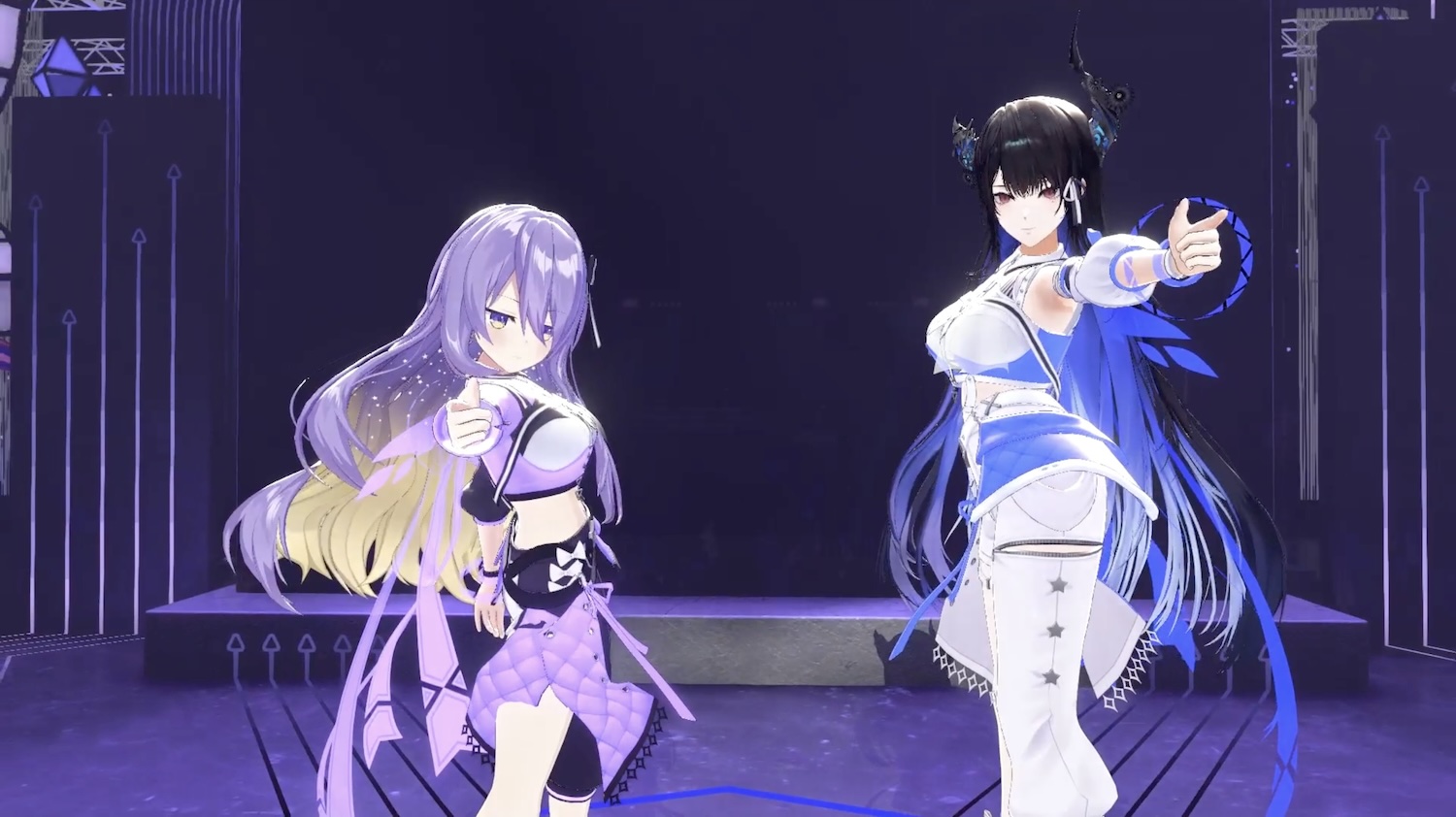
The twin VTubers of hololive, Fuwawa and Mococo, have talked before about their fondness for Genshiken. Last month, they revealed another connection to Kio Shimoku’s beloved story about a college anime and manga club.
FUWAMOCO dedicated an entire karaoke session to the otaku icon, voice actor, and moe singer Momoi Haruko. At the beginning of the stream, they explained that not only is Momoi their kami oshi—essentially their all-time favorite—but that she was the very person who introduced them to the idea of Japanese idols and the Akihabara subculture of the 2000s.
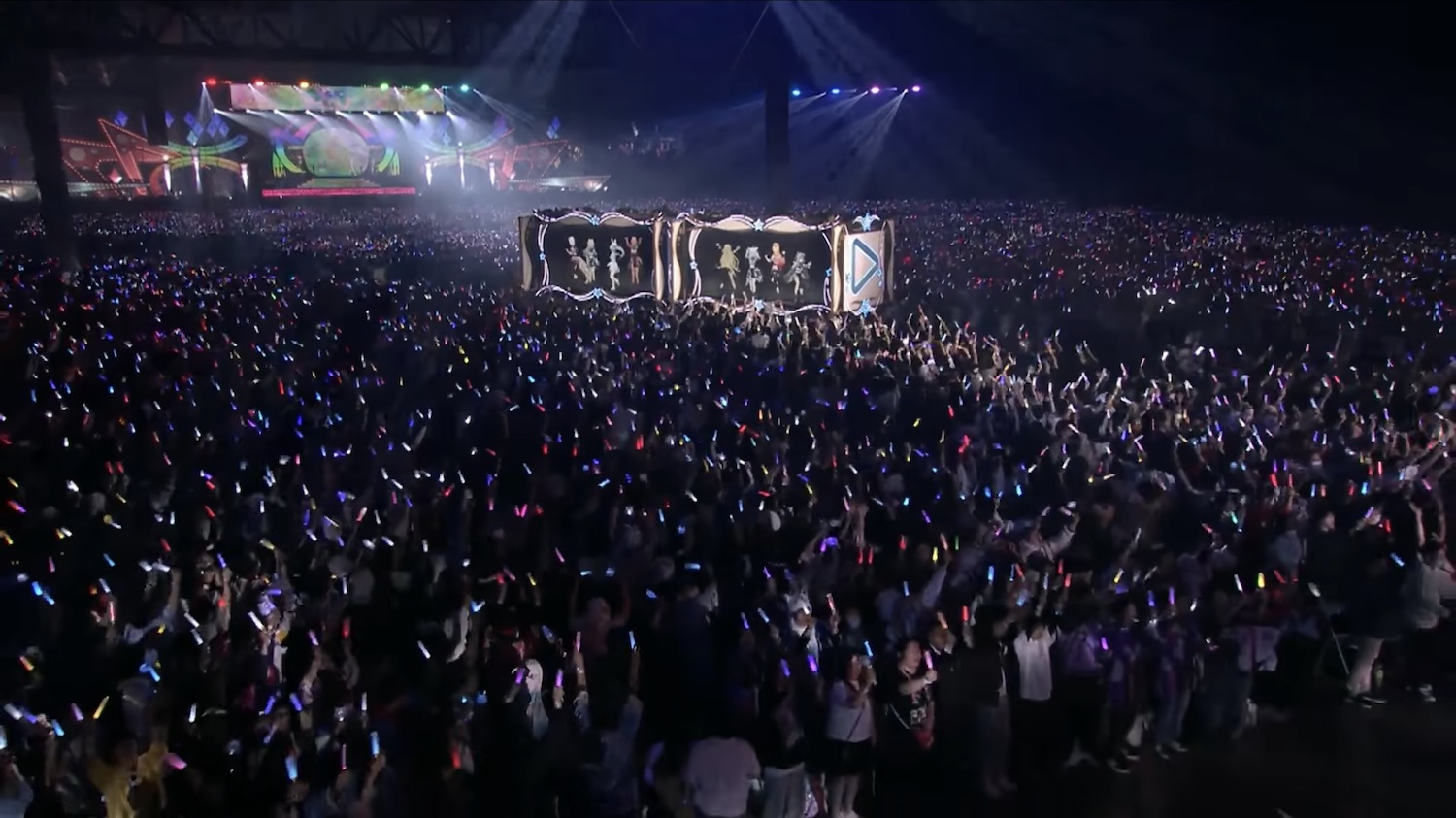
FUWAMOCO then kicked off their setlist with the opening to “Kujibiki Unbalance,” and afterwards revealed that they learned about Momoi and idol culture thanks to bonus footage on a Genshiken DVD, in which she (as part of the band Under17) performed the Kujibiki Unbalance opening! It was their first time seeing a crowd cheering together with glow sticks, and upon learning more about Momoi, connected to the fact that she was an anime fan who felt like she didn’t fit in. Essentially, she’s their idol in more than one sense of the word.
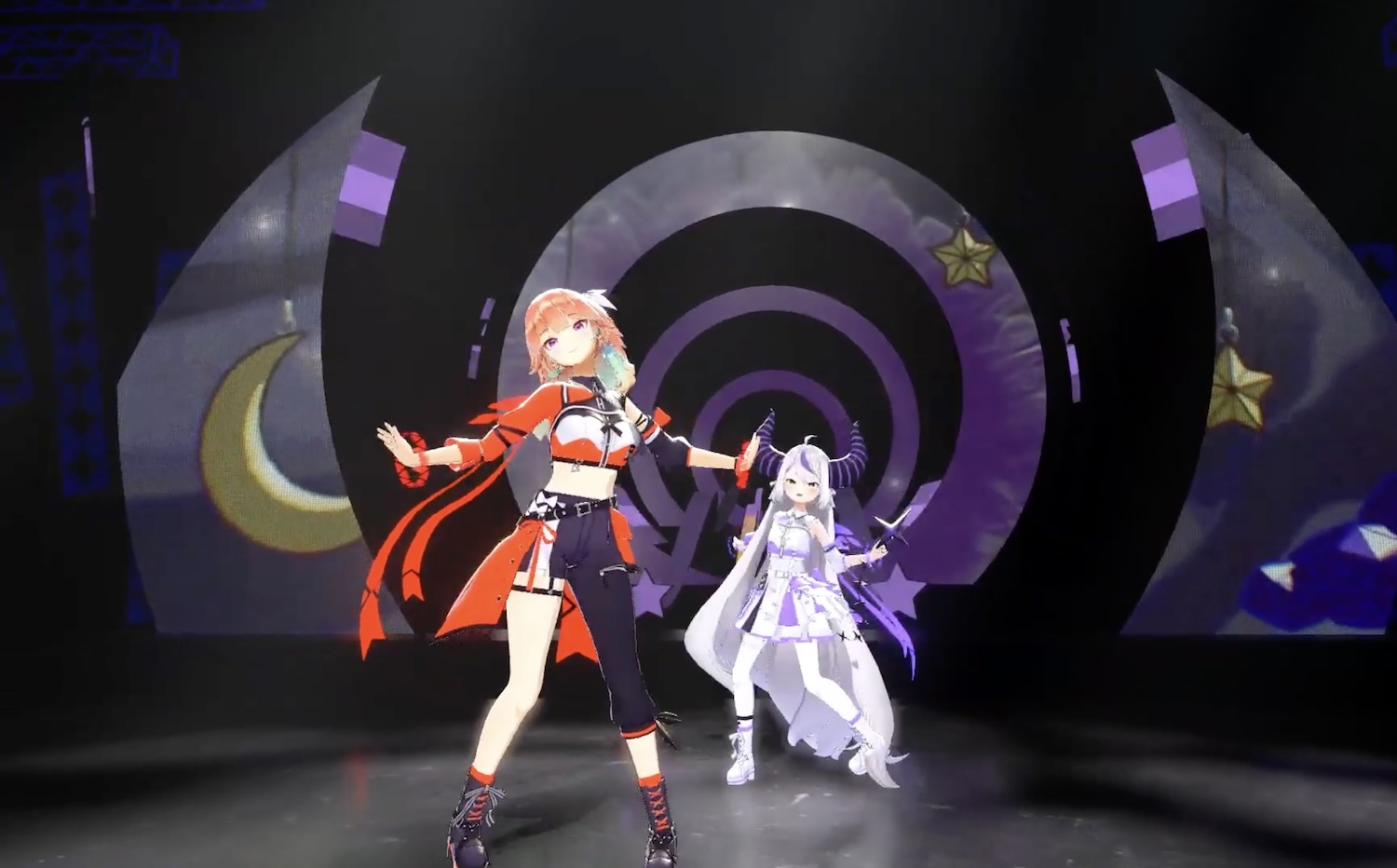
The twins proceeded further down Akiba memory lane with songs like “Mouse Chu Mouse,” “Tenbatsu Angel Rabbie,” and “Ai no Medicine.” That last one was the opening to Nurse-Witch Komugi-chan: Magikarte, a Soul Taker spin-off in which Momoi played the main heroine. FUWAMOCO even covered “NANIKA”—one of Momoi’s newest songs, for which the twins themselves contributed to the chorus!
Partway through, Momoi herself actually sent a superchat to FUWAMOCO, making this one of the most memorable karaoke streams ever. Seeing them thanked by the actual woman who inspired them to take this path, it felt like a true full-circle moment for the twin demon guard dogs of hololive. And to think: It was all because of Genshiken.
It’s remarkable to me how much Rental Family feels like a Japanese film.
That might come across as an obvious or perhaps even insulting comment, given that the director Hikaru is Japanese and the fact that it’s a Japanese/American co-production. However, to have a work with its aesthetics, storytelling, and subject matter get a wide theatrical release in the US—without being an import—feels special. A fair number of American films depict Japan or take place in them, but they don’t bring that same energy that one often finds in more contemplative dramas from Japan.
Rental Family is about Phillip Vanderploeg (played by Brendan Fraser), a white American who has been living in Japan for seven years while trying to find work as an actor. Despite some modest successes early on, it’s been a struggle filled with rejections. Desperate for anything, he ends up working for a “rental family” business, in which he and other employees play roles for clients to fulfill some need, be it emotional or pragmatic. Phillip’s acting skills help him with this line of work, but when he begins to genuinely make emotional connections on the job, it complicates matters for everyone involved in these charades.
Phillip’s boss mentions early on that mental health issues are stigmatized in Japan, and that people find other outlets to deal with these problems, of which the rental family business is one. The film does a good job of introducing this idea to a potentially unfamiliar audience without feeling unnaturally expository, and also while feeling like a criticism of a facet of Japanese society from an insider perspective. It’s a country somewhat infamous for having a lot of places to engage in parasocial behavior (host clubs, maid cafes, brothels, idol fandom), but it depicts this behavior in a fair and even-handed fashion that highlights its benefits as much as its downsides.
For example, while Phillip never engages in adult business for his job, he does visit a sex worker, and it’s notable how this is not portrayed in a negative light. While this is a relationship fueled by the exchange of money for services and where interaction is on a timer, they actually enjoy each other’s company and think highly of each other. At the same time, they’re both well aware of the “professional” nature of it all, and they leave it at that small bit of emotional reciprocation.
The notion of hiring someone to pretend to be your friend or husband (or even a journalist to make your aging thespian father still feel special) can sound pathetic. “What, you need to pay someone to spend time with you?” There are limits to playing “pretend,” and it can go terribly wrong. However, the film emphasizes the idea that this charade might very well be the catalyst that brings a person out of their rut or their crushing social situation, and a major part of Phillip’s development throughout Rental Family is the joy he experiences seeing his clients and/or their families healing psychological wounds to an extent. The job is both fulfilling and taxing on his mental wellbeing, and as the plot progresses, it can show how challenging it is for Phillip to navigate that balance.
I highly recommend Rental Family, but I actually want to end off by talking about a completely different example of a white actor who became a symbol of parasocial dynamics.
Billy Herrington was a gay porn actor who became a meme on the Japanese video site Nico Nico Douga before tragically passing away in a car accident. In one of his adult films, he wrestled another performer in a locker room while wearing very little clothing, and this became the endless subject of music videos, remixes, and parodies. There are many reasons this could be considered controversial or perhaps even offensive, but Billy became a minor celebrity in Japan as a result, and he even got to meet his fans at an offline event in Japan. While I don’t have a link to the original story anymore, I recall reports that some fans actually cried meeting Billy, and even told him how much he had helped them in darker times.
Ever since then, when I think about something being seen as silly or vapid, I wonder if it might still help someone overcome their own personal challenges. And while Phillip’s circumstances and means of changing people’s lives are not the same as Billy’s, I see his character (and the work of a rental family business) in a similar capacity, turning the “fake” into the “real enough.”
PS: At the very beginning of Rental Family, the film has a series of establishing shots of Tokyo, and in one of the shots is, I believe, an image of a Saber from Type Moon’s Fate franchise (though if you ask me which one, I wouldn’t be able to tell you). In Fate/stay night, the protagonist Shirou famously has a line saying, “Who says a copy can’t surpass the original?” in response to the notion that his replicated weapons are inherently inferior to his opponent, Gilgamesh the King of Heroes.
It might very well be a coincidence, but I can’t help wondering if that brief appearance was on purpose.
When I was a kid and Ronin Warriors first popped up on TV, it was one of the most incredible things I’d ever seen. The cool armor, the awesome villains, it just stood out against standard cartoon fare of the time. I even tried to make my own Ronin Warriors card game using a standard 52-card deck! No, the rules didn’t make any sense.
But while Ronin Warriors was something I look back on fondly, I’d never really experienced the Japanese version, Legendary Armor Samurai Troopers. The closest I got was the fact that I’ve often listened to the second opening, “Samurai Heart,” by the amazing Moriguchi Hiroko of Zeta Gundam and Gundam F91 fame. The original was always something I wanted to check out eventually, but I had it forever in the backlog.
What finally got me off my ass to watch it was the surprise announcement that Samurai Troopers is getting a sequel. While I’m sure Yoroi Shin Den Samurai Troopers won’t require viewers to remember everything about the first series, I figured it was as good a time as any to check this one off the list. And with a few decades between my first experience with Ronin Warriors and now, I wondered how I’d feel about this anime without the nostalgia goggles.
It’s Boys in Armor, All Right
The plot of Samurai Troopers focuses on five young warriors who can each summon a special armor with a unique elemental power. Together, they fight the evil forces of the Netherworld and their leader, the disembodied demon spirit Arago.
With its cadre of fiery yet angsty heroes clad in armor, the series is pretty much built in the image of Saint Seiya. I was completely unaware of that influence as a kid, but now, the fingerprints of Kurumada’s title (particularly its anime TV series) are all over Samurai Troopers. The series swings between its characters yelling as they launch attacks and give passionate speeches, and then having them yelling and moaning while being hit by enemy attacks—especially when it comes to protagonist Sanada Ryo of Wildfire. It’s a familiar combination of cool action stuff and dudes suffering handsomely, trying to appeal to both the kids eager to live vicariously through them and the older fans gushing over the characters and their popular voice actors, much like the whole multimedia experience we still see today.
A Focus on Style
I find Samurai Troopers to be good and fun, but not particularly great. The series is very spectacle-forward and reminiscent of soap operas in its dramatic moments: Plot twists, lore reveals, and even fight scenes are often more about vibes than trying to create a coherent narrative. Part of this definitely has to do with the fact that the series changed directors halfway through (over disagreements related to shilling of toys, apparently), but even without that, Samurai Troopers often seems to fly by the seat of its pants.
Some developments feel like they were probably planned to a degree, while others feel like course changes in the interest of playing to the audience and/or throwing stuff at the wall to see what sticks. The reveal about the true origins of the armors and the lead-up to the Inferno Armor that defines the first half are fairly coherent and overall entertaining, but the second half of the series comes across as stopping and starting every few episodes as if it’s in search of the right storyline to continue.
For example, after the midway point, they devote a handful of episodes to focusing individually on each Trooper. This is a welcome thing, but it’s strange to do this so late into the series. Also, for whatever reason, the episode focused on Shu of Stone is unusually well animated compared to the rest of the series. Elsewhere, Shu leans slightly more towards a comedic role, but here, he’s the biggest badass. And then, he and two other Troopers are kidnapped and basically out of sight for like six episodes as Samurai Troopers pushes Toma of Heaven into the spotlight with Ryo.
That said, the series has an undeniable cool factor that it keeps up well overall. When everything lines up, it does make for some really satisfying storytelling. The villainous warlord Shutendoji (known as Anubis in Ronin Warriors, where he was also the best) is probably the most compelling character in the entire anime because of his story arc and role as an honorable villain, and it often feels like later antagonists are attempts to replicate his success with mixed results. Incidentally, there’s a different character named Anubis in Ronin Warriors, which isn’t confusing at all.
Other Things
Speaking of Ronin Warriors, I was thinking about the localization choices, and while the changes are fairly substantial, they really are perfect for a 90s show for American kids. Arago’s Youja forces are subtitled in Samurai Troopers using phrases involving “Doom” or “Nether,” but it’s basically a combination of you (spirit, supernatural) and ja (demonic, malicious). However, in Ronin Warriors they’re Talpa’s Dynasty, which sounds awesome and menacing in English, even if the show definitely likes to conflate Japanese and Chinese culture. The fact that Samurai Troopers is basically Saint Seiya but hyper Japanese makes this funnier.
There are a couple recurring noncombatant characters whose main purpose is just to be the kid sidekick (Yamano Shu) and the female companion (Yagyu Nasté). Aside from some later plot relevance, they feel like audience inserts for their respective demographics. But Nasté is interesting to me because she’s kind of a prototype of Relena from Gundam Wing, which the first director Ikeda would go on to direct (and also leave). She’s not as forceful as Relena for most of the series, but in the sequel OVAs of Samurai Troopers, Nasté does get portrayed as a more strong-willed character.
Regarding the OVAs, they are much more fully out of the realm of toy commercial. The first two OVA series really pretty up the boys, double the angst, and give them lots of fashionable outfits to wear. The third, titled The Message, seems to interrogate the nature of trying to use evil objects to do good, but in a way that involves 50% existing footage and an overwhelming amount of narration by individual Troopers. While arguably being the most interesting in terms of ideas it presents, the format is a complete slog to get through.
Final Thoughts
Samurai Troopers occupies a kind of transitional space between different standard approaches to anime: It’s not primarily episodic, but it also isn’t committed to serialized long-form storytelling. The show wants to sell the toys to the boys and the guys to the ladies, but the ratio of its appeal shifts all over the place until the OVAs. All this is not so unusual; Samurai Troopers is hardly the first case of a work trying to find itself as it’s going, and even the Saint Seiya manga apparently went this way. However, I think this incongruity is more noticeable because the series doesn’t always follow through with its choices.
This might seem like I’m down on Samurai Troopers, but I’m really not. The way it clearly tries to navigate different audiences is fascinating to watch, and the excitement the title brings is undeniable. I think if I were a kid watching week to week, the way it swings between episodic and serial would make the latter parts feel that much more special.
So now I’m ready for the new show. It’ll be interesting to see how much the series leans into more recent tropes and how much it’ll try to match the feel of the original.
Are we seriously at the end of the year? This means I have to think about who my favorite characters of the year are going to be. In the meantime, I’m also feeling the pain of denying personal purchases due to import tariffs. Will I ever get that Soul of Chogokin Shinkalion?
Of course, that’s small potatoes compared to the hardships other people have had to face in this economy, and I feel very lucky I can even complain like this in the first place. I hope that on top of people having enough to eat and roofs over their heads, that the arts can provide comfort and joy in tough times. To all artists, writers, and other creative types: Don’t underestimate yourself.
Thank you to my patreon members. May you enjoy the holidays, no matter where you are.
The print edition of Spotted Flower Chapter 50 is out [and so is the digital edition now!]. There will be one more print chapter and then two digital ones after this, due to Rakuen: Le Paradisending.
Sometimes, there’s this exchange that happens when introducing an anime:
“Have you seen this show? It is wild.”
“What’s it about?”
“Y-you’ll just have to see.”
And the above doesn’t happen because you were trying to prank them, or because the show was simply about shocking plot twists. Rather, it’s because the show in question just keeps throwing one curve ball after another, and whatever conception you had of the series at the start gets tossed out the window.
Anyway, have you seen Turkey? It is wild.
Turkey! Time to Strike (as it’s called in English) centers around the five girls of a high school bowling club who, while dealing with some drama that threatens to tear the team apart, end up in a situation none of them could have ever expected. If that’s enough to convince you, go watch it now, because there’s a major spoiler in Episode 1 that kicks the series off for real.
For those who’ve decided to stick around: An intense match between two members suddenly goes awry when lightning strikes, one of the bowling balls glows, and the girls all get sent hundreds of years back in time. Surprise! It’s actually a time travel story. After rescuing a young and handsome warrior from the battlefield they find themselves on (through the power of bowling, of course), they end up living with his family. Now, they have to adjust to living in a world without electricity while trying to figure out how to return back to the modern day, and in the process learn about the family of siblings that are taking care of them?
(Turkey, by the way, is the term for when you get three strikes in a row. Time to Strike was possibly added to the English release because while having just the word Turkey written out makes an impact in Japanese, it would not have the same effect in English).
If this series were simply about time displacement hijinks that swap a DeLorean for a bowling ball, the show would be pretty bizarre and memorable already. But what pushes it far past the line is the fact that it actually puts some serious thought into the execution of its premise. “No, really—What if a bowling team wound up in feudal Japan?” Some of it is about teaching a generation past about the joy of bowling or learning the basic politics of the period, but then the show will get starkly serious at times. It’ll go from teenage girls using the thundering sound of bowling balls as an enemy distraction, to discussions about tragic loss of family and deep personal feelings of guilt, to the moral differences in the act of killing between eras, back to wacky bowling fun. Tonal whiplash doesn’t even begin to describe what’s going on here.
But somehow, the team behind Turkey managed to pull it off and create an emotionally powerful show that uses bowling as an unlikely conduit for healing and therapy across time. Across 12 episodes, the anime never stops surprising, and it even ends in both a satisfying and unexpected manner. It takes the “girls doing a specific activity” concept so perennially popular in anime, and hits on both the slice-of-life and drama levels in ways that feel incongruous, yet ultimately harmonize.
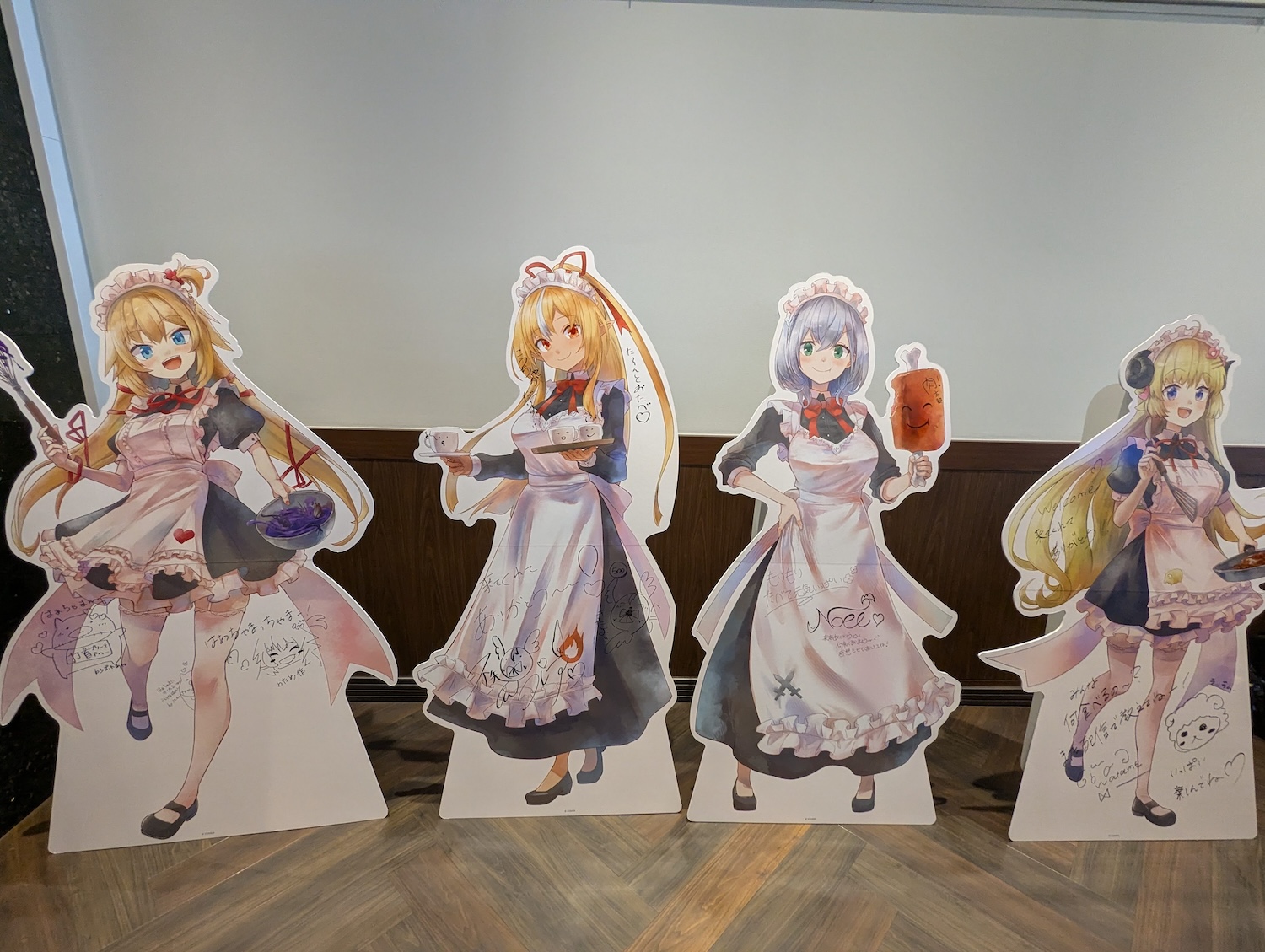
I didn’t know what to expect from “Chronicles of hololive Nexus Gate: Act 1.” Sure I’ve been to booths and events centered around hololive, but this seemed…different. It wasn’t a cross-promotion with a restaurant or anything. It was held at the American Dream Mall in New Jersey, the second largest mall in the United States after the Mall of America. And from what I heard, it was supposed to be in some ways similar to the online hololive role-playing event series ENigmatic Recollection.
The description was bizarre enough that I wasn’t sure I would make the trip in the first place, but I went just to see what the deal was. What I got was a multipurpose pop-up booth that provided five different forms of interaction.
First, it was a shop where you could buy both general hololive merch and stuff directly related to this whole Nexus Gate thing. I bought a little Nexus Gate–themed passport-style stamp booklet.
Second, it was an exhibition of fan works (art, cosplay), as well as a place to leave a record by adding a sticky note to a wall.
Third, it featured a series of brain-teasing puzzles that netted a prize in the form of a hololive STAGE ‘25 card for the hololive TCG.
Fourth, it was a gallery of the Nexus Gate concept, which was about the girls of hololive English entering a mysterious and mostly barren world.
And fifth, it was also a screening of a drama that played out like a series of visual novel chapters, all exploring how each EN member approached the element most core to their beings. Also, because I went on the last two days, we also got to see an Episode 0 that showed how everyone ended up there.
The main drama, titled “Act 1: The Portal Awakens,” consisted of script readings not unlike the audio dramas they sometimes sell on their online store, it didn’t quite have the off-the-cuff feel of something like ENReco. It was likely another alternate world where facets of them remain, blending kayfabe lore with aspects of the EN girls’ personalities established through their streams. This lasted a lot longer than I anticipated, but it was probably the highlight of the trip. I do have to say that the special miniature lawn (?) chairs set up for viewing were comfortable at first, but being on them too long was not entirely pleasant for my crotch area.
Perhaps the most interesting things were the way this other world seemed to be connected to three girls in particular: Baelz Hakos and Ouro Kronii of the old hololive Council generation, as well as Koseki Bijou. The former two seemed to recognize the world beyond the gate as being either in some primordial state of creation or nearing the end of its life. Bae and Kronii’s lines gave a lot of hints that both the rest of Council departing over the years and everyone’s desire to step back from essentially godhood would affect things significantly. As for Biboo, she seemed to hear something he others couldn’t, perhaps tying into her backstory as a sentient jewel who has a strong connection to emotions.
The biggest question to me about Nexus Gate is that if this was Act 1, where and what will Act 2 be? Are booths going to show up all over the US and perhaps the world, all situated in malls? How many will there be? What is the ultimate purpose of all this? I found it all to be pretty cool, but I can’t help but wonder what the overall goal is.
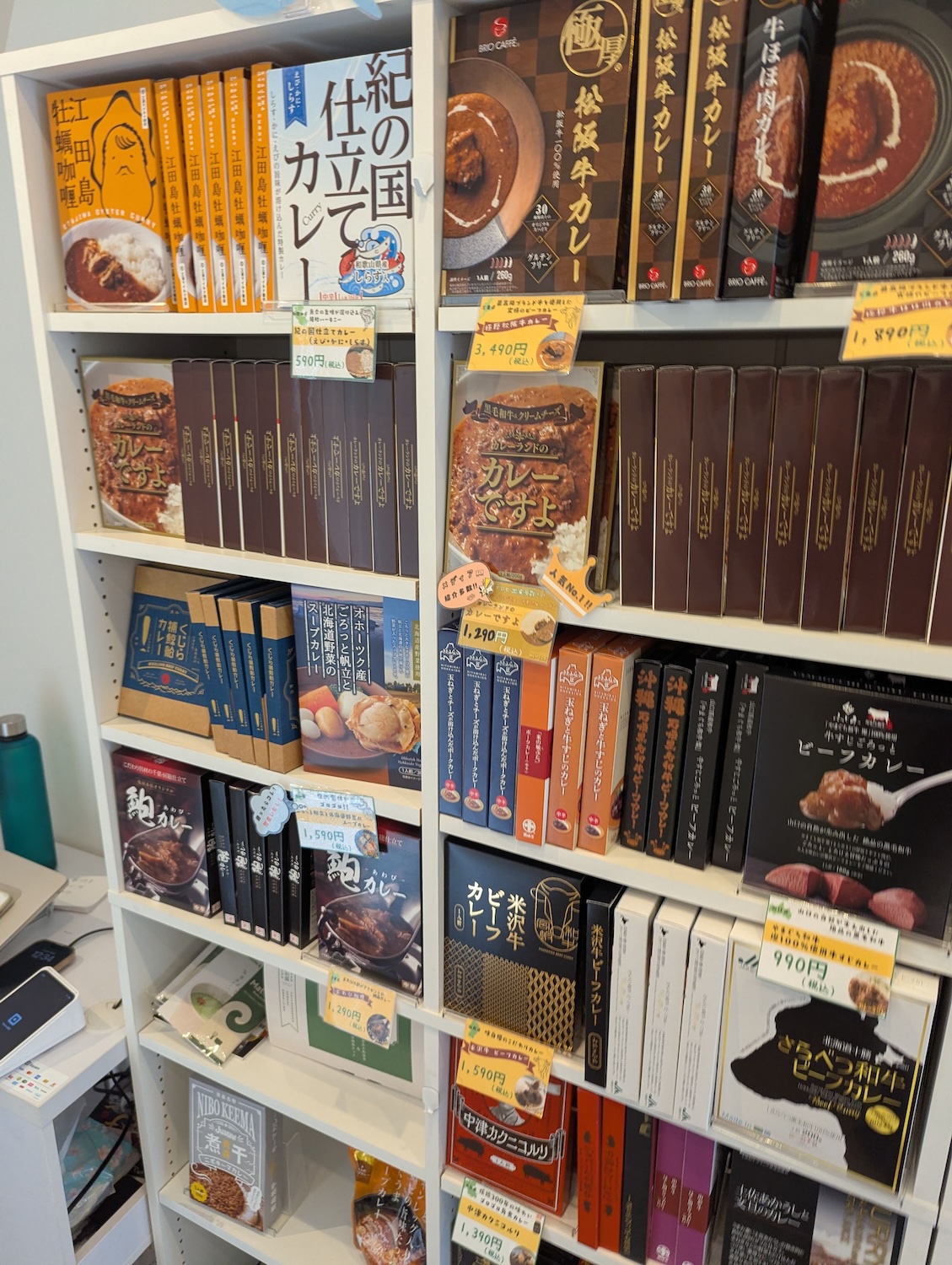
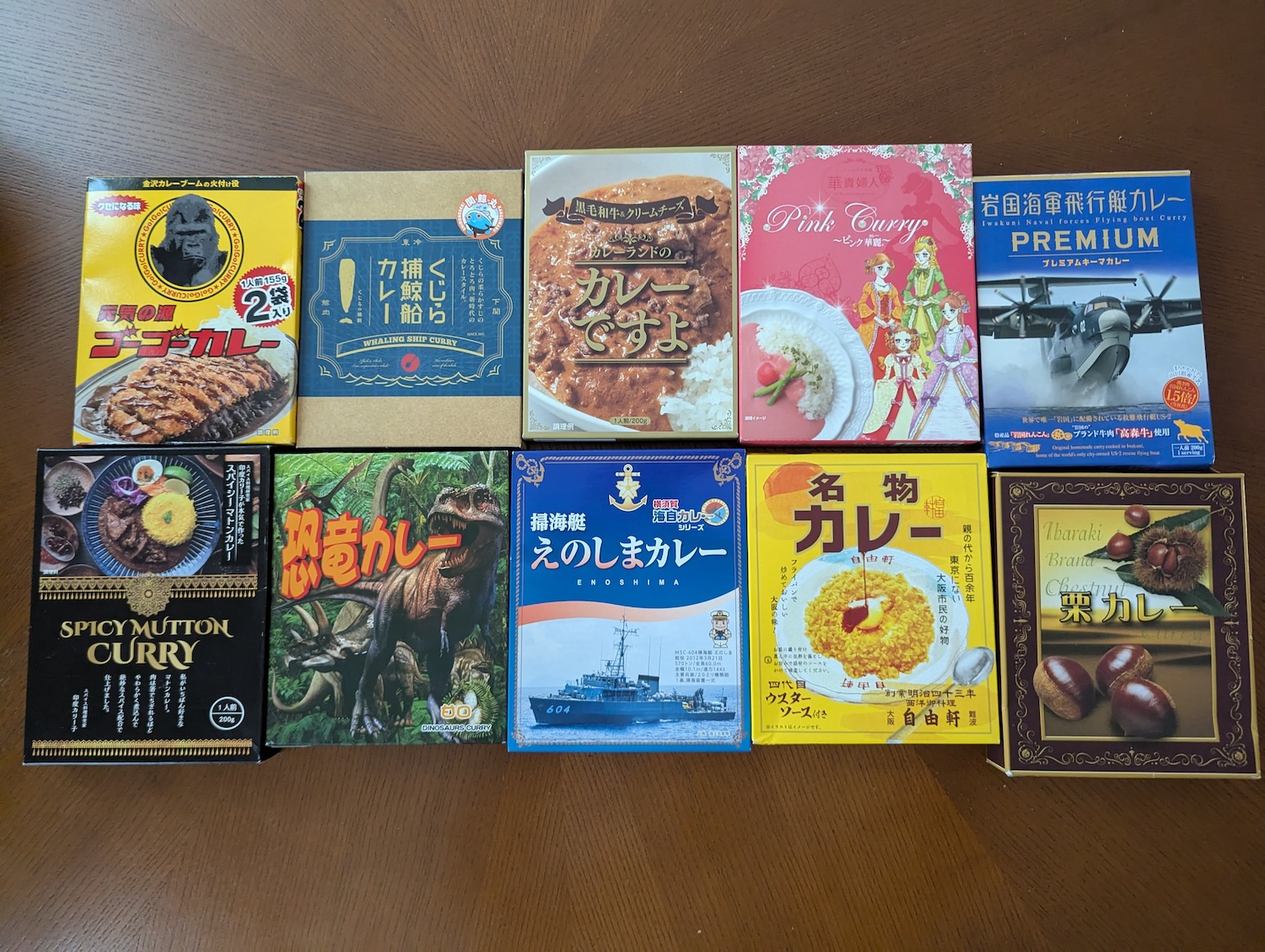
As for the curry, it was definitely Japanese curry from a mall food court
Tomorrow is the 18th annivesary of Ogiue Maniax. My little blog is all grown up now.
I believe 18 years is supposed to be the point where you look at your child and realize that they’re not the same person—or rather, website—anymore.
If Ogiue Manaix could vote, what would it decide? Sure, it’s entirely a product of my own output, but I wonder if it would hold certain ideals or approaches to the world that are stronger because they are housed within this structure of written posts that continue to vividly reflect where I was, where I am now, and where I might end up in the future. I can’t remember my earliest memories as a newborn baby, but I can look back and see what I was writing about in 2007, even if it might be a little cringey.
That’s actually something I’ve wanted to be part of Ogiue Maniax all along, though. If I do have beliefs and ways of thinking that have shifted over the course of almost two decades, I wanted to have that documented as well. I also recall all those people I’ve talked to online who mentioned that you will end up hating anime you used to love because your standards will have changed. I don’t know if the first part has happened, even though the latter definitely has.
Blogging for 18 years has been less about prestige and more about stubbornness. I don’t want to give it up if I don’t have to. It helps keep my heart in my fandoms, even as I add other things to it (e.g. VTubers) and my post rate drops further. I’m nowhere near enough to be considered a notable veteran fan of anime and manga, especially as I get a mere fraction of the readership I used to have. Though, I have gotten more hits lately for some reason. I chalk that up to not understanding how WordPress (or any other site) tracks visits anymore.
Is 18-year-old Ogiue Maniax now entering college and joining the Society for the Study of Modern Visual Culture? Will I actually change this blog again so that its template isn’t stuck in the past? Probably not, but who knows what the next year holds?
Chrono Gear: Warden of Time combines two of my favorite things: action platformers and hololive. As implied by its title, the game centers around the sardonic and leggy Ouro Kronii from the English 2nd generation, Promise. Her official backstory positions her as an overseer of time itself, and her role in Chrono Gear sees her recovering the stolen pieces of a temporal device of her own making through sword slashes, time manipulation, and other techniques.
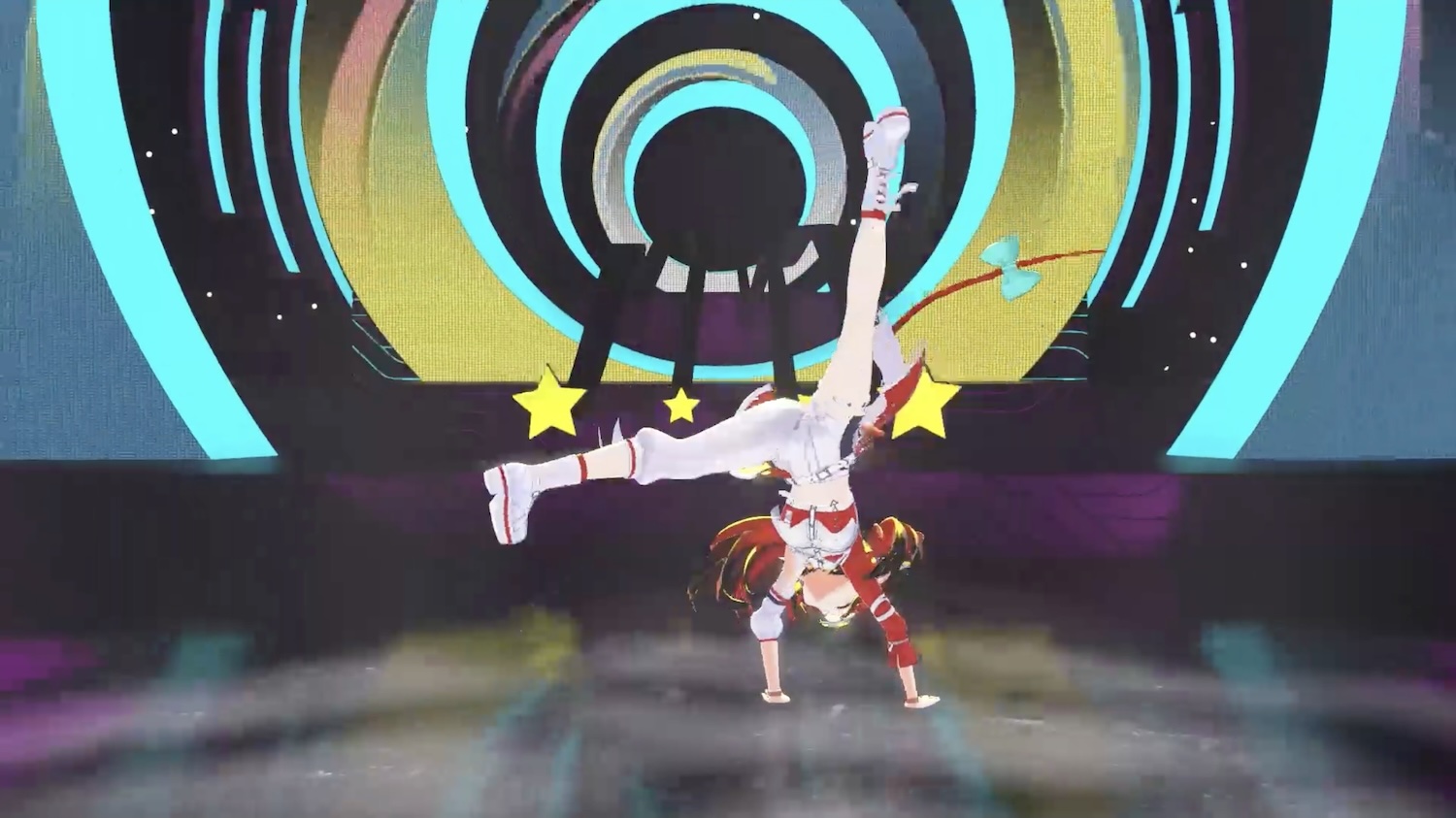
While using the popular VTuber company as a basis doesn’t guarantee quality, I found Chrono Gear immensely satisfying to play. The basic controls can be kind of clunky at first, but it doesn’t take long for Kronii to control smoothly and comfortably in multiple scenarios and gameplay modes. And unlike a lot of platformers that basically demand precision from its players, Chrono Gear is fair and lenient even in the hardest difficulty without feeling like handholding. The stages are creative and meant to have multiple paths without being focused on exploration, similar to 2D Sonic the Hedgehog games. And as a fan of good boss fights, I’m happy this one has them in spades. It doesn’t hurt that La+ and the girls of holoX are among them.
I’m never a fan of games that make you use all four shoulder buttons, but I know that’s just common these days.
Much like the bullet heaven game HoloCure, Chrono Gear doesn’t waste its use of popular source material. It’s clearly made by fans who love hololive, and they incorporate its lore and history in creative ways that often add to the gameplay instead of just being there for flavor and fanservice. Other hololive members (notably the rest of the full hololive Promise roster) make appearances—and whether they’re friend or foe, their personalities come through in dialogue, animations, and actions. One of my favorite examples is how the time-traveling Amelia Watson (a mere human among supernatural beings and cosmic deities) has four smaller health bars instead of a single big one. There’s just a great fusion of various elements with a lot of care put into the whole package.
The funniest thing about this game is that it’s basically an extremely intricate and interactive piece of TimeRyS fanfiction, pairing Kronii with her genmate IRyS in not-so-subtle ways. But even if you don’t care about this ship or shipping in general, there’s more than enough to make playing Chrono Gear a worthwhile experience. It doesn’t demand your attention, yet it’s easy to sink in more and more hours—to beat the game, relive your favorite parts, improve your stage times/scores, or even just bask in its beautiful world.