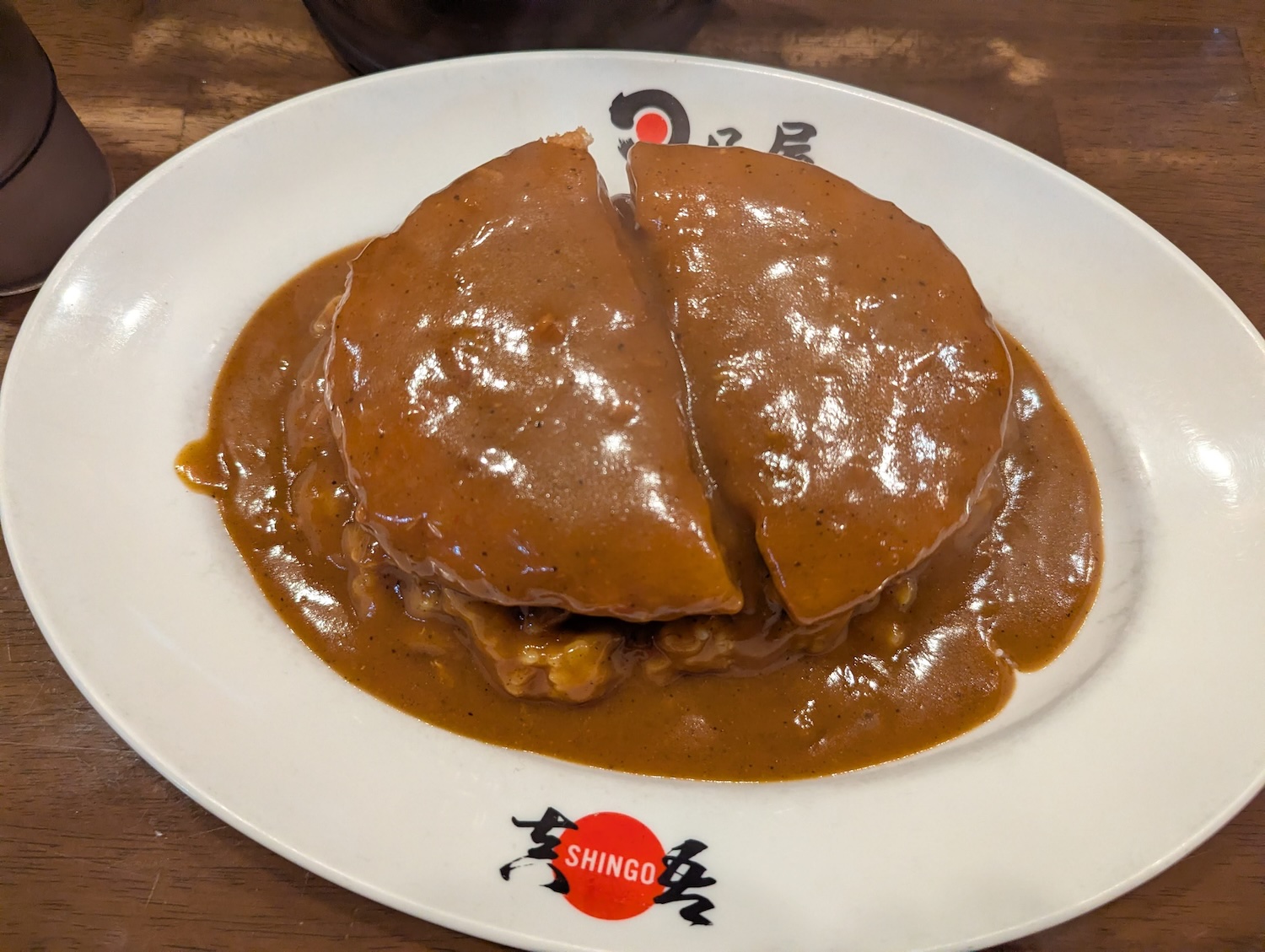
As part of a trip to Japan earlier this year, I ended up eating a lot of curry, both Japanese-style and otherwise. Some were places I had scouted out, but others I just happened to find by happenstance. One such instance happened on an evening walk back to my hotel, where I got lost. While trying to find my bearings, I ended up in front of the original Hinoya Curry. A sign proudly boasted that it previously won an award for best curry in the Kanda area of Tokyo. Given that the area has some pretty stiff competition, I changed my dinner plans and went in there instead.
The decor was unpretentious and inviting. There were seats at a counter where the chef prepared curry, as well as a counter facing a wall, and a few tables for groups. The menu was full of items that sounded interesting (like the raw egg curry and the beef tendon curry), but I decided to go with what seemed to be a signature item of theirs: menchi katsu curry, or minced-meat cutlet curry.
The sauce was rich in flavor, spiced well but not extremely spicy. It sat on the rice well, and was neither super thin nor super thick. I bet if I had just gotten a plain curry, I would’ve been pretty satisfied, but then the menchi katsu elevated it to something superb.
The cutlet was enormous. While sometimes portion sizes in Japan can feel a little small even when ordering large sizes, that was not the case here. It was a middle ground between a pork or chicken katsu and a hamburg steak, and as someone who loves both and can sometimes feel conflicted over which one to get, the menchi katsu was just a wonderful thing to have, with its satisfying combination of tender meatiness and crispy breading that borders on fried fish batter.
Hinoya Curry has stores throughout Japan now, and they’ve also expanded overseas with locations in Malaysia, China, and even San Francisco. Next time I’m in the bay area, I might just decide to check it out again and see how the American branch stacks up.
Last month, I attended a US screening of the second movie in the Mobile Suit Gundam Hathaway trilogy, The Sorcery of Nymph Circe. It was actually my second time seeing it, having catched it during a trip to Japan. I had originally planned to write about it after that first viewing, but I came away confused about a few things that I felt would benefit from a repeat viewing.
Prior to the release of the first film in 2021, the Hathaway’s Flash novel was always something of a mystery to me—a work I merely read about in dedicated online forums or guides for Gundam crossover games. It’s wild to think about how by the time all this wraps up, it’ll be 2031 and an entire decade will have elapsed, alone the 30 years since I learned about the novel.
In the first Hathaway movie, we were introduced to Hathaway Noa as a full-grown adult, years removed from the child and teenager we saw in previous works like Zeta Gundam and Char’s Counterattack. While he’d previously been best known as the son of Bright Noa, commander of the famed White Base from the original Gundam, here we discovered that Hathaway is now the head and namesake of a militant anti-government organization called Mafty. While living his double identity, he encountered a mysterious female Newtype named Gigi Andalucia, who reminded him of Quess Paraya—the girl he loved and whom he saw die in combat after having defected to Char Aznable’s Neo-Zeon.
After a big battle, the first film ended by introducing a ton of new faces as Hathaway reunites with the other members Mafty. The Sorcery of Nymph Circe continues from there, and I have to admit that I originally got a little lost keeping track of everyone, trying to remember if I even saw them last time, all while they threw names and places around. By the second viewing, though, I came to understand that Mafty was trying to coordinate an attack on a gathering of Federation leadership, all while Hathaway struggles with his relationships towards women and his sense of guilt/responsibility as leader. All the while, Gigi contends with the fact that she has been sheltered and showered with every luxury imaginable due to being both such a powerful Newtype and the favored mistress of one of the richest people in the world.
Hathaway is surrounded by gorgeous women, many of whom have feelings for him, and the film really wants to make that clear. Watching in the moment, the frequent indulgent shots can feel gratuitous, but the film eventually reveals that there’s a greater point being expressed beyond cheesecake: Hathaway suffers from PTSD brought about by his involvement both direct and indirect in the death of women from his past. He angrily and desperately chides himself for feeling sexual desire when he’s supposed to be fighting for loftier goals, as Char Aznable did. In this light, our protagonist becomes something of a pathetic James Bond, whose pain and determination become a form of charisma that attracts women and acts as both a curse and a blessing. In other words, the fanservice is portrayed in a distracting manner because it is meant to show how distracting it is for Hathaway himself, and I find having such patheticness in a main character to be pretty interesting.
Now, whether that approach works is a more complicated question. It’s not the main driving force of the movie (which would be the whole “attempting to overthrow the Federation” thing, but that turmoil does reveal itself to be the foundation of Hathaway’s character and the thing that undergirds his actions. In the moment, however, the T&A can feel excessive and gratuitous, and like an attempt to get some horny fans.
A similar issue exists with Gigi. There are many scenes of her basically playing fashion model and home designer in ultra-wealthy settings, and they’re ultimately meant to show how Gigi is trapped in a gilded cage. She has her position and privilege because she’s desired by a very powerful man who values Gigi for both her psychic gifts and her body, and this gives her access to more than most can even dream of. In this context, all the opulence feels like an attempt to exercise some form of autonomy, and the limitations of this are what attract Gigi to the mess that is Hathaway Noa. However, the sheer amount of expensive outfits, furniture, and decorations portrayed—not to mention Gigi’s statuesque beauty that is very rare in Universal Century Gundam even among its most beautiful characters—can also come across as trying to appeal to people with similar tastes, or perhaps those obsessed with luxury goods.
The movie also can sometimes just be visually hard to follow. In addition to not always being clear who’s on what side, there’s a particular problem that stems from Hathaway’s Mobile Suit, the Xi Gundam. It is a chunky hunk of metal that almost feels like a very burly and pointy linebacker, and between that, the night battles, and the amount of weapons being fired, sometimes action scenes can be a huge blur. Rather than being able to follow the “choreography” so to speak, I found myself enjoying it more when I let the chaos wash over me and lived in Hathaway’s head. There’s also a big moment that really delves into his psyche, and the world portrayed there ironically shows how much more clarity these battles could have had.
I’ve given some criticisms, but I ultimately did like The Sorcery of Nymph Circe. It feels both mainstream and experimental, and I do like that Hathaway Noa is such an unusual protagonist whose internal struggles oddly seem more relevant than ever with how the male libido has become a weird battleground in culture. He is an imperfect hero whose attempts to become more ideal are filled with pitfalls.
As the credits finished during that first viewing I watched while in Japan, there was a girl behind me who was crying. Talking to another girl next to her, she simply commented that it was really good, all while drying her tears. If a film can move someone that much, I feel like it’s gotta be doing something right.
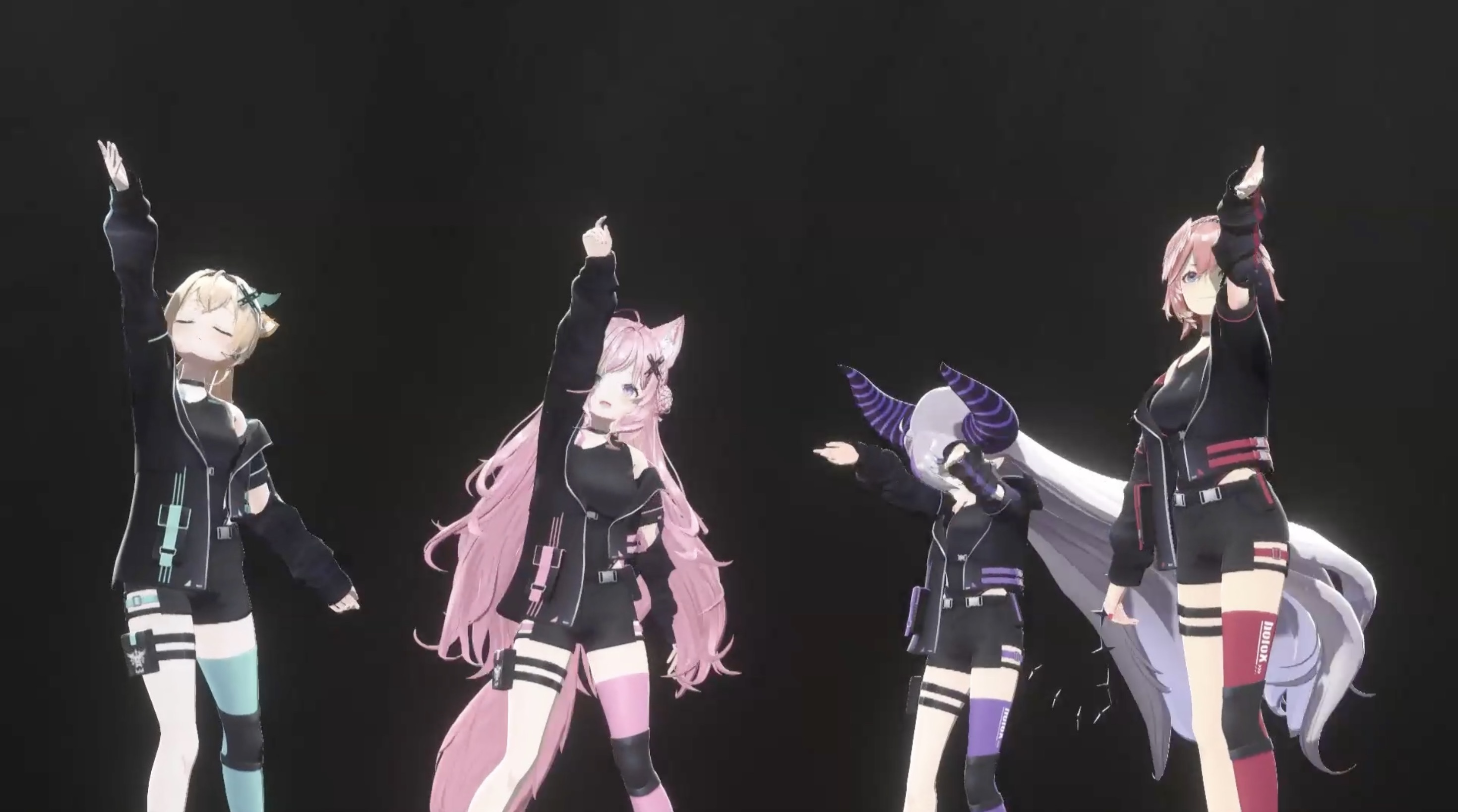
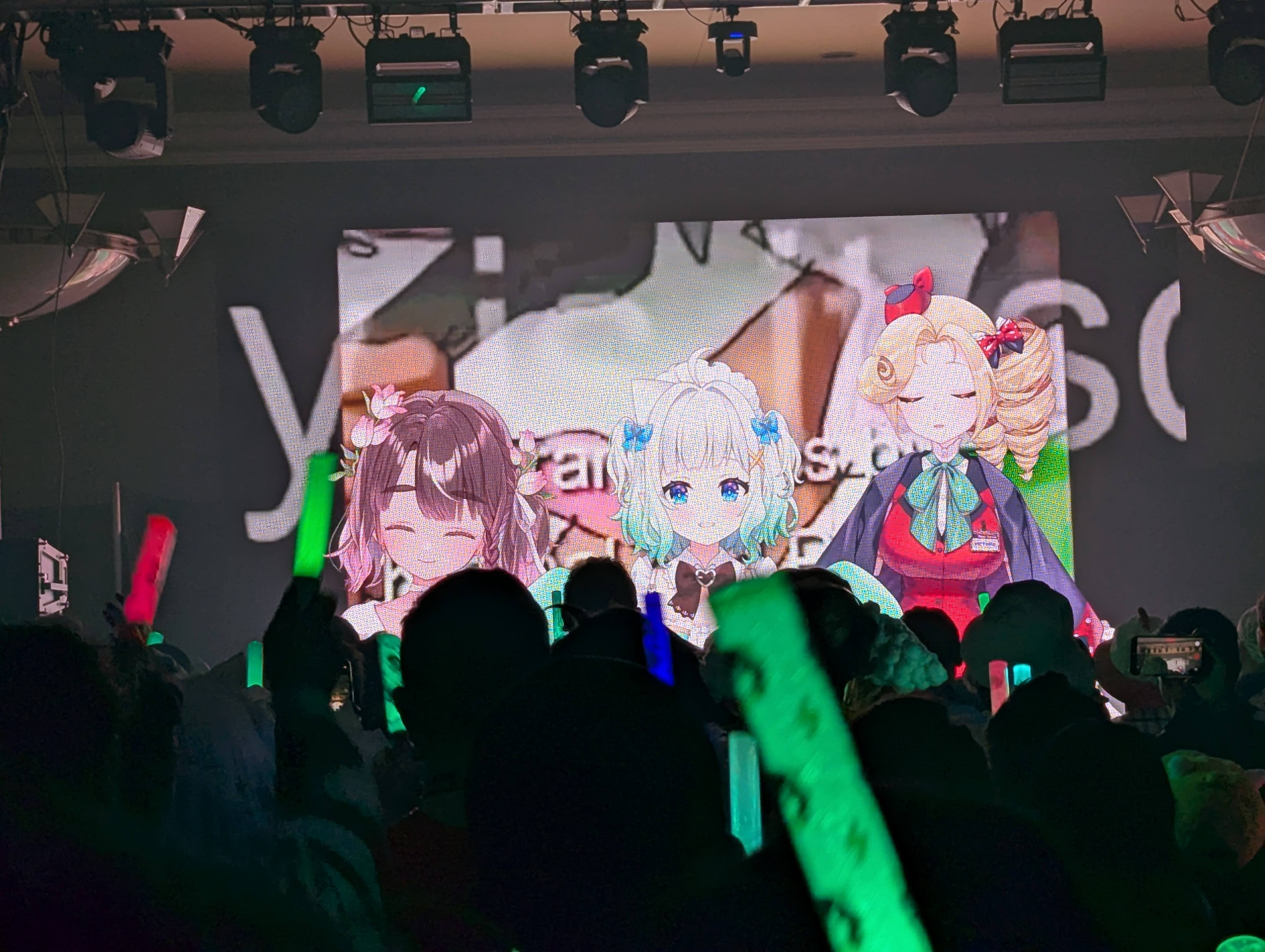
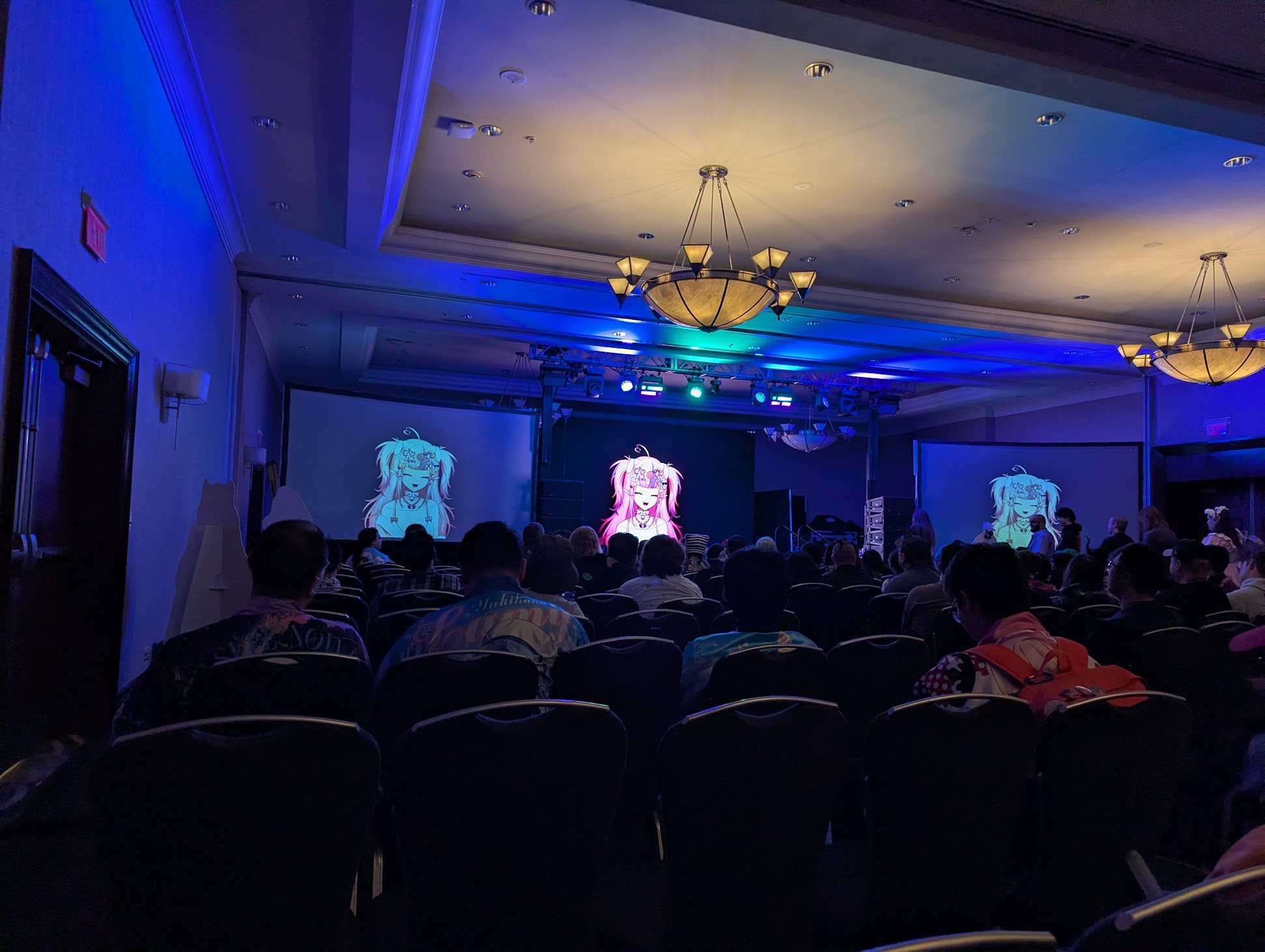
Ever since their debut in 2021, I’d been looking forward to the day that one or more members of hololive’s 6th generation—Secret Society holoX—would get a dedicated live 3D concert. Then, last year, they made the big announcement during their anniversary: a full-gen holoX concert would be set for April 2026.
Now that I’m on the other side of the event, titled “Secret Society holoX Live 2026 First Mission,” I can say that it was one of my all-time favorite VTuber concerts I’ve watched online. Some of it comes from my clear bias and favoritism towards the talents themselves, but there also a lot in terms of presentation that both elevated the whole endeavor and made it feel unique.
In its current form, holoX is a roster of four: the diminutive alien leader La+ Darknesss, the mature hawkgirl XO Takane Lui, the energetic coyote scientist Hakui Koyori, and the cute/cool samurai bodyguard Kazama Iroha. A fifth member, the orca intern Sakamata Chloe, has moved on from hololive and did not appear (More on that later). Lore aside, each of them also have different tastes, histories, and approaches to music and dance. Thus, First Mission was an opportunity to experience their particular flavors both alone and together, and with a live audience that is normally absent from their online-only anniversary concerts.
La+ Darknesss
As holoX’s strongest dancer, La+ has the best stage presence in her generation despite being literally the smallest member of hololive, on top of a wonderful singing voice that swings between boyish and girly. She’s one of my absolute favorites in VTubing for those reasons and more. Getting to see her different choreographies across her original songs all in one place was a real treat—the last time was years ago with the Nissin collab, and she was just recovering from a severe illness that affected her physically and vocally. Here, she really showcased her musical leanings, which is basically aggressive Kpop, idol music (both real and fictional), and cool and complex Vocaloid fare.
I did notice a couple things about her dance routines. First, I finally got why she steps in place with her arms stretched out during a part of “Love Bug.” She’s talking about “sense of distance” and is mimicking backing away in order to not get too emotionally attached. Second, her dance for her first original, “Aien Jihen,” was simplified in some places compared to previous performances, with other flourishes added elsewhere. I assume these were adjustments made for the live concert format and the fact that she had to keep coming back on stage. Overall, I am a satisfied La+ fan.
Takane Lui
Out of everyone in her generation, Lui has made the biggest push into a singing career. She may not have the conventionally dulcet voice of a Hoshimachi Suisei or an AZKi, but what she does have going for her is a distinct sound and a wonderfully eclectic mix of genres in her original songs. That variety—I would say the greatest in hololive—was on display at First Mission, between the Latin inspiration of “Evil Eye Wink” and , and she hit every performance exuding a sense of confidence that pairs well with her husky voice.
Hakui Koyori
Since the beginning, Koyori has been one of the most prolific and consistent streamers in all of hololive, while balancing that with a variety of projects that include idol aspirations. More than any other member of holoX, her music and dancing are both conventionally energetic and poppy. While I still believe she’s vocally strongest when using a deeper voice and a more “rock” feel, I could tell that she is pretty close to hitting that sound while also still delivering with songs in the former vein.
Kazama Iroha
If all the other girls are like waves crashing down and making big splashes, Iroha is like a gentle current that still has the power to erode its surroundings. Her voice is both mellow and vibrant, her reputation as the most athletically fit member comes across in how stable she is when dancing, and her songs tend to have a calming Japanese aesthetic that plays into her samurai motif. Iroha’s sweetness is one of her defining features, and it’s amazing how much it comes through in every performance.
All Together
With each member of holoX being quite different from one another, one new element for this concert that really unified their particular styles was the presence of DJ fu_mou. He became the bridge between each performance, and the flair he added to each song also made them sound new and unique compared to the original songs, as well as past birthday and anniversary concerts.
There were also some really great visual transitions. Whether it was the use of smoke to bridge a medley between the four or a glitching holoX logo slowly coming into view before revealing the next performer, it was one of the smoothest presentations I’ve ever seen for a live VTuber concert. The main exception might be NePoLabo’s Twinkle 4 You, where the girls actually remained in the background even for the songs in which they weren’t the focus.
Together with their multi-person songs, whether it was in the form of duets or full-gen numbers, holoX ended up feeling like a really cohesive unit. The way they contrast with each other has always worked well aesthetically, and here they got to show off their individual strengths and help create something greater than the sum of its parts. I also have to call attention to their cheeky fakeout, where the encore seemed to be another instance of “Our Bright Parade” like so many other in-person concerts, only for it to be another awesome holoX medley.
The Elephant (Orca) in the Room
I alluded to this earlier, but there is something that I think needs to be addressed: the looming question of whether Sakamata Chloe would make an appearance. While she is indeed no longer considered an active hololive talent, Chloe has actually appeared once before post-graduation, in Murasaki Shion’s own graduation stream—a benefit of her “affiliate” status. Given that Chloe was the best singer in holoX, as well as someone actively working towards having enough of a repertoire of original songs to someday have a solo live of her own, I (and apparently many others) held some hope that the orca who had swam out to sea would make her way back for this special moment.
That didn’t happen in the end. Moreover, the girls made mention of an “intruder” at the venue, but that turned out to be not Chloe and instead the jester-like Japanese comedian Gorgeous (seen most recently in hololive at Inugami Korone’s 6th Anniversary). While I had hoped she would be there, I understand that having a talent who left come back immediately for the next major event sets a somewhat bad precedent. Not only does it feel it diminishes the importance of the members who remained, but having the VTuber alumnus show up at the very first group concert creates the unenviable assumption that she would show up every time. Whether it’s Chloe or her fellow affiliate, Amelia Watson, the news of their appearance always risks overshadowing everything else, and is best used sparingly if at all.
In fact, in one of the last MCs of the night, all of them spoke about how performing without Chloe came with some conflicted feelings, including fear that fans would be disappointed. While the details and length of each speech differed between each talent, they all came to similar conclusions that essentially both the five-person and four-person iterations are important parts of the history of holoX. In my opinion, this is the healthiest approach to a difficult and emotional situation.
Final Thoughts
I am so glad that I finally got to see holoX perform in front of a live crowd, and to fulfill their dream of a full-generation concert. I hope that all of them someday get to be on that big stage again, whether as individuals, as a group, or even in some other form entirely. Secret Society holoX will always be near and dear to my heart, and I don’t see that ever changing.
PS: By the time this goes up, it will already be May 25 in Japan. Happy Birthday, La+ Darknesss!
Ever since 2020 and the rapid rise of VTubers in the US, they have become an increasing presence in North American nerd conventions. And out of this interest has emerged cons fully dedicated to VTubers, notably Offkai Expo in California. Just like with anime and manga, the west coast is well positioned to get guests and attendees from different parts of the world (especially Japan), but it can be a real travel commitment for lots of people, including myself.
As if to answer that demand, OshiUplink has appeared. It’s not only Canada’s first VTuber convention, but also a more convenient event for those closer to the east coast.
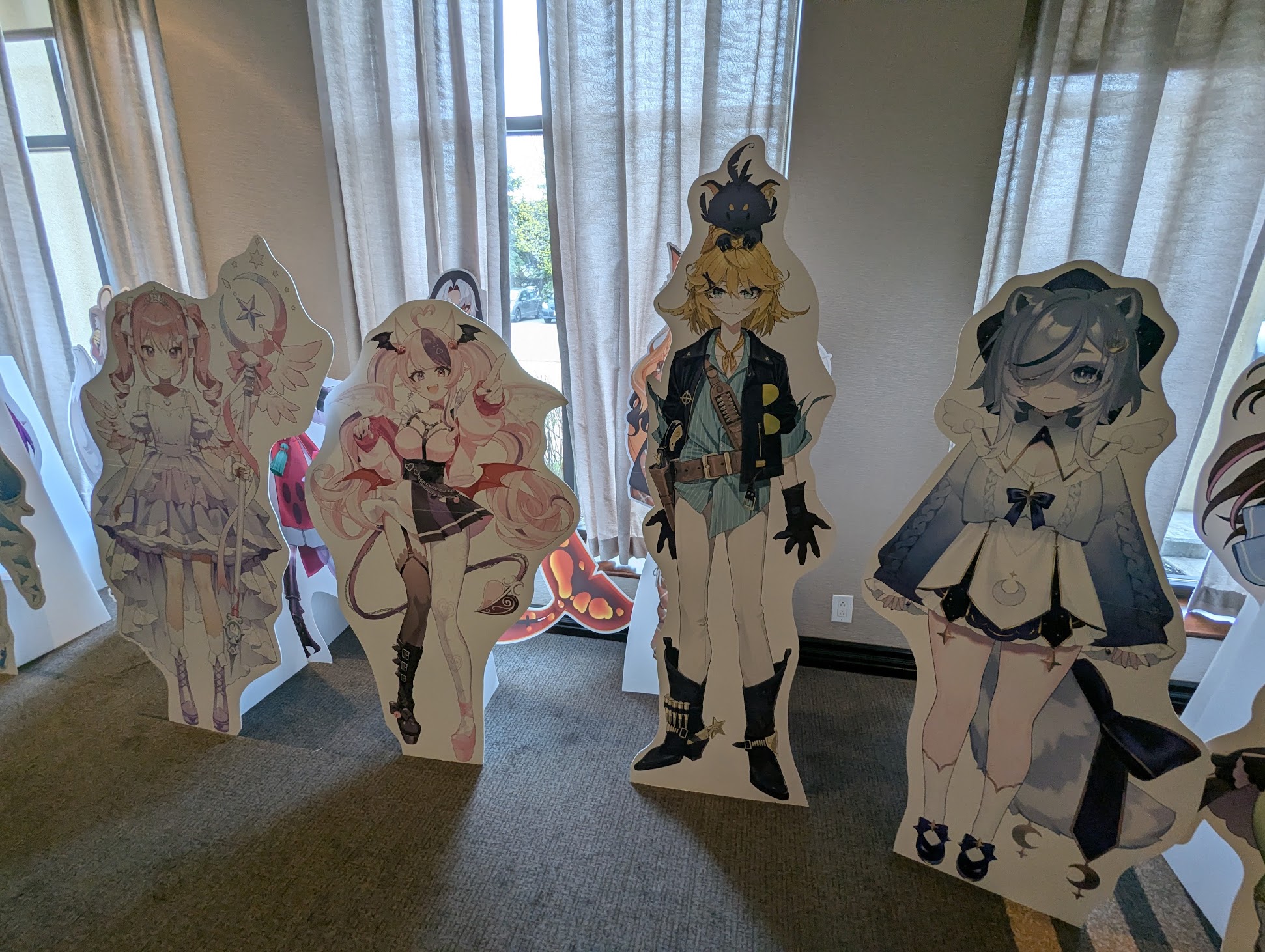
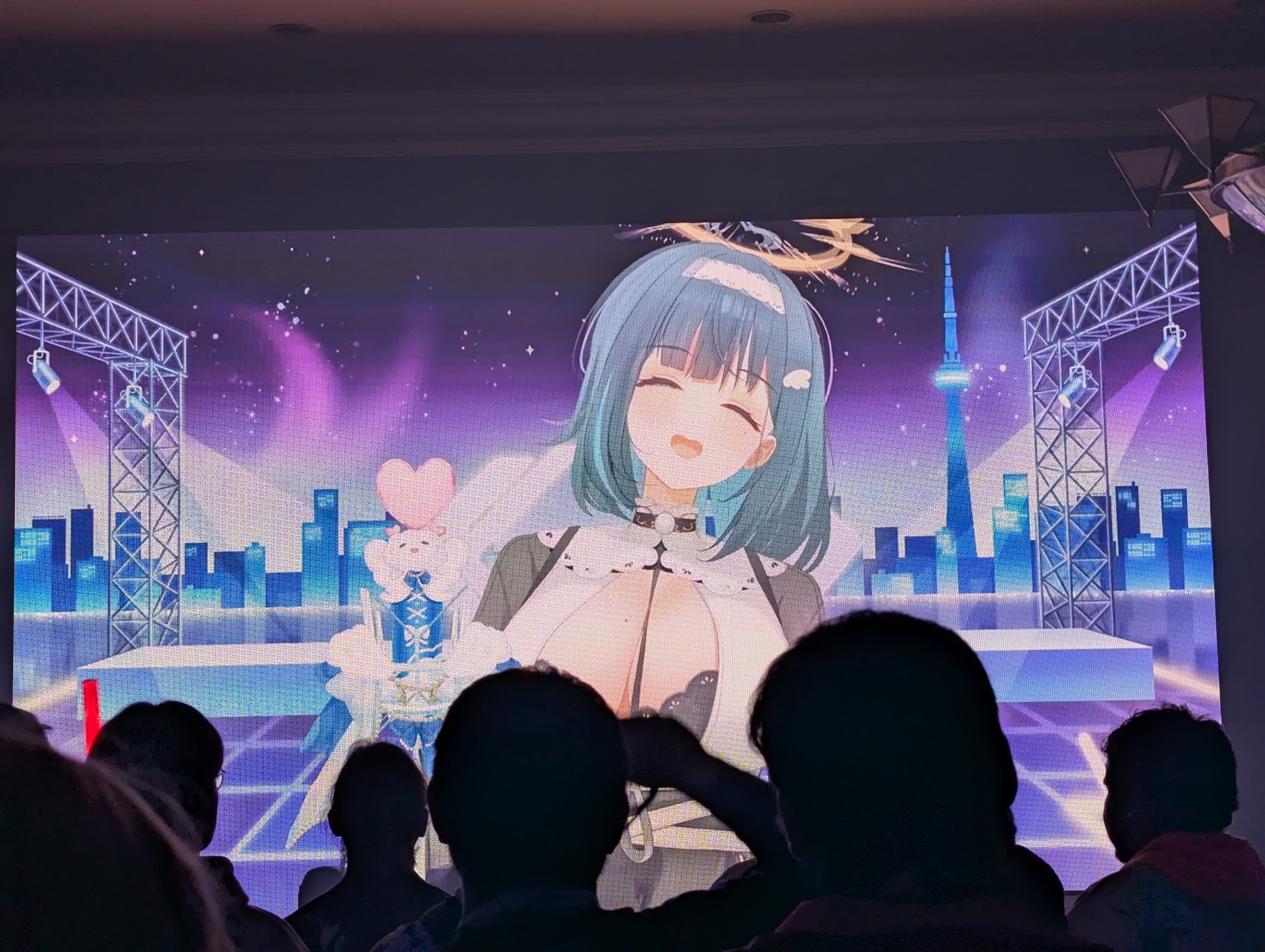
OshiUplink took place from May 2 to May 3 at the Sheraton Toronto Airport Hotel and Conference Centre, only a few minutes away by car or public transportation from Pearson Airport. As per its name, it was a hotel with a bit of venue space that could be used for panels, meet and greets, small concerts, and so on. Although it lacked the official heavy-hitting presence of hololive, Oshi Uplink included VTubers ranging from small and new to established major names—notably Dokibird, Densetsu.exe, and Ironmouse. In fact, the announcement of Doki as its first featured guest (along with the con’s location) is what convinced me to attend in the first place.
The Meet & Greet Experience
Over these past few years, I’ve become a fan of not just bigger names but also many less notable VTubers, so the fact that OshiUplink provided an opportunity to see those more obscure talents was a real boon. I’m the type who doesn’t go all-in on specific characters or entertainers in any of my fandoms (Ogiue Chika is the closest), so the sheer variety appealed to me. One distinction the convention made is between “featured guests who have official events done as part of the con schedule” and “unofficial guests who have a presence through vendors and exhibitors.” The former got to use the Conference Centre rooms, while the latter had to be set up in the exhibit hall or other means, such as an iPad being literally carried around. The official guests also had Meet & Greets that were first come, first serve ticketed events (the prices for which varied according to individual VTubers and what I presume to be their or their management’s choice). This was in contrast to the unofficial guests, where one had to just line up and wait to talk to them, or flag them down if they were part of a more mobile operation.
All solutions for how to handle guests meeting fans have their strengths and weaknesses, and I like that OshiUplink ended up with different approaches because of that official guest vs. unofficial divide. My only complaint is that having the official guest tickets on a separate website from the OshiUplink registration site got confusing: I ended up managing to get a Dokibird Meet & Greet, but only because I had purchased the more expensive Founders Pass, messed up trying to get the Dokibird one during the early sale, then got a second chance during the general sale. Neither of the systems were a lottery either, which one can argue is a fairer method.
In the end, I talked to a number of VTubers: Dokibird, REM Kanashibari, Poma Pom, and Paige Terner from V4Mirai, Roca Rourin and Akugaki Koa from ChromaShift, Eva Ananova, Izumi Teeny, PillowDear, Chroniko, and Nene Amano. And all of it was relatively painless, official ticket shenanigans aside.
Musical Performances
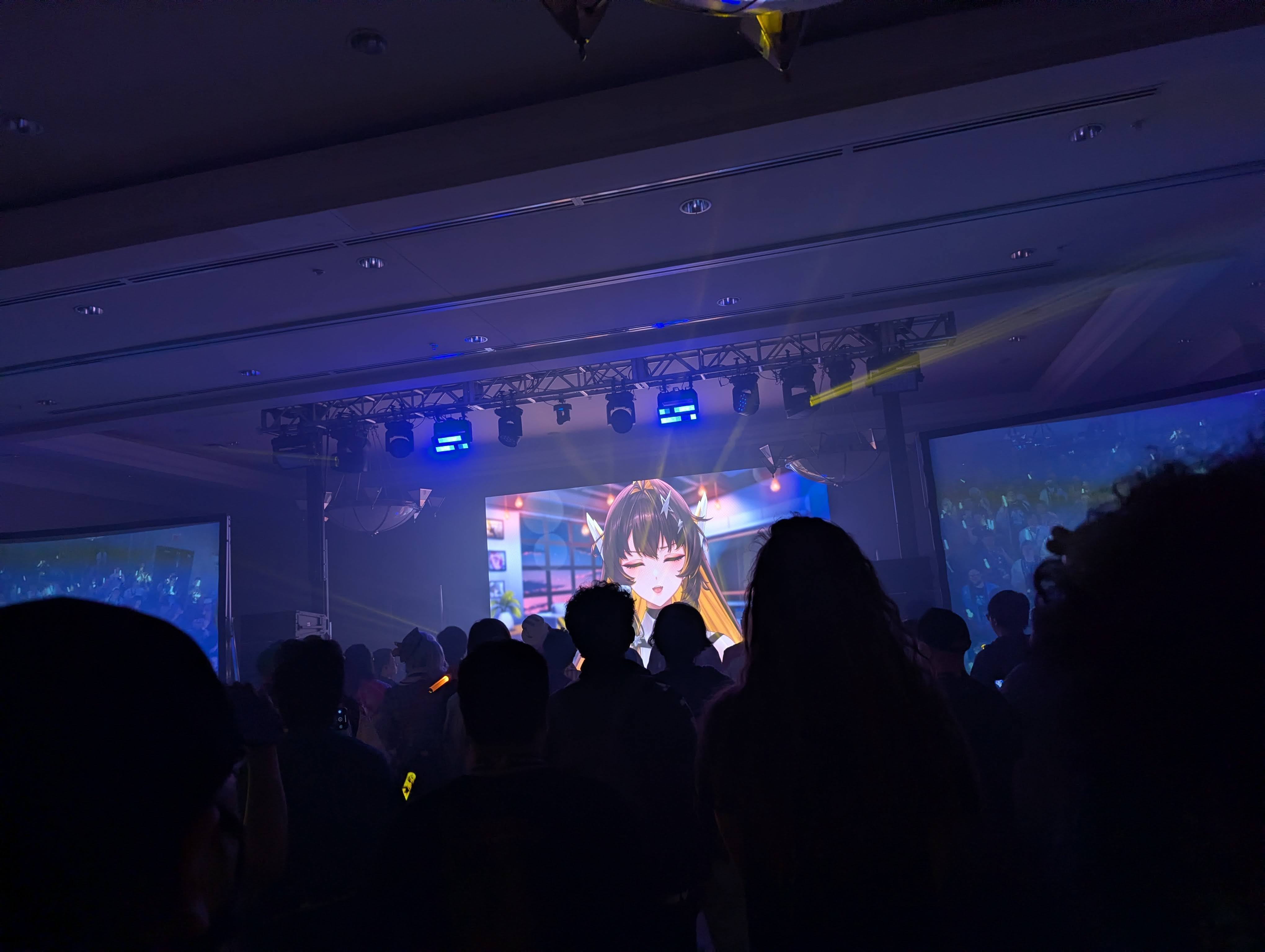
I also attended four concerts over the weekend, none of which were full 3D and only some of which were truly live, but were still fun regardless.
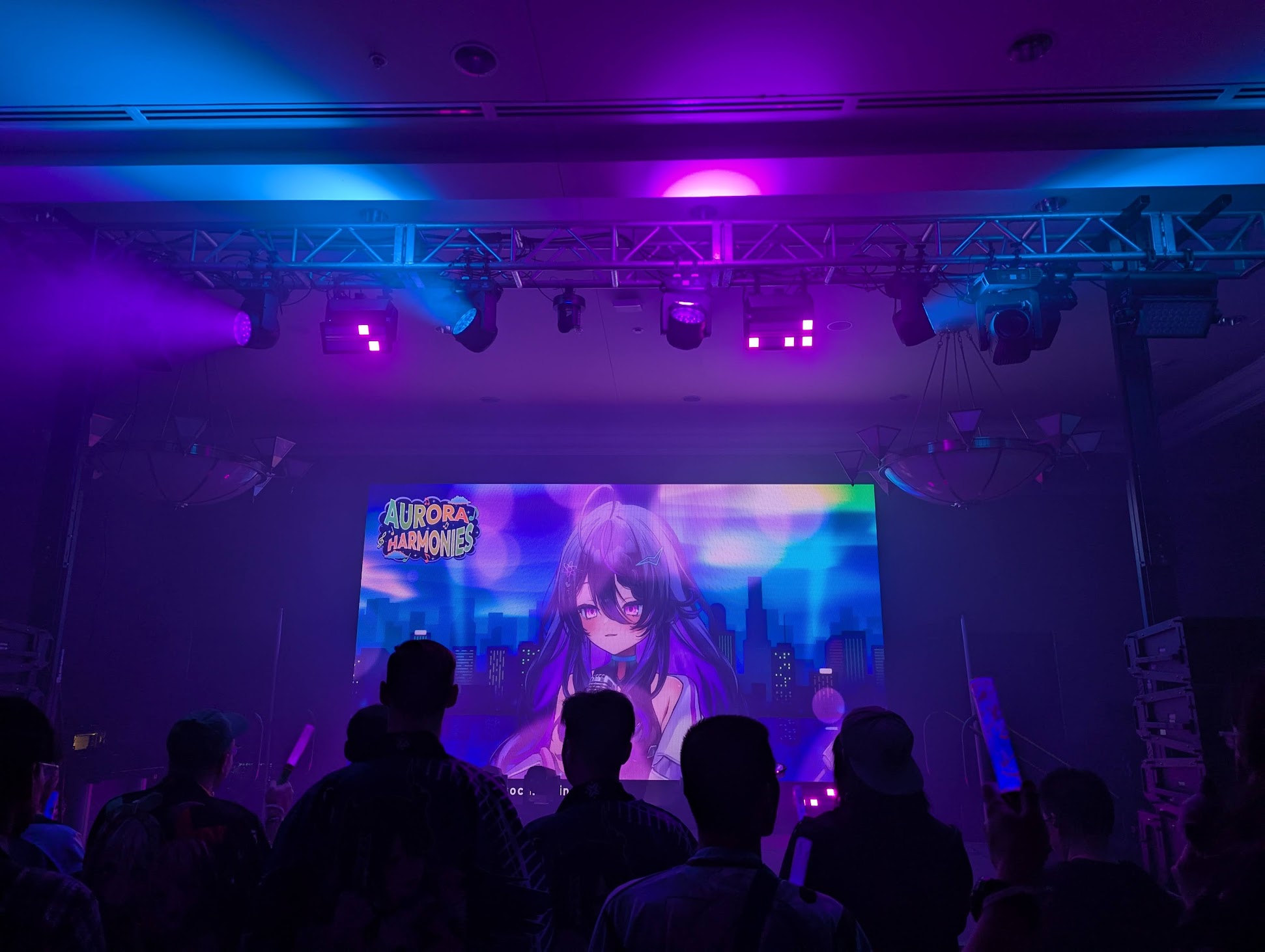
ChromaShift held a relay called Aurora Harmonies, the highlight of which had to be Roca’s cover of “Smells Like Teen Spirit.” As the first big morning event of Sunday, I have to wonder if at least a few people were introduced to her incredible voice. Another performance that sicks out to me was Lalabell Lullaby’s “My Heart Will Go On” (Celine Dion being a fitting choice for the first VTuber con in Canada).
The full Densetsu.exe roster—Victoria Roman, Phoebe Chan, and Mint Fantôme—went with a series of duets and full group performances. My favorites were their cover of “Magia” from Madoka Magica, Vicky and Phoebe’s “Lion” from Macross Frontier, and their original song “Densetsu MVPs,” which does a nice job of showing off their respective singing styles.
The Hyper Link concert was an eclectic mix of VTubers: the aforementioned Nene Amano and Eva Ananova (whom I only learned about the day of!), but also Kirispica, Kiichan, Penny Puffball, Yukinoshita Peo, and rachie. I had varying degrees of familiarity with all of them and their singing, making for a nice variety. Highlights for me were Spica’s city pop medley accompanied by her own piano playing, Nene’s Nico Nico Douga Medley (and yes, I did recognize a lot of the songs), as well as rachie’s English Vocaloid covers, notably “Monitoring.”
I only caught a portion of the OshiUplink Sunday Music Relay due to scheduling conflicts. I saw Yumemi (who was actually there in the flesh and also had merch at the official OshiUplink booth), Lazuli (whom I’d never seen), and Juna Unagi (whom I was introduced to at Fantôme Thief’s Revenge in 2024). I’m glad I got to see at least the tail end.
And while I didn’t get to see it live, I checked out the VOD of the Undercover Encore concert by the VTuber group Vivaria. There were a lot of group songs, and not just Vivaria members, and I was pleasantly surprised to hear “Live and Let Die.”
A crowd of wotagei lightstick performers were in the audience for each concert I attended live, and presumably all the others as well. I found their participation to range from entertaining to overwhelming. I can appreciate the hard work they put in or the dedication needed to make this all happen, but I also think they can sometimes draw too much attention away from the main show, depending on the circumstances.
Panels
The majority of my time was not spent at panels, but I did attend a few.
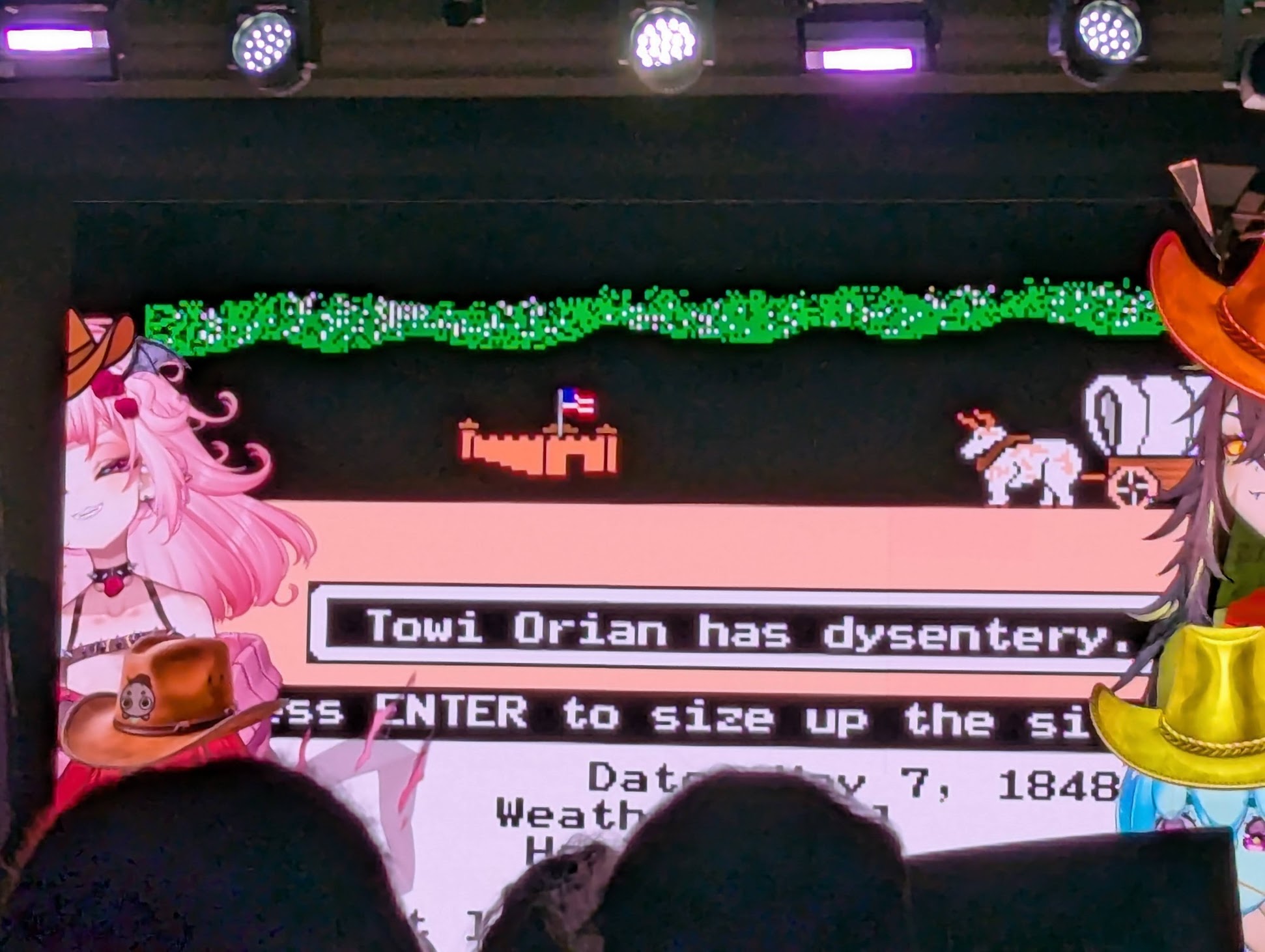
The group Beastiez did a playthrough of Oregon Trail, which I enjoyed a lot as a kid. They were hilarious, especially when riffing off the various mishaps and bowel-wrecking diseases that afflicted their characters. My only complaint is that they didn’t do the rafting section at the end, which I consider the highlight of the game. It was like seeing someone skip an awesome final boss, though they were technically going overtime, so it may have been a way to quickly wrap things up.
I also watched Dokibird 1v1 her fans in Apex Legends. The way she bantered with fans while gunning them down was classic Doki and a combination of charmingly abrasive trolling plus nervous energy. Her panel was as advertised, and it certainly did not disappoint
By the time I got to the Ironmouse Panel, it was a Q&A, and I could see just how much her fans adore her. Incidentally, I’m the one who shouted “Rhea Ripley!” when she was trying to figure out who’s her second favorite wrestler.
Then there was a group discussion by literal mom VTubers and what it’s like to have children while in this field. In a space where extreme fans can get scarily parasocial and get angry over the very notion that a girl might have a male significant other or even sexual experience, seeing them casually discuss topics like pregnancy, relationships with their children, and even bad exes was refreshing.
Comparing to Anime Cons
The vast majority of my general convention experiences have involved anime cons, and unsurprisingly, a VTuber one shares a lot of similarities. In fact, OshiUplink actually reminded me more of anime cons from 15 to 20 years ago than what I see today, regardless of size. I think it’s because VTubing occupies a niche space in a way anime used to, and a lot of the interactions between attendees seems to be centered on trying to convey either one’s passion for their chosen subject or to find like-minded fans who understand what makes VTubers special. This has both upsides and downsides, the former of which is a kind of casual atmosphere and the latter is potential for awkward intrusiveness. It can be a double-edged sword for me, personally.
And while there’s a lot in common with anime cons, one major difference to me derives from the inherent differences between storytelling forms such as anime and manga and the way “creator” and “product” are often one and the same with VTubers. An anime con might have some attendees who adore an anime for its characters and world, others who love the artists and voice actors, and so on, and these different groups of fans can be distinct. With VTubers, however, all that divide is blurred to the point of non-existence. It’s kind of like if the author of Frieren was actually Frieren, and you got to talk to her through a screen. It makes the question of whether to attend panels (to learn or to see a presentation) or have direct meetings (so you can talk 1-on-1 and have that more personal experience) both easier and harder.
Because of the greater connection to streaming, I was worried prior to attending that the vibes of the con would be unfavorable to me. Fandom culture has become one where many people are trying to figure out how to leverage attention for more attention, possibly in order to parlay that into a career. While I don’t begrudge people for trying to figure out how to make life work for them, I’ve heard less than stellar things about events like TwitchCon—particularly the way it can be less of a celebration and more of a networking and clout-chasing gauntlet. I feared that I would see this on a smaller scale. Fortunately, I didn’t really get that sense from OshiUplink, or at least not on a clearly obnoxious scale. I might just be so out-of-the-loop that I wouldn’t be involved in those circles where it happens.
Miscellaneous
Similar to many hotels of its kind, being near the airport means being a good distance from the more popular and populous areas. I spent the Friday before the convention traveling to downtown Toronto and enjoying the food, namely getting some Jamaican food at Allwyn’s (beef patty with slaw in coco bread, along with some curry goat on rice) and having a side-by-side peameal bacon sandwich comparison between Carousel Bakery and Paddington’s at St. Lawrence Market. Personally, I ended up liking Carousel’s more because it was more tender and easier to eat.
Doing all that required grabbing the hotel shuttle bus to Pearson Airport, then catching the UP Express train to Union Station. The trip was actually quite convenient, all things considered, and only took about an hour each way total, but that’s not time I wanted to use during OshiUplink itself, especially because the hotel shuttle only ran every 30 minutes. Fortunately, the food options around the hotel were not the worst, and many were within 10 to 15 minutes of walking. I got to try Harvey’s, a Canadian fast food chain that serves burgers, fries, and poutine. I got a buffalo chicken poutine and a Skor shake, though I wouldn’t recommend the latter: The toffee would either get stuck in the straw and make it a challenge to drink or end up at the bottom needing to be scooped out.
The hotel itself also helpfully provided some fairly quick food options. They were of course overpriced, but not as bad as I thought. I tried the in-restaurant hotel breakfast (another peameal bacon sandwich!), as well as the to-go Indian butter chicken, and both were very solid.
The artist alley was a little more crowded than I liked, but I did end up buying some official merch, as well as a Dooby3D sticker.
Final Thoughts
As I was winding down Sunday evening, it occurred to me that as far as I could tell, OshiUplink ended up running incredibly smoothly—especially for a first-year convention. I suspect the staff and perhaps even the volunteers had significant experience with events like this, and I give my highest compliments to them; things can go very wrong, very easily. Perhaps it was because the fan base skews older, but the way the concert audiences would actually listen to the reminders to not run into the main events room made it feel like everyone was on the same side.
I don’t know if there are plans to bring in those heavy-hitting companies. If they do, they might need a larger space or an attendance cap at this Sheraton. I’ve also read some complaints that at least one of the panel rooms were extremely small (around a 40-person capacity), which meant certain events, especially concerts, filled up fast. But even if a bigger venue isn’t in the cards, OshiUplink seems to be in a pretty good situation. I personally got to meet a lot of VTubers I’m a fan of, learn about ones I was largely unfamiliar with, and feel a combination of forward-facing optimism and a sense of nostalgia for times gone by.
Will I attend next year? It’s uncertain, as I might end up prioritizing other places for travel, just because May is turning into a really stacked month for cool things to do. But even if I myself don’t go, I really do hope OshiUplink comes back for the benefit of the fans, the creators, and the VTubers.
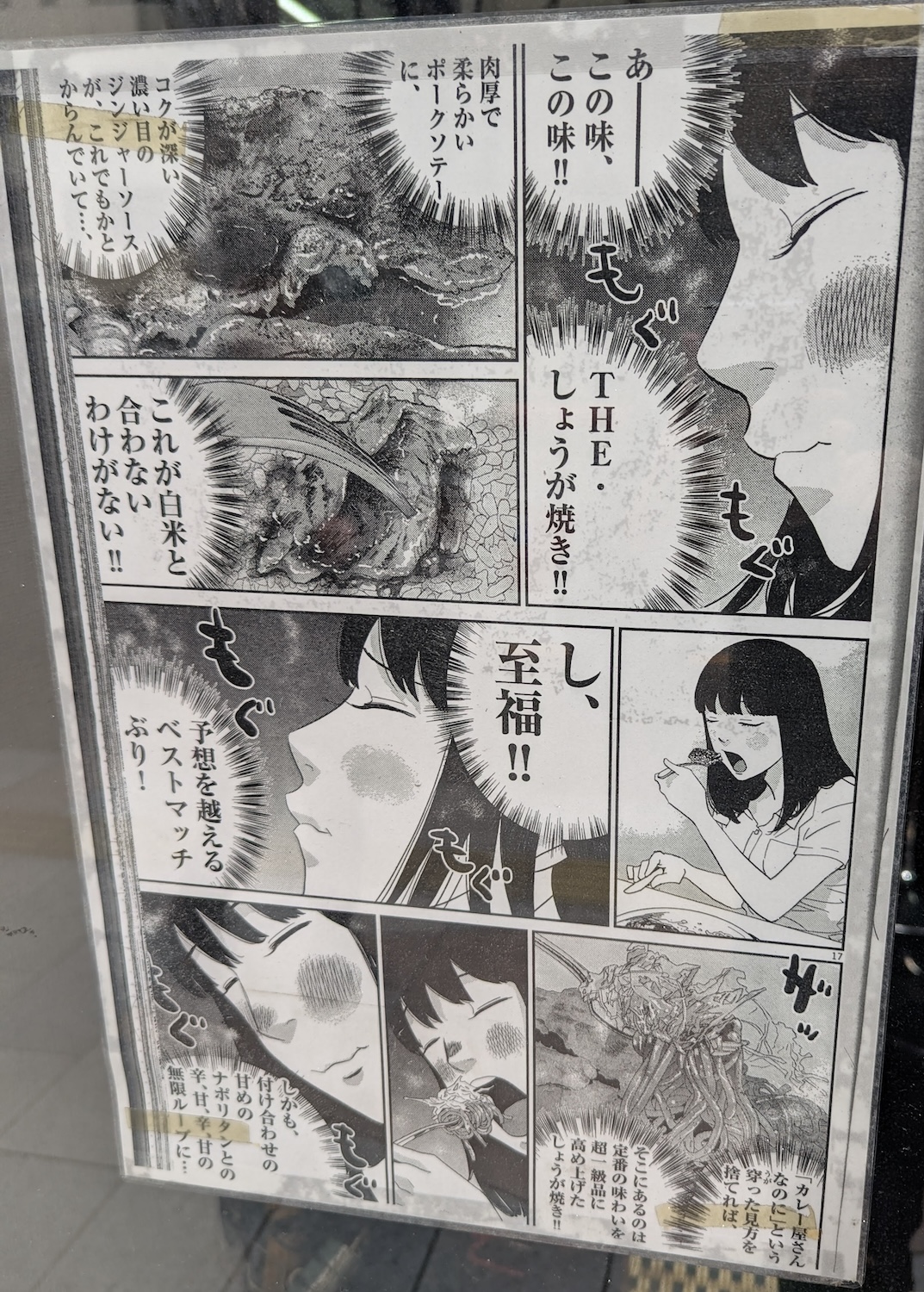
While walking in Tokyo, I happened upon a restaurant that had pages from a manga on its windows. Upon closer inspection, the comic was actually depicting that very restaurant: Boys Curry.
Located in Jinbocho—which is something of a curry epicenter in Tokyo—Curry Boys looks and feels like a restaurant from another generation. That makes sense, since it turns out to have started in 1982.
Going in, you’re immediately greeted by a horseshoe-shaped counter, and everything from the cooking to the service was done by an old man and an old woman. I love restaurants like this, as it reminds me a lot of Manhattan Chinatown, especially in years past.
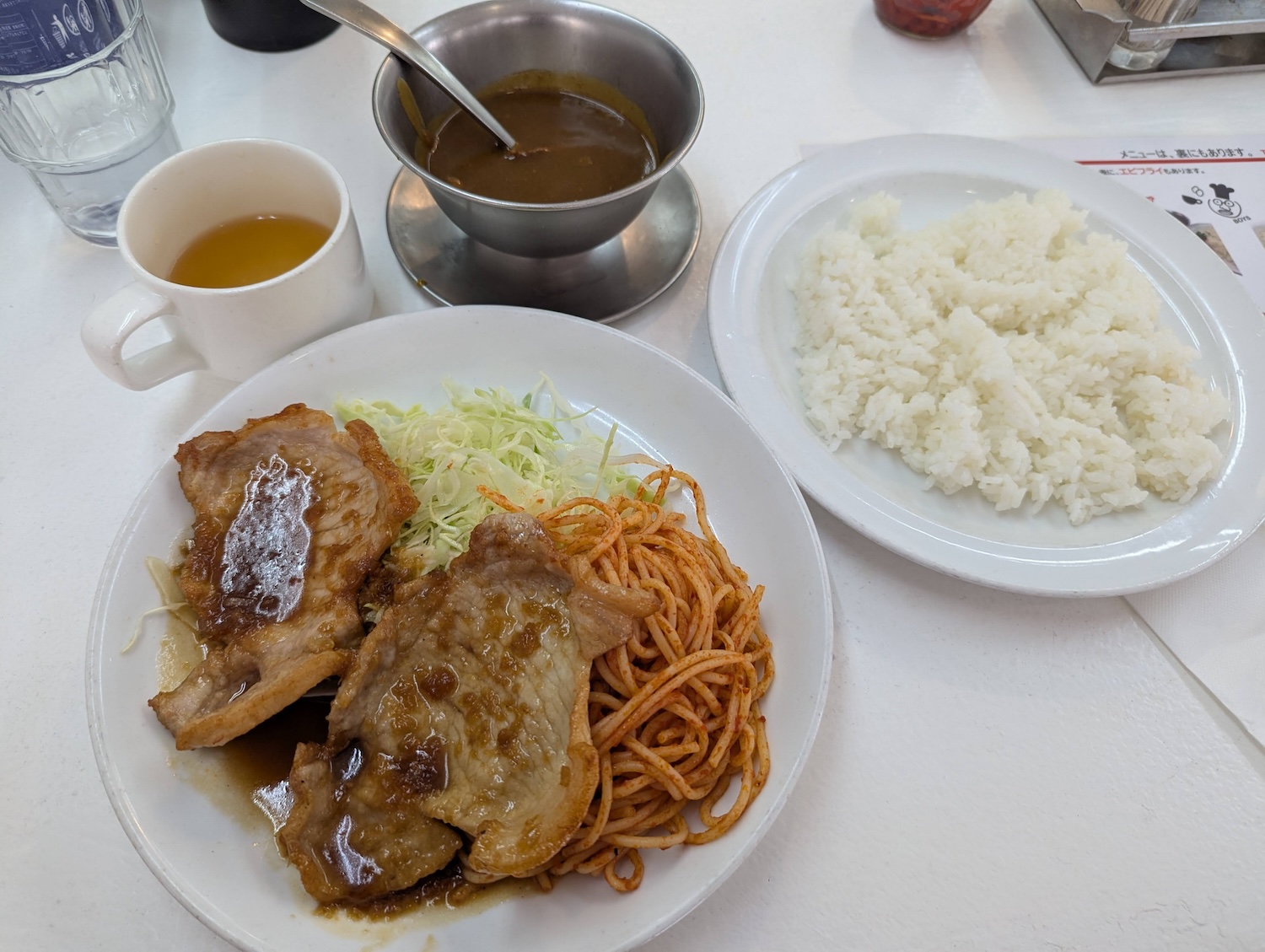
The menu was about as simple as it gets, and I ordered their recommended combo: curry rice, ginger pork, and ketchup spaghetti with a side of broth for a nice hot drink. It wasn’t a mind-blowing experience, but everything was incredibly solid and for a decent price of 1,300 yen. If there was a quintessential Japanese curry that wasn’t trying to keep up with current trends, this was it. Flavorful but not very spicy, it was a welcome throwback, as was everything else.
This was actually my very first time eating ginger pork, despite the fact that it’s apparently second to tonkatsu in terms of Japanese pork dishes! I definitely understand the appeal now, and it’s not nearly as gingery as I was expecting based on the name.
At the end, I asked the owners what the manga on the windows was, and they told me: Boukyaku no Sachiko. It’s been running since 2014 in Weekly Big Comic Spirits, and it’s currently over 25 volumes! I haven’t read it at all, but I’m considering doing so and maybe even posting my thoughts on the blog.
For nearly seventeen years, Kio Shimoku’s Spotted Flower has been a uniquely thrilling and terrifying rollercoaster of a manga. The series defies easy categorization: It’s very much a drama featuring otaku, but even more an exploration of varying sexual dynamics and relationship types. While cheating becomes a major plot point in the series, it’s not the fetishized NTR kind, albeit the series does delve into plenty of fetishes in general. What began as a tongue-in-cheek, off-brand Genshiken romantic what-if proceeded to transform over time into an increasingly complex and sprawling web of a relationship chart that ensnared and entangled its characters.
Now, Spotted Flower has ended—or at least the physical magazine in which it was serialized has come to an end. There seem to be some vague rumblings about its future, but there’s no word yet. And I am going to spoil the final (?) two chapters 50 and 51 immediately, because 1) I bet anyone who’s read it over the years is curious, whether morbidly or otherwise, and 2) it acts as an important preface for the rest of what I want to discuss.
The Finale
When last we left off in Chapter 49, everything seemed to come home to roost for its protagonist, the Husband (i.e. Not-Madarame). His Wife (Not-Kasukabe), fully aware of his act of infidelity, gives him an ultimatum: Get hard or get out. It’s also important to note that despite his getting railed by their genderqueer friend Asaka-sensei (Not-Hato) in the past, the Husband remained flaccid during that act, which is one of the reasons the Wife has even given him a chance to redeem himself.
Chapter 50 focuses entirely on a conversation between the Husband and the Wife. She recalls in the present the events that first truly brought them together: a discussion over drinks where she brought up the time he was confessed to by a bunch of the girls (just like in Genshiken Nidaime). She admitted to feeling relieved that he didn’t choose anyone, and from there convinced him to get a hotel room. In the present, the Husband expresses his frustration that he honestly wants badly to get an erection, but it just doesn’t seem to be happening. The Wife, rather than getting fed up, tells him they have plenty of time, and goes to sit down.
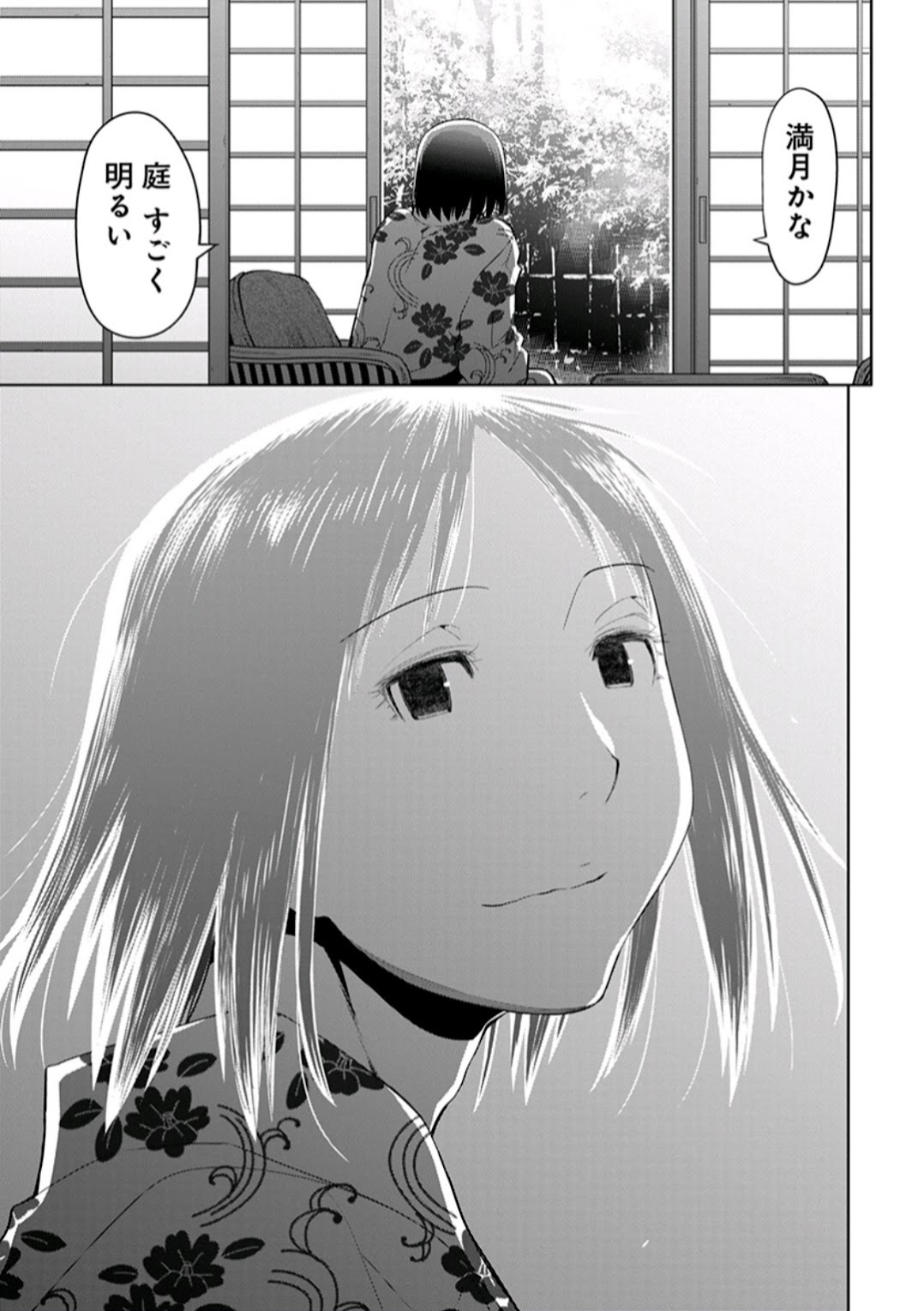
However, when she goes to sit down, the moonlight hits her hair in such a way that it reminds him of her younger self (back when she dyed her hair), and something sparks inside the Husband. He even goes as far as having her roll up a fake cigarette, and this image of the past she’s inadvertently presenting gets him to talk about just how much he used to masturbate to her, and that he started since the very first day they met. While the Wife is not a fan of how very detailed the Husband is about describing his past fantasies, the results can’t be denied, and she notices that he’s downright throbbing down there.
Chapter 51 then winds up being 33 pages of explicit scene of the two going at it hot and heavy, interspersed with scenes of the rest of the old club discussing whether or not they were basically a “sex club” in practice (probably not, but it’s difficult to discuss over the moans of the other two), and then the boys all getting together to play fighting games. I would very much like to share even a single page from this chapter, as the images of sex juxtaposed with dudes having some (actually) innocent nerd fun is quite striking, but I would end up having my Patreon age-restricted.
Thoughts (and Many of Them)
The Husband has rediscovered his libido and deep lust for his Wife. What began as a pseudo spin-off about a horny pregnant woman trying to get her man hard became a story about feelings of male inadequacy, only to loop back to the original premise. All’s well that ends well, right?
And yet, the journey to get here was so tumultuous that some readers (according to online comments) jumped ship partway through. It became too difficult to continue reading Spotted Flower, as the darkness and betrayal began to ruin Genshiken for them in the process, despite it being “non-canon.” Madarame and Kasukabe was a popular fan pairing that didn’t pan out in Genshiken (Madarame ends up with Sue), at least among Genshiken diehards, and it was like their consolation prize was a poison pill. The fact that Kio kept introducing more character analogues only served to create a sense of doubt about the intentions of the story: What if this is the actual Genshiken canon, and we were all played for fools?
I also believe that there’s another factor compounding all this: We increasingly live in a time when feelings about NTR/cuckolding/cheating in general have become more extreme. I personally don’t prefer it as a genre, nor do I think it should be outlawed or anything, but what I have also seen is that a complicated mix of emotions related to fetishes, fear of emasculation, and moral panic has left us in a state where things like “girl dates one guy over the other” is incorrectly described as “cucking.” While I highly doubt that most of the people obsessed with these labels were reading a manga as obscure as Spotted Flower, and the series literally came out over 15 years ago in a rather different period culturally, it is certainly a manga that doesn’t consider vanilla monogamy to be a sacred cow.
But as it turns out, Spotted Flower isn’t just a series that inflicts pain, either in a malicious or sadomasochistic NTR sort of way. Instead, it is a disorganized world of adults who all have their own types of relationships where some are monogamous, others sleep around, and others are engaged in some form of polyamory or another. And here’s another messy outcome, where the Husband disastrously cheats on his spouse out of a sense of inadequacy, only to end up rediscovering his lust for her amid social pressure from friends and acquaintances. The Wife, meanwhile, has to actually forgive him and give him this chance in the first place. We see not a defense of cheating or an encouragement of it, but ultimately a marriage that has been rocky. I won’t necessarily say it’s “realistic,” but it’s the kind of relationship you rarely see in manga.
(And if you want that kind of hurt, read Kio’s Gonensei instead.)
That all said, I understand that most series that bring up cheating—and have it actually happen—don’t finish on a happy note. One can even argue that both Genshiken and Spotted Flower “copped out” by giving Madarame and his doppelganger a relationship at the end, but I don’t see it that way.
Not every plot thread is fully resolved, but I’m satisfied by where they leave off. The Wife’s Ex-Boyfriend (Not-Kohsaka) still seems to have some unrequited feelings for the Editor. Yet, it almost seems like what he was really missing in his life (and what he was trying to find with all his philandering) was that friendship and camaraderie from the old days, given that he was the one who kicked off the fighting game session. Most of the other couples seem happy where they are.
As for Ogino-sensei (Not-Ogiue) and her two spouses, a supplemental chapter released online continues teasing at the possibility of a real threesome—this time by having Ogino suggest that if both her and her Assistant fiancee (Not-Sue) have kids with her Editor fiancee (Not-Sasahara), the two girls can share a connection by having their children be related. Sure, why not.
ClosingComments
A part of me can’t believe that I started writing about Spotted Flower almost two decades ago, and we’re only finally seeing it ride off into the sunset. Sure, a lot of that is due to the very slow release schedule, but so much has happened in my life since that first chapter came out. I literally moved to Europe and back, had multiple jobs, got married, and went through a hopefully once-in-a-lifetime pandemic (during which Kio himself started posting on social media). In a way, I’m more attuned to the maturity of the series than ever before, even if I can’t relate to the specific circumstances of the characters.
It’s been a wild ride, everyone. Hope to see you for the next nerd life milestones.
When the anime for Tojima Tanzaburo Wants to Be a Kamen Rider was announced, I didn’t realize it was based on a manga by one of my favorite authors, Shibata Yokusaru. Previously known for works like the martial arts battle series Air Master!! and the bizarrely wonderful shogi title 81 Diver, Shibata is a master of mixing absurd comedy with excitement and tension. So even though I’m not a particularly big tokusatsu head, I had every reason to check out this show.
The story: Ever since childhood, Tojima Tanzaburo has carried a burning passion for the original Kamen Rider, and he’s dedicated his entire life to becoming as strong as its titular hero. But while he’s built up his strength and martial prowess to an almost superhuman degree, Tojima is profoundly saddened by the fact that he can never use it to fight Shocker—the villainous organization from the TV series. However, when a string of robberies occur by thieves dressed like Shocker’s minions, this might finally be his chance to make his dream home true. Only, he’s not alone, and it turns out there are other Kamen Rider super fans who have decided to emulate their favorite heroes.
One of the beautiful things about Tojima Wants to Be a Kamen Rider is the juxtaposition between fandom as a catalyst for achieving greatness and fandom as a delusion that weighs people down like an anchor. Tojima really is “training to beat Goku,” so to speak, and the result is a guy who manifested the highly choreographed and predictable fighting style of Hongo Takeshi into reality. All he does is throw the same punch over and over, but he is the embodiment of the classic Bruce Lee line, “I fear not the man who has practiced 10,000 kicks once, but I fear the man who has practiced one kick 10,000 times.”
However, he also encounters Kamen Rider fans who have actually trained in real martial arts, and the difference in technical skill becomes a point of friendly yet intense competition. In other words, Sometimes being the biggest dork is the greatest superpower, and sometimes it just isn’t. The characters are essentially doing the most deadly serious LARP ever—one they’re convinced is as real as their own flesh and blood. Over the course of the series, this belief spreads out to more and more characters, developing in unexpected ways.
There’s one curious thing that immediately stands out with this anime adaptation: The characters and artwork are generally good, and that is totally not what Shibata’s art normally looks like. He has a very off-kilter sense of perspective and human proportions to the point of looking beyond amateurish, and the anime makes a firm decision to mostly hew away from that. I could understand the desire to make this change, but I did worry that it would lose some of the heta-umamagic that I so adore in Shibata’s manga. The solution is that the Shibata style comes out in certain moments, such as in characters’ exaggerated expressions or for the sake of comedy. It’s a decent compromise.
One last note: Tojima Tanzaburo Wants to Be a Kamen Rider makes a brief reference to Air Master. If we get more anime, I’m hoping to see 81 Diver get some love too.
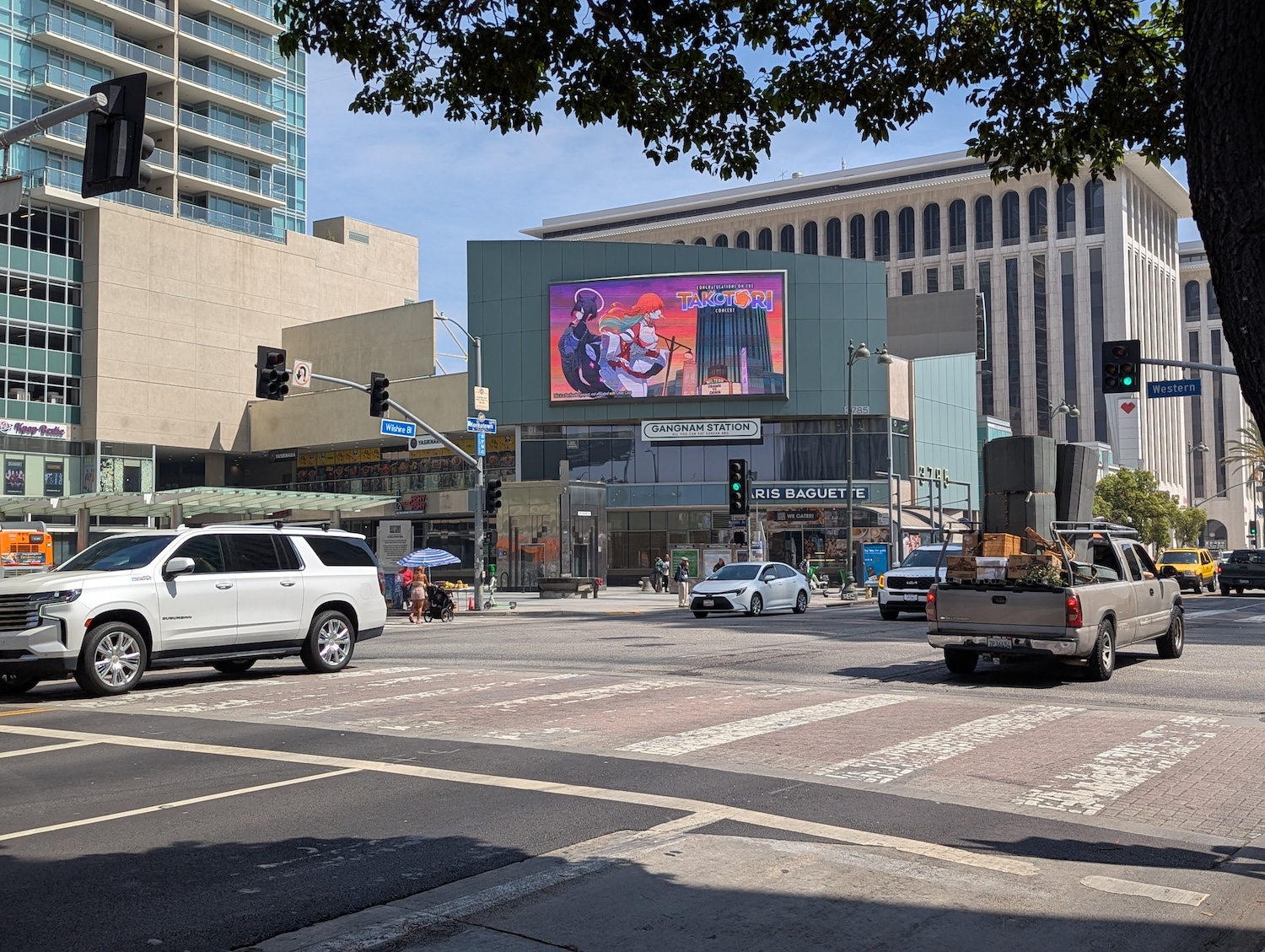
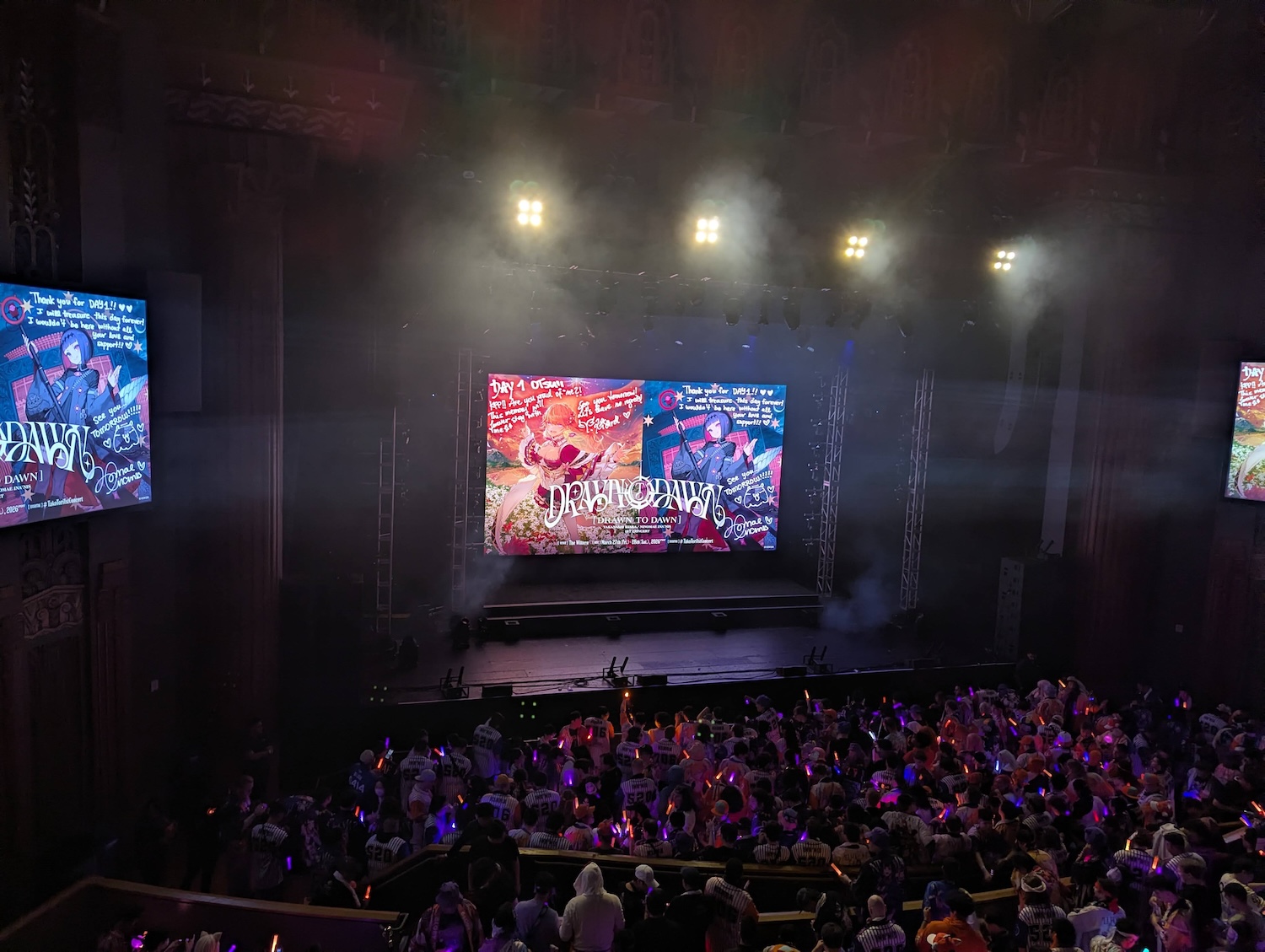
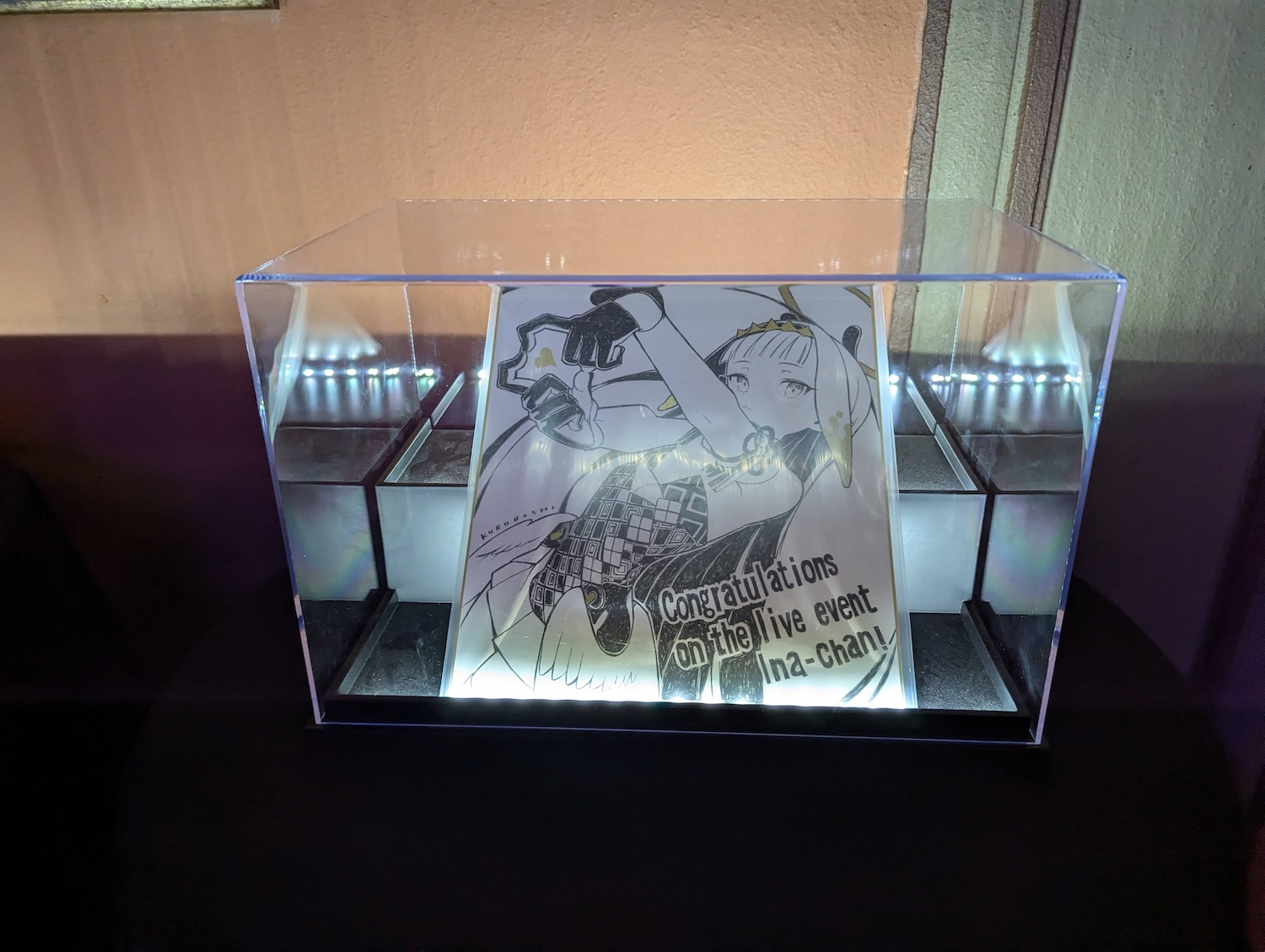
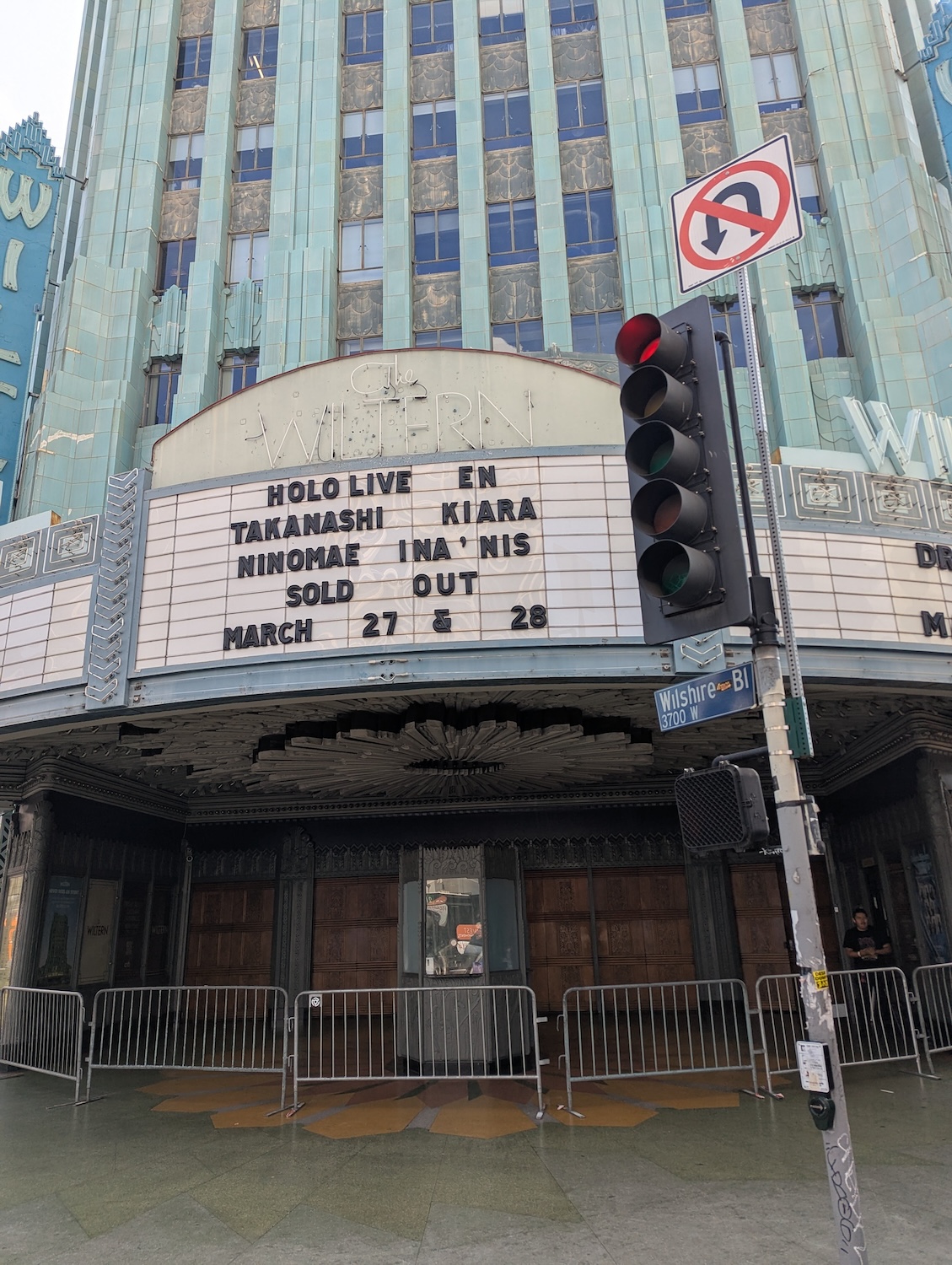
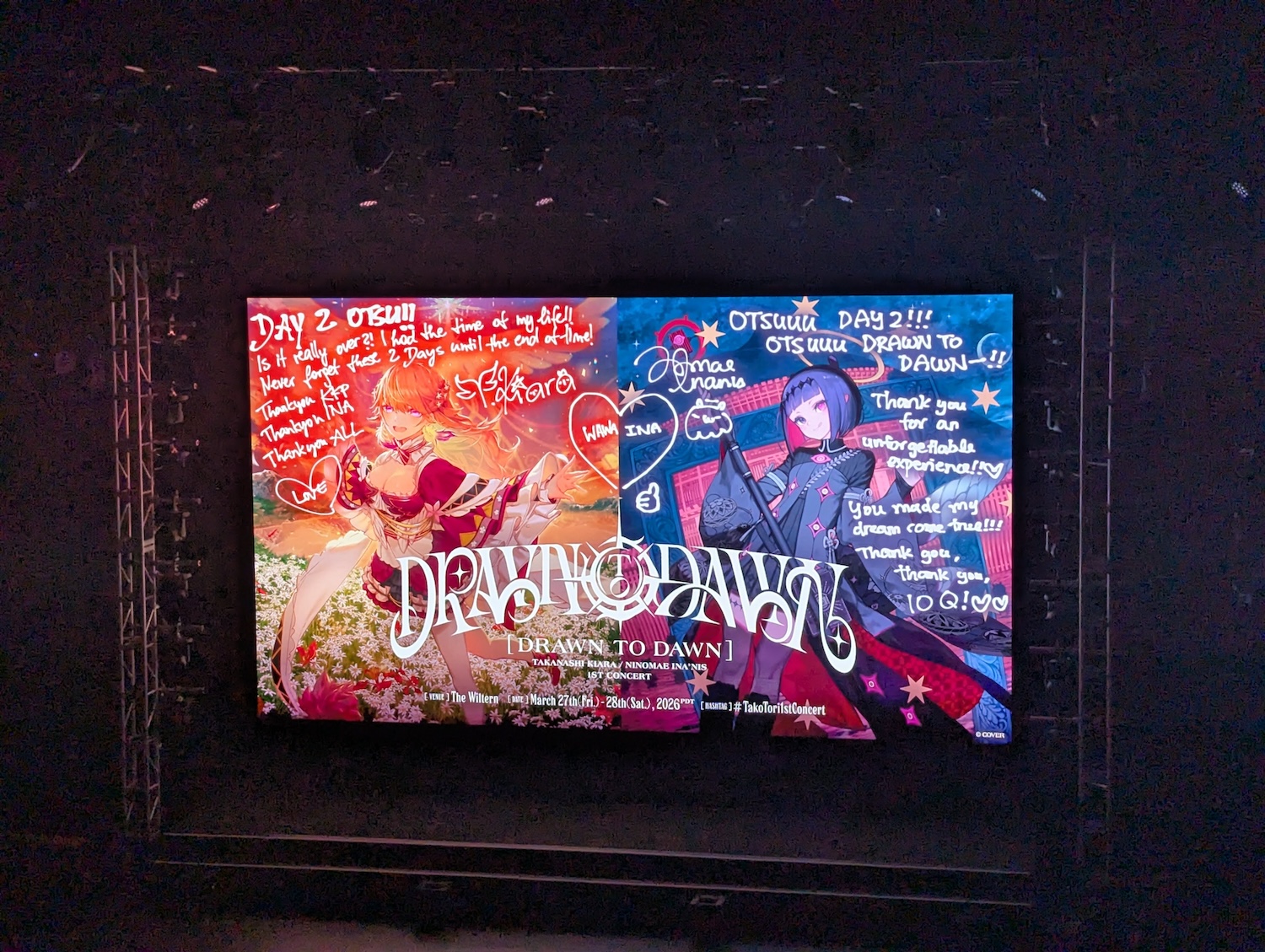
“Solo live.” “Duo live.” Whatever you call it, Drawn to Dawn was something special. An in-person VTuber concert at the Wiltern in Los Angeles held on March 27 and 28, the event featured two of the founding members of hololive English: the spirited phoenix diva Takanashi Kiara and the low-key eldritch priestess Ninomae Ina’nis. While both have years of experience performing in front of a live audience, they also have never had the spotlight dedicated to just them. They join their gen mate Calliope Mori in being among the few EN talents to star in concerts of this kind.
And in the months leading up to the event, I kept waffling between excitement and buyer’s remorse.
While I greatly admire and support both Kiara and Ina, I’m also nowhere near being the most diehard fan of either. Was I denying a bigger KFP or Takodachi the opportunity of their life? Was I spending my money wisely, given the cost of tickets and overall travel expenses? Was I really going all the way to LA just to do this? The doubts lingered, but one thing I told myself was that if ever there was a time to show my appreciation for these Myth girls, this was it.
I’ve seen my fair share of VTuber concerts, and multiple talents typically means alternating between the performers from song to song. To my surprise, however, they instead each had their own dedicated sections before crossing over for a big finale. Kiara started for Day 1 (and thus appeared in the free preview online), while Ina opened on Day 2. The approach differed significantly from the generation-focused concerts (e.g. NePoLaBo’s and holoFantasy’s) by emphasizing them as individuals more than their identity as a group, which ended up very effectively showcasing their differences, allowing each to shine in their own unique ways and at their own paces.
Takanashi Kiara
As the owner of one of the largest discographies on the English side, Kiara has always made clear that a concert like this had been one of her dreams. However, it has been an uphill battle for her, having started in hololive at the height of the COVID-19 pandemic, and having spent the great majority of her tenure living outside of Japan. As later generations have debuted with even more stage experience than her, it felt like her star might not shine quite as brightly among the multitude. Despite these challenges, she persevered and honed her craft, and her resulting performance truly felt like she was pouring all of that passion and determination onto the stage. I have never seen Kiara move better or sound better than she did for Drawn to Dawn.
Kiara has always had the most “pop star” energy of her generation, and her setlist embodied that. Every single one of her 20 numbers had its own unique choreography, with only a few slow enough to even arguably be considered “restful.” She even included more complex formations with back-up dancers, who themselves had newly revealed designs that took them from shadow silhouettes to full-fledged characters. And in a first for hololive, the dancers actually have two unique designs instead of just one.
Not to be outdone by her own back-up, Kiara debuted a new 3D outfit herself. It was exactly what she was wearing on the official promotional art for the concert, and also happened to be one of the best VTuber outfits I’d ever seen, both from Kiara and in general—and that’s factoring in the fact that I adore her other outfits too. (I may have a dirndl bias, though.)
It was also quite remarkable to hear her bring her current singing ability and some of the flair she uses in “Do U” and “Mirage” (one of my favorites), to her older songs, such as “Hinotori” and “Fever Night” (another favorite). And when she slowed down the tempo for “Blue and Gold,” a song dedicated to her former genmates Gawr Gura and Amelia Watson, the weight of the history they (and we) share felt palpable.
During one of her MCs, Kiara read a letter she wrote to her past self. She recalled the time she performed in front of an audience of just one person (who wasn’t even there for her), and wanted to congratulate the younger “Kiara” on not giving up. She also brought up the development of her music style—which she cheekily called “K-pop” (short for Kiara-pop)—and the way she has shifted from a more cheerful J-idol sound to a more mature K-pop presentation. She was honest in stating that she personally prefers the former, but understood that the latter was getting her more notice, and that mix of passion, pragmatism, and bluntness is what I think draws fans to Kiara.
I have to wonder if the rise of “Kiara-pop” simply comes from her fan base being younger than her now (whereas it would have been older than her in the past), and whether Kiara will find a way to unite the two sides of her music into something greater.
Ninomae Ina’nis
In many ways, Ina is the opposite of Kiara. With her more subdued personality, she’s known for things like her professional-level art skills, her comfy chatting style, and her love of puns. To Ina, music and stage performances have not been life-long pursuits, but rather something she has come to learn and appreciate as part of hololive. The size of her discography is only a fraction of Kiara’s, but Ina’s artistic sense comes through every time in her choice of music style and the aesthetics of each music video, and she brought that same creative unity to Drawn to Dawn.
Whereas Kiara’s staging drew most of the attention to herself and the dancers, Ina’s was almost like a series of paintings in motion. Each of her original song performances was unified by a single thematic color that reflected the contents of the song, and often its implications in both the official lore of Ninomae Ina’nis and the identity she has created with her fans. As she sang and moved about the stage, it was as if she was integrating herself into each art piece.
Ina also revealed her own new 3D outfit matching the official promotional art, which resembles something like occult priest robes but with some extra pizzazz. It was sharp and elegant, but there was an additional surprise: the robes could be removed to reveal a more casual long-sleeve and short skirt ensemble. Social media was abuzz with the comments about how her lack of high heels and somewhat larger thighs gave a different (yet welcome) impression to Ina’s appearance. Incidentally, Kiara’s thighs also seem to have been made larger, and attractiveness aside, I can’t help but wonder if this is some kind of trend. (Then again, even the original and official character designs of hololive members often don’t end up perfectly matching their VTuber models in proportions, be they 2D or 3D.)
While Ina doesn’t have a ton of range to her voice, she used it well across all her songs, especially when taking into account that all her originals are quite different from one another. “Violet” is quiet and gentle, “Meconopsis” has a heartrending and forlorn quality that I particularly love, “ “Tako Takover” is silly and hypnotic, and so on. Because she doesn’t have nearly as many songs as Kiara, she filled out some of her setlist with covers of other hololive members’.
As Ina explained in an MC section, she had no experience singing and dancing in this way prior to hololive. However, that has made her journey to Drawn to Dawn special in its own way. Rather than it being the culmination of a continuously striving performer, Ina’s path is one of new discovery and the realization of another facet of herself. Together with Kiara, they exemplify two types of idol journeys, and this juxtaposition strengthened both women’s respective approaches.
Miscellaneous
There were a few technical issues that occurred during the event. The line on Day 2 took so long that some people did not even get the chance to see the first few songs. I managed to get in on time, but only because I went around asking employees about the early entry line, and that was only because a friend reminded me that there was supposed to be early entry in the first place. Apparently some of the Wiltern workers didn’t realize that, and put everyone on the same massive line, which wrapped around the venue.
This isn’t the first hololive concert that had issues of this kind, and I think it might come down to unfamiliarity with attendees who want to carry their entire fan collection with them. Each venue exists on its own, so we have to repeat history over and over. Day 2 was better in the sense that they just delayed the start.
I also realized something myself. I’m actually not a huge fan of penlight stuff, especially when it’s supposed to be a detailed and coordinated choreography. When I have to make a conscious effort to do it, I end up having a harder time concentrating on the actual performers, who are my main focus. There was more than one occasion at Drawn to Dawn where I found myself fumbling to do the “right” thing and missed a dance move or accidentally zoned out. I appreciate penlight formations and all that, but I end up distracting myself. At the most, I just want to vibe along with it at my own pace.
Speaking of penlights, one bizarre thing happened to me (and apparently a few others) during “Blue and Gold.” As per Kiara’s instructions, we were supposed to set our Penlights to Myth colors during the final chorus, and I had mine set to Gura blue and Ame yellow. Venue security actually came up to me during the song and asked me to turn off the yellow, mistaking it for an Ultra Orange glowstick. This is despite multiple Ultra Oranges being deployed by other people during the concert with seemingly no consequence. I was a little annoyed to have the moment tarnished by this interaction, but I understand that security was just trying to do its job and didn’t understand the difference—hell, I only recently learned about it in greater detail.
Final Thoughts
While I was initially unsure about whether attending Drawn to Dawn was the right decision, I don’t regret it one bit now that I’m on the other side. I enjoyed the hell out of it, and was happy to be part of something so unique. I ended up making a lasting memory and growing my appreciation for both Kiara and Ina.
At the end of each day, both girls asked the audience to quiet down so that they could shout out with their voices unmic’d. Despite some audio mishaps and audience confusion, getting to hear the fact that two of them were really and truly present with us in that concert hall is a treat I’ll cherish forever.
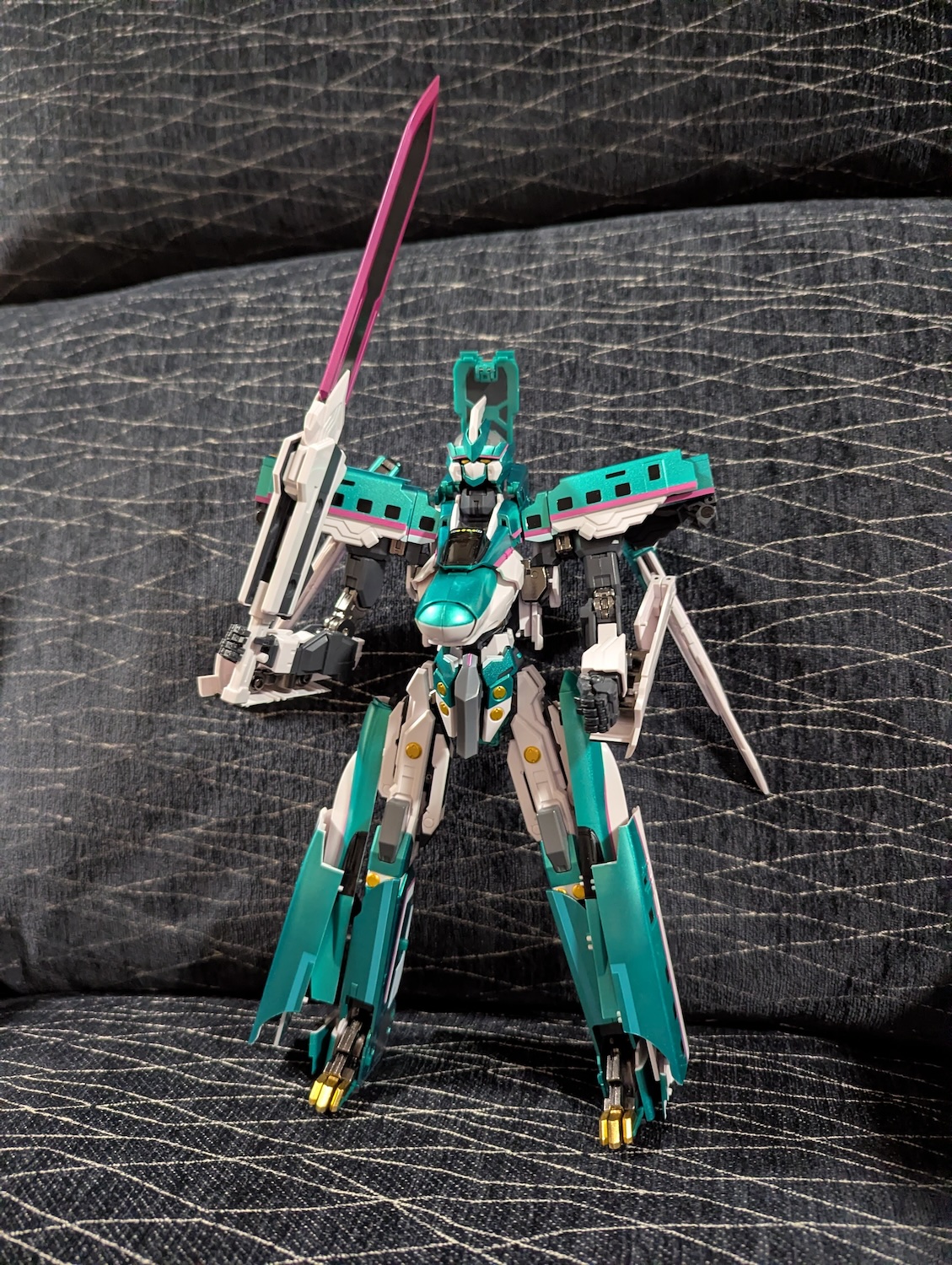
I have a hard time believing that Shinkalion is over a decade old. It feels like just yesterday that I first saw a live suit actor performing as a train robot at an event as a precursor to the anime. But last year, the Soul of Chogokin toyline released its version of the Shinkalion E5 Hayabusa to commemorate the franchise’s 10th anniversary, so there’s indeed proof. And now I have this physical manifestation of train marketing for myself.
Only 10 years to get a Soul of Chogokin rendition is remarkably fast for any mecha series; some have needed 40 or 50, if not more. While Shinkansen Henkei Robo Shinkalion isn’t the most amazing anime ever, it’s fun and tries to bring together viewers young and old. Also, the design is pretty cool overall, and I’m glad they tackled a relatively modern mecha. That said, one of my criticisms of Shinkalion has always been that nearly all the robots across multiple series transform in much the same way and look largely similar, so it can get a bit repetitive. Just one SoC is enough, I believe.
The figure comes in shinkansen mode as two separate trains, which are then bent and contorted to become the upper and lower halves of the Shinkalion’s body. The end product makes quite a striking impression, though I need to mention that transforming it is both a figurative and somewhat) literal pain.
Upon looking at the instructions, one thing stands out: the amount of warnings about notches, pegs, and slots that can easily break off or get worn down if you’re not careful. There are also many areas that have to join together in just the right way, or else things just start falling off or risk snapping. And because the design of the Shinkalion is so spindly, there are pointy edges everywhere, and I could feel them stabbing into my thighs when I was trying to get two pieces to connect. Now that I have it as a complete robot, I probably won’t ever change it back to train mode.
I don’t own and have never touched the higher-quality figures from the original Shinkalion toyline, so I can’t make a firsthand comparison, but based on the videos I’ve watched, the SoC figure sacrifices a good deal of the playability in terms of transforming it back and forth in favor of getting closer to how the E5 Hayabusa looks in the anime. For example, the double-layered pauldrons recreate how the shoulders come together in the show’s transformation sequence, but this also means the arms have to be attached to the body in a more finicky way. Even posing it can be tricky, as pushing too hard in one direction or another can easily make a limb fall off. A delicate touch seems necessary.
However, I can’t deny that the end result looks both really sleek in a way that should be familiar to Shinkalion fans. It’s just an aesthetically pleasing robot, at least from the front. The rear view shows a lot less detail, but that’s just part of the mecha itself from its source material. I find that goofy and charming in its own way.
I also enjoy how the lower half is mostly just one hefty piece filled with diecast metal, especially in the hip joints, as it makes for a stable and poseable figure overall. The large pieces that attach to the legs help give the figure a more pleasing silhouette.
I do have one other small criticism, which is that the instruction manual is unusually sparse. All of its space is dedicated to teaching how to transform the Shinkalion, whereas other SoC figures’ booklets will have things like a history of the original show, early drafts of the mecha design, older toys, etc. While Shinkalion is a relatively young franchise, there should still be some kind of material worth including. I’m left to wonder if this has anything to do with either the length of the instructions provided, or perhaps some kind of copyright issue.
When I look at the SoC Shinkalion E5 Hayabusa, one thing I think about is the fact that there were kids who grew up with Shinkalion, who came to it because of a love of trains or even learned to love trains because of Shinkalion. Perhaps this figure is a test of their maturity 10 years down the road—can they handle this figure now that they’re teenagers and adults? Well, provided that they have the money to buy it, of course. This thing is still a premium figure at the end of the day, and we might need another few years for those kids to have the disposable income to make a purchase like this.
I first learned about the influential manga artist Tsuge Yoshiharu thanks to that seminal book on Japanese comics, Manga! Manga! by Fred Schodt. In his goal of showing how diverse manga can be, Fred includes images of Tsuge’s most famous work, Nejishiki, also known as “Screw Style.” Now, thanks to Drawn & Quarterly, I’ve gotten the chance to read it in English, as well as other works by Tsuge.
I had originally written this review with plans to eventually publish it when the time felt right, but then news came that Tsuge had died at the age of 88 on March 3. So here it is.
Tsuge’s work is hard to describe. It’s never straightforward, and each story seems to exist in the space where rationality ends and passion begins. His characters aren’t “characters” in the traditional sense, but rather agents of deep-seated desires. They’re dark and succumb to their (often sexual) vices, and feel like people who are meant to be relatable, though far from admirable. Originally published in Garo, Nejishiki has become practically the go-to example of experimental comics-making in Japan. It’s not surprising to see why Tsuge’s comics would make an impact back in the 1960s and 70s.
What is perhaps surprising is that they can still shock today. In a sense, the changing morals and ethics of society over the past few decades make the questionable decisions all the more eyebrow-raising, as well as thought-provoking. Even putting aside the sex, violence, and sexual violence (none of which are portrayed with excessive detail, yet feel more visceral), the seeming density is haunting and reminds me more of something like the ambient moments in Serial Experiments Lain or Evangelion.
Reading Nejishiki also puts another creator in a new light for me: Panpanya. It’s clear now that the author of Invitation from a Crab and Guyabano Holiday draws from Tsuge in a big way, whether directly or otherwise. The simplistic character design juxtaposed with the detailed backgrounds, the surreal and seemingly non-sequitur stories—the big differences are just that Panpanya’s “avatar” is cuter (one might say kawaii) and that the narratives are relatively clearer.
There’s a long essay by Ryan Holmberg in the back that I’ve been slowly working through. In it, he gives the friendship and working relationship between Tsuge and Mizuki Shigeru (author of Kitaro) a lot of attention, describing how the two mutually benefited from each other. Tsuge worked as an assistant to Mizuki, used some of Mizuki’s other assistants for his own work, and exchanged ideas. What I think is fascinating about this connection is that Tsuge is basically the patron saint of unorthodox manga, whereas Mizuki has been a household name for over half a century. While the comparison I’m about to make isn’t quite the same, it reminds me of how the two directors of the Sailor Moon anime ended up on two unique paths, one highly experimental (Ikuhara) and the other conventional yet still profound (Sato).
Drawn & Quarterly also published a picture diary by Tsuge’s wife, Fujiwara Maki, which details their life together with their young son. In contrast to the image of her husband as this legendary figure of Japanese comics, Fujiwara’s portrayal often paints him in a less glowing light, especially when it came to his abusive misogyny towards her. Fujiwara, who passed away in 1999, was an avant-garde actor herself before having to abandon that career to be a housewife. Tsuge himself even said that Fujiwara meeting him was probably ultimately to her detriment.
Still, Nejishiki is worth at least knowing, but even beyond the historical significance, it holds up in its own way. Tsuge’s manga result in art that can be challenging to approach, and the act of grappling with it can be its own reward.