[Anime Central 2025] Thunderbolt Fantasy Red Carpet Gala and Q&A

Anime Central 2025 was home to the United States premiere of the final Thunderbolt Fantasy movie. I reviewed the film, but because there was so much other stuff, I didn’t want to cram it all into one post. So here we are with Part 2, which covers things that happened both before and after the screening. Note that much of what’s written below contains SPOILERS for the finale.

Red Carpet Gala

Before the screening, ACen actually set up a red carpet of sorts and allowed photographs of the puppets. Some cosplayers were also there—one who later turned out to be PILI puppeteer Osmond Pi Ting, and a couple who were just really dedicated fans.

Live Demonstrations

After the screening, the staff also put on demonstrations of the puppets as they went around the room. Music and sound of different characters played, and the puppeteers moved the puppets with grace and beauty.

Osmond (cosplaying as the Enigmatic Gale) also participated, and at one point even “fought” the Demon Lord.

Panel Q&A Notes

PILI also provided lots of fascinating information about their process in a Q&A section. 

  • Audio is recorded first, and then the puppeteers at according to the voices and sounds 
  • The giants and monsters (such as the gorilla mecha and the emperor made of magical swords) are played by live actors in suits
  • They actually only use one camera to film for the most part. Two cameras are utilized for explosions and such, though. 
  • The sage who created the swords is actually based on a famous character from PILI’s shows. One of his appearances is in the 2000 film Legend of the Sacred Stone, where he was voiced by Koyasu Takehito in the Japanese dub. Koyasu reprised the role for Thunderbolt Fantasy.
  • Some puppets are heavier and can be harder to puppet. In some action scenes, three people might be needed to puppet
  • Traditionally, PILI lets the sculptors do the creating and go straight into making the puppets. Thunderbolt Fantasy was different because they got the designs from Japan. Simple puppets like Shāng might need two weeks, while more complex ones like the yandere princess might need two months because of all the 3D printing for her accessories.
  • There were two puppeteers among the guests. One was Osmond (the aforementioned cosplayer and puppeteer), who is one of their newest recruits. He likes to handle the female characters because he’s adept at conveying softer movements. The other was Yu-Che Hsieh, a 30-year veteran. He likes to puppet action scenes.
  • Who decides the signature gestures of characters? They’re designed by the puppeteers based on the script, and then go about trying to get their personality down.
  • TM Revolution definitely liked working on the series. In one of his music videos, he had Làng come out to interact with him. Làng allowed him to play a character who actually survived [as opposed to dying quickly like his Gundam SEED characters], which he was happy about.
  • PILI staff sometimes had to come out covered in fake blood when making trips to the convenience store. Bystanders wondered whether they should call the cops.

That’s it for this post! Stay tuned for Part 3: An Interview with the staff of PILI and Thunderbolt Fantasy!

Arcane Reminds Me of Transformers

I’ve never played League of Legends, but I decided to watch Arcane after seeing it consistently praised by all sorts. Now, having finished the first season, I understand why it is beloved in a way far different from the also-popular game it calls its source material: two-dimensional personalities given depth through a story about family and class differences, combined with an attractive aesthetic that marries cool action with a colorful, yet gritty environment. Playable characters are seen in a new light, such as fan favorite Jinx, who goes from a Harley Quinn–esque goth punk to, well, basically the same thing but with a method to her madness and a tinge of tragedy.

It’s not the first instance of taking rougher materials and bringing them all together to make a creative work with more cohesion. Alternate stories with familiar characters, be they done by professionals or fan amateurs, are a way to tell stories that might not happen otherwise. That’s why I was surprised to find out that Riot Games has decided to make Arcane the official League of Legends canon and retcon everything else to fit it. That indicates just how successful Arcane has been, because reshaping your lore in your 15-year-old series is no simple task.

One article I read about the retcon mentioned that League of Legends has plenty of established backstory, though players were not necessarily engaging with it in-game. I think the difference with Arcane is that the previous stuff apparently felt like either scraps of lore dumps, whereas actual stories told through a narrative just hit differently. They create a sense of connection to the characters as creatures of thought and emotion whose lives have stakes.

The closest thing I can compare to Arcane is the Generation 1 Transformers cartoon. In its case, the franchise began by bringing together action figures from multiple Japanese toy lines under one banner and giving these toys basic names and designations of good and evil (Autobot or Deception). But the 1980s cartoon went such a long way in establishing those toys as characters that it became the benchmark for how all Transformers works, and to some extent all similar multimedia properties are perceived. Optimus Prime was vaguely a heroic truck in toy form, but with his battles against Megatron animated, he became the strong and gentle leader with an unparalleled moral core that we still think of today. 

I don’t know if the Arcane retcon is working, but I’d love to know if people have indeed been convinced to play League of Legends because of it, and whether the refocus has been welcome or not. (Though I still will probably never play the game.)

The Facades We Wear: Oshi ga Yameta

I follow the VTuber La+ Darknesss, who reads a lot of manga on a regular basis. Every so often, she throws out a recommendation, and one such title that caught my attention was Oshi ga Yameta, or My Fav Idol Quit

Miyabi is a 25-year-old woman who is obsessed with a male idol, the 22-year-old Miku. She devotes her entire life to supporting him, even going as far as doing sex work to fund her fandom. Miyabi also meets up with a group of like-minded women, each of whom have their own favorite idols, and each of whom have their own secrets about their personal lives. But when Miku announces that he’s quitting the business, Miyabi ends up like a boat adrift in the ocean. What she doesn’t realize is that Miku’s retirement is the catalyst for drama, turmoil and discovery—not only for Miyabi and Miku, but also the people around them.

The world of Japanese idols is a great subject for stories because the clash of fantasy and reality is inherent to it. Oshi ga Yameta focuses on the drive of fans to keep living in an illusory world, but not solely in a negative manner or judgmental manner. Individual and societal circumstances, like the pressure put on Japanese women to marry young, undergird the seemingly foolish decisions being made by idol fans. At the same time, the manga also portrays the idols themselves as being of all stripes, from those who genuinely buy into the idol image to those who enter the industry with ulterior motives. The lives depicted feel both ugly and beautiful, and it’s not always clear which aspects are which. Is Miyabi’s main sex client any better or worse than Miyabi herself in terms of how passion, love, and lust intertwine?

Comparing it to the biggest idol drama work of the day in Oshi no Ko, Oshi ga Yameta entirely lacks the supernatural elements as a plot hook. The latter also maintains its heroine’s perspective as a fan and nothing more (as opposed to having her enter the industry), and puts greater emphasis on the torrent of complicated emotions arising from a lifestyle that is both self-affirming and self-sabotaging. The art in Oshi ga Yameta is also very different, showing a messier style with less distinct differences in character designs, but which emphasizes its characters’ own dysfunctions and roiling emotions. The two series do resemble each other more in certain ways, but it’s not immediately obvious how.

I originally planned to read all of Oshi ga Yameta a lot sooner, so it’s funny that I would finish after the news about the Fuji TV scandal involving the former leader of the idol mega group SMAP. Juxtaposing this real scandal with that of the manga’s, it becomes clear that there’s still an element of fantasy even as stories feel “too real.” But the ability to approach sensitive topics while cloaked in fiction helps to provide plenty of food for thought, and this particular manga provides a hell of a buffet.

[Anime Central 2025] An Ultimate Triumph, Nine Years in the Making—Thunderbolt Fantasy: The Final Chapter 

In 2016, I was looking at a preview of the new anime season with friends, as was our custom. We talked about the shows we thought had potential, the ones we were more skeptical about, and anything else of note. But there was one series that seemed to come completely out of left field. A Taiwan-Japan co-production that wasn’t animated but rather performed using puppets, and it was written by Urobuchi Gen of Madoka Magica fame?! Even if we potentially did not end up liking it, we had to at least give this Thunderbolt Fantasy a chance.

Nine years later, and this series has become one of my absolute favorite works of fiction ever. The novelty of its puppetry never actually wears off, and it’s backed by solid writing and charismatic voice actors giving some of their best performances, as well as a sense of tension and excitement that had me coming back for more. So when I found out that they would be doing the North American premiere of the feature-length Thunderbolt Fantasy: The Final Chapter, I made it my mission to attend the convention. 

This is my review of the movie, but since then, the movie has come out on Crunchyroll under the name Thunderbolt Fantasy -The Finale-. I recommend you just get straight into watching it, but feel free to proceed if you want my thoughts. Note that there will be a MAJOR SPOILERS section at the bottom.

The Basics

Thunderbolt Fantasy is set in a world once ravaged by a war against demonkind, which humanity barely won thanks to the help of a series of divine weapons. In the long years since this War of Fading Dusk, the weapons have been sought after by the righteous and the evil alike. 

When we first see the two main characters of our story—no-nonsense vagrant swordsman Shāng Bú Huàn and white-haired pain-in-the-ass illusionist Lǐn Xuě Ya—they have just met each other for the first time, and both are holding their own respective secrets. At the end of the first season, we learn that Shāng is not only a ridiculously powerful swordsman who can wield a wooden stick like it was real steel, but that he’s also in possession of the Sorcerous Sword Index: a special scroll designed to house all sorts of supernaturally powerful weapons. Shāng carries it to prevent the weapons from falling into the wrong hands, notably the Order of the Divine Swarm, a clandestine organization seeking to conquer the world. 

But Lǐn the “Enigmatic Gale” has been far more, well, enigmatic. Throughout the prior seasons, he appears to just be an elusive trickster who finds joy in aggravating the powerful. But in the penultimate chapter, we finally learn a truth even he didn’t know: Lǐn is actually a kind of “offshoot” of the Demon Lord who rules the Demon Realm, cast away and abandoned to remove any of the leader’s weakness. Lǐn thus has a revelation that the greatest target to torment would be essentially none other than himself.

Three other major plot points help create the backdrop for the end. First, the leader of the Divine Swarm, Huò Shì Míng Huáng, turns out to be the Emperor of Xī Yōu, the land which Shāng was trying to leave. This means the emperor was playing both sides of the law the entire time. Second, one of Shāng’s old allies, a bard named Làng Wū Yáo (voiced by rock star TM Revolution!) is actually half demon and is being forcibly transformed into an infernal god by his long-lost father. Third, the armies of Dōng Lí and Xī Yōu (the East and the West) are on the verge of coming together to fight a new war against the demons, though the former doesn’t know a thing about the latter’s true identity.

The Final Chapter

I’ll admit that I don’t have the most rigorous grasp on the full story of Thunderbolt Fantasy. There’s a lot I’ve forgotten over the years among all the different plot threads, and I suspect many coming into this movie would be in a similar situation. However, I actually don’t think you need to have an encyclopedic knowledge of all that has transpired to enjoy the film. In addition to just being incredibly entertaining, the characters all have such bombastic designs and larger-than-life personalities that it’s easy to identify what roles they each serve in the overall narrative, even if the details are a little fuzzy.

That said, the movie is (as expected) not meant to be watched without any prior exposure to the show, and it does little in the way of actively filling in the blanks for the uninformed. It feels very much like the conclusion of a long-running TV series than a work meant to stand entirely on its own legs. Things happen fast and furious, not only in terms of the pace of the storytelling but also the action. The fights are more complex and relentless compared to what is typically seen in Thunderbolt Fantasy, and rivals even the greatest martial arts fight scenes in history.

In a certain sense, this is PILI taking off its weighted clothes and unleashing its full potential. The studio has a four-decade history of creating action-oriented puppet TV shows in Taiwan, and if you compare Thunderbolt Fantasy to their other works, the latter often turn into such never-ending frenzies of stylized violence that the notion of “breathing room” is a suggestion at best. But action in Thunderbolt Fantasy is slower and more deliberate, emphasizing the drama over a fight choreography built on countless details. In The Final Chapter, we get the best of both worlds.

Battles truly feel like the characters are fighting with everything they have, while the narrative and the characters’ individual motivations provide context to give their movements meaning and weight. Lǐn fights his doppelganger, the Demon Lord, and they naturally match each other move for move. Làng’s travel companion, a sentient pipa, has turned human and fights with strings befitting a former instrument. When he runs into a yandere princess puppeting two magical corpses at the expense of her own life force in order to take on Làng’s demonic father, the three-way back-and-forth is nonstop but also relatively easy to follow. And when Shāng finally gets the chance to wield a non-wooden sword after nine years of avoiding it, his assault is all the more special.

The plot twists and dramatic turns are all really satisfying in a way that screams “epic finale,” and the respective fates of all the big villains provide perfect bookends to all their stories. The film even touches on the origins of Shāng himself, and it was the last thing I could have ever predicted. That being said, I want to discuss some of the details of the ending.

SPOILERS SECTION

There are three major spoilers I wanted to write about in greater detail. 

The first thing is Shāng being in the same company as Marty McFly (Back to the Future), John Connor (Terminator), and Philip J. Fry (Futurama). Essentially, he turns out to be the son of Lāng and the blind harpist Mù Tiān Mìng, both with whom he fought side by side before the start of Thunderbolt Fantasy. They realize their baby is somehow the Shāng they know, and the couple gives him up to the sentient pipa-turned-human, who apparently comes to raise him in another realm so that he will be ready to fulfill his destiny.

I definitely did not expect that, and based on the audience reaction, I don’t think anyone did. I also genuinely thought he had romantic feelings for Mù, but I guess it turned out to be more filial. They hinted at Shāng being a time traveler of sorts in Season 4, and possibly before that as well, but it implies the source of Shāng’s unparalleled swordsmanship: the fact that the man has trained across time and space and dimensions since he was a child. So he was the child who saved everyone, and also got his own parents together, to an extent. At least he did not sleep with his own grandmother.

The second thing is the way the leader of the Divine Swam is defeated, and the aftermath of his loss. There’s something a little hokey but absolutely wonderful about him using all the divine weapons of the Sorcerous Sword Index to transform into a gigantic armored demigod. A part of me wishes he was vanquished in a more conventional manner, but I think what happens fits the story incredibly well. 

Shāng uses the one remaining blade, and while it seems to have no effect on Huò, it seems to be opening up a rift in the sky. Realizing the true nature of the weapon in his hand, Shāng proceeds oto summon Bái Lián, the sage who originally created the weapons (and whom he met in Season 3). Bái Lián proceeds to forcibly bring the emperor into the void beyond and back home to his own world where the weapons came from, and where they are now rusted and lifeless. The emperor tries to use his dark magic to threaten Bái Lián but finds that he can’t form spells. Bái Lián tells him that had he arrived in this realm as himself, he would have retained his powers, but by tying his very being to the weapons, he is now as inert as they are, and the only thing he can do is live like any other average person. His precipitous fall from world conqueror to commoner breaks him.

I love this so much. Not only is it rather cathartic given the state of the actual world right now, but I really find pleasure in seeing someone who believed they were untouchable be laid low and made to feel vulnerable. The villain really thought he was inherently superior and deserving of ruling over his entire world, and the fact that he can’t handle the idea of fending for himself the way everyone else does is the justest of deserts. (See also JoJo’s Bizarre Adventure Part 5: Golden Wind). Bái Lián is also based on a popular recurring character in PILI’s Taiwanese puppet shows, so his presence at the climax is also a way to pay homage to the studio that made all this possible.

The third thing is Lǐn taking over as Demon Lord. Hilarious. We get that silly moment where Shāng sees through his disguise and refuses to duel to the death with the Enigmatic Gale (“Of course it’s you. I’ve never even met the Demon Lord, so why would he want to fight me?). We also get to think about just how a Demon Realm ruled by the most egregious troll in all of existence would turn out. 

SPOILERS OVER

Concluding Thoughts…and More

What a fantastic ride. I’ve been told that this movie was originally supposed to be a full season, and it does show to a degree, but I still think this was a wonderful way to close the book on Thunderbolt Fantasy. It was the essence of this whole international creative endeavor boiled down to a clean 90-ish minutes, and had me coming away grateful to have learned about it nearly a decade ago. 

So those are my thoughts on the movie, but this is actually just the first part of my Thunderbolt Fantasy coverage from ACen 2025. There was a “red carpet gala” to show off the puppets before the screening, as well as a Q&A afterwards with some live puppet demonstrations. Even more exciting, I got the chance to interview the PILI staff and even try out one of the puppets! 

I hope you’ll look forward to it.

Tardy with the Tardis: I Finally Checked Out Doctor Who

Of all the decades-long science fiction mega franchises in the world, Doctor Who is definitely one where I’ve long had little, if any exposure. 

In my head, it was always this series where people got mad if I called the main character “Doctor Who.” It also had the image of being a relatively low-budget serial adventure that suddenly became big again around 2006 or so, had been going on since television was black and white, and somehow had still kept going. It was (somehow) a still-ongoing story whose various hiccups and plot inconsistencies can be hand-waved away with suspension of disbelief and time travel shenanigans—not unlike a mix of soap opera, pro wrestling, and Star Trek, with shades of the legacy of Buffy the Vampire Slayer in more modern times. 

Oh, and I enjoyed seeing that one scene of Daleks vs. Cybermen. It works even without knowing a single bit of actual Doctor Who context. 

But until recently, I don’t think I quite appreciated the lasting impact Doctor Who has made on culture and entertainment—not just in the UK, but around the world too.

I think there were two things that prompted me to start looking at the series more in-depth. First, I kept seeing people (including VTubers like Gawr Gura) make reference to the Doctor Who monsters known as Weeping Angels. Second, I read that the Doctor Who theme song is iconic, identifiable, and still very unique even after 60 years…and I couldn’t recognize it even if you played it in full for me. Knowing that this was a missing piece of television and pop culture education in my brain was my motivation to learn. And with a lot of help from a very well-maintained official Doctor Who Youtube channel, I started to just watch clips of iconic scenes from throughout its run going all the way back to the First Doctor. I read discussions about “who’s the best Doctor,” knowing that this debate has been going on for literal decades and across generations and waves of nostalgia. I learned that the aforementioned theme song is one of the two most continuously used theme songs ever (the other being James Bond), and even influenced Pink Floyd.

But one thing I held back on was watching actual full episodes of Doctor Who. Where do you even start? It’s a challenging question, even when compared to similarly old franchises like Gundam or Star Wars don’t have to face. In those cases, “go with some version of the original” does the trick, but with Doctor Who, there are literal episodes of the early era that were never archived, and by most estimations, Doctor Who didn’t hit its stride until at least a few years in.

I ultimately went with “Genesis of the Daleks,” a story from the Fourth Doctor era, because I read that it’s a widely beloved episode featuring one of the most popular Doctors of all time. I understood that it risked color my perception of Doctor Who to an extent, and that it would give me perhaps a different impression from the 21st-century “New Who” era that helped drive Tumblr discourse for over a decade alongside Supernatural and Sherlock (the so-called SuperWhoLock fandom). If this was the “peak” of Doctor Who, I tried to remember that the series is a range and not a single mountain.

I was impressed. Within the caveat of it still being fairly hokey, the basic plot is surprisingly serious and fraught with profound ethical dilemmas. The Doctor being forced to go back in time to try and stop the creation of the cruel, genocidal war machines that would become his greatest nemesis. He finds himself in a “would you shoot Baby Hitler?” scenario and a chance to convince the father of this army of Baby Hitlers to change his mind, only to realize that this creator is beyond all help. (And if the Nazi analogy wasn’t clear enough, all the soldiers fighting this forever war are all very SS-coded.) For a show aware of and expecting young viewers among its audience, these are heavy topics.

(I also can’t help but think about the fact that Nazis were still fresh in the general memory of humanity at this point. It’s perhaps appropriate that I’m watching this at a time when we are realizing once again that Nazism and fascism are clear and present threats that must be confronted.)

But even putting aside the weightiness of the topics, what truly makes “Genesis of the Daleks” work are the performances of the actors themselves. Tom Baker as the Doctor is so very convincing, both in terms of his portrayal of this eccentric protagonist around whom the series revolves, but also with the way he seems to really grapple morally and philosophically with the potential impacts of his decisions. Baker isn’t alone, either, as other actors (notably Elizabeth Sladen as Sarah Jane Smith) also bring a sense of sincerity to their performances. 

The ability to make you believe that the characters believe their own words reminds me a lot of tokusatsu from Japan: The shows might look cheap, but the actors and presentation make the stakes feel real, and that’s something that can ring true on some level even if the writing, the visuals, or storytelling styles change. It’s also the case that, like Doctor Who, franchises such as Ultraman and Kamen Rider have themselves been ongoing for decades—with new protagonists coming in on a regular basis, and with continuous growing pains as they try to adapt to the changing times. Because of all this, I came to the conclusion that Doctor Who is basically British tokusatsu.

It’s actually more coincidence than anything else that I started watching Doctor Who during a time that I’ve heard about some wild things going on. I don’t pretend to have an opinion on all that because, well, I’ve just dipped my toes in. But it is funny and amazing to me that this work of fiction is somehow both massive and small, and that it has existed long enough to have made a mark on both the history of prog rock and Tumblr. I don’t know how much more I’ll end up watching, but never say never.

And did I write all that just to talk about watching a single Doctor Who story? Yes. Yes I did.

Paying It Forward, Correcting the Past: Final Thoughts on Cobra Kai

Cobra Kai finished earlier this year after six seasons, and it has me remembering when I started the Karate Kid spin-off. Back then, it really surprised and impressed me with how much it avoided being a regressive nostalgia fest and tried to put out new ideas, and all while having the old characters look over a new generation of karate students. But like with so many popular things, a bad ending can really sour a series as a whole, so I was still a bit cautious. There’s a reason I’ve never really written about Game of Thrones.

Thankfully, despite the later seasons dragging in places and sometimes forcing drama in certain places like there was an obligation to do so, Cobra Kai finishes strong both emotionally and thematically. It also understands something very fundamental: A show based on The Karate Kid needs to begin and end with karate.

Everything I wrote in my previous review still holds up. Cobra Kai stresses the importance of finding balance, but that there is no one-size-fits-all approach. Sometimes, the aggressive approach of Cobra Kai is exactly what a person needs, but following it to the extremes can cause more harm than good—something Johnny Lawrence (the main character of the series and original bad boy of the franchise) knows all too well. Miyagi-Do, the style and life philosophy of the “Karate Kid” himself, Daniel LaRusso, is more defensive and less likely to lead someone down a dark path, but it might not have the sheer force to break through to the hearts of those who aren’t receptive to it.

There are numerous moments in the show that stress this point, but I think one of the most powerful comes when the character Tory Nichols is facing Sam (daughter of Daniel) to see who will represent Miyagi-Do in the women’s division of the world karate tournament, the Sekai Taikai. Tory’s mother has just passed away, and the girl is distraught and emotionally unstable during the match. The LaRussos see this fact and try to stop Tory, but Johnny understands that Tory needs to let out her emotions through this fight. While Daniel’s heart is in the right place, it’s Johnny who better understands what Tory is going through, and the former’s failure to recognize that causes Tory to abandon Miyagi-Do.

Eventually, pretty much all the characters get their happy endings, which might feel a bit hokey, but the nature of each one really speaks to the unique qualities of each individual. With the setting of a tournament to determine the world’s greatest karate dojo, each person must achieve their balance. 

Robby Keene (Johnny’s once-estranged son) has had a rough past with negligent parents and getting roped into the wrong crowd, and Miyagi-Do has helped him temper his anger. When his opponent in the semifinals, Axel Kovačević, purposely breaks his leg, however, Robbie is forced to forfeit. Yet, while he wishes he could have won in front of the world, he also knows in his heart that he had what it took to do so, even if a dirty trick stopped him.

Sam LaRusso decides to quit in the semifinals and give Tory a bye to the finals, it’s because she realizes that she never got into karate to prove that she was the best or the greatest. It’s helped her find good friends, a great boyfriend (despite some Teen Karate Drama), and even mend fences with her rival in Tory. Karate opened the world to her, and she ends up going to college in Okinawa (the birthplace of karate).

Tory Nichols, however, is not like Robby or Sam. She has a chip on her shoulder, guilt over causing so many problems, and a burning desire to beat the crap out of Zara: the arrogant, man-stealing, social media darling waiting for her in the finals. Zara knows how to get into Tory’s head, but an “I love you” and a kiss from Robby brings her back to take 1st place. What Tory needed was to realize that she had people on her side no matter what. When she and Robby also get offers for karate sponsorships, she gains the stability she’s always been searching for. 

Miguel Diaz, Johnny’s first student and in many ways the heart and soul of the Cobra Kai series, finds balance in bringing together all the experience he’s gained from not just karate but bonding with everyone. He’s no longer the weak, bullied kid he once was. At the same time, all the challenges he’s faced and the lessons he’s learned from both Cobra Kai and Miyagi-Do unite in him to win the finals against Axel.

As for Axel, he might have been responsible for Robby’s injury, but he ultimately refuses to let the toxicity of his own sensei control him. Despite having strong romantic feelings for Sam (who is Miguel’s girlfriend), as well as being told that his life is worthless without victory, he chooses to be the better man and fight honorably. He helps highlight another key aspect of Cobra Kai: The purpose of teachers and mentors is to pass on the good lessons and understand what should remain in the past. And this isn’t just subtext—it’s stated outright.

Nowhere is this idea more ironically poignant than the original big, bad villain of The Karate Kid: John Kreese. He is responsible for so much of the misery brought forth by the Cobra Kai dojo. The Cobra Kai series delves into his past as a traumatized Vietnam veteran who tried to instill in his students the mantra of “strike hard, strike fast, no mercy” as a way to make them invincible, and it isn’t until the very end that he realizes how much damage he’s caused in the process. 

I find the moment of Kreese’s inner revelation interesting, because it doesn’t seem to click until he sees the real master of the Cobra Kai style (an elderly Korean man) using his weaker students as fodder to train the stronger. Even Kreese wanted only to drive weakness out of his students, and not to sacrifice them on the altar of strength. When he remembers his own commander in the Vietnam War (and the one who originally taught him Tang Soo Do) allowing his subordinates to fight to the death as POWs instead of acting as a leader, Kreese decides to end the cycle of abuse, albeit decades after he already traumatized Johnny, LaRusso, and many others. However, he can’t stop being the man he’s been, so his ultimate act of closure is to stop his former friend and literal comrade-in-arms Terry Silver from kidnapping Johnny’s family by fighting Silver and blowing up his yacht. (Whee.)

It all comes to a head when Johnny has to face another teacher, the Iron Dragons’ Sensei Wolf, to determine the overall winning team of the Sekai Taikai. Wolf is younger, stronger, faster, and more skilled, making Johnny the complete underdog, and he’s overwhelmed by fear during the match. But Daniel, knowing Johnny all too well, goes against his normally gentle demeanor and tells him that fear does not exist in Cobra Kai and to “stop being a pussy.” When it comes down to the last point, Johnny sees himself in the same position he was in when he lost to Daniel back in 1984. This time, however, Johnny takes a defensive stance. He looks like he’s about to perform Daniel’s move, the Crane Kick, but instead sweeps the leg and uses the advantage he gains from that to finish Wolf and win it all. 

Daniel came to realize that the crass and aggressive philosophy of Cobra Kai was what he needed to successfully communicate with a panicked Johnny, but he used it to communicate a lesson Mr. Miyagi taught him: You can lose the match, but you must not lose to fear. Johnny, in turn, used the patient defense of Miyagi-Do but adapted it to his own style, changing the context of the iconic “sweep the leg” line that is one of the most lasting pieces of pop culture from The Karate Kid.

Overall, through the ups and downs, Cobra Kai sticks the landing magnificently. It understands that it has old fans watching, but also a new audience who don’t know anything about Karate Kid. It stresses that the young can learn from the old, and that the old can learn from the young. 

As a final note, I think one thing that really gets across the positive vibes of the series is the sheer number of cameos from the old movies. They seem to be there to give props to as many people who were involved with The Karate Kid, no matter how big or small their roles were. It’s a celebration in the best way: One that knows that when the party ends, there’s still more to do to make life better.

A Mecha Classic More Timeless than Ever: Blue Comet SPT Layzner

When I first saw the opening of Blue Comet SPT Layzner, I was blown away. The music, the animation, the dramatic flair, the giant robots—it all worked together to make me want to see the show for real someday.

This was my introduction to Layzner, and it would be a long time before I was able to watch the series. Now that I have, I’ve come away feeling that this Cold War relic is not only an excellent work despite major setbacks, but actually more relevant than ever, for better or worse. 

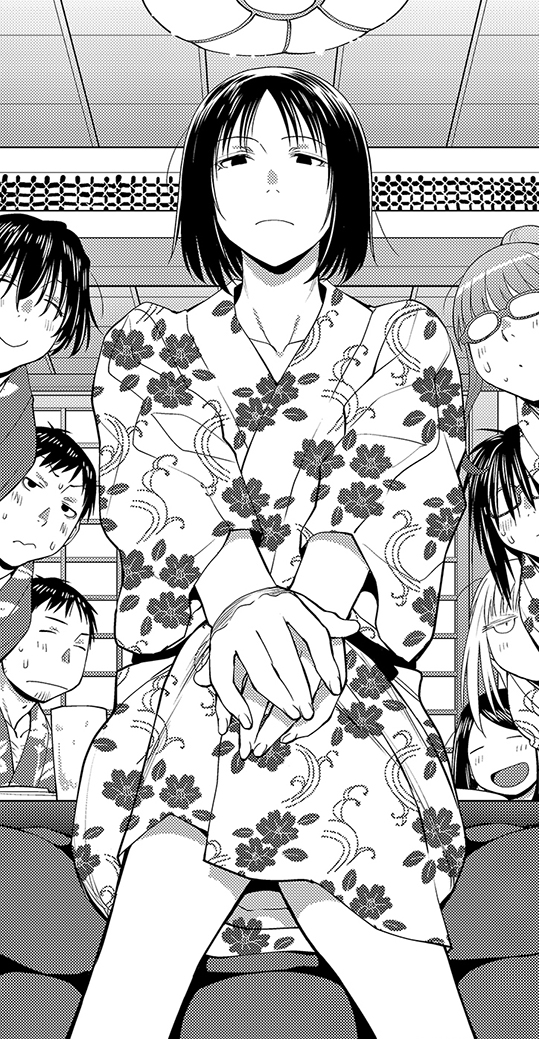
Before actually watching it, I continued to encounter Layzner in different forms. In the first TV series of my beloved Genshiken, there’s an episode preview narration where the characters are talking about anime that got their runs cut short. The character Madarame (i.e. the nerdiest of the nerds) posits the curious notion that it’s not so much that great shows often get canceled but that getting canceled is the very sign of a great show. One of the series he mentions is the thinly veiled title Dizner, which taught me that Layzner was an anime that got kneecapped. 

Was this abrupt end a case of a show burning bright and then fizzling out? Or maybe the merch simply didn’t sell; that happens all the time. But the truth is more bizarre, and tells the story of a series cursed by circumstances beyond its control—a faulty kerosene heater made by the primary sponsor of Layzner, Sanyo Electronics, meant funding ended up being pulled

Later, I would command the characters of Layzner through my import copy of Super Robot Wars GC, but because my Japanese was not all that great at the time, my understanding of the story was limited, as was my awareness of how exactly it was rushed. (Having Shin Getter Robo and Mazinkaiser show up doesn’t exactly reflect the story of Layzner with great accuracy either.)

But now, in 2025, I can say I have watched all 38 episodes of Blue Comet SPT Layzner, plus the three OVAs made to give the series some semblance of a real conclusion. But before I get to the end, I need to talk about the beginning and all the potential this anime held and indeed lived up to, until things went sideways.

Watching Layzner

In the future year of 1996, the Cold War between the US and USSR has expanded into the stars. During a visit to a space station by a youth culture club, a mysterious figure appears. His name is Eiji Asuka, and he has come to warn the Earth of an impending invasion by his home planet, Grados. Eiji is half Earthling, and he does not want his father’s world destroyed by war. The advanced giant robots known as SPTs are far superior to anything humankind has created, but luckily, Eiji has an SPT of his own: the powerful Layzner. However, his abhorrence towards killing weighs heavily on him when he might have to turn his weapons on the very people from his home planet. This is made doubly troublesome because the A.I. of Layzner seems to hold a dangerous secret that makes it much less merciful than Eiji himself.

Layzner drew me in instantly with its compelling story, its characters’ political and philosophical conflicts, and its overall animation and style—80s “real robot” anime at its finest. Every episode brims with drama and intensity, and the action is consistently exciting. Central to it all is Eiji himself, who definitely has a place in the Mecha Angst Hall of Fame. Unlike the stoic Chirico Cuvie from director Takahashi Ryousuke’s Armored Trooper VOTOMS, Eiji is deeply passionate about his love for both Grados and Earth, and the determination he must hold while his heart aches makes for one of the finest (and indeed angstiest) protagonists ever. His compassion also helps win over some of the more skeptical Earthlings, who go from mistrusting him to being some of his closest allies. One of those humans, a 14-year-old girl named Anna Stephanie, acts as the narrator for the series. 

The Mid-Series Tonal Shift

Like with so many anime that are set to run for an entire year, the “halfway” point for Layzner comes with a massive shift and changing of the status quo. Whereas the first 26 episodes are about Eiji trying to reach the Earth in the hopes of preventing or at least slowing down war, the second part sees the plot jump forward a few years to a time when the Earth is dealing with a brutally regime that is trying to stamp out all nearly aspects of human culture, including books and art. Given our current political climate—where right-wing leaders who are largely fascists, racists, and grifters who are trying to force their backwards view of humanity onto the world and bilk us for all we’re worth—I found myself taking a bit of psychological damage. Seeing the main New York Public Library being set on fire hits a little too close to home, and it makes me all too aware of the fact that I might have viewed this series differently if I had watched it even 10 years earlier.  

Eiji himself changes during this time, abandoning some of his more pacifist tendencies in favor of outright opposition against the powers that be. He also goes from that angsty young man with a thinner build to a brooding and brawny freedom fighter. While he isn’t Fist of the North Star Kenshiro levels of being a barrel-chested Greek god, the difference is noticeable. 

However, the biggest transformation goes to Anna Stephanie, who grows into a strong 17-year-old girl and has basically learned what it means to fight in the face of oppression from her time with Eiji. Anna might be a sticking point for viewers, as her younger self seems designed to appeal to lolicon fans, and they set up a burgeoning romance towards the end of the first 26 episodes that’s made more blatant after the timeskip (including an ending theme talking about love and longing). While Eiji is supposed to be 16 (later 19), his design is such that he looks much more mature than Anna, and I have to wonder if the timeskip designs are meant to make the pairing more generally palatable. 

The Early Finish

It’s fairly clear around when the sponsorship got pulled because the show begins to make giant leaps forward in time with only the briefest explanations as to what has changed. The final episode answers next to nothing, functioning like a canceled manga’s non-conclusion. The third and final OVA episode basically replaces Episode 38 and gives a greater sense of closure to Layzner as a whole, but still has to suffer from the fact that the series was originally forced to rush through its story by the end. That said, it’s truly fascinating to see what a work of fiction prioritizes when it suddenly doesn’t have enough time left, and Layzner chooses to up the political and emotional drama of its characters. 


If there’s a significant flaw of the series that is not wholly related to having its year-long run cut short, it’s that Lazyner sometimes doesn’t seem to know what to do with certain characters. For example, the initial image of Eiji’s sister comes from the ending sequence, where it implies that she is some kind of gentle soul draped in a white dress. However, when we finally meet her in the series, she is a focused warrior intent on revenge. Then, after the timeskip, she becomes more like a messianic religious leader whose pacifism gives hope to the people. Another character whose purpose seems to change over time is Le Cain, the talented and powerful son of the Gradosian commander who is leading the assault on Earth. Introduced later in the series, he swings from arrogant and brutal antagonist to honorable rival to naive noble desperate for his father’s approval, with some romantic sparks between him and Eiji’s sister. I get the sense that Le Cain ended up being a popular character, and that the show tried to lean into this.

Final Thoughts 

Hobbled by aspects outside of the production’s control, Blue Comet SPT Layzner is nevertheless an all-time great that tragically could have been even better if it was allowed to tell its full story. It has the characters, the story, and the thematic messages to be a timeless classic, and unfortunately for us, it is perhaps more relevant than ever before. I’m very glad I watched Layzner after all these years. While it might have taken forever, the timing might have been perfect: In the world we live in now, Lazyner makes me feel more invigorated to stand up for human dignity.

I Finally Watched Seven Samurai

Recently, I watched Akira Kurosawa’s Seven Samurai for the first time. I’ve long been aware of Kurosawa’s reputation as one of the greatest filmmakers of all time, and that Seven Samurai is often seen as his magnum opus, but only in the past few years have I actually begun to engage with his work.

Having now seen the film, I feel it deserves every bit of praise it has ever received. Its storytelling, cinematography, acting, and themes all hold up extremely well. The word “timeless” is thrown around often, but little to nothing about Seven Samurai feels dated in its presentation, and that helped me to understand why this was such a pivotal work in the history of film. Given that this is one of the most discussed movies of all time, there’s not much (if anything) I can add to the conversation. Nevertheless, I still want to say something.

Seven Samurai is set in feudal Japan, where a poor farming village is the victim of bandits. Left with next to nothing, a group of villagers go into the city to try to hire a samurai to protect them from the next impending raid. However, most samurai are either too expensive to hire, and most of the ones who would be okay with merely receiving food as payment aren’t exactly the best. But when they see one samurai go to great lengths to rescue a girl being held hostage, they know he’s the one. After some desperate pleading, this veteran agrees to help, but he must first gather six other capable allies if they have any chance of repelling the bandits. 

Reading about Seven Samurai, I’ve come to learn that it is not just any film about bringing the band together—it is the film. While there are precedents in other forms of media (notably the Chinese classic Water Margin and its whopping 108 heroes), it is the grandfather of this ever-popular genre in cinema, and shines strongly against its descendants after all these years. The utterly unique personalities of all seven warriors, and the ebb and flow of harmony and discord created by their interactions amidst the mission at hand is just amazing. That influence can be felt in the fact that its characters and their archetypes are still referenced in media to this day, like the stoic (yet deceptively kind) figure dedicated solely to his swordsmanship, the young noble who wishes to be one of the down-and-dirty heroes so unlike his upbringing, and the brash and bearded rebel who eschews all the etiquette and formality of the elite.

The only thing that makes the film feel of an entirely different time is its portrayal of women, which reminds me more of Golden Age Hollywood with its dramatic closeups of fluttering eyelashes and the like, as well as the relatively reductive roles of the female actresses.

If anyone is daunted by the age of Seven Samurai or its 3 ½ hour run time, don’t be. It doesn’t require its viewer to be a dedicated student of cinema or to have a particular fondness for the classics. Kurosawa’s most famous film remains compelling, exciting, and filled with important messages about how things are achieved through mutual aid and cooperation.

“This is the nature of war. By protecting others, you save yourself. If you only think of yourself, you’ll only destroy yourself.”

The Dawn of the Sports Boys: Captain Tsubasa

Tsubasa, the spiky-haired hero of Captain Tsubasa, delivering a powerful midair kick to a soccer ball that looks more like he's launching a laser beam from his foot.

As an anime and manga fan, I enjoy checking out the big fan favorites of yesteryear. It helps broaden my perspective on these artforms, and gives me an opportunity to form my own opinions on a work and not rely solely on the views of others. And who knows—maybe I’ll get a new favorite. In this spirit, I recently familiarized myself with a manga that is not only beloved worldwide for its portrayal of soccer but also the father of the modern shounen “team sports boys” format. Before Blue Lock, Yowamushi Pedal, Haikyu!, Prince of Tennis, and Slam Dunk, there was 1981’s Captain Tsubasa by Takahashi Yoichi.

Regarding reading older major titles, Shounen Jump has been a consistent resource of works for me to tap, such as Saint Seiya and Hunter x Hunter. But while these titles are huge in their own right, Captain Tsubasa’s influence is really something special.

In Japan, Captain Tsubasa helped propel the popularity of soccer nationwide, even being published in a time when “World Cup” wasn’t even a commonly known phrase. Abroad, it gained popularity anywhere soccer was. On my most recent trip to Japan, I watched an episode of Why Did You Come to Japan?, a well-known program that interviews foreigners who are in Japan. This particular episode followed a German fan who made a pilgrimage just out of love for the series, during which he got to visit the real inspiration for the school in the series, among other things. There’s also a famous story about the occupation of Iraq by the US military, where water trucks were covered with images from Captain Tsubasa to show that they were friendly vehicles.

Creating love for soccer at home and garnering praise internationally for its portrayal of the sport are parts of the legacy of Captain Tsubasa. But it was also important in another area that has become a prominent part of anime and manga culture: doujinshi. In my review of the giant robot anime God Mars (also from 1981), I described it as one two series fundamental to the establishment of the fujoshi fandom as we know it today—the other was Captain Tsubasa. Having read the entirety of the first manga series, I now feel that I understand exactly why this story of young soccer athletes achieved the hat trick of domestic influence, international acceptance, and subculture proliferation.

Let’s talk about the actual story: Captain Tsubasa kicks off with a hell of an introduction to its main character, Ozora Tsubasa. As a small child, Tsubasa is literally saved from a truck by a soccer ball (avoiding the isekai protagonist fate, in the modern parlance), and his life is forever changed. The boy falls in love with the sport, treating the ball like an extension of his body. And as Tsubasa grows from impetuous kid to adult with soccer in his heart (though I only read up to the point where he finishes middle school), he influences every other player he meets, be they friendly or adversarial or both.

Those looking at Captain Tsubasa, especially from a modern perspective, might be surprised by its aesthetic, expecting a title known for its various fandoms to either have characters who look impossibly cool or incredibly beautiful. Instead, Takahashi’s designs feature ridiculously long and stilt-like legs, squashed craniums, and bird-like eye placement that makes it seem as if the characters can see in two different directions at once. How could this possibly be the series that helped spark soccer fandom and spawned shounen sports BL shipping? Yet, despite the odd look of the characters themselves, two things become clear even from the very beginning. 

First, the manga is fantastic at depicting action and tension. When portraying things like passing, dribbling, and goal attempts, the art is very clear and easy to follow while still creating excitement. When the athletes use their ridiculous signature moves (that aren’t meant to be supernatural but still play fast and loose with the laws of physics), there’s a satisfying sense of weight and emotion. The paneling frequently takes advantage of the double page spread to portray very wide shots, especially when points are being scored. It almost feels as if Takahashi made some kind of pact that made him a genius at depicting characters in action in exchange for being bad at drawing them standing still. 

A bunch of manga characters who are elementary school boys in soccer uniforms. Most of the kids look to be realistically young, but the one in front is weirdly lanky and muscular.
Kojiro as a gigantic grade schooler

They’re also all weirdly mature-looking. Some 10-year-olds look like they’re 16, while some 14-year-olds look like they’re 30—something we see in later titles like Prince of Tennis.

Second, many of the tropes of the shounen sports boys genre—namely having a wide-ranging cast of passionate guys engaging in intense forms of camaraderie and rivalry—are on full display here. Wakabayashi Genzo the goalkeeper starts off as Tsubasa’s first antagonist while later developing a nagging ankle injury that stymies him at dramatic moments. Misaki Taro is a student from out of town who becomes Tsubasa’s most reliable partner on offense, but who can only play for their school for a year before his family has to move away. Ace striker Hyuga Kojiro sees Tsubasa as the man he must take down, and his violent, win-at-all-costs mentality comes from a heartfelt desire to support his family. Wakashimazu Ken is a reliable goalkeeper for Kojiro who utilizes his karate background to defy what should be possible in soccer. Matsuyama Hikaru emphasizes teamwork above all else as the captain of his team. Misogi Jun is a handsome and noble all-around genius who would be the greatest youth player in Japan if not for his congenital heart disease that limits his playtime. And there are other characters.

If you were to ask who is Tsubasa’s greatest rival/partner, there really is no clear answer, making the series ripe for explorations of the imagination of various kinds. All the ingredients are there, whether one is reading for the competitive soccer or the bromances, and it’s doubly powerful when you realize how these very characters fueled their archetypal descendents in the following decades. 

It’s also worth noting that all the female characters are the kinds of managers and sideline supporters typical of sports boys series, except that this was an era when they were clearly intended to be romantic partners down the line instead of mainly audience-perspective characters. For example, Tsubasa’s main love interest, Nakazawa Sanae, starts off as a tomboyish ouendan-style cheer squad leader but becomes more “feminine” over time. I actually got a little miffed that the story couldn’t even keep that fun aspect of Sanae’s character. It’s no wonder why the female fans gravitated towards guy-guy pairings, regardless of their inclinations towards BL in the first place.

Two spiky-haired teenage manga boys (who look unusually tall and mature) trying to kick a ball at the same time in midair, which makes them look like they're clashing as martial artists.

But when Captain Tsubasa is at full strength, the excitement jumps off the page. The matches start off as exaggerated depictions of actual soccer before transforming into something that looks more like a battle manga at times. Many scenes feature opposing players clashing in mid-air like they’re Fist of the North Star characters who happen to have a soccer ball between them, and while it does start to feel ridiculous, I can’t deny the infectious energy. Though its tropes are old hat in the realm of sports boys at this point, the series holds up very well. There’s so much manly passion in this manga that it’s no wonder it formed so many different fandoms and even played a part in making soccer a national sport in Japan. 

Personally speaking, the ball is not my friend, but maybe Captain Tsubasa is now.

Thunderbolt Fantasy 4: Now with More, Well, Everything

Thunderbolt Fantasy 4 aired a few months ago, with Crunchyroll making the series available to English speakers after it concluded. The season is the penultimate entry before the movie finale, and I wanted to just get some thoughts out before I finish it all. Everything I said in my first and second reviews still applies, and Thunderbolt Fantasy is still something that I hope everyone checks out, whether in spite of its medium (epic puppets) or because of. 

More eyeballs on it! More!

Thunderbolt Fantasy is the story of Shāng Bù Huán, a mysterious wandering swordsman who is trying to collect and seal the mystical weapons that once helped humanity beat back an invasion from the Demon Realm, but are now dangerous remnants that are sought after. He meets many eclectic (and often dangerous) personalities—some friends and some foes, but always larger than life. This most recent season finally brings the story to the Demon Realm itself, and while it’s as eerie and dreadful a place as one might expect, there are some surprising twists about what it’s really like, and the powerful figures who run it. Reunions and revelations are plentiful, but there are also new characters who make a hell of an impression (pun only somewhat intended). 

Without going into spoilers, this is a series where truly anything is possible and it hits on so many different levels of entertainment. You’re mainly interested in shounen battle anime? The fights in this series are amazing and the characters are some of the coolest I’ve ever seen. Oh, you love witty reparté by a large cast of charismatic characters? This is writer Urobuchi Gen (Madoka Magica, Saya no Uta) at his very best. How about a narrative with robust world building that rewards viewers but doesn’t take itself too seriously? Ample opportunities for shipping both queer and het? Great portrayals of characters not limited by gender stereotypes? All satisfyingly covered. Heck, are you really into yandere? Take your pick, because there’s more than one.

Thunderbolt Fantasy may be over in Japan, which means now is a great time to just sit down and watch through it. I hope to see you on the other side!