Heartcatch Precure! and the Dueling Dreaded

I’m not a big fan of obsessing over tropes. The way people might try to fit everything into a TVTropes category bothers me, and even when asked questions about what kinds of character pairings I prefer, it always greatly depends on context and execution. Despite this, I do enjoy occasionally watching Overly Sarcastic Productions’ Trope Talk, and after watching their recent episode about the “Dreaded,” I found myself wondering what might be my favorite example.

The answer, as with so many things, is Heartcatch Precure!, the 2010 entry in the Precure magical girl franchise.

According to TVTropes, the Dreaded is “a character or a single, unified group whose primary characteristic is the fear the other side has of them.” Examples include Darth Vader, All-for-One from My Hero Academia, and perhaps even Uncle Iroh from Avatar: The Last Airbender. In terms of narrative the way the character’s reputation precedes them adds to the sense of anticipation for when they do show their full strength, and as the Trope Talk video points out, a character can also lose their “Dreaded” aura if they are overused or mishandled.

The reason I love Heartcatch Precure!’s version of this is that there are two “Dreaded” characters, and the way the series handles them both is just magnificent.

WARNING: SPOILERS

The series begins not with girls who would become the main characters, but a clash where a warrior named Cure Moonlight is defeated by a formidable foe named Dark Precure, who seems to mirror her abilities. Before all hope is lost, Moonlight’s companion mascot, Cologne, sacrifices himself and creates an opening that will allow a new generation to take over the fight. In the first two minutes, Dark Precure is established as this overwhelming entity who crushed Cure Moonlight, but then Heartcatch! does something important: Dark Precure doesn’t show up, at least for a long time.

And so the new heroes, Cure Blossom and Cure Marine, discover their new abilities and find their footing as they repel the enemy’s minions and monsters time and again. Then, Episode 10 hits, and Dark Precure appears, beats them down, and makes all their efforts and progress look hopeless. The first episode established her as a dangerous foe, but this just shows superior she is compared to Blossom and Marine. It does a great job adding to Dark’s aura of dread.

But when nearly all hope is lost, a high school girl they met earlier shows up and does the seemingly impossible, blocking Dark Precure’s finishing blow. This girl, Tsukikage Yuri, is actually the former Cure Moonlight, and she’s using the broken remnant of her transformation stone as a shield. This is when Heartcatch does something that pushes the Dreaded trope to the next level: Upon realizing who it is standing before her, Dark Precure reacts with a caution so different from her previously stoic attitude that it immediately makes clear what a force Yuri is. With just a fraction of her strength, she makes a seemingly unstoppable villain hesitate. 

Heartcatch Precure! thus establishes its Dreaded characters: one on the side of evil, and the other on the side of good. What’s more, both their stories play important roles long term in various ways. Relative to each other, they establish a deep sense that they are each others’ true arch enemies. To the main heroines, Dark Precure acts as a litmus test: As the series continues, the girls go from being outclassed to being able to at least hold her off—not enough to diminish Dark’s status as a Dreaded. Yuri, for her part, is part of a vital part of the story: It’s through the efforts of the others that she slowly regains her conviction to fight and to stop blaming herself for the death of Cologne. When Yuri finally transforms into Cure Moonlight again, all the anticipation that comes from her reputation pays off in spades.

The presence of a trope does not make anything inherently good or bad, and 90% of its effectiveness comes from execution. They’re descriptive rather than prescriptive, and Heartcatch Precure! uses both its Dreaded characters to both entice and reward its audience over time. It’s just one of the million reasons I still love this magical girl series so much.

La+ Darknesss Birthday 2025 and the Proximity of Fandom

Laplus Darknesss from hololive posing on stage. She's a short girl with long white hair and large purple horns in a dark dress.

Today is hololive VTuber La+ Darknesss’s birthday, and that has me thinking about her relationship with her fans. In a world that both passively and actively encourages talent and fans alike to fall into obsession, she rarely lets others dictate what directions to go.

I like watching new VTubers debut. Variety is the spice of life, and you never know who’s going to be a pleasant surprise. But I’ve also noticed something when looking at reactions to these reveals: There’s a certain kind of viewer who seems very eager to throw their full support behind someone or something. With just an initial introduction (or even less) to work off of, this type of fan behaves like they’re looking desperately for a conduit for their passion

This can be just another way of engaging with online personalities, albeit one that differs from my more hesitant “wait and see” approach. A forlorn heart might yearn to be recognized and have its intense feelings reciprocated, so having some kind of outlet can be healthy. The fact that this can turn into genuine feelings of attraction and affection can still be okay if there is recognition and understanding of the limits of this relationship. 

Where it starts to get iffy is when someone either projects all their values and fantasies into a figure and fails to at least admit that this is projection, or when the eagerness to find a fandom turns into bitterness. That’s the point at which being parasocial becomes harmful, and I worry about both sides in these scenarios.

Some will play into this dynamic, but La+ has a bit of an unusual relationship with her viewers. She is herself an idol fan, and she has expressed empathy for those who have been hurt by an idol revealing that they have a significant other. She’s also a self-professed doutan kyouhi: a competitive fan who does not want to interact with others who share the same particular fandom. She knows what it’s like to be obsessed with someone…but she doesn’t actively seek to be that object for other people. 

The way the holoX commander prefers to hold her fans at arm’s length has actually at times garnered her haters. They wish she was something she’s not trying to be, and the fact that she doesn’t conform to their desires bothers them. She’ll make connections outside of hololive in big collabs with people regardless of gender or genre. She’ll gush over Mai Shiranui from the Fatal Fury franchise, channeling the energy of fighting game fans who grew up in the 1990s and 2000s despite not being of that era. She’ll ask to be insulted by her colleagues in hololive with mature voices. She’ll even come up with an official name for her fans (Plusmates), but never actually use it. And when others talk about what La+ is like behind the scenes, they’ll mention how hard she works for herself, her peers, and her fans. That’s something I really appreciate about her: She does her own thing and appears to have a good time in the process. 

La+ Darknesss prefers to act as a fellow fan who has the privilege of doing idol-like activities, such as singing and dancing on stage. In this way, seems to look at the fans who might potentially become her most obsessive and parasocial supporters, and says, “I get where you’re coming from, but I can’t be that for you. I can entertain you, though.” That’s just fine by me.

Kizuna AI and the Realest Timeskip

Kizuna AI, the Virtual Youtuber who coined the very term itself and was once known as the big boss of VTubers, made her return last month after a three-year hiatus. While she has announced that she won’t be doing things the same way this time around, one major change is that she’s using an entirely new model that makes her look more mature. She’s been likened to a mom, and even a former delinquent turned mom.  

VTubers upgrading or even changing models isn’t all that rare. Some even drastically change appearances while under the same identity. But it feels different with Kizuna AI, and I think it’s because with her, it’s almost like a timeskip straight out of anime and manga.

Unlike most other VTuber makeovers, in which the switch happens almost instantly, AI was gone for three years. An actual significant amount of time has passed in the real world, and now she has the aura of someone who is at a different stage of her life. In a space where it’s still standard to portray more youthful characters regardless of the actual performers’ ages, having the figure most synonymous with VTubing break away from that trend (if ever so slightly) is a fairly big deal.

Perhaps allowing VTubers to reflect the growth of the performers has its own merits. As Houshou Marine once put it, “the age of 30 is in demand,” but maybe 30 is only the start. 

Marvel Rivals and the Ever-Changing Nature of the Invisible Woman

Marvel Rivals has recently introduced the Fantastic Four to its roster, and like the other heroes and villains, they’ve received designs meant to capture the spirits of the characters while giving them a modern game-oriented feel. Among them is the Invisible Woman, and thanks to the game’s behind-the-back camera, one thing is clear: Susan Storm-Richards has quite a butt.

Big buttocks and thick thighs are popular these days, so this isn’t particularly surprising in and of itself. However, the fact that they would give Sue a body in that direction makes me realize something: Perhaps no other character in superhero comics more thoroughly reflects the evolution of trends in female beauty standards than the Invisible Woman.

In my look at VTuber Takanashi Kiara’s 1980s-inspired aerobics outfit, I mentioned that its emphasis on a more voluptuous lower body does not match the dominant thin aesthetic that existed back then. The Invisible Woman goes back even further in time, to the introduction of The Fantastic Four in 1961. And while she’s not alone in that regard (there are female heroes who have been around far longer than her), the difference is that Susan has very few specific iconic features that define how she’s “supposed” to look.

The Invisible Woman is meant to be very attractive (enough that Namor is constantly infatuated with her), but not to the extent of a manslayer like the Enchantress. Other than being blonde, she’s not associated with specific physical features, like Power Girl and her large chest or She-Hulk and her muscular green physique. Her costume isn’t particularly iconic or defining, like with Supergirl or Psylocke. And her powers are actually less conducive to establishing her visual identity compared to most others, including her teammates—”stretchy with graying temples,” “man entirely on fire,” and “big rock guy” are instantly identifiable in a way Sue isn’t.

So over the course of six decades, Sue’s look has changed over and over. Her hairstyles have included long, short, straight, curly, simple, coiffed, Mary Tyler Moore, mullet, and everything in between. Her costumes have ranged from conservative to astoundingly daring: form-fitting, skin-tight, that famous design from the 1990s with the cleavage-exposing “4” on her chest. While she’s generally thin, fairly busty, and pretty, her proportions have all fluctuated a bit. To some extent, this can be chalked up to individual artists’ tastes, but I think it’s notable that they can play around this much with her design compared to other female superheroes.

In the context of Marvel Rivals, the Invisible Woman seems to be influenced by two factors aside from “big butts are in.” First, there’s Sue’s status in the Marvel Universe as a kind of matron of superheroes due to her age and experience. Second, Marvel Rivals is clearly trying to be the next Overwatch, and that includes its reputation for sexy characters who are arguably more famous than the games themselves. In other words, the Invisible Woman is very 21st-century MILF-coded, not unlike Elastigirl from The Incredibles—a series that itself clearly draws a lot of inspiration from the Fantastic Four.

If the Invisible Woman is getting attention again in ten years’ time, I wonder how she’ll look then.

The Insular Nature of VTuber Fan Humor

I’ve been thinking more about one peculiar quality I see in the VTuber community: the extremely insular humor from the fans.

Sometimes, humor is meant to be broadly accessible, such as how a good stand-up comedian will deliver a joke with proper setup so that even a first-time audience can understand it. A lot of actual VTubers are also skilled in this regard because part of their goal is to grow their community by appealing to new viewers. However, from the fandom side, many things considered funny begin with what is the common refrain of the in-joke: “You had to be there.”

As a hypothetical example, a VTuber might have a four-hour stream, where halfway in, they mispronounce a word in a humorous manner. This might then get clipped into a concise form. From there, it becomes the subject of a hastily photoshopped image, and then another, until it’s so abstracted from the original that it’s nearly impossible to understand for anyone who isn’t in the know.

That’s not to say that this makes such humor objectively bad—there are plenty of VTuber memes that I myself find hilarious. But I also understand that I had to have been watching enough to attune myself to the wavelength of that humor. Unless something is general enough, it’s hard to create new fans when everything looks strange and obtuse.

The interesting thing about all this is the fact that it’s like a marriage between two popular forms of nerd humor—references and image memes—without fully possessing the traits of either. References are often practically reverent to the original source, either some combination of a knowing nod to a quotable line or perhaps a show nudging and winking while essentially saying, “Hey! Remember THIS?” Image memes are often so divorced from their original sources that they take on a life of their own far removed from however it began. But VTuber fan humor is both reverent and transformative, combining the best and worst of both worlds. It’s like Simpsons “steamed ham” memes, only restrained in specific ways to make it grow back in on itself and create an insulated shell.

Take all this as a very light criticism of the fandom. Humor is subjective, after all, and there’s nothing inherently wrong with jokes only understood by those who have the proper context. Ultimately, I think it just means that the VTubers themselves are the ones to bring people down the rabbit hole. Maybe that’s not such a bad thing.

I Want a Jet Alone Isekai

I’ve come to realize that I like isekai spin-offs that are about giving lesser characters another chance. After all, they’ve got the skills, and are often just overshadowed by the heroes. It’s why the Fist of the North Star Amiba spin-off is so enjoyable—it takes a relatively minor and seemingly irredeemable villain and gives them a new world that they can help, but can also handle their shit.

That’s why, if ever they made an Evangelion isekai, I would want to see one made about Jet Alone.

Technically, Jet Alone isn’t even a character. It’s a radio-controlled, nuclear-powered giant robot that is meant to supplant the Evangelions before it goes haywire and has to be stopped. Ultimately, this turns out to be a scheme by the EVAs’ own organization, NERV, to remove competition. 

Jet Alone could’ve been helpful in protecting the planet, but just never got the chance. But what if the robot were transported to another world and got to be its defender? You could even have someone controlling it remotely like Shoutarou in Tetsujin 28, fighting giant monsters or solving crimes or whatever. 

Any number of settings could work: a magical world that contrasts with the technological Jet Alone, an alien invasion of a different kind, maybe even some mega-sized martial arts tournament. 

In another time, I might have been more compelled to turn this into a fanfic. Never say never, I guess.

PS: I happened to find this animation by KGBlagden featuring Jet Alone to the tune of Jet Jaguar’s theme in Godzilla. In a smilar vein, it gives some props to a mecha so unceremoniously squashed.

What if an RTS Race Had to Deal with Bureaucracy?

I used to be really into watching Starcraft and Starcraft II, before falling off around ten years ago. However, over the past year or so, I’ve become aware of the many attempts to breathe new life into the real-time strategy genre through a variety of new games: Battle Aces, Stormgate, and so on. I’m uncertain as to whether we’ll end up seeing another renaissance, but it has me recalling the age-old question concerning RTS: How important should execution be?

I think the obvious answer everyone can agree on is that it should at least matter a little. That’s what makes it a real-time strategy game, and the degree of importance is where people will debate endlessly. But I wonder whether you can design a race within a game to be less execution-intensive without making them either too balanced or unfair. Essentially, what if this “low input” race tested different skills that were neither better nor worse than the others, but also had an inherent flaw in that it couldn’t rely on execution as much as others could?

I started to imagine a race that would basically be an empire with a huge and powerful army that is encumbered by its sheer size and maybe a bit of bureaucracy. What if there was a race whose units could be amassed more easily while also being stronger individually, but there was some drawback that kept the player from being able to control them more precisely? 

For example, maybe there is a cap on how many actions could be executed in a given period. This could resemble playing a commander who can only oversee the broader strokes of their forces, and has to leave the details to subordinates.

Perhaps the cap could be over a longer chunk of time (like 700 actions every five minutes?), so there can be moments where you can control your forces more directly, but you end up sacrificing the ability to respond more quickly a minute or two down the line. You’d have to choose when you can execute effectively, knowing that you’ll be more vulnerable at other times, or you could choose to play at a steady pace.

Another possible way to mimic a slow and convoluted chain of command would be to actually introduce a purposeful input delay. This could simulate you giving orders from on high that take time to get through to the lowest levels of the army. Maybe it has to do with controlling your forces, or it could be that upgrades or switching unit compositions take a longer while to happen.

In all these cases, the idea would be that this race can be effective and can be difficult to play in its own right, but it doesn’t hinge on physical execution as much. At the same time, it would allow other players and races who do want to use their honed macro and micro skills to defeat this race if they manage to hit hard at vulnerable moments. I have no idea whether something like this could ever work out, but I think there’s a way to have a reasonable and enjoyable compromise between those who want the high APM and real-time tactics and those who want to be methodical strategists.

A Lesson Learned: My Brief Stint Going Viral on Social Media

Recently, I made a tweet that got over 100,000 likes. 

This is not a brag. I had nothing to do with its success, seeing as it was someone else’s words—a famous moment in Twitter history that I was simply sharing.

What actually matters is that it gave me a glimpse into what it’s like to actually go viral on social media, and it made me realize something: Popular People Social Media is a significantly different experience from what the rest of us see.

I’m not famous in any real sense, and I’ve used Twitter mostly to toss ideas into the void—not unlike what I do with this blog. Up until now, the number of notifications I got didn’t matter, and more recently, I’ve mostly been using them to keep up with specific accounts: Kio Shimoku and Haachama for example. 

If my social media accounts were always the way my Twitter had been when the above tweet started getting serious attention, it would be nigh-unusable—at least in terms of how I prefer to engage with it. 

So what I’m saying is, if you get 100k likes on a regular basis, my condolences. It’s possible that you have a social media manager or something, but if you don’t, then I hope you’re mentally in a good place. 

How Takanashi Kiara’s Retro Outfit Reflects Changing Beauty Standards

hololive VTuber Takanashi Kiara revealed a new outfit last month: a 1980s aerobics ensemble that ties into one of her songs, the vaporwave retro–themed “Fever Night.” The look has proven to be a very popular design with fans, and I’m no exception. But putting aside personal taste, one thing I find intriguing is that while the costume successfully evokes the 80s, Kiara’s hips and thighs reflect a much more contemporary beauty standard.

For better or worse, the Western standard for how women (especially white women) were “supposed” to look in the 80s was big breasts, tiny waist, narrow hips, thin legs, and small butt. There’s a reason “Baby Got Back” is written as a rebuttal to a dominant cultural sentiment.

This is even more the case when it comes to the iconic aerobics wear of the period. There’s a famous YouTube upload of an aerobics championship, and it’s a never-ending parade of fit and smiling folks in spandex showing off their slim lower bodies.

These days, however, wide hips and big butts are in. People online use words like “thicc” and “gyatt” with positive connotations, Instagram models swing in this direction, and Kiara to some degree aligns with these current values. Her default design has more prominent hips, and she even got the backside of her 3D model changed to be more shapely and closer to her non-virtual self—an upgrade that has received extra attention in her “Chimera” music video.

The Fever Night outfit, as form-fitting as it is, emphasizes this aspect of Kiara even more. And rather than seeing it as unfaithful to the 1980s, artists have embraced it, often exaggerating her proportions further still. In a way, it makes all the current fanart depict a kind of (not unwelcome) anachronism.

The way that fans have shown their love for Fever Night aerobics Kiara just has me thinking about how beauty standards can change—not only over time, but also across cultures. The 80s “ideal figure” might not be fashionable in 2024, but it could be seen in a different hololive campaign earlier this year: the hololive Production x Cheer Up collab in Taiwan. The promotional art was created by local artist Yanni, and it’s very clear that the girls’ proportions are different from their respective official designs.

In a way, the combination 80s aerobics outfit with current beauty standards—manifested in the form of Takanashi Kiara—really hits home the way nostalgia for an older time doesn’t necessarily mean every aspect of that bygone era is revived at equal levels. We’re seeing a snapshot of a time that is itself looking backwards, and if that is most readily depicted in the form of large thighs in hot pink, so be it.

PS: Today is Kiara’s birthday—stream “Fever Night!”

Checking out Holostars: Vanguard Debuts and Movin’ On

Over the past month, there have been a number of events for Holostars, the men’s side of hololive. While I don’t usually watch them often, I decided to check out both the Tempus Vanguard 3D debuts, as well as the Holostars JP 5th anniversary concert, Movin’ On. While the boys get only a fraction of the attention that the girls do, it’s become clear to me that this discrepancy has little to do with a lack of talent.

Holostars Popularity

I think the massive success of the hololive girls can skew people’s perspectives when it comes to how well the guys are doing. Holostars members have subscriber counts that are sometimes an order of magnitude smaller than their female counterparts, but this is comparing 100 thousand to 1 million—they’re still in the upper echelons of both VTubers and online content creators. I don’t pretend to know what makes anything become enormously popular, but they’ve all garnered sizable fanbases in their own ways. I wonder if the disparity just has to do with how girls are more often willing to watch stuff made for guys, but the reverse doesn’t happen as much.

Tempus Vanguard 3D

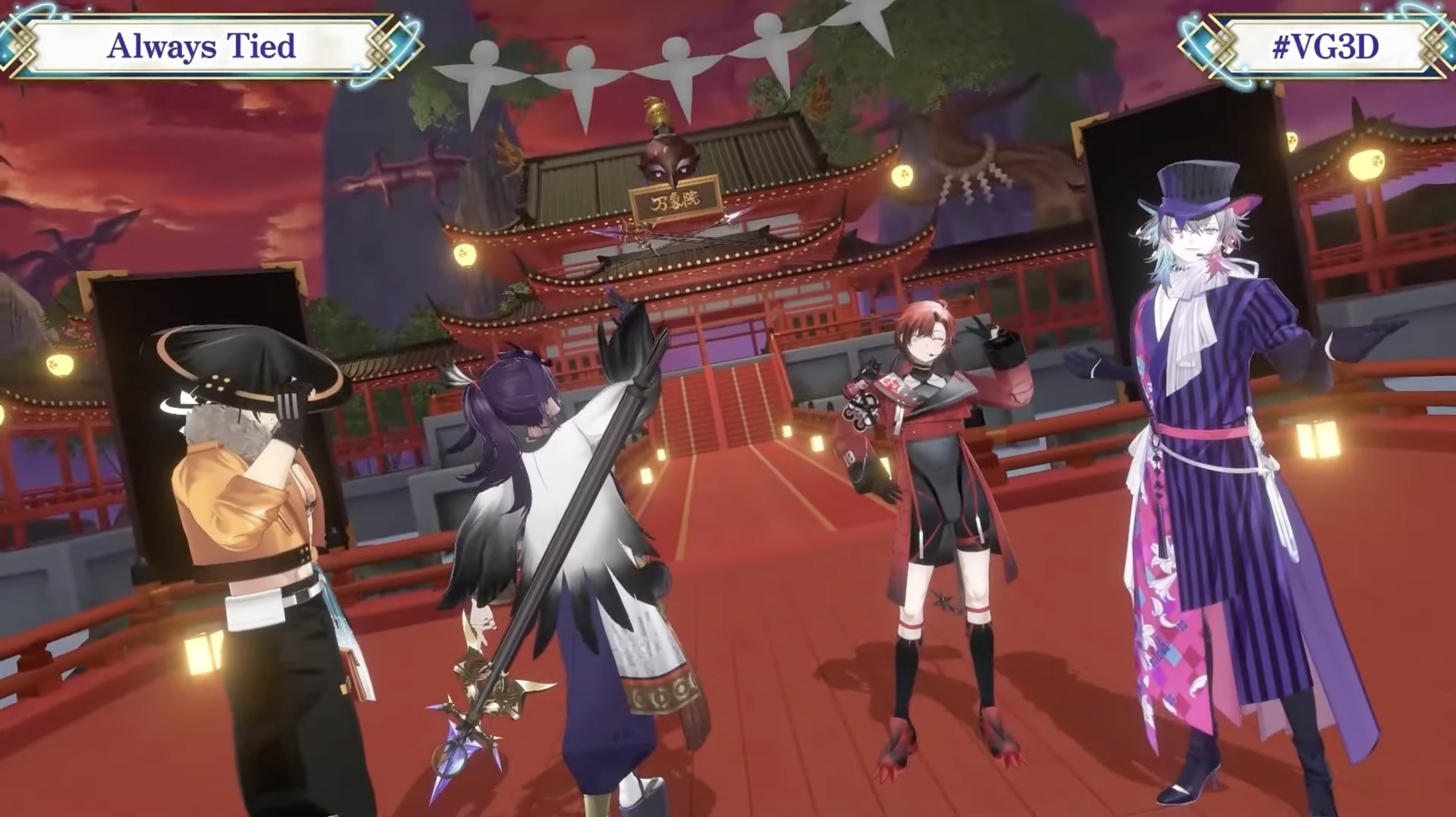
3D debuts/showcases are one-time events in the hololive world, and so they naturally attract curious passersby like myself. They also give new insight on figures who were basically only talking heads, with the added benefit that these special streams are built entirely around putting the VTuber’s skills and personality on display. Tempus Vanguard is no exception. Bettel’s buffoonery has extra nuance when you can see him physically clowning around (and getting clowned on). Flayon is surprisingly athletic, which makes him seem even more animated than normal. Hakka’s powerful singing was obvious even in 2D, but getting to see his physical expressions only adds to his performance. Shinri’s willingness to go a bit “out-of-character” for his song selections makes him even more masculine.

Movin’ On

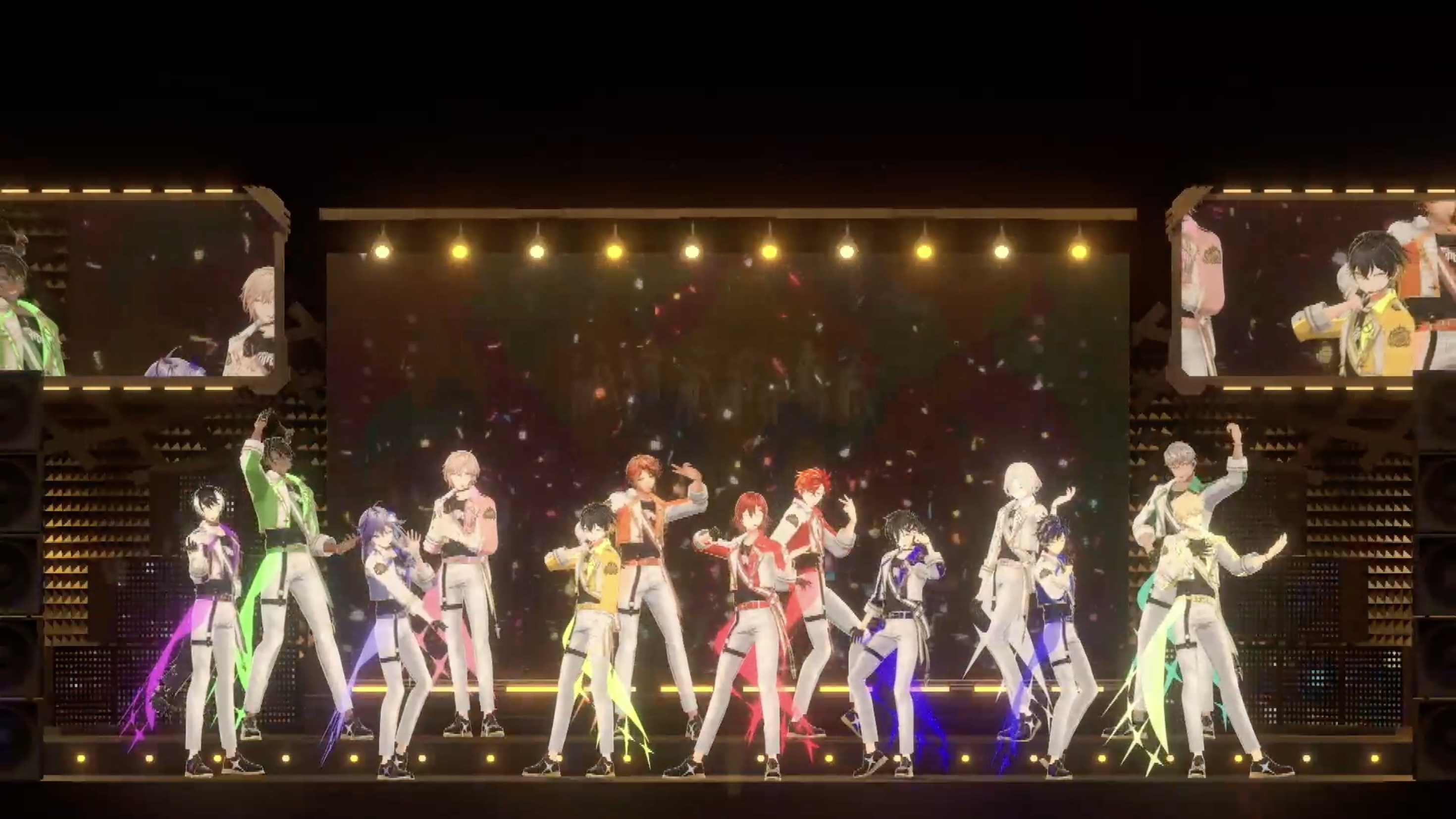
For the Movin’ On concert, I followed Kureiji Ollie’s stream VOD so that she and her watchalong crew could fill in the gaps a little. These events are often culmination points for talents and their fandoms rather than neutral evaluations of their abilities, and I knew that I was lacking the right context in basically all cases. Together with Area 15, Baelz Hakos, and the live audience, I got a somewhat better understanding of the relationship each Holostars member has with their respective followers. 

Just like with the hololive girls, though, there are some individuals who can really command the stage. Minase Rio’s singing is beautiful. Roberu carries his jovial charisma from his chatting streams to his performances. Astel Leda has undeniable star power, combining a versatile voice with serious dance skills.

Overall, it’s just good to see everyone in Holostars provide a good time for their fans, be it through thrilling stage performances or as a comforting respite from the world. Maybe someday, we’ll get to see the EN and JP branches together at the annual hololive fes in their own concert (as opposed to a fun karaoke session), or even together with the female talents. Whatever the future holds, I’d like to see them succeed on their own terms.

Movin’ On is still available for a limited time as a VOD costing 6,500 yen.