The Spectacle of Salty Bet and VGCW

At this point a lot of people know that it’s fun to watch other people play video games, whether it’s a Let’s Play or a competitive esports event. A subsection of these people additionally know that it’s crazy fun to watch AI opponents fight each other, provided the right context surrounds it. That’s what we get with Video Game Championship Wrestling, a gaming stream where various gaming culture icons fight each other inside of a WWE video game, and with Salty Bet, a place where you bet fake money on fighting game characters.

Though similar in that they both involve having non-human-controlled characters duke it out, they’re opposites in terms of how these AIs are used. VGCW is a curated experience where, much like actual pro wrestling, a single person writes the story and decides the overall direction of his “show,” but ironically is missing the most crucial pro wrestling component of having match results predetermined. Instead, the show clearly alters its path from week to week according to the results of its own matches. For me, the highlight of the entire thing so far has been when Little Mac came back from getting hit by a car and had an amazing match with Dracula that ended with Mac landing a powerful Star Punch counter on Dracula and then throwing him inside a coffin.

Salty Bet on the other hand is not about “story,” it’s about seeing how different characters crafted by M.U.G.E.N. creators across the world fare against each other, a complex interaction of not just who the characters are but the skills of their makers, their desires to make the strongest or the weakest characters, and even sometimes their desires to be in video games, as many of the self-insert avatars in Salty Bet show. Largely, the “drama” is created at random when two strangely appropriate opponents face each other, or a clash of gods occurs. The exception is that once every Thursday the owner of Salty Bet holds custom tournaments, often around a certain theme (the week of Pokemon X & Y‘s release there was a Pokemon character tournament).

In either case, what I find most amazing about their experiences is the necessity of the audience. Sure, audience matters at a Starcraft or Street Fighter IV tournament in that it livens up the mood and makes things just feel special, and in a Let’s Play of course you the viewer are the audience, but with VGCW and Salty Bet watching them is substantially worse when there is no chat available. The chats, with all of their memes and running jokes, make the fights feel “real” because real emotions are being poured into them. Scholars like Henry Jenkins talk about active fandom and audience participation, but with these “shows” the audience is in many ways the reason to watch. That’s not to say the work the owners of VGCW and Salty Bet don’t matter, as they’re of course important, but their successes are also tied into the image created by the very people viewing them.

Call from Mighty No. 9, a Focal Point of Projected Ideals

mightyno9-call-e

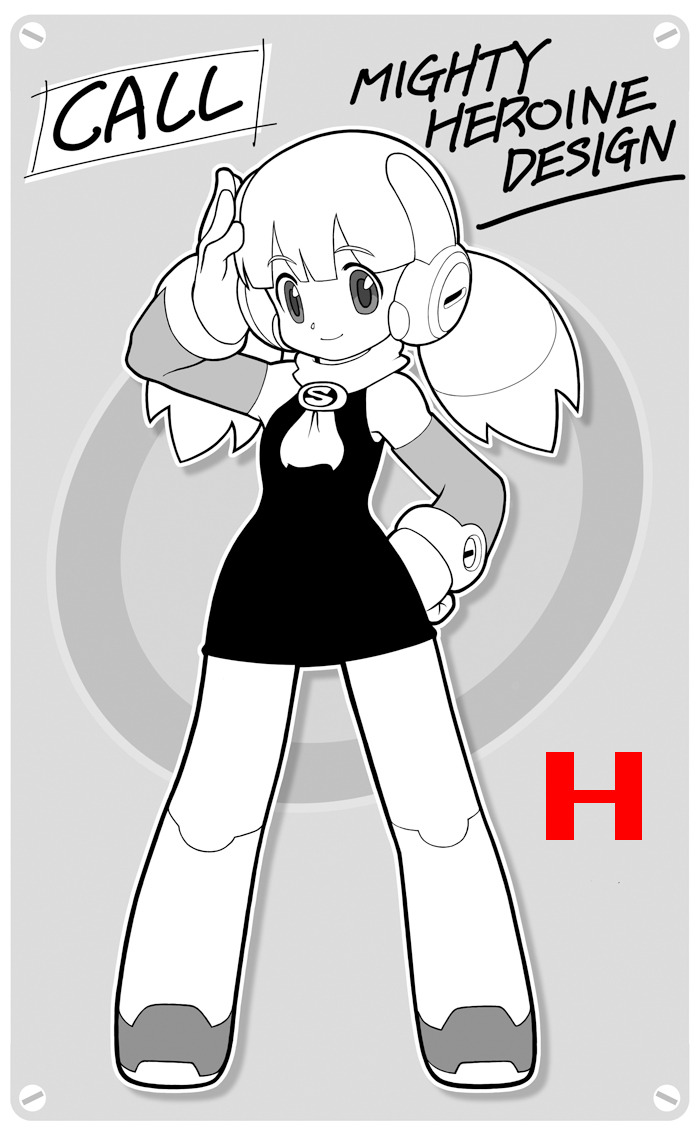
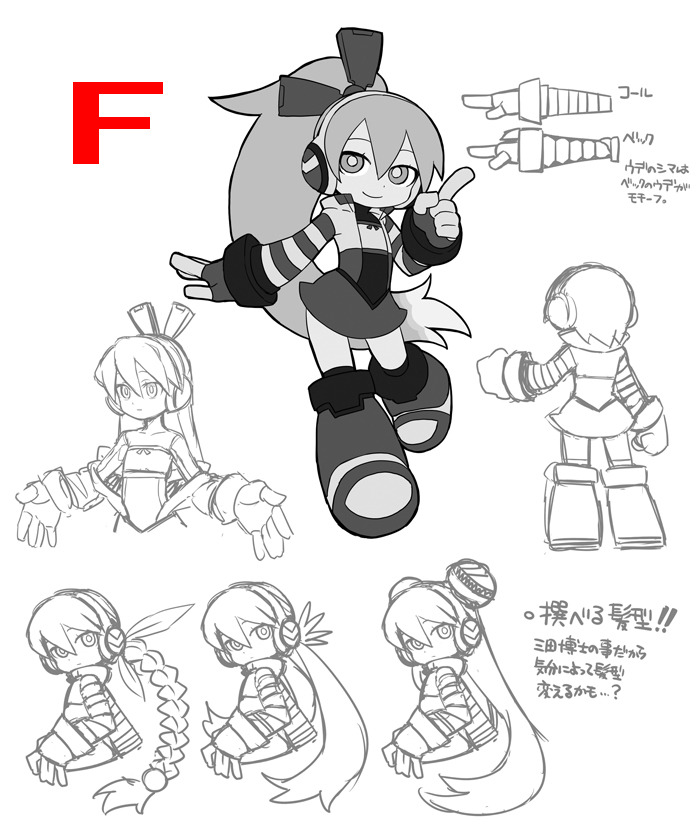
Given the success of its Kickstarter, it’s highly likely that you’re already aware of Mighty No. 9. The brainchild of Inafune Keiji, co-designer of Mega Man, it’s very much a successor to Mega Man, starring a robot with variable powers named Beck. While there are plenty of things to discuss when it comes to Mighty No. 9, one of the more fascinating topics is the “Roll” of the game, a female character named Call. Garnering enough fan support for a “Call gameplay stage” stretch goal to be reached, what is curious about Call is that her popularity was achieved well before we knew really anything about her.

From the very beginning of the Mighty No. 9 project, it was announced that there would be this female supporting character. However, she had no definitive design (though a few possibilities were shown), no determined color scheme, and very little information about her background or personality. Even her actual name was a later addition to the campaign, while these were the only notes eventually provided about her:

  • Call is a female robot originally created by Dr. White’s friend, Dr. Sanda, to help assist him with his research; she somehow avoided being infected by the virus causing all the other robots to go berserk and has pledged to help Beck.

  • Call was not imbued with the human characteristics that make Beck unique, so she’s more of a pure robot — as you might imagine, this contrast can lead to some interesting differences and misunderstandings whenever they interact!

And yet, even with this utter lack of information about Call, she developed a fanbase, such that the vote to decide what will become her finalized look has become a big deal among Mighty No. 9 fans.

mightyno9-call-f

A common answer these days for this sort of thing involves referencing Hiroki Azuma’s database narrative concept in a reductive fashion by pointing to how disparate features such as blue hair or a tsundere personality act as patchwork parts to create characters appealing to otaku, but I don’t think you can even refer to Call’s initial concept as a “database character.” It was less of a database and more of a less-than-1kb .txt file, and I think Call’s popularity actually comes from something else entirely.

mightyno9-call-h

My own guess is that the reason Call gained fans before we really knew anything about her is that her basic position, as a female character in a new video game which has as one of its guiding principles heavy interaction with the community during development, made her an open canvas for fans’ perspectives. Whether fans see Call as someone to potentially relate to, or an opportunity to establish a strong female character who can go a step beyond Roll in Mega Man, or even just as “the cute girl,” Call’s initial lack of features combined with faith in Inafune and the staff of Mighty No. 9 allowed people to project onto Call their various ideals. In this prototype state Call fans see in her the very best.

Pretty Good, Quite Fun: Chousoku Henkei Gyrozetter

Chousoku Henkei Gyrozetter is about a world where everyone can drive, including 8 year olds. Cars can also turn into robots called Gyrozetters. This technology comes from a prophetic tablet known as the “Rosettagraphy” which also contains a list of “chosen drivers,” kids with the attitude and will to drive the most “wicked cool” Gyrozetters in order to fight evil or corrupt fuel companies or whatever.

If it wasn’t clear from my summary, I think Gyrozetter is an odd show, but what I think is really strange is how typical it is without veering towards tedious or amazing or even average. Its mostly episodic format gives off “standard kids’ anime” vibes in spades, but it neither comes off as a refreshing take on the formula nor so rote as to be unentertaining. I find it difficult to talk about if only because I definitely enjoyed the show in a way which would have me looking forward to more, but it doesn’t feel quite special. People say that the hardest shows to talk about are the ones that are utterly mediocre, but when it’s “better than average, though not great,” a show like Gyrozetter poses its own review challenge. The robots/cars are fairly well-designed, the characters are fun and expressive, and both the episodic elements and the overarching plot work well enough together. I think the best I can do though is to talk about some aspects of Gyrozetter which I found fairly notable.

First, is the endings which are pretty much Precure-style dance sequences but done with giant robots. It’s eye-catching if anything.

Second, even though it’s a kids’ show it spends a lot of effort on attractive ladies. Apparently in some interview the director or producer said something along the lines of wanting to make the show “erotic” but I don’t know how seriously to take that.

Third, the villains are an appealing part of the show, and though they start off fairly serious they get increasingly Team Rocket-ey as the series progresses. Curiously, as this is happening the plot is also getting more dramatic so there’s this almost schizophrenic feel to Gyrozetter which isn’t offputting but gave me pause every so often.

Fourth, it’s a boys’ show which develops the relationship between the main character Todoroki Kakeru, who’s very much of the Ash Ketchum-type (or Satoshi if you prefer) and his would-be girlfriend Inaba Rinne to a surprising extent. He’s 10, she’s 12 (or somewhere along those lines), and it’s actually really close to if Pokemon had spent more time overtly pushing Ash x Misty as a thing instead of just giving the vaguest of hints. Maybe that’s what’s oddly refreshing about the show even though it’s so formulaic.

Fifth, Mic Man Seki, who is literally voice actor Seki Tomokazu. His job is to hype up everything ever, and he certainly does a good job of it.

Sixth, the Valentine’s Day episode.

Gyrozetter is a bit different from other giant robot anime because it’s not based on a toyline or pushing sales to nostalgic older fans, but comes from an arcade game where you’re supposed to drive around for a while collecting powerups and then transform into a robot for a 3-on-3 battle. Apparently the anime didn’t do well, and I wonder if it was partly because the show’s format (children of destiny use their car robots to save the world!) was too different from the actual game, and I did notice that towards the end they tried to actively foreground the arcade gameplay in the actual anime. However, it seems like the arcade game itself wasn’t terribly popular and is going away, so maybe there’s plenty of blame to go around.

From what I’ve been told (by Kawaiikochan author Dave), the arcade machine is the embodiment of rad as the giant cockpit-like arcade machine will literally transform into a battle mode as you shift gameplay modes and do so in the flashiest way possible. I have to wonder if maybe the game was too much, as a lot of the popular arcade games for kids seem to be the super automated games where characters dance or fight on autopilot based on a special card you use.

In terms of favorites, the best robot design in my opinion Rinne’s second Gyrozetter, Dolphine. Its curved design makes for a pleasing sillhouette and its figure skating gimmick reflects Rinne’s own interests (her dream is to be an Olympic skater) in an interesting fashion. I can’t pick a favorite character but I was fond of Kotoha the bridge bunny (the one in green and glasses), Haruka, who is shown in the shot of the villains above, and the secretary character Kouno Saki.

If I stretched even further, I think I could say some things about how the show addresses the concept of destiny through the later developments concerning the Rosettagraphy, but I’ve said a lot more about a show I find to be “not bad” than I was expecting. With that, I’ll just end with some final screenshots.

Scattered Thoughts on the View of Anime and Manga as Sexist

I’ve been thinking a lot about female characters in anime and manga recently (not exactly a surprise, I know), and it’s something where, even if I don’t have a fully formed argument or point to make, I feel compelled to write something down. Forgive me as I meander through my own thoughts in an attempt to piece it all together.

About a month ago I was reading the comments section on polygon.com in regards to the portrayal of female characters in video games. I can’t remember which game they were talking about, but one commenter said something along the lines of, “You shouldn’t bring up Japan when trying to show strong women in video games because it’s such a sexist culture. Just look at anime and manga,” and it made me bristle. I do think Japanese culture is sexist in many ways, but the idea that this perception of Japan as sexist made it impossible for Japanese fiction to have really good female characters in this person’s eyes bothered me because I’ve seen plenty from every period of anime and manga.

I know it was just one comment on a video game article, but it got me thinking more broadly about what people see in anime and manga, and to what extent the image of anime and manga as sexist is fueled by what people want to see. I recently saw a comment that criticized Heartcatch Precure! for encouraging girls to be stereotypically feminine by having the character of Itsuki, who normally dresses like a boy, express a desire to be more girly. While I know there are plenty of examples of tomboy characters who end up feeling like they need to dress like girls to attract their male love interest, Itsuki’s story is more about how she suppressed the side of her which enjoys cute things out of a somewhat misguided sense of duty and responsibility. Yet, rather than taking this as the message, it was like as soon as the person saw the rough outlines of the stereotype, surely it would play out the same as always.

There are most certainly a good deal of works which go out of their way to objectify women for male consumption, but I just find that there are also plenty of instances of well-portrayed women and girls in anime and manga. Whether it’s Princess Jellyfish or RidebackKekkaishi or Gowapper 5 Godam, it seems like these female characters get ignored because they’re, somewhat ironically, not as eye-catching as a Queen’s Blade or an I Wanna Be the Strongest in the World! There seems to be this idea that anime = sexism, and while even the works I mentioned as strong examples aren’t entirely devoid of sexism themselves, I also don’t think it’s as simple as just slapping the misogynist label on Japanese media as a whole. Messages regarding women in anime and manga can be so diverse and divergent.

At this point I’ve seen a lot of 60s and 70s shoujo, and I’ve noticed a clear trend of mischievous tomboy heroines from that time period. Even putting aside an extreme example such as Oscar from Rose of Versailles who was raised as a man to uphold her family’s proud military tradition, you have Candy from Candy Candy, who’s adventurous and constantly challenging the conceitedness of the upper class, and Angie from Petite Angie, who is portrayed as an extremely clever detective. You have Ayuko from Attack No.1, whose aggressive desire to win at volleyball inspires the rest of her teammates, and Yumi from Sign wa V! who initially plots to sabotage her teammates because of how much she despises volleyball. Hiromi from Aim for the Ace, Lunlun from Hana no Ko Lunlun, Masumi from Swan, the list goes on and on. All of these characters have their fair share of personal agency (even if it’s not always an ideal amount). Given that the trend of the strong, mischievous tomboy was clearly a “thing,” and I do believe it continued in some form well beyond the 70s (Utena is an obvious one, but perhaps Lina Inverse from Slayers counts too, for example?), I just have to wonder about the disconnect between that and the perception of anime and manga as inherently misogynistic and where it may have come from.

Is it a matter of age of these older titles, that if people were able to access the works these characters are from, that they would change their minds? Is it that shoujo doesn’t act enough as the “face” of anime and manga? Could it be that, as much as we’d like to think we’ve gone beyond the stereotype, anime is still viewed as essentially “porn or Pokemon?”  If the ratio were different, and there were just fewer fanservice titles or works where girls are basically a cheerleading squad for the heroes, would detractors be more charitable towards anime and manga, or is it inescapable as long as some titles are still like that? For that matter, to what extent does the western image of the submissive Asian woman affect and interact with how people see all female characters coming from Japan, and how does it differ from the similar stereotype as viewed by Japan (I can of course admit that it’s there too)?

What shapes people’s views of female characters in anime and manga? I guess that’s the question I want to explore the most.

Looking at the Choice of Pokemon in “Pokemon Origins”

If ever there was a “nostalgia anime,” Pokemon Origins is it. An intentional recreation of the first Pokemon games, it limits its world to 151 Pokemon instead of the steadily climbing total count of later generations. There’s a lot to look at in terms of how it portrays a simpler time for the Pokemon franchise, but one thing I wanted to focus on is the main character Red’s team when he fights Blue for the championship, because it’s actually extremely deliberate and meant to reflect the experience of going through those first games, as well as the diversity of choices available to you along the way.

From left to right:

Scyther was a Pokemon exclusive to Pokemon Red and represents one half of the version exclusivity which helped to define the games and the necessity of trading to get all of the Pokemon. Being that the main character is named Red, the implication is that he caught this one in the wild.

Persian represents the other half of version exclusivity, being only in Pokemon Blue (or Green for the Japanese). This implies that Red at some point traded for it or its pre-evolution Meowth.

Lapras, unlike most of the Pokemon which are caught, evolved, or traded (or in the case of Porygon purchased), is a gift. In the games you receive it from an employee in the Silph Co. headquarters, so Lapras represents the “Pokemon by plot event,” and shows how he went through Silph Co. dismantling Team Rocket along the way.

Jolteon evolves from Eevee, a Pokemon which like Lapras you receive as a gift. Unlike Lapras, however, it also represents the act of the permanent choice: in the first games you were supposed to only get one Eevee (barring any creative glitches), and the choice of whether to evolve it into a Jolteon, Flareon, or Vaporeon was permanent, so the choice of Jolteon is meant to make you think, “Ah, so Red went with this one.”

Charizard is of course the Starter Pokemon, the first choice a player has to make in the game. Once again Red is Red, so the choice for which starter he’d go with is pretty obvious.

That leaves Dodrio. Its pre-evolution Doduo is available in both versions, is caught in the conventional manner, and also evolves in a normal fashion. However, the fact that Dodrio is common is what makes it special within the context of this team.

If you look at the rest of the battles in Pokemon Origins, you’ll find that the choice of Pokemon reflects this idea that the anime should give a sense of the progress Red has made. For instance, both Hitmonlee and Kabutops appear as Red’s Pokemon, and both are Pokemon whom you have to choose over others in the game (Hitmonchan and Omastar). Snorlax is a Pokemon you have to encounter because of the way it blocks certain routes, and a sign that the Poke Flute was used. Using the Legendary Birds against Mewtwo also shows how Red intended to go against it at full strength. Perhaps the most interesting decision of all, however, was having Pikachu appear only towards the end, to acknowledge its value to the franchise but to prevent it from overshadowing everything else or associating it too closely with the other anime.

NiGHTS into dreams… HD is my Wonder-Drug

After much delay, I finally started playing NiGHTS into dreams… HD. I’ve never played too many games on my PC just because I didn’t even have a proper controller for a lot of the genres I normally play otherwise, but I decided to just go, “To hell with it” and purchase an X-Box 360 controller. I know I was hankering for some retro gaming when I decided to buy it in euros even though it’d cost me a little extra.

I’m not really going to review NiGHTS here just because the game has such a powerful reputation, a cult classic that all Sega Saturn owners either remember fondly or always pined after. It is indeed an exquisite game, especially in its visual presentation and its smooth controls, but what I’ve found upon returning to my old favorite is that the game occupies this strange space for me where it is both somehow therapeutic while at the same time motivating and challenging.

Actually, I will say one thing about the game: it doesn’t control quite like the original Sega Saturn NiGHTS, and while the difference isn’t huge, it’s still noticeable for someone like me who poured hours and hours and hours into the old one. Playing widescreen can also throw off my sense of timing because the camera changes at ever-so-slightly different points.

I’ve written previously about how a current hobby of mine, Japanese mahjong, is a combination of luck and deception, and is thus enormously nerve-wracking. NiGHTS isn’t this, but it also doesn’t feel “casual” or “mindless.” Rather, it’s a game with a simple, clear-cut goal (get the highest score while beating each stage and boss), but I always feel like the game is only as intense as I want it to be. Unlike another perennial favorite of mine, Pokemon, it also isn’t hampered by the permanence of decisions (can’t use your single-player team because it wasn’t EV-trained properly!!!) If I want to just enjoy the bright colors and scenery, I can. If I want to push myself to get as close to perfect as possible, I can. If I just want to fight the bosses over and over again (and I do love doing that), I actually can now, thanks to NiGHTS HD. I can kill Gulpo in 10 seconds.

That reminds me that, even back then, my biggest complaint about the game is that the bosses are simply too easy regardless of whether you’ve played the game a ton or not. It’s the one thing that I think the sequel, NiGHTS: Journey of Dreams, improved upon tremendously (except for that stupid and frustrating fight against Bomamba).

Are You as Excited as I am About Mega Man in Smash Bros?

Nintendo just revealed the new Super Smash Bros. today at E3, and the Villager from Animal Crossing as well as Mega Man have been confirmed as characters.

Next to NiGHTS, Mega Man was my #1 wish for Smash Bros. (and putting in a character more flight-themed than even Pit is a tall order), so I am super, super hyped. Sure, the Sonic reveal from Brawl was cool in that we got to see that console rivalry materialize in a way which was not some game about the Olympics, but Mega Man is a bigger deal to me.

We know nothing about the balance or the depth of the game outside of the fact that it seems to not be wildly different from its predecessors, so obviously this isn’t based on how great the new Smash Bros. is. Rather, it’s because Mega Man as a series is very precious to me, a piece of my childhood.

While NiGHTS into dreams… and Pokemon taught me all about being a part of a fandom, I think it was actually Mega Man which first taught me how to be a fan. By providing an exciting world with a clear template for personal input, the Robot Masters, the series allowed me to exercise my creative imagination as young as the age of 4. I still remember Cockroach Man and Glue Man to this day.

There’s a bit of information about his moveset from the trailer: He has his slide, Charge Shot, and Rush Coil, as well as the ability to access moves from a variety of Robot Masters from his own franchise. Exactly ow many weapons are available is unclear, but it looks to be quite a bit more than, say, his entry into Marvel vs. Capcom 2. Even if we didn’t know that, however, there’s something about Mega Man which makes him easy to imagine in Smash Bros., even more than in his other fighting game appearances. The run speed, the jump height, the various interactions of his attacks, it all makes sense. Perhaps the only disappointing thing is that he can’t absorb other characters’ powers it seems, so no Mega Kirby vs. Kirby Man.

I don’t have a Wii U or a 3DS yet, but this may be my incentive. Well, that and Pokemon X/Y.

Dutch Starcraft League Cheerfuls

The past two years, I’ve attended the Dutch anime con, “Anime Con,” but this year I decided to mix it up a bit and go primarily to the Dutch Starcraft League Finals, which was happening as a part of the Anime Con. It was a fun event, and I got to meet such great personalities as Madals, Kaelaris, and even German champion Hasuobs, who was actually there not for the tournament but for the anime con. Also of course congratulations to the winner Harstem, who managed to upset in the finals with strong Dark Templar play.

One weird thing about the event was that the cameras broadcasting the event had a tendency to fixate on cute girls (especially if they were in cosplay), as if to say, “Hey, girls watch this too! Isn’t that amazing?!” The funniest thing to come out of this was the fact that the camera would focus on one female cosplayer so much that it failed to actually notice that the guy she was with was Hasuobs.

As it was a Starcraft tournament at an anime con, I thought it only appropriate that I quickly make some cheerfuls combining both hobbies together.

My Thoughts on the “Damsel in Distress” in Tropes vs. Women in Video Games

Over the past few months, Anita Sarkeesian has released the first two videos on her series concerning tropes regarding women in video games. Back when it was first announced, I had my concerns that she would so emphasize what has gone wrong that she wouldn’t leave sufficient space for what has gone right, or even what was meant to be female empowerment but fails for whatever reason. Later, after having done some further reading, I amended my thoughts on the matter when I realized that, even if it wasn’t my intent, the idea that women (as well as people in general) should settle for “good enough” as if that’s the best they could hope for in regards to portrayals of women in media is a problem.

I watched the first two episodes, which concern the “damsel in distress” trope. The third one, which is supposed to address some of the inversions or subversions of the damsel device, is not yet out, so I can’t at this point speak about that element, but I’d still like to state my thoughts on what I’ve seen so far. I find Anita’s strongest overall argument to be the idea that video games have tended to assume violence as a primary course of action so often that as games have tried to become more sophisticated this mechanic limits the potential avenues for solutions beyond “punching them until they die.” As Anita notes, the inertia created by the games of old, both in terms of having damsels and having violence as a means to save them (or not), is perpetuated, though not out of malice but from not thinking about other alternatives.

Multiple times during the videos, Sarkeesian talks about how the hero having to rescue (or even mercy kill) the damsel turns the woman into an object or goal for a male power fantasy, and one of the concerns I have with this is that, even if she might not mean it, it can be interpeted as casting male power fantasies in a negative light. Certainly I understand some of the problems of the male power fantasy and how its ubiquity can create a narrow scope of examples of acceptable behavior for men in lieu of male characters capable of functioning in different capacities , but I don’t think male power fantasies are wholly the product of perceived gender role imbalances where a man must protect the woman, nor are they mainly about the trivialization of women, even if it on some level contributes to the perpetuation of such stereotypes.

Rather, rescuing the girl speaks more to the fantasy that a man can be relied on no matter what, and is capable of accomplishing anything and everything. Thus, when the damsel is fridged (killed or injured for the sake of advancing the male character’s story), it is about playing with these assumptions and desires, an attempted move towards more diversity and creativity in storylines even if the products end up not being very well thought out, containing many of the problems which Anita points out. The power to do something in every possible circumstance can also be found in the idea of the self-made man or the rugged outdoorsman, who can be thrown in the middle of a jungle and come out of it with muscles flexing. I think it’s a valid desire for men to want to be able to be relied on, though once again I understand that wanting to be relied on and being relied on as a requirement for masculinity are two different things.

You might be asking, “But if there are all of these problems with the male power fantasy, why even defend it?” In that case, compare the male power fantasy to another type of “power” fantasy, the rags-to-riches story, where a person uses their wits, hard work, and/or luck to go from a life of poverty to one of profit and wealth. There are many valid criticisms for such stories, such as the idea that it reinforces an unforgiving capitalist mindset where money is the most important thing in life, or that if rags-to-riches stories present the idea that anyone can pull themselves up by the bootstraps then it implies that people who haven’t done so simply haven’t tried hard enough. In other words, there’s a clear downside to this type of narrative. However, there are people who enjoy these stories and fantasize about doing the same thing, even if they are conforming to a flawed concept that is a product of assumed societal values it still speaks to their desires. This ability to respond to people’s desires is one of the things I think art and creative media can and should have, as is the ability to criticize that very same thing.

To restate, it’s not entirely clear if Sarkeesian is saying that male power fantasies are tainted from the roots, but I could see this being an issue that skeptical viewers might jump on to show that she is “man-hating” even though she isn’t. At the very least, Sarkeesian points to the ability for male characters to get captured and then break out of captivity through their own strength and wits as a way in which male characters are not truly in distress, and this scenario has a clear power fantasy component which can function without the victimization of women as a plot device.

Of course, this leaves the question of where the “female power fantasies” are, and in this regard Sarkeesian is right that the repeated use of women as damsels in video games feeds into the perpetuation of these scenarios. However, my opinion is that this does not make the male power fantasy in video game form itself the main problem and that the character in need of rescue needs to be removed from media, but the lack of alternatives for characters of all genders and sexualities to do more and be more. That said, I think Anita’s goal in making these videos is on some level to create awareness so that people will think to produce these alternatives, and in that regard she is getting people to talk.

Thoughts on Casual Gaming

I once had a conversation with friends where they expressed bewilderment that people could enjoy casual games. To them, games are about challenges, puzzles, something to figure out in order to overcome or outwit an opponent be they computer-generated or another human being. As a gamer myself it’s something I understand, but I also know how daunting or even draining the “gamer” mindset can be, and I feel the ups and downs of “true gaming” in my experience with online mahjong.

I’ve been playing Japanese-style mahjong for a few years now, and it’s a game I find fascinating for a variety of reasons. In mahjong you have this mixture of skill and luck which creates a dynamic interaction between its players. The game is such that it’s possible to create complex plans and intricate webs of deception to upset your opponents, but the random component means the best-laid plans can go to waste, and adapting to the “unfairness” of the luck elements by knowing when to call it quits becomes part of the strategy. In other words, when playing mahjong your mind has to be sharp and focused, but what happens when you’re not at your best?

This is the problem I run into with mahjong sometimes, and why I feel able to understand the casual game mindset. I love mahjong at this point, but there are times when the day was long and I’m all worn out mentally, and I’m looking for just a way to relieve stress. At times like this, I’ve made the mistake of trying to use online mahjong as a way to relax and I’ve been punished nearly every time. In those instances, I want to treat mahjong like a punching bag, except that in this case the bag punches back. Mahjong is the type of game where trying to win a hand at all costs just makes you vulnerable. In these situations when one’s mental condition isn’t the best, decent opponents can exploit it without even trying because it’s basically the equivalent of running straight at them in the hopes they won’t fire first. Naturally, watching my rank drop as I make this simple mistake over and over again causes more stress instead of less.

It’s not mahjong’s fault, though, that it fails to do what I want it to in those instances, and that’s where casual games come in. They can be your reward for a hard-fought day, as just a way to escape from pressure. The games might be even more random than mahjong, but clicking a lot can basically be the mental equivalent of punching a pillow over and over. This is not to say that casual games can’t have any skill or challenge component (Angry Birds being perhaps the most prominent example, and you can pretty much auto-pilot Tetris), but that it can be tough to feel like life is beating you down and then a video game is too. Sometimes, people might just want to have the comfort of knowing they’ll always win (or at least win eventually), and they might even be willing to put down $5 just for that luxury.