
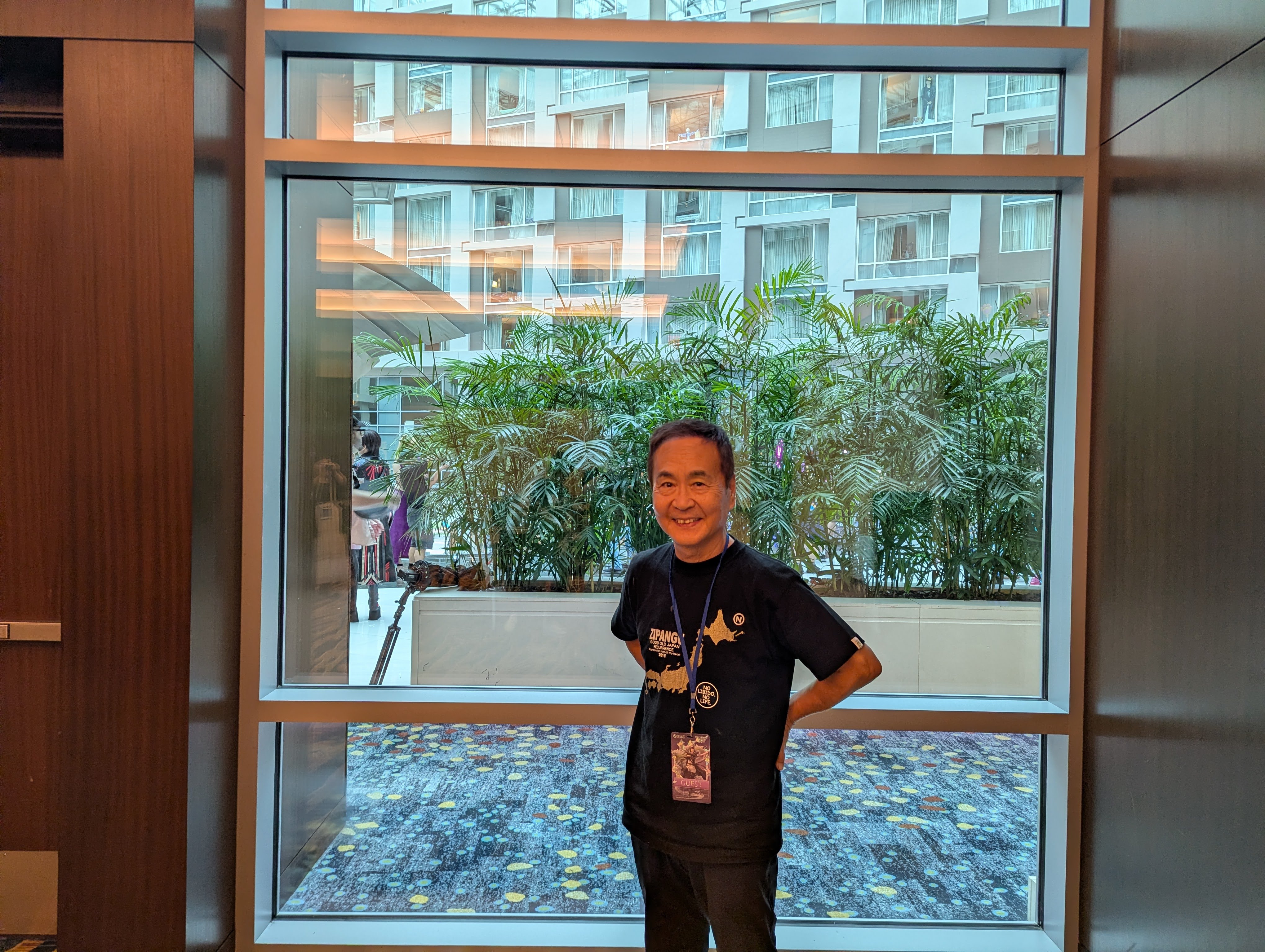
Oka Kunio, a nationally famous food replica maker from Japan, was a guest at Otakon 2026. I got to attend his panel, as well as conduct a one-on-one interview with the man, and have included both below.
Panel Notes
Oka began by giving a brief history of food replicas, starting off with how a wax modeler was once asked to make replicas of sashimi so that a restaurant could show off their food for a long time. After some trial and error, they found success. Originally, the molds were made from agar, and the resulting product was wax. Other restaurants also began asking for similar displays, but the wax back then came with problems, notably a yellow color that made it hard to work with foods that weren’t yellow. But American paraffin wax didn’t have a color, and it became the standard.
When making the molds, agar was poured over real food, and then colored wax was poured into the molds, with the burrs removed afterward. Additionally color was done with oil and small brushes, and an oil-and-resin varnish was used for polish. Like the yellow wax, varnish had a color which made it difficult to use when replicating certain foods, but clear/uncolored varnish was eventually created.
According to Oka, it’s said that mastering food modeling takes 10 years.
As for his own origins, he was a high schooler and student council president with a keen interest in cooking. He even worked part-time in the food business. Unfortunately, his dad passed away during that time, and he gave up going to college and having a culinary career. He did, however, enter the world of food replicas.
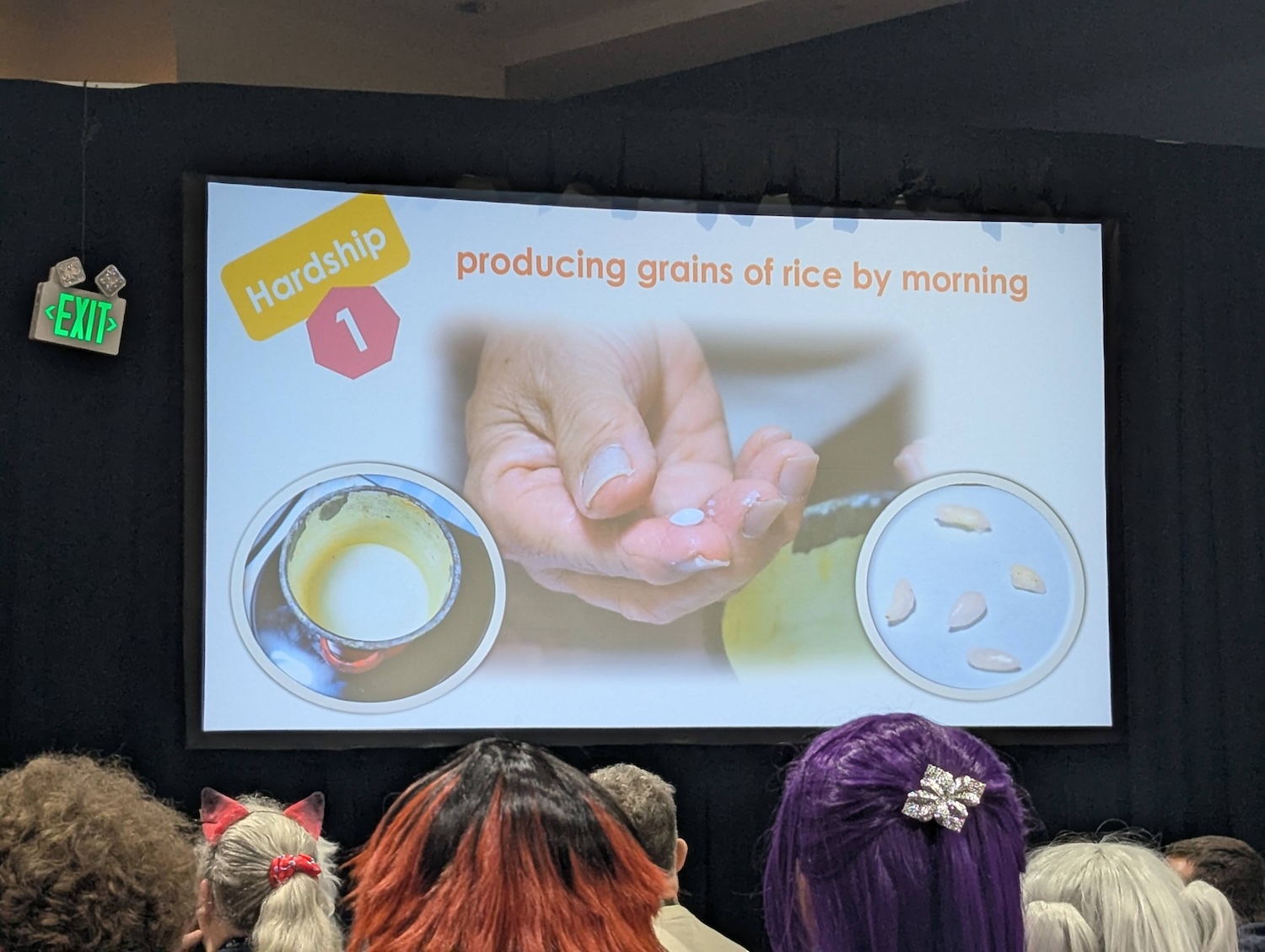
His modeling teacher was a typical craftsman; he always looked serious and couldn’t tell what he was saying. As part of his work, Oka had to mold rice by hand, grain by grain. He also had to color without using a regular airbrush, and instead had to use a blowing tool as his “airbrush.” Preventing mold from forming in breadcrumbs was also an ongoing challenge.
He also recalled that wax samples could melt during deliveries, and had switched to gelatin at some point, and later down the line other materials.
Oka then showed some examples, including a coffee replica made for a family friend’s restaurant, as well as a custard pudding that actually jiggled. The latter was used on a variety show as a prank, and it actually tricked people into taking bites! He also recalled one instance of a kid who bit into some of his fake French fries at a revolving sushi restaurant, and another who tried to eat a replica dorayaki. Another notable television appearance was on the Ultraman Dash Variety, where a member of Arashi had to try to make fake custard pudding as his challenge.
Outside of food, Oka was also hired to make replicas of human anatomical features, such as blood vessels. He remarked that a softer PVC was used to recreate the feel of blood vessels.
When asked about if he had ever made fantasy foods, he said no, but thinks he is capable of doing so. For him, no food is impossible to replicate because if he gives up on one, he’ll start to give up on more. The color of sashimi and meat is a challenge though.
At the end of the panel, we were informed that he had some of his work on display near one of the information booths.
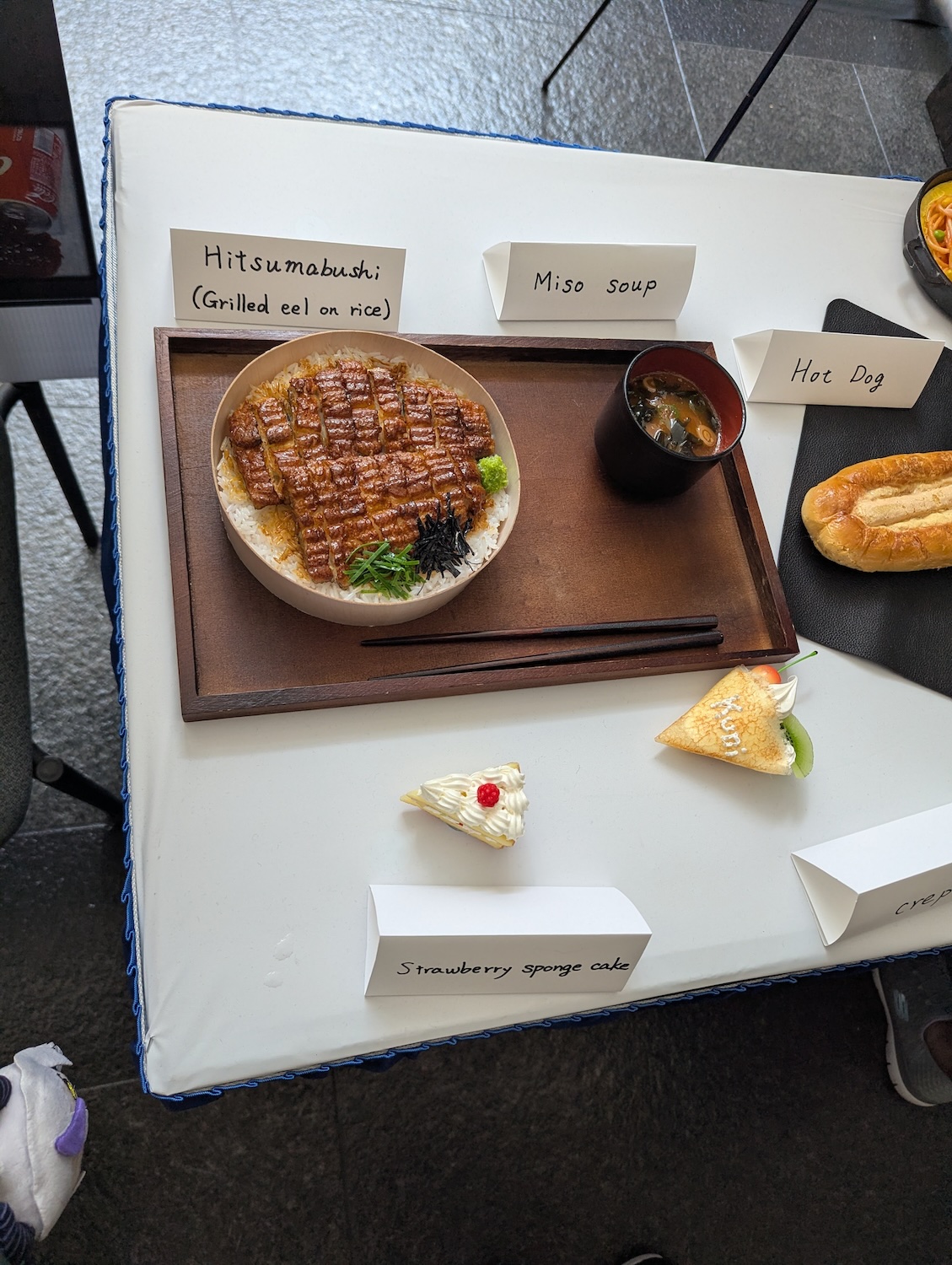
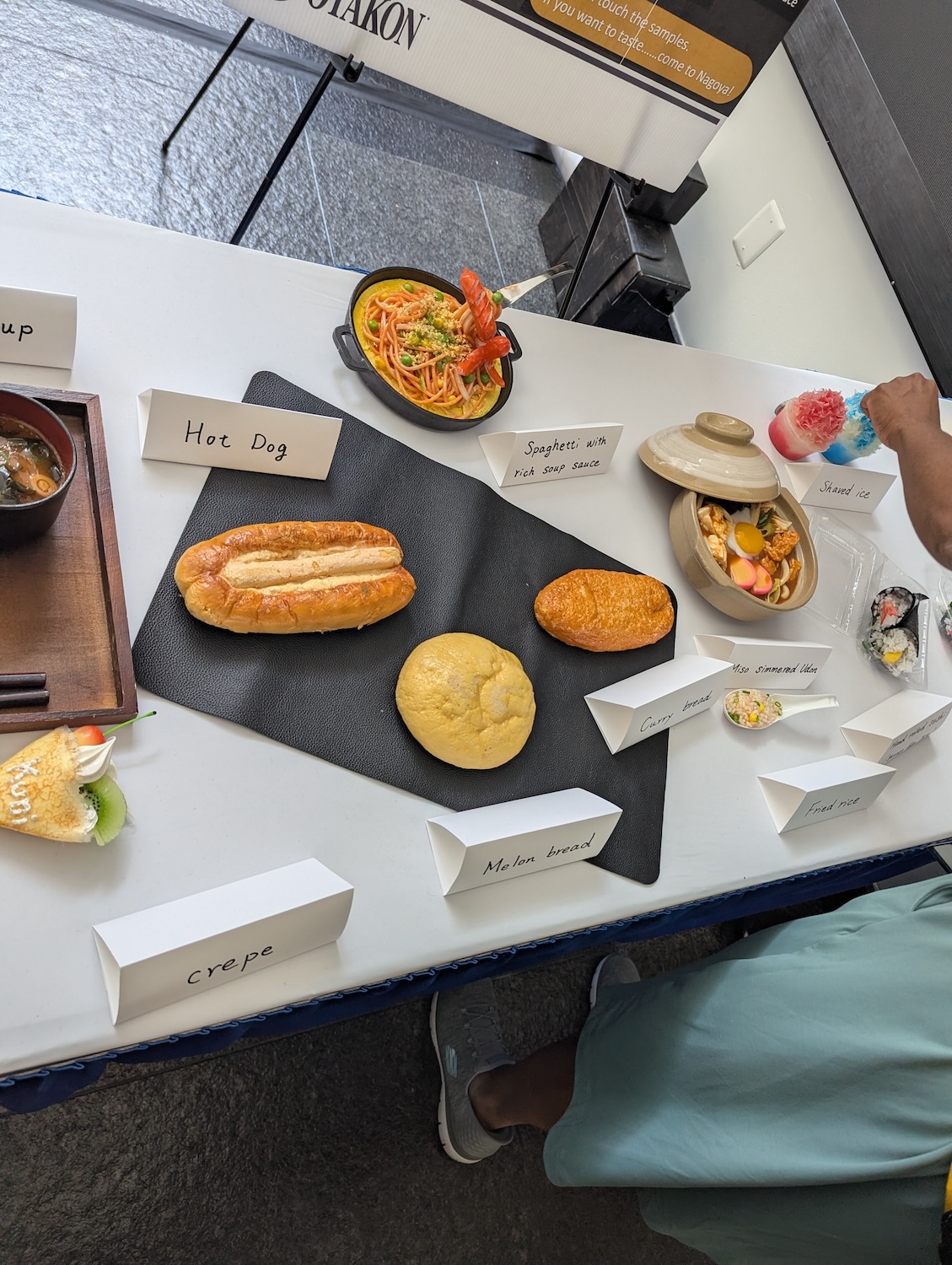
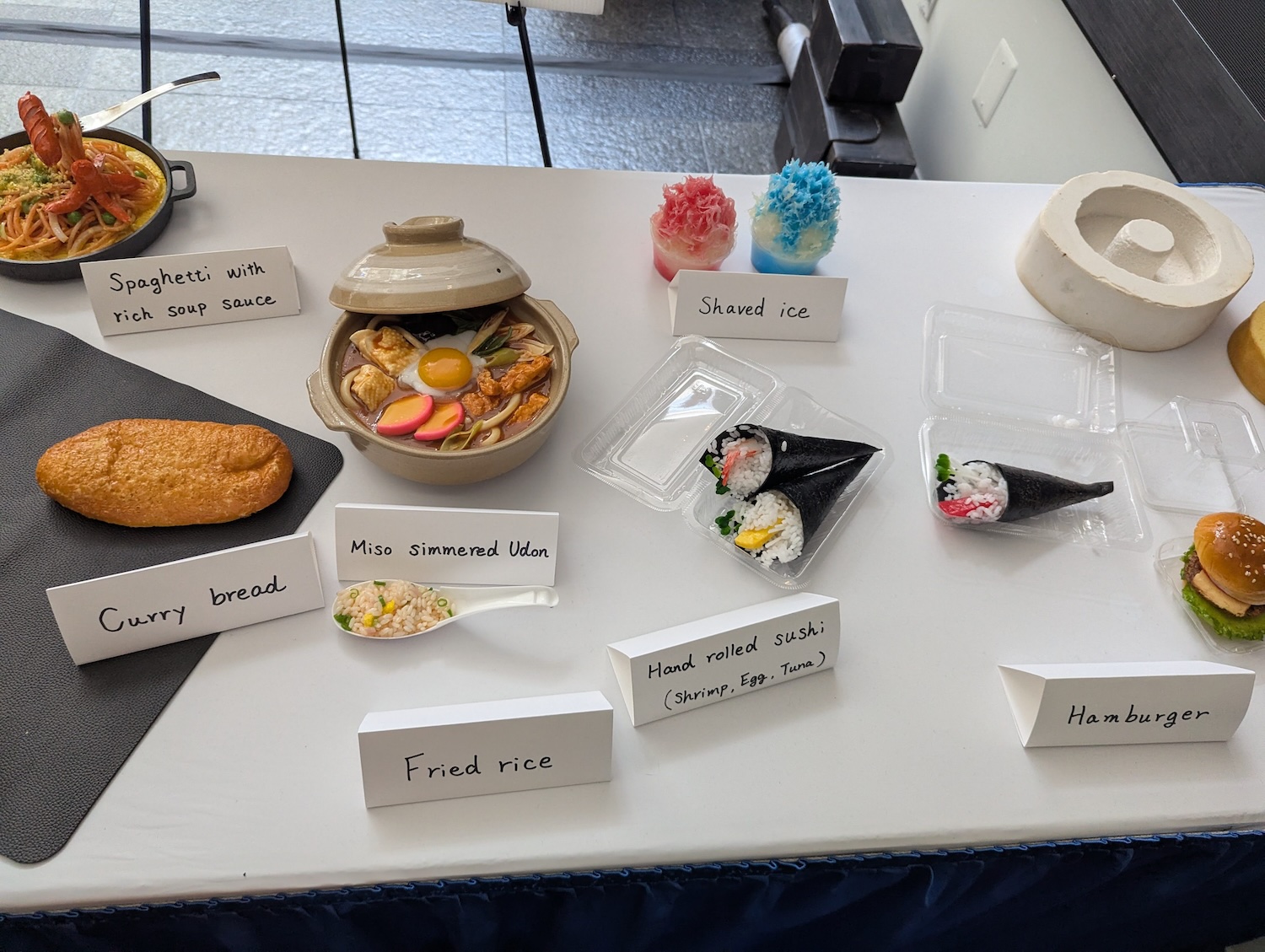
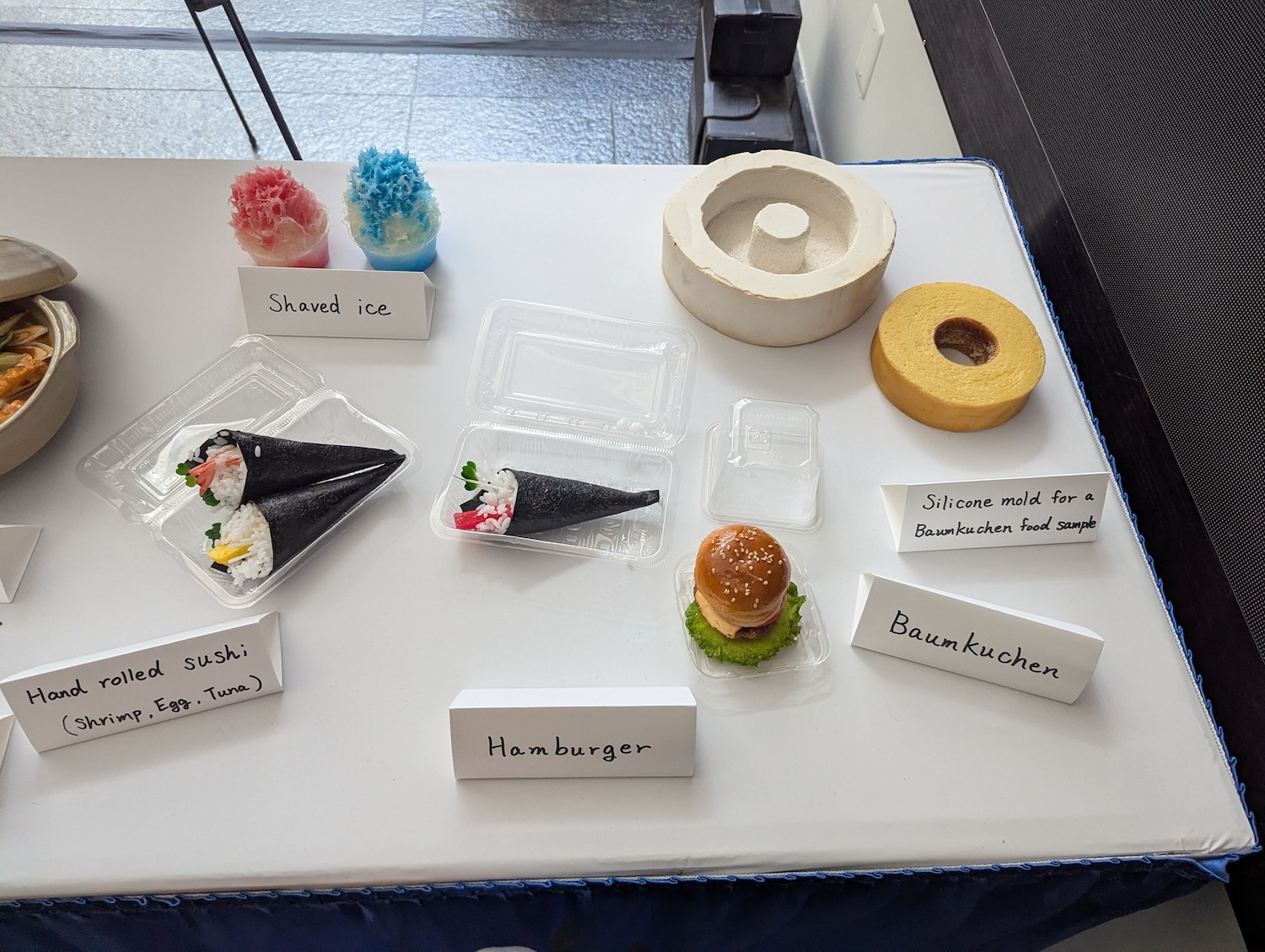
The next day, on August 1, I conducted my interview.
Hello, it’s very nice to talk to you, Mr. Oka. Just to start off, I had seen the food replicas in Japan when I’d been there, and they were very nice, but I had assumed that those replicas were things made in machines and factories—that there were craftsmen like you behind them. That’s something I learned. In that regard, the first thing I want to ask is, do you have any philosophy for what makes food look delicious?
That’s a difficult question. The only thing I think about is how to make it as realistic as possible.
It seems like you’re geared toward making food look good and realistic. Have you ever had to do the opposite, and make food that didn’t look good on purpose?
Food from a long time ago might not be as glossy as food from the modern day. It might not be the right way to say it, but rice from the past might not be as clean, so I have to replicate that.
Would this be because your replicas were being used in a television show or something, where they were purposely meant to look like something from an older time?
Yes, it was for television. I had to replicate a meal from a long time ago. My samples are also being used at museums.
What would you say is the most unusual food you’ve ever had to craft?
Everything is somewhat unexpected, but I made examples for the Nagoya Public Aquarium before. I had to use the meat of the takaashi crab (Japanese spider crab) and make gunkan sushi out of it to show how sushi you could make out of one crab. I’ve also had to make nigiri sushi out of fish in a similar way.
Was there something about takaashi crab that was special or unique? I’m unfamiliar with it—is it considered a typical crab or something unusual?
It’s commonly eaten in Japan.
What is an important lesson about your work that you learned over the years that you could teach yourself when you were first starting?
I really like food samples. I think having passion for it is important.
Interesting. I went to your panel yesterday, and you mentioned working 50 years in this industry, this craft. Have there been any interesting changes or trends in terms of what the restaurants and customers want from you over the years? Anything that has changed about the foods or the things they want from the replicas?
The main difference is that when I first started I used wax, but nowadays I use silicone or vinyl.
Is there anything that the restaurants ask of you that’s different from how it used to be?
I’ve been requested to not only replicate food but also tea and injuries from blood vessels.
In that regard, I also saw you had created those anatomical models in your panel yesterday. Was that something the hospitals came to you about, or was it something you thought up yourself?
It was a request from the hospitals.
You mentioned yesterday that you had to replicate the feel of the blood vessels. How did you replicate that feel?
I did some hearings with doctors, asking how they look. I also looked at different photos. But of course, not all blood vessels look the same, so I talked over the phone a lot with the doctors.
I’ve had the opportunity to travel to Taiwan, and the reason I mention this is because at one of their museums, there’s two famous pieces there, which are called the Meat-Shaped Stone and the Jadeite Cabbage—both of them being essentially food replicas from I believe the 19th Century.
I wanted to ask if you have ever seen them or if you know about them.
I haven’t, but I’d be very interested to see them.
I would recommend it, and as someone with your skills and abilities, I’d be interested to see what you thought about them. A funny thing was that I was very fascinated by them, but the people I traveled with didn’t really have much interest in a stone shaped like meat. I would love to see what you think of it if you get the chance to see it in person.
You’d have to be interested!
In terms of non-Japanese foods, I know you’ve created a lot of replicas for then. Do you have to approach them differently compared to Japanese foods?
In order to make the samples, I need to see the real thing. So sometimes, when I have to make ones for non-Japanese food, I don’t have access to the freshest food. So sometimes, I’m not sure if the mold will work well or not.
How do you try to get around that limitation?
I usually look at the pictures and I get specific measurements of the food. There can be shrinkage with the food as well. Also, people have different perceptions and can see color differently, so when the person requesting it can deliver the request as accurately as possible, that’s usually when things go most successfully.
This goes back to the museum talk, but how would you feel if your replicas were in a museum as well, maybe 200 years in the future?
I would be so happy! That’s it.
If you had to put one in the museum right now, which would it be?
One that I like?
Yes.
Right now, I want to make tuna sushi.
That’s all the time I have. Thank you! It was very informative.

