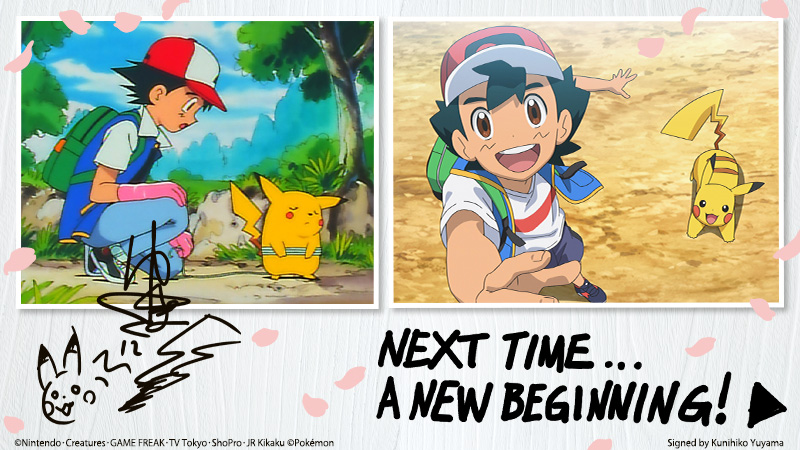
This past week marked one of anime’s biggest departures ever, as Ash Ketchum—aka Satoshi—has ended his 26-year tenure as the main hero of Pokemon. It’s amazing to think about how the character has been such an enduring presence in the lives of millions of people for over two decades, all without being wholly remade and revised. Other heroes in other franchises might arguably have greater legacies, but the fact that it was consistently the same Ash week in and week out makes for one fascinating and continuous chain of history.
It’s been many, many years since I was actively part of the Pokemon fandom. I naturally didn’t know about it when it first came out in Japan, but for all practical purposes I was there from the beginning. I remember getting a little pamphlet about Pokemon in an issue of Nintendo Power, and as I anticipated its arrival, I managed to even catch the sneak peek “Battle Aboard the St. Anne” episode that aired the week before the first episode aired in the US. For maybe five or more years, I would record every episode on VHS, and the times I had to program the VCR, I tried to time breaks in the recording to preserve space so I could fit more on each tape. I’ve long since stopped doing that, or watch Pokemon on a regular basis, but I can never forget those early days.
Ash was never my favorite Pokemon character, and for the fellow fans I interacted with online, it was largely the same. The reason: a lot of the people I talked to I met either through the competitive scene (years before the founding of Smogon) or via a Team Rocket messageboard. In the former case, people were not fans of Ash’s nonsensical battles or inability to understand the type chart despite his successes. In the latter, it’s because a site dedicated to Team Rocket would naturally run ever-so-slightly edgy and prefer older characters. For me, it’s just because he was a pretty decent but generic kids’ anime protagonist—a plain rice ball (or donut, as it were) in a world of more compelling stories.
But there‘s something special about being that hero for so many people for so long. And while many of his accomplishments were often tied to meta events (e.g. Gary Oak/Shigeru’s Japanese voice actor leaving the show is why they ended up having their big 6v6 clash in the Johto Pokemon League), the sheer amount of things Ash managed to achieve is impressive. A character who could have gone on forever unchanging still leaves behind one hell of a CV.
A big factor in why there was a sense of progress with Ash was because of the way he would go from one region to the next in accordance with game sequels. While the basic formula of “meet new friends, have adventures, get gym badges” was always present, he never stayed in the same area for long, and he always met new people. And while fans would often remark on the way his skill and knowledge would seemingly go backwards every time he started a new path to a Pokemon League, it’s clear that his inability to retain knowledge is not necessarily a matter of poor character writing or insufficient lore consistency and more a way to keep him level with the new fans who still come to the series even now. Ash is as much a vessel as he is a protagonist, and he could never be a vessel for everyone at the same time.
One thing I always found funny is the fact that some of Ash’s greatest wins and titles came about in “filler arcs,” the seasons that took place between main-game storylines. This is why he’s the Orange League champion, the Frontier Champion, and most recently the winner of the Masters Eight tournament (solidifying him as the strongest trainer in the world). He also won the Galar Pokemon League, but in hindsight, it’s clearly because they knew they were about to start winding down Ash’s story and they wanted to show much he had grown. I remember thinking, all the way back in the late 90s, about how a main-line gold medal would likely someday be the sign that Pokemon was going to conclude. While the anime will continue with new leads, it really is the end of an era.
Now the perennial 10-year-old gets to go off and do things unseen, and it makes me wonder if we’ll ever see him again. Might Ash make cameo appearances down the road, and will he look different or even possibly…older? It’s a new and unknown world.
When I first heard about the film They Call Me Jeeg, its premise intrigued me. Although named after an anime, it’s not actually based on Steel Jeeg, a 1970s anime firmly within the super robot subgenre. Rather, the film is a mob flick mixed with a superhero origin story, where the characters use the lore of Steel Jeegas a reference point to understand the changes happening.
Before getting into the movie itself, I want to say that its premise shows the degree to which giant robot anime has long penetrated the popular psyche of Italy. As an American, it has always felt remarkable. Sure, we have our Voltrons and Gigantors and the like, but it’s just not the same compared to the sheer range of influence Italy has experienced from Goldrake (aka Grendizer), L’imbattible Daitarn 3, and in this case Jeeg Robot. They Call Me Jeeg utilizes its titular mecha somewhat like how The Iron Giant uses Superman.
The hero of the story is Enzo Ceccotti, a small-time pickpocket who accidentally exposes himself to barrels of toxic waste while on the run. Unbeknownst to him, the experience makes him super strong and nigh-invulnerable. At first, he uses his newfound abilities to just commit bigger crimes, but when Alessia (the mentally unwell adult daughter of his boss) is threatened by higher members of the local gang, Enzo rescues her incognito. Alessia is obsessed with Steel Jeeg and sees everything through the lens of the 1970s anime, and confidently declares that Enzo is actually Shiba Hiroshi, the Immortal Cyborg and protagonist of Steel Jeeg. The contrast between Enzo’s flawed self and the ideal version Alessia sees in him—especially when dealing with the local gang leader, Fabio—becomes the main conflict of the film. Sometimes, it takes the world of fiction to provide a reference point of what one can be.
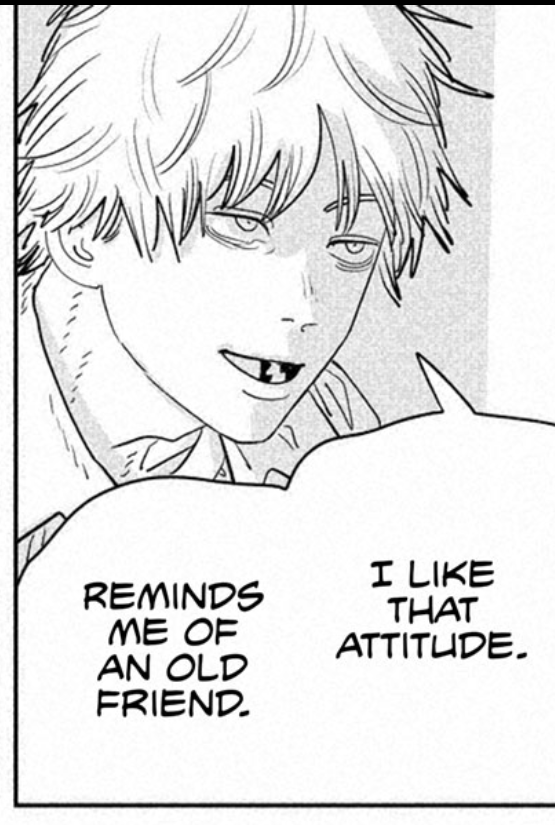
The general arc of the narrative is generally familiar to superhero fans (the gradual fulfillment of unrealized potential to save others), but the very grounded grittiness makes everything feel almost palpable: the emotions, the violence, the internal and external struggles. In this age of sleek and highly produced Marvel and DC films, They Call Me Jeeg stands out all the more. Enzo is a compelling main character precisely because he struggles with the idea of performing acts of good and questions if he’s even capable of it. In a sense, he reminds me of Denji from Chainsaw Man, and I mean that in a positive way. Whether to do the right thing even when it’s not immediately personally beneficial is a major question in the movie.
There are a few areas that might not play well with a current audience. I’m not particularly well read on the topic of mental health, but Alessia might come across as a bit stereotypical. That said, the film does show how her interpreting everything through Steel Jeeg is not just “random craziness” but her way of coping with past traumas. In terms of other issues, the flamboyant and unhinged nature of Fabio might reinforce the image of villainous gays, and there is some highly questionable consent. In regards to the former point, I think it might be trying to position Fabio as parallel to Queen Himika, the first major antagonist of Steel Jeeg. Also, it seems that the actor for Fabio, Luca Martinelli, is famous for portraying queer characters of all kinds. And as for the latter point, the act is not portrayed as a positive thing, but its presence can’t be ignored.
They Call Me Jeeg carries both a loftiness and a down-and-dirty feel that successfully Enzo’s struggles between the life he has led and the one he’s capable of. It’s not an anime movie in any traditional sense, but it takes a piece of pop culture and draws out a story based on the emotional connection Steel Jeeg has created in people. I wonder if we’ll ever see more like it.
Raven of the Inner Palace is an intriguing fantasy anime with shades of one of my favorite shows ever, Twelve Kingdoms, but mixed with the vibes of a series like Natsume’s Book of Friends or Mushi-shi. The main heroine, a girl known as the Raven Consort, works in the inner environment of a great palace, using her supernatural abilities to solve mysteries like an occult detective. Its combination of elements and its overall compelling nature make me think about various assorted aspects of the series, each of which I want to briefly expand upon. There’s no real organization to these thoughts.
Chinese Fantasy vs. European Fantasy
The world of Raven of the Inner Palace is not actually China, but the series takes a lot from Chinese culture and mythology. It’s certainly not alone in this regard (Twelve Kingdoms also falls in this category), but it stands out in my mind because of how much “Ancient China” is an aesthetic (especially in fiction coming out of Asia in general), and how much it parallels/contrasts with the default European look that typifies fantasy series of a certain kind. “China-esque” is a whole artistic motif that is less prominent in the West, but the fact that the Chinese Wuxia BL novels have been such a hit makes me wonder if Raven of the Inner Palace (itself originally a light novel series) might also get increasingly popular.
Girls Often Make for Better Audience Stand-In Characters
In terms of being vehicles for wish fulfillment, Raven of the Inner Palace isn’t an exception. It’s primarily geared towards female readers, with the heroine Liu Shouxue (or Ryuu Juusetsu, depending on if you prefer Chinese or Japanese pronunciation) being a cool and powerful sorcerer who gets involved both professionally and emotionally with a kind and handsome emperor. But even knowing this, Shouxue comes across as a well-conceived and well-written character who is actually enjoyable to witness.
I think one of the big differences is that the male counterparts in series geared towards guys tend to be either more insufferable or carry qualities that just make them less appealing overall. I can see why the emperor or anyone else would fall for Shouxue, and it helps render her as an individual who can carry her own weight in the narrative. On the other hand, so many light novel protagonists seem to just kind of be there, with a handful of quirks cobbled together into a makeshift personality.
Cool Eunuchs???
In Chinese culture and entertainment, eunuchs are often not portrayed in a favorable light. The very reason Chinese emperors used eunuchs is because their inability to procreate supposedly meant that they could care for the concubines without surreptitiously siring children with them, but they also became major parts of inner-palace politics as a result. Thus, eunuchs are traditionally portrayed as weirdly effeminate and conniving schemers who also smell.
However, Raven of the Inner Palace, eunuchs are some of the most awesome characters around. Unpleasant emasculation is interpreted as bishounen coolness, and I can’t help but think about whether this is the product of Chinese-inspired fantasy being processed through anime and manga aesthetic.
The Last Thing: Chekhov’s Chicken
There’s a chubby bird that lives with Shouxue that is mainly comic relief, but I had a feeling from the start that it’s important in some way. I call it “Chekhov’s Chiken,” and I just wanted to mention this nickname so that others use it as well.
I’ve been watching more non-anime films lately, partly with the intent of connecting to influential works of geek culture. Today’s menu: 1982’s Tron.
My general image of Tron is shaped by my earliest days online, back in the 1990s. Being into things like video games and anime, websites would often laud Tron as a work that shaped perceptions of what the inner world of computers looked like, but also really appealed to nerds even as it was less well received by many movie critics and didn’t perform astoundingly at the box office. The grids and games of “Deadly Discs” and what-not carried a virtual cyberpunk aesthetic, even if the film might not be technically cyberpunk.
Now that I’ve watched it, I can see exactly why some would love it to bits and others would find it shallow and impenetrable. It’s the kind of movie where in order to enjoy it, you need to be in love with the aesthetics or at least highly appreciative of them. The world they depict, highly reminiscent of the arcade games of the 1980s mixed with a hauntingly sterile environment, carries a certain specific attraction that current artists try to capture through things like vaporware. As someone who is into this sort of thing, experiencing Tron could feel like a religious experience, or like a David Lynch or Oshii Mamoru work. The fact that the universe of Tron has programs as living entities who speak of their programmers in hushed tones of reverence (while a rogue program forces its fellow brings to renounce their creators) certainly adds to it.
But it’s in that basking that Tron can drag. Moments meant for viewers to revel in the heretofore unseen computer graphics and the eerie world around them can take a long time—enough to make even me impatient. For anyone who is not so on-board with the aesthetics, whether because they were a 1980s critic for whom “computer world” held no value or because Tron most assuredly looks at least somewhat dated to a modern viewer, these moments can get in the way of the story rather than complement it.
To compare Tron to later works might be an exercise in foolishness (what was once novel is now commonplace), but the first thing that pops to my mind is the 1990s cartoon Reboot. In a similar manner, that show depicts a world inside the computer where programs go on their own adventures and have a strange relationship with a being on high (the “player”). And given that decades have passed since Reboot as well, it might be worth revisiting just to see how its depiction of the universe inside electronics holds up today.
So Tron is definitely a nerd film that valued things mainstream critics often would not. Today, it might seem too plain. But its look and feel can still resonate today, amidst the enduring revival of 80s nostalgia. I feel like I can understand the past and present just a bit more.
I normally don’t write about the death of anime and manga figures that often, preferring to save it for people I feel have influenced me in major ways. But here we are again with animator and character designer Kimura Takahiro, who passed away on March 5 from amyloidosis. He was 58.
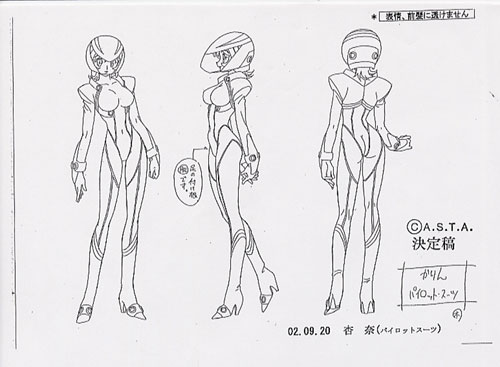
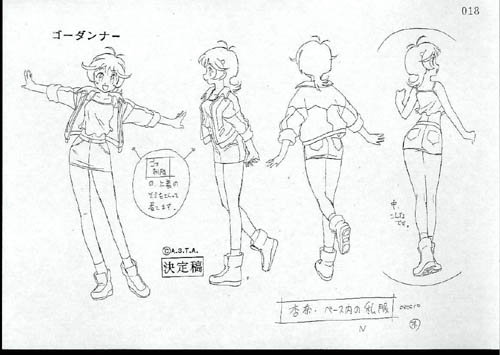
Kimura worked on series like Gaogaigar, Betterman, Godannar!!, Brigadoon: Marin & Melan, Gun x Sword, and Code Geass. As far as character designers go, he is one of my favorite ever. His style is distinct, and he would give his designs a real attractiveness and charisma. Are they drawn pretty horny? Certainly, but somehow that aesthetic feels both very grounded in the 90s but also timeless. His art touched so many of the series I love, and I still consider Aoi Anna from Godannar a Top 10 fave among female characters.
I never got to meet Kimura in person, and I think about this because of the fact that he was a guest at Sakura Con in 2006 and Anime NYC 2019. In both cases, circumstances made it impossible for me to see him, and now I wish I could have figured something out.
I found out the news of Kimura’s death thanks to a tweet from his wife, the artist RICCA—I guess this is how I learned the guy was married. Also, Kimura apparently loved to search his own name, and RICCA mentions that he’s probably watching from heaven and loving the attention.
And here’s a message from the director of Gaogaigar, Yonetani Yoshitomo, recalling the cosplay wedding party Kimura had back in the day. Apparently, Yonetani and Kimura not only sat next to each other at work, but also lived right next door from each other.
Thank you, Kimura Takahiro. You were one of my heroes.
It can sometimes be a struggle to explain why Chainsaw Man is so good, even to those who have become fans of it through the anime. It’s as if they’re eating a peanut butter cup and going, “Wow, this chocolate is good!”
But recent chapters of the manga have shown just how much Denji’s journey has changed him when we see Denji talk about Power, as well as his interactions with the character Nayuta.
MANGA SPOILER WARNING
Part 2 of Chainsaw Man has been fun, especially between having a new perspective character in Asa and the way Denji keeps trying to “accidentally” reveal that he’s Chainsaw Man. The guy is still pretty shallow and dim, but then he starts talking to Asa about a “good friend” he knew, and his words carry a tone both mournful and joyful. Over time, his bond with Power became genuine and full of caring, and the weight that comes with his current maturity can be felt.
Then, when you see him interact with Nayuta (the new Control Devil after Makima), that feeling only multiplies. Denji in Part 1 thinks mostly about himself—a product of his upbringing as an orphan surviving on scraps—but here, he has responsibilities as Nayuta’s guardian. From the little bits we can see of their relationship, he knows full well how dangerous the Control Devil can be, but behaves like a mix of dad and big brother in order to get Nayuta to listen. Hearing “I’ll only revert my transformation of this girl’s psyche into a dog’s if you let me eat ice cream every day” and replying with “Fine, but only if I get to eat some too” sums up how Denji negotiates with her. He’s no paragon of virtue, but he tries to make sure Nayuta does the right thing by treating her practically as a peer.
Given all of Denji’s trauma before and during the events of the manga, I see his attitude towards Nayuta to be a desire to not repeat the same heartbreaking mistakes, especially for Nayuta’s sake. Flawed as Denji is, including morally, he doesn’t want her to feel the pain of loneliness on the scale that he, and even Makima, knew all too well. Denji’s doing his best to set a good example, and seeing the odd contours of that attempt speaks to a profound personal growth.
The 3D debut of La+ Darknesss forever changed her image as a Virtual Youtuber. This Hololive member initially presented herself as a brattychuunibyou with legit singing and rapping skills, but seeing her with a full range of motion revealed that La+ is actually one of Hololive‘s best dancers. Since then, she’s had a handful of performances in her own streams and as a guest in others, and they’re consistently top-notch. Numerous clips and comments in multiple languages make note about how her routines just look different from most everyone else’s, with one Japanese viewer summing it up well: While many others (like Subaru and Matsuri) are great at idol dancing, La+ comes across as a great dancer.
Indeed, La+’s dancing has made such an impact on me that I’ve previously discussed her talent in two separate posts. And now here’s a third one.
Writing another essay might seem superfluous; I’d actually thought as such myself. I’m also such an absolute dance novice that I’m completely unqualified to comment on La+’s with any authority. But as I’ve waited for more expert analysis of her skills, none have really appeared—even reaction videos are exceedingly rare. So, I’ve found myself watching her concerts over and over, trying to figure out why her abilities shine through even to someone as ignorant of the art as myself.
Thus, I present my attempt to explain what I literally don’t have the proper vocabulary or understanding for, in the hopes that someone better than me can do a more proper job of it.
Crisp, Full-Body Expression
I think the first dance that really caught my attention was from La+’s 3D debut stream: her performance of her first original song, “Aien Jihen.” She actually came up with the choreography herself, and it is likely her most difficult dance to date—La+ even prefaced by saying she was only dancing to her pre-recorded vocal track.
The introduction starts off, and she strikes poses if every part of her is in perfect sync with the rest. Then the blow horns sound off, and La+ goes into the first verse with the most confident arm movements I’ve ever seen from a VTuber. As she pumps her body, there’s a combination of elegance and forcefulness (along with some solid camera work) that just leaves a lasting impression—and that’s before La+ gets into the more difficult parts of her choreo! She looks as if she’s able to carry movements all the way from beginning to end with a level of precision that makes everything feel both important and impactful.
That crispness can be seen across literally everything she does. Case in point, one place where it really stands out to me is in her duet cover of Ayase’s “Cynical Night Plan” with Amane Kanata, from her first-anniversary concert. At times, La+ performs more complicated moves than Kanata, but there are moments when they’re doing the same steps, and she just seems to have something extra. In the above clip, the duo spread their arms in and flick upwards in steps of three; while Kanata seems to move wrist-first, La+ looks as if she’s moving from the shoulders and elbows, creating a sharp ratcheting that matches the song well. I find my eyes being drawn to her as a result.
Control and Stability
The 3D debuts of every member of holoX culminated with a group stream in which they performed a cover of the song “Roki” by MikitoP. This is actually the moment that multiple VTuber clippers drew attention to La+’s dancing, and for good reason: she somehow manages to steal the spotlight without diminishing her genmates. There are just multiple moments where she dips or moves like an undulating wave, and it highlights just how much more control and stability she seems to have over her body—especially her core—compared to the rest of holoX and by extension nearly all of Hololive.
Her first-anniversary stream is also full of moments that demonstrate her incredible smoothness, but where that talent really comes to the fore is in “Dark Breath”: her second original song, and one that clearly draws inspiration from K-Pop in the vein of Blackpink. Not only does she demonstrate the aforementioned crisp movement when she turns in place like the hands of a clock, but the way she leans back as if about to fall over—only to then snake right back up—seems to speak to an impressive amount of training.
Idols and Dancing
With the impressive expressiveness and control of La+ on display, I’d like to return to that previously mentioned distinction between “idol dancing” and “dance dancing.” To that end, it’s important to describe what idol-style dance is in the first place with a brief and highly generalized history lesson.
Japanese idol culture emerged in the 1980s with singers such as Matsuda Seiko being presented as platonic ideals of what girls could be—this is the foundation of the seiso (pure and clean) idol concept that is the butt of so many jokes.
As dancing has become a bigger part of idol culture—such as with the famous AKB48—performances follow a similar trend, being less about making you go “wow” and more about making you go “aww” or “ooh.” In anime terms, this is the progression from Macrossand Creamy Mamito Love Live!
Idol dance is the angle most Hololive members take, and it allows for those with and without dance experience to look fairly good and to utilize their strengths. For example, Inugami Korone is known as one of the most physically fit members of Hololive. She doesn’t have the cleanest moves, but she makes up for it with sheer athleticism and stamina, famously pulling off a front walkover flip while also nursing a broken finger. In turn, Oozora Subaru may not be as athletic as Korone, but she brings a similar amount of boundless energy, a kind of joyful expressiveness that’s really endearing, and visible improvements over time that play into the narrative of watching idols as “works in progress.”
Two members who actually have significant backgrounds in idol performances are Natsuiro Matsuri and Takahashi Kiara (Hololive Myth’s best dancer), and it shows in how stable they look while in motion.
In the above clip, Matsuri’s “Hare Hare Yukai” dance from Suzumiya Haruhi stands in sharp contrast to Houshou Marine’s memorized but somewhat uncoordinated motions. Below, Kiara’s performance during her original song “Hinotori” straddles the line of idol dancing with a choreography that feels more daring, but she still has a certain staticness that is expected of idol fare, despite showing off a great deal of balance and flexibility.
In comparison, it’s clear that La+ doesn’t follow the same template as most others. Certainly, she’s not alone in that regard, with Kiara diversifying her style further with her later songs, and Moona Hoshinova giving a more diva-like performance for her original song “High Tide.” But I think what La+ seems to have an astounding level of consistency, which leads me to the third reason I think she’s such a mesmerizing dancer.
Versatility
On the subject of idol dance, there is something important to note: Just because it’s not La+’s typical style doesn’t mean she’s bad at it. In fact, she’s one of the best:
This clip is taken from the most-rewatched moment in her first-year anniversary concert: her idol outfit reveal, which leads into “Daishikyuu Daisuki,” a poppy and bubbly tune by the Japanese group Femme Fatale. It’s by far the most idol-esque number La+ has ever done, and she manages to bring her crispness and control to the performance in a way that elevates the whole thing. From how she twists and bends to the subtle positioning of her legs, she looks as impressive here as her other dances. For comparison, below is a video showing other Hololive members covering the same song. The difference is noticeable.
La+ is amazingly versatile, and nowhere is that more apparent than the fact that the very same first-anniversary concert also features La+ with Aki Rosenthal, who is indisputably one of Hololive’s best dancers. With a partner who is similarly skilled, La+ is able to pull off something that looks closer to a Broadway number or a dance recital at a major concert hall. The song, “One Room All That Jazz,” also has a completely different feel from everything else she’s done (quiet and jazzy, naturally). The number consists of nonstop highlights, but I think what really shows her (and Aki’s) power is the level of elegance displayed during the instrumental section that then transitions into a wildly contrasting tap dance. Aside from possibly Kiara and Moona, as well as potentially certain members who have yet to receive their 3D models, I’m doubtful there are many who could manage this so effectively.
Dark Lord of the Dance
When La+ Darknesss dances, she displays artistry and a plethora of skills that I think put her near, if not at the top of the list of best dancers in Hololive and Virtual Youtubers as a whole. She actually outdoes Miku Miku Dance models from the best 3D animators when it’s far more common for the opposite to be true.
La+ has the crisp, full-body expression that makes every movement feel razor-sharp. She has such stability and control that her moves seem somehow effortful and effortless at the same time. She has the versatility to apply her talents to different songs and genres of dance, and make all of them look good. It’s as if she combines the strengths of the most notable performers in Hololive, with the possible exception of Korone-level endurance and athletic prowess (though she might merely be lacking relative to the intensity of her choreographies). And all this isn’t even factoring her strong singing ability—something that makes her concerts that much more powerful. Truly, she’s my favorite dancer in Hololive and there is no close second.
Which is all to say, if you haven’t watched La+’s 3D concerts, you should really check them out.
I’ve long wondered what it would look like for a platform fighter to be the Smash Bros. of indie gaming.
Over a span of two decades, the Smash franchise has gone from a large intra-Nintendo crossover to a celebration of gaming as a whole. But as diverse as its roster has become, indie games have only barely begun to have a presence in Smash—and only really with titles that have been wildly influential, like Minecraft and Undertale.
Fraymakers is not the first to step up to the plate, but it’s definitely gotten the furthest. Itpromises a diverse roster that emphasizes not just the big titles that acknowledge how messy gaming history can be, and that it’s not all about the major names—at least not in the way one might normally think about.
I first heard about Fraymakers through its Kickstarter, and there are three reasons I ultimately decided to back the project. First, as mentioned, it’s something I’ve wanted to see for many years. Second, it’s being developed by McLeod Gaming, the folks behind Super Smash Flash, a fan-made Smash clone that has its fair share of supporters (though admittedly I’ve never played it). Third, one of the Assists in the game is the Newgrounds tank.
It’s that last point that I think really encapsulates the Fraymakers mindset: Newgrounds—which was built on interactive Flash games before the format became obsolete—was not always home to especially great games. However, they were a source of entertainment for many people. The imperfections of these amateur works made them all the more charming. Now it’s out on Steam early access with a handful of playable characters, and here I am trying out out.
I’ve said a lot about wanting to see an indie Smash, but truth be told, I’ve never played many indie games—no, not even the one you’re probably thinking of. But that’s also precisely why I love the concept. It reminds me of the first time I played a Super Robot Wars game; I barely knew certain robots, but discovering and learning more about them is part of the fun. I recognize Octodad and Orcane from Rivals of Aether, but do I know who CommanderVideo is? Nope. Now I’m curious, though, and I can sense the love and care in how they try to capture the essence of each character, each of whom feels noticeably different.
Of course, all the fun references in the world can only take a game so far, and it’s ultimately gameplay that’s king. In this regard, Fraymakers feels at home for anyone with a passing familiarity to Smash, leaning towards the famously long-lived and highly competitive Super Smash Bros. Melee, but with some quality-of-life improvements seen in other games. For example, wavedashing does exist in Fraymakers, but also controls can be customized to fit individual preference, much like in later Smash games. There are even control options, like “d-pad movement” and “double tap to dash,” meant to help people who might have issues with analog sticks. Overall, the game doesn’t stray terribly far from its inspiration in terms of mechanics, but there are a few changes such as replacing the air dodge with an air dash meant primarily for extending combos instead of as a defensive option.
One thing definitely in Fraymaker’s favor (say that three times fast) is that the act of fighting itself feels satisfying. Characters have a sense of weight and gravity, hits have impact, and the controls never feel mushy—issues I’ve had with some other platform fighters like Brawloutand even Multiversus. The only time I did have issues was when I was using a controller that was less than ideal; once I switched to something better, everything pretty much clicked.
In terms of tournament viability, I did go online to see what that’s like, and proceeded to get mauled by people who had a better idea of what they were doing. There is definitely combo potential and all that jazz, I can tell that much. While you can’t force a competitive scene to happen, the fact that Fraymakers feels inherently good to play probably bodes well for it.
Ultimately, I’m mostly eager to see more and more characters with relatively unique play styles. The current four demo characters have varying levels of unorthodox elements, with Octodad surprisingly being the most standard despite the purposeful awkwardness of his source game. There are already more characters announced, and I look forward to trying out all these cool faces I only know from watching other people stream.
The end of last month hit with some tough news as the world learned that Matsumoto Leiji had passed away at the age of 85. I’m still thinking about what an end of an era that is, and I’ve been spending time with his works. In addition to finally watching more Space Battleship Yamato 2202, I decided to revisit my favorite anime of all time, 1979’s Galaxy Express 999. It’s as gorgeous as the day I first saw it.
This month’s Kio Shimoku tweets are a real treat, as he’s been posting a bunch of old Genshiken art without any text, including at least one piece that’s never been released widely see above)! Genshiken was also trending on Japanese Twitter thanks to being spotlighted on a TV show!
On Duck King’s birthday, Kio mentions that he used to play Duck King. He could do Duck King’s command throws from jumping or out of a block, but never from standing.
In response to a Kim Kaphwan player, Kio refers to Kim as a “demon.” Another commenter replies with “Obenjo Baby!” (Toilet Baby)—a mishearing of one of Kim’s attacks. Kio jokingly says he never could figure out what Kim was saying, so he’ll accept this interpretation
Kio bought a Playstation 5 and Elden Ring despite a lack of free time. He also wants to try SEKIRO.
A long-time fan asks him to please not die without releasing any new works because he was playing nothing but Elden Ring. Kio says he’ll be careful. (Others in the thread do not mind encouraging him to play more.)
Kio accidentally misplaced some parts for a model kit. Manga artist Ikuhana Niiro and Kio talk about how this sort of thing makes them grateful for the quality of Gundam kits.
Kio showing the parts he’s built. When asked if this is a garage kit, he says that it’s technically an action figure kit Kaiyodo used to sell, but it’s functionally a garage kit.
Kio built one of the kits from the box in this older tweet: Knight of Gold from The Five Star Stories. It turns out one of the parts that went missing earlier is actually for this.
Kio learns that Genshiken is going to be on the TV show Sukkiri the next week, on the segment “Hot Comic.” He’s excited about this, and naturally receives a bunch of congratulations from fans (too many to list in this post).
I will make an exception for this one person who says they love Ogiue and Sue. Kio responds “OgiSue! ……Or Sue/Ogi?”
Kio has been so busy with Spotted Flower and other things since the end of last year that he hasn’t had time to work on his ero manga project. Even though it’s the same amount of work that he had when doing a monthly series, it somehow feels unsustainable these days.
Kio posts this old drawing of Madarame and Jin, to which someone responds that they wish they could see both Genshiken and Hashikko Ensemble continue. Kio thanks them, and says he’ll continue to work hard on Spotted Flower.
Another older drawing, but this time someone shows Kio that they have the hot-spring bathing Ohno bust that came free with an issue of Monthly Afternoon. Kio calls it a fine product.
An Ohno fan says they loved Ohno so much, they ended up with a girl like her, and that Kio is responsible for this “severe” crime. Kio jokingly says that’s unforgivable.
A fan mentions that he used to be embarrassed to say the word eroge before Genshiken. Kio replies that they actually checked if there was any issue using it for the anime, and the response was “none at all.”
Kio finished watching Sukkiri. He jokingly equates hearing all the old lines he wrote 20 years ago to humiliation fetish play, and says he’s happy to see it regarded as a story not merely about otaku but about human beings.
Kio feels the depiction of otaku in media has changed since then.
Director Mizuhima Tsutomu (Girls und Panzer, Shirobako) mentions working as staff on the first Genshiken anime and the Kujibiki Unbalance stuff in there. He also worked on the Kujibiki Unbalance light novel as part of the group called “Yokote Michiko and Her Pleasant Companions.” (Yokote Michiko is a writer who’s worked on Genshiken.)
Singer Atsumi Saori talks about how if it weren’t for Genshiken, she wouldn’t have wrote the ending theme for it, “Biidama.” She’s grateful to the series for that reason.
Kio thanks her back, and talks about how he likes the fact that the song contains both happiness and sadness.
Manga creator Shikizawa Kaya describes Genshiken as if actual real people were chiseled and dug out for it. Spotted Flower uses an even sharper chisel, and results in something very thrilling. Kio responds with gratitude.
A fan didn’t realize that the name Genshiken Nidaime is in part a reference to the second club president. I.e. Madarame. Kio responds that this was one thing he considered when naming the series.
A Japanese model, Ikeda Miyuki (aka Michopa-san) said something along the lines of it being weird to experience works from an era before the concept of otaku had proliferated in the culture. Kio agrees.
Kio thanks the host of “Hot Comic” on Sukkiri, actor Okayama Amane, as well as the staff for talking about Genshiken.
He then promotes Spotted Flower by calling it “What-if after-story, or maybe a spin-off, or maybe a parallel world—even the author isn’t sure.” He then shows the above drawing of Not-Sue and Not-Ogi and says “Characters like these show up.”
The cover of Genshiken Volume 8. Also, it turns out that my Twitter mutual and fellow Ogiue fan Noori actually went to the spot referenced in the cover! Kio thinks that’s probably the place?
Kio responds with a “Nice!” to someone telling him that they grew up wanting a senpai like Madarame, and eventually found one after they started working.
Ritsuko from Kujibiki Unbalance in a school swimsuit, from the back cover of Genshiken Volume 2. When shown a sealed figure of the same character, Kio points out that the figure in question is based on an illustration by Yagumo Kengou (who illustrated the light novels, and was later in charge of the designs for the anime).
A commenter mentions to Kio that the Midnight Blissed version of Hydron (Nool) from Capcom Fighting Evolution is clearly based on Ritsuko from Kujibiki Unbalance, and not only does Kio know that, but the artist who made those drawings has also made a Ritsuko doujinshi.
Title image from Genshiken Chapter 9. Kio notices that the colors seem different on Twitter compared to how they actually are, and one commenter replies that it might be because they need to be converted from CMYK to RGB for viewing on screens. Kio realizes this is the case and proceeds to repost many of the earlier illustrations.
Kio bought a plastic model of Super Sasadango Machine, a wrestler from the comedy wrestling company DDT. He’s a parody of Super Strong Machine from New Japan Pro-Wrestling.
Kio explaining about how the first anime had a special addition with the Kujibiki Unbalance OVAs, and this is what led to Director Mizushima helming the TV series.
The cover art of Genshiken Volume 3. Kio also replies to a commenter talking about how he thinks the quality of the old Genshiken trading figures is really high for how small they are.






 OGIUE MANIAX