Shounen series are often built on their appealing characters. Many feature a large cast so that each fan can find their favorites, with each character having a different aesthetic, personality, and power set. But some titles will subordinate other aspects of storytelling to prioritize “rule of cool” above all else: If something serves to make a work more awesome and thrill fans, logic and consistency can take a backseat.
One title that immediately comes to mind is Bleach, while the biggest example in recent memory has to be Jujutsu Kaisen.
The ridiculous popularity of Jujutsu Kaisen is undeniable. Putting aside the 11 wins last year at the 2024 Crunchyroll Anime Awards, it both sells well and occupies a huge chunk of the current fandom mindshare. It also attracts fans of all genders, ages, and walks of life. When I look at the characters, it feels like each one is meant to be the coolest person in the world to a specific type of audience. This isn’t inherently bad, but it’s such a major aspect of JJK that I think it can detract from the series.
Examples:
Gojo Satoru is like half the characters in Naruto because he has special eyes. In many ways, he’s Hatake Kakashi x2: Gojo doesn’t just cover one eye but both. His power set is based on infinity and negative infinity or something, and it’s appealing to people who want a guy who can have his hands in his pockets while warping reality and minds. Combine that with his svelte figure, pale complexion, and of course beautiful eyes, and you have someone who is effortlessly stylish.
Fushiguro Toji takes a different angle. Rather than have the biggest, baddest power, he’s basically an amoral, barrel-chested Occult Batman with the demonic equivalent of a utility belt. For those who value being the supposed underdog and winning through sheer hard work and tactical prowess, Toji is the epitome of a character they can get behind.
Nanami Kento is a straitlaced guy in a business suit who looks like an office worker—because that’s what he used to be. He’s stoic but kind, and his powers invoke the concept of overtime to power him up while also using math ratios to create weak points. For those who see a caring and reliable individual as the truest example of greatness, Nanami fits the bill to a tee.
Okkotsu Yuta is basically Ikari Shinji from Evangelion if he became strong and determined (and is literally voiced by Ogata Megumi).
In these cases and more, nearly every character in Jujutsu Kaisen feels like what you get if you asked 100 people to each write their own power fantasy + ideal partner. There’s a real thrill to it all, but I think it can come at the expense of a coherent narrative, often feeling like too many things are tacked onto each character without any sense of moderation.
I often see people praising different aspects of Jujutsu Kaisen. They’ll talk up the action. They’ll praise the characters. But I almost never see anyone praise the plot or the storytelling. “Rule of cool” turns into “ruled by cool,” as if the series is a highlight reel. That’s sometimes all it takes for a shounen series to succeed, but I do end up wanting more.
The new year is upon us, and one of the most stacked anime seasons in recent memory is upon us, particularly when it comes to sequels. I’m still trying to catch up on shows from 2025, so I hope I can keep up with everything.
Speaking of being behind on things to watch, I’m going to finally watch KPop Demon Hunters. I literally saw kids dressed up as the characters for Halloween, not to mention knowing more than a few who adore the film. Will I be drawn into the Kpop vortex as well?
And once again, a huge shout-out to my patreon members, especially the names below. I hope the new year has good things in store for you.
I would dedicate a post just to my entry, Lamprey Man, but there are rules against posting it elsewhere, so all you’re getting is a link.
Long-time readers of the blog might recall that I’ve long been a huge Mega Man fan, and even posted some Robot Master art/designs in the past. Even if I don’t get picked, just getting to enter is reward enough.
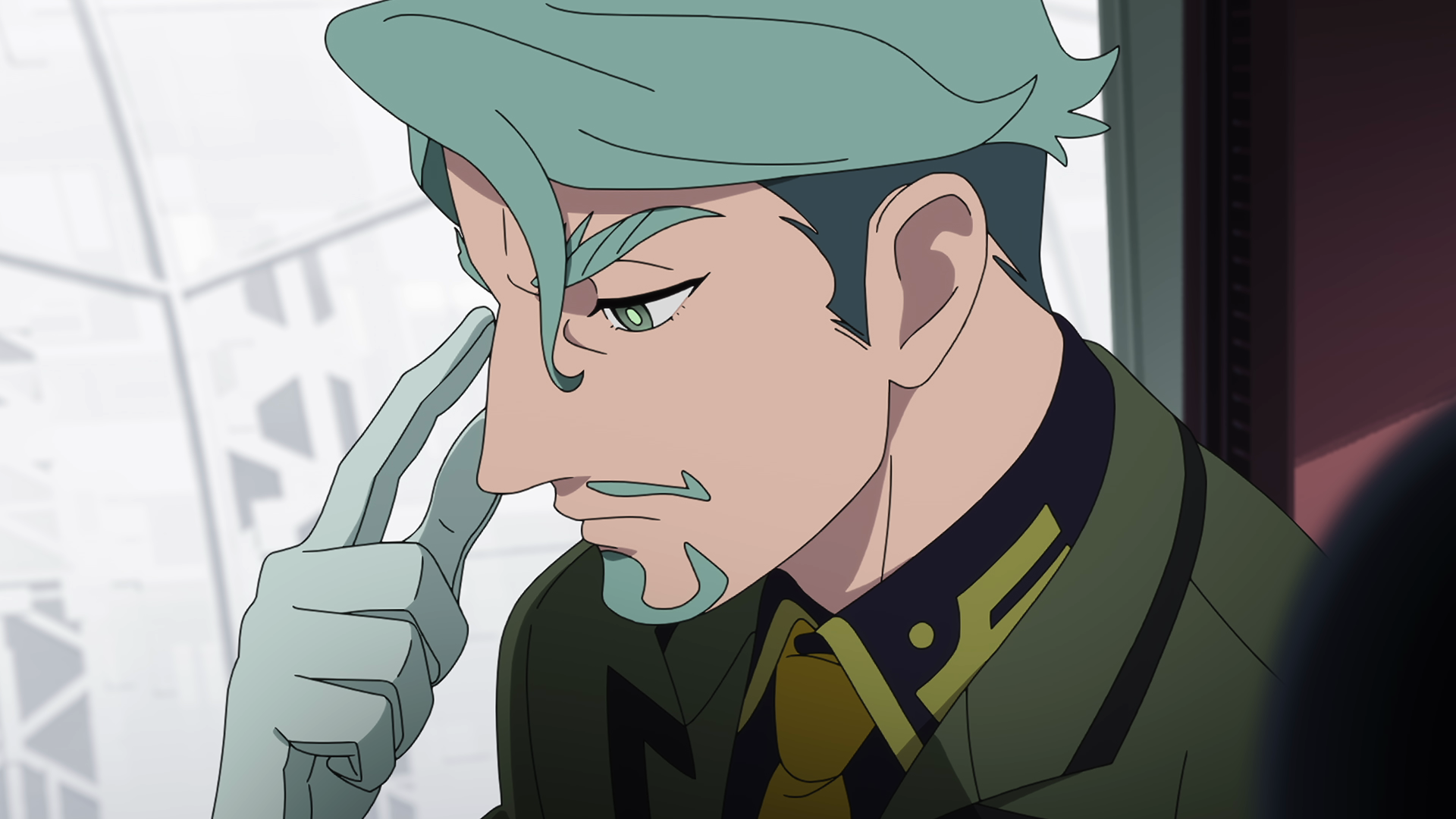
Who would have thought 2025 would turn a one-off Enemy of the Week from the original 1979 Mobile Suit Gundam into one of the coolest characters in anime in 2025? Challia Bull didn’t even get to appear in the Gundam movie trilogy! But now he’s seen in a whole new light as a force to be reckoned with, not only for his Newtype powers but also his shrewd mind and wealth of experience. Even his Mobile Armor, the Kikeroga in the GQuuuuuuX universe, became one of the most interesting mecha designs of the year.
Best Aspiring Scholar
Jolenta (Orb: On the Movements of the Earth)
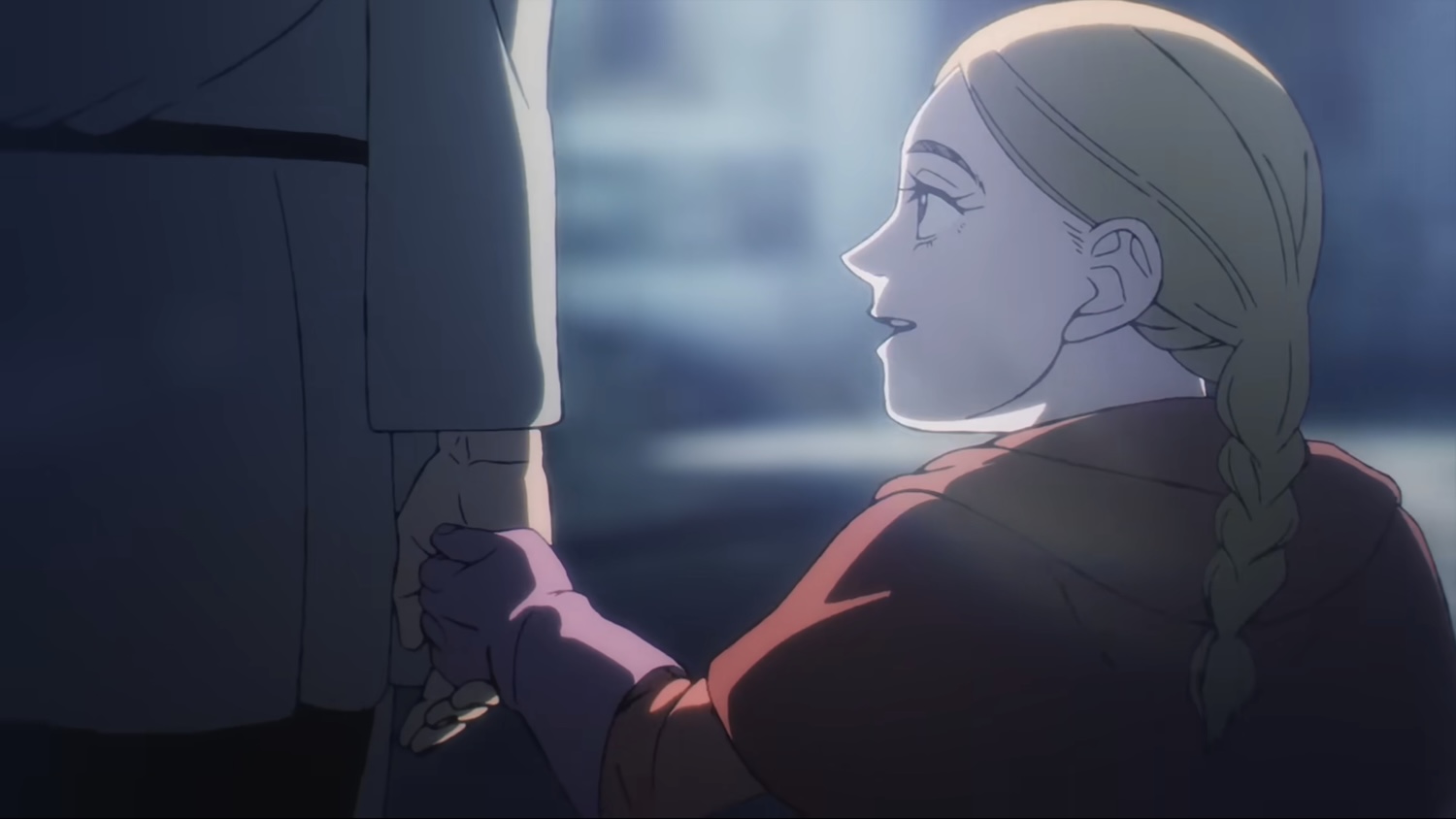
The entire cast of Orb: On the Movements of the Earth is worthy of praise as richly defined characters who reflect the complexity of humanity and its relationship with knowledge. I’ve decided to highlight Jolenta in particular, however, because of her added challenge of being an intelligent and inquisitive young girl who was stymied not only by the prevailing religious beliefs of her time but also the sexism that permeated even the sacred halls of scholarly thought and education. Yet she defies those barriers, puts her life and well-being on the line for the sake of expanding human knowledge, and becomes something unexpected yet far greater: a revolutionary figure.
Best Puppet Protagonist
Shāng Bú Huàn (Thunderbolt Fantasy)
They don’t make ’em quite like Shang Bu Huan, both literally and figuratively. Not only is he the face of a Taiwanese-Japanese co-production for a fantasy-genre puppet-theater series, but he also calls to mind the stoic and witty action heroes and manga protagonists of decades past like John Matrix and Kenshiro. I think what’s ultimately really impressive about the so-called Sword-Plundering Nemesis is that in a series full of charismatic and memorable characters like Thunderbolt Fantasy, Shang never got lost in the shuffle or any less intriguing. His humility and quiet confidence put him on par with the greats.
Best Dance Partners
Wanda Hikari and Kotani Kaboku (Wandance)
I’ve been following the Wandance manga for many years, so I was glad to see the series get an anime adaptation. While it hasn’t quite lived up to the manga in terms of its visuals, the incredible bond between Wanda and Kabo still shines through.
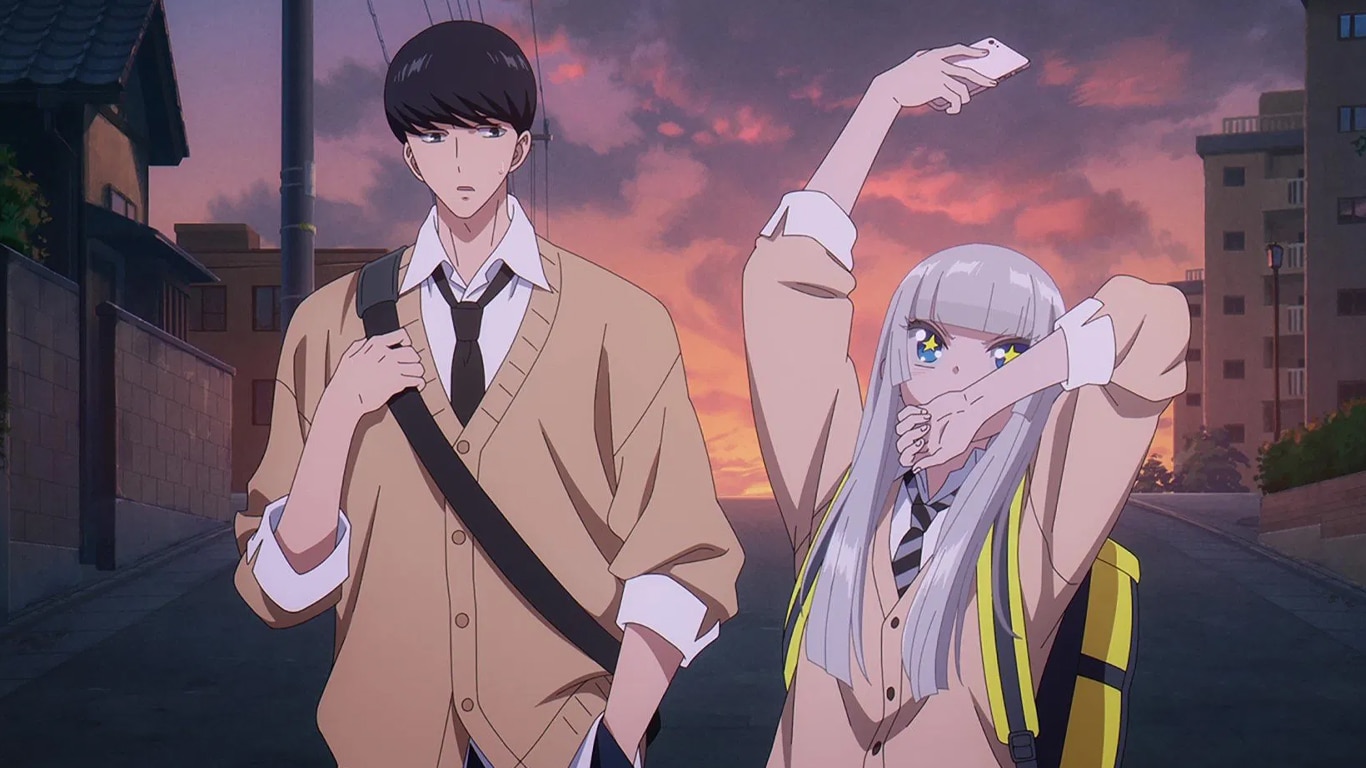
It’s a classic problem in anime romances that male-female pairings often don’t have that feeling of “equal partners and rivals” that is so common and exciting in BL or yuri pairings, but that’s exactly what we get from these two and their ever-growing love of dance. They’re sweet, wonderful, and supportive of each other…and when they’re together, they feel unstoppable.
Final Thoughts
I decided to mix things up this year and get rid of specific gendered categories in the hopes of not boxing myself or the characters in.
Overall, my picks don’t have a great deal in common, whether in personality or actions taken. If I had to pick a point of convergence, though, it would be that they all bring something unexpected to the table within their stories and worlds. They invite us to re-think how we view things, whether they have to do with revision and revival, science and education with respect to politics and cultural norms, what goes into making a main character, or expectations of what a “conventional” romance looks like.
I’ve been avidly watching VTuber concerts both online and offline this year, and I just wanted to give my brief thoughts on a variety of events from 2025 that I didn’t write about otherwise.
holoX and La+ Darknesss
holoX celebrated their anniversaries around the start of December. While we have no shortage of talented dancers now, there’s still something that stands out about La+ Darknesss’s dancing. In particular, I find the way she moves her arms to be very appealing, and I suspect it’s because she really knows how to move her arms from her torso/core, rather than from her hands.
I also have been listening to Takane Lui’s recently released album, Lapis Lazuli, and kind of regret not getting the physical release. And of course, I’m beyond excited for holoX’s first live venue concert next year!
Myth
I think Kiara can get lost in the shuffle a bit, but what I’ve come to realize is that she’s very good at fully leaning into a particular quality. Some talents are always going to be cool even when they’re trying to be cute, or vice versa, but Kiara can go 100% in being cute, cool, silly, sexy, etc. in a given situation. Her concerts throughout the year really showcased this facet. Her performance of Fake Heart with La+ is my personal highlight (see above), though I need to mention the fact that she brought Ame for a guest appearance.
I’m looking forward to seeing her March concert with Ina, who’s been improving in her own right.
Rewinding things back to the beginning of the year, I’m also glad that people showed up for Calliope Mori’s second solo live in Los Angeles, despite the deadly wildfires that were plaguing the area. Also, what I’m about to say isn’t new information at this point, but I’m glad she continues to carve out a unique sound for herself.
REM Kanashibari and Roca Rourin
I plan on writing about her more in the New Year, but REM has quickly become one of my favorite VTubers. In addition to some convention concert appearances, she also had her first online concert, called Sleepover Stage. I find myself listening to their cover of “Murder on the Dancefloor” with Roca Rourin regularly. The two sound really good as a duet, and I hope to hear more of them in the future.
Flow Glow
Flow Glow, a hip-hop and pop–themed generation from the hololive branch known as “DEV_IS,” made a hell of an impact with their 3D debuts. Isaki Riona’s probably the best in the entire company at singing and dancing. Mizumiya Su is small but has very powerful moves that literally give her the most air time in hololive when she leaps. Kikirara Vivi backs her cute movements with clear dance experience too. And while Rindo Chihaya and Koganei Niko appear to be not as skilled, they’re both quite athletic in their own right, keeping up with the others and even bringing a lot of strength in terms of singing. Even more than their direct predecessors ReGLOSS, they are focused heavily on music and performance, and it’s clear how much experience they have.
ReGLOSS
Speaking of ReGLOSS, they had their first live concert this month, titled Flashpoint! It’s a great achievement, and you can really tell how much they worked on it. Ririka and Raden have noticeably improved in their weakest areas (dancing and singing, respectively), and while straining her voice in some places, Kanade is still the vocal center of the whole group. Hajime’s solo performance was amazing, and felt like a reminder to everyone that she’s no less amazing a dancer compared to her juniors in Flow Glow.
I do miss Ao’s sound, though. She was the only one with a deeper voice, and it provided a nice contrast to the rest of the girls. During an encore performance of their first single, “Shunkan Heartbeat,” the current members of ReGLOSS actually left a silent space where Ao would usually sing for one line, as if to pay tribute to their friend.
Vroom Boom Duo (Baelz Hakos and Todoroki Hajime)
This year was also when we finally got to see the two marquee dancers of hololive join forces. Bae’s Non-Birthday celebration featured them doing the song “Gingiragin” together, which was followed by a performance of “Bareru” for Hajime’s own birthday. The latter was one of the most impressive things all year because they were filmed with one continuous shot. Creative camera cuts can cover up flubs, and here they were, showing the world that they didn’t need any editing magic.
HIMEHINA
Hime and Hina really make clear just how comfortable they are as veterans of this space. At their 7th Anniversary concert, their ability to just match up with each other and harmonize is maybe second to none. Also, I mistakenly thought La+ would be singing with them, but she simply did a bit of MCing.
Suisei and AZKi
As the two former members of the now-defunct INNK music group, these two have had a specific and unique connection. It almost goes without saying that these two are among the best singers in hololive and VTubing, but when they perform together, they just work so incredibly well. AZKi’s almost flawless execution and Suisei’s powerful voice balance each other out nicely. Suisei these days is more popular, but AZKi is so subtly and deceptively good to the point that I feel like it can be easy to gloss over her. However, once you pay attention, you realize how incredible she is.
Tokoyami Towa
Towa’s husky voice continues to stand out in a sea of many talented singers, and I hope she can
Nekomata Okayu
Seeing Okayu go in so many different directions is pretty amazing. It’s one thing to get a solo live as someone who started off dedicated to making music, but to transition into it and then get a second solo live is downright astounding.
Phase Invaders Wish
I was glad to see the first gen of Phase Invaders get a group concert because they were my introduction to Phase Connect. The resulting event, First Transmission, successfully highlighted each of their strengths, even when some were clearly more practiced hands at performance than others. Lumi’s singing ability and Ember’s dancing skills made themselves apparent, and Jelly came across as comfortable on stage despite being inexperienced. Dizzy is the least stage-inclined of the four, but she found an answer in the form of sensual choreographies that took advantage of her fitness and flexibility.
When talking about the mecha genre, omitting the merchandise component often tells an incomplete story. Most shows are historically also toy commercials, and sometimes decisions can be traced to bottom lines more than creative choices by a director or writer. But what about a giant robot that, for the most part, was only ever a toy?
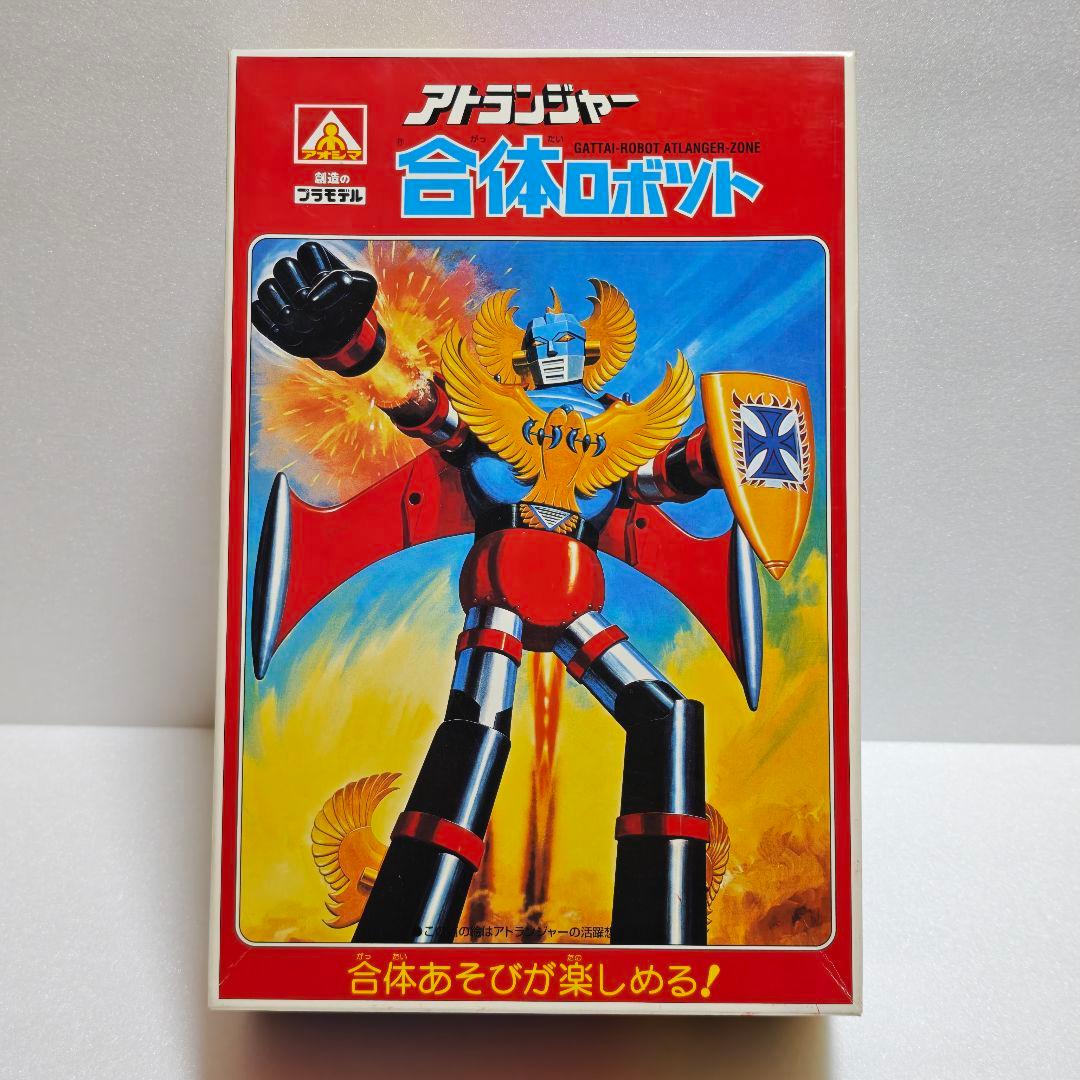
That’s the story of Gattai Robot Atlanger, a robot from the 1970s that didn’t have a cool and dramatic TV series to excite the imagination and endear itself to an audience, yet still managed to find success by looking cool, being affordable on a kid’s allowance, and having lots of playability. And my goal in writing this article is to provide an informative but not comprehensive look at Atlanger to help others who are curious.
Background
My interest in Atlanger (sometimes known as Atranger or Atlanjer) started a few years ago, though I don’t remember what was the catalyst that prompted me to look for more information. Nevertheless, I was intrigued by the idea that there exists a beloved hero from the golden age of super robots that often doesn’t get included because of an accompanying anime or tokusatsu title. However, when I tried to find English websites, articles, or anything that talked about it at length, I kept coming up short.
So I decided to give it a try myself. I’m nowhere close to being an expert on Atlanger, but I wanted to have something out there for English readers. I also wasn’t a kid in 1970s Japan and I haven’t collected any of the toys or other merch, so everything I know is just second- or even third-hand knowledge. Hopefully, those who lived through it, or are perhaps bigger toy and model enthusiasts, can hopefully expand on what I have here.
Before I get into things, a few notes:
First, a special thanks to long-time robot fandom comrade VF5SS for pointing me towards a book released in Japan all about the company behind Atlanger: Outsider Plamodel Art -Aoshima Bunka Kyozai Co.’s Unusual Power of Imagination-. It’s been the biggest boon in this endeavor, though it means there are likely a number of biases that come from working mainly off of one resource. I’m also grateful to the YouTube channels pokopokoMyTube, Robo-Labo J, and Arisa Honda for providing detailed looks at many of the products and releases I discuss below.
Second, a lot of name spellings below are unofficial and are my best guesses.
And last, while the word “successful” is used in various resources, it’s not entirely clear what defines a success. Outsider Plamodel Art gives some sales numbers, but they’re for Aoshima as a whole, and not just Atlanger by itself. At least in terms of overall profit, the company made hundreds of millions of yen throughout the 1970s and 1980s.
Aoshima and the Birth of Atlanger
Aoshima Bunka Kyozai began in 1918 by selling model kits of airplanes, and the company still makes model vehicles today, including for the racing manga and anime series Initial D. The story of Atlanger’s specifically, however, begins in 1975. The company had previously released a Mach Baron toy, but that year saw something of a super robot drought, with supercars being the hot new thing. In this environment, the staff at Aoshima decided they would take matters into their own hands, and the third-generation company president, Aoshima Masao, went about personally designing their first original robot.
According to its lore, Atlanger is a robot originating from Atlantis 8,000 years ago. Made up of the alloy orihalcon discovered by the scientist Picard (Pikaru), it was created by the Atlantean prophet Palou (Paruu) to defend the Earth against an invasion from the Dark Planet Gloustar (Ankoku Sei Guroosutaa). Atlanger is actually assembled by combining four vehicles: the Grand Tiger, the Mighty Bird, the Red Clipper, and the Target Carrier. When fully formed, it strikes an impressive figure thanks to its Mazinger-like aesthetic and its golden yellow highlights (especially its bird-like chest plate), as well as its four major armaments. Those would be the Broken Cutter sword, the Miracle Defender shield, launching fists called Rocket Clippers, and the flight-granting Red Wings.
This name and backstory were created after the robot was already designed, and some details appear to have changed or gotten fudged over time. For example, later versions would state that the pilots of Atlanger were fighting in the year 2500 CE after a second invasion from Gloustar. Aoshima would also introduce other allies like the robot Dryger; a Grendizer Spazer-style flying vehicle that can combine with Atlanger called the Tiger Shark; and the large battleship Gattai Kyokan Yamato, which has its own mecha on deck called Gattai Robot Musashi.
Atlanger within Mecha History
The fact that Atlanger is composed of vehicles that join together cleanly might feel pretty run-of-the-mill today, but it was no small deal at the time. 1975 was after Getter Robo introduced its “smash ’em together” gattai sequences but before Combattler V and its detailed combination that could be replicated nicely in toy form. While the Atlantean robot’s design wasn’t as elegant as Combattler’s, it was a bridge between the more logic-defying approach of the former and the more realistic one of the latter. And unlike Aoshima’s Mach Baron (which had a similar feature but which didn’t reflect its presentation in the Super Robot Mach Baron TV show), this was “official.” Atlanger was also fairly novel in its concept, being a robot with a fantasy angle similar to Reideen—which coincidentally came out the same year and is also from a lost continent (Mu).
This timing and relative originality is part of the reason Atlanger found a place in the toy market, but another major factor was price. Aoshima’s complete robots were sold in supermarkets and dagashi shops for 1,000 yen (around 2,115 yen adjusted for 2025 inflation), but individual vehicles were also available for 500 yen each. While kids might not be able to afford the whole thing, they could also settle for a part and maybe hope to get the rest down the line. The toys were also often cross-compatible, so you could take parts of one robot or vehicle and attach them to another. A battleship could have heads and arms sticking out of it. There were no rules, like seen in this absurdly and decidedly non-canon Ideon vehicle called the “Ideon Colossus.”
One of the reasons why the Aoshima kits like Atlanger (and Mach Baron before it) were so relatively inexpensive is that they were made entirely of plastic, unlike the diecast metal toys seen elsewhere that were often twice as expensive. In this sense, they could also be considered precursors to the Gunpla craze, with Gundam predecessors like Zambot 3 and Daitarn 3 even getting Aoshima versions. Atlanger and pals were also much simpler to construct.
Aoshima would later create smaller kits more proportionally in line with Gundam model kits. Although Aoshima’s kits were slightly more expensive (400 yen vs. 300 yen), they were also larger and more colorful.
Yet, despite (or perhaps because of) Atlanger’s affordability, it wasn’t immune to economic hardship. One curious thing about the aforementioned Broken Cutter is that the sword is so unusually short that it’s practically a dagger. Japan was still feeling the effects of the 1973 oil crisis, and this was one way to save on manufacturing expenses.
Keeping Up with the Times, or At Least Trying
Atlanger comes from a specific period of time, but as Aoshima’s flagship mecha, it has been updated in numerous ways over the decades.
When the company started making those smaller and vaguely Gunpla-esque kits through its Mini Gattai line, they introduced “New Atlanger” in 1981, a version with a more angular design and elements very reminiscent of Gundams and other real robots.
Years later, they would release Hattenkei (Successor) Robo Atlanger, which looks a lot more like a 90s Sunrise/Takara Brave Robot.
In 2012, Evolution Toy released a premium poseable figure in its Dynamite Action Series. One interesting feature of this toy is the fact that it comes with two versions of the Broken Cutter: a longer one and a shorter one. The former is more aesthetically pleasing and what you expect out of a super robot’s sword weapon. However, the latter has history, calling back to the original toy and its material circumstances. I find it funny and charming that the stubby Broken Cutter is so iconic for Atlanger that they bothered to include it as an accessory.
Most recently, 2021 would see a new model kit called the ACKS Gattai Atlanger, and it again made a move to modernize. However, while it indeed sported a “modern super robot” aesthetic, the real feature that spoke to the times was the fact that it came with an additional figure: a cute and sexy anime girl named Hotaka Atori, who wears an outfit reminiscent of Atlanger. This girl figure could even attach some of the robot parts to become a mecha musume of sorts.
Actually, There Is an Atlanger Anime, But…
I went through the majority of this article emphasizing that Atlanger-related narrative media wasn’t really a factor. That technically isn’t true, though there is an important caveat: It’s always been in service of the toys themselves to a degree that exceeds even the merchandise tie-ins of other mecha.
Aoshima’s products, including but not limited to Atlanger-related toys, were portrayed in manga form through the 1970s and 80s, first in children’s magazines by Shogakukan focused on individual elementary grade levels, and then in their own Aoshima Comics. However, these were primarily short promotional comics meant to show how cool the toys are, not unlike the pack-in comics that came with He-Man products in the US.
Then, in 2011, Aoshima released a one-episode 15-minute OVA titled Gattai Robot Atlanger at Winter Comic Market 81. Its purpose was to celebrate Atlanger, but also to coincide with a figure release: the 2012 Evolution Toy version mentioned above.
The plot sees Atlanger on the eve of a retirement ceremony after decades of service in the fight and eventual stalemate against the aliens from the Dark Planet. When a new attack occurs, it’s up to Asuka Ken (one of the old pilots of Atlanger) to jump in the cockpit once again. This time around, he’s joined by a group of young co-pilots who are skeptical about the effectiveness of this outdated machine, but the classic robot proves to still have what it takes in battle. At the climax, Atlanger showcases its ability to split into four vehicles, as well as its combined form with the Tiger Shark, to win the day—all while a theme song is performed by tokusatsu and anime music legend Kushida Akira (Gavan, Xabungle). Overall, the OVA is a love letter filled with nostalgia. There’s even a meta commercial for the old 1975 toy included!
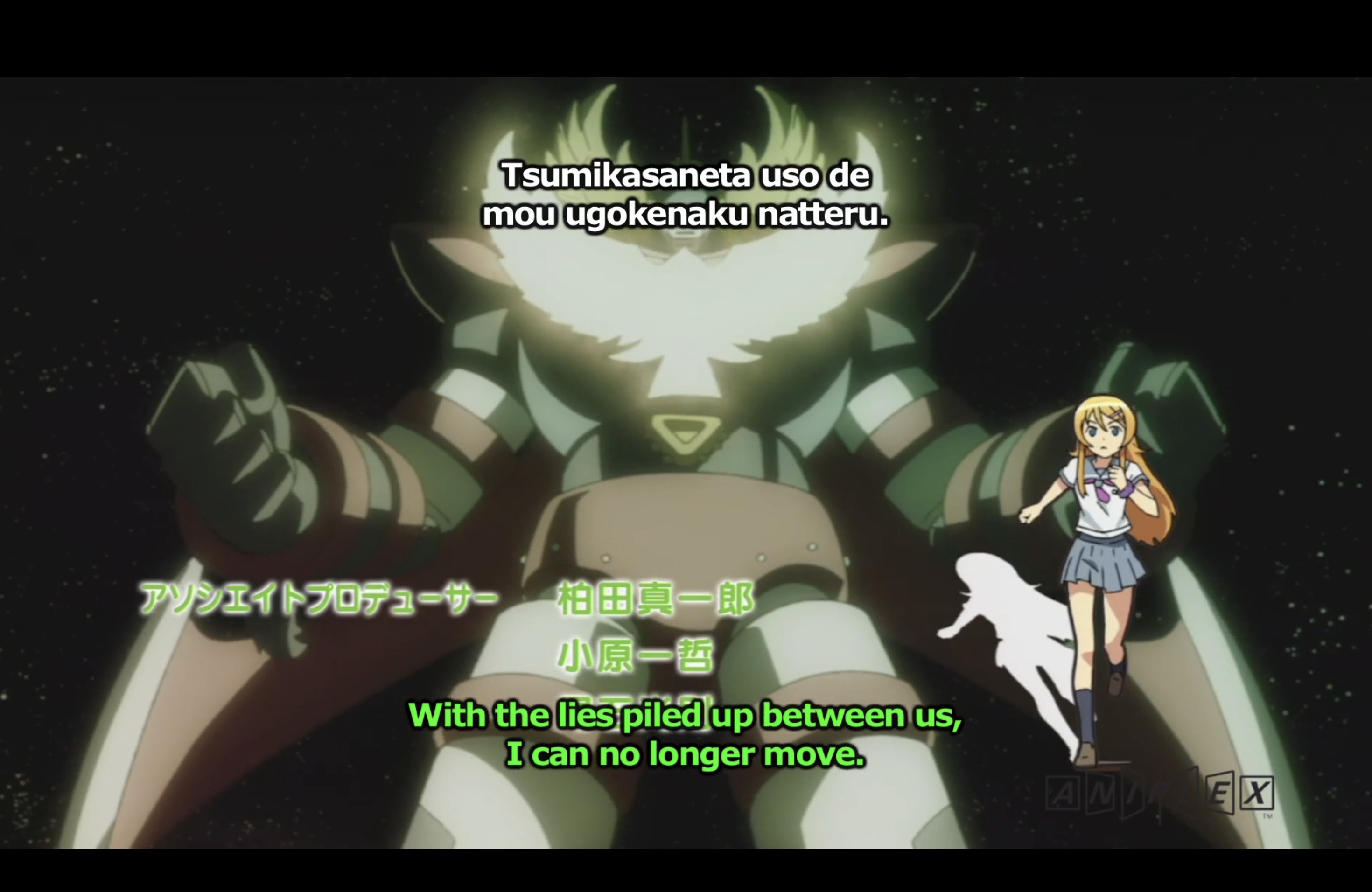
(Curiously, this wasn’t Atlanger’s first anime appearance. That would be, bizarrely enough, a very brief cameo in the opening of Episode 8 of Oreimo in 2010. The same studio, AIC, worked on both.)
An Atlanger manga then debuted digitally in 2021. GattaiAtlanger was published on the Dengeki Hobby website, coinciding with the ACKS model kit release and featuring multiple cute moe girls. In this version, Atlanger was a sentient guardian deity robot who fought against a threat to humanity called Shadow (not Gloustar). After a cataclysmic battle, the AI for Atlanger was sent back across time and space, meeting schoolgirl Hotaka Atori, who becomes capable of transforming magical girl–style and even summoning Atlanger in super robot form. This manga ran for six chapters, with the ACKS kit version of Gattai Robot Musashi also showing up.
In every case, the merch ends up being the true center of attention. Atlanger is simply a robot that happens to have an anime, rather than being an “anime robot.”
Concluding Thoughts
Gattai Robot Atlanger began as an affordable robot toy first and foremost, with any media tie-ins being ancillary at best, and somehow still found success. This spirit has persisted, defining the presence and memory of Atlanger over the course of four decades.
Without a defining anime/manga image at its core, the aesthetics of Atlanger shifted from one iteration to the next. The 70s super robot toy made way for the 80s real robot–adjacent model kit, and each later release saw more and more changes that fluctuated based on how much they were trying to call back to the original and how much they were trying to modernize.
But even in terms of tapping into nostalgia, Atlanger hasn’t been able to get what most other mecha receive when they’re made into premium robot figures. High-quality lines like Soul of Chogokin, Masterpiece Transformers, Master Grade (or higher) Gunpla, and even Evolution Toy’s Dynamic Action Series all try to close the gap and find a compromise between the physical objects, the visual media, imagination, and nostalgia. Alternative designs like Hajime Katoki mobile suit variations or the Amakuni Kizin line might re-think or exaggerate certain elements or proportions while staying pretty close to this idea. But because “fidelity to the original” isn’t really a factor, there is no “platonic ideal” to aim for in this case. In a way, that’s perfect for Atlanger.
But eschewing faithfulness to source material isn’t telling the whole story. In an essay in Outside Plamodel Art, quintessential mecha designer Okawara Kunio (Gundam, Zambot 3, many others) talks about the degree to which the “combining” aspects of Aoshima’s licensed toys paid little attention to how a robot was portrayed in their own media. This wasn’t uncommon at the time (see the original Clover Gundam toys), but Okawara believes that while other companies were always trying to create new ideas and gimmicks for toys, Aoshima was more about providing “teaching materials” that could foster learning in kids. To me, it sounds like Okawara is saying that Atlanger and company were like a halfway point between action figures and Legos, and thus occupied a unique position on store shelves.
So while Atlanger won’t ever have the powerful politics of Mobile Suit Gundam, the iconic status of Mazinger Z, the dozens of variations of Super Sentai, or the challenging introspection of Evangelion, it does emphasize something special: a primary devotion to play, where “messages” and “themes” are secondary to imaginative, hands-on exploration by the young and the young at heart.
I was convinced to check out the anime The Gorilla God’s Go-to Girl just based on the name. Turns out that it’s not just a silly alliterative title, but also an otome game–like reverse harem where a meek girl named Sophia Riller gets the powers of a gorilla and uses them to help others out and inadvertently romance the boys. It was originally a web novel, and the title translates to the much more straightforward The Lady Blessed by the Gorilla God Is Adored by the Royal Knight in Japanese.
The silliness is welcome, as is the somewhat incongruous setting. Watching Sophia swing around and subdue bad guys with great ape strength, as well as win the hearts of the knights are exactly the things I wanted to see out of Gorilla God. However, I have a problem with the show: It doesn’t go far enough. The content is about 40% gorilla antics at best when I think it should be 80%.
If they ever make a second season, I hope it’s able to lean into the premise even further, even if it means deviating from the source material a bit.
The twin VTubers of hololive, Fuwawa and Mococo, have talked before about their fondness for Genshiken. Last month, they revealed another connection to Kio Shimoku’s beloved story about a college anime and manga club.
FUWAMOCO dedicated an entire karaoke session to the otaku icon, voice actor, and moe singer Momoi Haruko. At the beginning of the stream, they explained that not only is Momoi their kami oshi—essentially their all-time favorite—but that she was the very person who introduced them to the idea of Japanese idols and the Akihabara subculture of the 2000s.
FUWAMOCO then kicked off their setlist with the opening to “Kujibiki Unbalance,” and afterwards revealed that they learned about Momoi and idol culture thanks to bonus footage on a Genshiken DVD, in which she (as part of the band Under17) performed the Kujibiki Unbalance opening! It was their first time seeing a crowd cheering together with glow sticks, and upon learning more about Momoi, connected to the fact that she was an anime fan who felt like she didn’t fit in. Essentially, she’s their idol in more than one sense of the word.
The twins proceeded further down Akiba memory lane with songs like “Mouse Chu Mouse,” “Tenbatsu Angel Rabbie,” and “Ai no Medicine.” That last one was the opening to Nurse-Witch Komugi-chan: Magikarte, a Soul Taker spin-off in which Momoi played the main heroine. FUWAMOCO even covered “NANIKA”—one of Momoi’s newest songs, for which the twins themselves contributed to the chorus!
Partway through, Momoi herself actually sent a superchat to FUWAMOCO, making this one of the most memorable karaoke streams ever. Seeing them thanked by the actual woman who inspired them to take this path, it felt like a true full-circle moment for the twin demon guard dogs of hololive. And to think: It was all because of Genshiken.
It’s remarkable to me how much Rental Family feels like a Japanese film.
That might come across as an obvious or perhaps even insulting comment, given that the director Hikaru is Japanese and the fact that it’s a Japanese/American co-production. However, to have a work with its aesthetics, storytelling, and subject matter get a wide theatrical release in the US—without being an import—feels special. A fair number of American films depict Japan or take place in them, but they don’t bring that same energy that one often finds in more contemplative dramas from Japan.
Rental Family is about Phillip Vanderploeg (played by Brendan Fraser), a white American who has been living in Japan for seven years while trying to find work as an actor. Despite some modest successes early on, it’s been a struggle filled with rejections. Desperate for anything, he ends up working for a “rental family” business, in which he and other employees play roles for clients to fulfill some need, be it emotional or pragmatic. Phillip’s acting skills help him with this line of work, but when he begins to genuinely make emotional connections on the job, it complicates matters for everyone involved in these charades.
Phillip’s boss mentions early on that mental health issues are stigmatized in Japan, and that people find other outlets to deal with these problems, of which the rental family business is one. The film does a good job of introducing this idea to a potentially unfamiliar audience without feeling unnaturally expository, and also while feeling like a criticism of a facet of Japanese society from an insider perspective. It’s a country somewhat infamous for having a lot of places to engage in parasocial behavior (host clubs, maid cafes, brothels, idol fandom), but it depicts this behavior in a fair and even-handed fashion that highlights its benefits as much as its downsides.
For example, while Phillip never engages in adult business for his job, he does visit a sex worker, and it’s notable how this is not portrayed in a negative light. While this is a relationship fueled by the exchange of money for services and where interaction is on a timer, they actually enjoy each other’s company and think highly of each other. At the same time, they’re both well aware of the “professional” nature of it all, and they leave it at that small bit of emotional reciprocation.
The notion of hiring someone to pretend to be your friend or husband (or even a journalist to make your aging thespian father still feel special) can sound pathetic. “What, you need to pay someone to spend time with you?” There are limits to playing “pretend,” and it can go terribly wrong. However, the film emphasizes the idea that this charade might very well be the catalyst that brings a person out of their rut or their crushing social situation, and a major part of Phillip’s development throughout Rental Family is the joy he experiences seeing his clients and/or their families healing psychological wounds to an extent. The job is both fulfilling and taxing on his mental wellbeing, and as the plot progresses, it can show how challenging it is for Phillip to navigate that balance.
I highly recommend Rental Family, but I actually want to end off by talking about a completely different example of a white actor who became a symbol of parasocial dynamics.
Billy Herrington was a gay porn actor who became a meme on the Japanese video site Nico Nico Douga before tragically passing away in a car accident. In one of his adult films, he wrestled another performer in a locker room while wearing very little clothing, and this became the endless subject of music videos, remixes, and parodies. There are many reasons this could be considered controversial or perhaps even offensive, but Billy became a minor celebrity in Japan as a result, and he even got to meet his fans at an offline event in Japan. While I don’t have a link to the original story anymore, I recall reports that some fans actually cried meeting Billy, and even told him how much he had helped them in darker times.
Ever since then, when I think about something being seen as silly or vapid, I wonder if it might still help someone overcome their own personal challenges. And while Phillip’s circumstances and means of changing people’s lives are not the same as Billy’s, I see his character (and the work of a rental family business) in a similar capacity, turning the “fake” into the “real enough.”
PS: At the very beginning of Rental Family, the film has a series of establishing shots of Tokyo, and in one of the shots is, I believe, an image of a Saber from Type Moon’s Fate franchise (though if you ask me which one, I wouldn’t be able to tell you). In Fate/stay night, the protagonist Shirou famously has a line saying, “Who says a copy can’t surpass the original?” in response to the notion that his replicated weapons are inherently inferior to his opponent, Gilgamesh the King of Heroes.
It might very well be a coincidence, but I can’t help wondering if that brief appearance was on purpose.
When I was a kid and Ronin Warriors first popped up on TV, it was one of the most incredible things I’d ever seen. The cool armor, the awesome villains, it just stood out against standard cartoon fare of the time. I even tried to make my own Ronin Warriors card game using a standard 52-card deck! No, the rules didn’t make any sense.
But while Ronin Warriors was something I look back on fondly, I’d never really experienced the Japanese version, Legendary Armor Samurai Troopers. The closest I got was the fact that I’ve often listened to the second opening, “Samurai Heart,” by the amazing Moriguchi Hiroko of Zeta Gundam and Gundam F91 fame. The original was always something I wanted to check out eventually, but I had it forever in the backlog.
What finally got me off my ass to watch it was the surprise announcement that Samurai Troopers is getting a sequel. While I’m sure Yoroi Shin Den Samurai Troopers won’t require viewers to remember everything about the first series, I figured it was as good a time as any to check this one off the list. And with a few decades between my first experience with Ronin Warriors and now, I wondered how I’d feel about this anime without the nostalgia goggles.
It’s Boys in Armor, All Right
The plot of Samurai Troopers focuses on five young warriors who can each summon a special armor with a unique elemental power. Together, they fight the evil forces of the Netherworld and their leader, the disembodied demon spirit Arago.
With its cadre of fiery yet angsty heroes clad in armor, the series is pretty much built in the image of Saint Seiya. I was completely unaware of that influence as a kid, but now, the fingerprints of Kurumada’s title (particularly its anime TV series) are all over Samurai Troopers. The series swings between its characters yelling as they launch attacks and give passionate speeches, and then having them yelling and moaning while being hit by enemy attacks—especially when it comes to protagonist Sanada Ryo of Wildfire. It’s a familiar combination of cool action stuff and dudes suffering handsomely, trying to appeal to both the kids eager to live vicariously through them and the older fans gushing over the characters and their popular voice actors, much like the whole multimedia experience we still see today.
A Focus on Style
I find Samurai Troopers to be good and fun, but not particularly great. The series is very spectacle-forward and reminiscent of soap operas in its dramatic moments: Plot twists, lore reveals, and even fight scenes are often more about vibes than trying to create a coherent narrative. Part of this definitely has to do with the fact that the series changed directors halfway through (over disagreements related to shilling of toys, apparently), but even without that, Samurai Troopers often seems to fly by the seat of its pants.
Some developments feel like they were probably planned to a degree, while others feel like course changes in the interest of playing to the audience and/or throwing stuff at the wall to see what sticks. The reveal about the true origins of the armors and the lead-up to the Inferno Armor that defines the first half are fairly coherent and overall entertaining, but the second half of the series comes across as stopping and starting every few episodes as if it’s in search of the right storyline to continue.
For example, after the midway point, they devote a handful of episodes to focusing individually on each Trooper. This is a welcome thing, but it’s strange to do this so late into the series. Also, for whatever reason, the episode focused on Shu of Stone is unusually well animated compared to the rest of the series. Elsewhere, Shu leans slightly more towards a comedic role, but here, he’s the biggest badass. And then, he and two other Troopers are kidnapped and basically out of sight for like six episodes as Samurai Troopers pushes Toma of Heaven into the spotlight with Ryo.
That said, the series has an undeniable cool factor that it keeps up well overall. When everything lines up, it does make for some really satisfying storytelling. The villainous warlord Shutendoji (known as Anubis in Ronin Warriors, where he was also the best) is probably the most compelling character in the entire anime because of his story arc and role as an honorable villain, and it often feels like later antagonists are attempts to replicate his success with mixed results. Incidentally, there’s a different character named Anubis in Ronin Warriors, which isn’t confusing at all.
Other Things
Speaking of Ronin Warriors, I was thinking about the localization choices, and while the changes are fairly substantial, they really are perfect for a 90s show for American kids. Arago’s Youja forces are subtitled in Samurai Troopers using phrases involving “Doom” or “Nether,” but it’s basically a combination of you (spirit, supernatural) and ja (demonic, malicious). However, in Ronin Warriors they’re Talpa’s Dynasty, which sounds awesome and menacing in English, even if the show definitely likes to conflate Japanese and Chinese culture. The fact that Samurai Troopers is basically Saint Seiya but hyper Japanese makes this funnier.
There are a couple recurring noncombatant characters whose main purpose is just to be the kid sidekick (Yamano Shu) and the female companion (Yagyu Nasté). Aside from some later plot relevance, they feel like audience inserts for their respective demographics. But Nasté is interesting to me because she’s kind of a prototype of Relena from Gundam Wing, which the first director Ikeda would go on to direct (and also leave). She’s not as forceful as Relena for most of the series, but in the sequel OVAs of Samurai Troopers, Nasté does get portrayed as a more strong-willed character.
Regarding the OVAs, they are much more fully out of the realm of toy commercial. The first two OVA series really pretty up the boys, double the angst, and give them lots of fashionable outfits to wear. The third, titled The Message, seems to interrogate the nature of trying to use evil objects to do good, but in a way that involves 50% existing footage and an overwhelming amount of narration by individual Troopers. While arguably being the most interesting in terms of ideas it presents, the format is a complete slog to get through.
Final Thoughts
Samurai Troopers occupies a kind of transitional space between different standard approaches to anime: It’s not primarily episodic, but it also isn’t committed to serialized long-form storytelling. The show wants to sell the toys to the boys and the guys to the ladies, but the ratio of its appeal shifts all over the place until the OVAs. All this is not so unusual; Samurai Troopers is hardly the first case of a work trying to find itself as it’s going, and even the Saint Seiya manga apparently went this way. However, I think this incongruity is more noticeable because the series doesn’t always follow through with its choices.
This might seem like I’m down on Samurai Troopers, but I’m really not. The way it clearly tries to navigate different audiences is fascinating to watch, and the excitement the title brings is undeniable. I think if I were a kid watching week to week, the way it swings between episodic and serial would make the latter parts feel that much more special.
So now I’m ready for the new show. It’ll be interesting to see how much the series leans into more recent tropes and how much it’ll try to match the feel of the original.




 OGIUE MANIAX