World Connectooo!: Ogiue Maniax Status Update for July 2023

July is a packed month. Not only do I have Otakon at the end of the year, but I’m also in LA this weekend for Anime Expo and to see today the first HololiveEN live concert, Connect the World! Back when tickets became available, I almost missed them entirely, but I got lucky that there was some available after the initial prerelease sale. I fully intend on writing a review of the experience.

I won’t be lying when I say that I’m nervous about attending large events after just getting over COVID a month ago, but I will be masked as much as humanly possible for my sake and others’. I hope everyone else treats others attending these big gatherings with respect and compassion.

Thank you to my Patreon subscribers at the start of this summer season!

General:

Ko Ransom

Diogo Prado

Alex

Dsy

Sue Hopkins fans:

Serxeid

Philippe Nguyen

Hato Kenjirou fans:

Elizabeth

Yajima Mirei fans:

Machi-Kurada

Blog highlights from June:

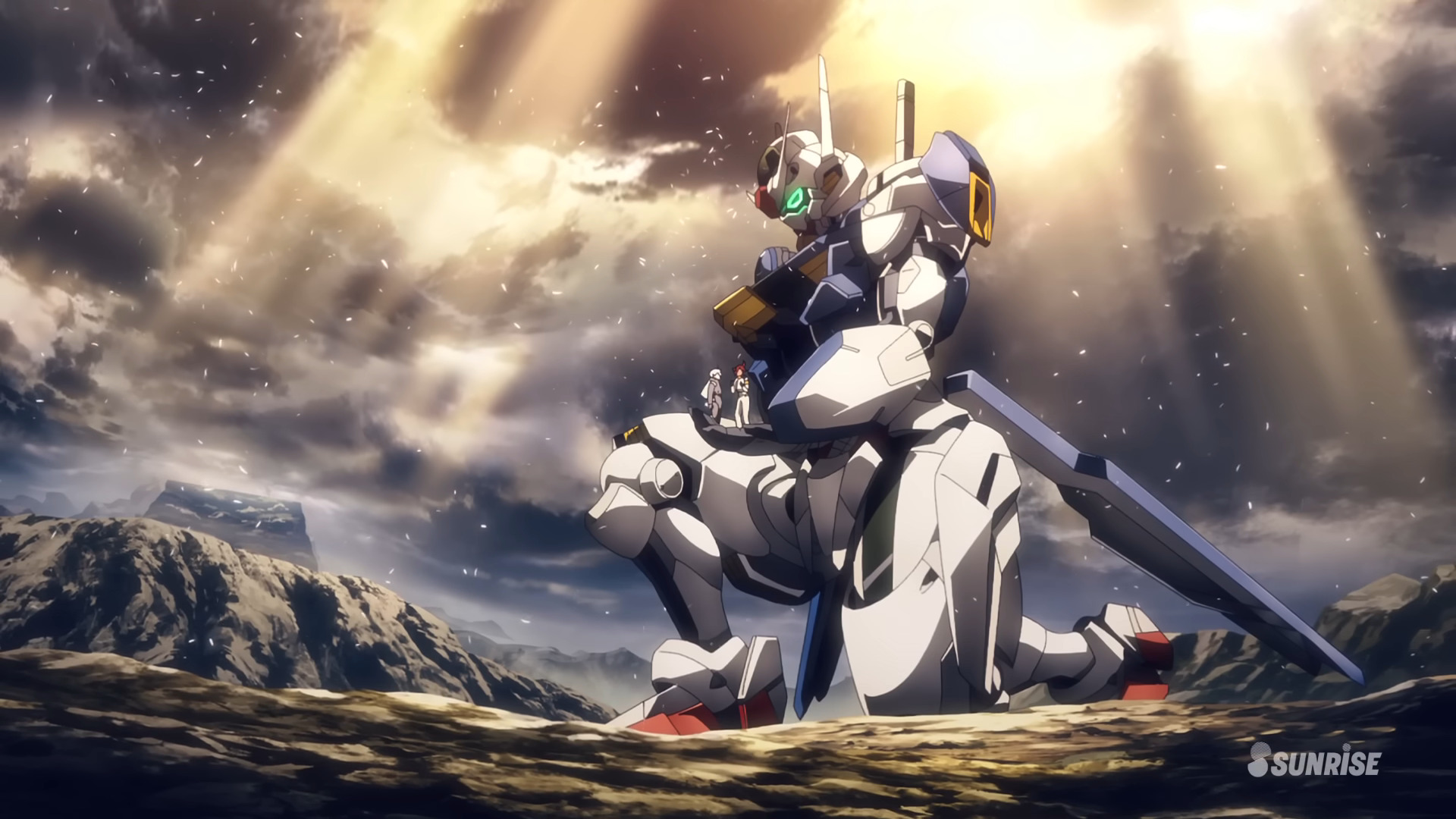
Larger than Life—Body Diversity in Gundam: The Witch from Mercury

My most popular post in a long time!

Anime Central 2023 Interview: Animator Tabata Hisayuki

I got to conduct an extensive interview with a 20-year veteran of the industry. Tabata goes into detail and working with the late, great Kimura Takahiro.

Anime Central 2023 Interview: Kubo Yurika and Ichinose Kana

Another interview, this time with the voices of Hanayo and Suletta—mostly focused on the visual novel A Light in the Dark.

Kio Shimoku

Kio’s been working on some risque material.

Apartment 507

Thoughts on Soaring Sky! Precure!

Closing

Anime Expo and Connect the World has many powerful individuals I’m interested in, but Otakon has Iwao Junko: the voice of Tomoyo from Cardcaptor Sakura. Here’s to hoping I can get an interview with her! It would be a dream come true.

Larger than Life—Body Diversity in Gundam: The Witch from Mercury

Fatphobia is still prevalent in Japanese culture. While there will be the occasional piece of media that pushes against it (sometimes in flawed, yet well-meaning ways), Japan is still predominantly a place where “thin” is in. That’s what makes the presence of fat characters in Gundam: The Witch from Mercury noteworthy; it features multiple characters who are portrayed not as comic relief or even fetishes, but as just cool and admirable in their own right.

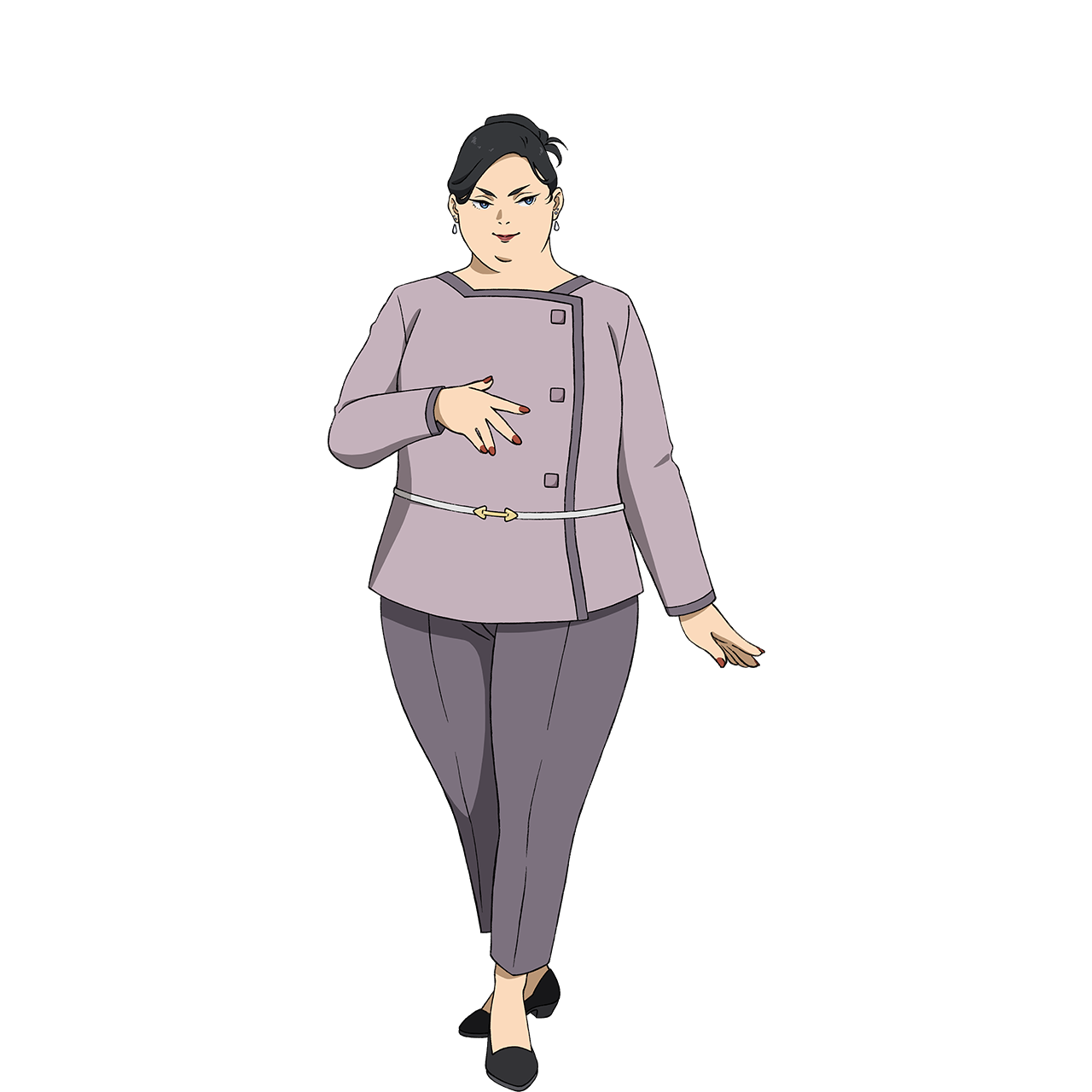
The first is Feng Jun, a woman who on the surface is a smuggler but is in actuality an agent of the Space Assembly League, a governing organization in The Witch from Mercury. She’s cunning, savvy, and capable in a rather matter-of-fact way, and her body is never shown as a hindrance. As the show progresses, it becomes clear that she cannot be pigeonholed based on any expectations.

The second is Kennanji Avery, a veteran mobile suit pilot renowned for his skills in battle. Seen as a thinner fellow in the prologue, by the time of the main story, he’s put on some pounds. But while he doesn’t look the same as he did in his younger days, his subordinates all look up to and trust him, and he’s shown to possess a sharp mind and an athletic body even if it doesn’t appear to be the case. He fights against the notion that “fat” automatically means “physically unfit.”

The third is Lilique Kadoka Lipati, a first-year and fellow classmate of the heroine, Suletta Mercury. Defying conventional thinking about girls her size, Lilique is described in her official profile as being quite popular. One episode even has another girl start trouble with Lilique because her boyfriend tried to ask Lilique out. It is incredibly rare to have even a few characters have a thing for the “fat girl,” let alone giving her a popular reputation for making people fall left and right. 

What’s notable about the way The Witch from Mercury portrays these three is that their size is neither diminished nor put out as some kind of circus display. While there’s certainly nothing wrong with being really into larger people, what this anime does is push their attractiveness beyond the boundaries of fetish territory. They’re all charismatic in different ways, as if they’re all unique people with different personalities and histories, even if they have similar body types. It’s ultimately about respect, and I can truly sense that from how Feng, Kennanji, and Lilique make such powerful impressions.

Anime Central 2023 Interview: Animator Tabata Hisayuki

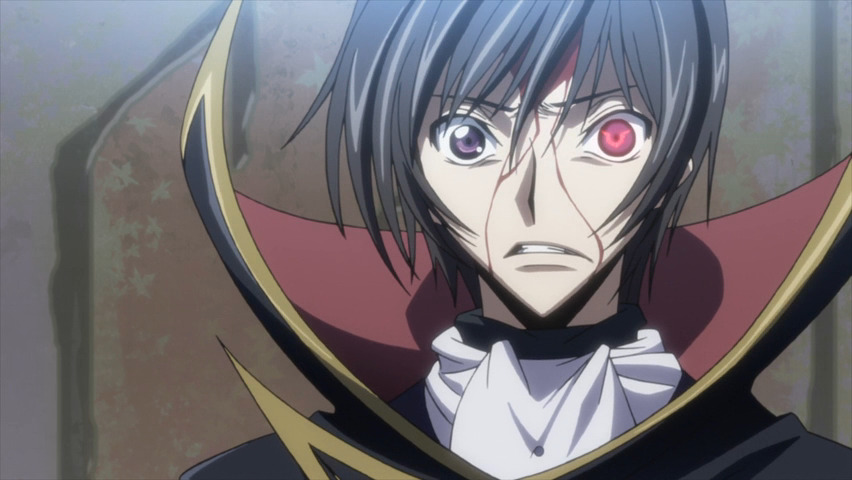
Lelouch from Code Geass, a slender and dark-haired teenager who has a single glowing eye. He's wearing a high collar cape, and blood is running down his face.

Tabata Hisayuki is an animator and animation director with over 20 years of experience in the industry. He’s best known for his work on anime from the Fate franchise, as well as being involved with works such as Code Geass. 

What was supposed to be a group press conference at Anime Central ended up being a one-on-one session, which resulted in a longer interview than is typical.

You started working in anime during a time when the transition from cel to digital, as well as to widescreen, was occurring. Looking back on that period, what do you think about it now?

For me, the digital media was actually much better. All the frustrations I had with analog were solved by digital. So I think I transitioned to digital much quicker than most other people.

In your career, you’ve worked on multiple projects involving Kimura Takahiro, namely Godannar, Code Geass, and Gun x Sword. In light of his unfortunate passing this year, do you have any stories you’d like to share about working with him?

Kimura was a lot older than me—by 12 years—so I wouldn’t dare say he was my friend, but during Code Geass, our desks were next to each other. He was always a great mentor to me, and he treated me as an equal colleague. As for all the memories I have of him, there’s so much that I don’t know if I have enough time to talk about it here.

As director on Warm, Winter Canada, did you work closely with the Canadian Tourism office? What kind of feedback did you receive from them?

Let’s start by saying that they brought me to all the cities they wanted me to promote, and that made a huge difference because it meant I could incorporate all my personal experiences into the videos. 

What do you think are your strengths as an artist and animator?

That would be my attitude towards work, but as for my actual professional skill, it would be subtle character acting. I like to put acting into my characters, and I do believe I am considered for those kinds of skills.

There aren’t too many animators who are interested or capable in animating characters according to their personalities rather than giving them flashy actions, so I think that’s a selling point that I can give.

What motivated you to get into animation? Were there any works that really influenced you and your style?

I’m just one Japanese otaku, and for my generation there is just one influential show, and that would be Evangelion and all the other GAINAX shows. So I think my influences are the same as everyone else’s. 

And this is hard to say in the open, but I got to know Kimura Takahiro’s work not through his anime, but rather one of his pervy games.

Between being an animator and an animation director, which do you prefer and why?

Animator. 

Are there any projects, specific scenes, or any other work that you feel most proud of?

I think all the projects went well, and it’s hard to single out just one. But when I talk to overseas fans, they always bring up Fate and Code Geass, so I’m glad I worked on those two shows.

Being an animator in Japan can be a very difficult and laborious job. What do you think would help make “animator” a more stable profession?

I do think the working conditions of animators have improved a lot over the years. But if you look at the general flow of capital, it’s structured so that those at the top of the rights pyramid take all the pay, and it’s up to us production staff to make it with the spillover from that. And so without fundamental change in that structure, I don’t think there would be any big change. Recently, though, I do think there have been some moves towards changing that structure as well.

For example, individual animators don’t have any rights, so even if I want to draw Tohsaka Rin or Saber for someone at Anime Central, I wouldn’t be able to do that. So even if it were just free permission for a visiting animator to draw these IP characters for the public, I think that would be a big change.

I deeply regret that even though I might be the character designer, I can’t draw these characters that I’ve designed, for fans at locations like Anime Central. If I draw these IP characters without permission, Crunchyroll might get upset.

Are there any upcoming projects of yours that you think anime fans should know about?

There was supposed to be a project I could have announced here. Two months ago, it was permanently canceled. 

But the next project I’m involved in should be due for announcement soon. I’m not the character designer for it, but I am the animation director, and it’s a wonderful project. So I look forward to it being announced.

It seems we have more time than expected, so would you be able to talk a bit more about your experiences with Kimura-sensei? 

As an example of how we got along, we would exchange New Year’s greeting cards every single year, and the sketches on both of our cards would be very pervy. Would you like to see some examples?

Sure! [Note: Image cannot be shown]

(Chuckles) I don’t have the ones that I drew for him.

In my fond memories, since I was in charge of all the pervy scenes in Code Geass, Kimura would be grinning and correcting all my work next to me. 

And since our desks were so close, I would always see how hard Kimura worked. I worried for his health, but he kept assuring me that he would be okay. He did leave us early, though. But I can’t forget all the times I had with him back then. I learned everything from him, and I enjoyed all those times. My attitude as an animator, as well as my skills, are things that I learned from him. 

I know that I’m going to just start tearing up if I recall everything in a proper perspective. 

You said you’re a fan of Evangelion. Did you have a favorite character?

Asuka. Back in the old theatrical release, the one from way back, the presale tickets would come with a prepaid telephone card. So I started lining up the day before to get it. 

So I really am a living example of an otaku who went professional.

Have you been able to see the recent Shin Evangelion movies? What did you think of them?

I think the remakes of Evangelion have really mellowed out. Personally, I’m much more fond of the original films that were much less mellow. 

You just described yourself as one of the otaku who became animators. I think lots of people have aspirations to become animators—what do you think made you different?

Well, I don’t know if I was “successful,” but I have been able to continue for 23 years, and I think it’s because I’ve been able to deliver and gain trust. This is the same as any professional job.

You mentioned being in charge of pervy scenes in Code Geass, and you also mentioned being very good at character acting. Are these two things related? 

Yes and no, but technically speaking, they’re not related because those are different modes. But I gave my best to both.

Before, you preferred being an animator over being an animation director. Why is that?

As an animator, I don’t have to correct other people’s works.

As you said, people know you for your work on the Fate franchise. What is it like seeing it get so big over the past 10 years?

I do feel lucky that I was involved with Fate. But after Fate/Stay night, Unlimited Blade Works, and Heaven’s Feel, I haven’t really followed up on the franchise, and I’m not so familiar with the game’s expansions such as the mobile game, but I just think it’s impressive. 

Do you have a favorite route of those three?

Of course, it’s Unlimited Blade Works.

Are there any anime or manga from growing up that you would like to see revived—maybe even with you work on it?

I’m not so interested in revivals, so I’m stuck for an answer.

Is there any anime genre that you haven’t been able to work on that you would love to be involved with?

There may not be so many missed opportunities for me, since if there was a genre I wanted in on, I could always find a friend to refer me to it.

Having noticed that Code Geass and Fate are popular among fans outside of Japan, have you noticed any differences in tastes and preferences between fans in Japan and fans abroad?

For me, the reaction from overseas fans is limited to occasions such as conventions. But seeing the fan reaction to Code Geass, I don’t see much of a difference. Is that something you feel is different?

I find Code Geass was popular both in Japan and especially here a few years ago. Fate has become very popular over time here as well, very much thanks to the mobile game, Fate/Grand Order

I do think it’s very much the same between Japan and overseas because the lack of time lag due to streaming has brought things to the same place. 

Speaking of that, there’s talk these days about how anime production is increasingly international, involving Crunchyroll, Netflix, etc. Do you feel there is a difference between creating anime that is primarily targeted towards Japan vs. a more international audience?

This is a question best answered by a producer rather than a line animator, but for the Japan-side shows, I do think there is much more emphasis or interest in hitting ratings for the Japanese domestic market. That might be the sole focus.

Do you have any advice for aspiring animators?

To become an animator in Japan?

Let’s say yes.

There are a lot of animators who work overseas remotely with Japanese studios, so borders are starting to become irrelevant. There are issues about this, but time will solve them. Perseverance is the best advice.

Was this remote work because of the pandemic or was it even before that?

This was a trend that started before the pandemic, but I do think the pandemic accelerated it.

Are there any other workflow/production changes that have occurred because of the pandemic as well?

Digital production has really accelerated. Or rather, COVID really separated it into two layers: the ones who succeeded in digitizing their workflows and those studios that were left behind.

You don’t have to name names, but for the studios left behind, does that mean that they are no longer around or that they’re just having to catch up?

This really depends on the sense of urgency at each studio. Some will be able to catch up and others will end up disappearing just because the digital workflow is inevitable, and everyone needs to move on.

Going back to the topic of Canada, the Tourism office sent you to a lot of places. Did you have a favorite?

I like cold climates, so there are plenty of favorites, but I ended up liking Yellowknife. Since this was my first visit to Canada, I liked it so much that I went there again two years later for a personal visit. For that trip, I revisited Vancouver, and also Banff and Yellowknife.

Did you grow up in a cold area in Japan?

Not at all!

Haha, I see. 

Thank you so much for the interview!

The Initial D Life Lesson I Often Think About

A black-and-white car racing a smaller red one.

There are many unforgettable moments in Initial D. Whether it’s seeing the AE86 drift for the first time, the battle against Ryousuke, the Trueno vs. Levin battles, or many other examples, the races are often showcases of protagonist Takumi’s unbelievable feats. But there’s one battle that often sticks out in my mind—the 86 vs. the Suzuki Cappuccino—because it features an important lesson about not limiting your self-perception.

Throughout Initial D, Takumi is very familiar with being the underdog due to his car being much older and weaker compared to his opponents’. The result is that he has to use various tricks (as well as an intuitive understanding of his own vehicle) to topple one Goliath after another. But the Cappuccino presents a different challenge: It’s actually smaller and lighter than the 86, and can pretty much outdo Takumi’s car at what it does best. Ultimately, though, Takumi prevails by doing what has not come naturally to him: He overpowers the weaker vehicle, even using the relatively larger frame of the 86 to block the Cappuccino.

Often, we think about our strengths in absolutes: “I’m good/bad/mediocre at this.” However, this is all relative. Maybe you’d normally be considered undersized, and have patterned your life to compensate for that, but there could be times where you are the bigger individual and have to use that to your advantage. If you get too stuck on who you’re “supposed” to be and how your actions should reflect your identity, you might lose out on opportunities. 

Avoiding tunnel vision about your own attributes is the key—all too fitting for a series about racing.

Anime Central 2023 Interview: Kubo Yurika and Ichinose Kana

Kubo Yurika and Ichinose Kana were at Anime Central 2023 to promote the game A Light in the Dark. Kubo is best known for her role as Koizumi Hanayo in Love Live!, and Ichinose is currently voicing Suletta Mercury, the protagonist of Mobile Suit Gundam: The Witch from Mercury.

I also had the chance to ask Kubo a question specific to Love Live! during her fan panel, which I’ve included at the end of the main interview. 

You’re both here at ACen because of your role in the visual novel A Light in the Dark. What are your most memorable experiences being involved with this game?

Do you mean during the recording?

Yes.

Kubo: Personally, this was during a time when I had a lot to record, so my sessions went on for days. My character, Mysterious Girl, goes through a lot of difficulties, and I was going through a lot of difficulties in my real life as well. So that overlapped, and I really realized that my life can be so easily influenced during recording.

Ichinose: By the roles you play?

Kubo: Yes, yes! That’s it! There’s a part of me that can be hurt quite a bit.

Ichinose: Oh, wow.

Kubo: So my memorable experiences tend to be about the heaviness of the role I play.

Ichinose: For me, I like playing serious roles, and my role hit close to heart. My character starts off very reticent, but there was still a lot of emoting involved. I do like heavy roles—and it was still heavy—but I still enjoyed it.

-How have your experiences playing characters such as Hanayo from Love Live! and Ichigo from Darling in the Franxx influenced the way you play your characters in A Light in the Dark

Kubo: So for both of us, it probably wouldn’t just be the roles from the works you mentioned—they’re all opportunities for growth as actors.

Ichinose: These are genuine experiences that contributed to our breadth of expression.

How do you balance playing multiple characters at once and keeping track of them?

Kubo: As for keeping track of roles, I think all the characters we’ve played so far don’t necessarily influence who we play in the moment. We just get into the role and do it that way. 

Ichinose: And since all the roles are so heavy in A Light in the Dark, resetting the emotions and getting out of the characters tends to be a bit of a challenge. But at the same time, as we work professionally, we do get ingrained with an emotional switch, or an acting switch, where we switch between roles in a very natural way.

Kubo: Yes, you’re right!

How does recording for a visual novel compare with other types of voice work?

Ichinose: Compared to recording for other types of video games, in other games, it’s more typical to do small voices like “Yah!”

Kubo: And “Hah!”

Ichinose: Yeah, and “Hah!” But there is a much longer story in A Light in the Dark, and there is much more emotional continuity. Depending on the recording, we might be skipping chapters, so we have to keep track of the continuity of the story and also the emotions. 

Kubo: But there are also branching paths in the story where the user has to select which path to go, and we have to be aware of the pre-selection emotion as well as which path the user chose.

Ichinose: One dialogue path would end, and then we’d have to do a different dialogue path.

Kubo: The level of tension and excitement would have to change too. It’s one of the fun and interesting things about the project.

Ichinose: I would sometimes have to rewind the emotional state of the character and go back. 

Kubo: Right!

That general area is part of the difficulty.

What inspired you to become a voice actor, or get into the entertainment industry in general?

Kubo: I started as a model for teenage magazines, but even before then, I was always watching anime and reading manga. While modeling, I was starting to wonder if I was unfit for the job, whereas I could always enjoy anime and manga. So I always wanted to take on the challenge if I ever had the opportunity. I did tell my agency that’s what I wanted to do, but they told me off that it’s not such an easy thing. They didn’t outright oppose what I said, but they said it’s not easy. When I got the role for Love Live!, though, that was my foot in the door into a career as a voice actor.

Ichinose: When I was in grade school and kindergarten I always loved watching anime, and my life more or less involved watching anime. I did play with my friends, but if I were at home, I’d spend pretty much the whole day watching anime. As I watched anime and loved anime, my thoughts turned towards the casts in anime, towards the voice actors, and eventually I would think that I wanted to get involved in the world of these various animation stories. So when it came time to choose a future for myself, one day I went to an open campus at a voice acting school, where I got my determination to go into voice acting.

For my three years in high school, I worked part-time and saved so I would have the money to pay for my own tuition for voice acting school. I paid my way through, did my audition, and got a role. So I started from a love of anime, refined my voice, and tried it out. I have the person who encouraged me to go into voice acting back then, who told me I had a chance, to thank.

Is there anything about your performances as Mysterious Girl and Young Girl that you’re especially proud of? 

Ichinose: What do you mean by that?

In the sense of, did you think you felt you had performed well, and can look back and say “I did a really good job here?”

Kubo: For my role as Mysterious GIrl, there is a portion in the latter half of the game where she goes through an emotional explosion. I played that part thinking, “I could lose my voice tomorrow, but I’ll go through with it.” If you can experience that scene, I would be very happy.

Ichinose: My character gets a little bit closer to the main character in the middle of the story, and she begins to open up and start talking about her dreams and aspirations—like how she would like to eat sweets. Normally, that’s the kind of dream that’s easily realizable if you have the money for it, but the girls grew up in an environment where that’s not something they could afford.

How is it to play a character who didn’t have something that was so ordinary and common for normal people? That was my challenge. So this is a serious title, but there are these small slivers of hope that my character can aspire towards, and if that kind of nuance gets through to the player, I think my acting will be rewarded.

Thank you!


Bonus: Extra Question for Kubo Yurika from the Previous Day’s Fan Panel

I love the way that you portray Hanayo’s shyness and intensity. My question is: I noticed your performance of her evolved over time; what changes did you make to playing Hanayo over the years?

Kubo: It wasn’t like I really changed my approach to Hanayo—more like as the years went by, Hanayo saw more of her character, experienced more, as did I personally. I think that’s kind of what led to that natural evolution. I wasn’t very conscious of it at all.

COVID the 19th—The First: Ogiue Maniax Status Update for June 2023

So it finally happened: I got my first case of COVID-19. I’ve been isolating, but I’ve also finally started testing negative, so I think I’m over the hump.

I already announced it on Twittter, but anyone who attended Anime Central 2023 should probably get themselves tested if they haven’t already. While I was masked for pretty much the entire time, I most likely had COVID-19 during the entire event, and it’’s better to be safe than sorry when it comes to the coronavirus.

While it might be too late for anyone who’s first reading about my COVID-19 case here, I still wanted to talk about it in this status update for a couple reasons. First, well, this is technically the “status of Ogiue Maniax.” Second, many people are afraid to admit they got COVID, worried that they might be looked upon negatively if they say anything, or feel a sense of guilt about how they put themselves and/or others in danger. But I think the more we publicly talk about it, the more we can reduce the stigma without downplaying the ongoing severity of the pandemic (it’s not just “the flu.”)

Thank you to my Patreon subscribers, who allow me to continue to indulge in this hobby of mine:

General:

Ko Ransom

Diogo Prado

Alex

Dsy

Sue Hopkins fans:

Serxeid

Philippe Nguyen

Hato Kenjirou fans:

Elizabeth

Yajima Mirei fans:

Machi-Kurada

Blog highlights from May:

I Finished Reading the Saint Seiya Manga

A nonstop rollercoaster of thrills, chills, and people throwing their bodies at perilous situations to protect their loved ones.

Oshi no Ko vs. Getter Robo: A Hot-Blooded Killer Combo

It’s like my fandom has gone full circle thanks to this meme.

La+ Darknesss, VTuber Birthdays, and the Ultimate Kayfabe

A look at the pecularity of the VTuber Birthday (and an excuse to celebrate La+ again!)

Kio Shimoku

Kio’s got some more good stuff.

Closing

While Anime Central wasn’t ideal due to my condition, I did manage to conduct some interviews, and I think they all turned out well. Expect to start seeing them soon!

Social Connection and Nostalgia for Web 1.0

I have a somewhat rose-colored view of an internet from long ago, and based on my observations on social media, I’m not alone. Increasingly, I see among those who surfed the superhighway a desire to return to a still-connected but far less prominently “public” presence. There’s no doubt a heavy element of nostalgia, but I also think there’s another major factor: a longing for a time when you could feel comfortable baring your insides, both the beautiful and ugly parts, without risking attack en masse.

The internet has thrived as a way to help people feel less alone without great risk to themselves. Whether it’s a political belief, favorite book, or even a sexual fetish, thinking you’re the only person in the world who’s into something can be an incredibly isolating experience. Are you “normal?” If not, are there at least others who can relate to you?

Now, especially as an entire generation has grown up being encouraged (or even forced) to make their online presence and extension of their offline identity, it’s not surprising that people would become afraid to share themselves. In a recent interview, game creator Sakurai Masahiro (of Smash Bros. and Kirby fame) said something related to this, which was summarized by a translator as follows:

“Sakurai talks about how he feels like today’s culture is too combative & people are quick to tear down things they don’t like in bad faith, and that the people putting things out into the world are vulnerable whereas the critics aren’t; he has little faith that things will change.”

I think it captures the environment well, along with the fear it creates.

Trying to find out if there were others like you carried a risk in the past too, of course. I’m under no illusions that those days weren’t filled with trolls or mean-spirited assholes eager to tear people down, but compared to today, the potential damage to the self feels less severe. Or at least, it would be localized.

There’s an anime called Jormungand about a mercenary team led by an arms dealer. In the final episode [Spoiler Warning], the main characters essentially cripple the ability to wage war from the other side of the world, though more regional conflicts are still very possible. In other words, while they can never truly stop war, they at least wanted to slow its spread. I think the desire to return to an era of web rings, bulletin boards, and extremely unpolished personal sites comes from a similar sentiment. Call it harm reduction, perhaps.

Evil Doppelgängers in Anime and Manga (or Lack Thereof)

The evil doppelgänger is a classic trope of fiction. I’m drawn to simple stories in this space, ones that revel in what makes these counterparts nefarious, and how this inevitably leads to cool battles where the original and the double are evenly matched. Oddly, though, I find that this trope isn’t terribly common in anime and manga.

While TVTropes is not the be-all end-all of how to understand fiction, it’s notable that the anime and manga sections for “Evil Doppelgänger” and “Mirror Universe” are barely populated. The Evil Knockoff has more entries, though they are typically not long-term characters. Goku Black is one such knockoff, as he‘s more of an imposter in the vein of the Fake Ultraman and the Fake Kamen Rider, as explained by Toriyama Akira himself. The Precure franchise has seen a number of examples, but they usually last for only a little while—a standalone movie (Yes! Pretty Cure 5, see image above), a couple episodes (Smile Precure), and only rarely as a recurring villain (Dark Precure in Heartcatch Precure!) Often, if they have any enduring popularity, it’s because their designs have an inherent appeal as the “bad versions.”

Contrast that with superhero stories where the trope is downright ubiquitous. For example, the Crime Syndicate from DC Comics has taken various forms, but they all amount to the same thing: crime-committing counterparts to the Justice League, who come from an alternate universe, and whose differences with the heroes range from interesting to hilarious. The original incarnation of the evil Superman—known as Ultraman—gained new superpowers whenever exposed to kryptonite. Owlman is Batman except his origins usually involve being a relative of Bruce Wayne who had to kill someone in cold blood. When I think about how different creators can interpret what it means to be the mirror version of an existing character, it makes me appreciate their imaginations. Sometimes, it’s Spock with a goatee, or the way Nega Duck prefers scheming and explosives to theatrics and Gas Guns.

I think the difference might have to do with the fact that superhero comics have historically been some combination of “goes on forever” + “willing to bring back villains who will come and go.” Even in the longest-running anime and manga that would potentially have evil clones in the first place, they usually don’t go beyond a single arc. I have to wonder if such characters might be less appealing to creators and consumers of anime and manga alike because they’re not working off the succinct characterizations that have classically defined superheroes. 

Or even if the heroes do have “dark opposites,” they’re usually characters unto themselves, like how Gaara parallels Naruto by having a similar yet more cruel past, or how Shigaraki in My Hero Academia is like the evil version of a superhero nerd to contrast with Deku. The fact that literal superhero-themed anime and manga don’t feature such characters feels significant. Why is there no One Kick Man or Lion and Hare?

Instead, where the doppelgängers seem to thrive is in the world of video games, to the point that trying to count them is pointless. Whether it’s Dark Link in the Zelda, Dark Harrier in Space Harrier 2, or Dark Samus in Metroid, the notion of having to fight an opponent with all your skills provides a nice thematic challenge—especially in the endgame. Perhaps their lack of story is a bit more forgiving there because the primary focus isn’t narrative but gameplay.

Naturally, it’s not like a story needs evil doppelgangers to be good or fun. That said, what I find interesting is that for all the diversity of tropes and stories that manga and anime contain, somehow this is the one that isn’t so common. In the meantime, I can appreciate where such villains show up.

The Roles of “Characters” in Mecha Anime

Sometimes, you’ll see a wild claim about mecha anime, like “Gurren-Lagann was the first giant robot series to be about characters instead of the robots,” and it inevitably results in a backlash—in this case, the counterargument that all giant robot shows are about characters. Whether the initial statement is made in jest or as a genuinely ignorant take by someone with only surface-level knowledge of mecha, it reflects certain assumptions about what the genre is like.

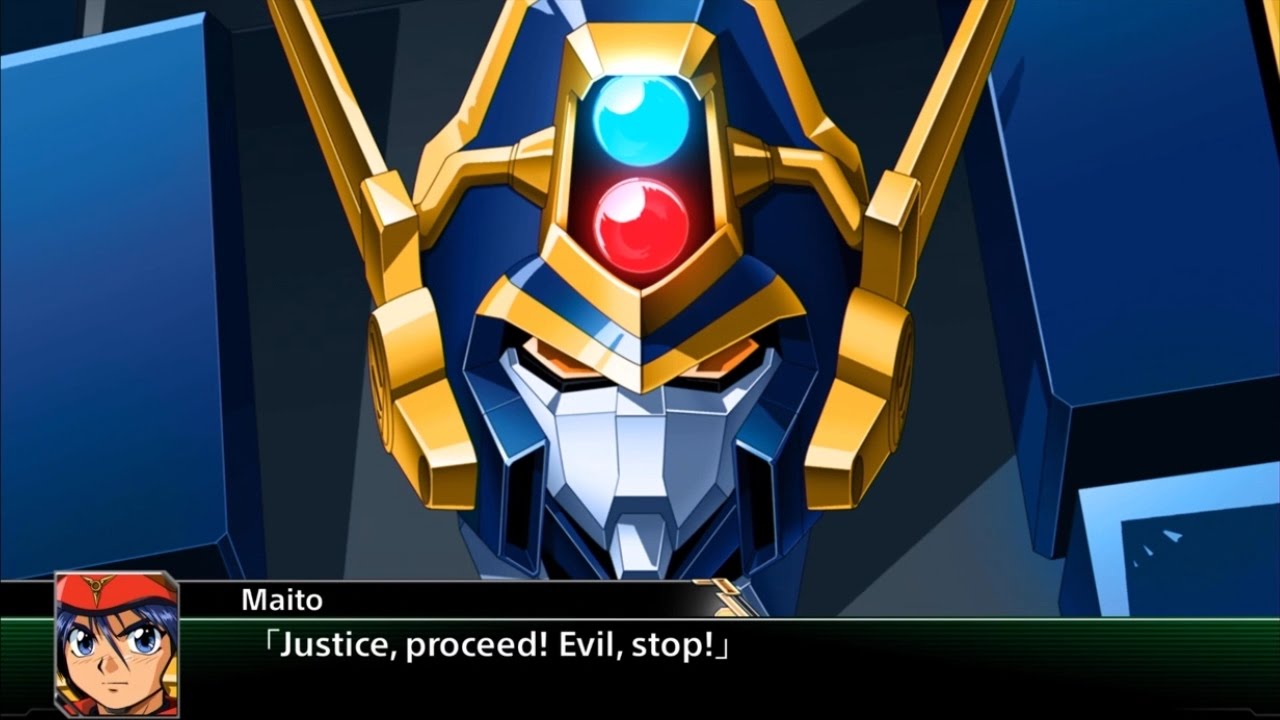
I got to thinking about the notion that giant robot anime are about characters because it’s both true and an oversimplification. Moreover, the extent to which the giant robots truly “matter,” as in they’re inexorable from the world being portrayed and can’t be substituted with some other form of weaponry, varies tremendously. But regardless of the true “necessity” of either characters or robots, I feel there is more to it than just one side mattering more than the other. Then a thought occurred to me, and I have a kind of nascent “universal theory of giant robot anime”:

Giant robot anime are about characters, but more specifically, the main character reflects some vital or fundamental aspect of the world and story around them. The giant robot, in turn, is reflective of the connection between the hero and that aspect.

If it seems nebulous, that’s because it is. I’m thinking less about trying to justify every mecha anime and more about how the giant robots end up being the avatar through which so many of these protagonists interact with their environment and their histories, and thus reveal more about the anime themselves. There’s also no denying the close ties between giant robots and merchandising, but this also ebbs and flows over the decades.

So let’s start with some of the big ones. 

Tetsujin 28 is about Shoutarou trying to make a difference in a post-WWII environment by being a boy detective who fights crime. Tetsujin 28 the robot was created to fight the Allies, but is now being used for an alternate purpose: as a guardian of peace instead of a weapon of war. 

Mazinger Z draws a direct lineage to this sort of thinking. While the power fantasy and toyetic appeal of the robot itself is undeniable, Kouji is presented with a question about human potential from the very beginning: If you had great power, would you be a god or a devil? The robot Mazinger Z is Kouji’s way of making a difference, and he chooses to use it as a protective guardian.

Mobile Suit Gundam, the first “real robot” anime that emphasized the robots as weapons of war over superhero-like entities, is about its hero Amuro’s repeated exposure to the trauma of war. It’s through the Gundam that he experiences physical and emotional scars alike, and the very fact that his piloting experience molds him into a capable soldier also contributes to the overall “horror of war” message that girders Gundam and its many sequels.

Superdimensional Fortress Macross has three main components: romance, music, and robot battles. Here, the titular robot is literally a flying city traveling through space, and it functions as both an urban cosmopolitan center and a massive superweapon. In other words, it is the very space in which all three pieces of Macross take place.

Neon Genesis Evangelion centers around Shinji and his fear of human connection, be it with his family, his peers, his friends, or anyone else. It is the anime of extreme introspection. Not only is the EVA-01 the means by which he tries (and fails) to find self-worth, but the EVA itself is revealed to house the soul of his dead mother. He is contained in a womb-like structure inside of his giant mom.

Tengen Toppa Gurren-Lagann is about Simon and the limitless potential of humanity to overcome all obstacles slowly but surely—and ultimately whether there should be limits on that power. Gurren-Lagann manifests this through numerous transformations fueled by human spirit that bring on exponential power growth.

The above examples are all heavy hitters, but what I also want to emphasize is that this applies to “lesser” titles as well.

Brave Police J-Decker is maybe the most on-the-nose example of the relationship between a boy and his giant robot, as the story is about how Yuuta’s friendship with the giant police robot Deckard is what teaches the latter to develop true emotions and a proper sense of justice and humanity. 

Shinkon Gattai Godannar is about the relationship between Gou and Anna as husband and wife and how their love affects both their personal and professional lives as co-pilots. Godannar Twin Drive is literally a combination of both robots.

Robotics;Notes focuses on Kaito and his relationship with Akiho’s giant robot club, and the blurring of augmented reality with actual reality. The creation of the Guntsuku-1 is basically an untenable goal that, through the events of the series, becomes effectively “real” through how Kaito and Akiho view and utilize it.

Trider G7 is about Watta, who’s both a little kid and the CEO of his own company, utilizing both the image of Japanese corporate culture of the early 1980s and the classic child desire of wanting to do what the adults do. The Trider G7 robot literally flies out of a playground, and has tons of cool and wacky weapons, but the fact that it’s Watta’s robot and the main way he gets his job done means it’s the conduit through which that “grown-up” fantasy takes place. 

Shinkansen Henkei Robo Shinkalion the Animation is literally a commercial for bullet train toys that are, in turn, advertising for the Shinkansen trains in Japan. Its main character, Hayato, is basically a Shinkansen fanatic who sees them as not only the coolest things ever but as reflecting a philosophy of unwavering service to the people of Japan. The Shinkalion robots, by extension, portray a more action-packed version of this concept.

Giant robot anime embody many values, from crass commercialism to dreams of being brave and strong, from anti-war sentiments to deep looks inward at the psychological scars of society. The mecha themselves are often not “characters” in and of themselves (with a number of notable exceptions), but they are symbolic of how the protagonists of these stories relate to what they experience. The hurdle for those who think that these anime are “more about robots” is that this particular way of communicating the characters’ stories requires an acceptance of giant robots as a storytelling device.

Ogiue Maniax at Anime Central 2023

This is just a short post to say that I will be attending my very first Anime Central this May 19–21! Motivated by my wish to see Kubo “Koizumi Hanayo” Yurika, I have decided to dip my toes into the Chicago area.

I am doing zero panels, and will be attending them instead. I’ll also be trying to conduct interviews with guests. I hope to have a good time regardless—and I plan to make that happen even if the con doesn’t go as planned by scarfing down many hot dogs and Italian beef sandwiches.

To all those attending, stay safe! COVID is definitely still a thing, and I encourage everyone to wear good-quality masks. You will most likely not see me without one.