An Acquired Taste that Gets Better with Time: Mysterious Joker

This is a sponsored post. If you’re interested in submitting topics for the blog, or just like my writing and want to be a patron of Ogiue Maniax, check out my Patreon.

mysteriousjoker-crunchyroll

A comedy/adventure anime about a phantom thief named Joker and his bumbling ninja sidekick, Mysterious Joker (also known simply as Joker) is one of many anime derived from the Arsene Lupin-inspired archetype. In fact, this anime began the same season as a similar show, Magic Kaito 1412, and in that respect Mysterious Joker initially seems pretty unremarkable. Having watched the first 4 episodes, however, I noticed a couple of interesting qualities about the series. First, is that the visual designs of its characters are really indicative of a comics lineage that gets somewhat less attention from English-speaking audiences. Second, is that each episode has been better than the last.

mysteriousjoker-v11

In regards to the first point, I’m referring to the fact that Mysterious Joker was originally a children’s manga. However, when people talk about a category like “shounen,” they probably think of series like Dragon Ball or Naruto. Though titles like those are indeed meant for children, what some might be unaware of is that there are also manga magazines dedicated to very young kids, and chief among them is Corocoro Comics. This is where Mysterious Joker (created by Takahashi Hideyasu) comes from, and while the anime cleans up the look of the characters for consistency (generally a must when it comes to commercial animation), their appearances remain colorful and bombastic, with large facial features beyond even what people typically expect out of anime.

The reason why I bring all of this up is that I think it can make Mysterious Joker feel somewhat odd even for those who are accustomed to most other anime that are targeted towards children, as many of them, even if they do not expect an additional older readership, have qualities that almost inherently appeal to a roughly 15-21 demographic. This is not to say that Mysterious Joker is a show that can only be enjoyed by kids, as it can be quite clever in how its mysteries and puzzles play out, and the humor is delightfully crass at times without being crude, but it requires on some level an acknowledgement that it is indeed a kids’ show and that older viewers may not even be taken into consideration. I think this can be a sticking point for a lot of anime fans, particularly teenagers, and so enjoying Mysterious Joker, even on a basic level, requires something of an open mind.

mysteriousjoker-diamond-small

As for the second point, which is about how the show seems to improve with every episode, it’s as if each episode adds a bit more to the story and the world of its characters, and motivates viewers to keep watching. I originally planned on stopping at Episode 3, but then saw the reveal of a female rival phantom thief, which compelled me to see how that turns out. Episode 4 doesn’t feature her in any way, but it explores the friendly rivalry between the main character and another established in the previous episode, and in doing so gives even more reason to keep watching.

mysteriousjoker-jokerspade-small

I looked up the staff for Mysterious Joker and was surprised to see that Satou Dai of all people is responsible for series composition. While I can’t say how much of the story’s quality comes from the original manga and how much Satou himself is a factor, from my experience with his work I think you get a true sense of what it means to be responsible for series composition. Eureka Seven, another show of his, builds upon itself beautifully. Satou wasn’t around for the sequel, Eureka Seven AO, and it really shows. A more relevant work of his Battle Spirits: Shounen Toppa Bashin, which took the humble card game anime and made it into something more substantial and mature, yet still very attuned to its young audience. While I’ve not seen all of Mysterious Joker, I would not be surprised if it ends up developing in a similar way.


My List of Top 10 Magical Girls

Check out the list on the Waku Waku +NYC Blog. And no, the answer isn’t “Ogiue in that Cardcaptor Sakura cosplay that one time.”

Top 10 rankings are surprisingly difficult for me, because I think I dwell on them longer than you’re supposed to. Still, I understand that they’re accessible and easily digestible content and a great way to introduce anime and manga fans to series they may not have heard of, so you’ll see my try them every so often.

Of course, feel free to leave comments, either here or at the link above.

In Case You Forgot, I Love Both Anime and Food

I’ve written a blog post on Sailor Moon as my introduction to Japanese food over at the Waku Waku +NYC official blog. If you’re interested in me waxing nostalgic and rambling the way you expect out of Ogiue Maniax, take a look.

Sailor Moon Was My Gateway into Japanese Food

I’ll be a regular contributor to the Waku Waku +NYC blog from now on, so look forward to more posts from there in the future. As always, I will continue to devote myself to Ogiue Maniax as well.

If you’re curious, Waku Waku +NYC is an upcoming Japanese popular culture festival from August 29-30 in Brooklyn, NY. Unlike a lot of anime cons and Japanese events, this one looks to more thoroughly integrate food with Japanese anime, games, fashion, etc. If you’re even half as interested in eating and watching anime as I am, it might be worth your while.

Hikigaya Hachiman: A Work in Progress

hachiman-season2

My Teen Romantic Comedy SNAFU was an anime that really impressed me in spite of its seemingly cliche-ridden premise, and whenever I talk to others who were skeptical of the show, I recount to them my surprise that I had found something worth watching.

On one occasion, I was chatting with some friends online and explaining how I really liked the fact that the series can get a little serious at times when it comes to criticizing elements of social interaction people take for granted and that the main character has a “loser” perspective that feels different from other similar light novel protagonists. One friend responded that this was exactly the sort of thing he hated about the show, and because it had been a while since I had seen SNAFU I wondered if my own experience was colored by my biases or some other factor.

Since then, a sequel series has started coming out for the Spring 2015 season. While I haven’t had the time to watch as much as I would like, re-visiting this anime through this second season (which by the way is for some reason animated by a completely different studio) has helped me to clarify why, in fact, I enjoy the surly adventures of Hikigaya Hachiman.

Hachiman has a very cynical personality, and his self-described strength is that his particular world view allows him to see problems and find solutions that the popular kids can’t. On the surface it appears as if Hachiman is the rebel who’s too cool for school written by someone who resented the popular students growing up (whether justified or not), but I believe that SNAFU portrays his character with far more consideration. For example, in the first two episodes, Hachiman clashes with a number of other characters, who basically criticize him for his methods, and I think it’s very important that he appears to be affected by their words. Hachiman isn’t the invincible outcast, and he at times unwillingly questions his own mindset. His cynicism is as much a weakness as it is a strength, and it leaves open the opportunity for him to grow and change, or at least acknowledge when he needs the help of others who simply see things differently.

The fact that the series premise is that Hachiman, Yui, and Yukino solve other students’ problems lends itself to also reflecting and showcasing the issues of the main characters themselves. As the series goes along, I think that this quality in SNAFU will become even more important.

If you liked this post, consider becoming a sponsor of Ogiue Maniax through Patreon. You can get rewards for higher pledges, including a chance to request topics for the blog.

New Requests and (Writing) Desires Fulfilled: Ogiue Maniax Status Update for May 2015

This month I’m happy to say that the Ogiue Maniax Patreon is currently at almost $100, thanks to my generous patrons both new and old. Even getting close to the three-digit mark is kind of like a dream, and I hope to continue to provide interesting content for my readers.

This past month, I’ve gotten around to making a number of posts I’ve been planning for a while, most notably my review of the fujoshi friendship manga Fujoshissu!, my first look at DLC character Mewtwo in Super Smash Bros. for Nintendo 3DS & Wii U, and my review of the anime about anime, SHIROBAKO. In the case Fujoshissu! I’d been anticipating writing the review of years.

This month’s special Patreon sponsors are:

Ko Ransom

Alex

Johnny Trovato

anonymous (not Capital A “Anonymous”)

One of my contributors wanted to remain anonymous, but because they fulfilled the “Decide My Fate” tier, I wanted to mention them as I am writing a special post this month. As always, if you’d like to request a topic for me to write, you can pledge $30 or more to my Patreon.  If you don’t want to or can’t contribute that much every month, you can always change the amount to something lower, or force a maximum limit on how much you give.

For this month, I’d like to ask what people want to see out of my rewards and goals. I understand that my goals and sponsor rewards aren’t exactly world-shattering, and while I’m certainly not willing to sell myself out, I’m curious as to what people would like to see. Perhaps Skype conversations once a week on any topic? Post requests with unique twists? Drawing requests? I’m not sure if I’d be able to do everything, but I’d like to at least offer more.

In terms of milestones, I’m open to suggestions. How would people feel about a tongue-in-cheek negative review of Genshiken and/or the character review of Ogiue?

The Versatility of the Kyoani Face

Though a fair number of anime studios can be characterized to some extent by the types of shows they put out, the only current ones I can think of that have a house “look” on a character design level are P.A. Works (SHIROBAKO, Hanasaku Iroha) and Kyoto Animation (Suzumiya Haruhi, Tamako Market). I think this is especially noticeable with the latter studio, as the “Kyoani Face” is instantly recognizable, and is even sometimes imitated, such as with Sound of the Sky.

While watching the first episode of Kyoto Animation’s newest work, Sound! Euphonium, it occurred to me how versatile the Kyoani face is to a certain extent. It’s not so much that Sound! Euphonium alone that made me realize this, but rather that it was a slow culmination of watching their shows over the years. Namely, i find that their iconic face can be fitted, or perhaps was slowly adapted over the years, to match not only a variety of body types but also a range of character designs from cutesy caricature to more realistic proportions.

freeguys

The most obvious example of this would probably be the Free! character designs, shown above, but I think you can see it in their more historical tendency to make stories about cute high school girls. All of these characters are supposed to be roughly the same age, and yet while they share that signature look in terms of their faces, their bodies are all noticeably different. I’ve even made all of the characters the same “height” in order to emphasize this.

kyoanigirls-comparison-small

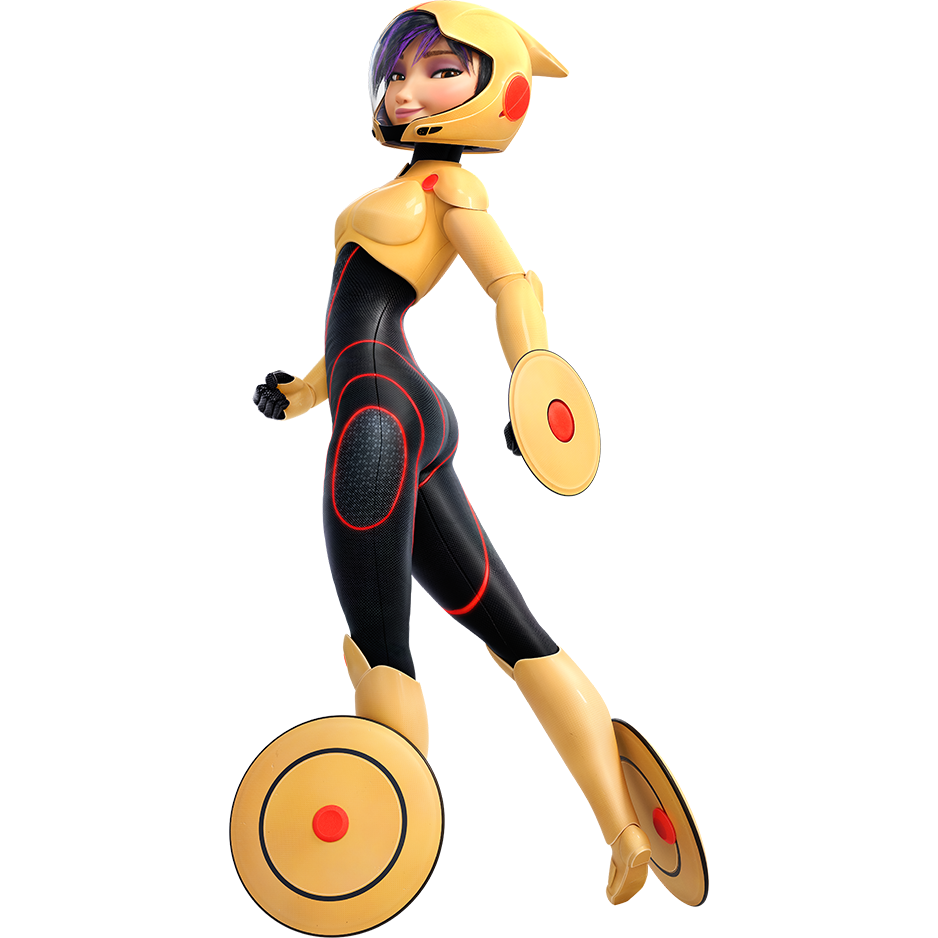
From left to right: Ritsu from K-On!, Hazuki from Sound! Euphonium, and Gou from Free!

Of course, not every one of their shows uses the Kyoani face of course (Lucky Star being the notable exception), but I think it goes to show just how important that particular facial structure is to the identity of the studio. Otherwise why would they use it again and again? At the same time, I wonder if it also shows Kyoto Animation’s willingness to experiment, at least within their particular areas of specialty, in terms of both story and visuals.

If you liked this post, consider becoming a sponsor of Ogiue Maniax through Patreon. You can get rewards for higher pledges, including a chance to request topics for the blog.

Stress and Inspiration and Animation: SHIROBAKO

shirobako-aoi

shirobako-director

With a lovable cast of characters, in-depth look into the world of anime production, and numerous references to famous creators and works,  SHIROBAKO has been a darling of the internet anime fandom, particularly among those who consider themselves to be, if not among the most informed anime fans, then at least those who desire to be more informed. While SHIROBAKO is not the first anime to delve closely into its own industry, I believe it is the first full-on 26-episode television series to do so, and this allows it to show multiple facets that are involved when making anime, while also giving them room to breathe and to garner appreciation.

SHIROBAKO centers around Miyamori Aoi, a young animation production assistant at Musashino Animation Productions (aka Musani), a once-renowned anime studio that is trying to rebound and recover its reputation. Back in high school, Aoi and her friends in the school’s anime club created their very own animated short, with the hope of someday working together professionally to create it for real, which has led them each into different areas of the anime industry: 3DCG, voice acting, writing, 2D animation, and of course production. As each of them deal with their own struggles in trying to get closer to their dreams, which include wondering if anime is right for them after all, Aoi and the others learn about what it takes to make an anime, and all of the joy, stress, and sleepless nights that go into it.

P.A. Works, the studio behind SHIROBAKO, has a reputation for producing very specific sorts of works. Whether it’s True Tears, Tari Tari, or Hanasaku Iroha (which I love), many of their shows involve cute high school girls and a lot of emotional drama. It’s a formula that works for some but is like poison to others, and with SHIROBAKO we have a work that successfully toes the line between the two. These aren’t high school girls but rather young professionals, and though many of the women in the anime are purposely designed to be attractive, there’s more than enough focus on anime production that the show hardly feels like a cute girl/melodrama delivery system. In a way, because of how taxing anime production is (as has been revealed in numerous articles and interviews over the years), a bit of melodrama doesn’t seem surprising between people fighting back their tears so that they make an absurd deadline.

A more cynical part of me thinks that the girls are there to an extent to be the gateway to introduce those anime fans obsessed with cute girls to what goes on behind the scenes, and that the series in general is very much designed to promote the anime industry and encourage people to join. It’s also a problem that they don’t really acknowledge the enormous component that is the anime industry’s outsourcing of in-between animation to other countries including Korea, the Philippines, and India. However, there’s no denying that the series is rife with genuine information to learn and appreciate, and that the characters, regardless of their base intent have convincing personalities and stories as to why they’re in the art and business of making anime in the first place.

shirobako-midori

shirobako-misa

For the record, my favorite characters are Imai “Diesel” Midori (one of Aoi’s old club mates who possesses a strong desire to write for anime, a thirst for research, and an ever-enthusiastic personality), Toudou Misa (another club mate who works in 3DCG and has to decide if she wants to play it safe with her career or take a chance), and Sugie Shigeru (the oldest veteran animator at Musani who, while enormously skilled, doesn’t quite fit into the current era because he “can’t draw moe”).

As mentioned at the beginning of this review, SHIROBAKO is rife with references to both real people and real anime. Aoi’s favorite series is Mountain Hedgehog Andes Chucky, based on Mountain Rat Rocky Chuck. One episode centers around the importance of the Idepon films, or Space Runaway Ideon. Numerous posters seen in the background throughout the series include parodies of Casshern, Lunlun the Flower Child, Ghost in the Shell, and much, much more.

shirobako-gachorn

shirobako-musani

As for people, this is probably what gets people to scramble to anime production staff lists the most. The above-mentioned Sugie is based either on MADHouse founder and animator Akio Sugino, legendary animator Mori Yasuji, or some combination of the two. The real identity of Musani president Marukawa Masato is blindingly obvious to anyone who’s been to Otakon in Baltimore and attended a panel by MADHouse and MAPPA founder Maruyama Masao. Evangelion director Anno Hideaki and voice actor Itou Shizuka are among the many, many real industry veterans to appear in slightly altered forms in SHIROBAKO. Combined with the anime parodies it makes for a somewhat addicting game of “figure out the reference” that, unsurprisingly, appeals to a lot of fans who have devoted themselves to learning about anime.

The day after I finished SHIROBAKO I had a thought: often times when it comes to anime or other forms of media that fictionalize a given craft, technology, or profession, people who are deeply involved in those areas can easily nitpick these series in terms of accuracy. While I don’t have firsthand experience in the anime industry (though I’ve done a bit of work as an animation production assistant myself), I almost feel as if SHIROBAKO is defying the “well actually’s” of the world to say something. Who better to talk about creating anime than the people who create anime? Perhaps the answer is those whose voices haven’t been covered. Maybe we’ll next get a series from the perspective of the in-betweeners.

SHIROBAKO is available on Hulu and Crunchyroll.

PS: I recently found out that the Japanese terms for in-betweens and moving images in general are the same: douga, just like what you see in Nico Nico Douga. Nooo, this isn’t confusing at all.

If you liked this post, consider becoming a sponsor of Ogiue Maniax through Patreon. You can get rewards for higher pledges, including a chance to request topics for the blog.

“Jesus is Kind of Like a Buddha, Right?”

This post was sponsored by Johnny Trovato. If you’re interested in submitting topics for the blog, or just like my writing and want to sponsor Ogiue Maniax, check out my Patreon.

It is a somewhat common mistake to assume that Japan as a wholly foreign and alien culture despite events such as the influence of China on its development, the appearance of Commodore Perry, and various interactions with nations such as Portugal and the Netherlands. However, no matter where it comes from, Japan’s own history can be considered unique (and just about any culture or area can say the same), and there are certain implicit and assumed elements that can permeate Japanese culture.

I was asked by Johnny Trovato to address broadly the subject of how theological differences between Japan and countries with more of a Christian history affect how anime and manga are viewed. Truth be told, even though I’ve watched plenty of series which reference religion and spirituality such as Neon Genesis Evangelion, Inari Kon Kon Koi Iroha, and Hermes: Winds of Love (don’t watch that last one), I’m not really an expert on the subject. I originally planned on tackling the subject from a fairly limited perspective, but fortunately I recently discovered a book called Holy Ghosts: The Christian Century in Modern Japanese Fiction by Rebecca Sutter. While it’s not quite on the subject of Japanese religions and beliefs, it did help me to realize an aspect of Japanese culture, media, and literature that I believe sheds a bit of light on how religious beliefs are used in anime and manga.

One of the more major lessons I took away from reading Holy Ghosts is that Japan has historically approached religion in a rather pragmatic way. Shintoist, Buddhist, and Confucian beliefs exist together in Japan, but only as far as they’re convenient. When Portuguese Jesuits arrived in Japan and sought to convert its people, not only did the Japanese sometimes interpret Jesus as a kind of “Buddha” that conformed to their own polytheistic views, but many of the daimyo who converted did so because the Portuguese also sold firearms. Spirituality exists, but it has existed to to serve the people, rather than having people be absolutely beholden to one or more gods. Even the idea of the Emperor as god was a response to the prominence of other religious beliefs being used as tools to control territory.

To take what is probably too big of a leap into the present day, I think we can still see this tendency at work when it comes to the utilization of religious aspects in anime. Evangelion famously features Christian imagery and mythology mainly as a way to provide something fairly exotic to Japanese viewers, while Spirited Away is just as much about encouraging young people to rediscover nature regardless of overt spirituality. This, I believe, is where a good deal of the confusion or dissonance might lie when it comes to how people in the United States and other traditionally Christian cultures interact with anime. Of course, not every person who lives in those countries is necessarily religious, and there has been plenty of media that plays fast and loose with the Bible, from Bruce Almighty to Teen Angel (I still love that show, by the way), but often there’s some kind of counter-play with the assumption that many people know at least the basics of Christianity and that there are plenty who firmly believe in its tenets.

I’m going to use two examples of media, one from the US, and one from Japan. Xena: Warrior Princess was a popular show when it aired. Having begun as a spinoff of Hercules: The Legendary Journey, it at first focused mainly on ancient Greece and the presence of Greek Gods. Eventually though, they decided to branch off and include Christianity in the show. Xena meets both David and Jesus, and any historian would probably tell you that it makes no sense. It didn’t matter in the show itself to a certain degree, but it was directly up against the value of Christianity in the US, and how accurate or (intentionally inaccurate) a work it was factored into how it was perceived.

Now contrast this with Devilman, the story of a teenager who gains the power of a devil so that he can fight other demons. Its creator, Nagai Go, stated that he designed Devilman to resemble a bat, even though that’s not quite the imagery people in countries more familiar with the idea of Satan and Hell would utilize. Eventually Satan himself appears, and he turns out to be a hermaphrodite because Lucifer has been described in some texts as being as such. However, the main value of Lucifer’s dual-gender appearance is visceral shock, and Devilman as a whole didn’t have to take into account how much its readers would be going to church every Sunday. Devilman, if I recall correctly, also mixes in various spiritual beliefs including Japanese ones, and it all effectively works to (on a somewhat pragmatic level) help the story along.

The idea that religion isn’t this overwhelmingly powerful subject in Japanese culture and society isn’t necessarily shared by all who live there, of course, but I think there’s a lot in the old adage that says, in Japan, you have a Shinto birth, a Christian wedding, and a Buddhist funeral. That synthesis of beliefs and the ability to mold them into whatever you want defies the idea of religion as this overwhelming, monolithic thing that cannot ever be altered, and anime and manga are proof of that.

Gundam Build Fighters TRY Fighting References

Gundam Build Fighters Try has made a number of references to fighting styles from other anime, manga, and games, especially towards the end of the series.

In Episode 19, the character Ichinose Junya pulls off a couple of attacks from various fighting styles. This includes a demonstration of boxing, which might look familiar:

This is actually Makunouchi Ippo’s finishing combination from Hajime no Ippo: the Liver Blow, the Gazelle Punch, and the Dempsey Roll.

Next, Junya demonstrates attacks from Ba Ji Quan:

This specific sequence leading into the shoulder tackle is one of Akira’s signature attack strings from the fighting game series Virtua Fighter:

In Episode 20, Kamiki Sekai, one of the central characters of Gundam Build Fighters Try, sends a burst of energy rippling forward by slamming his fist into the ground:

This is a reference to Terry Bogard’s special move, “Power Wave,” which he’s used since the original Fatal Fury and all other games he’s appeared in.

This last one I’m not 100% certain on, but in Episode 23 Junya appears again and confronts Sekai:

I believe it is supposed to be an homage to Fist of the North Star, specifically Souther’s Nanto Hou’ou Ken style:

That’s all I’ve spotted for now. If there are more, then I’ll probably make another post.

If you liked this post, consider becoming a sponsor of Ogiue Maniax through Patreon. You can get rewards for higher pledges, including a chance to request topics for the blog.

Yo-Kai Watch: Amano Keita vs. Nathan Adams and the Meanings of Names

youkai

The Yo-Kai Watch video game series has been a smash hit in Japan, even managing to outsell Pokemon. Recently there has been news to start bringing the franchise and its accompanying merchandise to English-speaking audiences, and the main character of Yo-Kai Watch, Amano Keita (pictured above, right), has become Nathan Adams. This leads me to speculate on the specific choice made here, and to think about how it compares to the meaning inherent to the original name.

Video games are no stranger to changing characters’ names to make them more culturally accessible, but a question arises as to whether there is any meaning lost (or even gained) in localization of names. For example, a lot of Pokemon characters names gain become much more explicit in terms of wordplay though in a way that has less to do with the inherent meanings of names and more to do with how they sound or have built up associations through culture and history (Lance the Dragon Master, Brock the Rock Gym Leader).

In the case of Amano Keita (which sounds like a fairly typical Japanese name) in Japanese his name references very specific things, and because the name has official kanji it becomes easier to see what it could mean. Amano Keita is 天野景太, where 天 means “sky/heaven,” and 景 means “scenery/view.” The Ama in Amano is on a basic level associated with the Japanese goddess Amaterasu (EDIT: It also might very well refer to Amanojaku, a demon-like creature in Japanese folklore. Thanks to Zack Davisson for informing me!). Thus, Amano Keita’s name basically means “a view of the heavens,” which I think associates him with spirituality and mythology and thus the titular youkai in Yo-Kai Watch.

What about Nathan Adams? Initially, what can’t be ignored is the fact that “Amano” and “Adams” sound somewhat similar. I have little doubt about that.

In terms of basic meaning, a Google search reveals that both Nathan and Adam are Hebrew in origin (Adam being a little more obvious in that regard), so there might very well be a continued connection to heaven and spirituality through the name as well. At the same time it probably won’t earn the ire of those who don’t wish to associate Judeo-Christian beliefs with the Japanese occult, because even though Nathan means “gift from God,” Nathan Adams is also fairly generic-sounding and few truly associate names like “Christopher” with Christ anymore.

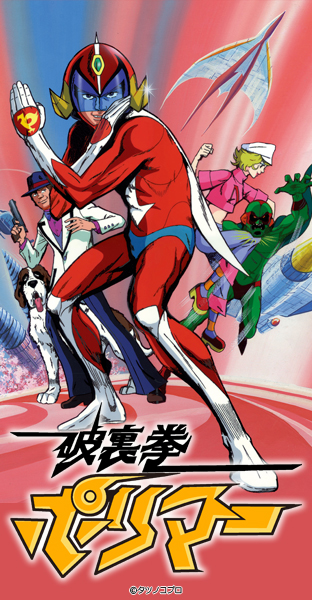
However, I’m not sure if this is the actual reasoning, because as explained above, I don’t know the degree to which a localization would actually pursue the deeper origins of names, especially because they don’t have the benefit of kanji to make things explicit. That said, sometimes names are selected because of how they sound, with different kanji used to transform it into a “real” name, similar to English. For example, the female character in Hurricane Polymar is Nanba Teru, or “Number Telephone.”

There is another way in which the English name can be associated with the spiritual and the occult, which is The Addams Family. This, I think is actually more of a likely origin, and while Yo-Kai Watch isn’t focused on the macabre the way The Addams Family is, there’s still that connection with the afterlife, ghosts, and monsters. As for Keita vs. Nathan, I wonder if Nathan was picked because it sounds close to “nature.”

While it’s difficult to draw firm conclusion, I believe that both names spirits and the occult/celestial, though due to cultural differences their exact meanings don’t exactly draw from quite the same concepts. I get the feeling little of this will actually matter in terms of how the character of “Nathan Adams” is perceived, but it was at least fun to explore the potential connotations of his name.

If you liked this post, consider becoming a sponsor of Ogiue Maniax through Patreon. You can get rewards for higher pledges, including a chance to request topics for the blog.