A Dramatic Interpretation of American Mahjong

Ever since I thought of a mahjong manga where the hero would have to travel around the world and experience different variations of the game, I’ve thought about how the different types of mahjong that exist would be conveyed to readers. Previously, I had analyzed Singapore Mahjong (which turns out to be quite similar to Malaysian Mahjong), and even thought of things that could be emphasized in an arc featuring Singapore Mahjong.

This time, I want to talk about American Mahjong, also known as the official style of the US-based “National Mah Jongg League.” In terms of comparison with other forms of mahjong, it has a number of unique features, such as joker tiles (essentially wilds), and an exchange of tiles between players known as the Charleston. The scoring for the game changes annually, with hands coming and going, and it requires players to buy a new card every year to keep up, sort of like expansion packs for a TCG in the sense that it forces its players to pay up if they want to stay relevant. The most recent one was $7.00.

I must emphasize that I have not had the chance to play American-style Mahjong, and so there will be no real gameplay analysis in this post. That said, I have taken a close look at the rules (and even went out of my way to buy one of their cards), so if you’ll let me indulge for a day, I want to try and write what I think an Akagi-style narrator would say if presented with American Mahjong with respect to Japanese-style Riichi Mahjong.

Mah Jongg!

The American style of mahjong is spelled in English as “Mah Jongg,” with two G’s. It is a simple change which hints at the vast differences lying within.

Where one might assume certain universal truths of mahjong, such as the formation of multiple sets of three tiles, or for irregular hands such as “Kokushi Musou” and “Chii Toitsu” to be the rare exceptions, American “Mah Jongg” defies expectations. Instead, every possible winning hand is like a Kokushi or a Chii Toi unto itself! The fundamental structures of mahjong vanish leaving barely a trace, and the only thing that matters is the entire hand as a single and unique entity!

Indeed, if each round of mahjong is like a fierce battle in a greater war, then American “Mah Jongg” can be said to exist in a world that has not only abandoned conventional firearms and vehicles, but has forgotten about them entirely.

Guns! Cannons! Tanks! Planes! All are part of a history lost to the ages. Instead, each player is like a team of scientists trying to assemble their own nuclear bomb to launch at their enemies! The blueprints are complex, the research intense! Knowledge of bullets and boats do not matter! Everything is for the sake of completing that deadly atomic weapon.

However! That world is also subject to different physics from our own, and with each revolution around its sun, the construction of those weapons must also change! Every year, there comes a time when the old rules no longer matter. The scientists must then realize where their existing knowledge still applies, and where it will inevitably lead to a technological dead end!

“Mah Jongg!”  What that second G stands for is unclear, but it may very well mean “galaxy,” for compared to Japanese mahjong the American style is millions of light years away!

You Might Feel a Little…Attracted: Hato Kenjirou Figures Review

While Genshiken-related merchandise remains relatively sparse in the grand scheme of figure collecting, Kodansha recently collaborated with Kaiyodo to bring two Hato Kenjirou figures to loyal readers.

The first figure comes from an issue of Monthly Afternoon and features a standing Hato, while the second one comes from a limited edition Japanese release of Genshiken Volume 11.

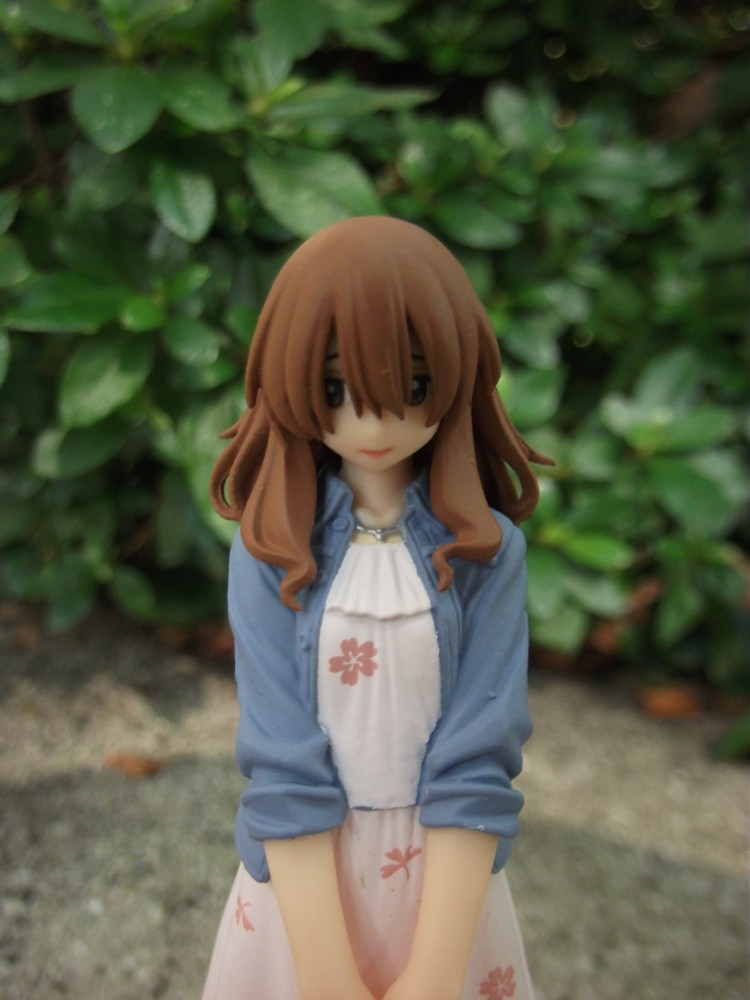
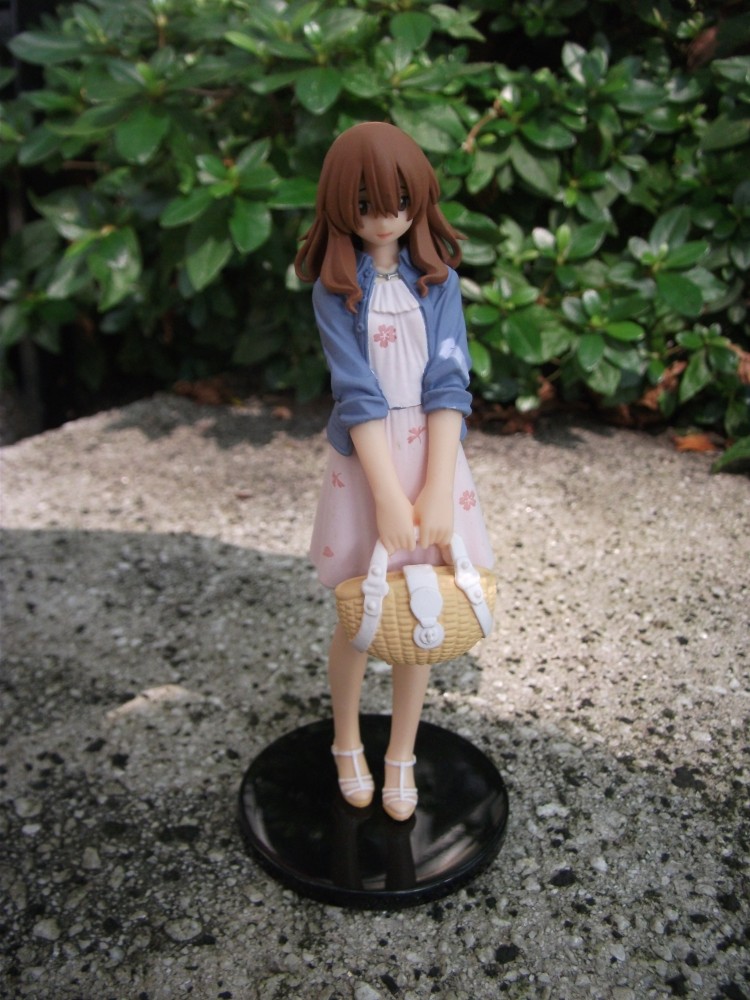
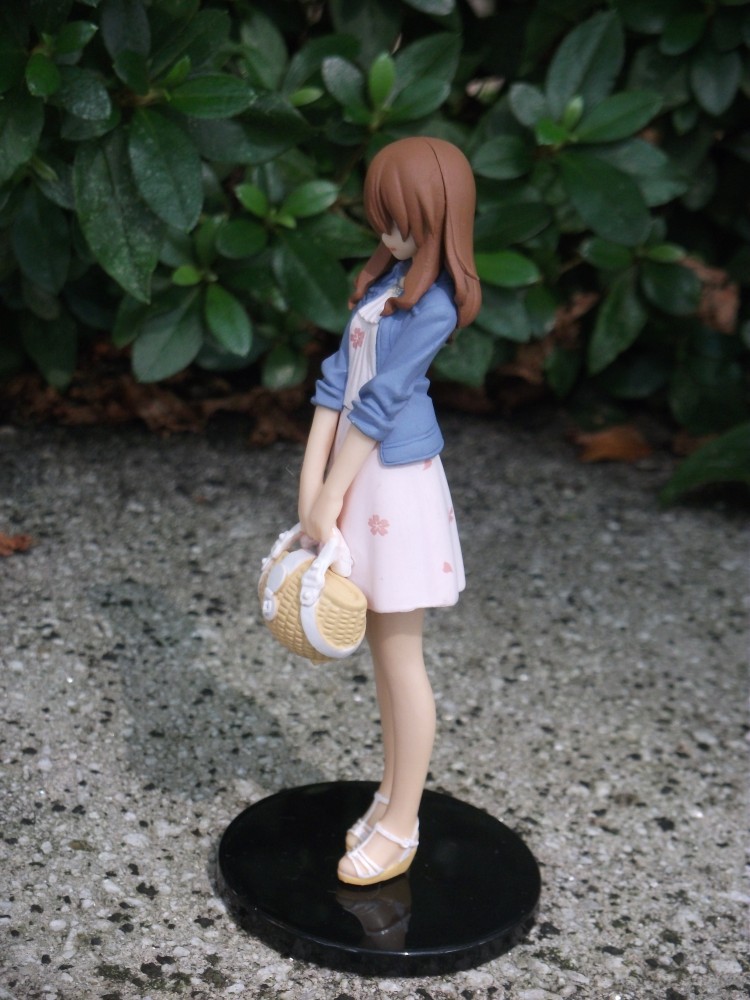
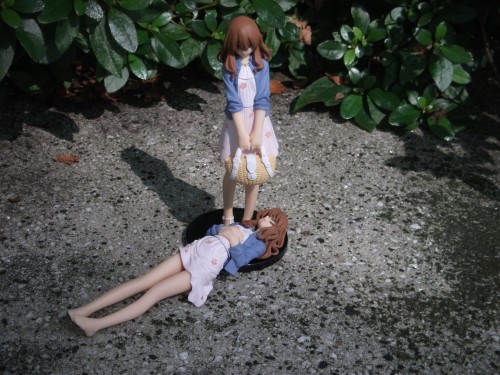
Featured here is Standing Hato. As can be seen from the photos, the quality of the figures is trading-figure-level, so it won’t match up to a really good model, but as far as trading figures and gashapon figures go, it’s actually fairly impressive. There doesn’t seem to be any significant bleeding in the paint job, and even the details on the purse hold up to a certain amount of scrutiny.

Aside from the seams separating the pieces which make up Hato’s hair, there aren’t any really noticeable flaws, and even that is just part and parcel for the level of figure we’re getting here. The flower pattern on the dress and the details on the denim jacket also look good.

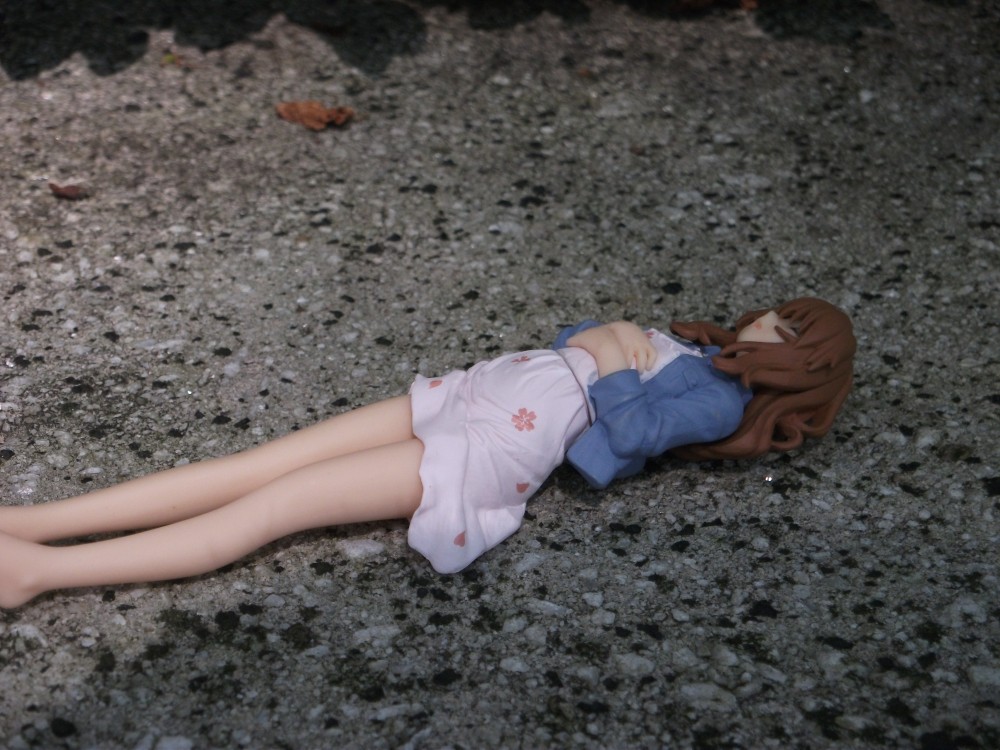
Next up is Sleeping Hato, otherwise known as Unconscious Drunken Hato.

Aside from some minor flaws, the second figure is just as solid as the first. They even did a good job on the toes, which I get the feeling would be enormously easy to mess up on a figure this small and relatively inexpensive (it came packaged with the volume for a bit extra, though I can’t remember exactly how much).

Because Sleeping Hato has to be constructed from more parts than Standing Hato, the seam in the dress between the torso and the legs is much more noticeable, though I don’t find it to be the biggest deal in the world. Again, given the typical quality of these figures, this one does a good job. You’ll note that they sculpted his hair to match the fact that he’s supposed to be lying down.

Actually, Sleeping Hato comes with one additional feature that most other figures lack: It’s a refrigerator magnet!

There’s a small magnet sticking out of Hato’s back which I’ve chosen not to photograph, but it’s pretty much what you might think it is. Are your to-do lists for grocery shopping feeling a bit lonely? Do you wish you had company for your magnet souvenirs from Japan? This crossdressing fudanshi figure successfully accompanies all fridge doodads! What’s more, 9 out of 10 people can’t tell that it’s a man!

So there we go. Both figures at this point will be pretty difficult to find, especially because they were both packaged as extras. I’m certainly not the biggest fan of Hato Kenjirou, but I have to say that both of them look good if you judge them by overall figure standards, and great if you judge them among their peers.

The School in Aquarion Evol is a Pokemon

Peter Parker, Make a Contract with Me

Have you read Spotted Flower? It’s a comedy manga by Genshiken creator Kio Shimoku, about an otaku and his pregnant wife. Actually, the premise isn’t that important for this post, other than to say that it made me realize something recently.

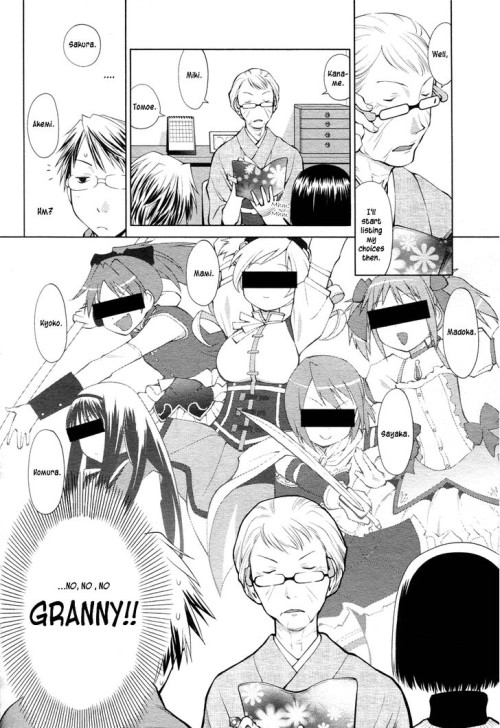
Let’s look at this page from Chapter 4:

Pretty funny and bizarre moment. But let’s modify it a bit.

Basically, thanks to Spotted Flower, I realize now that all of the girls’ names inMadoka Magica are unconventional in that they’re actually two first names strung together, a convention that I primarily associate with American superhero comics.

That’s all, really. Maybe I’ll actually talk about Spotted Flower some other time.

THE COMIPO TRIAL EXPIRES TODAY SO HERE IS ONE LAST HURRAH


In case this somehow convinces anyone to purchase it: Official Site

If you want to see true mastery of Comipo, head over to Dave‘s Kawaiikochan Gaming no Korner.

Double Dragons vs. Abobo

Check out this exciting fight!

Return of Comipo

FATE/ZERO SPOILERS I FIGURED OUT BERSERKER’S IDENTITY

Emergency Salami

For those who don’t get it: Reference #1, Reference #2.

Testing Out Comipo!

Get the trial version here.