The spring 2024 anime season turns out to be absurdly good! There are many highlights among the new shows, but I think chief among them are Train to the End of the World, Jellyfish Can’t Swim in the Night, and Go! Go! Loser Ranger! It’s also interesting seeing Shinkalion: Change the World try to be a little more mature. I wonder if it’s aiming for the kids who grew up on the first two Shinkalion anime.
Thanks to my Patreon supporters for the month, especially the following people!
A celebration of super robot anime that forges its own path.
Kio Shimoku
For fans of Ogiue (and Ogiue doppelgangers), this is a good month.
Closing
It feels like it’s been a while since all of my highlighted posts are just straight-up reviews and analyses of specific anime and manga titles. I wonder if this trend will continue.
Elden Ring completed! Kio is a little sad that there was no last dungeon after the boss rush, though (Note: Let me know if there is one, and I’m totally off in understanding this.)
I’ve been keeping up with the One Piece manga for many years now, though I don’t write about it all too often because I don’t feel the need. When the subject is one of the most gargantuan works of fiction in history, it’s not hard to find opinions, articles, podcasts, and videos discussing—or even dedicated entirely to—One Piece. However, the events of recent chapters, particularly the actions of certain characters, have been so significant that I feel compelled to share my thoughts.
Naturally, I’m going to be talking about HUGE SPOILERS for the One Piece manga. To the anime viewers and anyone else who doesn’t want the surprise ruined: turn away now.
The milestone in question is the long awaited arrival of the Five Elders into the main story and the full debut of their monstrous alternate forms. The impact they have is almost unparalleled—something that only a select few series can ever accomplish because they lack the longevity. The only one that springs to mind aside from One Piece is Detective Conan, whose main bad guy is still shrouded in mystery even after some major revelations.
In action manga, especially the shounen battle genre, villains come in many forms and can often be among the most exciting and interesting characters: minor nuisances, archenemies, rivals, erstwhile allies, etc. But one area that can make or break a battle manga is the appearance of a major antagonist, especially one that has been built up in the background. Freeza in Dragon Ball is an iconic example of this being done well, from the first mentions of him, to his initial reveal, and then to Freeza’s many transformations. The span of Freeza’s debut to his true form was a little over a year, or 58 chapters. The anime stretched it out even longer, as it was wont to do.
In contrast, the Five Elders in One Piece first showed up in 2002, and their descent onto Egghead Island happened this year in 2024. That’s 22 years, and over 860 chapters—enough time for infants to grow into full-fledged adults. And what’s even more astounding is that the Elders actually lived up to literal decades of anticipation!
On a very basic level, part of the reason the Five Elders are worthy of the hype is their physical appearance. They are legitimately menacing and bizarre in a way that none of the most dangerous and freakiest of Luffy’s foes thus far can match. All five are based on demons and mythological creatures, and they exhibit a new level of uncanny. Moreover, their powers are such that merely gazing upon them knocks the average soldier unconscious, and even Luffy’s new “Sun God Nika” form can only stymie them temporarily. In other words, the Elders look and feel like unprecedented threats to the Straw Hat Pirates.
Beyond the artistry in their designs, the weightiness also comes from how these monstrous forms have been mostly kept under wraps for so many years. Aside from an earlier hint when Sabo infiltrated their domain (which showed the Elders’ silhouettes transforming), it wasn’t even clear that they were physically strong in their own right. After all, as the heads of the World Government, it could easily be the case that they were just a group of wizened old men who rule through intellect, hegemonic inertia, and political influence. The fact that they’re actually capable of outclassing nearly every other character in One Piece is both a great twist and a satisfying fulfillment of the core of shounen battle manga. Why wouldn’t the literal leaders of the world also be the biggest badasses around?
The Five Elders also now open up even more speculation:
Why are they able to regenerate from any damage, and is there a catch that might just be their Achilles’s heel? And why are the Giant Pirates able to hold their own against the Elders?
Their names are references to five of the planets in the Solar System: Saint Jaygarcia Saturn, Saint Marcus Mars, Saint Topman Warcury, Saint Ethanbaron V. Nusjuro, and Saint Shepherd Ju Peter. Three of the other planets have references in the Ancient Weapons: Poseidon, Uranus, and Pluton (remember that this series began before Pluto was officially redesignated to a dwarf planet). What is their relationship, and could the Ancient Weapons somehow be key to defeating them? The two Weapons we know about in detail are associated with the sea—Poseidon is a mermaid who can control the massive Neptunians, and Pluton is the greatest battleship in history—so might the Five Elders be vulnerable to water in a way similar to Devil Fruit users? And could their distant-yet-absolute dominion over the world of One Piece have to do with a profound fear of the sea?
And what of their true leader, Imu? How can beings as powerful as the Five Elders be subservient to this individual?
One Piece is currently on a brief hiatus. This might be for the best—not just for the author, Oda, but for us readers. Maybe we need this breather before things get even more unpredictable.
Spotted Flower Chapter 45 is out in the physical edition of Rakuen (digital is end of March). Kio also shows off all the issues of Rakuen he’s collected.
Kio retweeted a previous tweet of his showing an old model kit of the L-Gaim MK-II that he tried to rework and improve. It’s not quite to his liking yet.
The adult video version of Kio’s 18+ doujinshi was on sale (ended 3/11). The tweet includes one old drawing, and I believe one that’s entirely new (on the right).
Kio reacts to the death of Toriyama Akira. “Ever since I discovered Dr. Slump in my boyhood days, I was happy to have the art of Toriyama Akira with me through life. May your soul find happiness.”
Kio finally finished reading through the 7th The Five Star Stories Designs book. He especially likes the character 剣聖ヴェイデリ・コーダンテ (Sword Saint Veidery Codante? I can’t find an official English spelling).
Responding to the death of Tarako, the voice of the main character of Chibi Maruko-chan (also the second voice of Monokuma in Danganronpa). “Whoa, whoa, whoa. Hold on…”
Kio tries out a Five Star Stories Shindanmaker, and the site decides that he would be part of the Magic Kingdom Buchtgma, his Motorhead would be Batsch the Black Knight, and he would be compatible with the Fatima Harper.
Kio has apparently been shadowbanned on Twitter for the past year. When someone replies that he should consider bluesky, he’s hesitant because of how long it took him to get on Twitter.
Kio reacts to the death of Inomata Mutsumi, character designer on the Tales RPG series. “Inomata Mutsumu-sensei…I feel so sad…May your soul find peace in the afterlife.”
Reacting to the manga artist Kusada drawing the Jamru-Fin from Gundam ZZ, Kio joins in on talking about how awesome the design is. Kio remembers seeing it in a plastic modeling magazine back then.
Kio is surprised to discover there are Gundam model kits that are Real Grade Ver.2. He remembers having trouble with the fine details of the Version 1 Real Grades due to his aging eyes, but now he has Hazuki Loupe magnifying glasses, so it should be okay
There are plenty of manga about a boy and a girl growing closer, but I only know of one where the relationship centers around escape games—Watashi to Dasshutsu Shimasenka, or Won’t You Escape with Me?
A school boy named Tsunami Kousuke has a problem where people think he’s a creep because he tends to think about and analyze things very quietly and intensely, creating all sorts of misunderstandings. One day, he finds a mysterious school notebook with a code on the front, and after cracking it, realizes that it’s from the meek girl who sits next to him in class, Tojino Aika. It turns out that she’s obsessed with puzzles, and she left that notebook around to see who could be her partner in tackling her favorite type of challenge: escape games. She loves them not just for the problem-solving but also the atmosphere, even being willing to play the damsel just to add to the flavor.
Aika is what I refer to as a “safe yandere”: a character with the intense, obsessive look of a yandere, but targeted at something harmless or only indirectly related to people. She has a very magnetic design and personality as a result, somewhat reminiscent of one of my favorite girls, Hanayo from Love Live! Even skimming the manga can be entertaining, as you get to see all sorts of fun expressions from Aika.
If you can/do read it, though, all the puzzles are meant to be solvable by the reader to a certain degree. Unfortunately, knowing Japanese decently is not enough. I’ve done escape games, and I can read Japanese well enough to understand what’s going on, but I don’t think I could solve these puzzles on my own. There’s a certain degree of familiarity one has to have with a language to begin to decode some of the abstract requirements of the puzzles, and that’s simply not where I am. It’s like why I can never figure out the answers to Professor Agasa’s puns in Detective Conan.
While some series based on similar premises might have the characters progress towards tournaments or something else shounen-like, I don’t think that’s what’ll happen here. Rather, comparable series would be something like Dagashi Kashi or Mysterious Girlfriend X: Boy-girl bonding centered around a specific gimmick. If you like it, you like it.
Four collected volumes are currently out, and I wonder what kind of readership it has built up. Whatever the future of this series might be, though, I actually think it would make for a really good anime. The three-dimensional spaces and the sense of urgency could translate well to animation, and I think Aika herself would be a very popular character.
When the Virtual Youtuber group “hololive English Advent” debuted last summer, something in particular caught my eye: The twin demon guard dogs known as FUWAMOCO listed Genshikenas one of their favorite anime. As a fan of the series (in case you haven’t noticed), it was exciting to know there were a couple of VTubers with a fondness for Genshiken. But it left me wondering, who is their favorite character?
Last month, Fuwawa and Mococo did one of their popular karaoke streams—one that later turned out to be a special stream to announce their move to Japan. As if to call back to some possible younger days as otaku,, lot of the song selections were from the 2000s, including “Soul Taker” and “DANZEN! Futari wa Pretty Cure.” Then, they said the magic words: “Kujibiki Unbalance.”
While regular readers of Ogiue Maniax probably already know this, Kujibiki Unbalance is the name of the fictional series-within-a-series in Genshiken, as well as the title of its opening by Under17. As FUWAMOCO began to sing the theme song, I sent a superchat asking about their favorite character, knowing there was always a possibility that they wouldn’t notice. To my pleasant surprise, they responded.
The answer: Madarame. As arguably the most iconic character of Genshiken, he deserves it.
The only caveat is that only Mococo answered, so I don’t know if it’s Madarame for both of them or just her. If I ever get the full answer, I’ll be sure to make an update.
On a recent trip to Japan, I walked past a shrine. Next to that shrine were statues of Dragon Quest monsters. Seeing them reminded me of the sheer impact of those games and the artist whose memorable designs helped to entrench the series in Japan’s popular imagination.
We now live in an age where Toriyama Akira is no longer with us. As the creator of Dragon Ball and Dr. Slump, as well as the iconic artist of Dragon Quest and Chrono Trigger, his influence is nigh-unmatched. There are maybe two or three other series that are as pivotal to shounen manga as Dragon Ball, and Toriyama even casts an enormous shadow on the isekai and fantasy genres: The Dragon Quest series is what established the “Hero” (Yuusha), the “Demon Lord” (Maou), and the “weak Slime” as archetypes in Japan’s popular imagination, and it’s Toriyama’s designs that inform the aesthetic of all successors.
In light of Toriyama’s tragic death at only 68 years old, I’d like to just talk about how my life has been touched by his work. My story is nothing special compared to the millions of voices mourning Toriyama, but I wanted to at least personally add to the well wishes pouring out.
Dragon Ball
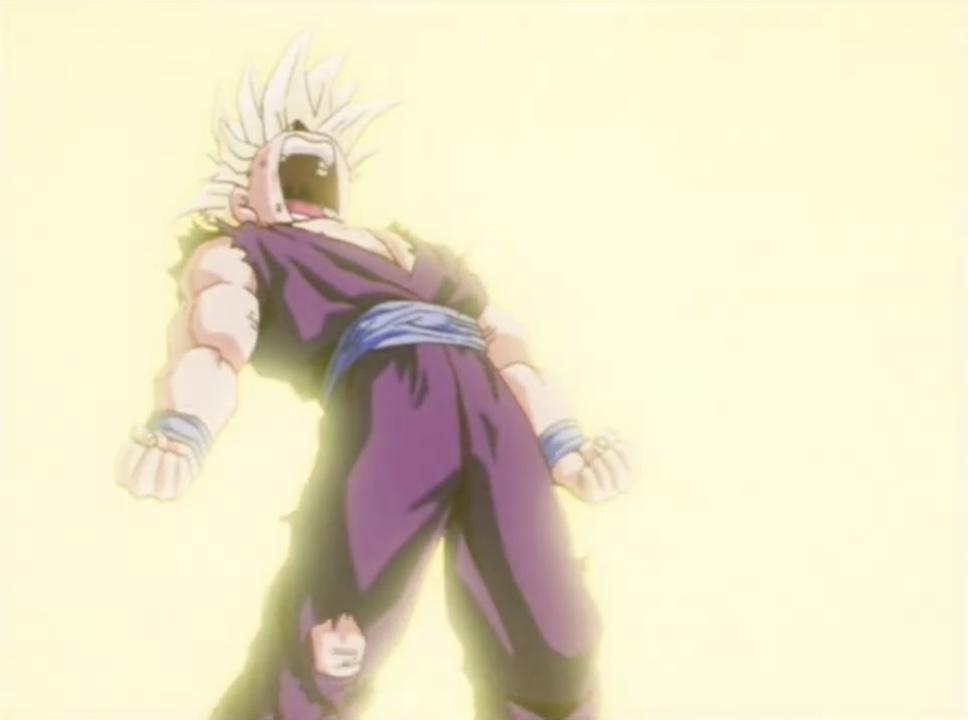
Dragon Ball Z was the very first anime that I knew to be “anime.” While I had loved things like Voltron, they were still just “cartoons” to me. But when a relative started bringing home tapes of DBZ, it was a sight unlike any other. I remember just being amazed at the rapidfire punches, the zooming around, the ki blasts—I’d never realized animation could be this way! I cheered for Piccolo, watched characters (gasp) die, saw Son Goku turn Super Saiyan, and witnessed his son step up and defeat Cell. I wondered if anything could ever top this story. I wanted to be Gohan.
It was also a time when I got to play the first two fighting games for the Super Famicom, and when I’d re-read over and over a small guide to the first game that showcased all the playable characters. “What does Jinzoningen (“Android”) mean?” I recall wondering.
So when I first found out that DBZ was coming to US airwaves (for real, and not just finding a random channel that sometimes had Korean episodes of the original Dragon Ball), I was elated at the prospect of Dragon Ball Z getting big. Imagine: more American DBZ fans! While the English adaptations have had their differences with the original (as well as the non-English dub I first watched), Goku ultimately succeeded in reaching into the hearts of countless viewers. (I still wish those early US viewers got the chance to hear “Chala Head Chala,” though.)
Ironically, I was one of those people who’d go on to poo-poo the Dragon Ball franchise. As I got more into anime and manga, I viewed the series as a thing you’re into when you’re just a “beginner,” or obsessed with just macho violence and watching muscle-bound dudes power up endlessly, and I felt good that I knew there was more out there. It took a number of years to get through that embarrassing phase, but I’d eventually come back around to appreciate Dragon Ball for its outsize influence on culture, as well as for just being a work of art in itself. More recently, it’s been great seeing Dragon Ball Superbe a thing, and for Toriyama to have worked to bring back the essence of Goku—as well as the balance of action and humor that Dragon Ball and Toriyama himself had been known for.
Dragon Quest
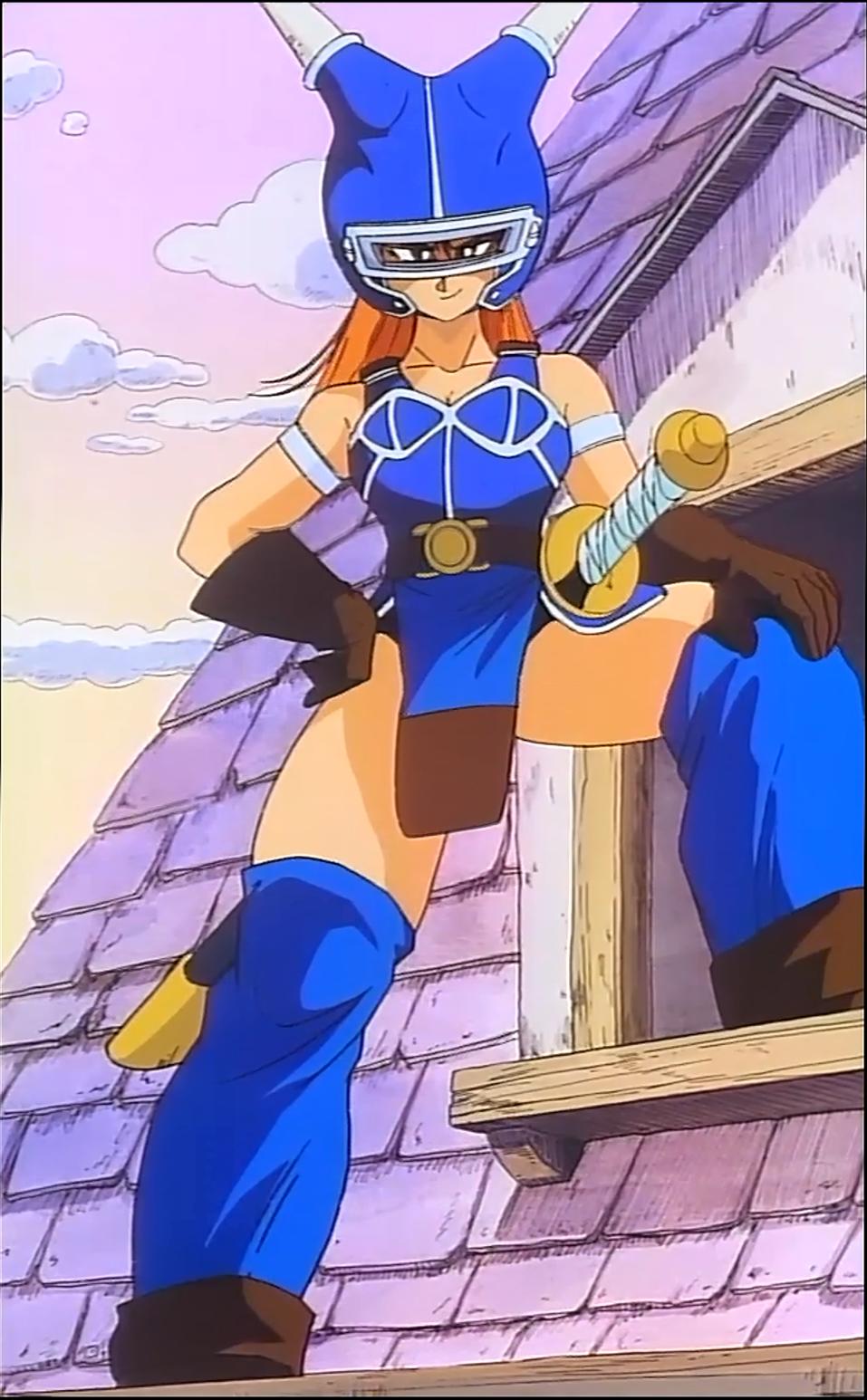
Dragon Ball Z was actually not my first encounter with Toriyama, and not even the first anime from Toriyama that I had seen. I was one of the kids who watched Dragon Warrior (aka the English dub of the anime Dragon Quest: Legend of the Hero Abel) as it aired. I remember having to wake up very early—around 5:30 or 6am on weekends. I don’t think about it very often, but in hindsight, the show was likely very formative for me, and I wouldn’t be surprised if Daisy (the girl in blue armor) ended up influencing my taste in characters.
My family also subscribed to Nintendo Power, and we received a free copy of Dragon Warrior (aka the first Dragon Quest) as a result. Today, RPGs are a popular and beloved genre of video game, but back then, they were entirely new territory to most kids, and pretty unapproachable. However, the same relative who brought home DBZ tapes had decided that they were going to beat Dragon Warrior, and spent hours getting through the game as a young me would watch along. In the final battle, the evil Dragonlord reveals his true form as a giant bipedal dragon, and I remember just being in awe.
This was at a time when the Super NES had already come out, and I thought the Dragonlord looked almost on par with the graphics I saw there. The fact that his foot covered part of the dialogue box, and the way the screen froze instead of shaking every time he landed a blow made it feel like this was the ultimate adversary. It wasn’t until at least a decade later that I got to see Toriyama’s drawing of the Dragonlord that I realized just how closely the sprite graphic matched his original art, and I appreciated that memory all the more.
If Dragon Warrior was the game that pushed the boundaries of what an NES game could look like, then Chrono Trigger was a revelation. The 16-bit graphics and the greater color palette of the Super NES really brought Toriyama’s designs to life, and the game conveyed an intensity to RPG battles unlike any I’d seen up to that point. The only thing they paled in comparison to was Toriyama’s actual drawings of Chrono, Frog, Magus, and the others. While Chrono very obviously looked like a redheaded Goku, he was still unbelievably cool. And just as the Dragonlord was a mindblowing antagonist, so too was Lavos. The eeriness of music and visuals in the climactic confrontation with him is hard to match even to this day.
Years down the line, Dragon Warrior finally became known as Dragon Quest just like in Japan, and I was one of the folks who bought Dragon Quest VIII. It wound up being one of my favorite RPGs ever. In addition to its classic feel (Dragon Quest is famous for not trying to reinvent the wheel), the game really felt like stepping into the world of Toriyama’s art. It was a triumph of the PlayStation 2, but also a treat for those who always wanted to see an interactive environment that embodied his imagination and aesthetic.
A Farewell
Toriyama Akira’s life was a spark that inspired creators to bring their ideas to life, bridged culture gaps through the sheer power of his work, and even pushed people to exercise and train so that they could be like Goku. His name is synonymous with anime, manga, video games, and even indirectly light novels. And while I can’t call myself the most diehard Toriyama fan, he clearly took my life on a course that would embrace the wonders of Japanese popular culture—a path I still pursue to this day. Rest well, King. To say you deserve all your praise and accolades is the understatement of a lifetime.
Spotted Flower has a voiced manga version now! …Unfortunately, I can’t seem to register for the site no matter how many times I try. If anyone has better luck, let me know!
Kio decided to try drawing with a physical pencil again, but it’s a lot more difficult than he remembers. He feels like he’s gotten too used to drawing digitally.
Kio left a comment on the A-Koe page for the Spotted Flower voice comic, talking about how shocked he was to hear the spicy lines he wrote being brought to life. He wonders how powerful it’d be if it were ever animated.
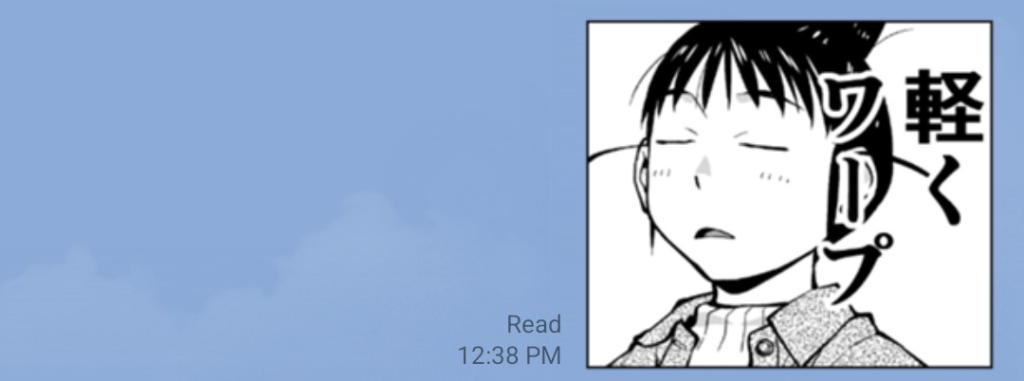
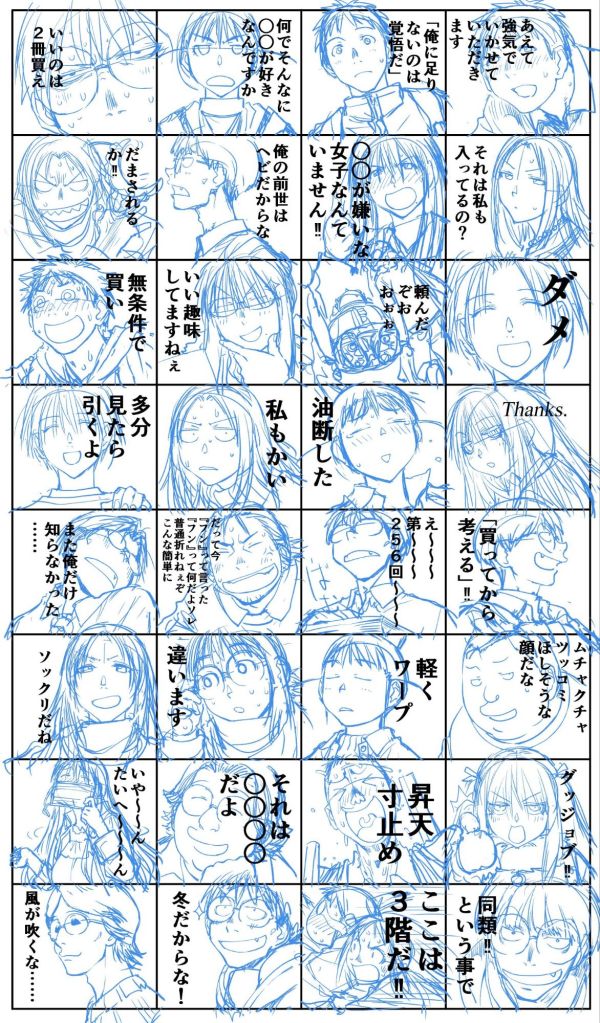
Kio Shimoku just released a set of Genshiken LINE stickers! Best of all, they’re available outside of Japan (unlike so many others).
He recently went through a process of deciding which lines from the manga to include, and had even asked fans for suggestions. All of them are from the original series, rather than Nidaime.
Interestingly, rather than just using his old art, Kio actually drew them anew:
Note that there are certain words that have been censored, I assume to conform to LINE’s policies.
Do you have any favorite stickers? Naturally, mine are all the Ogiue ones.
It’s February, which means the day everyone with romance in their hearts looks forward to.
That’s right: It’s new Precure anime time. And with Precure Full Bloom and Soarin’ Sky Precure finished, I’m hoping to have reviews of both series done this month.
Of course, the must-watch show for me this season is Bang Brave Bang Bravern. The culture clash between a very super robot and a gritty realistic world is hilarious, and I want to see where it all goes.
This month is also a momentous time for two of my favorite VTubers. La+ Darknesss, fresh off a new outfit reveal, will be having her first solo concert. It’s sponsored by Nissin UFO yakisoba, of all things. Meanwhile, Hakos Baelz will be celebrating her February 29 birthday with streams every day (and hopefully won’t collapse from overwork). After the string of unfortunate VTuber events recently, I am looking forward to some fun times.