Fan Fan Fine: Ogiue Maniax Status Update for February 2018

It’s February, also known in these parts as “new Precure time!” Satou Junichi (Ojamajo Doremi, Sailor Moon, Princess Tutu) helming the new Hugtto Precure! means I’m eagerly anticipating it, though I’m trying not to get my hopes too high up. As much as I love his shows, he’s not infallible or anything.

Whether you’re celebrating Valentine’s Day, the Lunar New Year, or some other holiday, I’d like to thank the following Patreon sponsors for their support.

General:

Johnny Trovato

Ko Ransom

Alex

Diogo Prado

Viga

Sue Hopkins fans:

Serxeid

Hato Kenjirou fans:

Elizabeth

Yajima Mirei fans:

Machi-Kurada

My favorite posts from January:

Down-Home Food Therapy: Atari no Kitchen!

A food manga I’ve been enjoying for a quite a while, I finally got around to writing about it!

A Strong Foundation: How the Japanese Smash 4 Tournament Format Helps the Community

A detailed look at what I believe are the underlying reasons behind Japan’s noted character diversity at high levels of competitive play.

“We’re Just Like You!”: The Empathy Scam of the Alt-Right

A post on a more serious topic: how the alt-right’s use of internet memes and subculture might act as false masks to lure in frustrated young men.

Return to Genshiken

Part 7 of my Genshiken re-read delves into the depictions of love and lust in my favorite manga.

Patreon-Sponsored

The Past and Future of Anime Blogging

I wax nostalgic about anime blogging but also how it’s positioned versus other mediums.

Closing

I’m high off of watching EVO Japan 2018 and seeing both Asuka and Shinsuke Nakamura win the Royal Rumbles. I’m also hyped for the new Kio Shimoku manga coming out this month.

May your February be as inspired.

Love and Lust. Return to Genshiken: Volume 7

Volume 7 is the point where Genshiken starts focusing much more heavily on Ogiue’s story, for better or worse (guess which side I’m on!). As the only character at this point who has a powerfully emotional backstory (though I wouldn’t have minded learning about the others in their younger days), it makes sense, even if it pulls the manga away from its more laid-back origins.

What is Return to Genshiken?

Genshiken is an influential manga about otaku, as well as my favorite manga ever and the inspiration for this blog, but it’s been many years since I’ve read the series. I intend to re-read Genshiken with the benefit of hindsight and see how much, if at all, my thoughts on the manga have changed.

Note that, unlike my chapter reviews for the second series, Genshiken Nidaime, I’m going to be looking at this volume by volume, using both English and Japanese versions! I’ll also be spoiling the entirety of Genshiken, both the first series and the sequel, so be warned.

Volume 7 Summary

It’s the dawn of a new age for Genshiken, as Ohno now leads the club. However, an awkward scene with Kuchiki drives away all prospective members, aside from Sasahara’s sister Keiko (who doesn’t even attend the school). This means the balance of the club has shifted to actually have more women than men.

Ogiue’s troubles are only beginning, as she finds out she’s been accepted for Comic Festival. Given her outward hatred of fujoshi, the idea that she’ll be putting out a BL doujinshi frightens her. However, thanks to a pep talk by Ohno, she begins to move forward, though Ohno also uses this as an opportunity to get Ogiue into some mildly skimpy cosplay. Sasahara sees this, and later begins to fantasize about Ogiue, and the other girls in the club (including Keiko!) pick up on the small, yet smoldering sparks between the two.

Ohno and Kasukabe begin plotting to get the two closer, which ends up with her bringing her American friends, Angela Burton and Susanna “Sue” Hopkins, to ComiFes as a way to get Sasahara and Ogiue to be at the event together alone. The two actually begin to hit it off (to the point that it overwhelms Ogiue a little), but a chance encounter with two hometown women from Ogiue’s past—people she hesitantly calls “friends”—clearly induce emotional anguish in her. A confusing moment with Sue at first helps Ogiue calm down, only for her to flash the most hardcore page from Ogiue’s own doujinshi in front of Sasahara—the last person she wanted to show it to.

Sasahara, meanwhile, has his own non-romantic troubles, namely being unable to find work. He’s decided to pursue a career in manga editorial, but keeps getting rejected. Finally, he lands at a dedicated freelance editorial company and uses his experience with Kugayama and Ogiue to finally land a job.

The volume ends with Ohno and Kasukabe setting up a club trip to the resort town of Karuizawa, where they intend to finally get Sasahara and Ogiue together.

Is Kuchiki “Okay?”

Kuchiki’s character is being “that guy”: the one whom the other members barely tolerate because they don’t want to drive out because they either 1) don’t want to get too aggressive 2) have empathy for someone so socially awkward. It’s an understandable situation for anyone who’s had experience with a social circle full of dorks.

Given what’s happened with women and the rising tide against sexual harassment, however, Kuchiki’s character becomes increasingly hard to swallow. It’s not just that he’s got lascivious behavior, and it’s not just that he fails to respect personal space, but that he actively tries to creep on the girls, including attempting to peep on them bathing. Even Nidaime, with its female-centric cast, shows the ladies of Genshiken pretty much enduring Kuchiki’s existence and waiting for him to graduate.

I don’t fault Genshiken for this, simply because it does a good job of reflecting the reality of anime clubs in the 2000s and before. Not only is Kuchiki portrayed as being too spineless to actually threaten them, but it’s not like Genshiken rewards or praises the character. And yet, I have to wonder if a socially conscious series made in 2018 would even let him through the front door, so to speak.

Kuchiki’s not all bad, as he does try to defend Ohno’s cosplay from that one thief, but it’s arguably just an example of having a worse villain make a milder one look better. Sasahara sticking up for him and treating him like a human being does help Kuchiki grow a little bit, but is Sasahara’s kindness accidentally a form of complicity? It’s made more complex by the fact that it’s also one of Sasahara’s best qualities, and what helps him get his editor job. A later chapter in Nidaime has an in-love Ogiue praising this very quality of Sasahara, and even here in Volume 7 you can see her being somewhat smitten by that accepting demeanor. It’s perhaps the fate of the moderate force to sometimes not do enough.

Ogiue’s Right to Love

Volume 7 is where the layers of Ogiue begin to peel away, revealing not just a self-hating fujoshi, but one marred by trauma. The first time I read this volume, it wasn’t entirely clear where it would go, but re-reading while fully aware of Ogiue’s past actually makes it kind of heartbreaking. Her anxieties creep to the surface in many of her interactions, and as her feelings for Sasahara get stronger, it’s clear how much her experiences weigh on her mind.

One of the big moments comes when Ogiue is talking to Ohno about having to make a doujinshi for ComiFes. In it, she directly mentions that she’s drawn doujinshi before, and that she hates herself for being a fujoshi. Looking back, the idea that Ogiue has experience drawing more extreme material only makes sense, but I recall it being a bit of a revelation back when I first read it. This conversation is also the first true indication of Ogiue and Ohno having become friends. Before that, there was still a noticeable amount of animosity between them, and I believe here is where it begins to die down a bit.

Ogiue’s blushing profusely as Sasahara smiles at her is incredibly adorable but also complicated. You can feel the inner turmoil raging inside of her as she questions whether she should be happy. Also, I think her switch from a Haregan [i.e., not-Full Metal Alchemist] doujinshi to a Mugio x Chihiro Kujibiki Unbalance one is an early sign of her secret Sasahara x Madarame drawings.

The Society for the Study of Getting Turned On

There’s something very real and refreshing about the way Genshiken portrays sexual desire. The fact that it’s not limited to the male characters also means Genshiken goes a long way in showing women as beings with sexual desire. The approach isn’t like the hyper-eroticism of a fanservice series or a pornographic title and it doesn’t revel in the lasciviousness of its characters carnal wants, but it also doesn’t shy away from showing their libidos at work in public and private contexts.

Nothing shows this better than when Kasukabe drags Kohsaka off so that they can “do it ten times.” Immediately after, Keiko informs her brother that she’s not staying over that night, and Madarame decides it’s his cue to leave too. Keiko and Madarame, having the hots for Kohsaka and Kasukabe respectively, are clearly thinking similarly about how to “remedy” the situation in private. You can practically feel their hormones being barely contained.

Then the manga cuts to Sasahara playing an erogame while thinking about Ogiue in cosplay. It implies that he’s going the same route as his little sister and Madarame, but the fact that he’s thinking about Ogiue (and not Kasukabe) is significant. The Ogiue cosplay moment happens in the previous chapter, which means Sasahara had Ogiue on his mind the entire time. Let’s also not forget that the guys in the club were willing to use the other girls as masturbatory material, so this shows how much Ogiue’s been encroaching on Sasahara’s psyche. This obviously isn’t the first sign that Sasahara’s into Ogiue, but it certainly is one of the most vivid. Later, when they have a ComiFes planning meeting with Ohno, Sasahara’s brief glances at Ogiue show much his mind’s image of Ogiue still persists.

Angela and Sue
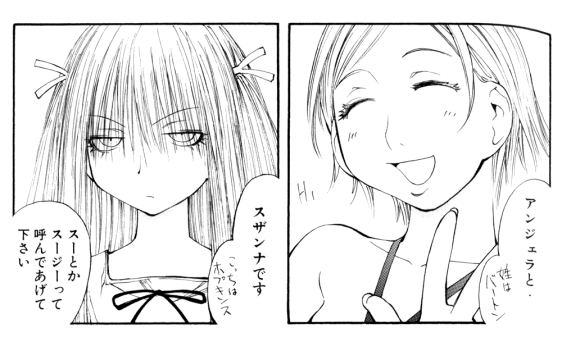
As we know from the end of Nidaime, Madarame eventually ends up with Sue. It’s kind of funny that he’s the first guy she meets in Genshiken, as if it was all a long play into the most classic of romance tropes.

I always found Angela and Sue to be fairly realistic, if exaggerated portrayals of American fangirls, but I think that it’s become even more the case as time has passed. Maybe it’s my greater exposure due to social media like Twitter, but Angela’s willingness to just announce her fetishes without hesitation seems not that unusual. Then again, Yoshitake from Nidaime is built from a similar cloth; the only difference is maybe level of sexual experience (Angela is clearly sexually active, while Yoshitake is very much not).

In Volume 7, Sue has a certain grumpiness about her, even as she becomes attached to Ogiue. However, Ogiue is pretty surly herself. I wonder if the softening up of Ogiue leads to Sue becoming less harsh as well.

It’s also funny to think about the fact that, at the time of Genshiken, Sue’s combination of Asuka reference (“Anta baka?”) and Ruri reference (“Baka bakka”) was like, anime nerd knowledge 101. Now, I think it wouldn’t be unusual for the typical fan, Japanese or otherwise, to not have it click immediately.

Final Random Thoughts

The between-chapter specials this volume include Sasahara and Madarame discussing preliminary Kujibiki Unbalance designs. Those drawings are clearly from a younger Kio Shimoku, as it’s the same style as the first chapter of Genshiken! Kio’s aesthetic changes are amusingly visible as a result.

As Sasahara is thinking dirty things about Ogiue, there’s a Gundam model kit box in the background. I think it’s a Sazabi.

In Sasahara’s job interview, he talks about how Kujibiki Unbalance has changed so much since the original cast graduated, to the point that it doesn’t even feel it’s the same series anymore. At the time, it feels like it might have been referencing the graduation of Madarame, Kugayama, and Tanaka, but now it seems to reflect Genshiken Nidaime even more—almost as if Kio doubled down on this idea for the sequel. We know he’s a guy who likes to get referential with his series, but I wonder if Nidaime is even more meta than any of us realized.

Cardcaptor Sakura and the Alternative Canon: What is the “Clear Card Saga” Anime Following?

When the Cardcaptor Sakura: Clear Card Saga anime announced, one of the questions asked was, would it be following the canon of the manga or the anime? Although the two versions share many similarities, there are also some notable differences between them. Now that the new TV series has been out for little while, it’s evident that they’re acknowledging the old anime…but I have my suspicions that this wasn’t always the case.

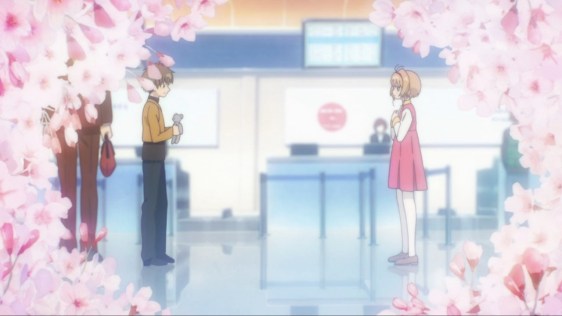
One of the tell-tale differences between the two iterations of the original Cardcaptor Sakura is how they end. While both involve an exchanging of teddy bears as an expression of mutual love and a temporary separation as Syaoran returns to Hong Kong, the anime has this happen at the airport, while the manga’s version takes place as Syaoran is riding the bus to the airport. Also, while the anime has them reunite in the second film, the manga immediately follows this with a timeskip where Syaoran shows up to greet a now-middle school-aged Sakura. This is roughly the point where Clear Card Saga starts.

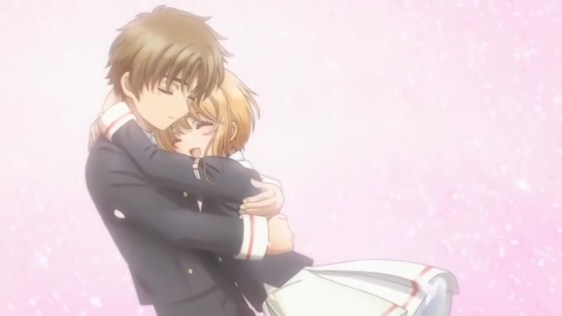
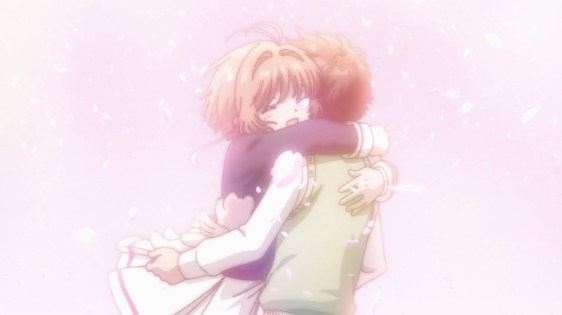
Prior to the premiere of the Clear Card Saga TV series, there was a special OVA released as a way to bridge the old and new anime. As seen above, this OVA takes its cues from the manga by having the bear exchange take place at the bus, and then transitioning to the middle school timeskip. With this, I assumed the matter was settled. The Clear Card Saga anime would definitely be sticking closer to the manga.

Then episode 1 hit, and things didn’t quite line up.

When Syaoran shows up again in the manga and OVA, he’s wearing a Tomoeda Middle School uniform. In the new anime, he’s wearing street clothes. Maybe this is just a timing or aesthetic issue. Perhaps it doesn’t make sense for Syaoran to have a uniform after just moving back. Maybe the fact that they show Sakura at school before meeting Syaoran means he couldn’t be there (because she or one of her friends would’ve inevitably noticed him walking around in uniform). Either way, here is a discrepancy from the manga.

But they also flashback to the teddy bear exchange, and it’s at the airport! That’s a scene that explicitly calls back to the anime and not the manga. Maybe they just did that for the convenience of the people who watched the old anime.

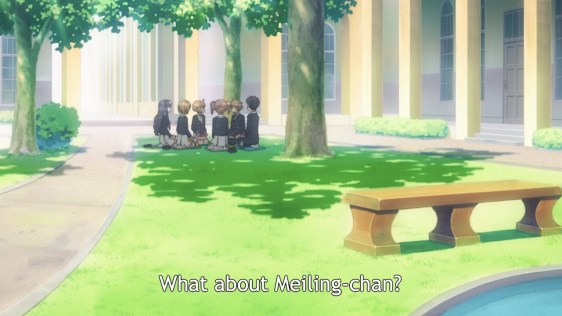
The smoking gun comes in episode 2, when the characters are having lunch together at school. During their conversation, Tomoyo asks Syaoran how Meiling is doing. The reason this is a big deal is that Meiling never shows up in the manga. She’s an anime-original character, and one of the many elements used to turn a 12-volume manga into a 70-episode anime. Whatever the case may be, we have clear unequivocal acknowledgement that the old anime’s events are either partially or wholly canon in the Clear Card Saga anime.

So why make that OVA? I suspect that it served multiple functions. First, it might’ve bridge the gap between series, as mentioned above. After all, it’s been about 15 years. Second, it could’ve been used to get the staff and actors used to working on Cardcaptor Sakura again. Third, I really do think the anime was going to follow the manga more strictly, as a way to keep things simpler, but that they changed their minds at some point. If this were the case, maybe it was because they realized many had only ever seen the anime, and thus would be confused by the differences.

While the old anime appears to be canon for the new show, the question remains as to how much will actually be different from the Clear Card Saga manga. Referencing Meiling is one thing, but what about having her show up? Will the new anime have more clear cards than the manga, just like it’s predecessor? And what of the fact that Sakura’s dad is a partial reincarnation of Clow Reed—a fact revealed in the manga but never in the anime?

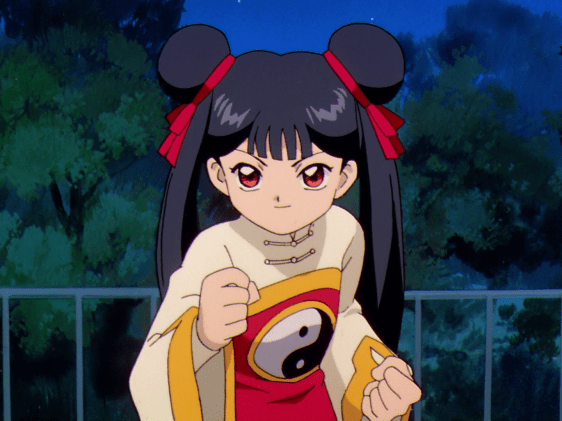
Personally speaking, I wouldn’t mind seeing Yukana reprise her role as Meiling and treating us to some Kung Fu fighting.

Down-Home Food Therapy: Atari no Kitchen

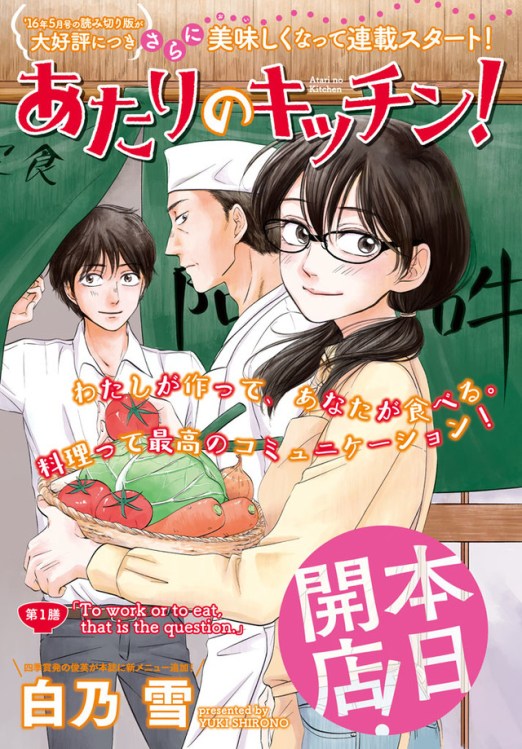
I enjoy food manga in all its forms. I was even quoted on the back of the English release of Sweetness & Lightning Volume 1! But within the Afternoon manga family is another food series I’m enjoying. Called Atari no Kitchen!, it follows a college-aged woman who starts working at a small, family-owned restaurant and helps to inspire dishes that are just right for each customer.

Atari no Kitchen! is very similar to manga such as Bartender and La Sommelière, where the food experts act almost like doctors prescribing particular spirits for each individual’s problems. Where I enjoy Atari no Kitchen! more is in its focus on food instead of alcohol. I have nothing against spirits, but their differences are much more subtle and alien to me, making their assumed effects much less relatable on a personal level. To put it succinctly, I’ve consumed far more food than alcohol in my life, and it makes this series easier to understand.

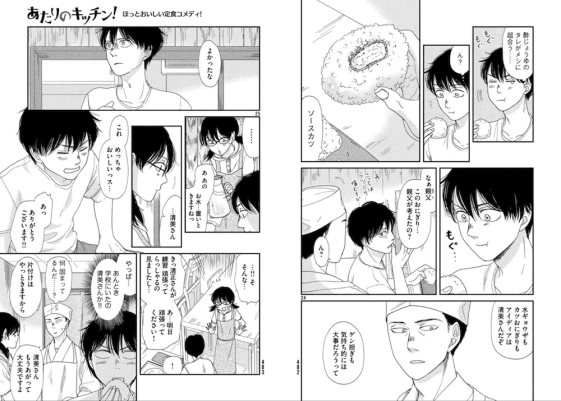
Because the setting for Atari no Kitchen! is a small restaurant (think of where Soma from Food Wars!: Shokugeki no Soma comes from), the dishes are not fancy foie gras or blowfish, but foods meant for working-class families to enjoy. For example, one chapter involves trying to find a better menu for the son of the restaurant owner, who’s set to participate in a sports event. Usually, he eats katsu, as a classic pun on the Japanese word for “win,” katsu (勝つ), but Kiyomi reads that katsu is pretty heavy and oily, and so doesn’t digest as efficiently as one might want for physical activity. So, she sets out to make a more balanced menu that still carries the flavor and spirit of pork cutlets. I think this is easy to understand and envision, even if someone’s never eaten a katsu in their life.

Kiyomi herself is also adorable, and I would be lying if I said she didn’t charm the socks off of me. The son, Kiyomasa, is also clearly smitten with her. It’s not exactly a romance series, but the fact that their names are so similar (they even start with the same kanji!) tells me that their feelings will grow as the series continues.

If you can read Japanese, you can find it on sale wherever Japanese books are sold. If not, it is a Kodansha title, so there’s always a chance it’ll get translated someday. Let’s hope!

The New Year Isn’t Just For Show!: Ogiue Maniax Status Update for January 2018

Happy new year to all! Amidst a topsy-turvy year, what have been your favorite shows? 2017 might go down as a surprisingly robust year for anime, and I hope to see an industry that allows creativity to rise to the top. After all, the better anime is, the more there is for this blog to talk about.

Going into 2018, I’d like to thank my Patreon sponsors, especially the following.

General:

Johnny Trovato

Ko Ransom

Alex

Diogo Prado

Viga

Sue Hopkins fans:

Serxeid

Hato Kenjirou fans:

Elizabeth

Yajima Mirei fans:

Machi-Kurada

New Year’s is of course the time for resolutions, and while I tend not to make them, I want to hold myself accountable this year.

As I’m interested in improving my language skills, most of my resolutions are focused in that area. I want to have true Japanese literacy. I’m fairly fluent overall, but I’m still not technically “reading newspapers without help” proficient—which is how Japanese literacy is officially defined.

I also want to improve my Cantonese, learn Mandarin Chinese, and/or reach a greater level of Dutch. I’ve been practicing the last one in the Duolingo app for a while now, to try and make up for my lack of true fluency when I lived in the Netherlands. My goal is to be able to read Dutch comics. Ik wil lezen Nederlandse strips.

I know they say not to try and learn more than one language at a time, but I just want to do everything, I guess.

My favorite posts from December:

Gattai Girls 7: “Shingu: Secret of the Stellar Wars” and Moriyama Nayuta [Anime Secret Santa]

A combination Gattai Girls entry and Secret Santa review! Shingu is really good; you should watch it.

Spotted Flower and the Role of the “What-If”

This story about an alternate Genshiken took on some crazy twists recently. But how does its proximity to Genshiken affect our perception of it?

Japanese vs. English Yu-Gi-Oh!: How the Two End Up Being Almost Different Shows

Inspired by the recent Yu-Gi-Oh! marathon on Twitch.

Patreon-Sponsored

Aikatsu Stars! Christmas 2017 Thoughts


“We wiiish you a merry Christmaaas…”

Closing

2017 was a tumultuous year for many. I hope you stay strong. I look forward to a world where reason and compassion defeat hatred and bigotry.

Save

Save

Save

Spotted Flower and the Role of the “What-If”

The manga Spotted Flower is more than just a story about a male otaku and his non-otaku wife. To fans of the author, Kio Shimoku, the series is also a thinly veiled alternate universe version of his most famous work, Genshiken. With nearly all of the characters in Spotted Flower having direct analogues in Genshiken, the manga is constantly nudging and winking at the audience. Recently, one of those nudges turned into more of an elbow to the solar plexus, and many assumptions about the series have gone out the window. A story seemingly about marital bliss (despite some ups and downs) has become a tale of adultery, and Genshiken fans are left reeling.
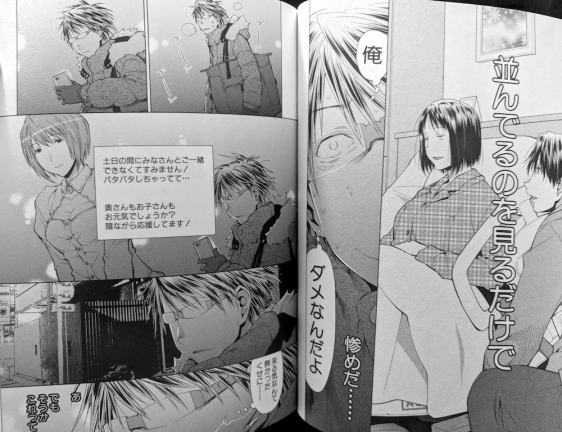
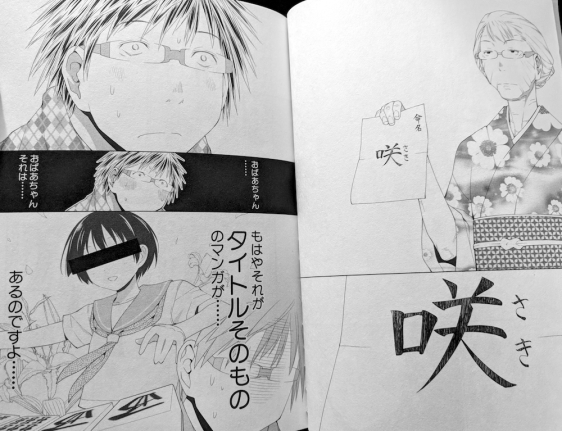
The buildup to the big moment occurs shortly after the birth of the husband and wife’s first child, who is named, appropriately, “Saki.” Visited by her ex-boyfriend, the ease with which she and her former lover banter back and forth drives the meek husband to wallow in quiet envy. In a moment of weakness, he ends up sleeping with an old mutual friend—one who’s female up top, male down below, and who still identifies as male—and cheats on his wife. Only, instead of doing the deed, he winds up on the receiving end.

Jealousy and Betrayal

It’s clear which Spotted Flower characters map to which Genshiken identities. The husband is uber nerd Madarame Harunobu, while his wife is the no-nonsense Kasukabe Saki. The ex-boyfriend is Kohsaka Makoto (who is Kasukabe’s actual boyfriend). The one night stand (?) is with Hato Kenjirou, the male BL fan who ends up falling in love with Madarame. Seeing all of these characters act so terribly to each other can feel like a betrayal, especially to fans of the popular Madarame-Kasukabe pairing. But the situation begs the question: where do the Genshiken versions end and the Spotted Flower ones begin?

Spotted Flower resembles fanfiction in the sense that, while it’s possible to enjoy it standalone, the work encourages and even to some extent assumes a certain degree of familiarity with the source material. What use is a story about Mikasa from Attack on Titan turning into a robot, if the reader doesn’t know how Mikasa is supposed to act normally? To that extent, I suspect that the controversial decision to make the husband an adulterer is part of stressing Spotted Flower as the space where all the things not possible in Genshiken become real. The very premise of the series is built on that idea—Kasukabe ultimately rejects Madarame because she loves Kohsaka.

If the husband does all the things Madarame didn’t or couldn’t do, then his poor decisions make sense. At one point in the second manga series, Genshiken Nidaime, Madarame comes close to sleeping with his friend’s little sister, Sasahara Keiko. As it turns out, Keiko is actually trying to cheat on her current boyfriend with Madarame, and her casual admission to this fact sends Madarame running for the hills. Madarame is unwilling to be an accomplice in another’s unfaithfulness, but the husband in Spotted Flower is not. Later in Nidaime, Madarame ends up alone with Hato in an awkward spot. Hearts racing, the two come close to having something happen, only for happenstance to deflate the tension. Madarame ends up rejecting Hato later, out of concern that Hato should be with someone better. The evening that goes nowhere in Genshiken certainly ends up somewhere in Spotted Flower.

What’s more, where Genshiken deals in relatively tame kinks and features mostly faithfully monogamous relationships where available (Keiko notwithstanding), Spotted Flower thrives on the unconventional. The not-Hato (hereafter referred to by his artist pen name Asaka Midori) is already in a physical relationship with his manager who’s the Spotted Flower version of Genshiken character Yajima. But rather than being upset or surprised, the manager was already well aware of Asaka’s desire for the husband. She even goes as far as to ask how it was giving anal sex to him. At another point, it’s implied that another character (a manga editor who maps to original Genshiken protagonist Sasahara) could maybe potentially be having threesomes with his girlfriend and her very touchy-feely American girl friend, but doesn’t. “Open relationships” seems to be the name of the game, which further emphasizes the Bizarro Universe-esque aspects of sexual relations in Spotted Flower relative to Genshiken.

Does this mean that Spotted Flower is reliant on Genshiken, or that the sense of betrayal on the part of readers would only come from Genshiken fans? Perhaps not, but the feelings are likely most intense from that established fanbase. However, I find it fascinating that, unlike fanfiction, which typically exists on a very clear line of what is “canon” and not, the fact that Spotted Flower is this very obvious Genshiken what-if with only the barest degree of plausible deniability makes that canon/non-canon distinction much blurrier. At the same time, it is fact that the Spotted Flower characters are definitely not the Genshiken ones, and not just the same characters in an alternate universe or timeline. They simply have too many different physical features that can’t be explained by the passage of time on account of the Spotted Flower characters being older. “Ogino-sensei” (Ogiue in Genshiken) has a different face structure. The blond American otaku behaves like the petite Sue but has a body like the tall, buxom Angela. In some cases, it’s not even clear who’s supposed to be who based on character design alone. Spotted Flower might be a “possible future” as both it and Genshiken like to put it, but it’s practically CLAMP’s manga, Wish—a series based on a JoJo’s Bizarre Adventure doujinshi of theirs with the names and designs altered into “original” characters. Only, for Kio, he’s his own source of inspiration.

Ogiue’s Counterpart: Ogino-sensei

The question as to how much Spotted Flower should speak for Genshiken is a tricky one. The characters of the former mirror the latter. Are they the true desire of the author, or simply a chance to tell different stories? Is it precisely because the characters are alternate versions that this can happen, or does that thread of possibility mean the two are tied together? I don’t believe there to be a true answer to these questions, simply because it really depends on individual readers’ relationships with both series. But it’s also curious that some of the characters and relationships are not as different as others. Ogino-sensei is still seeing her manga editor boyfriend, and their bond seems to have remained strong. The wife’s ex-boyfriend (not-Kohsaka) looks almost the same, except his hair is black instead of blond, and his bright-eyed gaze has been replaced with some kind of seeming cynicism or darkness. Maybe there are characters who can find the same happiness on the alternative route, and those who cannot.

A new character: Endou

How much Spotted Flower will continue to be self-parody remains to be seen. Volume 3 introduces wholly original characters in Asaka Midori’s editor, Endou, as well as her publisher. I wonder if this is the signal that the manga is on the verge of becoming its own entity.


It’s Time to Yule: Ogiue Maniax Status Update for December 2017

EDITPatreon has decided NOT to go through with the changes described below.

This month’s Patreon sponsor update is, funny enough, going to be about Patreon.

Before I go into detail, I’d like to give thanks to my Patreon sponsors.

General:

Johnny Trovato

Ko Ransom

Alex

Diogo Prado

Viga

Sue Hopkins fans:

Serxeid

Yoshitake Rika fans:

Elliot Page

Hato Kenjirou fans:

Elizabeth

Yajima Mirei fans:

Machi-Kurada

Recently, Patreon has changed the way it handles patron subscriptions and creator payouts. There’s some controversy over the exact intent behind this change too–Patreon claims it’s to increase consistency of payments, critics argue it’s a greedy move to extract more money. Either way, what it means is that many users might end up paying more. Where a $1 pledge once meant you pay $1, it now means $1.36 per creator you support.

If you want to keep supporting Ogiue Maniax at your current pledge level, feel free to do so. But if the extra financial burden from this Patreon change is too much, feel free to lower your pledge amounts as much as necessary–even to $0.

One thing I’m considering is lowering my rewards to compensate for this change, so patrons can get the same perks for the same amount. Tell me in the comments or on Patreon.

My favorite posts from last month:

Teikoku State of Mind: Anime NYC 2017

It’s been a while since New York City’s had a dedicated anime con. Check out my thoughts on Anime NYC (spoilers: it was fantastic).

10 Years After: Ogiue Maniax 10th Anniversary

Wherein I reflect on a decade of anime blogging.

Raspatat at Koshien: An Iconic Dutch Snack at Japan’s Most Famous Stadium!

A snack from my time in the Netherlands!

Genshiken Re-Read

Return to Genshiken: Volume 6 – Eyes as Black as the Abyss

My favorite volume of Genshiken, period.

Patreon-Sponsored

Aikatsu Stars! and Nikaido Yuzu, the Ultimate Kouhai/Senpai

I was asked to write about my favorite Halloween anime, only to realize that most of them are Precure episodes. Go figure.

Closing

Kio Shimoku announced a new manga. Am I going to review it on Ogiue Maniax? The answer is “very yes.”

Save

Save

Save

A Food Analogy to Explain the Resistance Against Diversity in Comics (and Why Diversity is a Good Thing)

Marvel placing blame for its declining sales on its push for characters outside of the white, male archeype has provided the latest arena for critics and fans to come out for and against diversity in entertainment. Looking at the online discourse, however, I find that there are many championing diversity who have difficulty seeing why anyone would resist. A major part of the problem, I believe, is that there’s a failure to understand that the two sides are coming from unique points of view built on very different foundations.

The Story of Trans Fats

Here’s a food analogy (because I love food analogies).

For years in restaurants across the US, frying oil was reused over and over by default. Then it was discovered that this process produced what came to be called trans fats, and that these fats were more harmful to health than just frying in general. Because of this, every place began changing their practices and eliminating or minimizing the presence of trans fats.

In addition to the added expense of having to rethink how food is prepared, this transition came at arguably another cost: flavor. Fried food just tastes different when old oil isn’t being reused. If the reason for eating at, say, your favorite fried chicken joint was because of what that reused oil imparts to the meat and skin, it could have felt like an unnecessary sacrifice for “health.” Even though having food be healthier is unarguably a good thing (if people could eat versions of the food they do now that tasted the same but was better for the body, they would), health benefits are not necessarily what any given person will prioritize.

The Establishment of Critical Values Among Fans

This is where I think some of the contention over diversity in comics and media lies. While the notion of “I don’t mind diversity in my entertainment, I just won’t want it to turn into some SJW hugfest,” is an argument borne out of certain biases and blindness towards privilege, it’s also on some level based in the standards established in a given circle of media consumers. In this environment, there are criteria by which a comic or television show is judged as “good” or “bad,” e.g. narrative consistency. To a different audience, narrative consistency could be important too yet still take a backseat to something accepted as a “higher priority,” such as a visceral feel to romantic interactions. Personally speaking, different groups of fans I’ve interacted with can have wildly different elements they value, to the point that it can seem as if two groups are watching completely different things despite it being actually the same product.

In other words, the push-back against diversity isn’t only about right and wrong, but about what people are accustomed to—what they’ve accepted as truisms of the medium. When a given community is built and reinforced over time, certain values become stronger in turn. If the specific reason you ate fried foods was for the savoriness that trans fats provide, then no amount of “it can increase the risk of heart attack!” will placate you.

Old vs. New Criticism

To move this away from deep frying and towards actual examples from comics and entertainment, I present two examples. The first is the changing reception over British comics writers such as Alan Moore and Grant Morrison. The second is the increasing prominence of character-over-story manga series from around the early to mid 2000s.

In years past, Alan Moore and Grant Morrison were praised by comics fans as writing incredibly intelligent and mature comics. Works such as Watchmen (Moore) and Seven Soldiers (Morrison) are genre-defying/defining creations that present complex and cerebral arguments that challenge comics readers. However, a lot of their works involve anywhere from minor to heavy doses of misogyny, so if your priority is the positive portrayal of women above all else, then it might not matter how “smart” Moore and Morrison’s comics are. On the other side, if you’re from a community space that believes the intellectual elements of their comics are what define good comics, then misogyny might be viewed as a lesser complaint or a non-issue.

Somewhat similarly, manga scholar Ito Go has written that manga criticism was historically biased against manga that emphasize character over story. When manga began coming out in the late 90s/early 2000s that focused on the stylization of its characters above all else, these were considered “bad manga” by established critics. Ito, on the other hand, argues that this because of the values that have been built and reinforced around the cult of Tezuka Osamu (the most celebrated manga artist ever), and that the visual “realness” of characters (kyara, as Ito calls it) has been just as much a part of manga all along. Essentially, the idea is that the only reason why kyara-heavy manga is considered inferior is because of the ossification of the criteria for “good” manga. Yet, for those who still want strong story above all else, Ito’s point of view holds little weight.

Whether the contention is based specifically in diversity or not, the general tendency for a group of like-minded individuals is to assume certain truths and then build around them. Disagreement can happen within these parameters, and sometimes those boundaries can even be stretched or broken, but in time certain truisms develop. Attacking that structure or praxis from the outside can appear to an insider as if you’re saying “1 + 1 = 3,” even if what you’re expressing merits consideration.

Noticing the Problem

On a certain level, I believe that the resistance against diversity in comics and other forms of entertainment is because we’re in the middle of a paradigm shift. Where once comics fandom and criticism was built on a long established marketing focus on white, male, and straight readers, other groups are making their voices heard in ways that the entrenched fanbase can’t help but take notice. The reason that they didn’t notice in the past is because they were unaffected by it, plain and simple. Many likely didn’t even know there was a problem, and this is because the values emphasized and prioritized in that community left little room for diversity to be brought up except in very broad strokes. The sand is shifting underneath them, and it’s not surprising that some would double down on what they’ve learned to be true.

Ogiue Maniax Discusses Anime NYC on the Speakeasy Podcast


In addition to my con report of Anime NYC, I also sat down with Kate and Al from the Reverse Thieves to discuss New York’s latest anime convention

Teikoku State of Mind: Anime NYC 2017

When a brand-new convention decides to call itself “Anime NYC,” it’s practically asking to have the deck stacked against it. Running a first-year convention is no small task, doubly so if it’s in the heart of Manhattan. And with no reputation to go by, potential attendees may feel reluctant to try things out. Small attendance numbers can mean a lack of overall interest and the inability to justify the high costs of NYC, while large numbers means a greater chance of disaster striking if mismanaged. As a longtime resident of New York City, I’ve seen cons come and go, but somehow, someway, Anime NYC went so swimmingly that I almost can’t believe it was real.

General Impressions and Exhibitor’s Hall

Those who attended New York Anime Festival and the first few New York Comic Cons might recall what it was like to go through the Jacob Javits Center without feeling like sardines. Walking through Anime NYC felt reminiscent of that environment, as the con was fairly heavily populated but with plenty of elbow room to spare. Panel rooms were right next to the Exhibitor’s Hall, making transitions between checking out the goods and listening in on industry and fan talks. Special events were held in a Main Event Hall that was a fair distance away, though nowhere near as disorienting as, say, the Baltimore Convention Center where Otakon used to take place.

Because it was so easy to navigate (without the space feeling overly empty), I came out of the three-day con feeling satisfied yet unstressed. Usually one comes with the other due to the hustle and bustle of trying to get everything done, or because there’s so little to do at the event itself that boredom and lethargy set in. Anime NYC struck a Goldilocks-type balance with a schedule that thrilled but did not overwhelm body and mind.

A major contrast between Anime NYC and NYCC is that the latter is focused on being a general comics pop culture event, with a film and television presence that all but overshadows the “comic” in comic con. Anime NYC, on the other hand, is first and foremost concerned with anime and manga. A few features branched out from that core, such as the presence of Overwatch voice actors who were there to meet the fans and sell autographs, but this was certainly no “anime ghetto,” as fans took to calling New York Anime Fest when it began to be dissolved into NYCC.  For those who love anime and love a big convention feel but think New York Comic Con’s a bit too much, Anime NYC has potential to be a gathering point for anime fans in the tri-state area.

Concerts

Anime NYC featured two concerts that shone in different ways. The first was Anime Diva Night, while the second was the Gundam Thunderbolt Concert.

At Anime Diva Night, three Japanese musical guests performed as part of the Anisong World Matsuri. Two of the singers, Ishida Yoko and TRUE, are amazing vocalists in their own right, but the third, Yonekura Chihiro, was the reason I wanted to attend. She’s the voice of so many amazing anime themes over the years that it almost doesn’t compare. Notably, she sang the opening and ending themes to Mobile Suit Gundam 08th MS Team.

While having Yonekura alone would’ve sufficed in my case, all three did a wonderful job. Some singers sound significantly better in the recording booth than they do onstage, but this was not the case for the Anime Diva trio, who sounded incredible even though the makeshift Main Events Hall did not have ideal acoustics.

The concert had a somewhat unusual format. Rather than move from one act to the next, each performer would do a few songs, perform a duet with another, and then the newer singer would take over before the next duet. There were two rotations in total, with all three singers performing together at the start and end of the show. All of the group performances were cover songs of popular anime themes—”Cruel Angel’s Thesis,” “Moonlight Densetsu,” “God Knows,” etc.—while the solo acts were their signature songs. Yonekura did indeed sing the Gundam 08th MS Team opening, but also an old favorite of mine in “Will” from the anime Hoshin Engi (aka Soul Hunter). Highlights from the other two singers included TRUE performing the first Sound!! Euphonium opening and Ishida doing arguably her most famous song, “Otome no Policy” from Sailor Moon R.

There were a couple of songs that didn’t make the concert that I was hoping for: Yonekura’s “Yakusoku no Basho e” from Kaleido Star and Ishida’s “White Destiny” from Pretear, but it was a small loss for an otherwise amazing concert.

The Gundam Thunderbolt Concert was highly unusual compared to what typically happens at an anime con performances. Generally, they’re closer to Anime Diva Night, sounding like the j-pop or j-rock one expects out of anime. To have the Gundam Thunderbolt composer Kikuchi Naruyoshi lead a jazz band himself on saxophone was a truly rare treat, and it’s one of the most unique experiences I’ve had at an anime con. The closest equivalent I could think of was Kanno Yoko’s concert at Otakon 2013.

I am no jazz aficionado, but thanks to the concert, I felt as if I began to understand the almost primal appeal that jazz holds for listeners. As I listened, an analogy popped into my head: jazz is like constructing a human being from music. They can be loud one moment and quiet the next. They can be a mess of contradictions, yet still function. I’m unsure if this will send me towards checking out more jazz in the future, but my curiosity is definitely piqued.

I’ve been more or less referring to the Gundam Thunderbolt Concert as a “jazz performance,” but that’s not entirely accurate. To everyone’s surprise, the concert also included performances by the singers of some of the 50s/60s-style pop songs from the Gundam Thunderbolt anime. In the context of the series, the two main characters, Io and Daryl, are two soldiers on opposite sides of a war who each listen to music as they battle. Io is an intense man who loves equally powerful jazz, while the handicapped Daryl prefers softer ballads.

At the Gundam Thunderbolt panel, Kikuchi mentioned that these are basically his two favorite genres of music, and he thought both fit the characters well. Interestingly, while the Gundam Thunderbolt manga included jazz already, Kikuchi composed entirely new songs that he felt fit Io’s character better.

One funny coincidence of sorts when it comes to Kikuchi’s choice to add a golden oldies aspect to the Gundam Thunderbolt score is that one of the biggest names in classic mid-20th-century American pop, Neil Sedaka, once composed the theme songs to Mobile Suit Z Gundam in the 1980s. I’d be curious to know what Kikuchi would think about this.

Artist Alley

More than Exhibitors’ Halls, Artist Alleys at cons can be affected heavily by the space they occupy. Regardless of the artists’ skills, or the amount of people in the alley, a bad space can make an attendee want to leave as quickly as possible, while a good space encourages more browsing and exploring.

Anime NYC’s is probably the best I’ve ever seen. Held on the top floor of the Jacob Javits Center, natural light shined down on the entire Artist Alley from an entirely windowed roof. At times, it almost felt like an outdoor European boutique, which made it just a pleasant place to peruse.

I purchased a few items at the Artist Alley, mainly from Japanese artists (something of a rarity even at anime cons). One booth was ran by the wife and assistant (pictured above) of manga artist Ohno Junji, creator behind the manga for obscure titles Mobile Suit Gundam: Missing Link and Mobile Suit Gundam The Origin MSD: Cucuruz Doan’s Island. Unfortunately, the artist couldn’t attend himself. They were selling art packages from Ohno himself and his assistant, Ally Suwabe:

Ohno Junji

Ally Suwabe

Axel Rex is Ohno’s original web comic he drew for Kodanasha/Yahoo!! Comics from 2008 to 2009.

The other Japanese artist attending was Tatsuyuki “Mikey” Maeda, who’s worked for the past 10 years as a manga assistant. In a way, while manga artists themselves only attend cons sparingly, their assistants are even rarer. Maeda was selling a short guide called “Secrets of Manga: Basics of the Tools & Trade.” In it, he gives various technical tips to aspiring manga creators, the kinds of things that often get glossed over in favor of “character design” and “how to draw mecha.” The guide talks about differences in pen nibs (such as what you should use if you have a light touch vs. a heavy hand), how to effectively use white-out, and more. I highly recommend it.

Panels

Gundam Thunderbolt Panel

Panels are an important part of the con experience for me, though due to my schedule I could not attend as many as I would have liked. Still, the Gundam Thunderbolt panel was highly informative, as were the Inifini-T Force and LeSean Thomas panels.

Infini-T Force is a current 3DCG anime series crossing over the classic heroes of Tatsunoko Production—Gatchaman, Casshan/Casshern, Hurricane Polymar, and Tekkaman. The fact that Tatsunoko, one of the most influential anime studios ever, had a con presence at all was the main reason I decided to attend their panel. Overall, it was a fairly basic introduction to Tatsunoko, but I like that they conveyed a bit of the studio’s historical significance. They’re one of the most influential studios ever, pushing the limits of animation in Japan since their inception in the 1960s. They were also willing to discuss a bit of the reception Infini-T Force has received in Japan, such as the fact that the primary female character is a little contentious to Japanese audiences. This is also somewhat unusual for Japanese companies, and was somewhat refreshing.

The LeSean Thomas panel was a general Q&A, but was one of the highlights of Anime NYC. It was inspiring to see attendee after attendee express how Thomas inspired them to keep working at their art, and how his success as a creator of color gave them the courage to never give up. I previously interviewed him at Otakon 2016, and he does make for an excellent role model.

Cosplay

In this case, I’ll let the pictures speak for themselves:

In Conclusion

Given how much I’ve praised Anime NYC, it might seem like I’m a paid shill, but I assure my readers that this is not the case. The con was actually executed so smoothly that there’s little I can complain about that would be the fault of the convention itself. While I attended for free as press, even the weekend ticket was affordable, especially compared to New York Comic Con ($60 vs. over $200 to buy four 1-day NYCC passes).

At approximately 20,000 attendees, Anime NYC has already become one of the larger anime cons in the US. The convention appears to have done a sound job of attracting locals, and I’m curious to see how much more it can grow. If the convention keeps up this level of quality, I’d be happy and proud to call Anime NYC “home.”