I Actually Met the Author of Genshiken! Kio Shimoku Live Drawing Report

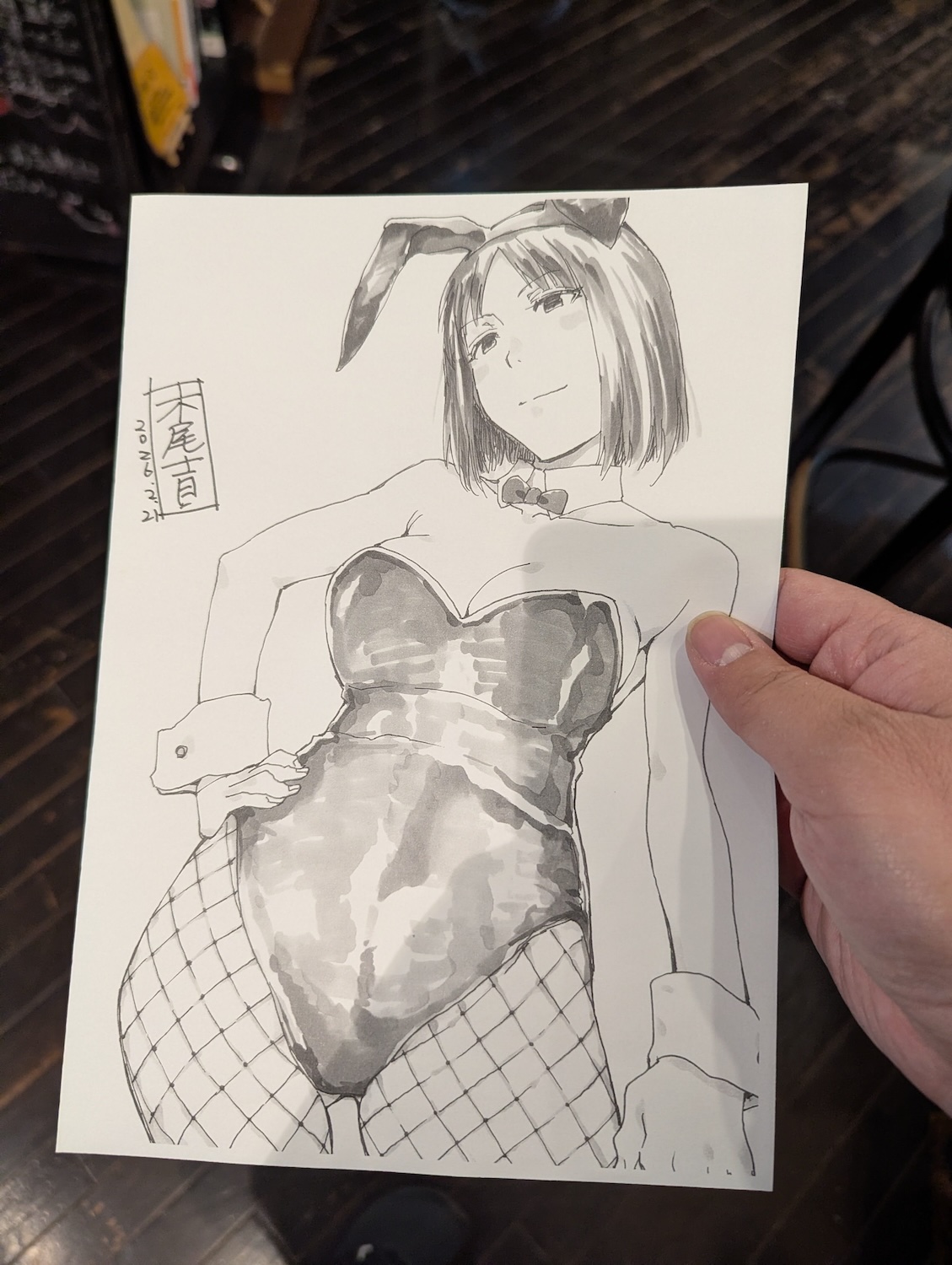
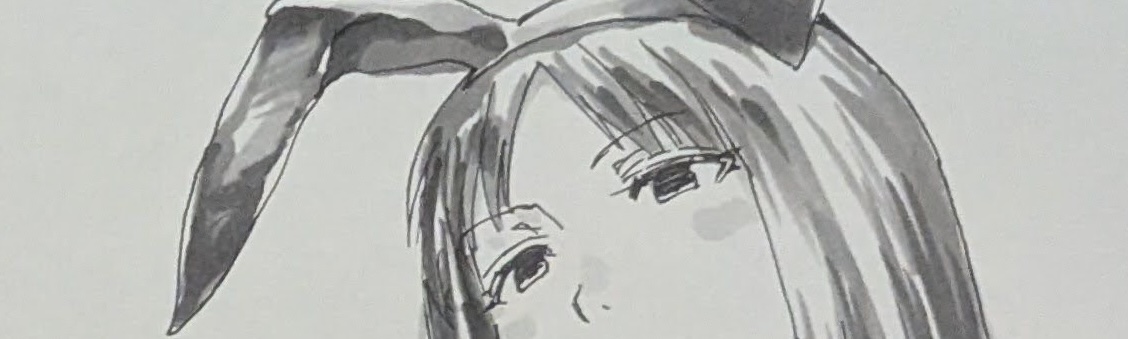
A close-up of a drawing of a woman's face from the nose up. It is the wife from Spotted Flower. She's wearing bunny ears.

This past February, Kio Shimoku did a live drawing event with fellow Rakuen: Le Paradis manga artist Minoda Kaidou as part of a series called “Oekaki no Jikan Desu,” or “It’s Time for Doodling.”

And by amazingly fortuitous coincidence, I happened to be in Japan at the time, and I couldn’t let this chance slip by. So I actually got to see Kio Shimoku in person for the first time!!

The Venue

Tonarimachi Coffee is a short walk from Nakanobu Station, and is located in a shopping district, down a short staircase. A number of attendees had already lined up when I got there, and unsurprisingly the audience was mostly older men. The seating area included trays to put your personal items. The “camera” used to capture the drawings for viewing was just a smartphone jury-rigged into a projector. Classic American music played on the speakers before the event started as well as during the break in between, such as “Stand by Me,” “Be the One,” “My Sharona,” “Jailhouse Rock,” and “Oh Carol.”

A coffee shop counter, with coffee cups on shelves in the back.

Event and Guest Details

Photos and video weren’t allowed in the event, so I took notes as the guests drew and talked to each other. Due to a combination of not having the best listening skills and them talking a lot of inside baseball, I didn’t catch everything, so if anyone happened to watch (in person or via the stream) and has more to add, I welcome clarifying comments.

The event was MC’d by a “navigator” (their term), Iida Takashi, who was a gray-haired gentleman in a nice suit and spoke with a fairly authoritative air. I later found out he was the editor of Rakuen: Le Paradis, with a long career working for the manga publisher Hakusensha. His experience includes working for magazines such as Young Animal and Hana to Yume, and he currently does freelance editing after retiring in 2020. 

Minoda, a female artist, was fairly short and had overall round features and dark shoulder-length hair. She wore a leather jacket and a red dress, as well as a facemask. Kio was a slender guy with gray hair. He had on a sweater, a scarf, and slim pants, as well as flip-top glasses. Later, they mentioned that the weather was fluctuating a lot that day, so it was hard to dress for. 

Minoda Kaidou’s Turn

Both Minoda and Kio drew bunny girls, which seemed to be both the theme of the event and something that other manga artists have done for Tonarimachi Cafe. I didn’t know this going in, but they announced that they were going to give every attendee a copy of the drawings at the end! Iida asked if regular copy paper was okay, to which Kio replied that it’s fine, and he’s had experience doing doujinshi on cheap photocopy paper (copybon).

Minoda was up first, with Iida and Kio providing additional commentary. She used a 2H pencil for the initial, which was so light that it didn’t quite show up on camera. Kio pointed out that a lighter pencil is easier to erase, but Minoda says it’s just what she’s used to. As she continued to draw, Kio got distracted by the fishnet stockings of Minoda’s bunny girl. 

(Iida briefly referenced the author of Houkago Play, Kurosaki Rendou, who was also published in Rakuen. I couldn’t catch it all, but Kurosaki does draw a lot of bunny girls, so maybe that’s why.) 

The topic of pens came up, and Minoda said that round pens are easier to use. Kio followed up by saying that digital art can’t capture the special feel of the G-pen, which is fun and has unique quirks. The digital G-pen setting has no feedback the way analog does. However, digital is great for filling blacks and applying screentones. Minoda and Kio also hold a G-pen differently from each other. Minoda said she probably does it wrong, but Kio basically said different strokes for different folks.

Kio said his right wrist was hurting, and that the wrist bone on the pinky side has issues. He mentioned that it was taped or bandaged, but I didn’t see the actual tape. Genshiken was drawn entirely analog, and Kio basically did it all himself. In fact, he was at a gathering at Kodansha, where Iida pointed out that Kio is one of the few creators who don’t use assistants.

Most younger artists apparently draw digitally now. Kio thinks it’s possibly because of COVID.

The drawing was going fairly quickly up to a certain point, when the pace slowed down because Minoda started meticulously drawing the fishnet stockings details. She really likes drawing the S-curve of a woman’s waist and hips. Minoda likes to use a Tentel brush pen with refillable ink for doing blacks.

Gundam and GQuuuuuuX came up briefly. Kio may have also drawn a Gundam doujinshi at some point.

Kio said that artists often struggle with how much ink to put in their pen. While Genshiken linework was drawn analog, coloring was digital. Back then, he didn’t know how to use layers in Photoshop. Someone then brought up the fact that Sadamoto Yoshiyuki, when working on the Evangelion manga, would apparently mke drawings and then discard them over and over.

The topic then shifted to Rakuen Issue 50 (the final print volume), and Iida said the art for Spotted Flower looks amazing, especially when it comes to all the different “connections” being shown. I didn’t understand this at the time, but now that I’ve read it, I can see what he means. (More on that in a future post.) Kio talked about how Spotted Flower started with only a few characters, but the cast kept growing. 

During this, Minoda was adding little dots to the intersections of the fishnets. With the finishing touches done, everyone got to see her drawing up close. We then got a 10-minute break before the next session started with Kio’s turn.
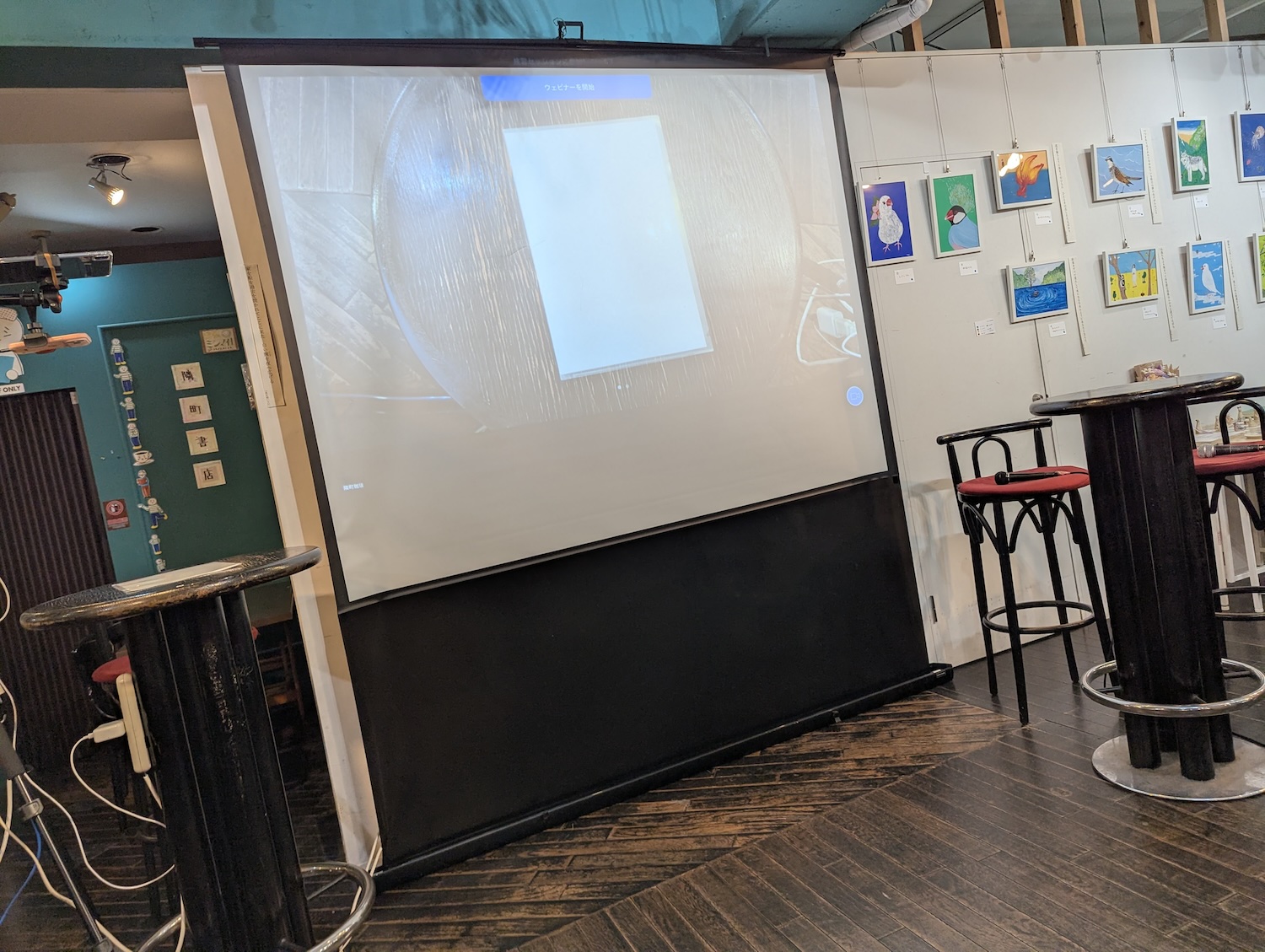
An empty space showing a projection screen and two tall, round tables with tall stools near them.

Kio Shimoku’s Turn

At the start, Kio was asked what some of his preferred drawing tools are. His answer: Air-in erasers and Prockey pens. One thing I noticed is that Kio extends his fingers and grips the pen high when drawing.

He also asked who he should draw as a bunny girl, to which Minoda replies “the wife” from Spotted Flower because she loves that character. 

During this session, Minoda accidentally got a bit of water on her own drawing because Iida was advising her to erase the pencil and they accidentally bumped a cup of water. 

Kio said he wished he could take a screenshot, but that this was analog. When asked about her own process, Minoda does her manuscripts digitally. However, she does drawings analog but backgrounds digital. 

Kio got to inking really quickly compared to Minoda, taking only 11 minutes. His head kept accidentally showing up on camera and blocking the drawing, until he was informed by staff. Kio showing he’s not afraid to draw hands at odd angles.

Other bits of information: Minoda finds taking a blank page and filling it with black very satisfying. Iida’s manga god is Toriyama. 

Iida and Minoda were very impressed by Kio’s drawing. The wife has sexy curves and wide hips. He used different copic markers with different grays to add shading. Minoda also found Kio’s thin gray lines to be amazing. 

Kio struggled some with erasing the pencil: the perils of working with paper. Iida then talked about using screen tones in the 90s, and about non-photo pencil—a kind of blue pencil that doesn’t show up when copying and printing. Iida also pointed out that grays are easier with digital. [Personal query: Is it because they automatically can become tones when printed?]

When asked how he feels about drawing analog these days, Kio replied that while he does all digital for his work these days, he has drawn analog for signboards. He uses Copic on those.

Seeing both Minoda and Kaidou draw, Iida was reminded of those shows on NHK where they show the old vs. new way of doing something. Minoda mentioned that being so up-close to Kio was a learning experience. Iida meanwhile was impressed by the details on the hands in the drawing.

Late into the drawing, Kio commented that it kept getting more erotic. He also added the little dots to the fishnets. Minoda brought up the angle of the eyebrows on her own bunny girl, possibly because she wanted to fix them. Other revisions she would make if she could do it again would be to have more of the legs and less of the bunny ears. Kio responded that he can’t draw legs well aside from the thighs. After some finishing touches (including some white out), his drawing was done. One really cool thing was that Kio actually used a hand mirror to look for errors, like a low-tech version of the “canvas flip” command in Photoshop or Clip Studio Paint.

At the end, they took questions from the audience.

Q&A

What is the fate of the artists of Rakuen?

Iida: Can’t say anything yet. Wait.

I’ve never seen a bunny girl before. How do you draw the chest, upper body details? 

Minoda: I do what I want to see 

Kio: But there are photos you can reference. 

What software do you use? 

Both: Clip Studio Paint. Kio uses version 4 from when it used to be Comic Studio.

(There seemed to be a question about one of her manga, which is set in Hokkaido.)

Minoda: Seeing people wear not much even in the cold of Hokkaido shocked her.

Will you draw a sequel to your Hokkaido work?

Minoda: Yes. Wait for it.

Kio, did you feel your drawings change from doing adult work? 

Kio: Not really, but it made me really impressed by everyone else who does 18+ material.

Minoda and Kio then made some closing statements:

Minoda: It was fun getting to draw for everyone. 

Kio: Thank you. Could feel myself trembling as I drew.

Closing
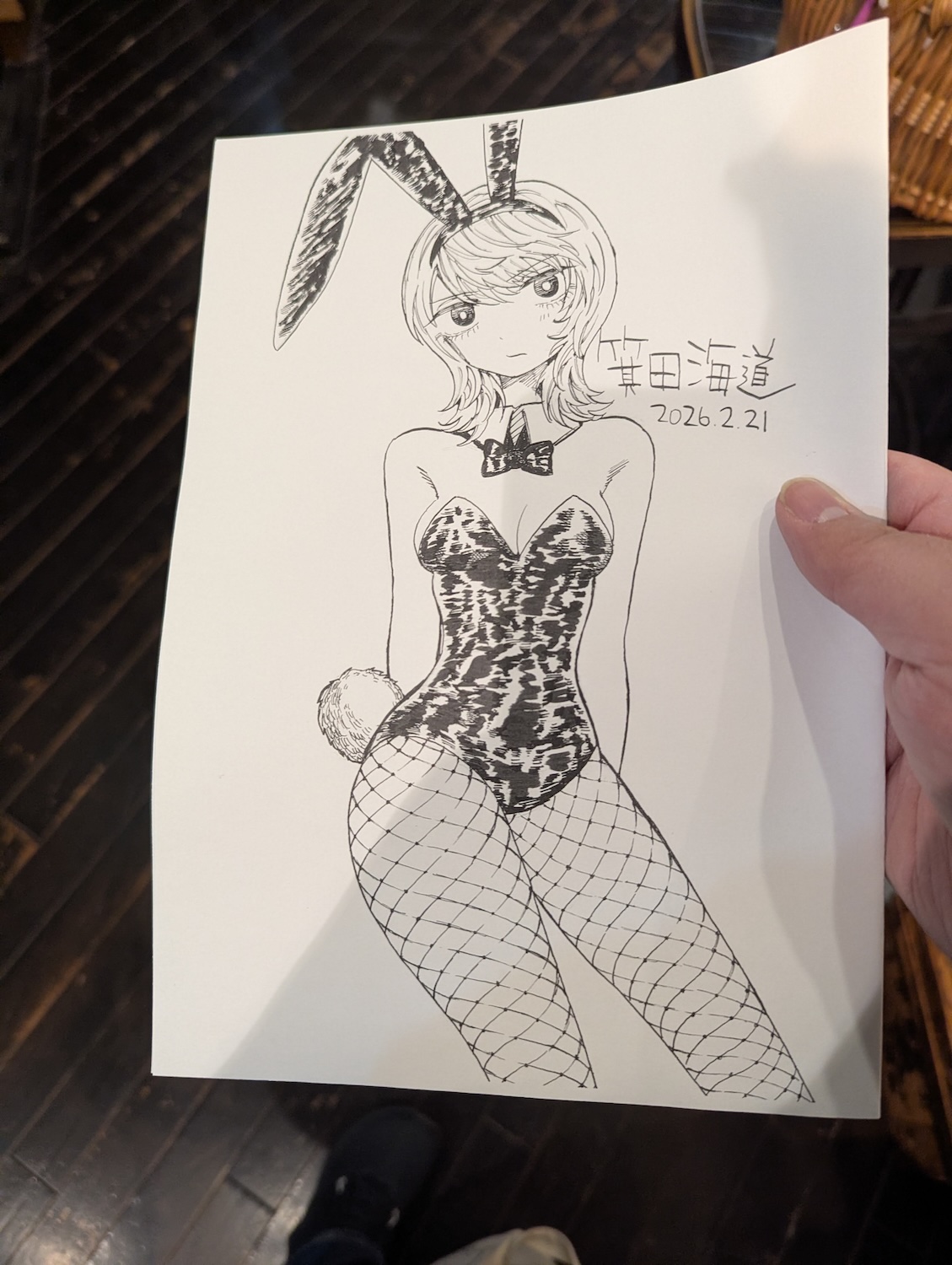
A hand holding a drawing of a bunny girl. The girl has a stoic look, medium-length hair, bangs, hands behind body, and medium breasts. It is signed "Minoda Kaidou."
A hand holding a drawing of the wife from Spotted Flower in a bunny girl outfit, done with an upward perspective. She has a hand one one hip and a smirk on her face. Her hips are also very wide. The drawing is signed "Kio Shimoku."

After all the attendees and I got our copies of their drawings, I decided that this was probably a once-in-a-lifetime opportunity for me, and I actually went up to Kio Shimoku to talk to him. I told him I was a big fan ever since Genshiken and thanked him for all his work.
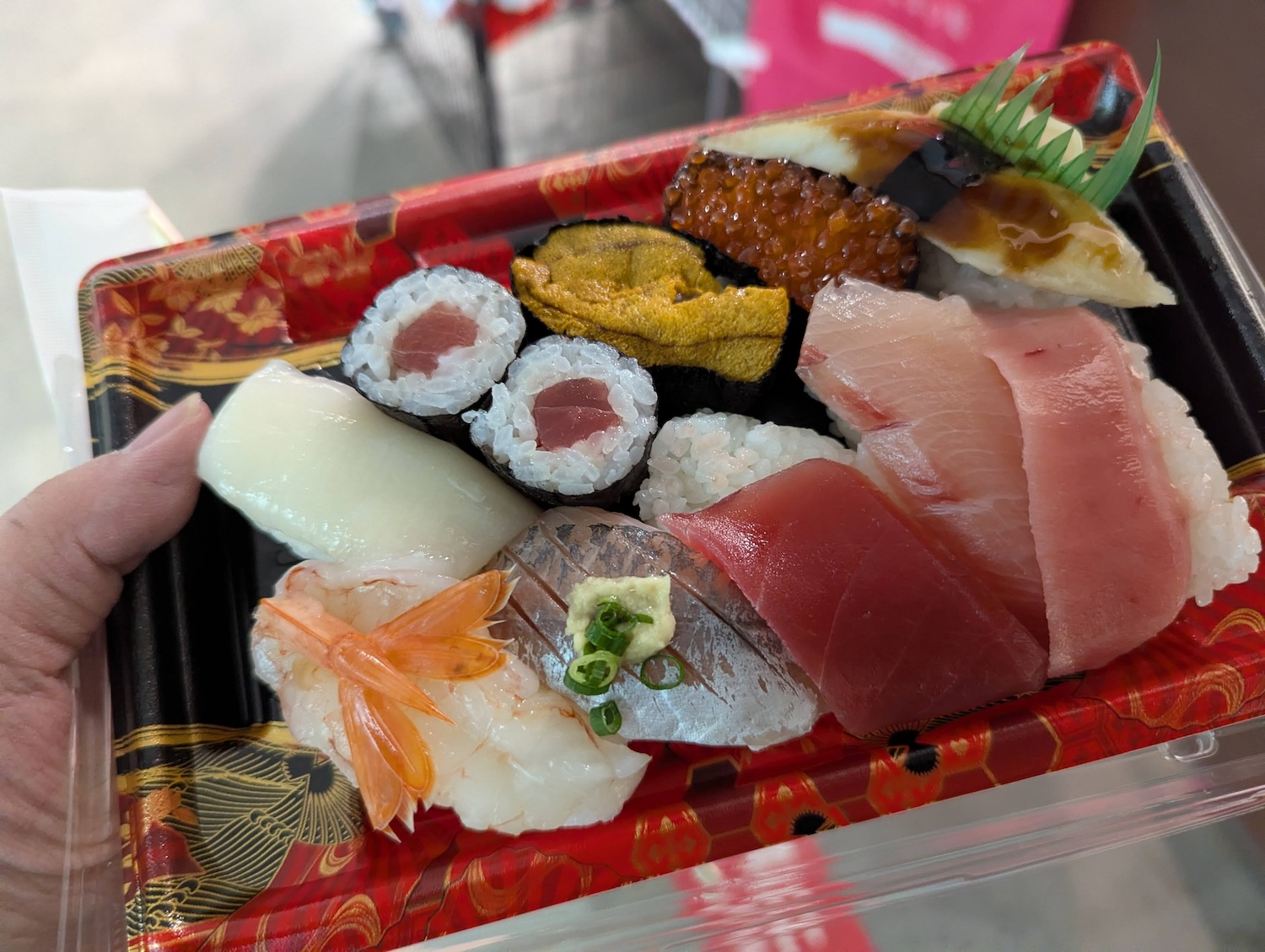
As I walked back to the train station that evening, I picked up some discount sushi. As I ate it, I marveled at how lucky I was to have had that experience. If ever there was a moment to be grateful to be a Maniac for Ogiue, this was it. 
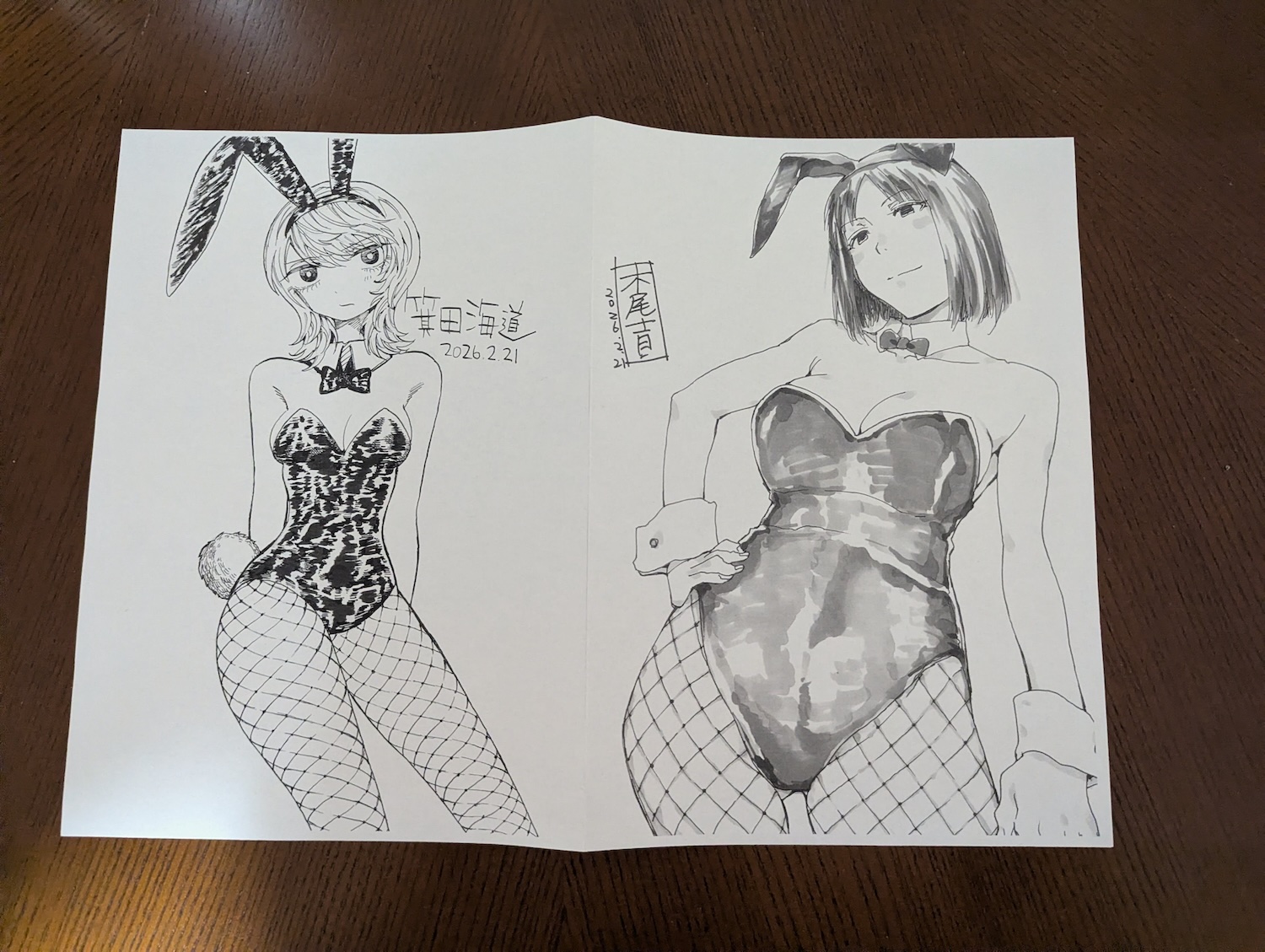
A photo of both bunny girl drawings showing that they are on the same large piece of paper.

Curry Land: The Store of My Dreams

A sign that says in .a mix of Japanese and English the following. Pouch Curry Specialty Shop: Local Curry Curry Land

As I was looking up places to eat in Tokyo, I discovered an incredible place in the district of Jinbocho: Curry Land, a shop that specializes in selling instant curry from all over Japan.

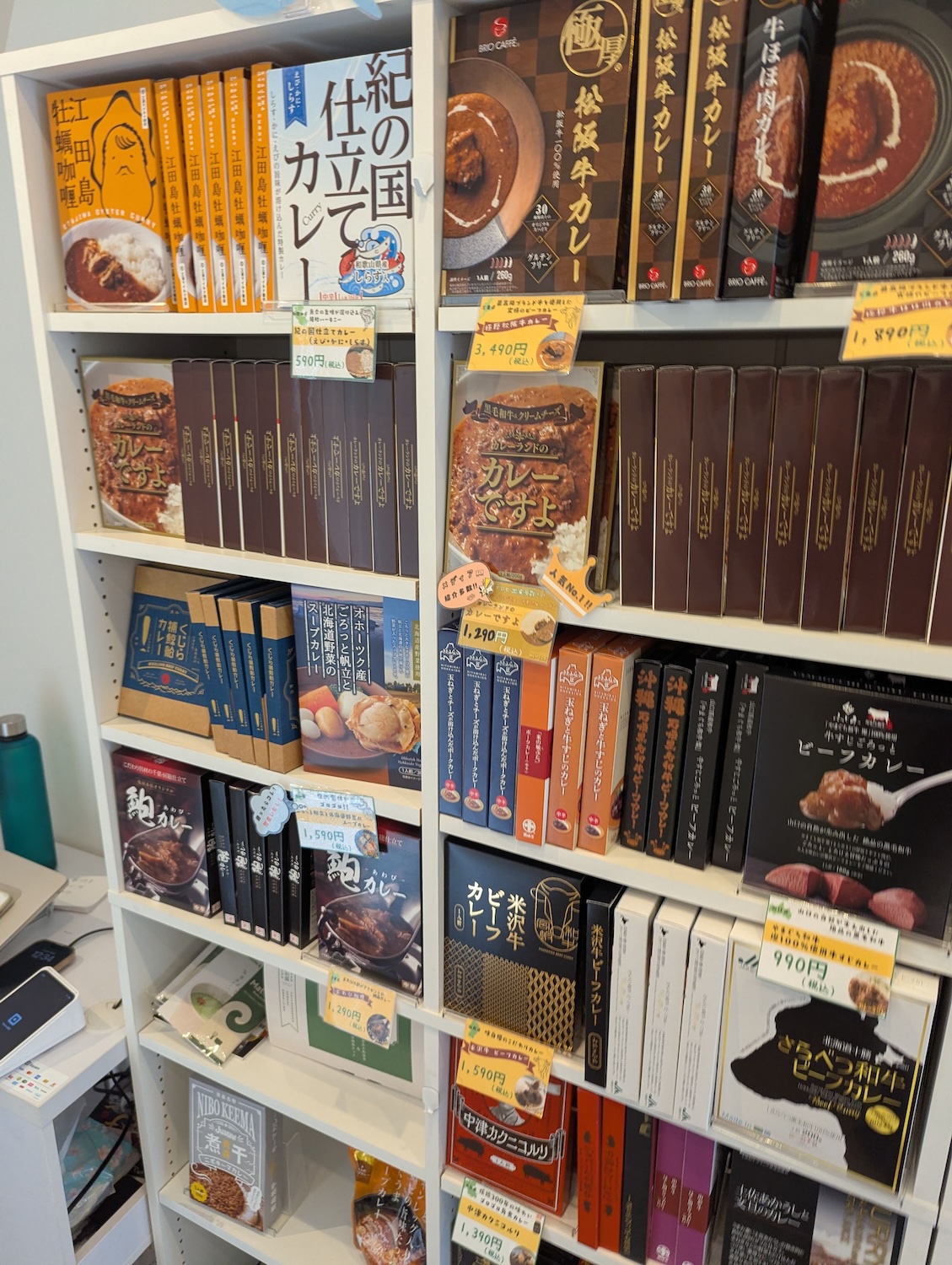
Located in a small side street not far from the main intersection in Jinbocho, Curry Land is a tiny shop with no frills. Past the sliding door at the entrance are three or four shelves filled with pre-cooked curry in reheatable pouches. A woman was running the shop when I visited, and she was very helpful, though I don’t know if she’s the owner or just someone employed there.

Many of these packages are local types of curry, normally found only in the specific regions from which they originate. There are also other unusual options, such as curries eaten on naval vessels or even a whaling ship. The shop even has its own special curry available!

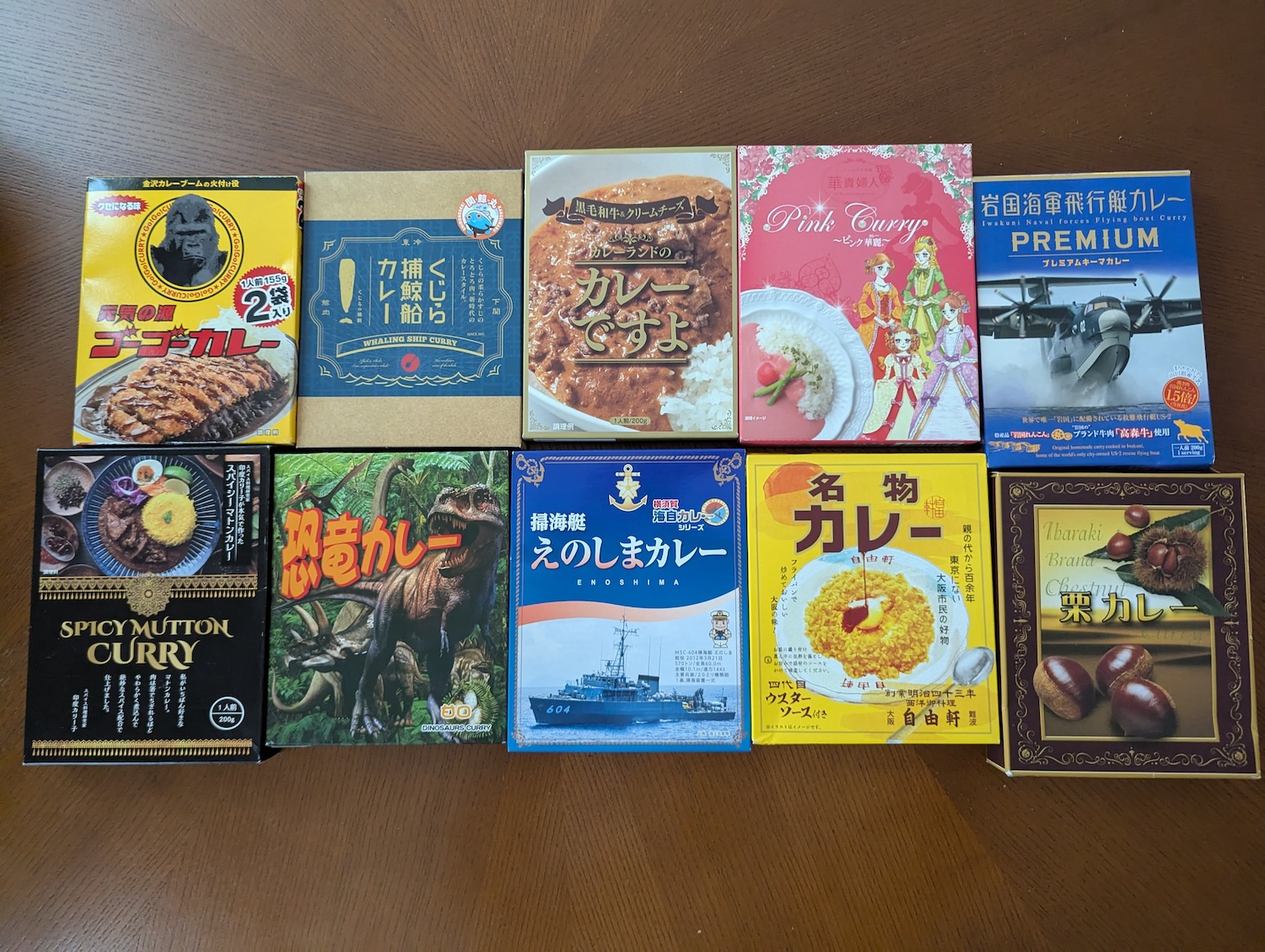
I bought nine packs in total, which ended up being about 7,000–8,000 yen, with the price of individual packages varying.

Clockwise from top left: Go Go Curry (not actually at the shop but I included it in the photo anyway), Whaling Ship Curry (does not contain whale), Curry Land’s Own Black Wagyu Cream Cheese Curry, Graceful Lady Pink Curry, Iwakuni Naval Flying Forces Curry, Ibaraki Chestnut Curry, Famous Osaka Curry with Worcestershire sauce, Enoshima Naval Curry, Dinosaur Curry (made with chicken), and Spicy Mutton Curry.

Some could be relatively expensive (~1,300 yen), so while this store won’t break the bank (unless you try really, really hard) this is not the place to go if you really care about getting the cheapest options. Nevertheless, Curry Land is basically a dream come true for me, and I recommend it to anyone who loves curry, but also anyone who wants to experience a thin yet broad slice of Japanese food.

I plan to review each curry eventually, but I don’t know if I’m going to devote a separate blog post for each curry, or if I’ll cover a few at a time. I know it’s not exactly anime, but I hope you’ll indulge me.

The Next Moves: Hololive 7th fes. Ridin’ on Dreams

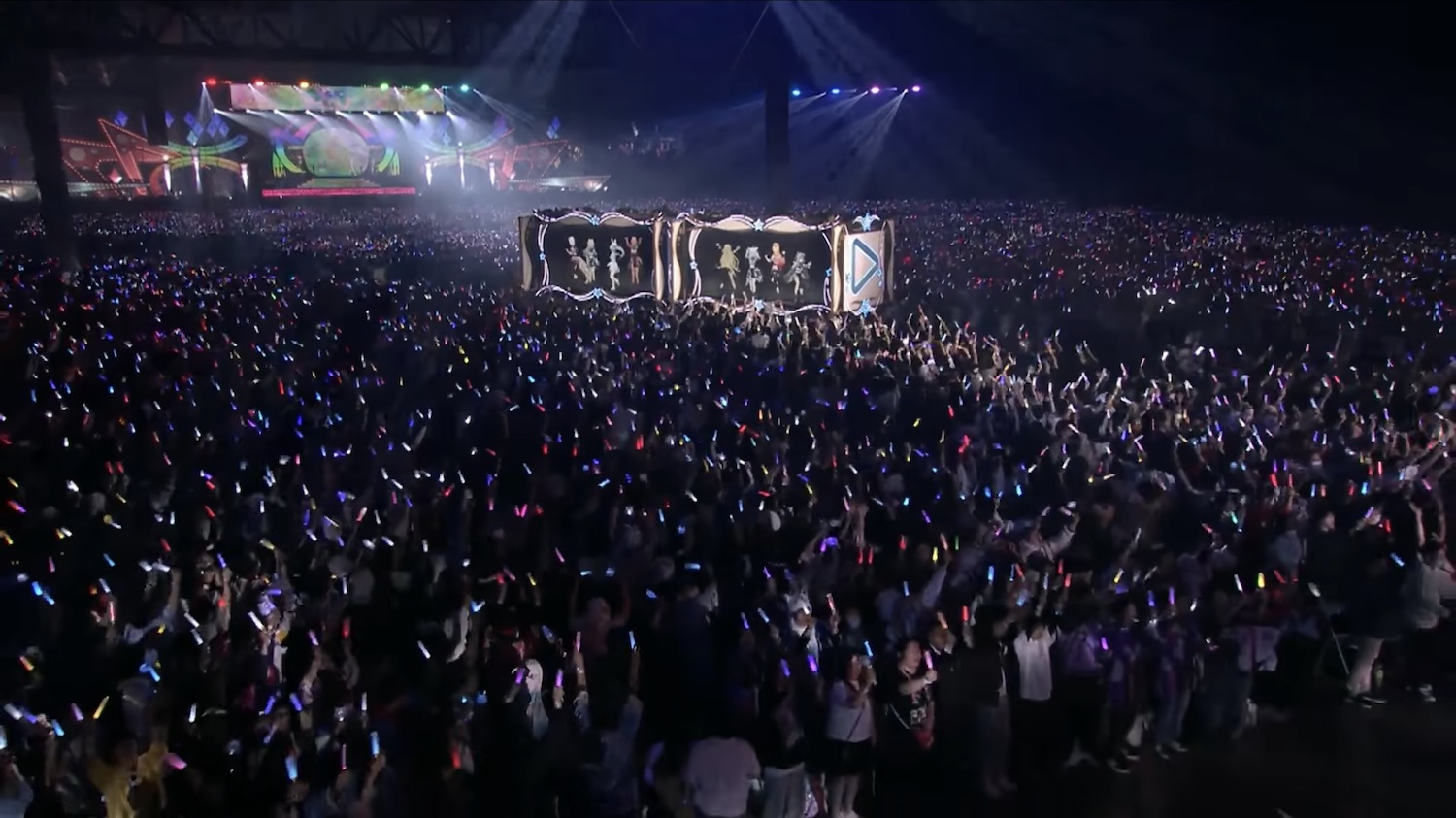
hololive is arguably the premier VTuber company, and hololive fes is the big annual concert for its female talents. I’ve been watching avidly for a few years now, and it’s become a tradition I increasingly look forward to every time. However, 2025 saw quite a few major challenges for hololive, notably the departure of multiple talents. So while I was just as enthusiastic as ever about watching this year’s 7th fes, I wondered how differently I might end up feeling with so many familiar names gone.

Despite the potential setbacks, I came out of it with generally positive vibes. I always appreciate that we get performances of all stripes, with each talent bringing a story of their own that was created through their experiences as VTubers and the fanbases they’ve cultivated.

Venue and Other Details

This was the first year that the event took place over three days—a change that affected its associated convention, hololive Super Expo 2026, as well. Rather than having two concerts per day over two days, they had one on Friday, two on Saturday, and one on Sunday. Moreover, whereas one of those concerts used to be an “extra” stage that utilized talents from the other three, this time around saw all four concerts featuring unique performers. Watching the stream live meant messing with my sleep schedule, in some ways better compared to previous years and in other ways worse, due to time zone shenanigans and a pesky thing called a “work week.”

Once again, the venue setup used multiple stages as a way to have more people able to get better views of at least a few performances. The mysterious pod from 6th fes did not return, and was replaced by a new moving cart/trolly contraption with screens on the sides, which acted as “windows” to see the VTubers and vice versa. It moved through a diagonally placed lane that cut through the audience section, with the seeming aim of also providing more up-close viewing and interactions with the talents. While it was definitely less confusing and bizarre than the pod, it didn’t have quite the novelty factor, for better or worse.

The Debuts

While it stung to lose some beloved members of hololive in 2025 and to have both Inugami Korone and Haachama not participating, the overall number of performers stayed close to the same as last year thanks to the two most recent generations making their fes debuts: Justice on the English side and Flow Glow on the Japanese side. While the graduated talents were truly special and can never be replaced, the performances by the newest blood kept them well out of their predecessors’ enormous shadows.

Justice showcased each of their unique approaches—Liz’s versatile vocal range, Cecilia’s emphasis on elegance and accuracy along with a violin solo, Gigi’s boundless energy and a singing style that hangs on a razor’s edge, Raora’s bubbly pop. And when Flow Glow hit the stage, they put on a display of why they’re the most stage-focused group ever in hololive thanks to their well-honed skills and experience in singing, dancing, and overall entertainment.

Leveling Up

For the returning fes veterans, their hard work came through more than ever in their performances, with some having come particularly far from where they started.

With her characteristic awkward grace, Shiori Novella sang her recently-released first original song, “Monsters and Men” and came across as more comfortable than any previous performance—possibly because the song was made for her. Biboo (Koseki Bijou) discovered in the past year a method for singing lower, which she utilized for her original song “Rock In” while showing increasing comfort with dancing. Ichijou Ririka took on the challenge of covering “Darling Dance” and its fairly complicated choreography despite having two left feet when she first debuted. Ouro Kronii probably wins the award for greatest overall vocal improvement, showing a different and more vibrant quality as she performed a surprise new original of her own titled “Storm.” And Airani Iofi pulled off an impressive cover of “Unison of Smiles,” the main heroine’s signature song from You and Idol Precure!, emphasizing just how far she’s come in all aspects.

Not everyone comes to hololive as a strong singer or dancer (skill in either doesn’t seem to be a strict requirement), so seeing evidence of the talents’ hard work and progress in these areas gives me joy.

Conquering Great Hurdles

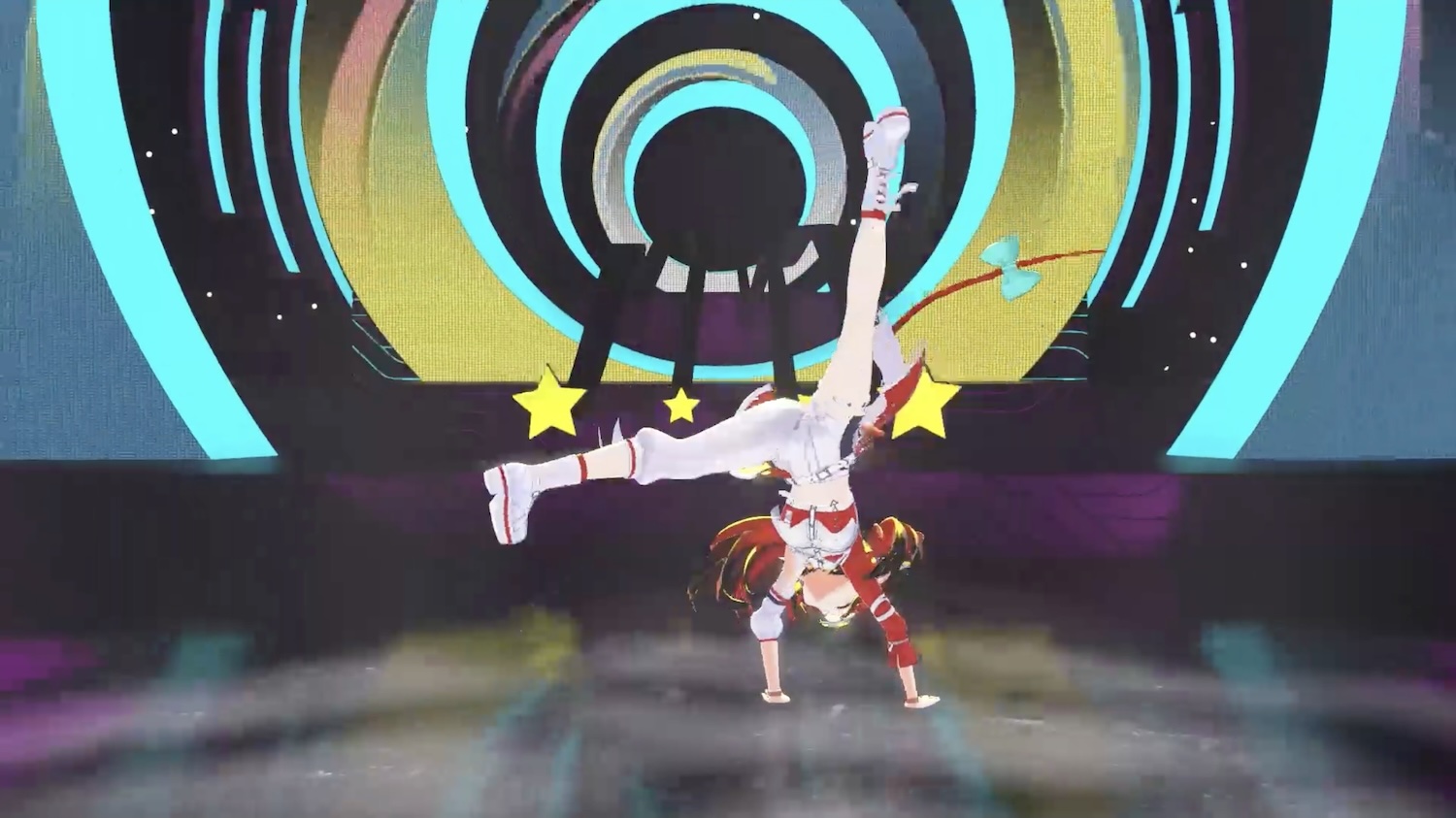
Even those with more experience and ability pushed their limits. Baelz Hakos, already a top dancer, gave a stunning performance of the first Oshi no Ko opening, “Idol.” One stand-out moment was when Bae seamlessly transitioned into a squat as she went into the rap portion of the song, but more significantly, she also threw in a cartwheel and some basic breakdancing moves at the end. These are more acrobatic moves that she has been afraid to do because of the potential head trauma, and for her to confront her fear directly was a real thing of beauty. 

Perhaps the biggest story of all was the astounding recovery made by Kazama Iroha from holoX. In 2024, she was afflicted with a psychological condition that left her unable to speak, and her voice only barely managed to come back by the time 6th fes rolled around. But whereas some of her speech was still noticeably halting and unsteady in 2025, a year of speech therapy and streaming resulted in an Iroha at 7th fes who almost made me forget the tribulations she’s experienced. We saw her sing and dance with confidence, and even have heartfelt and off-the-cuff exchanges with her frequent collab partner (and idol) AZKi. 

Preludes to Upcoming Concerts

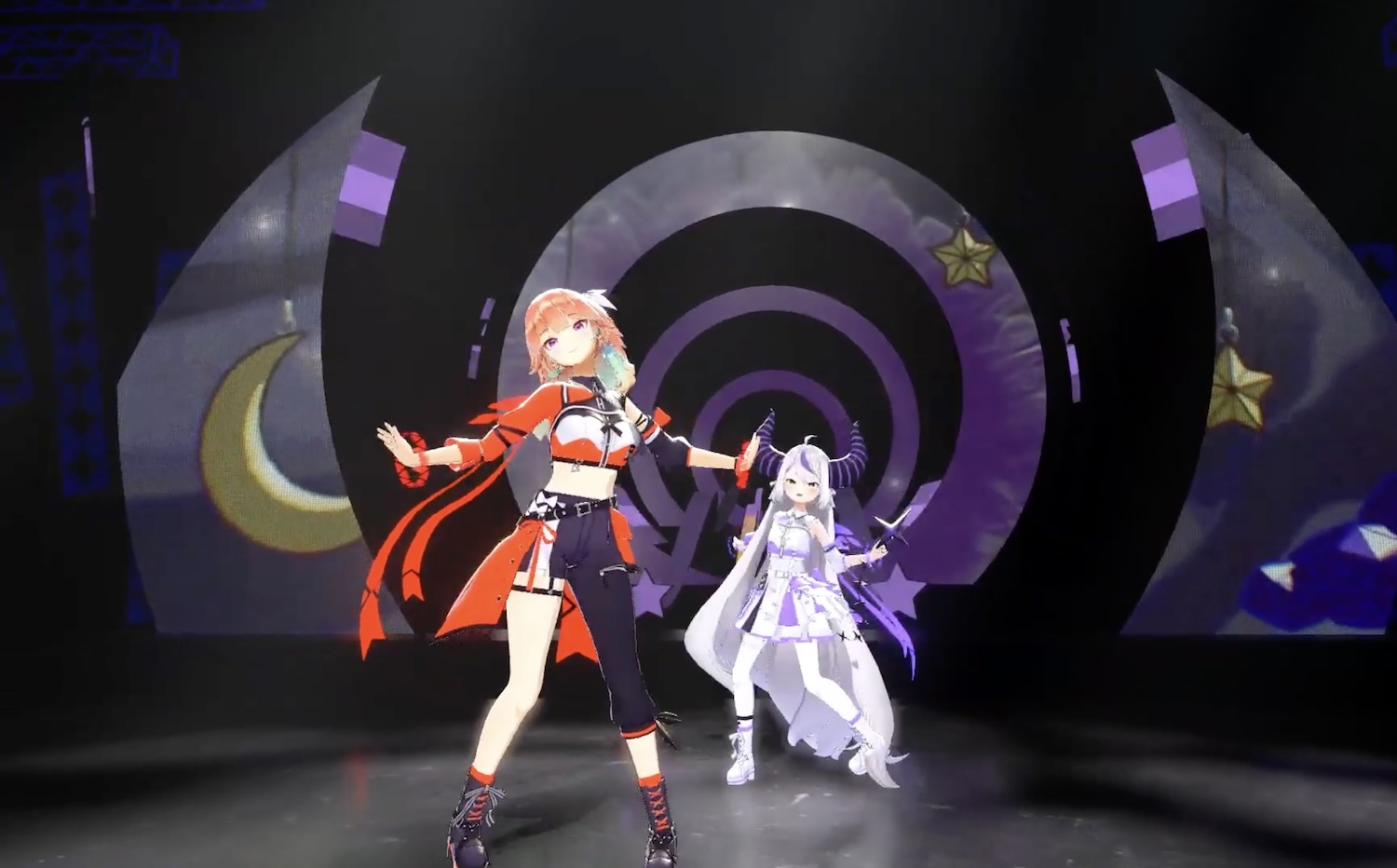
Speaking of holoX, they have their big live-attendance concert, First Mission, coming up. They’re not alone either, as Ninomae Ina’nis and Takanashi Kiara from Myth are only days away from their own concert in Los Angeles, Drawn to Dawn. While I can’t be sure how the rehearsal timelines lined up, I really felt that their practice for these major events are evident at 7th fes, especially in the case of Kiara and holoX’s leader, La+ Darknesss.

Kiara’s dancing and singing showed a new level of refinement, while La+ once again focused mainly on singing for her solo performance…and then threw everyone for a loop by humorously and abruptly tossed her prop guitar on the ground at the beginning of her song. When Kiara and La+ then performed together their original, “Glow in the Dark,” they reminded me that 1) Kiara is one of the most versatile talents around, and 2) even as the overall level of dance in hololive keeps going up, there’s really something special about the way La+ moves. At the same time, it felt like both of them were holding back a bit, as if they’re saving the big guns for the upcoming concerts.

IRyS has also just announced her first solo live concert for October 2026. I had thought her incredibly solid performance of her Eurobeat original “Carbonated Love” might have been out of a desire to feature at fes a song she personally adores, but now I also suspect it’s because the majority of her energy is going into this major project.

Other Stand-Outs

There were still other performances that caught my attention.

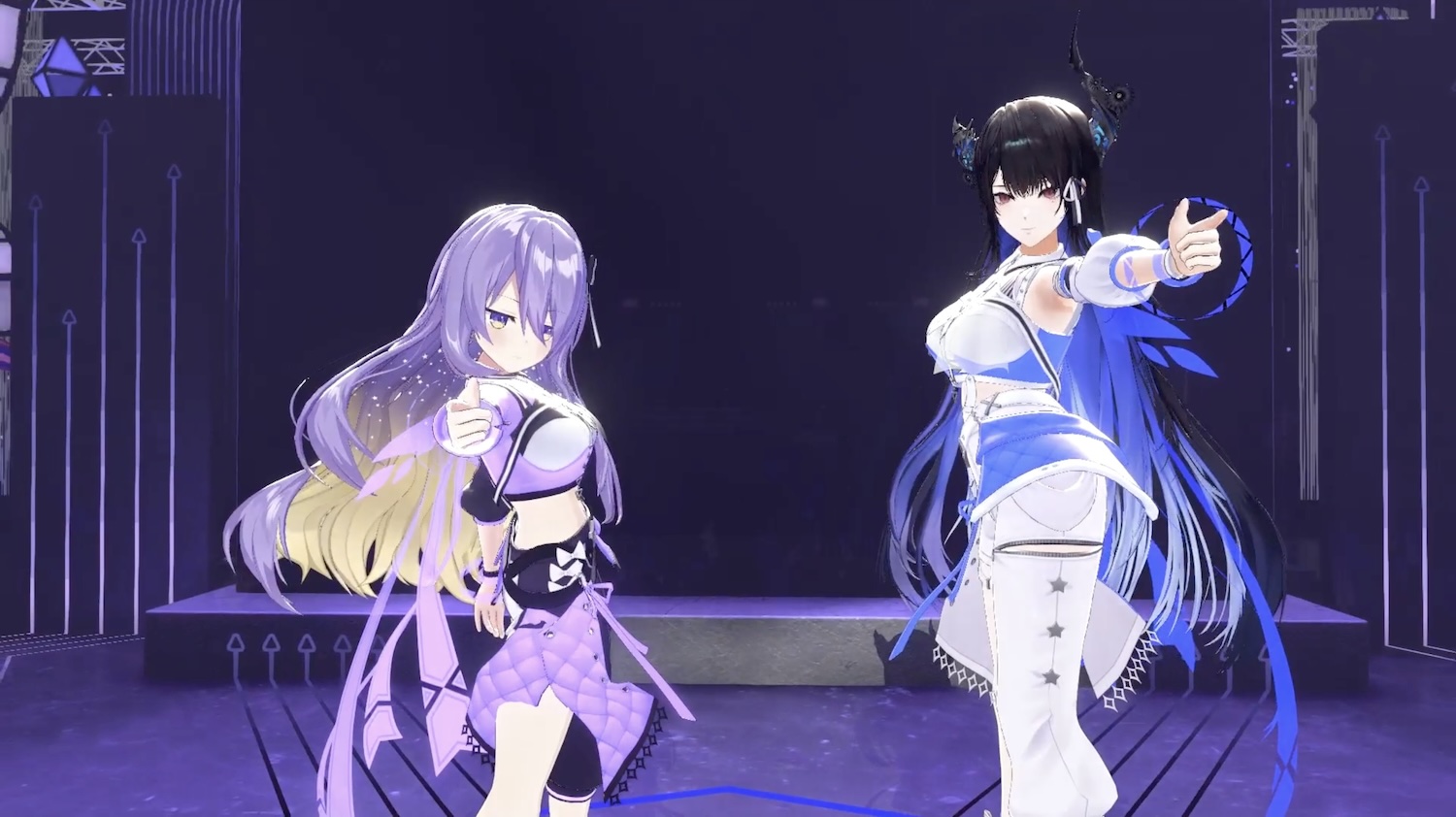
I feel that the entirety of hololive Indonesia really showed up this year. Moona Hoshinova especially brought some of my favorite performances of the entire event, with “100%,” her song featuring Nerissa Ravencroft, being one of the absolute highlights for me. 

On the Japanese side, Nekomata Okayu’s deep and sultry singing is always a surprise, but it really hit hard this time around. Natsuiro Matsuri can go under the radar, but she appears to have made some incredible strides this year on top of her already underrated skills.

I also got a kick out of Todoroki Hajime’s new solo choreography for “Countach,” and Otonose Kanade’s voice rang out loud and beautifully on  “Greatest.” And while Juufuutei Raden isn’t quite the musical performer of her fellow ReGLOSS members, the fact that she turned a Japanese art history lesson into a song and then had thousands singing along (and thus learning in the process!) really showed me how VTubers can reach people in unique ways.

Final Thoughts

As I finished watching 7th fes, I began to think about the structure of the event itself and what it can accomplish. fes is a gathering of both the hololive talents and their fans, and because these fanbases don’t overlap perfectly, the concerts can also be someone’s introduction to other VTubers. In that context, I end up wondering what kind of first big impression these unfamiliar audience members get. The way this format encourages fans to branch out past their immediate faves by providing this comfortable atmosphere really appeals to me, especially with the live audience there to react. That’s why, despite the fact that fes prices out a lot of fans (and something like the New Year’s Countdown is arguably a better introduction because it costs nothing to watch), I think it can go a long way in igniting someone’s career and helping someone discover a new favorite.

So while I certainly missed the presence of the talents who left or couldn’t be there, it was also an opportunity in many ways. I just hope that hololive can foster an environment that gives these artists the chance to develop their craft in the ways they want, and in ways that keep them healthy in both mind and body.

Who Says Democracy Doesn’t Work?: Hypnosis Mic -Division Rap Battle- FINAL

Hypnosis Mic -Division Rap Battle- FINAL is a very unusual movie, even as far as anime goes. Acting as the conclusion to the Hypnosis Mic franchise—in which handsome men rap battle one another using weaponized microphones in order to get a chance at overthrowing an oppressive government run by women (no, I’m not kidding)—this film is somewhat unique in that it has no true ending. Instead, it leaves the fate of these rappers to the viewers, who get to vote on who wins each rap battle and progress to the next round. 

In other words, this film is a group-effort “Choose Your Own Adventure” movie, with seven endings and multiple branching paths to get there. On the one hand, it’s fun to compare the path and ending you got to the results from different screenings. On the other hand, it’s also a way to get fans to pay for the same movie seven times at minimum in order to get all the endings, or at least try to coordinate with like-minded fans to get the battles and endings they want.

I was already fairly familiar with Hypnosis Mic before this. I first happened upon a collab cafe on a trip to Japan (eight years ago at this point!), watched the two seasons of the anime, and even got a preview of this specific movie at Anime Expo 2025. Unfortunately, the screening there purposely cut off after the first round of rap battles, so I decided it wasn’t worth writing about until this point. 

The film itself feels like a series of cut scenes meant to both quickly introduce new viewers to these characters and provide plenty of fanservice to existing fans. There are no real narrative twists and turns, because everything is determined by audience vote. It’s gimmicky but fun, a somewhat distorted glimpse into the world of Japanese rap, and perhaps for those less familiar with this and other similar titles, a chance to see what your local crowd values in hot anime dudes.

Going to the theater to see a movie has always been a social experience to an extent, but this Hypnosis Mic movie really places that aspect front and center in a different way. You are meant to be cheering on the groups as they compete while also hoping the crowd votes the way you do. That also means having people who will make their opinions known, and the audience could get rather…spirited. Notably, I overheard a fan who was describing in detail the things they wanted to see the characters do to each other, and also to her. I did not presume that I’d be getting a quiet cinematic experience, but I certainly wasn’t expecting something like that. Anime film screenings can often get crowds not entirely accustomed to watching things in public, and I wonder if the COVID pandemic made that even more common.

I decided that, rather than pick a favorite team (which I don’t exactly have), I would vote based on who I thought rapped the best. Ultimately, the Shinjuku team Matenro ended up as the winner at the show I attended. The fact that I would not consider that a spoiler is one of the quirks of this film’s format.

Shockingly, the Party of Words (the final bosses) have the top win rate in the US despite being the only major female characters in a franchise dominated by guys meant to appeal to women. As someone who likes the Party of Words—where else can you find as the main villain an attractive 50-something woman who is both canonically the most powerful rapper and voiced by Kobayashi Yuu?—I’m pleasantly shocked.

Ultimately, Hypnosis Mic -Division Rap Battle- is something to enjoy for the spectacle rather than as a conventional film. In the latter sense, it’s pretty flat. In the former, it’s a good time. If you’ve been to a screening (or multiple ones), how did things turn out for you? 

Sing, My Vampire of the Night—Castlevania: Awakening in the Moonlight

Japan’s famous all-female theatre troupe, the Takarazuka Revue, put up a recording of one of their performances for international streaming. The theme: Castlevania, the classic Konami video game series about fighting vampires, and half the namesake of the “Metroidvania” genre.

In fact, Castlevania: Awakening in the Moonlight is actually a loose adaptation of the franchise’s first Metroidvania, Symphony of the Night. It even starts with Richter Belmont’s refrain (in)famously translated as “Die, monster! You don’t belong in this world!” And after Dracula’s defeat at the hands of Richter, time jumps forward to focus on the main protagonist of this story: Dracula’s half-human son, Alucard.

Despite having traveled to Japan before, this was my first time watching Takarazuka. I had some idea of what to expect based on numerous cultural references in Japanese media, but all my assumptions were waiting to be defied or affirmed. 

I believed Takarazuka to be non-stop singing, but that wasn’t  the case. While it’s certainly a musical, the numbers are interspersed between spoken scenes. I also wasn’t sure how they would incorporate the action element of Castlevania, which turned out to be more of an interpretive dance-fighting that fits the medium, and largely takes a secondary role to drama, angst, and romance. That said, they do include some elements from the Symphony of the Night I had not expected.

And sometimes, something happened that would reinforce my preconceived image of a Takarazuka Castlevania while also throwing me for a loop. Namely, they somehow manage to incorporate the French Revolution into this thing, and Robespierre is even a prominent character! The Rose of Versailles is one of the Takarazuka Revue’s most iconic adaptations, so it’s not wholly unusual that they would use France as a partial backdrop to Awakening in the Moonlight. Nevertheless, making Castlevania more familiar and accessible to the typical Takarazuka fan in this manner is pretty amazing.

I believe all the music is taken from the games and adapted for the stage with lyrics and all. Given that Castlevania as a whole has a fantastic soundtrack, it’s not a surprise that they would take this approach. That said, it’s certainly different from other times they’ve added words.

I could tell that I was limited in some ways by the  home viewing experience. While I definitely appreciate the opportunity to watch it from the comfort of my couch, I’m 100% sure that it pales in comparison to being there in person. There are parts that feel a bit long, but I wonder if the live spectacle would change the experience—I’ve seen enough musicals at this point to know this can happen. Maybe I should make the trip out to Takarazuka next time I have the opportunity.

The VOD is available until March 31.

Seiken to the End: Mabataki Yori Hayaku Final Review

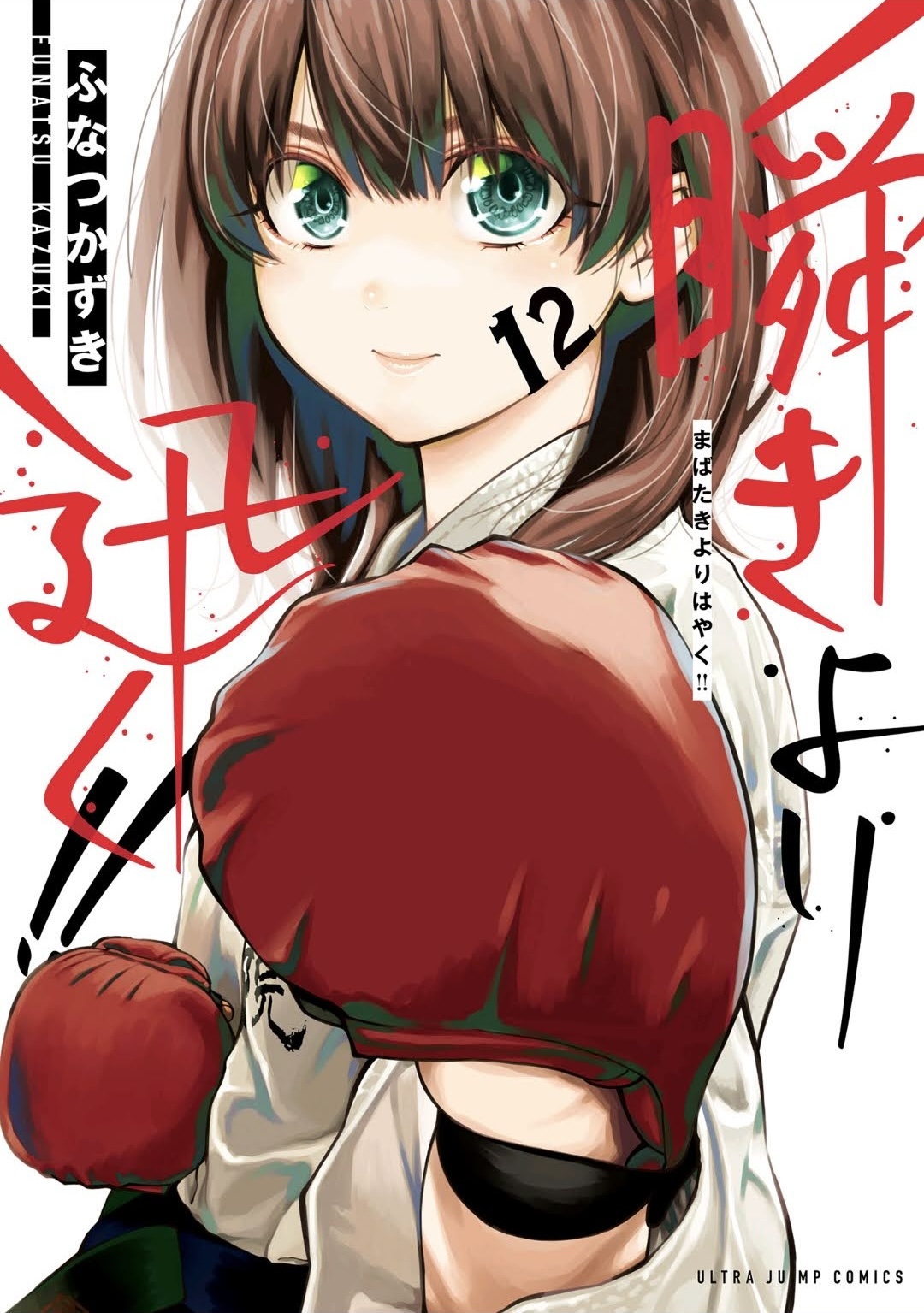
Mabataki Yori Hayaku, the sport karate manga by Funatsu Kazuki, finished in 2025 after 12 volumes. It’s a series that I had been enjoying a great deal thanks to its ensemble of characters at varying skill levels and each with a unique relationship to karate, as well as the solid artwork that communicates the action and intensity of a match on both a physical and a psychological level. While MYH was clearly forced to end a little abruptly, I still think it’s a fun read overall and concludes in a satisfying way. 

Kohanai Himari, a clumsy girl who gets inspired to learn karate after being saved by an upperclassman, is the main character of the story. Despite a case of mistaken identity where she confuses two twin sisters raised on karate (one enthusiastic about it and the other cold), Himari joins the school club, which is small and lacking in members. And while she seems ill-suited for any sort of athletics, the more practiced hands realize that she has unusually sharp and perceptive eyes. Soon, she’s practicing daily, growing alongside her teammates, and even gaining a few rivals, all while she and the other characters navigate the various forms of karate-centered drama. 

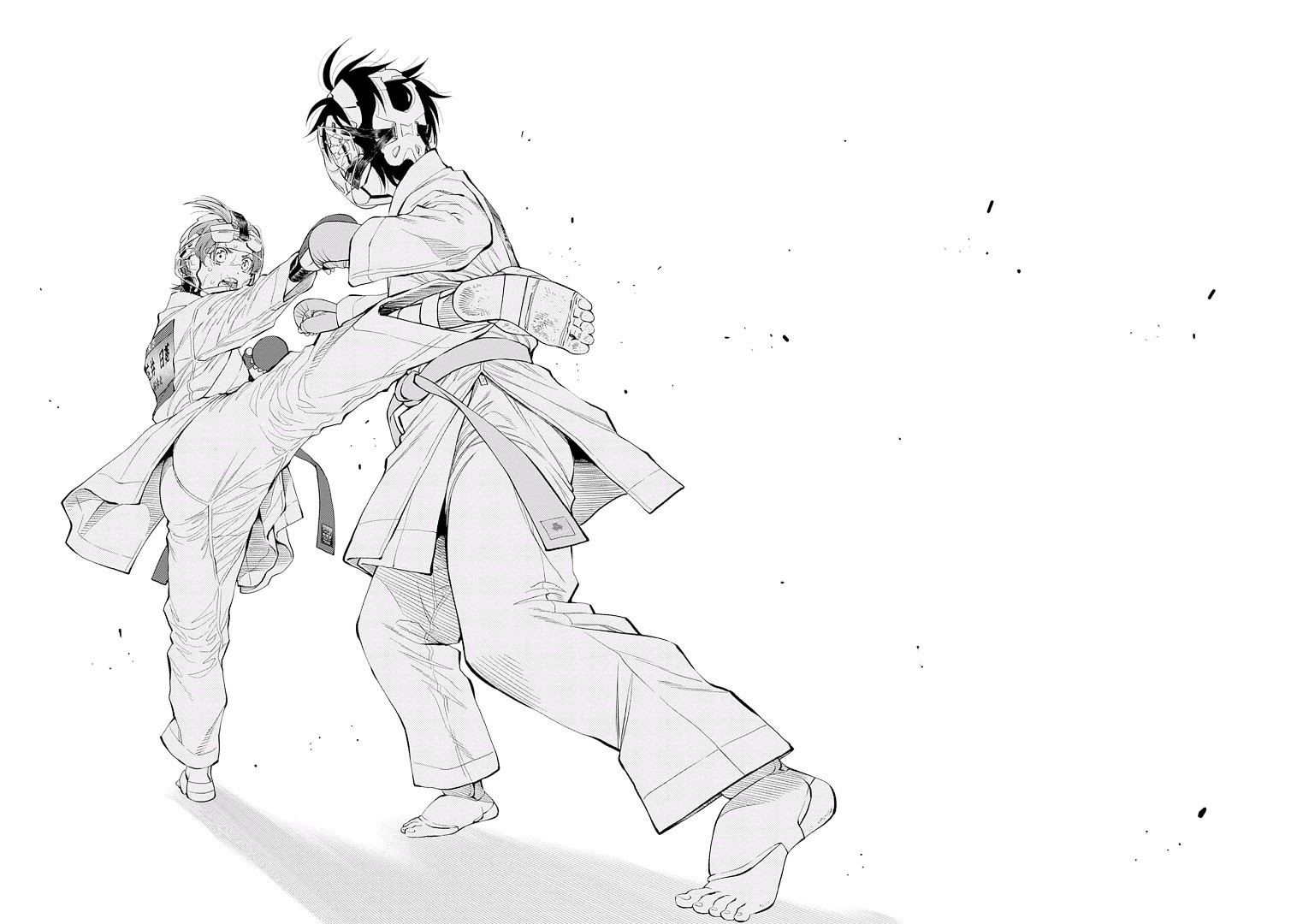
A dramatic two-page image of a karate fight happening. One girl appears to be landing a kick on the other.

Up until the end, the MYH is very consistent in terms of its sports manga appeal, and everything I wrote about it before still holds true. Seeing Himari come into her own as a competitor is wonderful, and learning the truth about the rift between the twins is satisfying. In the final volume, however, the story suddenly moves at a breakneck pace in order to wrap up everything and move all the characters into their intended positions. The climax of the series happens at a big karate tournament (naturally), and the results are satisfying in terms of the girls’ character arcs. The epilogue then puts them many years into the future to answer the question of “Where are they now?” I really do wish I could have seen the series get there at its normal pace.

Top 30 Hit Machine: You and Idol Precure

Precure has been the juggernaut of girls’ anime for the past 20+ years, and the most common way for others to compete has been by making shows focused on music idols. So when You and Idol Precure was announced as the first entry to also incorporate this popular motif, I wondered how it might try to differentiate itself from the rest of the pack.

You and Idol Precure is a return to the beams-and-brawls style that had long defined the franchise but was minimized in the most recent predecessor, Wonderful Precure! In this way, You and Idol Precure is also a series that speaks to the legacy of both “magical girl as idol” (Creamy Mami, Looking for the Full Moon) and “magical girl as fighter” (Cutie Honey, Sailor Moon). I had high hopes that this season could combine the two sides in an interesting fashion, and while I think it overall turned out decently, I can’t help but feel that there was some wasted potential.

The building blocks are excellent: The premise of bringing joy and defeating doubt as idol magical girls is fun. The heroines are vivid and memorable in terms of personality and presentation. The animation, while at times inconsistent, can really shine, such as during big battles and transformation sequences. Side characters, be they allies or enemies, have a nice balance between seriousness and silliness. And the show tries to basically say that people have both light and darkness in them, and celebrating the former shouldn’t mean denying the presence of the latter.

But the series falters for me in two ways. The first is that its approach to the idol side feels both a little too conventional, and like it doesn’t lean into that side enough. The second is that the show doesn’t give its more interesting stories and themes enough room to really breathe and develop.

In regard to point #1, part of me hoped that the series would be them going around and having to live their careers as idols while taking down the bad guys. While this is not far off from what actually happens, I really think it could be more exciting. Similarly, every heroine in the series does a special song and dance as their finishing move highlighting their unique qualities: Cure Idol loves to sing, Cure Wink has a classic western music background, and Cure Kyunkyun is a dancer. Naturally, they eventually get group performances as combination attacks, but it ends up being the same ones on repeat, and the emphasis on what makes each Precure special falls to the wayside. If they had changed up the center based on who is the focus in an episode, they could have maintained this aspect.

As for point #2, there are a number of characters introduced that help give some depth and dimension to the world. There are narratives that involve dealing with sacrificing your greatest desires to help save the ones you love, ones about getting consumed by negative emotions, and even ones about guilt over succeeding where your friends and peers have failed. All of these have the potential to guide plotlines in ways that reward viewers over a longer period, but they are almost all resolved in one or two episodes. One story—involving a famous male idol who befriends the main heroine Uta and his desire to reconcile with an old friend—is probably the best executed of them, but I would have liked to see even more in that vein.

I know I’m not the target audience in most ways. I’m not a little girl or even much of an idol fan (despite my ever-growing interest in VTubers). In fact, seeing as I’ve now been watching Precure for over two decades, the gulf only gets wider with time. I’m aware of all this, and understand that what I want out of an anime is not necessarily what a 9-year-old wants. 

But I’ve seen when Precure can make something for its core audience and still present something with greater substance. I don’t think this is a case of Precure failing to respect the intelligence of its young audience, as I really believe it’s trying to help them understand and process complex and conflicting emotions while providing great role models to admire and emulate. Rather, I believe You and Idol Precure could have been a more cohesive work that more deftly sews together all its best qualities to create something truly fantastic.

KPop Demon Hunters and Addressing the Work of Past Generations

I’m late to the party, but I’ve finally watched KPop Demon Hunters. And while I doubt anyone needs convincing at this point, I will say that I think it’s worth checking out. It’s easy to see why it resonates so well with kids, but I find it accessible for people of any age who are open to heroines who are allowed to be goofy yet serious, a lot of musical numbers, and a message about a will that, for better or for worse, has been inherited across generations.

I’ll be spoiling the ending of the film, so here’s your warning.

The mix of Korean folklore and modern pop culture is an interesting place to tell a story about being afraid to show who you really are. In the lore of the film, Korean demon hunters have fought with both weapons and songs for generations, using their voices to create and strengthen an anti-demon barrier called the Honmoon. Rumi is the leader of the current generation, Huntrix, and she hides her greatest secret from even her teammates and friends: Rumi is actually half demon, and she wants to complete the Honmoon so she can be rid of her demonic side for good and finally stop hiding a part of herself, but begins to find her voice is faltering when she needs it most. 

The Honmoon is one of the most interesting things to me about KPop Demon Hunters, because I think it does a great job of presenting both the good and bad parts of inheriting the actions and decisions of generations past. The Honmoon is a massive undertaking that has been continuously built up for dozens if not hundreds of years, and it has helped protect the people through hard work. However, it was built on the need for the singers who empower it to never show weakness, and this pressure is what causes Rumi to start breaking down. By the end of the film, she and the others remove the Honmoon and replace it with a new version that doesn’t place all the burden on the women and the need to project perfection at all costs. 

I really like this metaphor because it doesn’t lump the actions of their ancestors as an unassailable legacy, nor is it purely a source of generational trauma. It is the product of decisions made in the past that were arguably necessary, helped build a foundation for descendants to survive and thrive, and ultimately helped Korea and humankind. But those choices are not beyond reproach, and naively following every aspect of them can harm people like Rumi who bristle against its pressure.

So KPop Demon Hunters lives up to the hype, and will likely end up being the Sailor Moon of a new generation of children. I can hardly think of a better work of art to carry that torch.

The Long View: Apocalypse Hotel

Apocalypse Hotel reminds me why I fell in love with anime.

Its story centers around the cutting-edge Gingarou Hotel, which is run entirely by advanced robots. Ever since a global pandemic forced the entirety of humanity off the planet, Acting Acting Manager Yachiyo and the rest of her fellow mechanized staff have been taking care of the hotel every day waiting for everyone to return. While they’re accustomed to getting zero visitors day in and day out, a guest of extraterrestrial origins suddenly arrives one day, setting the Gingarou Hotel on a long and path full of surprises.

Across 12 episodes, Apocalypse Hotel sets the bright and courteous spirit of hospitality against the darkness of its post-apocalyptic setting, drawing a sublime contrast that accentuates both growing hope and deep despair. Instead of going with a more self-contained format or taking a more serialized approach, Apocalypse Hotel treats each episode like a vignette along an enormously vast timeline. Some things remain the same, other elements reflect the fact that decades can pass between each episode, and the interplay between these two elements tells the story just as much as what’s happening on screen. I already love stories that appear episodic but are actually telling a greater narrative overall, and this series greatly succeeds at this approach.

The clever format is further supported by a gorgeous aesthetic and superb animation that’s both charming and moody. Whether it’s a festive dance number of an opening, characters maintaining the hotel daily, or even the occasional action scene, everything is depicted beautifully. 

I think Apocalypse Hotel ends up being a great companion work to something like Frieren: From Journey’s End, which also similarly focuses on the long passage of time from the perspective of the long-lived. Whereas Frieren often looks at a past so full of history that half of it has been forgotten, Apocalypse Hotel peers into a future yet unknown and all its possibilities, all while focusing on the everyday of a surprisingly simple luxury establishment.

Freaks Like You and Me: Ancient Magus’ Bride Season 2

It took me a few years, but I finally got around to watching Season 2 of The Ancient Magus’ Bride, wherein the titular bride, Chise, attends a magic high school. I don’t believe I ever reviewed Season 1, but here we are anyway.

In other series, that might be the point where things fall into a comfortable routine and use the school setting to bring out the popular tropes. However, Ancient Magus’ Bride uses it as an opportunity for expanding the lore. Magic and sorcery are already portrayed in a fascinating and mysterious manner, and those qualities only grow stronger and deeper. 

One of the most interesting things about this arc is the way it introduces peers for Chise. Until now, she has been surrounded by people significantly older than her, or beings far removed from humanity. But here we have teenagers close in age to Chise’s, each of whom have their own unique challenges but are shown as relatable for her. At the same time, the questions surrounding Chise’s own being only increase, and having your protagonist be a center of some of the enigmas makes for a compelling story.

I found the plot development engaging and hard to predict, and the ending made me appreciate the build-up even more. I’m ready for Season 3 with a renewed interest in The Ancient Magus’ Bride as a whole.