What if an RTS Race Had to Deal with Bureaucracy?

I used to be really into watching Starcraft and Starcraft II, before falling off around ten years ago. However, over the past year or so, I’ve become aware of the many attempts to breathe new life into the real-time strategy genre through a variety of new games: Battle Aces, Stormgate, and so on. I’m uncertain as to whether we’ll end up seeing another renaissance, but it has me recalling the age-old question concerning RTS: How important should execution be?

I think the obvious answer everyone can agree on is that it should at least matter a little. That’s what makes it a real-time strategy game, and the degree of importance is where people will debate endlessly. But I wonder whether you can design a race within a game to be less execution-intensive without making them either too balanced or unfair. Essentially, what if this “low input” race tested different skills that were neither better nor worse than the others, but also had an inherent flaw in that it couldn’t rely on execution as much as others could?

I started to imagine a race that would basically be an empire with a huge and powerful army that is encumbered by its sheer size and maybe a bit of bureaucracy. What if there was a race whose units could be amassed more easily while also being stronger individually, but there was some drawback that kept the player from being able to control them more precisely? 

For example, maybe there is a cap on how many actions could be executed in a given period. This could resemble playing a commander who can only oversee the broader strokes of their forces, and has to leave the details to subordinates.

Perhaps the cap could be over a longer chunk of time (like 700 actions every five minutes?), so there can be moments where you can control your forces more directly, but you end up sacrificing the ability to respond more quickly a minute or two down the line. You’d have to choose when you can execute effectively, knowing that you’ll be more vulnerable at other times, or you could choose to play at a steady pace.

Another possible way to mimic a slow and convoluted chain of command would be to actually introduce a purposeful input delay. This could simulate you giving orders from on high that take time to get through to the lowest levels of the army. Maybe it has to do with controlling your forces, or it could be that upgrades or switching unit compositions take a longer while to happen.

In all these cases, the idea would be that this race can be effective and can be difficult to play in its own right, but it doesn’t hinge on physical execution as much. At the same time, it would allow other players and races who do want to use their honed macro and micro skills to defeat this race if they manage to hit hard at vulnerable moments. I have no idea whether something like this could ever work out, but I think there’s a way to have a reasonable and enjoyable compromise between those who want the high APM and real-time tactics and those who want to be methodical strategists.

I Want a Punch-Out!! Soulslike

I started playing Elden Ring recently, and it’s my first time with a Soulslike of any kind. Having to make my character stronger while also improving my own skills, all while interacting with an unfriendly world full of giant boss monsters has been a fun and frustrating experience.

It also made me really want to see a Punch-Out!! Soulslike.

Think about it: Punch-Out!! is a franchise that’s all about fighting enemies twice your size, where you have to figure out their quirks and tells, strike them during brief moments of vulnerability, and not overextend lest Mike Tyson send you to the mat with one uppercut. 

What if your player character started from scratch and had to train up? It could be a series of boss fights, but what if it were more like an Elden Ring open world, and you could visit different gyms to practice or spar with others? What if other fighters (CPU or human) could come to your gym? Established major boxers you could face in more official or formal settings, but maybe there are also bad actors who want to fight dirty and jump you in an alley?

It’s been over 15 years since the last Punch-Out!!, for the Wii. I would love to see something that would capture the spirit of the franchise, but if Nintendo wanted to take a different angle, I think this would be a welcome and interesting change. 

An Elden RING, if you will.

Revisiting “The Transformers: The Movie”

The 1980s Transformers movie looms large in my memory. I can still feel a part of me reacting to moments I first saw when I was maybe five years old, watching a VHS recording at a neighbor’s place. But I hadn’t experienced the full film itself in a very long time, only sometimes revisiting iconic moments on YouTube, and I wondered how I would view it through the eyes of someone well past childhood. 

There are a few things I’ve come to realize by watching The Transformers: The Movie again. Namely, I can see even more clearly why it was such a cultural touchstone for the young fans, and why it was so confusing and strange for adults. To the parents, film critics, and other older folks, Transformers likely spoke in a visual language that was disorienting and didn’t bother to differentiate characters in ways that made sense. 

But the kids, including myself, were essentially raised on the kind of collect ’em all mentality that involved different color schemes for boxy robots. Certainly, collectible toys existed in the past, but this was a post-He-Man world, where the sheer variety of action figures were tied to unique personalities that kids could know and love (or hate). Much has been written about how the death of the heroic leader Optimus Prime was a turning point/moment of trauma for a lot of children. 

Younger people reading this might wonder why this was a big deal beyond the obvious pain of having a fan favorite pass, but the key thing to know and remember is that death was unheard of in cartoons of the 1980s. No one ever got permanently hurt, lasers and guns would blow up vehicles but never people, and each episode’s ending reset to a status quo so that shows could go on forever, or even run episodes out of order if need be. What makes this all the more astounding is that the decision to kill off Optimus—and a large chunk of the cast—was the result of a cynical decision to make way for new toys to sell. The people in charge thought that the children saw Transformers as playthings, only to realize that they had introduced fascinating personalities and role models to which those kids could get attached. Even if the catalyst was simple capitalism, the result was an awareness of the power of fiction. 

One thing I realized anew is how the relationship between Starscream, Megatron, and Unicron plays out. Throughout the original Transformers TV cartoon, Starscream is a conniving soldier whose ambition is to overthrow Megatron and take over as leader of the Deceptions. He also never truly succeeds because he’s a coward who jumps the gun at the slightest sign of weakness, only to have it all backfire. On top of that, Megatron is simply more powerful than him, and he can’t hope to actually win in a fight. 

But when Starscream sends a weakened Megatron to his death, and the latter is exposed to a being far beyond him in the form of Unicron, it becomes clear just how very similar Starscream and Megatron are. Much like Starscream, the normally arrogant Megatron is quick to capitulate when threatened with real harm, but is also just as opportunistic—working towards betraying his new master by trying to obtain the Matrix, the only thing that Unicron fears. The only difference is that Megatron is more patient.

Another takeaway: The movie is basically a series of incredible vignettes kind of sloppily stitched together. The story as a whole is about passing the torch and discovering your potential, and individual scenes have some of the most impressive animation of all time, but the whole thing often feels loose and disconnected. It’s why watching clips of the high points on YouTube or whatever is so effective. Moments like the deadly battle between Optimus and Megatron, the Decepticon leader’s transformation into Galvatron, and the moment when Hot Rod fulfills his destiny with the Autobot Matrix of Leadership never fail to give me goosebumps. The weaker parts I can safely file away in the recesses of my memory. 

If you speak the “language” of Transformers and the kind of merchandising that is its legacy, everything about this movie makes sense. If not, then it all falls apart. I’m curious as to how newer generations of viewers—especially more recent Transformers fans—view this work. It’s a classic in my nostalgia-filled eyes, and I acknowledge all the ups and downs that come with such a perspective.

Ultimate Character Combo: Idols, Gals, and the Jougasaki Sisters

As character types, the “idol” and the “gal” (or gyaru) have both been around in Japanese media for decades. However, they seem to have hit even greater notoriety in recent times. On the idol side, there’s been heavy hitters like Oshi no Ko and Love Live! Then there are works like Hokkaido Girls are Super Adorable and An Otaku Who’s Kind to Gals, where gals are the main heroines or the central focus.

The idol is an idealized symbol of pure devotion to the fans, for better or worse. Fan support is why she’s able to grow as a performer. The gal is attractive, forward, and runs up against traditional Japanese beauty standards. When portrayed with a heart of gold (or as someone who’s secretly a virgin), she transforms into dork kryptonite. 

What happens when the two are combined? Naturally, it would make for a powerful character.

In thinking about the relative success of both archetypes, I began to wonder if there are any examples of such a convergence. Then I remembered that there are indeed a couple of characters who occupy that intersection: sisters Jougasaki Mika and RIka from The iDOLM@STER.

I am by no means an expert or even a dedicated fan of The iDOLM@STER. What I do understand, based on my limited knowledge, is that 1) Mika and Rika were introduced in the Cinderella Girls mobile game in 2011, and 2) I’ve been seeing their fanart for what seems like forever—Mika’s especially. In all instances, they exude “gal” energy. According to the popularity polls, Rika was initially ranked higher, but Mika emerged as more of an enduring mainstay. As if to reflect Mika’s notoriety, the Cinderella Girls anime portrays Mika not as one of the main characters, but an established idol whom others look up to.

One thing I don’t know is whether Mika and Rika have been merely a reflection of the two trends or if they actually contributed to their presence in significant ways. In other words, while I can guess that their popularity has come from being gal idols, how often is it the case that the Jougasakis are the reason people got into one or both sides? Gal subculture has been around for a long time, but I don’t recall them being nearly as prominent as characters in 2011—at least, not in the way they are today, and not in terms of their cultural presence around in the 90s and early 2000s.

While one can hardly attribute the increased visibility of idols to primarily Jougasaki Mika or Rika (they are from games where nearly everyone is an idol, after all), I can’t help but wonder if they’re significantly responsible for shining a greater spotlight on “gal characters” in a way that has persisted over a decade later. If the sisters have played a large role, it would make them influential in a way few other characters can match.

And if there are any other examples of gal idols, I’d like to learn about them.

When the Shounen Good Boy Gets Hate: Tanjiro, Deku, and Anti-Antiheroes

The first time I learned that some anime and manga fans dislike Tanjiro from Demon Slayer, I was genuinely surprised. To me, he’s one of the best shounen protagonists in a long time: a gentle soul whose greatest qualities are love and empathy, and who is fueled by those emotions to get stronger. And in terms of the battles Tanjjro fights, I really enjoy how every victory feels like it came at great cost to him, emotionally and physically.

“How could anyone not like Tanjiro?” I wondered. Even knowing that this was probably a minority of viewers, I decided to just look at online comments both off the cuff and more detailed, and saw a few recurring criticisms. Namely, the goodness of Tanjiro can make him come across as preachy or self-righteous. He’s too good, lacking any darkness whatsoever, and this can be difficult to relate to. 

I understand not being into goody two-shoes, but what confused me at first is that it’s not like Tanjiro is a perfect unstoppable hero. He’s often unable to defeat demons on his own, and it means that battles are more of a collective effort. However, I eventually realized that this too can be seen as an unappealing trait precisely because he didn’t win on his own.

Things changed when I began approaching the matter in pro wrestling terms. Essentially, I think a lot of people who aren’t fond of Tanjiro—or other similar characters like Deku from My Hero Academia—want heroes more akin to wrestling greats like Stone Cold Steve Austin, The Rock, and post-1980s Sting. Back in the 1990s, antiheroes became much more prominent in entertainment as a whole, and while they were often underdogs against an oppressive greater force, they were also rowdy ass kickers. In contrast, Tanjiro is what wrestling fans call a “white meat babyface,” or an unabashed good guy. In wrestling, this is often “solved” by having the good guy turn bad, become edgier, and then become good again so that they carry at least a bit of a dark side with them. This literally happened with The Rock, and even Deku has a similar phase—one that certain fans had wanted Deku to reach the entire time. Some folks are just looking for badasses.

All this reminds me of a post I wrote back when Kill la Kill was the big thing. At that time, some fans saw Ryuko as a one-dimensional protagonist because she’s a perpetually angry ass kicker who doesn’t have a grand arc full of character development. She doesn’t change on a fundamental level, and this was viewed incorrectly as “poor writing.” I think a similar thing happens with Demon Slayer, only with a different type of main character. That’s not to say preferences aren’t allowed to exist, but that they are not to be confused with neutral objectivity.

For Tanjiro and other “good boy” characters, the purity of their compassion is a beacon of hope that kindness and love can be enduring sources of strength. The fact that Tanjiro never changes at his core reinforces that power. At least, that’s my interpretation. What I’ve since learned is that others might see that aspect as something bland and in need of “development.” To this, I would say that being able to maintain one’s empathy even as the world grows more cruel is a fine character arc because it is in itself a true challenge that requires adapting and honing oneself to overcome the temptation to do otherwise.

One Piece, the Five Elders, and Going Beyond Expectations

I’ve been keeping up with the One Piece manga for many years now, though I don’t write about it all too often because I don’t feel the need. When the subject is one of the most gargantuan works of fiction in history, it’s not hard to find opinions, articles, podcasts, and videos discussing—or even dedicated entirely to—One Piece. However, the events of recent chapters, particularly the actions of certain characters, have been so significant that I feel compelled to share my thoughts.

Naturally, I’m going to be talking about HUGE SPOILERS for the One Piece manga. To the anime viewers and anyone else who doesn’t want the surprise ruined: turn away now.


The milestone in question is the long awaited arrival of the Five Elders into the main story and the full debut of their monstrous alternate forms. The impact they have is almost unparalleled—something that only a select few series can ever accomplish because they lack the longevity. The only one that springs to mind aside from One Piece is Detective Conan, whose main bad guy is still shrouded in mystery even after some major revelations.

In action manga, especially the shounen battle genre, villains come in many forms and can often be among the most exciting and interesting characters: minor nuisances, archenemies, rivals, erstwhile allies, etc. But one area that can make or break a battle manga is the appearance of a major antagonist, especially one that has been built up in the background. Freeza in Dragon Ball is an iconic example of this being done well, from the first mentions of him, to his initial reveal, and then to Freeza’s many transformations. The span of Freeza’s debut to his true form was a little over a year, or 58 chapters. The anime stretched it out even longer, as it was wont to do.

In contrast, the Five Elders in One Piece first showed up in 2002, and their descent onto Egghead Island happened this year in 2024. That’s 22 years, and over 860 chapters—enough time for infants to grow into full-fledged adults. And what’s even more astounding is that the Elders actually lived up to literal decades of anticipation!

On a very basic level, part of the reason the Five Elders are worthy of the hype is their physical appearance. They are legitimately menacing and bizarre in a way that none of the most dangerous and freakiest of Luffy’s foes thus far can match. All five are based on demons and mythological creatures, and they exhibit a new level of uncanny. Moreover, their powers are such that merely gazing upon them knocks the average soldier unconscious, and even Luffy’s new “Sun God Nika” form can only stymie them temporarily. In other words, the Elders look and feel like unprecedented threats to the Straw Hat Pirates.

Beyond the artistry in their designs, the weightiness also comes from how these monstrous forms have been mostly kept under wraps for so many years. Aside from an earlier hint when Sabo infiltrated their domain (which showed the Elders’ silhouettes transforming), it wasn’t even clear that they were physically strong in their own right. After all, as the heads of the World Government, it could easily be the case that they were just a group of wizened old men who rule through intellect, hegemonic inertia, and political influence. The fact that they’re actually capable of outclassing nearly every other character in One Piece is both a great twist and a satisfying fulfillment of the core of shounen battle manga. Why wouldn’t the literal leaders of the world also be the biggest badasses around?

The Five Elders also now open up even more speculation:

Why are they able to regenerate from any damage, and is there a catch that might just be their Achilles’s heel? And why are the Giant Pirates able to hold their own against the Elders?

Their names are references to five of the planets in the Solar System: Saint Jaygarcia Saturn, Saint Marcus Mars, Saint Topman Warcury, Saint Ethanbaron V. Nusjuro, and Saint Shepherd Ju Peter. Three of the other planets have references in the Ancient Weapons: Poseidon, Uranus, and Pluton (remember that this series began before Pluto was officially redesignated to a dwarf planet). What is their relationship, and could the Ancient Weapons somehow be key to defeating them? The two Weapons we know about in detail are associated with the sea—Poseidon is a mermaid who can control the massive Neptunians, and Pluton is the greatest battleship in history—so might the Five Elders be vulnerable to water in a way similar to Devil Fruit users? And could their distant-yet-absolute dominion over the world of One Piece have to do with a profound fear of the sea?

And what of their true leader, Imu? How can beings as powerful as the Five Elders be subservient to this individual? 

One Piece is currently on a brief hiatus. This might be for the best—not just for the author, Oda, but for us readers. Maybe we need this breather before things get even more unpredictable.

Alter Egos in VTubing and Pro Wrestling

Sometimes, I think about how so many members of hololive have “other personas,” and I don’t mean past lives as other streamers or entertainers. More than simply being a yandere-esque hidden side, they’re more like split personalities or alter egos. Some come from lore, while others are developed over time. It really reminds me of what we see in pro wrestling.

Haachama, Eater of Worlds

Akai Haato, aka Haachama, is arguably the most famous example of showcasing alternate identities. What began as a conscious decision to move from low-key tsundere schoolgirl to unpredictable eccentric eventually turned into an interactive narrative, and then as two possible ways for Haachama to stream. You never know which one you’re gonna get, and it gives special meaning to her self-proclaimed title of “World’s Strongest Idol.”

While I once compared her to Brian Pillman and Matt Hardy, this versatility also reminds me of the late Bray Wyatt, who drastically evolved his gimmick over time to feature multiple contrasting identities. At one point, he would switch between being a disturbed children’s show host and the otherworldly Fiend. Before that, he was a bayou cult leader. Every time, it felt like a grand opportunity to peer into an unpredictable mind, and this is what Haachama brings as well.

Moona Hoshinova and Gawr Gura, and their Demons

Moona from hololive Indonesia is supposed to be a college girl who also works as an idol and a singer. According to her official bio, she is sometimes taken over by another self called “Hoshinova,” who has a deeper voice and a sadistic streak. The transformation is best showcased when she performs her original song “High Tide,” further emphasized recently by a change in eye color. It’s as if having the two sides allows her to be both silly and serious.

Similarly, Gawr Gura has her “red version.” It wasn’t originally part of her lore, but it became a feature of her character with the release of her original song “Reflect.” This facet is part of the song’s lyrics, and even factors into her animated short Shark’d. Red Gura doesn’t appear often, but when she does, it’s special.

Because their alter egos appear more rarely, they bring to mind wrestlers like Jushin Liger and Finn Balor. Each has had a special transformation where they get more fierce: Kishin Liger and The Demon, respectively. 

Ayunda Risu and Shirakami Fubuki, Masters of Versatility

Moona isn’t the only hololive Indonesia member to have two contrasting sides: her fellow genmate Ayunda Risu also divides herself between being the high-pitched Risu and the silky-smooth Ayunda. Over in Hololive Japan, fox girl Shirakami Fubuki sometimes turns into the darker Kurokami Fubuki. In both cases, the transformations highlight the vocal talents of the performers. Risu is regarded as one of the best singers and possesses impressive range, while Fubuki is famous for her impersonations.

These transformations are similar to the difference between Mutoh Keiji and his other self, the Great Muta. Unlike so many other transformations, Mutoh and Muta actually wrestled different styles—not unlike how Risu and Fubuki can significantly change their voices.

The Many Faces of Amelia Watson

The time-traveling detective has gone a different route by creating an entire story built around a multiverse. According to herself, Amelia is just one of an infinite number of Amelias whose ranks include smol gremlins, bees, muscular hulks, and more. Here, Amelia shifts her personality slightly and treats each model as a different entity, but they’re all fundamentally the same persona.

In this way, Amelia resembles latter-day Mick Foley, who would wrestle as all his various gimmicks: The violent Cactus Jack, the disturbed Mankind, and the groovy Dude Love. And like how Mick once actually appeared as all three in a Royal Rumble match, it was once not unusual for Ame to feature her parallel selves. These days, it happens much less often.

Other Occasional Gimmicks

There are a few who will have creative costumes meant to be alternate selves. Inugami Korone has her fur ball model. Kureiji Ollie has Olivia (see above), a meek human version who never died. Takanashi Kiara sometimes has her stream taken over by Frogiwawa, a gun-toting amphibian version of her.

These I would consider similar to one-off jokes. Elias once became his brother, Ezekiel. Braun Strowman once came out in nerd glasses claiming to be a sibling named Brain Strowman. This approach makes for a bit of enjoyable mirth.

The Power of Possibility

I think the consequence of these alternate selves is that it allows a greater degree of creative freedom and a chance to experiment. Just like in pro wrestling, doing this seems to help prevent a VTuber from getting too boxed into being a specific way no matter what. It can help break up a sense of monotony, and hopefully just make things fun and fresh for the creator and audience alike.

The La+ Darknesss Solo Live, the hololive EN “Mind Craft” Cover, and Other Recent Music Events

A lot of cool music-related things have happened in hololive land over the past few months, so I just wanted to give some brief, unorganized thoughts about them.

La+ Darknesss Solo Live: Waku Waku Nightmare

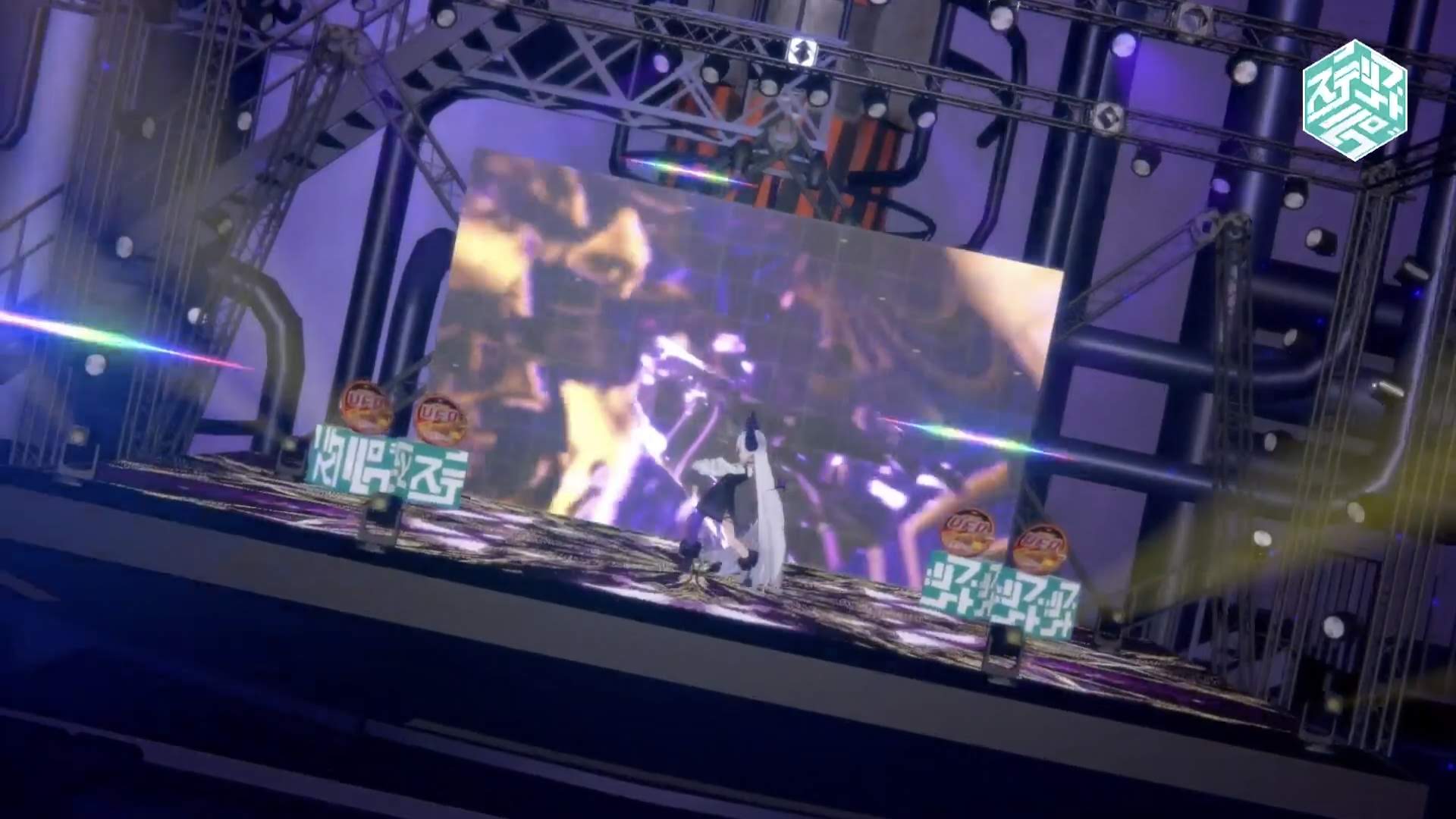
La+ had her first solo concert a few days ago, and the paid VOD (3300 yen)  is still available until March 1, JST. The event was sponsored by Nissin, the original instant noodle company, and La+ recently became a spokesperson for their U.F.O. brand of yakisoba. Note that the site is Japanese-only, and that when registering, you can put all 0s as your phone number. (Also, there’s a Koyori solo live on April 7, JST.)

As a La+ fan, I’d been hoping for something like this for a while now. While I could talk endlessly about this event (check out her final song, “Kurai”), I just want to highlight a couple things that stood out to me.

La+ actually started off with “Kamippoi Na,” which was her very first cover song back when she debuted, and she decided to sing with a deeper voice in contrast to the the whispiness of her recorded version. The choreography was also completely different from the time she covered it with Murasaki Shion. What’s really fascinating, though, is comparing her dance to that of Hakos Baelz. Both are among the very best dancers in hololive, and you can see how their respective styles come through on the same song: La+ is smooth, while Bae is dynamic.

Towards the end, La+ performed “Aien Jihen,” her first original song, and something she hadn’t pulled out since her original 3D debut. Back then, she had decided to perform the dance against a pre-recorded vocal track because of the challenging choreography. This time, however, La+ did both the song and dance, showing the progress she’s made, but also how she’s worked through a collarbone fracture from her COVID cough, a hiatus for her mental health, and throat issues, among other setbacks.

One thing I noticed during this performance of “Aien Jihen” is that the choreography has changed in some ways since she last showed it. These might be adjustments designed to make it easier to perform while singing, but I also suspect that she actually modifies her dances depending on whether or not she’s wearing her massive coat. Note in the above images (during the line “Nothing bad happened”) how La+ is leaning forward in her 3D debut but is leaning back during her solo live. I feel like the silhouette in the first image wouldn’t be quite as strong without the coat.

Ray (covered by Generation 0)

Recently, I was trying to decide which generation is the strongest musically…and then the Japan Generation 0 cover of “Ray” came out. Suisei, Sora, and AZKi are in the top echelon of Holo singers. Roboco’s sound has this haunting quality, and Miko pulls off “cute idol” while maintaining her signature voice. The closest second is probably Indonesia Gen 1.

Mind Craft (covered by hololive English)

Hakos Baelz organized a cover of “Mind Craft” with the entirety of hololive EN, and everything about it is amazing. The balance between giving the fans familiar combinations of individuals and unexpected ones really makes it a journey of a song. My highlights are IRyS + Nerissa, and how Bae herself is presented as a modest “leader” of the whole thing, both in how she has only a few solo parts but at pivotal moments, and her literal outfit looking like a ringmaster’s. Speaking of which, the character art is some of my favorite ever for hololive, and I hope there’s a way to own it someday.

Bae also did a stream where she talked in detail about getting the song and music video produced, and I think it’s worth a listen.

2023 to 2024 Countdown 

The New Year’s countdown was fun just like last year, and I’m glad to have seen new girls get in on the Shuffle Medley fun. Naturally, La+ as Kiara performing “Do U” stole the show for me.

But I wanted to look more at the fact that the hololive and holostars streams had different performances of the same songs, with distinct choreographies. Specifically, it was “Idol” from [Oshi no Ko] and “Dai Zero Kan” from The First Slam Dunk

The guy versions are more “masculine” in approach (like the basketball-themed dance moves in “Dai Zero Kan”), and it makes me think of something I read in the dance manga Wandance: It tends to be the case that guys don’t learn “girly” moves. Issues of heteronormativity aside, it’s still fun to see different interpretations of the same songs.

hololive KDA

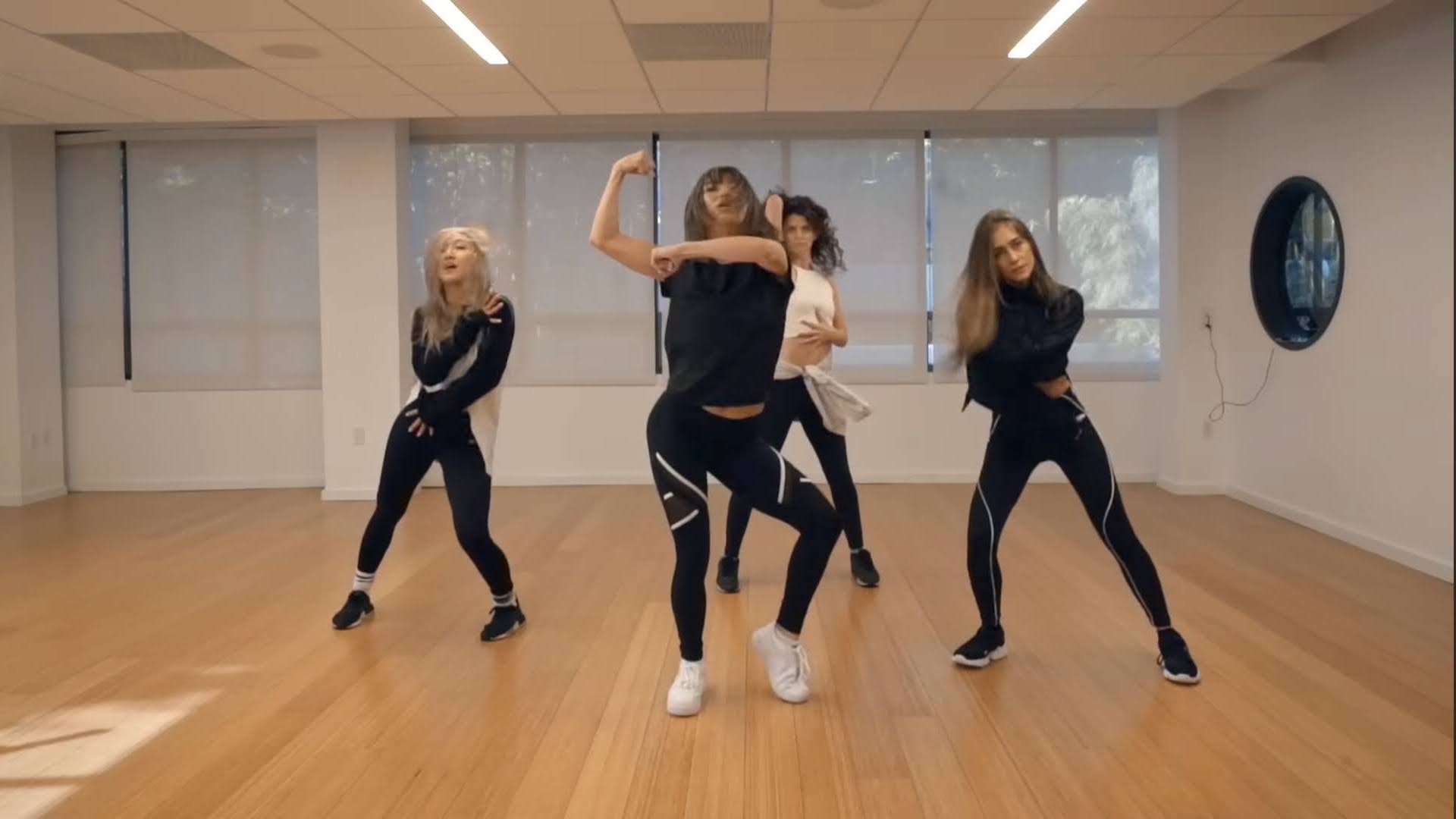
I wrote about the Riot Games One 2023 KDA cover performances previously, but I’m bringing it up again because I’ve been thinking about something in particular: The hololive version shows some of the limits of the 3D technology, and where it has room to improve. 

Putting aside the skill difference between the hololive girls and full-on professional dancers, there are definitely moments where the 3D can’t quite capture certain subtleties, or where certain moves don’t quite read correctly. For example, during “POP/STARS,” one of the performers is supposed to be a bicep flex, but this just doesn’t get conveyed when La+ does it.

That’s it for now! Who knows if I’ll do one of these again?

Nico Nico Douga, Natsuiro Matsuri, and Nostalgia for Asynchronous Chat

In November of 2023, Virtual Youtuber Natsuiro Matsuri celebrated her 5th anniversary by holding a concert themed after the premier Japanese video streaming site of the 2000s, Nico Nico Douga. The homages came in every form, from covers of Vocaloid songs popular in Nico Nico’s heyday (“Senbonzakura,” “Miku Miku ni Shite Ageru”), to jingles and error messages, and of course, the flurry of on-screen viewer comments that was and still is its signature feature. It wouldn’t be a real Nico Nico parody without that.

For those familiar with Nico Nico, it was most surely a nostalgia trip, but I did see some confusion from the uninitiated. They wondered how people could enjoy a chat that obscures the actual video. I mean, isn’t it distracting? 

In short: yes, it certainly is, but there are benefits as well. While not everyone likes the flying commentary (I know people who turn it off whenever possible), it also adds something to the viewing experience while also being a product of an older era of online video.

There are two important aspects of Nico Nico’s unique comment section that make it a boon more than a detriment. The first one is that because the text is on top of the video, it means you don’t have to constantly look away to see what people are saying. The second (and more crucial) one is that it fosters a pseudo-real-time communal experience without having to watch something live.

Similar to many other video platforms, Nico Nico allows for live streaming currently, but that wasn’t always the case. Like Youtube, it used to be purely pre-recorded material. While comment sections were nothing new even then, what Nico Nico allowed was the ability to have a user’s comment come up at a specific time in a video, so it’s clear what that person was reacting to. On top of that, anyone could post a message in this manner whether they saw a video the day it was uploaded or five years later, and they would show up all the same. This means you can feel like you’re watching with a group of people and quipping about what’s transpired despite not actually being together spatially or temporally. 

In other words, Nico Nico created an asynchronous form of fostering community through its chat, and this extends even to the present day when live streams are plentiful. In contrast, Twitch and Youtube constantly make viewers feel like they’re missing out if they don’t watch live. Twitch’s VOD service is an empty husk now, while Youtube only lets you participate in the chat if you watched something live or at least right when it premiered. There is a comment section, and it even lets you put timestamps, but it is considered its own separate space. On Nico Nico, however, chat and comments are one and the same. This approach, I believe, helps to prevent anxiety about FOMO to some degree.

That‘s not to say Nico Nico doesn’t have its flaws. Non-potato video quality, the ability to watch stream recordings after the fact, and even priority for who can even view something at all can be locked behind a premium membership. Youtube is also just more intuitive to browse and use in any language. But Nico Nico found a solution to the problem of not being able to provide a true simultaneous viewing experience, and I think an approach along those lines still has plenty of merit. 

I’m grateful to Matsuri for the reminder. Nico Nico is such a large piece of Japanese internet history, and for good reason. Maybe we can also be at a point where the flexibility displayed by Nico Nico can help people not be as beholden to rigid schedules and fear of missing out.

Emotional Continuity in Anime

What does it mean for a work of fiction to feel “realistic?” It’s a question I return to over and over because of how subjective the answer can be. The more I’ve thought about different possible takes, however, the more I’ve found that I resonate strongly with something I call “emotional continuity,” and it informs which series I view most positively.

Broadly speaking, there are many types of continuity in storytelling. There’s the simple that the events of the past should inform the events of the future. A character who loses an arm in episode 1 of a show shouldn’t get it back with no explanation in episode 10. Then there’s capital “C” continuity, like what American superhero comics often deal in, where all the individual parts ideally look together to form a consistent universe and timeline across multiple different series. “Emotional continuity” isn’t nearly so complex. Instead, I define it as simply when events that should affect a given character emotionally result in an appropriate response, and that this character remembers this feeling on some level. Those reactions and memories don’t have to be “sensible,” and they don’t have to result in a “character arc,” though both are possibilities. They simply have to feel consistent with the character and their way of being, and then leave a mark on that character.

One work I’ve debated with others about realism (and by extension show quality, though the two are not necessarily related) is the anime Mobile Suit Gundam: Iron-Blooded Orphans. Whereas others saw the character actions as making little sense and thus stunting the overall story, I felt the opposite. I came to strongly understand each character’s motivations, especially in the core cast, and to see how early events both happy and tragic would inform the general trajectory of their approaches to life.

Another anime that I’ve argued about is Kill la Kill, specifically in regards to the idea that the heroine, Ryuko, is a strong main character even though she didn’t receive much “character development.” The big sticking point for detractors is that she doesn’t really change significantly throughout the series or learn any personal lessons. However, I find that even if she doesn’t transform dramatically, she conveys a strong sense of “emotional continuity” based in her anger, her stubbornness, and her desire to right wrongs. Even if she’s still the same rage-filled Ryuko by the end, it’s impossible to say that the events of the series don’t affect her emotionally or inform her friendships, battles, and decisions.

I realized that “emotional continuity” also greatly informs my utter fondness for the series Heartcatch Precure! and might even explain why the series is often seen as the best of the Precure franchise or somewhat overrated. Years ago, a blogger named Scamp tried to watch through as much Precure as he could, but ended up dropping every show, including Heartcatch. His reason was that nothing ever seemed to happen for the most part, and that dramatic, story-changing moments came too abruptly. This surprised me, because I felt the total opposite—that the show built up to every significant plot point like a skilled architect oversaw the construction. I even wrote a response. In hindsight, while I used the phrase “emotional logic,” i.e. reasoning through feelings, to describe what I saw, what I was actually highlighting was emotional continuity.

Moonlight…in suffering loss…felt wracked with guilt, giving up her role as protector. The task to defend the world had been passed onto a new generation…and as they collected the Heart Seeds, they laid the groundwork for Moonlight to redeem herself, to learn from her mistakes while also forgiving herself…. Although Cure Moonlight’s return is telegraphed to a degree, for me it built anticipation … I felt satisfied that the show had reached a strong emotional point with a solid expression of how the feelings of each character, especially Moonlight, defined their actions.

Rarely in fiction is anything utterly devoid of emotional continuity, but the best series make you feel as if they care about what’s happened to their characters. Something that has had issues with maintaining this continuity in recent years was World Wrestling Entertainment, and that seems to be finally turned around in the past couple years. While there are general structural issues with how WWE presents itself that go beyond emotional continuity, it’s telling that fans had very little faith in their favorites wrestlers being recognizable beyond a basic template. Continuity is played fast and loose in general, and the highly physical nature of their format means injuries and other unpredictable elements can gum up the best laid plans, but there’s a persistent sense that what a given wrestler does or says one week should actually matter the next.

Do you find emotional continuity to be important? If so, how much is it a priority for you? I’m curious to see how others feel.