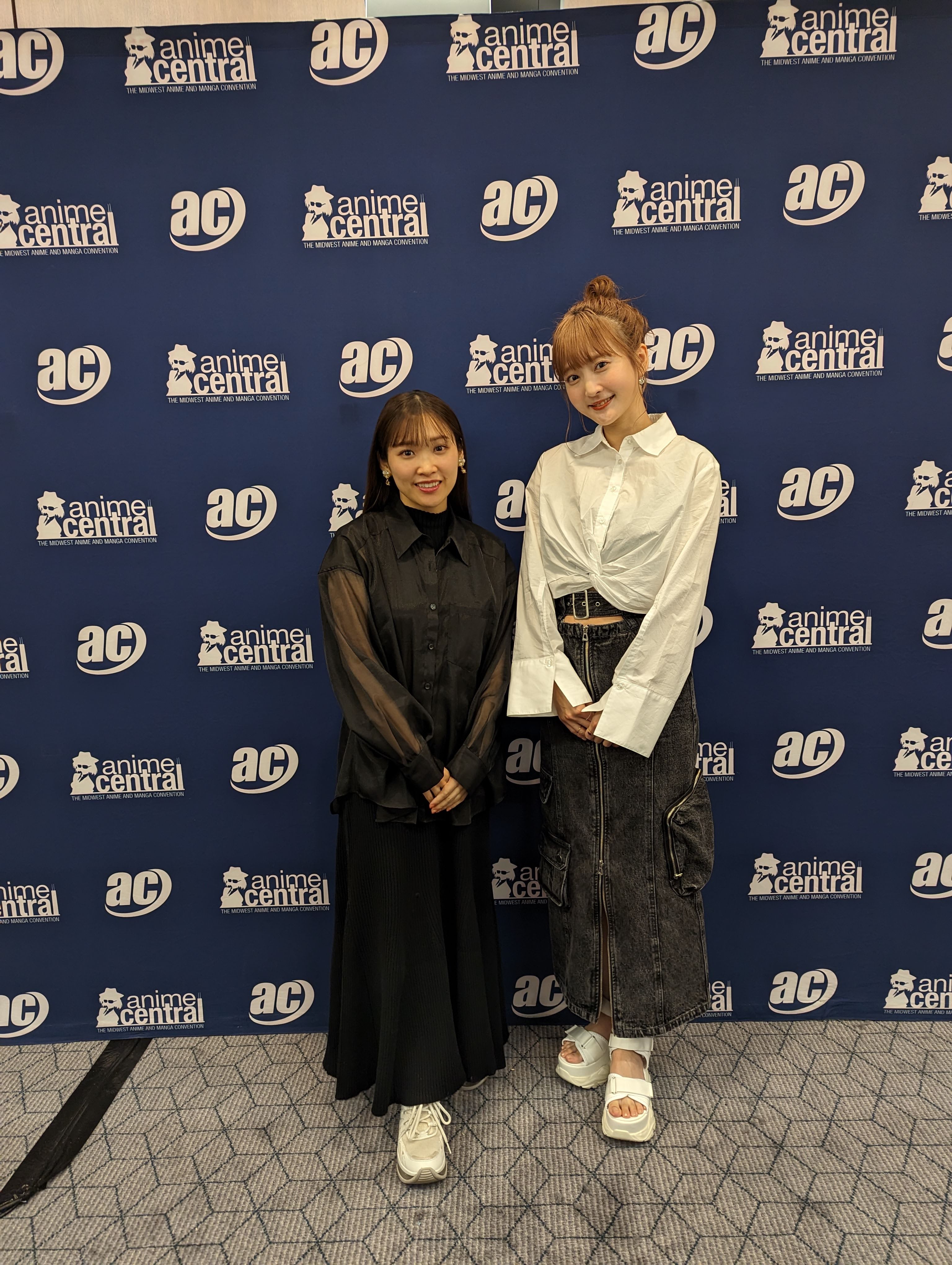
Anime Central 2023 Interview: Tanaka Rie

Tanaka Rie is a veteran voice actor with over two decades’ experience in anime.

How would you describe the voice acting industry back when you first started versus what it’s like today?

I feel like I’ve only been in the industry for 25 years, so there are other people who are much more senpai than I am. But back when I first started out, voice actors wouldn’t show their faces in the media a lot. Now, though, you see voice actors doing media, movies, TV shows, photo books, and such. So you start to see that it’s much more out there in the media. There are a lot of young kids nowadays who are really excited about the prospect of being voice actors, so in that sense it’s changed quite a bit.

You graduated from the famous Yoyogi Animation School. Are there any particular things you learned there that you feel have helped you greatly in your career?

I feel very fortunate and very blessed that I was able to attend Yoyogi Animation School. I only went for one year’s curriculum there, but I was able to gather a lot of experience. That’s because it’s very different when you’re a voice actor because in order to be a pro, you have to gather experience. And so even if you go to school, even if you go through a curriculum, and even if you graduate, you still have to get that experience at doing that job. But I do find that one thing that was really great was being able to be around other people who were also looking to be voice actors—that friendly competition, that rivalry. We also had auditions at school. 

When I originally went to the school, though, I debuted as a singer and not as a voice actor. I was with Sony for three years as a singer, and then went from there to being a voice actor. I feel that it was a very good experience. I’m glad I went to a vocational school.

When I think “Tanaka Rie,” the first character that comes to mind is Lacus Clyne from Gundam SEED. How did you approach playing the character, as well as Meer Campbell in SEED Destiny?

Lacus Clyne is the most difficult character I’ve ever played. She’s not a regular human, but rather one of a variation called Coordinators. They’re like a third era of humanity who are born having been adjusted and “coordinated,” and so Lacus’s emotional expressions were extremely challenging. Even through the full range of emotions, not much changes. She’s a human being, but she doesn’t emote in a very human way. In times of sadness or in times of joy, I had to portray her intense emotions in a calm and reserved manner. Whether she’s happy or crying, she doesn’t falter. 

Her name means “lake” [in Latin], and the director told me that the image of her is that of a tranquil lake that calms. Having to keep that image in mind was incredibly hard.

Lacus was a character in both SEED and SEED Destiny, whereas Meer Campbell debuted in SEED Destiny. People who’ve never seen these shows might be wondering who the heck Meer is, but she’s a copy of Lacus Clyne—a fan of Lacus who was surgically altered to look and sound like Lacus because Meer wanted to become her. She was a fake Lacus who was deceived by the villain of the series, Durandal, into believing she could become the real deal. 

Meer is actually a powerless and utterly normal human being, and so she has this very human quality to her. I found that it made her an incredibly easy character to play—Meer’s so human that it hurt. As a girl, she has a certain way of being and a strong personality. This comes out when she says, “I am Lacus!,” due to her brainwashing, and even when she’s confronted by the real Lacus Clyne, she still thinks, “I was Lacus, wasn’t I?” I loved Meer.

As I played her, I thought, the character of Meer really is a complicated girl. While Lacus was difficult to play, Meer was the opposite: a woman who was all too human. I could really empathize with her as a normal person. I approached her as a character one could easily empathize with. That’s what made Lacus so much more difficult, whereas when playing Meer, I could use the emotions I had going into the studio that day and put them into the character because she’s such a human character.

You were involved with the Precure franchise very early on in the role of Shiny Luminous. Do you have any memorable stories from working on Max Heart, and how does it feel to see Precure going for this long?

Luminous is not technically a Precure, and she’s actually a queen in that world. When I got the part, I thought she was a Precure, but in actuality she wasn’t. It was tricky in the sense that she’s a character who can transform like a Precure but isn’t actually one and doesn’t refer to herself as one. 

She transforms with a shout of “Luminous Shining Stream!” using her mascot Porun as a compact, but that doesn’t mean that she’s powerful. Precures fight using martial arts, throwing punches and kicks—that’s how they show their strength. Luminous can’t fight physically, though. She’s a character who runs away and guards using barriers, and thinks, “I’m going to protect everyone!” after she’s transformed. Luminous really tries her hardest, and because she can’t fight directly, she strives to safeguard Nagisa and Honoka, Cure Black and Cure White. However, when the time comes, all three are within her barrier to perform the attack Extreme Luminario. When that happens, all three are truly united.

When she’s Kujou Hikari, however, she’s just a normal schoolgirl who works part-time as an apprentice at a takoyaki cafe, and is rather shy. Playing her ended up requiring a lot of effort.

You play many “big sister–like” characters, such as Suigintou in Rozen Maiden, Maria in Hayate, Akira in Yamato 2199, and Maho in Girls und Panzer, yet you’re able to make them sound so different from one another. Do you have any advice for newer voice actors who would like to be able to diversify their style?

I’ve done so many roles, and when it comes to being a voice actor, we do a lot of solo recording these days. But before COVID-19, it was common to do voice recording as a group, and for like 23 people to share three mics.

When it comes to differentiating roles, well, there’s only 24 hours in a day. For example, you might have one project that goes from 10am to 3pm, and then another 4pm to 9pm, and you have to try your best to do well in both roles during those 24 hours. In that hour between, I make that “switch” inside me, like when I’m eating. While it’s tough to do so, being able to just go “I’m triggering that switch” is what being a professional voice actor is about. 

When I think about it, though, I don’t know for sure how I accomplish that. It’s true that my normal speaking voice isn’t the one I use for my characters, so perhaps it’s like putting on one mask and then switching to another. So it’ll be like: “Today I’m Nishizumi Maho.” “Today I’m Luminous.” “Today I’m Lacus Clyne.” I might be doing it unconsciously. But being able to “switch” like that is very important.

Those aiming to be voice actors shouldn’t just focus on voice acting but should learn from many things and observe more broadly. You often hear it said that you need to start your voice acting career in your teens, and if you wait until you graduate, it’ll be too late. They’ll even say that in the voice acting schools. But you’ll have some who start voice acting in high school, while others might go to college first or switch to becoming voice actors from a different career. It’s really about your own life, and the timing with which you decide, “I want to do this thing!” becomes important in terms of how you study and learn about the world and society. Between a voice actor who knows nothing of the world and one who has all kinds of experience, I find the latter more impressive. That’s what my senpai have always said as well, and it makes one want to try to have many different experiences.

Mobile games have become a major part of the entertainment industry, and you have worked on a great many. Do you do anything differently when voicing characters for mobile games versus anime or more traditional video games?

When it comes to mobile games, anime, and more traditional video games, the approach doesn’t really change. However, what is different is dubbing foreign media—dramas, movies, and such. That’s because they don’t want me to use “anime character voices” but rather something closer to my real voice. So the approach to voice acting for a TV show from abroad is different compared to doing something for a work that’s originally Japanese. 

In recent years, you started your own YouTube channel, playing games, releasing music, and showing your cosplay. What made you want to start streaming yourself?

During the coronavius pandemic, I thought, “Why not try?” but actually, the suggestion to make a YouTube channel began before COVID-19. I’d never done YouTube before, and between my main job as a voice actor and having to provide deliverables and content, I wasn’t sure if I had the capacity to handle doing it all. But I’ve always loved video games, and so when COVID-19 happened and things couldn’t continue as they had, I thought, “Well, guess I’m doing this.” But also, I thought about how I couldn’t interact with the fans—the tens of thousands of subscribers—and how hard it was for them, as well as how sad it made me as well as Vega-chan, who’s been working with me all this time. In terms of the scope of what we could do, we started with streaming from my home, and as things have opened back up, I can do more and even find sponsors. That said, things didn’t totally open back up, meaning it’s still a bit hard. So this is a kind of fanservice so I can connect to the fans through my voice, and I can give them joy through my broadcasts, where I deliver content twice a week. I love video games, and the fans like seeing me play them, so that makes me happy.

You are known for having a love of Indian curry. Do you have a favorite type of Indian curry?

Cashew curry! It has cashew and chicken. I always make sure to have cashews in my curry, and I love the spices. Indian food in Japan is amazing! I love it.

Would you like to give a message to your fans reading this interview?

I really cherish all my fans. Even if there are times you can’t hear my voice in anime or video games, I’ve been working hard with Vega-chan on my YouTube channel for a long while now, and fans can interact with me there. Also, there will be a lot of big projects coming up where you’ll be able to hear me again, and so to my fans not just in Japan but all over the world as well, please continue to support me. I look forward to seeing you all soon.

The Fun of Finding Your Style in Multiplayer Games

When I was playing Splatoon 3, I would do something that I barely attempted in previous games: try out as many weapons as I could to get a feel for them. Because upping a weapon’s “Freshness Rating” is how you get tickets to obtain other weapons, it’s both a welcome system and an opportunity to experiment. Combined with the forgiving leniency of Open Anarchy Battles, and I could even do so without worrying that it’d tank my rating. 

This relates to a topic I always find fascinating: How people figure out what “feels right” for them and why. It extends to just about any game where players have the freedom to choose their tools. The considerations one makes about skill level, comfort, satisfaction, community consensus on what’s strong and weak, etc. all factor in. 

And then there are all the attempts to help people figure out where they are. The famous Magic: The Gathering psychographic profiles, i.e. Timmy, Johnny, and Spike, are meant to be broad categories to designate how different cards appeal to different players. YouTubers create videos to help anyone who’s unsure of what weapons work for them in various shooters. Fighting games like Guilty Gear STRIVE and Street Fighter 6 now include in-game basic descriptions of how characters play so that newcomers can more quickly pick the archetype that appeals to them.

I think what fascinates me in particular about the whole “trying to find what fits you” aspect of multiplayer video games is that just because something is the “best” doesn’t mean it’s right for you. The example that immediately comes to my mind is the Smash Ultimate player, MKLeo. Despite Pyra and Mythra being widely considered a top tier character, they don’t quite click with MKLeo’s play style for some reason, and he’s actually gotten better results with the theoretically weaker Byleth. Even a player who had been undisputed #1 for years, can’t automatically go with the “superior” choice.

I love to watch videos discussing choice of weapon or character. I love discussions about it, salt and all, even in games I don’t actually play! I think it’s the way these choices are conduits for personal expression, and it’s what makes games beautiful.

The Real Diversity of Street Fighter 6 and Across the Spider-Verse

WARNING: SPOILERS FOR SPIDER-MAN: ACROSS THE SPIDER-VERSE (and I guess Street Fighter 6?)

I’ve had the pleasure lately of experiencing two of the finest works of media this year: Street Fighter 6 and Spider-Man: Across the Spider-Verse. Both are at the pinnacle of their respective genres (fighting games and superhero movies) and seem to draw all the right lessons from the past. But one thing both titles really have in common—and which I think is so indicative of their approach—is strong character designs that are profoundly respectful of their casts’ diversity in terms of culture, background, and circumstances. 

The idea of an international roster far predates both works and even their respective origin points, i.e. Street Fighter the arcade game and the Spider-Man comics. Often, these past portrayals end up being flawed, if well-intentioned. Be it a manga like Kinnikuman featuring heroic wrestlers built entirely on stereotypes or having the brilliant detective Charlie Chan played by an actor in yellowface, it’s historically a mixed bag. These instances frequently betray a lack of exposure to other cultures by ones that consider themselves the default.

SF6 and AtSV know that their audiences aren’t limited mainly to one ethnic group anymore, and either have people from more diverse cultures on staff, or at least people eager to listen to people from other groups. Both SF6 and AtSV had to meet the challenge of revamping many existing designs—the former because many returning characters are supposed to be older, and the latter because it draws from so many different portrayals of Spider-Man. In this regard, both succeed in spades.

Here are a few examples:

In SF6, Chun-Li’s update conveys through her mannerisms and outfit that she has matured while still being undoubtedly recognizable as the queen of fighting games. Her clothes draw directly from Chinese culture without bordering on parody, and some of her animations have been changed to draw from actual Chinese kung fu styles. Her new standing medium kick, for example, is actually the Separation Kick from tai chi.

Zangief still looks like a hulking wrestler, but they actually changed his body type. In previous games, Zangief has more of a body builder’s physique—extremely chiseled all around—but in SF6, he exchanges that appearance for one with a bit more fat around his massive muscles. In other words, he looks more like he trains for practical strength, and the fact that the developers did this actually goes a decent way in diversifying the bodies in the game while remaining true to Zangief’s character.

Similarly, AtSV had Pavitr Prabhakar, an Indian Spider-Man whose costume feel less like symbols of India added to Spider-Man and more like what a Spider-themed superhero might look like if they grew organically out of Indian culture. Moreover, the writers of AtSV actually consulted with Indian and Indian American writers as well as Pavitr’s voice actor, Karan Soni, because they wanted greater cultural specificity and authenticity.

And even with all of this consideration for ethnicity, gender, sexuality, etc., all these characters are attractive in their own right. People like to see good-looking characters, but there’s no one standard of beauty. Both creative teams seem to understand that.  

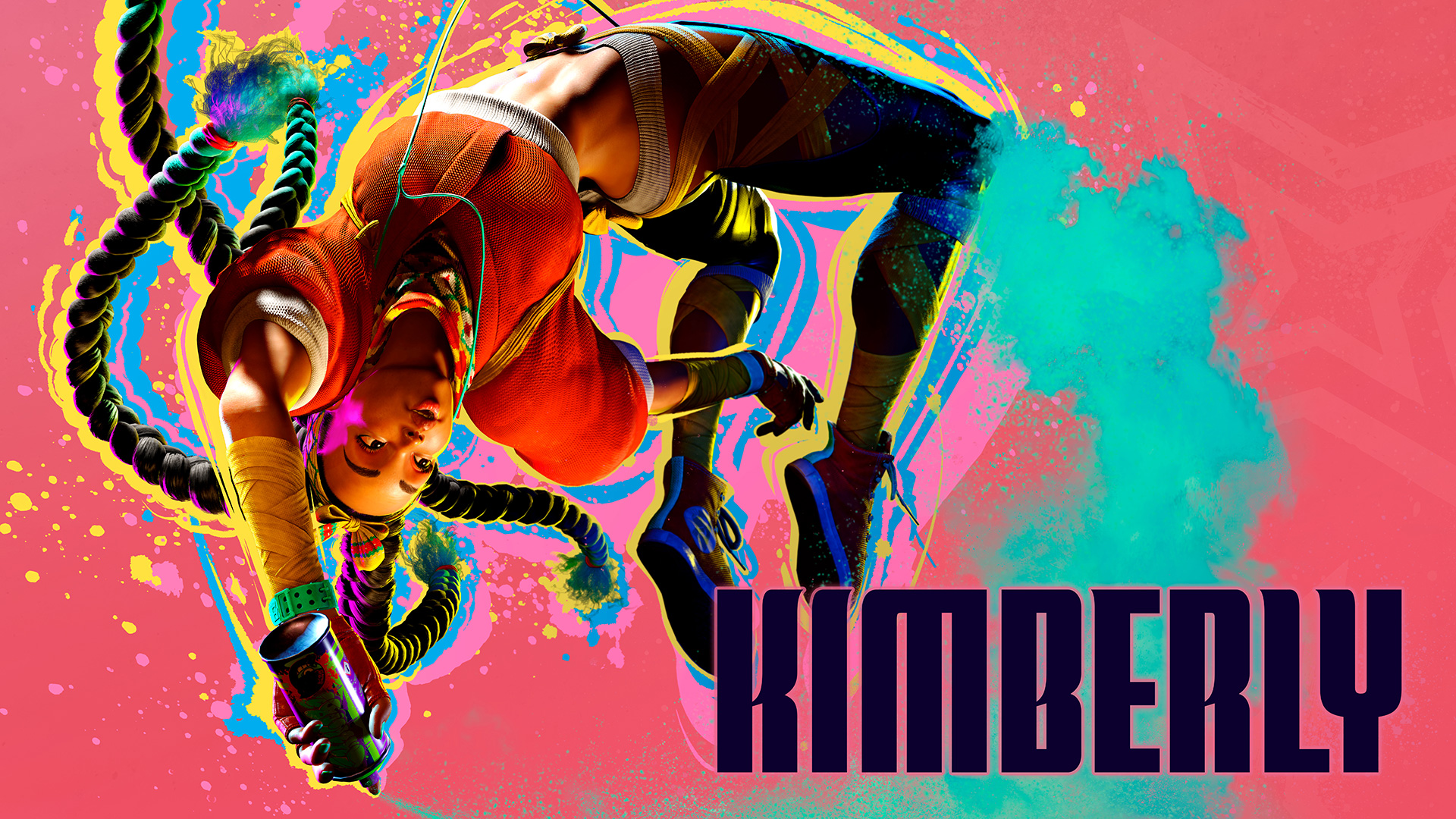
A major factor in both works’ success is starting from the understanding that not just one group of people are going to enjoy it. Kimberly Jackson in SF6 is black and one of the three most prominent heroes, and the only one with a story that ties directly to the main antagonist. The protagonist of the Spider-Verse movies, Miles Morales, is Black and Puerto Rican—and he reflects many of the aspirations and anxieties of those who grow up in non-White households in the US.

It can be easy to forget that the first Miles Morales film, Into the Spider-Verse, came out in 2018—before the murder of George Floyd and the increased mainstream awareness of the deeply rooted problems with police in the US. In 2023, however, I couldn’t help but notice the views expressed on that topic in AtSV. Both Miles and another character, the Spider-Woman Gwen Stacy, have dads who are on the force. They’re officers of the law who honor and respect the people, and having them be positive role models is part of the Spider-Man lore, but making the police and unalloyed good would never be compatible with the lived experience of so many black and brown people, not to mention other groups.

At one point, Stacy (a white girl) outright states that the reason her dad took on the role of captain is because he would inevitably be replaced by someone worse than him. In other words, contrary to the idea that cops like the one who murdered George Floyd are simply “bad apples,” it is the tree itself that is rotten, and the occasional good apple is the exception rather than the rule. While perhaps the film could have stated it more directly, it goes to show just how much AtSV is trying to express perspectives beyond what is comfortable. 

The greatest strength of Street Fighter 6 and Across the Spider-Verse is that both works come across as genuinely wanting to engage with as many cultures as possible from all sides. They’re not just paying lip service to the notion of diversity but actually making it happen in a satisfying way. I hope that both Capcom and Marvel continue to draw inspiration from the world in all its glory and shame, and in turn, encourage others to do the same.

Anime Central 2023 Interview: Kubo Yurika and Ichinose Kana

Kubo Yurika and Ichinose Kana were at Anime Central 2023 to promote the game A Light in the Dark. Kubo is best known for her role as Koizumi Hanayo in Love Live!, and Ichinose is currently voicing Suletta Mercury, the protagonist of Mobile Suit Gundam: The Witch from Mercury.

I also had the chance to ask Kubo a question specific to Love Live! during her fan panel, which I’ve included at the end of the main interview. 

You’re both here at ACen because of your role in the visual novel A Light in the Dark. What are your most memorable experiences being involved with this game?

Do you mean during the recording?

Yes.

Kubo: Personally, this was during a time when I had a lot to record, so my sessions went on for days. My character, Mysterious Girl, goes through a lot of difficulties, and I was going through a lot of difficulties in my real life as well. So that overlapped, and I really realized that my life can be so easily influenced during recording.

Ichinose: By the roles you play?

Kubo: Yes, yes! That’s it! There’s a part of me that can be hurt quite a bit.

Ichinose: Oh, wow.

Kubo: So my memorable experiences tend to be about the heaviness of the role I play.

Ichinose: For me, I like playing serious roles, and my role hit close to heart. My character starts off very reticent, but there was still a lot of emoting involved. I do like heavy roles—and it was still heavy—but I still enjoyed it.

-How have your experiences playing characters such as Hanayo from Love Live! and Ichigo from Darling in the Franxx influenced the way you play your characters in A Light in the Dark

Kubo: So for both of us, it probably wouldn’t just be the roles from the works you mentioned—they’re all opportunities for growth as actors.

Ichinose: These are genuine experiences that contributed to our breadth of expression.

How do you balance playing multiple characters at once and keeping track of them?

Kubo: As for keeping track of roles, I think all the characters we’ve played so far don’t necessarily influence who we play in the moment. We just get into the role and do it that way. 

Ichinose: And since all the roles are so heavy in A Light in the Dark, resetting the emotions and getting out of the characters tends to be a bit of a challenge. But at the same time, as we work professionally, we do get ingrained with an emotional switch, or an acting switch, where we switch between roles in a very natural way.

Kubo: Yes, you’re right!

How does recording for a visual novel compare with other types of voice work?

Ichinose: Compared to recording for other types of video games, in other games, it’s more typical to do small voices like “Yah!”

Kubo: And “Hah!”

Ichinose: Yeah, and “Hah!” But there is a much longer story in A Light in the Dark, and there is much more emotional continuity. Depending on the recording, we might be skipping chapters, so we have to keep track of the continuity of the story and also the emotions. 

Kubo: But there are also branching paths in the story where the user has to select which path to go, and we have to be aware of the pre-selection emotion as well as which path the user chose.

Ichinose: One dialogue path would end, and then we’d have to do a different dialogue path.

Kubo: The level of tension and excitement would have to change too. It’s one of the fun and interesting things about the project.

Ichinose: I would sometimes have to rewind the emotional state of the character and go back. 

Kubo: Right!

That general area is part of the difficulty.

What inspired you to become a voice actor, or get into the entertainment industry in general?

Kubo: I started as a model for teenage magazines, but even before then, I was always watching anime and reading manga. While modeling, I was starting to wonder if I was unfit for the job, whereas I could always enjoy anime and manga. So I always wanted to take on the challenge if I ever had the opportunity. I did tell my agency that’s what I wanted to do, but they told me off that it’s not such an easy thing. They didn’t outright oppose what I said, but they said it’s not easy. When I got the role for Love Live!, though, that was my foot in the door into a career as a voice actor.

Ichinose: When I was in grade school and kindergarten I always loved watching anime, and my life more or less involved watching anime. I did play with my friends, but if I were at home, I’d spend pretty much the whole day watching anime. As I watched anime and loved anime, my thoughts turned towards the casts in anime, towards the voice actors, and eventually I would think that I wanted to get involved in the world of these various animation stories. So when it came time to choose a future for myself, one day I went to an open campus at a voice acting school, where I got my determination to go into voice acting.

For my three years in high school, I worked part-time and saved so I would have the money to pay for my own tuition for voice acting school. I paid my way through, did my audition, and got a role. So I started from a love of anime, refined my voice, and tried it out. I have the person who encouraged me to go into voice acting back then, who told me I had a chance, to thank.

Is there anything about your performances as Mysterious Girl and Young Girl that you’re especially proud of? 

Ichinose: What do you mean by that?

In the sense of, did you think you felt you had performed well, and can look back and say “I did a really good job here?”

Kubo: For my role as Mysterious GIrl, there is a portion in the latter half of the game where she goes through an emotional explosion. I played that part thinking, “I could lose my voice tomorrow, but I’ll go through with it.” If you can experience that scene, I would be very happy.

Ichinose: My character gets a little bit closer to the main character in the middle of the story, and she begins to open up and start talking about her dreams and aspirations—like how she would like to eat sweets. Normally, that’s the kind of dream that’s easily realizable if you have the money for it, but the girls grew up in an environment where that’s not something they could afford.

How is it to play a character who didn’t have something that was so ordinary and common for normal people? That was my challenge. So this is a serious title, but there are these small slivers of hope that my character can aspire towards, and if that kind of nuance gets through to the player, I think my acting will be rewarded.

Thank you!


Bonus: Extra Question for Kubo Yurika from the Previous Day’s Fan Panel

I love the way that you portray Hanayo’s shyness and intensity. My question is: I noticed your performance of her evolved over time; what changes did you make to playing Hanayo over the years?

Kubo: It wasn’t like I really changed my approach to Hanayo—more like as the years went by, Hanayo saw more of her character, experienced more, as did I personally. I think that’s kind of what led to that natural evolution. I wasn’t very conscious of it at all.

Omnidirectional Fan Extravaganza: Holocure Version 0.5

The Hololive fan project Holocure is what finally made me try a Vampire Survivors–type game. That’s not to say anything is wrong with Vampire Survivors—I had no particular qualms based on what I knew of the genre, but also no particular motivation to check it out. But now I’ve devoted more hours to Holocure than many games in recent memory, so I figured I should jot down my thoughts on it, no matter how disorganized.

I can see why this game type has become such a hit. There’s something simultaneously relaxing and stressful about the format. The whole automatic-firing thing exemplifies this, as it means you don’t have to worry about constantly mashing on a button or timing hits, but it also means you have less control in dire situations where you really wish you could be more precise. My only complaint is that collision with stage elements sometimes happens unexpectedly, and I feel like certain graphics such as fences and potted plants are kind of iffy in terms of how they interact with the playable characters. Either that, or my partial color blindness makes them hard to notice.

Wikipedia calls Vampire Survivor a “timed survival” game, and I don’t know how common or accepted that is as a term. I feel like it’s treated as a genre or subgenre of its own, though I can’t help but compare it to the 1980s arcade game Robotron 2084, which also features an overhead view plus dual sticks for movement and aiming respectively. There are differences but also a clear conceptual lineage, and it’s fascinating to see people try to coin a term to describe this game type. The term “Roguelite” is funny for all the reasons Metroidvania and Roguelike are.

Specifically regarding Holocure, the roster is an obvious point in its favor. Getting to use Hololive members is ultimately what pushed me to try it in the first place, especially after hearing that Haachama would get added to the game. Even if I weren’t already a Haachama fan, she’d probably still end up being my favorite in Holocure. The fact that she has a “stance change” mechanic (based on the #coexist arc that implied Haachama has two warring personalities inside her) just makes her fun to play and strategize with. 

I’ve now had the chance to use every character available in Version 0.5, and I just love the way that the girls’ lore, personality, and memes all get rolled into gameplay elements. It’s the advantage of being a fan game based on an existing property. I’m eager to see how future characters turn out. The entirety of Hololive Indonesia has already been announced for 0.6, and I want to try them all, especially Kureiji Ollie, Airani Iofifteen, Kobo Kanaeru, and Kaela Kovalskia—the last of whom has herself become addicted to playing Holocure for hours end while blaring an in-game trumpet for maximum cacophony. 

And of course, I can’t wait to see the eventual arrival of La+ Darknesss. Given that Gura has the power of Smolness that allows her to dodge attacks more easily, I wonder if La+ will have a similar ability, given that she is literally the shortest member of Hololive. Or will it be the case that her massive horns neutralize the advantage of short stature? What will her super be—a reference to her original song Dark Breath, perhaps?

Fun times ahead.

Pallet Cleanser: The End of Ash Ketchum as Pokemon Protagonist

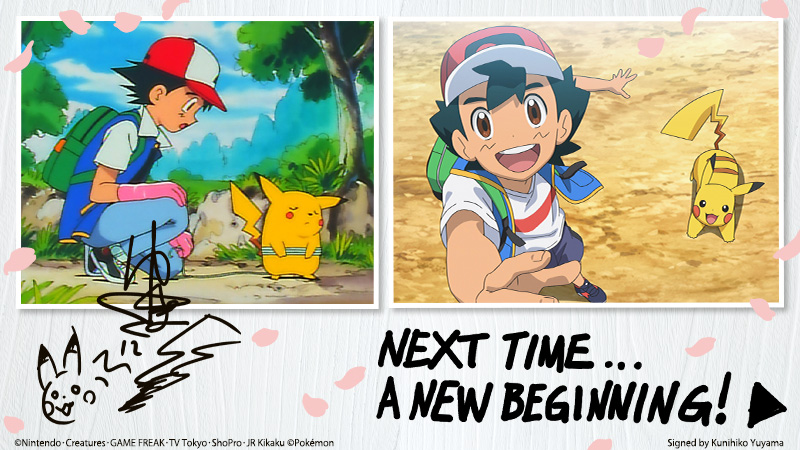
This past week marked one of anime’s biggest departures ever, as Ash Ketchum—aka Satoshi—has ended his 26-year tenure as the main hero of Pokemon. It’s amazing to think about how the character has been such an enduring presence in the lives of millions of people for over two decades, all without being wholly remade and revised. Other heroes in other franchises might arguably have greater legacies, but the fact that it was consistently the same Ash week in and week out makes for one fascinating and continuous chain of history.

It’s been many, many years since I was actively part of the Pokemon fandom. I naturally didn’t know about it when it first came out in Japan, but for all practical purposes I was there from the beginning. I remember getting a little pamphlet about Pokemon in an issue of Nintendo Power, and as I anticipated its arrival, I managed to even catch the sneak peek “Battle Aboard the St. Anne” episode that aired the week before the first episode aired in the US. For maybe five or more years, I would record every episode on VHS, and the times I had to program the VCR, I tried to time breaks in the recording to preserve space so I could fit more on each tape. I’ve long since stopped doing that, or watch Pokemon on a regular basis, but I can never forget those early days.

Ash was never my favorite Pokemon character, and for the fellow fans I interacted with online, it was largely the same. The reason: a lot of the people I talked to I met either through the competitive scene (years before the founding of Smogon) or via a Team Rocket messageboard. In the former case, people were not fans of Ash’s nonsensical battles or inability to understand the type chart despite his successes. In the latter, it’s because a site dedicated to Team Rocket would naturally run ever-so-slightly edgy and prefer older characters. For me, it’s just because he was a pretty decent but generic kids’ anime protagonist—a plain rice ball (or donut, as it were) in a world of more compelling stories. 

But there‘s something special about being that hero for so many people for so long. And while many of his accomplishments were often tied to meta events (e.g. Gary Oak/Shigeru’s Japanese voice actor leaving the show is why they ended up having their big 6v6 clash in the Johto Pokemon League), the sheer amount of things Ash managed to achieve is impressive. A character who could have gone on forever unchanging still leaves behind one hell of a CV. 

A big factor in why there was a sense of progress with Ash was because of the way he would go from one region to the next in accordance with game sequels. While the basic formula of “meet new friends, have adventures, get gym badges” was always present, he never stayed in the same area for long, and he always met new people. And while fans would often remark on the way his skill and knowledge would seemingly go backwards every time he started a new path to a Pokemon League, it’s clear that his inability to retain knowledge is not necessarily a matter of poor character writing or insufficient lore consistency and more a way to keep him level with the new fans who still come to the series even now. Ash is as much a vessel as he is a protagonist, and he could never be a vessel for everyone at the same time.

One thing I always found funny is the fact that some of Ash’s greatest wins and titles came about in “filler arcs,” the seasons that took place between main-game storylines. This is why he’s the Orange League champion, the Frontier Champion, and most recently the winner of the Masters Eight tournament (solidifying him as the strongest trainer in the world). He also won the Galar Pokemon League, but in hindsight, it’s clearly because they knew they were about to start winding down Ash’s story and they wanted to show much he had grown. I remember thinking, all the way back in the late 90s, about how a main-line gold medal would likely someday be the sign that Pokemon was going to conclude. While the anime will continue with new leads, it really is the end of an era. 

Now the perennial 10-year-old gets to go off and do things unseen, and it makes me wonder if we’ll ever see him again. Might Ash make cameo appearances down the road, and will he look different or even possibly…older? It’s a new and unknown world.

A Good Feel for the Game: Fraymakers Early Access Thoughts

I’ve long wondered what it would look like for a platform fighter to be the Smash Bros. of indie gaming.

Over a span of two decades, the Smash franchise has gone from a large intra-Nintendo crossover to a celebration of gaming as a whole. But as diverse as its roster has become, indie games have only barely begun to have a presence in Smash—and only really with titles that have been wildly influential, like Minecraft and Undertale

Fraymakers is not the first to step up to the plate, but it’s definitely gotten the furthest. It promises a diverse roster that emphasizes not just the big titles that acknowledge how messy gaming history can be, and that it’s not all about the major names—at least not in the way one might normally think about. 

I first heard about Fraymakers through its Kickstarter, and there are three reasons I ultimately decided to back the project. First, as mentioned, it’s something I’ve wanted to see for many years. Second, it’s being developed by McLeod Gaming, the folks behind Super Smash Flash, a fan-made Smash clone that has its fair share of supporters (though admittedly I’ve never played it). Third, one of the Assists in the game is the Newgrounds tank. 

It’s that last point that I think really encapsulates the Fraymakers mindset: Newgrounds—which was built on interactive Flash games before the format became obsolete—was not always home to especially great games. However, they were a source of entertainment for many people. The imperfections of these amateur works made them all the more charming. Now it’s out on Steam early access with a handful of playable characters, and here I am trying out out.

I’ve said a lot about wanting to see an indie Smash, but truth be told, I’ve never played many indie games—no, not even the one you’re probably thinking of. But that’s also precisely why I love the concept. It reminds me of the first time I played a Super Robot Wars game; I barely knew certain robots, but discovering and learning more about them is part of the fun. I recognize Octodad and Orcane from Rivals of Aether, but do I know who CommanderVideo is? Nope. Now I’m curious, though, and I can sense the love and care in how they try to capture the essence of each character, each of whom feels noticeably different.

Of course, all the fun references in the world can only take a game so far, and it’s ultimately gameplay that’s king. In this regard, Fraymakers feels at home for anyone with a passing familiarity to Smash, leaning towards the famously long-lived and highly competitive Super Smash Bros. Melee, but with some quality-of-life improvements seen in other games. For example, wavedashing does exist in Fraymakers, but also controls can be customized to fit individual preference, much like in later Smash games. There are even control options, like “d-pad movement” and “double tap to dash,” meant to help people who might have issues with analog sticks. Overall, the game doesn’t stray terribly far from its inspiration in terms of mechanics, but there are a few changes such as replacing the air dodge with an air dash meant primarily for extending combos instead of as a defensive option.

One thing definitely in Fraymaker’s favor (say that three times fast) is that the act of fighting itself feels satisfying. Characters have a sense of weight and gravity, hits have impact, and the controls never feel mushy—issues I’ve had with some other platform fighters like Brawlout and even Multiversus. The only time I did have issues was when I was using a controller that was less than ideal; once I switched to something better, everything pretty much clicked. 

In terms of tournament viability, I did go online to see what that’s like, and proceeded to get mauled by people who had a better idea of what they were doing. There is definitely combo potential and all that jazz, I can tell that much. While you can’t force a competitive scene to happen, the fact that Fraymakers feels inherently good to play probably bodes well for it.

Ultimately, I’m mostly eager to see more and more characters with relatively unique play styles. The current four demo characters have varying levels of unorthodox elements, with Octodad surprisingly being the most standard despite the purposeful awkwardness of his source game. There are already more characters announced, and I look forward to trying out all these cool faces I only know from watching other people stream.

New Paths: Pokemon Violet

I’ve been a Pokémon fan since before the very first game launched in the US, and I have to say that playing Pokémon Violet is some of the most fun I’ve ever had with the franchise. Yes, I know about the glitches and lack of polish. I got stuck in a black void inside my own house right at the start of the game, and I’ve taken note of the wonky physics. But even though I’ve finished the main game, I still keep jumping in.

Similar to Pokémon Legends: Arceus, Pokémon Scarlet and Violet are open-world games, meaning that they emphasize freely exploring the environment without forcing you into a certain order of doing things. This is both a plus and minus, personally: I have felt that newer Pokémon games are a little too on-rails, and this is a way to break with that trend, but I’m rather directionally challenged both in real life and in games. Luckily, they’ve added things that make the world feel pretty navigable even for someone like me. One key concept shared with Legends: Arceus is to have a ridable Pokémon that replaces the idea of key TMs or HMs to traverse unusual terrain—a definitely welcome change.

The new region, Paldea, is based on Spain. Here, you enter a Pokémon school that places heavy emphasis on both searching for and pursuing your dreams. To that end, there are three separate but overlapping storylines that each emphasize somewhat different views of what it means to thrive in the world: Victory Road, Path of Legends, and Starfall Street. Their stories progress in compelling ways, involve meeting great new characters, and even act somewhat as tutorials to help you develop certain skills. 

Victory Road feels the most refined, being the most tried-and-true part of Pokemon singleplayer. It’s the familiar acquiring of gym badges in order to fight against the Elite Four and become a champion, but it also manifests in cultural aspects of Paldea that result in a unique experience. Whereas Gym Leaders in other games dedicate their lives to running their gyms, it’s more of a side job here. Paldean Gym Leaders include a baker, a streamer, an office worker, a rapper, a sushi chef, and so on. Gym battles take place outdoors—perhaps as a way to not have to model interiors, but it nevertheless adds to the feel that Paldea isn’t like other regions. 

Adding to this is maybe the most fun rival to ever appear in Pokémon. Nemona is a fellow student, but she’s already a Champion-rank trainer by the time you meet her. Rather than growing alongside you, she guides you to become stronger, all because she loves Pokémon battles so much that she’ll seize any opportunity to have a great match. Players online have compared her to Goku from Dragon Ball, and it’s quite apt.

The storylines in Path of Legends (where you pursue titanic Pokemon) and Starfall Street (where you fight against school delinquents who comprise the latest nefarious organization, Team Star) have really engaging plots full of interesting developments. I found my view of certain characters evolve over time, and they provide both some of the most heartfelt moments and some of the funniest gags I’ve ever experienced in Pokémon. One downside is that I think the gameplay elements they each emphasize could have been done in somewhat more exciting ways. The Titan Pokémon could feel more titanic, and there really isn’t much to the battle system used for taking down Team Star. They’re more good than bad, though.

Playing through all three paths is very rewarding, not only because it opens up new branches and brings the overall plot together, but also because they collectively convey the richness of Paldea. The region seems to move at a characteristic pace (at its Own Tempo, one could say) that is about loving life and enjoying good food, while the blossoming of aspirations, the learning of mythology, and the reassessment of assumptions create a feeling that this is a robust world with lots of history and personality.

As for the Pokémon themselves, appealing to those who prefer a more classic look and those looking for more bizarre designs. Nothing is as off-the-wall as the Ultra Beasts of Pokemon Sun and Moon, but they expand the series’s universe in interesting ways. One quirky thing is the abundance of Pokémon based on food, whether it’s Fidough the dog bread dog, Garganacl the living salt golem, or Scovillain the two-headed pepper plant, culinary creatures are a norm. The game also has a feature where you can make sandwiches and visit restaurants that confer certain bonuses, driving home the idea that Paldea is a land of gourmets—an idea heavily promoted by Spain’s own tourism industry, incidentally.

Compared to Pokémon Legends: Arceus, one thing that’s missing is the greater sense of experimentation with the gameplay mechanics. That game really turned key aspects on their heads, and it was refreshing in a way. I do understand keeping the game more turn-based and rooted in established elements like the implementation of speed and status effects and even agree that this was the right choice for a main Pokémon title. That said, I can see it being a little tedious for those who want something more different.

Pokémon Scarlet and Violet certainly have flaws, but there’s an undeniable charisma that makes me want to keep playing. Witnessing the myriad stories unfold is fun. Venturing out into the world is fun. Finding and learning about Pokémon is fun. Meeting new characters and discovering what makes them tick is fun. And growing alongside everyone is fun. I don’t know how long I’ll stick around, but I’ll consider it time well spent.

Rise of the Bread Dogs: Hololive, Precure, and Pokémon

There must have been something fermenting in the collective imagination of 2022. Last year gave us not one, not two, but three different forms of media featuring cute dogs combined with bread. And as many minds landed on this same idea of oven-baked canines, they all appeared to be guided by more than merchandising power alone.

Sanallites

The first bread dog of note is an embodiment of the Sanallites, the fanbase for the retired VTuber Tsukumo Sana from Hololive. The reason her fans are portrayed as bread is that Sana herself would express how much she loves bread, even going as far as doing a bread horoscope in an early stream. And because Sana herself is an experienced artist, she used her illustration chops to solidify the design as a whole loaf with an adorable flat face.

Sana’s bread dog comes from a warm and comforting relationship with her fandom—the kind of personal-feeling connection that you could only get from a streamer.

Pam-Pam

The second bread dog is Pam-Pam, a sandwich-themed dog fairy from the magical girl anime Delicious Party Precure. Here, Pam-Pam is the mascot sidekick of the bread-themed Cure Spicy, and contrasted with a rice mascot and a noodle mascot for a trio of staple carbs. This all plays into one of the themes of Delicious Party Precure, which is teaching kids to eat balanced meals and learn to appreciate all types of food. Pam-Pam transforms into a little sandwich with her dog head sticking out, meaning her bread elements come out primarily in battle.

Delicious Party Precure’s bread dog is a way to convey a theme of good nutrition. The decision to design Pam-Pam in this way is the result of trying to prepare children for the future.

Fidough and Dachsbun

The last bread dogs are the new evolutionary line from Pokémon Scarlet and Violet. Fidough, which resembles unbaked bread, evolves into Dachsbun, whose Baked Body ability makes it actually immune to fire attacks. They have more of an active bread motif than Pamu Pamu but retain more dog features than the Sanallites.

These two are actually just a couple of the many new Paldean Pokémon with a food motif—others include hot pepper plants, olives, and more. The Paldea region is based on Spain, which has a rich and diverse food culture, and both bread dogs reflect that aspect.

The Yeast They Can Do

Combining fluffy bread with furry dogs seems like an obvious winner, and these examples are certainly not the first. But to see three big franchises implement the same idea within the same year feels like a tiny miracle. There’s a surprising amount of versatility to be found in the bread dog concept, and should there ever be a true bread-dog boom, I doubt anyone would mind.

A Dream Realized on Hanayo’s Birthday, or “Oops, All Hanayo”

It was almost 10 years ago when I discovered Love Live! and by extension the School Idol Festival mobile game. Koizumi Hanayo quickly became my favorite character, and so I set out with a simple goal: Make dedicated all-Hanayo teams while also avoiding whaling. It was both a way to show my fandom and to set a fairly concrete goal that I could dedicate my gacha pulls to. 

In 2015, I achieved the first step in a long road: a Hanayo Team consisting of all unique versions. Now, in 2023, I have crossed what I consider to be my final finish line: Three all-Hanayo teams with every member an idolized and legit Ultra-Rare (as opposed to free-giveaway URs that have less power as a result).

I have, in my own way, “beaten” Love Live! School Idol Festival, and can finally lay this game to rest—at least until the recently announced Love Live! School Idol Festival 2 shows up. Will I even play the sequel? And if I do, will I maybe dedicate myself to a different character, like Love Live! Superstar!!’s Wakana Shiki? Whatever the case, it’s the end of an era.

Happy Birthday, Hanayo. It’s been fun to cheer for such an intensely passionate character of contrasts, and it’ll continue to be amazing.