“Code Geass: Lelouch of the Rebellion” or “Enpsychopedia Britannia”

It’s a time when Social Darwinism was the overriding philosophy of the strongest empire in the world. It’s a world where the British never knew their limits and conquered many nations with the help of giant robots. It’s a show which you can undoubtedly call “anime,” and depending on who you are, those words can mean you love it or you hate it. This is Code Geass: Lelouch of the Rebellion.

I originally got into Code Geass before the show even started, as the pedigree of the character designs had me very intrigued. As if to say that this show was meant to on some level be eye candy for both male and female fans, the character designs are an unholy alliance between Shoujo Manga Superstars CLAMP (Cardcaptor Sakura, X, Magic Knight Rayearth, XXXHolic, Tsubasa), and veteran artist of well-developed women Kimura Takahiro (Gaogaigar, Betterman, Godannar, certain Viper games, Gun x Sword). When episode 1 appeared on the scene I was quick to snatch it up.

What was presented to me was an interesting twist on the giant robot genre. The main character didn’t have unwavering courage. He had a traumatic past, but not the kind that leaves a character hating conflict. What we got was Lelouch Lamperouge, a tactician first and foremost, who sees battles beyond the one-on-ones between giant robots. He’s also secretly Lelouch Vi Britannia, exiled prince of the Britannian Empire. There was a character who filled the role of your more standard giant robot hero, but he was made into a supporting, if important, character in Kururugi Suzaku.

My favorite character turned out to be a beautiful immortal named C.C. (pronounced C-Two), who gives Lelouch a mysterious power, the titular “Geass.” A Geass, at least in the case of Lelouch, is a contract which gives him the power to exert his will over another person and have them do anything Lelouch wants, as long as it’s within the ability of that person (no telling a man with no arms to clap). C.C. is tied into every aspect of the plot, and this is hinted at from the start, which gives her an air of mystery more inviting than even her sweet ass, an ass powered by an insatiable love of pizza (Pizza Hut in particular). There’s a ton of characters in Code Geass, as is expected of a major Sunrise show, and combined with the designs it’s the kind of situation where you’re bound to find a favorite, no matter how minor they are. There’s the (not really) quiet girl Kallen, the optimistic Britannian princess Euphemia, the lovable eternal side character Rivalz, and many more. Most likely it’ll be the Britannian Emperor, voiced by Wakamoto Norio. If you don’t know who he is, you’ve probably listened him before anyway.

Code Geass may give the initial impression of being some combination of Gundam and Death Note, and I even describe Code Geass as what SEED Destiny should have been, but calling it Gun Note can be a bit misleading. While Code Geass does have a highly intelligent protagonist matching wits with opponents from afar and possessing an occult power which gives him a significant edge, the show never really bothers to show you every minute detail in strategy. Seeing the battle of wits isn’t nearly as important as knowing that a battle of the wits took place. Code Geass, at its core, is all about being theatrical. Lelouch gives passionate inner monologues, and his voice change between his innocent high school student personality and his rebellion leader guise of “Zero” has nothing to do with convincing realism and everything to do with upping the melodramatic nature of the show. When a plot hole presents itself in Code Geass, and there are a LOT of them, my first response is never to nitpick, but to allow myself to be swept up in whatever’s going on and the emotional responses of the characters.

Convincing emotional responses are the work of a stellar voice cast. I mentioned Wakamoto Norio, but I think the stand-out role is probably C.C. as voiced by Yukana. Normally known for a more polite, feminine voice as seen in Tessa from Full Metal Panic and Cure White from Pretty Cure, Yukana’s C.C. voice is significantly deeper and more powerful. C.C. sounds like she has so much knowledge and experience that you the viewer should be honored that you even get to hear her speak. I liked Yukana already, this made me like her more.

It’s possible you’ve heard some of the controversy over the second season of Code Geass, Code Geass R2, and it has entirely to do with time slots. Originally Code Geass’s first season was set to air in Japanese prime time, but then was bumped to a late-night time slot. This resulted in a retooling and the adding of elements more favorable towards late-night viewers, e.g. fanservice. The show was a surprising success and when its second season got greenlit it got moved to the prime time slot that it originally had, but in doing so it was expected to draw in new viewers and had to backtrack a little to teach the prime time fledgling viewers all about Code Geass. This set back production and altered the plot in ways unknown, but the team in charge of Code Geass fought valiantly to keep it under control.

Code Geass’s strengths and weaknesses lie entirely in the fact that it’s a show which tries to please everybody. I wouldn’t say that the result is that it ends up pleasing nobody, far from it in fact. Just don’t get the wrong impression as to the kind of show it is. It is not Gundam, it is not Death Note, it is not Kingdom Hearts. You still might not like it in the end, and may think some of the plot points irreconciliable, but it’s as good a ride as any. Don’t call it a train wreck, call it a runaway train which managed to get to safety.

I Would Like to See Artistic Use of Dithering

Dither is, according to Wikipedia, “a technique used in computer graphics to create the illusion of color depth in images with a limited color palette.” In terms of otakudom, it’s a visual technique used in many early to mid-90s h-games when the maximum number of colors was 256, and is basically a way to make an image more detailed with limited resources. If you play the Phoenix Wright games, you might notice some of the backgrounds have significant dithering, at least the ones that were adapted from GBA titles. You’ll also see it if you enlarge any gif.

These days, with 16-bit, 32-bit, and “true” colors available, dithering has fallen by the way-side. Games as far back as To Heart and Kanon didn’t use dithering, and really there’s no practical reason to keep it up. People who want to get off on these games would undoubtedly prefer better colors, and those who play for the story and characters, it doesn’t make much difference. But where practicality falters, artistry thrives.

We’ve seen a “return to form” in anime and other media with varying degrees of quality. Megaman 9 showed the world what it meant to look 8-bit because your gameplay was suited to it. Bihada Ichizoku shows the world what it’s like when you make a show just to throw in super 70s shoujo designs.

So I want to see dithering used not as a substitute for better things, like a pirate attaching a pegleg, but as an intentional part of design, like a pirate carving his pegleg into an intricate horse shape.

There are two Setsunas

Setsuna F. Seiei

Setsuna Seiei (A)

Hopefully the start of a good trend in fansubbing

I was spending many hours minutes seconds preparing yesterday’s post (which believes in cool and spicy and is therefore power), using chibi fansubs’ release of episode 1 of Shugo Chara doki. I got to that point in the opening and decided to take a screencap of Amu doing the monkey, but then I panicked.

“This is a softsub mkv, but I probably won’t be able to get a good shot free of karaoke,” I thought. After all, many fansub groups despite switching to softsubs still hardsub their karaoke directly into the file. “I’ll have to download the raw.”

On a whim, I decided to just try to turn off fansubs, and lo and behold the karaoke actually disappeared! Amazing!

Why is this amazing?! This should be standard!

Please, let this be sign that the disease known as Karaoke Effects is dying, or at least mitigated by being able to remove them at the viewer’s own volition.

Shugo Chara Doki, brought to you by Tomino Yoshiyuki, Tanaka Kouhei, and Fukuyuma Yoshiki

COOL COOL

COOL AND SPICY

COOL COOL

COOL AND SPICY

Factoring Time into the Visual Aesthetics of Anime

Having spent yesterday and today hesitating on whether or not to buy the special edition Cardcaptor Sakura movies, I decided to sit down and watch some episodes of Cardcaptor Sakura, to see if it would swing my decision one way or the other. As of now, it’s still undecided, but just like every other time I’ve decided to re-watch Cardcaptor Sakura, I was reminded of how good the show looks. Years from now, the show will still look good. And this got me to thinking about the way time relates to an anime’s visuals.

In animation, there is a race to see the visual quality of animation improve over time. Though it’s not as drastic or hotly contested as the race that video games have gone through, it’s not uncommon to hear from people that a show looks outdated. This is a dangerous way of thinking, as it assumes that the shows you like today will be considered inferior in ten, twenty years. One might say then, that “timelessness” is the ideal to pursue, but at the same time I don’t think “timelessness” of visuals is necessarily a good thing. Much like how making anime for an international audience can take away some of the uniquely Japanese aspects of anime, I think a similar problem can occur when the creators of a show try to isolate it from its own time. At the same time, this isn’t an excuse for a show to look bad or have poor art direction and using either “timelessness” or “representative of its time” as an excuse.

Different shows seem to approach this issue of time and its relation to the animation quality. In Cardcaptor Sakura, it’s the well-thought-out “camera” angles, transitions, and just the way the show flows naturally from scene to scene and action to action that makes it stand the oft-mentioned “test of time.” Koutetsushin Jeeg and Re:Cutie Honey, both updates of 70s Nagai Go works, merge the visual cues of 70s anime with a modern sense of perspective and consistency towards animation. Casshern SINS, a current show, takes an interesting approach. Its main character is said to be immortal, and to show this the design of Casshern references anime throughout the decades. Casshern himself is a 70s anime character, while his hair and musculature are similar to 80s characters, his figure and facial features are reminiscent of 90s bishounen, and the overall aesthetic of the show is very modern. Anne of Green Gables, a 1979 anime series directed by Grave of the Fireflies director Takahata Isao (with Miyazaki on staff as well), is an adaptation of an already well-known novel, and though there wasn’t a lot of resources in animation at that time, they worked with what they had to make the show very engaging.

“Working with what you have” may not always produce the best or most well-remembered shows, but I think it’s an important step in making a show whose visuals will be well-remembered years down the line when what was once cutting-edge will become as old-hat as wearing a skinned sabretooth tiger. One thing that Cardcaptor Sakura, Koutetsushin Jeeg, Re:Cutie Honey, Casshern SINS, and Anne of Green Gables have in common is that you can see the sheer amount of effort put into these shows. Judging “effort” is tricky business, and might even be scoffed at as impossible or even arbitrary, but when there’s this much effort involved I think you can’t help but notice. And when people, year after year notice this, that’s when a show’s visuals can be called “timeless.”

Though if you don’t aim for “timeless” art direction, that still doesn’t mean your show cannot be great.

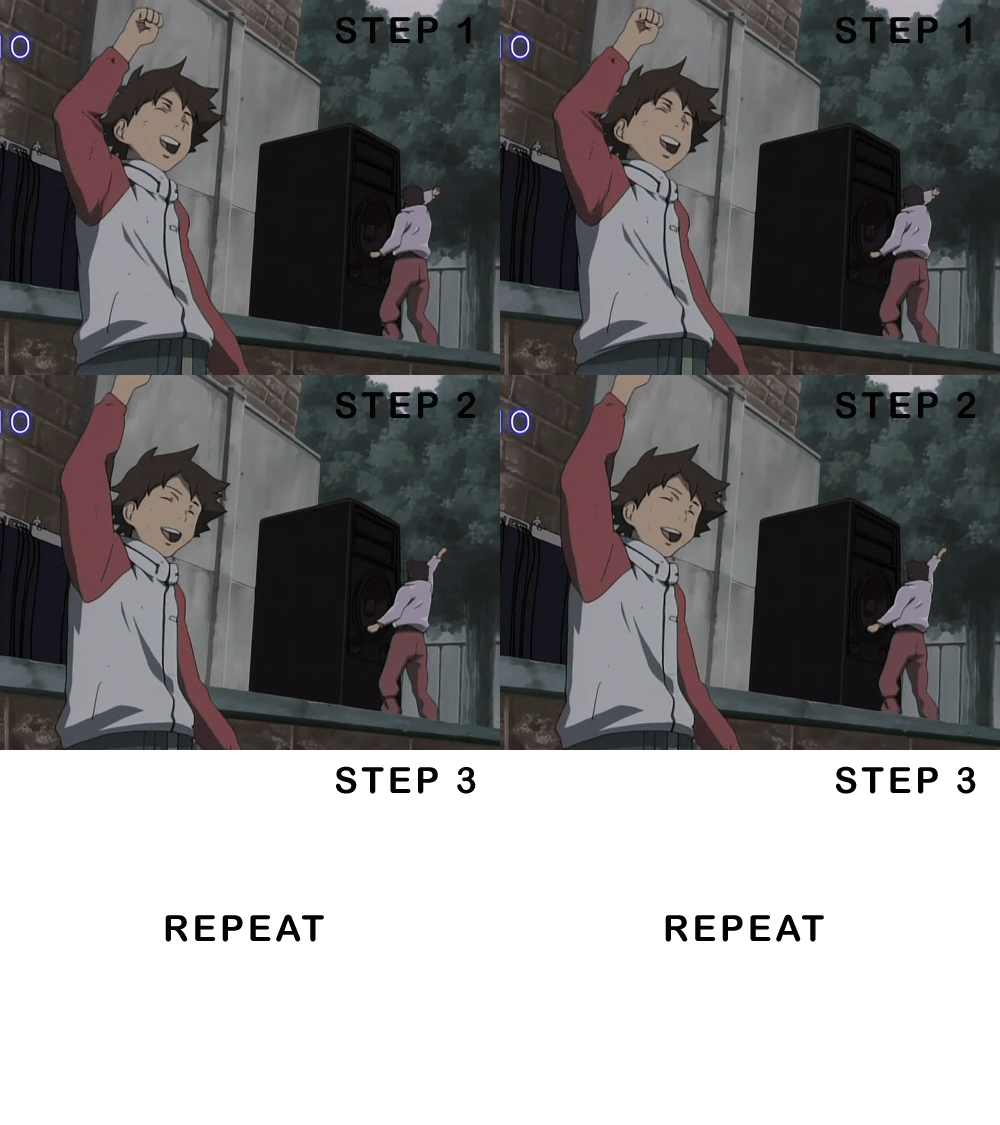
Eureka Seven Teaches You How to Guido Fist Pump

(an explanation)

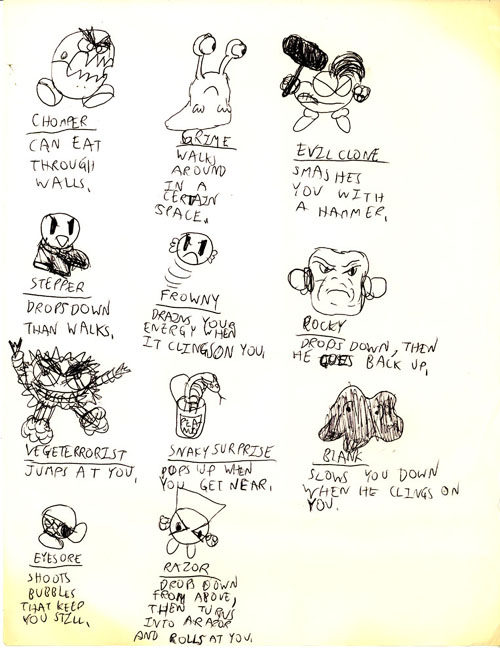
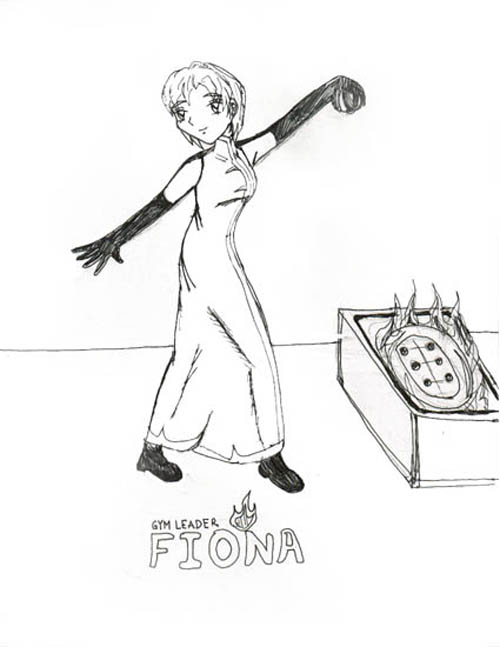
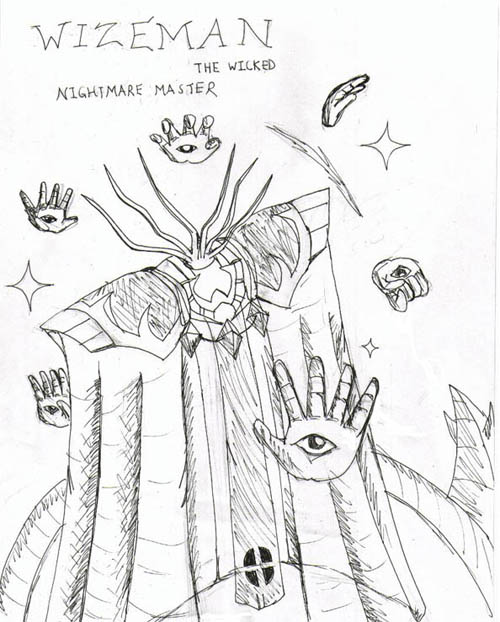
Personal History of Drawing

Something I put together because a friend did it a while back.

1995

2001

2002

2003

2004

2005

2006

2007

2008

The Moe Heroine and the Yamato Nadeshiko

A “Yamato Nadeshiko” is defined as the traditional ideal Japanese woman. These qualities include being loyal to their husband, putting family first, modesty, and being skilled in domestic matters. Belldandy from Ah! My Goddess is a prominent example in anime and manga of a Yamato Nadeshiko, and the fact that Ah! My Goddess has continued to run for many years indicates that this type of character is relatively popular today.

Of course, the spotlight in recent years has been on moe characters, and while some character traits reinforce the idea of the Yamato Nadeshiko, others defy them. Key’s heroine of heroines Tsukimiya Ayu has loyalty as one of her important traits, but is also a clumsy tomboy whose cooking ability is on par with Homer Simpson pouring cereal. Tsundere characters such as Hiiragi Kagami are strong, capable, and put family and friends first, but are independent-minded and are anything but submissive. Aisaka Taiga from Toradora! meanwhile is a clumsy tsundere.

I don’t think the intentional increase of moe traits in characters is, at the very least on a basic level, “progressive feminism,” but I think it’s worth taking a look at how these characters relate to a concept with a long history in the society from which their fictional media are produced. In American fiction, particularly television and movies, there are certain stereotypes for female characters, particularly when it comes to romantic interests. The Girl Next Door can be considered a reaction to the Bombshell (or vice versa). Any time there’s a shy girl who turns out to be highly sexual, it’s actually just a simplified form of “what you see isn’t always what you get.” Though they are now recurring, even stereotypical concepts in fiction, their basis is in the trends of what most people want in their entertainment, at least as it pertains to female characters.

Granted, otaku are not “most people” in Japan or any other country in which they (or should I say we) reside. And when non-typical people look at something typical, I think there’s often a desire for something “different,” though perhaps not drastically so. But the line between “different enough” and “too different” is a very personal thing, and I think it’s the area in which disagreements regarding the validity of moe characters arises.

Oh Man I Hope No One Notices It Shrunk in the Wash