I like to joke that certain figures comprise a pre-history of VTubers. Anyone who plays into the idea of a virtual character or alter ego, in part or in full, counts: the Wizard of Oz, Max Headroom, Sharon Apple (Macross Plus), Kevin Flynn (Tron), and so on. But one individual on my silly list is apparently making a comeback: Jem from Jen and the Holograms. To celebrate her 40th anniversary, she is returning with six new songs, including an extended version of the main theme from her original cartoon.
Jem and the Holograms is a TV series from the 1980s, targeted at a young female audience. The heroine is Jerrica Benton, the owner of a music label who also performs as lead singer of Jem and the Holograms. What makes Jem a “proto-VTuber” is the fact that she uses a special holographic technology, a sentient computer named Synergy, to create an alternate persona for the stage. Just like modern-day VTubers, she releases music videos of her original songs in this guise.
And while this might be mere coincidence, I noticed that the newly recorded rendition of the Jem and the Holograms intro is a length that has always been rare for American cartoons: about 90 seconds, the same as a a standard anime opening or ending.
(Or perhaps Synergy is the VTuber?)
Another interesting wrinkle is that, much like the return of the VTuber boss of bosses Kizuna AI this year, this Jem revival features her original singer: Britta Phillips. One of the biggest and most painful lessons the VTuber community learned in AI’s heyday is that the fans do not accept a different human behind the avatar. These entities are not viewed as “character designs” or “concepts” with interchangeable performers; the persona in front and and the person behind the curtain together form a VTuber. It’s more complicated in Jem’s case because she had separate singing and acting voices, and there was a 2015 live-action movie, but there’s still a sense here of the OG coming back.
Though certainly not intended to be an example of the future of VTubing, this Jem thing makes me wonder what will be possible someday. For a form of entertainment that is arguably not even 10, what will 40 years of VTubing even look like?
Optimus Prime and Megatron are iconic adversaries as the heroic and villainous leaders of the Transformers franchise. We’ve seen endless iterations of them in animation, comics, films, and more, and now Transformers One provides an origin story about the two rivals when they were best of friends. Going into the film, I expected at most a decent if predictable work, only to discover a narrative that is surprisingly political. Not only does it focus on a suppressed underclass throwing off their chains, but its portrayal of the differences in left- and right-wing thinking is remarkably enlightening for what is ostensibly a cartoon popcorn flick.
Transformers One centers on Optimus and Megatron when they were known by their original names: Orion Pax and D-16. The two are denizens of Cybertron, where they eke out a living as non-transforming miners of energon, the essential power source that runs their planet. Orion is brash and headstrong, while D-16 is more cautious, but the two have something in common: They both look up to Sentinel Prime, their world’s current leader and the last surviving member of the strongest Cybertronians, the Primes. When the two friends discover a clue to the missing Matrix of Leadership that can restore the once free-flowing energon of Cybertron, they embark on a mission to help Sentinel.
The Cybertronian Caste System
The class friction between the transforming elite and the non-transforming laborers would in itself provide plenty to chew on, but in a major plot twist, it’s revealed that Sentinel is actually a traitor who betrayed the Primes and now sells off the planet’s energon to the very enemy they had been warring against so that he alone can exist at the top. Even worse, Orion and D-16 learn that all are born with the ability to transform, and Sentinel has been forcibly removing it. In other words, Cybertron is a world where a lone robot sold out his people in a coup, enslaves the majority of the people by robbing them of autonomy that is their birthright, and reserves that power for loyalists and those who promote this hegemony. Worse still, the leader has deceived his subjects into believing he is a great and benevolent hero.
I really, truly did not expect this out of Transformers. While this is a franchise with famous lines like “Freedom is the right of all sentient beings” and “Until all are one,” this is a level of overt political theming well beyond what is typical.
Megatron’s True Driving Force
But it’s with D-16, particularly the way he contrasts with Orion that impresses me most because it shows how Megatron’s own right-wing authoritarian nature comes not from a place of strength, but one of fear. One would think him to be the rule breaker between the two, but D-16 worries about losing what little he has already gained. He sees Sentinel Prime as a leader who can do no wrong until he discovers the truth, and when he does, he lashes out at Orion for shattering the comforting illusion. Every time he gains more power, he increasingly sees himself as someone who must exert his superiority over others because they would do the same to him. And when Orion takes a shot meant for D-16 and the latter sends the former to his seeming death, it’s not a premeditated backstab but an impromptu action fueled by the fact that D-16 blames Orion for the loss of his stable world.
I felt that the 1986 animated movie was very revealing in terms of the inherent cowardice of Megatron. While Starscream is usually portrayed as the snake, it was clear that Megatron was cut from the same cloth when confronted by a vastly stronger being in Unicron. Transformers One complements that image by showing how D-16 would have been satisfied living as a lowly drone if he felt everything was in its place in the social hierarchy.
As for Orion, he clearly leans towards the liberal and left side of the political spectrum. His self-sacrifice is what grants him access to the Matrix of Leadership and direct contact with the god of the Transformers, Primus. He’s willing to fight to protect the lives and freedoms of all, but his willingness to let Megatron go at the end of the new film can be argued as the wrong choice, given what we know of the Decepticon leader down the line.
Side note: I really like how Orion’s conversion into Optimus Prime is a lot like Megatron’s own forced change into Galvatron by Unicron in the 1986 film. In lore, Primus and Unicron are brothers who are eternally opposed to each other.
Final Thoughts
Transformers One does a remarkably solid job of showing how two individuals could be true friends at a point in their lives when they have next to nothing, and then have it fall apart once they have more. The differences between Orion and D-16 go from small cracks easily ignored to massive fissures that threaten to tear everything apart. And central to it all is the question of what to do with power in the face of injustice.
As a kid, I thought that show was the coolest. It follows a football team (led by quarterback Arthur King) who have been transported to ancient Camelot to fight in place of the Knights of the Round Table against the evil witch Morgana and her general, Lord Viper. In practice, it was a toy-centric children’s show featuring buff dudes in armor riding buff horses in armor, firing missiles from medieval weapons and sometimes summoning a dragon. Totally radical.
Like so many animations of that era, it’s more impressive in my childhood memories and has no actual conclusion. Eventually, it faded from pop culture consciousness. Seeing it pop up again in a new format, I had to at least give the thing a chance.
Currently at a single volume, the comic version keeps the same basic premise but changes a few things up. The plot is a little more nuanced and does a lot to foreground the characters’ interpersonal dynamics. It’s also a lot more gay now, and I don’t mean that in a derogatory fashion. Two of the male teammates-turned-knights are literally a couple, and their relationship is both displayed prominently and becomes a major factor in the plot. There’s even a note at the end of the book promoting it as LGBTQA+ fiction.
While I could see some people criticize this adaptation for “changing the characters,” it’s not as if King Arthur and the Knights of Justice was ever some work with strong, three-dimensional personalities or significant cultural traction in the first place. Related to this, the characters are drawn fairly differently, going from the barrel-chested children’s cartoon heroes common in the 80s and 90s, to appearing a bit more svelte and often kind of sultry.
I find the new designs fascinating, because it’s like the comic designs are a confluence of various influences and forces originally found in shounen manga. First, there’s the handsome sports dudes component in the vein of Prince of Tennis or Yowamushi Pedal, but through the additional lens of comics such as Check, Please! Second, whether intentional or otherwise, King Arthur and the Knights of Justice has always been a kind of American version of Saint Seiya, a series that is foundational for the fujoshi community. In a way, making a Saint Seiya descendant that was as chaste/bland as King Arthur in the character department into something closer to Saint Seiya (in a way that appeals more to a chunk of the latter’s fanbase) feels like things have gone full circle.
The comic is trying to draw from a past resource and do its own thing, and I appreciate that. Although it runs the risk of alienating people who just want something totally faithful to the original, I think that aiming it at a newer generation is A-OK.
What if there was a sequel to Journey to the West, the story of Sun Wukong the Monkey King, and it was set in the near future? And what if all the characters were Lego people? That’s the basic premise of Lego Monkie Kid, an Asia-focused media franchise featuring toys, a cartoon, and more. I first noticed Monkie Kid thanks to clips on YouTube, and found myself impressed by the surprising quality of its animation. I recently got the chance to watch the actual series, and find it to be a kids show that, while modern, is also reminiscent of action cartoons from decades past.
The premise of Monkie Kid is that a noodle delivery boy named MK discovers the legendary staff of the Monkey King and becomes his successor. Now, he must fight against the now-freed Demon Bull King, who was originally imprisoned by Wukong himself, with the help of a close group of friends.
One of the first works that Monkie Kid reminded me of was American Dragon Jake Long, and not simply because of the connections to Chinese culture. Rather, MK is a very similar character to Jake, from his impetuous nature to his constant use of “hip and popular” vernacular. That said, while Jake’s use of slang could get obnoxious (something the show runners on Jake Longnoticed and dialed back in its second season), I find this isn’t really the case with MK.
Another cartoon that came to mind was Thundercats, and with it all the 1980s action cartoons of that variety. Specifically, in the storyline, the Demon Bull King is weakened after his revival, and is forced to rely on cybernetics that are powered by artifacts. Items of sufficient rarity (from ancient treasures to exclusive sneaker drops) can restore him to his former might, but only temporarily. This kind of Mumm-Ra/Silverhawks MonStar villain hasn’t really been a thing for a very long time, which makes Monkie Kid’s decision to include such a gimmick oddly nostalgic for someone my age.
The approach to storytelling is mostly episodic (as opposed to outright serial) and full of toy-shilling antics, but it does build towards major events here and there while featuring actual character growth along the way. Again, I liken it to 80s fare wherein a few episodes and a season finale are more focused on the overarching plot, and the results are usually pretty satisfying if one doesn’t mind this format. One big edge Monkie Kid has, however, is that it doesn’t feel as aimless as Thundercats or He-Man, and even displays shades of Avatar: The Last Airbender in the way it gradually turns into a grander and more epic story.
It’s also obvious that the show creators are more than aware of Avatar when Monkie Kid throws in gag references to Aang’s spinny hand trick. In fact, this is just one of many shout-outs to past animated works.
There’s one fun detail about Monkie Kid that I think is worth mentioning: The casting choice for the Monkey King. In English, he’s actually voiced by Sean Schemmel, the current dub voice of Goku from Dragon Ball Z—in other words, a guy famous for playing a Sun Wukong derivative is voicing the original! And then in the Cantonese and Taiwanese Mandarin versions, the role is performed by Dicky Cheung, a Hong Kong actor who rose to fame portraying the Monkey King in the popular and beloved 1996 Journey to the West TV series!
(He also sang the openings for those versions too.)
Overall, Monkie Kid is a children’s cartoon with real legs. Though it may be based on Legos, and it’s not the most sophisticated thing, there is an undeniably high quality to the whole thing. It’s one of those works where the creators definitely did not need to go this hard, but they chose to elevate their project into something greater. I come out of this now curious to watch whatever comes next, and maybe try to finally read Journey to the West.
The 1980s were a pivotal decade in American children’s television, when Ronald Reagan’s administration removed the rules against directly advertising to children. Things like He-Man, My Little Pony, and Thundercats are all a product of this barrier getting knocked down. There was a clear downside to this—it allowed greedy capitalist companies to have their way with young and impressionable minds—but I also distinctly remember loving the cartoons of the 80s (and 90s) because they felt like they spoke to me and my desires.
Compared to the even older cartoons of decades past that I’d see pop up on TV, there was so much more action. Characters from shows like Silverhawks, Teenage Mutant Ninja Turtles, and Bionic Six just looked downright amazing in the mind’s eye of a young kid. I think what really stood out to me was the degree to which these shows felt like they understood what kids wanted, in contrast to programs that were concerned about what parents would think. Even with the requisite PSAs (e.g. GI Joe’s “Knowing Is Half the Battle”), what made these toy-centric cartoons feel so good was the irresponsibility. They allowed kids like me to live vicariously through them, with only the flimsiest of morals as pretext. Even today, their opening animations ooze such style and splendor that they represent the pinnacle of cool.
Of course, the reality is that what kids want isn’t necessarily what’s good for them, and companies were and are all too eager to exploit them for the sake of a bottom line. Children are not ignorant or imperceptive, but they’re also readily willing to eat ice cream for breakfast, lunch, and dinner. Cartoons of the Reagan era definitely swung in that direction, and those who grew up on them and take their visual conventions and tropes for granted might not be aware how much their biases are influenced by this sustained marketing volley on our senses.
At the same time, shit was rad, and I’m glad I saw Rodimus Prime ask the Matrix of Leadership to “light our darkest hour.” How do you give kids that kind of empowerment without taking advantage of the plasticity of their minds?
I use the 80s as the main focus because of that prominent macho aesthetic, but what I’m also thinking about is the way getting attached to a specific era of animation can shape one’s perspective as to what is normal and interesting. Cartoons do not exist in a vacuum apart from the world at large, and both the creators and kids carry values that are often different in some way than their predecessors.
Ironically, diversity and championing civil rights is far more transgressive move than just letting kids imagine they could shoot lasers, but to those who grew up in the shadow of the 80s and 90s, the former can seem too much like the moralizing that made the previous decades’ cartoons feel boring.
The complaint that Disney doesn’t have “true bad guys” anymore also comes to mind. On some level, it makes sense: Evildoers like Jafar, Scar, Maleficent are iconic and bring a bit of an edge to the family-friendly works they come from. However, while these bad guys often possess a visceral darkness about them, the antagonistic forces of current Disney movies tackle more socially profound topics like generational trauma. The former chill the spine, while the latter bludgeon the gut, often feeling far more painful to those of us who can relate to the characters’ situations. But a certain type of person thinks it automatically worse if the villains aren’t, well, villainous. The lack of a clear-cut light vs. dark conflict can be disappointing to those who just want to see a foe vanquished.
I think all this is to say that sometimes it’s not just nostalgia that makes a period of art and entertainment feel special—there are actual differences influenced by the culture of the time and the people who contributed. But just because a period is special doesn’t mean it’s the be-all, end-all. We can find hot in the way 80s cartoons hit the mark aesthetically and inspired kids with that sense of cops-and-robbers awe, while also acknowledging that not everything was perfect.
WARNING: SPOILERS FOR SPIDER-MAN: ACROSS THE SPIDER-VERSE (and I guess Street Fighter 6?)
I’ve had the pleasure lately of experiencing two of the finest works of media this year: Street Fighter 6 and Spider-Man: Across the Spider-Verse. Both are at the pinnacle of their respective genres (fighting games and superhero movies) and seem to draw all the right lessons from the past. But one thing both titles really have in common—and which I think is so indicative of their approach—is strong character designs that are profoundly respectful of their casts’ diversity in terms of culture, background, and circumstances.
The idea of an international roster far predates both works and even their respective origin points, i.e. Street Fighter the arcade game and the Spider-Man comics. Often, these past portrayals end up being flawed, if well-intentioned. Be it a manga like Kinnikuman featuring heroic wrestlers built entirely on stereotypes or having the brilliant detective Charlie Chan played by an actor in yellowface, it’s historically a mixed bag. These instances frequently betray a lack of exposure to other cultures by ones that consider themselves the default.
SF6 and AtSV know that their audiences aren’t limited mainly to one ethnic group anymore, and either have people from more diverse cultures on staff, or at least people eager to listen to people from other groups. Both SF6 and AtSV had to meet the challenge of revamping many existing designs—the former because many returning characters are supposed to be older, and the latter because it draws from so many different portrayals of Spider-Man. In this regard, both succeed in spades.
Here are a few examples:
In SF6, Chun-Li’s update conveys through her mannerisms and outfit that she has matured while still being undoubtedly recognizable as the queen of fighting games. Her clothes draw directly from Chinese culture without bordering on parody, and some of her animations have been changed to draw from actual Chinese kung fu styles. Her new standing medium kick, for example, is actually the Separation Kick from tai chi.
Zangief still looks like a hulking wrestler, but they actually changed his body type. In previous games, Zangief has more of a body builder’s physique—extremely chiseled all around—but in SF6, he exchanges that appearance for one with a bit more fat around his massive muscles. In other words, he looks more like he trains for practical strength, and the fact that the developers did this actually goes a decent way in diversifying the bodies in the game while remaining true to Zangief’s character.
Similarly, AtSV had Pavitr Prabhakar, an Indian Spider-Man whose costume feel less like symbols of India added to Spider-Man and more like what a Spider-themed superhero might look like if they grew organically out of Indian culture. Moreover, the writers of AtSV actually consulted with Indian and Indian American writers as well as Pavitr’s voice actor, Karan Soni, because they wanted greater cultural specificity and authenticity.
And even with all of this consideration for ethnicity, gender, sexuality, etc., all these characters are attractive in their own right. People like to see good-looking characters, but there’s no one standard of beauty. Both creative teams seem to understand that.
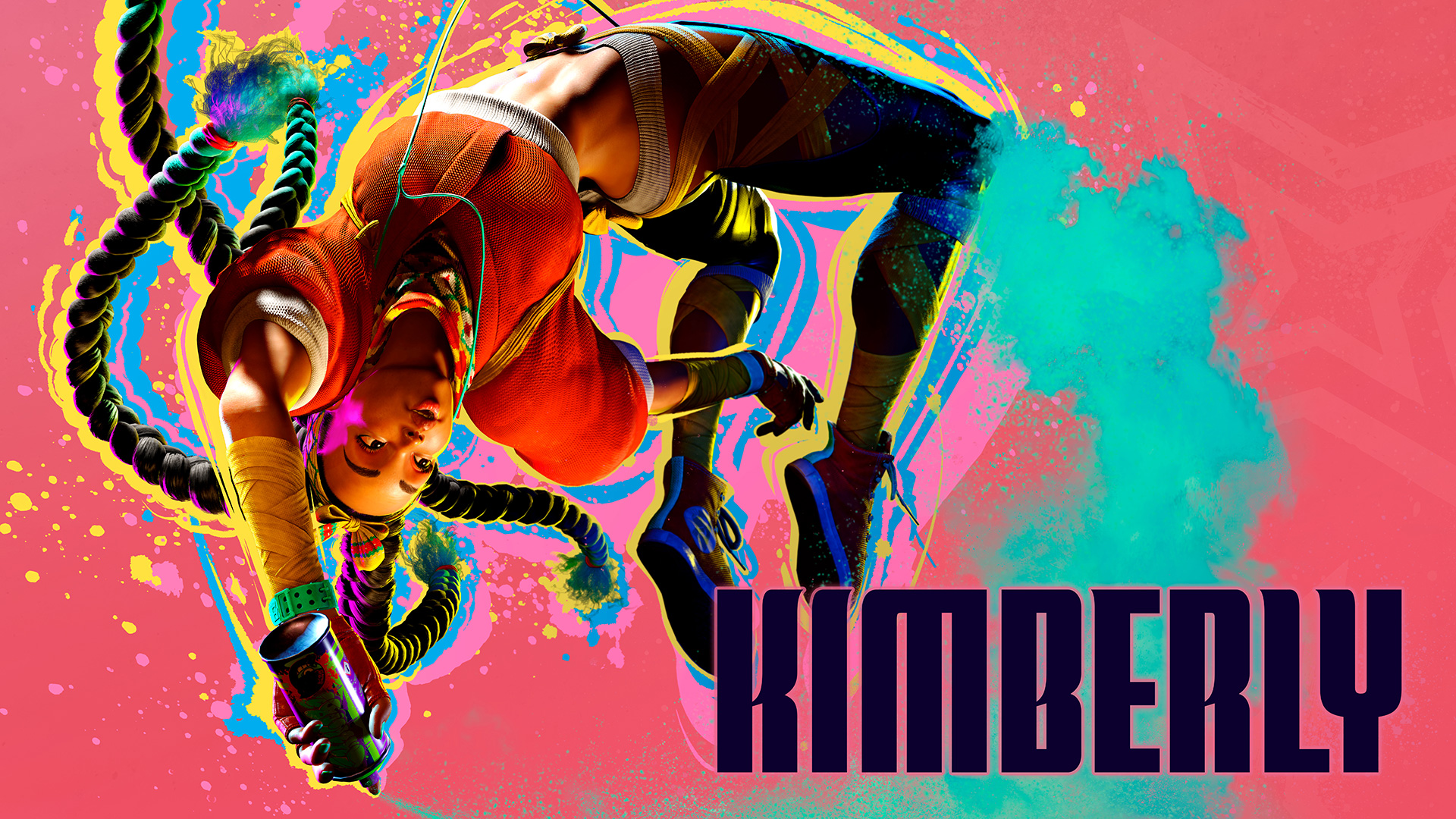
A major factor in both works’ success is starting from the understanding that not just one group of people are going to enjoy it. Kimberly Jackson in SF6 is black and one of the three most prominent heroes, and the only one with a story that ties directly to the main antagonist. The protagonist of the Spider-Verse movies, Miles Morales, is Black and Puerto Rican—and he reflects many of the aspirations and anxieties of those who grow up in non-White households in the US.
It can be easy to forget that the first Miles Morales film, Into the Spider-Verse, came out in 2018—before the murder of George Floyd and the increased mainstream awareness of the deeply rooted problems with police in the US. In 2023, however, I couldn’t help but notice the views expressed on that topic in AtSV. Both Miles and another character, the Spider-Woman Gwen Stacy, have dads who are on the force. They’re officers of the law who honor and respect the people, and having them be positive role models is part of the Spider-Man lore, but making the police and unalloyed good would never be compatible with the lived experience of so many black and brown people, not to mention other groups.
At one point, Stacy (a white girl) outright states that the reason her dad took on the role of captain is because he would inevitably be replaced by someone worse than him. In other words, contrary to the idea that cops like the one who murdered George Floyd are simply “bad apples,” it is the tree itself that is rotten, and the occasional good apple is the exception rather than the rule. While perhaps the film could have stated it more directly, it goes to show just how much AtSV is trying to express perspectives beyond what is comfortable.
The greatest strength of Street Fighter 6 and Across the Spider-Verse is that both works come across as genuinely wanting to engage with as many cultures as possible from all sides. They’re not just paying lip service to the notion of diversity but actually making it happen in a satisfying way. I hope that both Capcom and Marvel continue to draw inspiration from the world in all its glory and shame, and in turn, encourage others to do the same.
Turning Red is Disney Pixar’s latest theatrical animation, and its focus on life as an Asian middle schooler hits close to home. Like many Asians from North America, I was a kid who took overachieving to heart due to my upbringing. I wasn’t dedicated as some of my peers, mind, but it was enough that getting a B+ used to summon deep and gut-wrenching dread. But when I looked at TV and movies, it was clear that characters who were like me were few and far between, and the ones who did appear were often relegated to support characters even when factoring out physical appearance.
This has changed over time, with the mainstream rise of the “nerd” and protagonists like Twilight Sparkle from My Little Pony: Friendship is Magic carrying a similar energy, but that particular cocktail of emotions shared by so many of Asian descent remained a rarity. That’s why I was so taken by the heroine of Turning Red, Meilin Lee. A 13-year-old Chinese-Canadian from Toronto, her story is the latest in a line of works addressing generational trauma—and one of those symptoms is the way that Asian kids are expected to get those straight A’s, learn piano and violin, get into a good college, have a successful career, have a family and kids, and on and on.
Yet, the key is that the pressure placed upon us does not come from malice, neglect, or simple fear of ruining family reputation, but rather from what is practically the opposite. For our elders who had to endure unbelievable hardship, they do not want us to suffer as they did, yet the context in which many of us are raised is so fundamentally different that it creates inherent tensions.
The way Turning Red pursues this complex relationship through Meilin is nothing short of brilliant and powerfully relatable. Within her is a turbulent embrace of both 2002 North American pop culture (boy bands!) and the traditional culture of her parents, and the way they merge and split and get thrown into the blender feels so much like what I experienced as a kid and still do today. It’s a film where I instantly saw myself—not simply because it’s about Asians but because it tells a personally familiar story in a way that assumes that such experiences are natural and common.
Encanto gave me an existential crisis, a first for a Disney film.
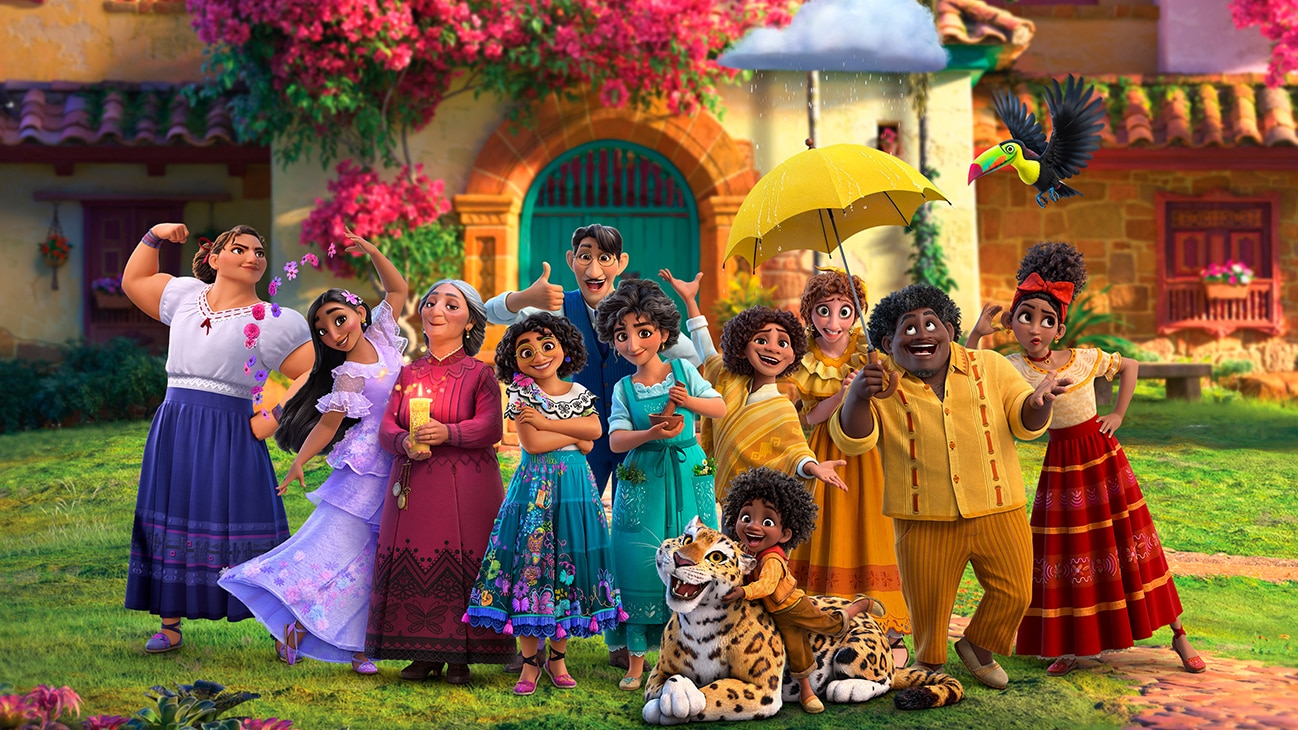
Its story centers around a family with supernatural powers called the Madrigals who have been the spiritual center of their town for generations. Each member of the Madrigals is bestowed a “gift” by a magic candle when they come of age, going all the way back to the family matriarch, Abuela (“Grandmother”), who received the candle through some unknown miracle while escaping from her hometown—and through the noble and tragic sacrifice of her beloved husband. The protagonist of the story is Mirabel, one of Abuela’s granddaughters, who is the only Madrigal to not have a gift. But when Mirabel begins to see what looks like a premonition about the destruction of their house and their magic, she takes action to solve the mystery, and in doing so, learns more about her family than she—or anyone else—ever knew.
The story of the “non-special” person who is surrounded by incredibly talented people and goes on to do big things doesn’t seem all that unique, and plenty of similar narratives never felt like a chest-wrenching experience to me. But the way in which the genuine mutual love between Mirabel and her family carries a vein of patronizing concern over Mirabel’s lack of conventional ability (by Madrigal standards) hits a little too close to home. It’s that complicated extra layer underpinning the interactions between Mirabel’s immediate and extended family, where a desire to help Mirabel ends up hurting by inadvertently reinforcing the idea that she’ll never be good enough, which makes the film wallop like a sack full of bricks.
But the film also has plenty of joyful highs, especially as Mirabel gradually breaks through the invisible barriers that obfuscate the state of her relatives’ emotional wellbeing. The emphasis on family is anything but shallow, and the simple yet profound truths about every character lend credence to the idea that the notion of the ideal and picturesque Madrigals is neither entirely true nor entirely false. The pressure to live up to greatness is heavy. And as for the eponymous uncle from the film’s hit song “We Don’t Talk About Bruno,” for me his story strikes closest to home.
What is also eminently relatable as someone who is descended from immigrants who had to basically start anew in an unfamiliar land is the story of the cultural gap that forms as each successive generation must deal with the challenges that lie ahead. Abuela’s priorities are the result of the circumstances that shaped her, and it makes me reflect on my own ancestors’ hardships—though not without pondering why the generational divide can be so very steep.
I don’t hate Encanto for making me feel all sorts of ways. Quite the opposite, in fact. It’s a powerful and authentic rollercoaster of emotions that reflect a family with a complex history, and I appreciate that a lot. I think it can sometimes be easy to think that those who have those feelings of inadequacy brought upon by familial pressure are alone, and it’s comforting to see such a story play out on so grand a stage.
Soul, the latest CG animated film from Disney and Pixar, speaks to me on a very deep and personal level. It’s not just that it’s about an older minority protagonist who chafes at family pressure when it comes to doing what’s safe and expected. Nor is it that the movie is set in New York City, where the familiar sights and sounds make me oddly nostalgic in a time when stepping foot outside can be a stressful decision in itself. What really hits home is one of the core messages of Soul, which is to be aware of how we as people often confuse inspiration, passion, purpose, and fulfillment—and how doing so can hold us back in life in fundamental ways.
The story of Soul follows Joe Gardner, a black middle-aged middle school music teacher who still dreams of being a professional jazz musician (the long overdue first black protagonist in a Pixar film). When a rare opportunity to play with one of the greats comes knocking, an ecstatic Joe gets caught in an accident that causes his soul to leave his body. Desperate to avoid the afterlife and get back to the land of the living (and his gig), he winds up as the mentor to 22, a soul that for thousands of years has failed to find the spark to become a full-fledged living being, and who sees her pre-life to be much more appealing than life on Earth.
Whether it’s Joe’s firm belief that his purpose in life is to play jazz, or the pre-life system that brings history’s greats in as mentors to guide those like 22 to begin life, Soul highlights the way people often think about what it means to live a great life. We celebrate those who follow their passion and transform them into monumental discoveries and achievements. We think having a greater purpose is the key to reaching greater heights. But just as Joe throughout the film is often so obsessed with his life-long aspiration that he fails to see the positive influence he gives (and receives) from those around him, it’s all too easy to feel like a failure when we focus only on destinations and not journeys.
Although I don’t see myself as being in a completely similar position to Joe, Soul made me realize something: for whatever reason, I often feel a lingering sense of guilt over not accomplishing more than I should have, or was supposed to. On a certain level, it can feel ridiculous. I’m at least fairly proud of the things I’ve managed to see and do in my life, achievements that I know took intelligence, dedication, and maybe even a bit of courage. Yet, I still see myself as rarely having ever gone the distance that can leave myself without any regrets. A career switch may have truly turned out for the better on a personal level, but still leaves me feeling that I left some potential unfulfilled. Even in the context of this blog here, I sometimes criticize myself for not having improved my writing as rapidly as I should have been, and for not having the drive to force that change upon myself. This guilt is in some ways internal and in other ways external, but the result is the same.
Thanks to Soul, I realize now that I do indeed get caught up in conflating inspiration with passion, purpose with fulfillment, and so on. I haven’t resolved what exactly this means for me, or what it is that I ultimately will feel once I’ve sorted out these feelings and the degree to which I value them, but it has me on a long road of introspection. Not every film can do that, which makes having watched Soul all the more worthwhile.
The Problem with Apu, a documentary by comedian Hari Kondabolu about growing up Indian with the well-known Simpsons character as the most prominent representation of his people, has been the center of a new and energized discussion about stereotypes and tokenism. Recently, an episode of The Simpsons referenced this debate, and it was criticized, including by Kondabolu himself, for being dismissive.
Wow. “Politically Incorrect?” That’s the takeaway from my movie & the discussion it sparked? Man, I really loved this show. This is sad. https://t.co/lYFH5LguEJ
But the more I think about this scene, the more I’m uncertain that the writers of The Simpsons are actually opposed to Kondabolu. What I believe happened is that the writers tried to be a little too clever for their own good in trying to explain their stance.
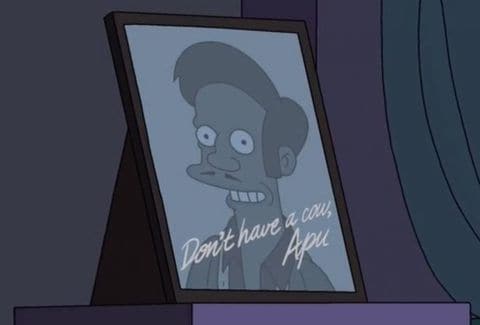
The last scene of the episode has Marge reading Lisa a bedtime story while trying to censor all of the unsavory parts, only for Lisa to ask for everything to be kept in. She proceeds to say, “It’s hard to say,” Lisa responds, breaking the fourth wall. “Something that started decades ago, and was applauded and inoffensive, is now politically incorrect. What can you do?” She then looks at a photo of Apu, which says, “Don’t have a cow, Apu.”
Reading this one way, it seems as if Lisa is saying, “Oh well!” and that the people finding Apu “politically incorrect” are wrong. The “Don’t have a cow” can be thought of saying, “This isn’t a big deal. However, the scene, especially the use of that classic Simpsons line, sticks out to me in two important ways.
First, it’s a famous catchphrase from the earliest episodes of The Simpsons TV series originally meant to show Bart’s rebellious attitude, but is now viewed as a relic of its time. As far as I know, it hasn’t been used on the show in years except maybe ironically, and it dates any episodes in which it is used as being of the fairly distant past.
Second, it’s being attributed to Apu, a Hindu. With that in mind, the line can be interpreted differently. “Don’t have a cow” now references the fact that it is morally wrong to eat beef according to Hinduism.
Together, I believe the scene and that photo are highlighting a couple of things. For one, there are parts of The Simpsons once thought irrevocable that in hindsight had to change with the times. The “bad boy” Bart Simpson and his once-signature catchphrase have been supplanted by even more controversial characters with mouths that are far more foul. The Bart of the early 90s wouldn’t last today. The Simpsons is not as immune to cultural shifts as might be assumed for a show that’s been on TV for decades.
The Apu-Hinduism aspect touches on another consideration: cultural context changes how words and phrases are interpreted. A culture that assumes America and whiteness by default has classically resulted in The Simpsons and its particular portrayal of life, but if the presumed target was an Indian demographic all along, how might it have changed?
Together, these two points reveal to me a desire from The Simpsons to approach the criticisms brought up in The Problem with Apu with a degree of subtlety, and the issue is that The Simpsons has never been a vehicle for nuance. Sure, it’s been extremely clever, sure, and some of its humor in the past has required viewers to think a little harder, but an age of social media and the speed at which online discourse occurs means it ended up vulnerable to the harshest interpretations, with no real way to defend itself.


 OGIUE MANIAX