“Makai” Fushigi Adventure: Dragon Ball Daima

The untimely passing of Toriyama Akira was one of history’s biggest blows to the world of manga and anime. While he had long since taken more of a backseat role for his most famous titles, knowing that he was there to provide some guidance for the Dragon Ball franchise lended some reassurance that his vision was included. So when the anime Dragon Ball Daima was announced, there was a real weight to its very existence: It’s the last work in the franchise Toriyama had his hand in and an inadvertent farewell message as a result.

According to reports, Toriyama was more involved with Dragon Ball Daima than he had been with other anime in years, but regardless of the exact amount, I think the end result manages to successfully capture his spirit and the spirit of Dragon Ball as a whole. Daima celebrates what has come and expands the world of its characters in a way that fascinates the imagination. 

Dragon Ball Daima takes place after the climactic battle with Majin Buu in Dragon Ball Z. Unbeknownst to Goku and friends, King Gomah of the Demon Realm has been observing them, and is alarmed at how powerful they are. Majin Buu, it turns out, actually comes from the Demon Realm, and was a force so menacing that he was thought impossible to defeat. Gomah gets so paranoid that they might come over to his side and overthrow him, so he uses the Demon Realm’s Dragon Balls to make a wish to turn Goku and the others into children to reduce their power, and kidnaps a now-infant Dende (current guardian of Earth’s Dragon Balls) to prevent them from undoing the wish. Unfortunately for Gomah, this actually becomes the motivation for the crew to travel to the Demon Realm and fix everything that’s gone awry.

Or to put it a little differently: This is Dragon Ball GT except instead of traveling to different planets, Kid Goku visits a magical world of demons. In a sense, it’s “What if Toriyama did GT?,” and it’s wonderful. 

Dragon Ball Daima strikes a nice balance for itself that incorporates the whimsy of the early stories and the action of Dragon Ball Z, resulting in an anime that’s fun and lighthearted but also knows how to crank up the tension and excitement at key moments. 

One of my favorite things about Daima is that in addition to the excellent action (some of the best Dragon Ball has ever seen), it’s also about the thrill of exploring a new world. There are unusual creatures and environments, insights into the culture of demons, and even revelations on series lore. Notably, it turns out that Namekians are originally from the Demon Realm, and that’s also where the first Dragon Balls come from. This reveal is very amusing because Piccolo was originally supposed to be a demon in the mystical sense, only to later be retconned into an alien. But actually, Daima says, they’re actually demons who emigrated to the universe we know, and settled on a world that became Planet Namek! In other words, they’re demons and aliens.

Brilliant.

Another aspect that Daima highlights is that martial prowess alone isn’t always enough. One of Goku’s travel companions is actually the Supreme Kai—a character who didn’t really get much attention in the rest of the series. Here, though, his wisdom, knowledge, and cleverness are on display; and it gives me a new appreciation for him. We even learn his real name! Another character on the antagonists’ side is also more about brains than brawn, and is severely underestimated even by their own side. To have someone like that in a fairly major role in Dragon Ball of all things is kind of amazing.

Dragon Ball Daima is only 20 episodes, and so it doesn’t suffer from needing a huge time investment or endless filler or any of the things that can make Dragon Ball intimidating to get into (or get back into, as the case may be). This is a short and sweet work where the meandering elements, the focused battles, and everything in between are truly a joy to experience.

A Bird Among Dragons: Remembering Toriyama Akira

On a recent trip to Japan, I walked past a shrine. Next to that shrine were statues of Dragon Quest monsters. Seeing them reminded me of the sheer impact of those games and the artist whose memorable designs helped to entrench the series in Japan’s popular imagination.

We now live in an age where Toriyama Akira is no longer with us. As the creator of Dragon Ball and Dr. Slump, as well as the iconic artist of Dragon Quest and Chrono Trigger, his influence is nigh-unmatched. There are maybe two or three other series that are as pivotal to shounen manga as Dragon Ball, and Toriyama even casts an enormous shadow on the isekai and fantasy genres: The Dragon Quest series is what established the “Hero” (Yuusha),  the “Demon Lord” (Maou), and the “weak Slime” as archetypes in Japan’s popular imagination, and it’s Toriyama’s designs that inform the aesthetic of all successors.

In light of Toriyama’s tragic death at only 68 years old, I’d like to just talk about how my life has been touched by his work. My story is nothing special compared to the millions of voices mourning Toriyama, but I wanted to at least personally add to the well wishes pouring out.

Dragon Ball

Dragon Ball Z was the very first anime that I knew to be “anime.” While I had loved things like Voltron, they were still just “cartoons” to me. But when a relative started bringing home tapes of DBZ, it was a sight unlike any other. I remember just being amazed at the rapidfire punches, the zooming around, the ki blasts—I’d never realized animation could be this way! I cheered for Piccolo, watched characters (gasp) die, saw Son Goku turn Super Saiyan, and witnessed his son step up and defeat Cell. I wondered if anything could ever top this story. I wanted to be Gohan.

It was also a time when I got to play the first two fighting games for the Super Famicom, and when I’d re-read over and over a small guide to the first game that showcased all the playable characters. “What does Jinzoningen (“Android”) mean?” I recall wondering.

So when I first found out that DBZ was coming to US airwaves (for real, and not just finding a random channel that sometimes had Korean episodes of the original Dragon Ball), I was elated at the prospect of Dragon Ball Z getting big. Imagine: more American DBZ fans! While the English adaptations have had their differences with the original (as well as the non-English dub I first watched), Goku ultimately succeeded in reaching into the hearts of countless viewers. (I still wish those early US viewers got the chance to hear “Chala Head Chala,” though.)

Ironically, I was one of those people who’d go on to poo-poo the Dragon Ball franchise. As I got more into anime and manga, I viewed the series as a thing you’re into when you’re just a “beginner,” or obsessed with just macho violence and watching muscle-bound dudes power up endlessly, and I felt good that I knew there was more out there. It took a number of years to get through that embarrassing phase, but I’d eventually come back around to appreciate Dragon Ball for its outsize influence on culture, as well as for just being a work of art in itself. More recently, it’s been great seeing Dragon Ball Super be a thing, and for Toriyama to have worked to bring back the essence of Goku—as well as the balance of action and humor that Dragon Ball and Toriyama himself had been known for.

Dragon Quest

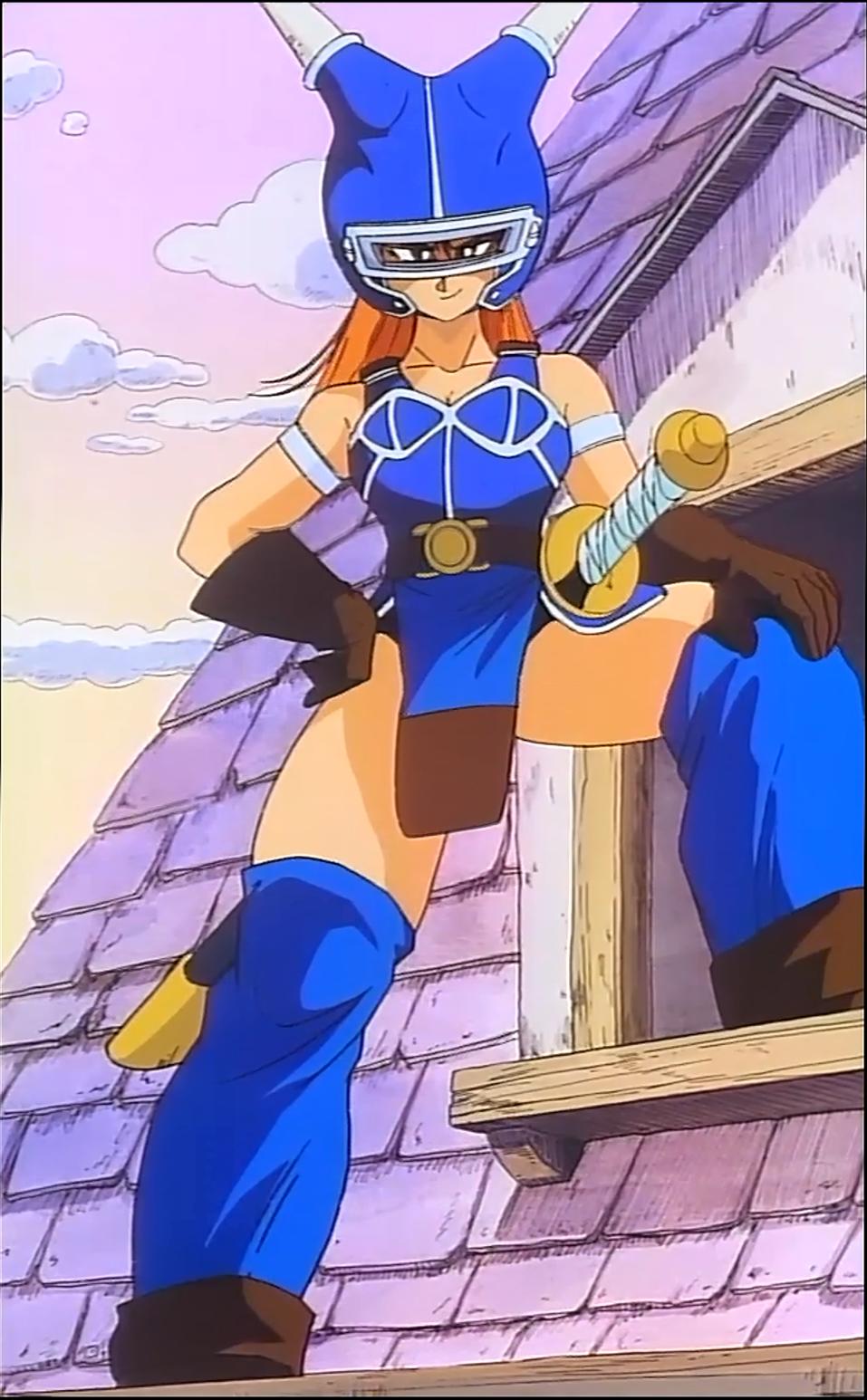
Dragon Ball Z was actually not my first encounter with Toriyama, and not even the first anime from Toriyama that I had seen. I was one of the kids who watched Dragon Warrior (aka the English dub of the anime Dragon Quest: Legend of the Hero Abel) as it aired. I remember having to wake up very early—around 5:30 or 6am on weekends. I don’t think about it very often, but in hindsight, the show was likely very formative for me, and I wouldn’t be surprised if Daisy (the girl in blue armor) ended up influencing my taste in characters.

My family also subscribed to Nintendo Power, and we received a free copy of Dragon Warrior (aka the first Dragon Quest) as a result. Today, RPGs are a popular and beloved genre of video game, but back then, they were entirely new territory to most kids, and pretty unapproachable. However, the same relative who brought home DBZ tapes had decided that they were going to beat Dragon Warrior, and spent hours getting through the game as a young me would watch along. In the final battle, the evil Dragonlord reveals his true form as a giant bipedal dragon, and I remember just being in awe.

This was at a time when the Super NES had already come out, and I thought the Dragonlord looked almost on par with the graphics I saw there. The fact that his foot covered part of the dialogue box, and the way the screen froze instead of shaking every time he landed a blow made it feel like this was the ultimate adversary. It wasn’t until at least a decade later that I got to see Toriyama’s drawing of the Dragonlord that I realized just how closely the sprite graphic matched his original art, and I appreciated that memory all the more.

If Dragon Warrior was the game that pushed the boundaries of what an NES game could look like, then Chrono Trigger was a revelation. The 16-bit graphics and the greater color palette of the Super NES really brought Toriyama’s designs to life, and the game conveyed an intensity to RPG battles unlike any I’d seen up to that point. The only thing they paled in comparison to was Toriyama’s actual drawings of Chrono, Frog, Magus, and the others. While Chrono very obviously looked like a redheaded Goku, he was still unbelievably cool. And just as the Dragonlord was a mindblowing antagonist, so too was Lavos. The eeriness of music and visuals in the climactic confrontation with him is hard to match even to this day. 

Years down the line, Dragon Warrior finally became known as Dragon Quest just like in Japan, and I was one of the folks who bought Dragon Quest VIII. It wound up being one of my favorite RPGs ever. In addition to its classic feel  (Dragon Quest is famous for not trying to reinvent the wheel), the game really felt like stepping into the world of Toriyama’s art. It was a triumph of the PlayStation 2, but also a treat for those who always wanted to see an interactive environment that embodied his imagination and aesthetic.

A Farewell

Toriyama Akira’s life was a spark that inspired creators to bring their ideas to life, bridged culture gaps through the sheer power of his work, and even pushed people to exercise and train so that they could be like Goku. His name is synonymous with anime, manga, video games, and even indirectly light novels. And while I can’t call myself the most diehard Toriyama fan, he clearly took my life on a course that would embrace the wonders of Japanese popular culture—a path I still pursue to this day. Rest well, King. To say you deserve all your praise and accolades is the understatement of a lifetime.

Why It’s So Hard for Shounen Battle Manga to End on a High Note

The author of One Piece, Oda Eiichiro, once stated that he always wanted to make a manga series where the ending is the most exciting part. Right now, it looks like his flagship series could very well be heading in that direction. However, when I thought about whether this is possible, I couldn’t help but think about the fact that the graveyard of shounen manga is strewn with series that failed to hit that goal—if they even had a chance at all.

So many shounen manga, particularly popular battle manga, usually peak well before the end. While taste is subjective, I think it’s a common opinion across various titles. In Kinnikuman, the tournament to determine the king of Planet Kinniku is actually pretty good, but it kind of pales compared to the Akuma Daishogun arc. Fist of the North Star peters out after Kenshiro’s climactic clash with Raoh. Naruto and Bleach have many possibilities as to the best arc, but it’s definitely not their finales. L in Death Note is remembered far more fondly than other rivals. Even with Oda’s beloved Dragon Ball, Majin Buu is not usually the villain people would regard as the best or most memorable.

That’s not to say it’s impossible. Two answers I received when I asked on Twitter were anything by Fujita Kazuhiro (Ushio & Tora, Karakuri Circus) and Yu-Gi-Oh! Funnily enough, these two examples also came up in a private conversation I had on the same subject. Nevertheless, the odds are not in One Piece’s favor.

The reason for this hurdle is pretty simple, I think: Most successful shounen series end up getting somewhat zombified, as they’re expected to keep going for as long as they’re popular in the hopes of bringing in more readers. No matter how creative manga authors might be, or how well they can plan, it just gets increasingly difficult to run on all cylinders. On top of that, even if an author has a brilliant ending in mind, they might still get canceled early, or their attempts to force a finale are ignored. Toriyama, for example, clearly tried to finish Dragon Ball in the Freeza and then the Cell arcs, only for the manga to keep going.

One big X-Factor is that Oda is on another level in terms of long-term planning. His signature series is basically an armory full of Chekhov’s guns situated next to a clothing store dedicated to alternating shoe drops. If anyone can pull it off, it’s surely him, but when your manga has been going on for almost 30 years (!!!), that is a whole lot of anticipation to live up to. Good luck, man.

So…Can you think of any shounen battle manga that was at its best and most exciting by the end?

“Son Goku” vs. “Sun Wukong”: The Challenge of Translating Chinese Names in Japanese Media into English

Let’s say you’re watching an episode of Raven of the Inner Palace in Japanese. Or maybe it’s Thunderbolt Fantasy. A new character appears and introduces themselves, but the voice seems to say one thing and the subtitles another. Is the eponymous heroine Raven “Ryuu Jusetsu” or “Liu Shouxue?” Is the hero of Thunderbolt Fantasy “Shang Bu Huan” or “Shou Fu Kan?” 

They look kind of similar but also not. It feels discordant to read and hear two different things that are supposed to be the same, so you might be wondering why such a decision was made. 

What you’re running into is the legacy of how the Chinese language came to influence the Japanese language.

I am no expert when it comes to to Chinese-Japanese linguistic history, but I believe I can sum it up very briefly as follows. The Japanese language originally did not have a writing system, eventually began importing Chinese between the 3rd and 7th centuries AD to deal with that problem despite the fact that the language structures are dramatically different. Japanese began to use Chinese written characters (kanji), in some cases choosing to adopt Chinese pronunciations of words as well. Yet, because the languages are so far apart in fundamental ways, these pronunciations had to be approximated. The word for wood (木) was pronounced as muk in Chinese (specifically what’s called Middle Chinese by linguistic scholars), but due to the lack of ending consonants in Japanese, this became moku. Such onyomi, as the Chinese-approximate pronunciations came to be known, were codified into Japanese and are still used today.

But the Chinese languages continued to transform in China, and many pronunciations changed over the centuries. Various factors, from the rise and fall of dynasties to physical barriers creating pockets and enclaves of peoples meant that not only did the language end up different from its 7th century form, but also resulted in regional variations that can often be mutually unintelligible. While the Cantonese word for “wood” retains the “k” sound at the end (similar to how it was said in Middle Chinese), Mandarin Chinese (what is today the official language of China and the most common throughout the world) pronounces it as mu. This is because most of the ending consonants disappeared from Mandarin.

So when you have a hero or heroine with a Chinese name in an anime, that name can generally be written in Japanese through kanji. But when it comes to pronouncing these kanji, the default in Japanese is to use the old onyomi pronunciations. This is why Sun Wukong becomes Son Goku, and why Kongming (like in Ya Boy, Kongming!) becomes Koumei. But then, if these characters are ethnically Chinese or have origins in Chinese stories, might it be better to write their names out as if they were being pronounced in Chinese? The question is whether an anime based on Chinese culture should go Chinese -> Japanese -> English with names, or make it Chinese -> English. And if it’s a manga or novel, and there is no issue of text and audio disagreeing, is it still an issue?

There are many other factors that can complicate this decision. While many anime and manga are set in China, some series take place in a world that is merely Chinese-folklore-inspired. Twelve Kingdoms, for example, is a fantasy series where all the countries have names that would make sense in China, but would translating the names into Chinese be too far removed from the source material, given that the series is originally Japanese and the world of the Twelve Kingdoms isn’t technically China? And even if a story is set in China, what if it takes place in the 5th Century AD or any other time when even “official” Chinese sounded substantially different from its modern form? Or what if a story takes place in a region of China where Mandarin Chinese isn’t the dominant form? What if there’s a Chinese character living in Japan, and everyone pronounces their name as if it’s Japanese but they refer to themselves internally with their Chinese pronunciation? In English, we’re increasingly at a point where the right thing to do is to respect the person’s own desire for how to pronounce their name, but the context of onyomi in Japanese complicates that decision.

The toughest thing is that there is no right or wrong answer because it’s not even a matter of Japanese vs. English but rather Japanese vs. English and the point at which to insert the inherent Chinese cultural aspect into a translation. Whatever choices are made, it‘s important to understand that “accuracy” and “faithfulness” are not so simple. 

(Happy New Year!)

The Prince of All Rating Systems: The Vegeta Level

There are many areas in which we can judge anime and manga. We can talk about animation quality, narrative consistency, excitement factor, or even just emotional resonance. Recently, I’ve come up with a system that I think provides a new perspective on how we view titles—I call it the Vegeta Level.

Named after the Prince of All Saiyans from Dragon Ball, determining a work’s Vegeta Level starts with a simple question: “How many Vegetas are in this?” In other words, are there any characters who embody—in part or in whole—the qualities of Vegeta, and if so, how many of these characters are there? Vegeta qualities include but are not limited to: short, spiky hair, intense, arrogant, a rival status, current or former villain with a smidge of emotional development. Sometimes, there’s an intangible quality where you can’t quite say why they’re a Vegeta, but you can definitely feel it. 

A series with a relatively high Vegeta Level can have one extreme Vegeta, or it can have so many partial Vegetas that they add up to one or more whole Vegetas. The degree to which each Vegeta quality is present can also factor in. For reference, Vegeta himself is 10 out of 10 Vegetas.

The genesis of this idea actually came from the volleyball anime Haikyu! When I first started watching, one of my recurring thoughts was, “There sure are a lot of Vegeta-like characters in this show.” Hinata and Nishinoya are both short, spiky-haired hotheads with something to prove. Kageyama is a scowling and hyper-competitive “king.” Tsukishima has all the arrogance in the world. And then, as you expand to the other teams, the number of Vegetas only grows—see Bokuto to some extent, and especially Hoshiumi. There’s Vegeta-like energy in all of them.

Even though there’s a clear standard for this metric—Vegeta—there’s still room for subjectivity. In a sense, how you perceive a Vegeta is as much based on how you see Vegeta, whether you’ve actually read/watched Dragon Ball or not. Bakugo in My Hero Academia is very clearly a Vegeta, but how Vegeta is he? One could argue that only Vegeta should be a 10 out of 10, but Bakugo is so nasty and angry and has such a character arc that he might be considered just as Vegeta if not moreso.

So let’s work through an example. Dragon Ball is clearly at least Very Vegeta due to the man himself. Are there any other Vegetas? Technically, there are literal relatives of Vegeta in here, but this is more about personality and archetype. Of his kin, his dad King Vegeta is probably around an 8/10, and Future Trunks (but not modern-day Trunks) is more like a 6/10. Among antagonists/rivals, Tienshinhan, Cell, Piccolo, and Frieza are all fairly Vegeta—I’d say about 4/10, 5/10, 6/10, and 7/10 respectively. From that rough look, that’s 49 Vegeta points. Again, it’s not wholly objective, much like the star rating system in professional wrestling, so there’s room for argument.

So what use does the Vegeta Level have? Well, if you like Vegeta, it’s probably a great way to find a series that interests you. But also, Vegeta as a character is so embraced not just by fans but also shounen manga in general, and I think the presence of Vegeta-like characters are a way to give a series an extra edge without necessarily making it “edgy.” That being said, an all-Vegeta series would make for about the edgiest thing ever.

Does such a series exist? One friend suggested to me at least one series that could outstrip it: The Sopranos. According to him, practically every character in that show is a high degree of Vegeta. 

Food for thought: Could there theoretically be a work with a Vegeta Level that’s over 8000 or 9000?

In Defense of Jiren

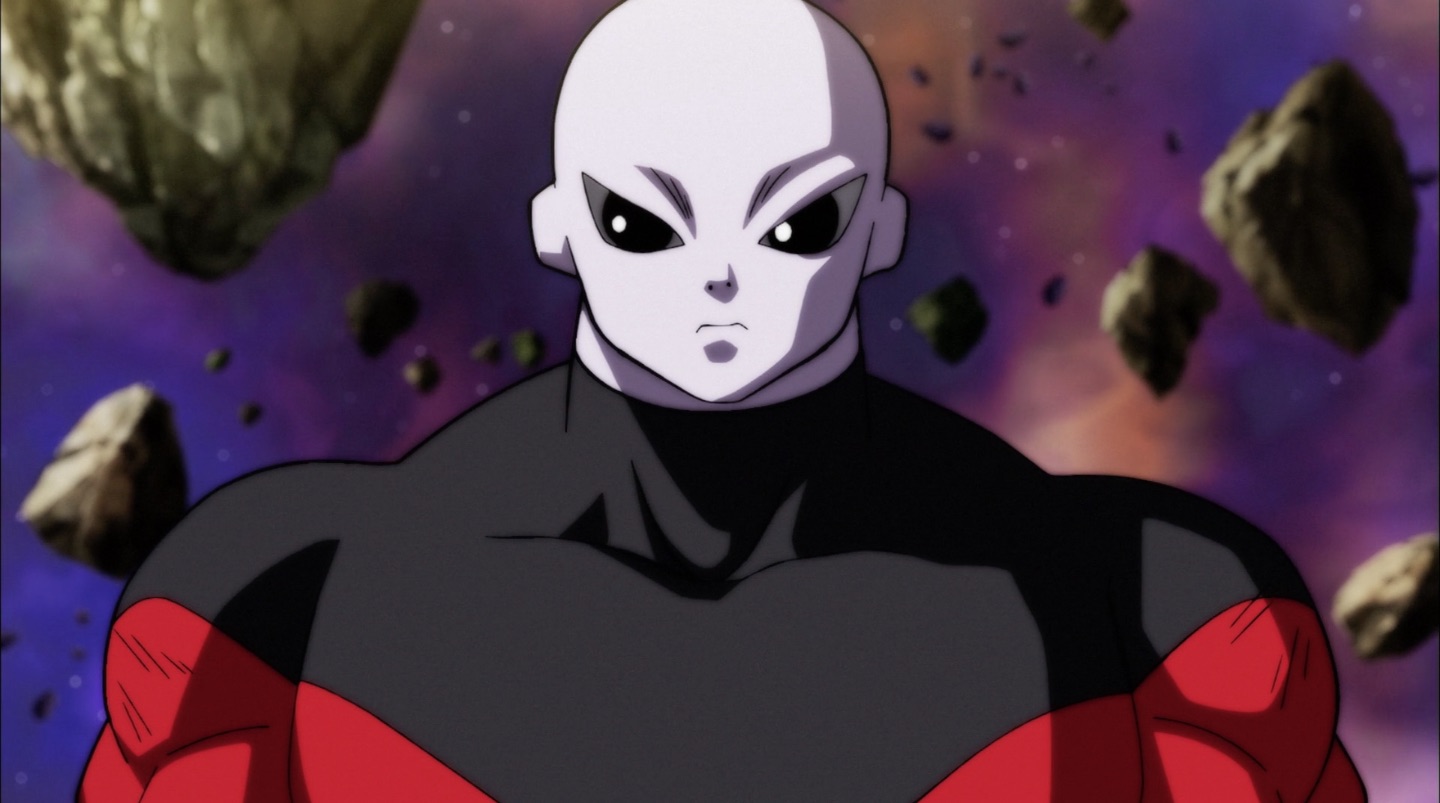
The Dragon Ball franchise is famous for many things, and one of them is its gallery of iconic antagonists. Piccolo, Vegeta, Freeza, and Cell are some of the big names Goku has faced over the years, and they each make a lasting impression. The recent Dragon Ball Super series introduced a major antagonist in its multiversal “Tournament of Power” arc, a mighty warrior from another universe named Jiren. But unlike the others, Jiren is considered by many fans to be a disappointingly generic villain. It’s an argument I can see, but in the end one I don’t quite agree with.

Indeed, if you take Jiren as a villain, he seems to just be generic in his obsession with power and sacrifice–just another big body for Goku to overcome. However, this approach to Jiren’s character isn’t quite accurate: Jiren may be opposing Goku, but he’s not a villain. He’s a hero of his own world, one he presumably has defended from threats comparable to the ones Goku has faced, and he gained his power through the circumstances and decisions that comprise Jiren’s experience.

The crucial difference between Goku and Jiren is that the latter’s life is full of pain and loss that made him choose a life of isolation and rejection. Where Goku would defeat and befriend those he faced, Jiren would destroy. Where Goku attains power for self-improvement and new experiences (i.e. fight stronger opponents), Jiren does it almost out of a sense of obligation or duty. Where Goku is goofy, Jiren is dead serious. What Goku has to overcome when fighting Jiren is not some evil machinations or even a chaotic force like Majin Buu, but a different in philosophy borne from a universe that did not have a Goku.

Put another way, Jiren could have been the protagonist of his own anime or manga, one where suffering and cynicism dominate. Perhaps you can think of a couple of titles that fit the bill. But just like how Goku embodies certain values as the core of Dragon Ball, Jiren would be the center of his own narrative and all that such a scenario entails.

So Jiren might come across as “uninteresting,” and he might not necessarily be as compelling a foe as the most well-known villains of Dragon Ball, but he acts as a different kind of foil. If ever he shows up again, there’s plenty of room to explore his character.

His Characterization is Maximum: “Dragon Ball Super: Broly”

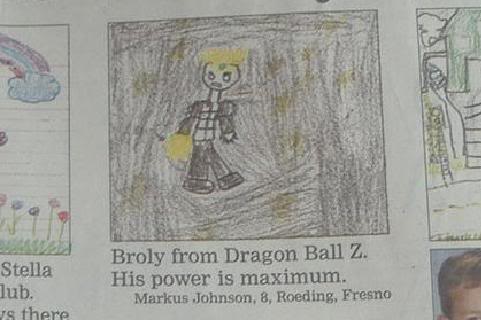
There’s an old and famous picture from a newspaper’s children’s section, where they asked kids, “If you could be a superhero, who would you be?” In response to this question, a boy named Markus answered, “Broly from Dragon Ball Z. His power is maximum.” But while people online have gotten lots of laughs from this innocent answer over the years, Markus’s words almost perfectly encapsulate the character of Broly, the Legendary Super Saiyan.

As an antagonist, Broly was always a one-dimensional character whose primary trait is being ridiculously and impressively powerful. To be fair, the way it’s portrayed in his appearances leaves a lasting impression, and has a clear, primal appeal to Dragon Ball Z fans. However, he’s ultimately a simplistic villain to be overcome by blasting him harder.

The character is also non-canon, appearing only in Dragon Ball Z anime films, which is why it’s rather significant that the creator of Dragon Ball himself, Toriyama Akira wrote the script for Dragon Ball Super: Broly. It not only means introducing Broly into the Dragon Ball universe proper, but also an opportunity to transform this flimsy rage machine into a fully fleshed character.

On a skeletal level, Super Broly is basically the same character: an instrument of revenge for his father, Paragus, against Vegeta  (the son of the man he hates most, King Vegeta), who goes berserk and must be stopped by Son Goku and his allies. There are a couple of crucial changes, however.

First, in the original Broly film, Broly is shown as having an inadvertent deep-seated trauma caused by Goku when they were fellow infants, which causes him to wantonly attack Goku. This no longer is a thing, and when he and Goku fight as adults, they’re meeting for the first time. Second, in the new film, Broly is shown as being ridiculously strong and terrifying but ultimately innocent inside—as if his personality isn’t inherently that of a fighter.

Both are smart choices that lay the groundwork for making Broly a properly three-dimensional character. The Goku grudge used to come across as largely a flimsy device to get Broly in direct conflict with the hero of the story, and it kind of punks out Vegeta in the process. Without it, his background focuses more on him being unfairly raised by his own father to be a tool for revenge, and the different ways in which Goku, Vegeta, and Broly have been shaped by their upbringings and experiences. An extensive background story in the first half of the film highlights these differences.

That being said, I don’t want to make this film sound like a deep look into character psyches, as it’s mostly one gigantic fight scene full of the fast and frenetic combat Dragon Ball is known for. However, those crucial differences between Goku, Vegeta, and Broly come out even as they’re pummeling each other. Goku’s Earth-bases martial arts background, Vegeta’s elite Saiyan training, and Broly’s mostly unrefined berserker rage are all conveyed in the action, which does a lot of showing instead of telling somewhat reminiscent of Mad Max: Fury Road.

A few bits of welcome comedy alongside some new characters help keep Dragon Ball Super: Broly from feeling too heavy—a clear indication of Toriyama’s hand in the process. Overall, it ends up being a really solid film, and one that manages to give depth and meaning to a pure power fantasy character like Broly without taking away the strength that made him popular in the first place.


[APT507] Dragon Ball Super and the Tournament of Power: Combining Two Unlikely Story Narratives!

I’ve previously made it known that I’m a fan of Dragon Ball Super. Now, I’ve wrote a post about why I think the latest arc, the Tournament of Power, is something quite special. Check it out on Apartment 507!

Chala Head Chala vs. Rock the Dragon and the “Image” of Dragon Ball Z

In a recent blog article, I wrote about how the character of Vegeta in Dragon Ball Z is portrayed differently in Japanese and English, and how this has resulted in something of a divide among fans. The article was a surprising success, quickly becoming one of my most popular posts in recent memory, and the numerous responses I received (especially on Twitter) prompted me to think more about how Dragon Ball Z (and the Dragon Ball franchise in general) is perceived differently depending on how a person came across it.

Is Dragon Ball a gruff fighting series, or a heartful adventure? How big a role should comedy play before it goes too far? Many factors go into how the series is viewed, including whether or not someone started with adult or kid Goku, but I came to realize another influence: theme songs. On some level, I believe that the core difference between how Dragon Ball can be summed up in the contrast between “Rock the Dragon” and “Chala Head Chala.”

Before I delve more deeply, I do want to say that, while I prefer “Chala Head Chala,” my taste in music is not important here. Nor is the fact that “Chala Head Chala” came first. Tthe anime is based on the manga, which has no actual sound at all, let alone opening and ending themes. “Being the original” is not a sound argument to make. What I will be focusing on is mainly, how do each of those themes make its viewers feel?

“Chala Head Chala” feels fairly light-hearted, with quite a few odd lyrics (“If I discover a dinosaur in ice, I want to balance it on top of a ball” ???), yet there’s also a quiet sense of gravitas thanks to Kageyama Hironobu’s warbling voice. While the theme does suggest action and excitement, it emphasizes more a sense of “adventure” and “discovery,” though perhaps not to the same extent as the Dragon Ball opening, “Makafushigi Adventure.” Most of the visual imagery in the opening is concentrated on movement—flying and running. Motion is the key.

“Rock the Dragon” is all about heavy use of electric guitar riffs. The song puts all of its emphasis on high-octane thrills, and the the lyrics (as repetitive as they are) further push to the forefront the idea that this is not just a series with action, it’s the action series. Instead of the first image being a rotating dragon ball, it’s the dragon itself in all of its majesty and glory. All of the footage aside from that is fighting, fighting, and more fighting.

If I had to greatly simplify, I’d say that “Rock the Dragon” is more about “body and spirit,” and “Chala Head Chala” is more about “heart and soul.” They both introduce the same overall series, about Goku and his allies taking on ever-increasingly powerful threats to the Earth, but one revels in the fighting and the other suggests fighting as a means of expressing character. Because of this difference, I think it cements different core images of Dragon Ball in people’s minds, and this affects how subsequent works (Battle of Gods, Dragon Ball Super) are received as well. Looking ahead, the opening of Dragon Ball Super, “Limit Break x Survivor,” is actually a kind of middle point between “Chala Head Chala” and “Rock the Dragon” with a dash of “Makafushigi Adventure.” Could it be the theme that unites Dragon Ball dub and sub fans once and for all?

Does the Japanese “Vegeta” Voice Not Translate to English?

Amidst the announcement of Dragon Ball FighterZ, a Guilty Gear-esque 3-on-3 fighting game based on the popular Dragon Ball franchise, one of the old debates between fans has cropped up: do you play with the Japanese voices or the English ones? Frequently, choices have to do with familiarity (what did you grow up on?), as well as the divisiveness of Nozawa Masako’s performance, which some fans see as not fitting for Son Goku’s masculine appearance.

Because of this, I began diving into old sub vs. dub threads, and to my surprise I found that quite a few people were also not big fans of Horikawa Ryo as Vegeta. On the occasions that commenters preferred Christopher Sabat’s Vegeta, it frequently had to do with Sabat making Vegeta sound more gruff and “badass.”

English and Japanese Vegeta have a lot in common. They’re both extremely arrogant and prideful, and even their caring sides will be expressed through anger. However, I find that each of them brings a different feel as well. If both of their performances could be likened to boulders (big and powerful), then Sabat’s Vegeta would be rough and jagged, while Horikawa’s would be smoothed and polished.

I’m beginning to wonder if the Horikawa-style Vegeta is somehow “lost in translation,” as if the effect doesn’t come across properly. The reason I’m considering this at all is that I also see other cases of similar characters coming across differently in English performances.

One example is Meta Knight in Smash Bros., who sounds more like a noble knight in Japanese but has a deep baritone in English. (In the dub of Kirby: Right Back at Ya!, they went for an odd Spanish accent, but that’s more a directing choice than anything else.) Would the effect Horikawa has as Vegeta work better if a voice akin to English Smash Meta Knight’s was used?

Another example is Kaiba Seto in Yu-Gi-Oh! In Japanese, Kaiba’s performance is more curt than anything else, like he has no time to waste on being nice or courteous. In English, Kaiba sounds more actively mocking and malicious. Would the former have not been as memorable? All of these different performances (as well as different scripts) can change people’s impressions to the point that they can almost be viewed as different characters.

I’d like to believe that it’s possible to successfully translate the feel and intent of a character at least for the most part when dubbing a series, but I have to consider whether or not cultural context actually changes how a given voice “sounds” to a person. It’s not uncommon to see dub anime fans complain about all the “high-pitched voices” in Japanese, but fans of Japanese voices might lobby the opposite criticism towards dub actors making high schoolers sound like 40-year-olds. It’s almost impossible to get an “objective” opinion on how a character sounds across different languages, especially because the actors themselves will slowly evolve their performances over time.

If dub Dragon Ball Z was ever able to perfectly adapt Horikawa’s Vegeta to English, would it actually have garnered him a somewhat different fanbase than he possesses now among English-speaking fans? Does the core character of Vegeta transcend voice, or is it a major factor in defining how the character lives?