Emotional Continuity in Anime

What does it mean for a work of fiction to feel “realistic?” It’s a question I return to over and over because of how subjective the answer can be. The more I’ve thought about different possible takes, however, the more I’ve found that I resonate strongly with something I call “emotional continuity,” and it informs which series I view most positively.

Broadly speaking, there are many types of continuity in storytelling. There’s the simple that the events of the past should inform the events of the future. A character who loses an arm in episode 1 of a show shouldn’t get it back with no explanation in episode 10. Then there’s capital “C” continuity, like what American superhero comics often deal in, where all the individual parts ideally look together to form a consistent universe and timeline across multiple different series. “Emotional continuity” isn’t nearly so complex. Instead, I define it as simply when events that should affect a given character emotionally result in an appropriate response, and that this character remembers this feeling on some level. Those reactions and memories don’t have to be “sensible,” and they don’t have to result in a “character arc,” though both are possibilities. They simply have to feel consistent with the character and their way of being, and then leave a mark on that character.

One work I’ve debated with others about realism (and by extension show quality, though the two are not necessarily related) is the anime Mobile Suit Gundam: Iron-Blooded Orphans. Whereas others saw the character actions as making little sense and thus stunting the overall story, I felt the opposite. I came to strongly understand each character’s motivations, especially in the core cast, and to see how early events both happy and tragic would inform the general trajectory of their approaches to life.

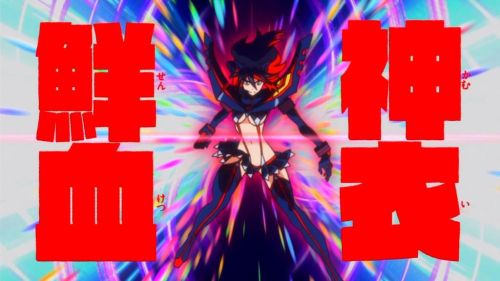
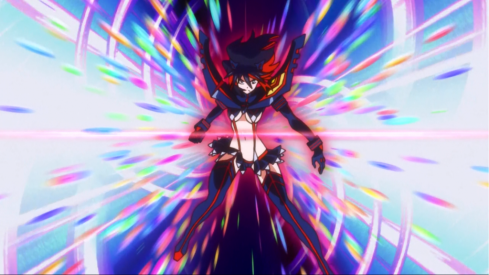
Another anime that I’ve argued about is Kill la Kill, specifically in regards to the idea that the heroine, Ryuko, is a strong main character even though she didn’t receive much “character development.” The big sticking point for detractors is that she doesn’t really change significantly throughout the series or learn any personal lessons. However, I find that even if she doesn’t transform dramatically, she conveys a strong sense of “emotional continuity” based in her anger, her stubbornness, and her desire to right wrongs. Even if she’s still the same rage-filled Ryuko by the end, it’s impossible to say that the events of the series don’t affect her emotionally or inform her friendships, battles, and decisions.

I realized that “emotional continuity” also greatly informs my utter fondness for the series Heartcatch Precure! and might even explain why the series is often seen as the best of the Precure franchise or somewhat overrated. Years ago, a blogger named Scamp tried to watch through as much Precure as he could, but ended up dropping every show, including Heartcatch. His reason was that nothing ever seemed to happen for the most part, and that dramatic, story-changing moments came too abruptly. This surprised me, because I felt the total opposite—that the show built up to every significant plot point like a skilled architect oversaw the construction. I even wrote a response. In hindsight, while I used the phrase “emotional logic,” i.e. reasoning through feelings, to describe what I saw, what I was actually highlighting was emotional continuity.

Moonlight…in suffering loss…felt wracked with guilt, giving up her role as protector. The task to defend the world had been passed onto a new generation…and as they collected the Heart Seeds, they laid the groundwork for Moonlight to redeem herself, to learn from her mistakes while also forgiving herself…. Although Cure Moonlight’s return is telegraphed to a degree, for me it built anticipation … I felt satisfied that the show had reached a strong emotional point with a solid expression of how the feelings of each character, especially Moonlight, defined their actions.

Rarely in fiction is anything utterly devoid of emotional continuity, but the best series make you feel as if they care about what’s happened to their characters. Something that has had issues with maintaining this continuity in recent years was World Wrestling Entertainment, and that seems to be finally turned around in the past couple years. While there are general structural issues with how WWE presents itself that go beyond emotional continuity, it’s telling that fans had very little faith in their favorites wrestlers being recognizable beyond a basic template. Continuity is played fast and loose in general, and the highly physical nature of their format means injuries and other unpredictable elements can gum up the best laid plans, but there’s a persistent sense that what a given wrestler does or says one week should actually matter the next.

Do you find emotional continuity to be important? If so, how much is it a priority for you? I’m curious to see how others feel.
Kiryuin Satsuki and the Curse of Power Girl

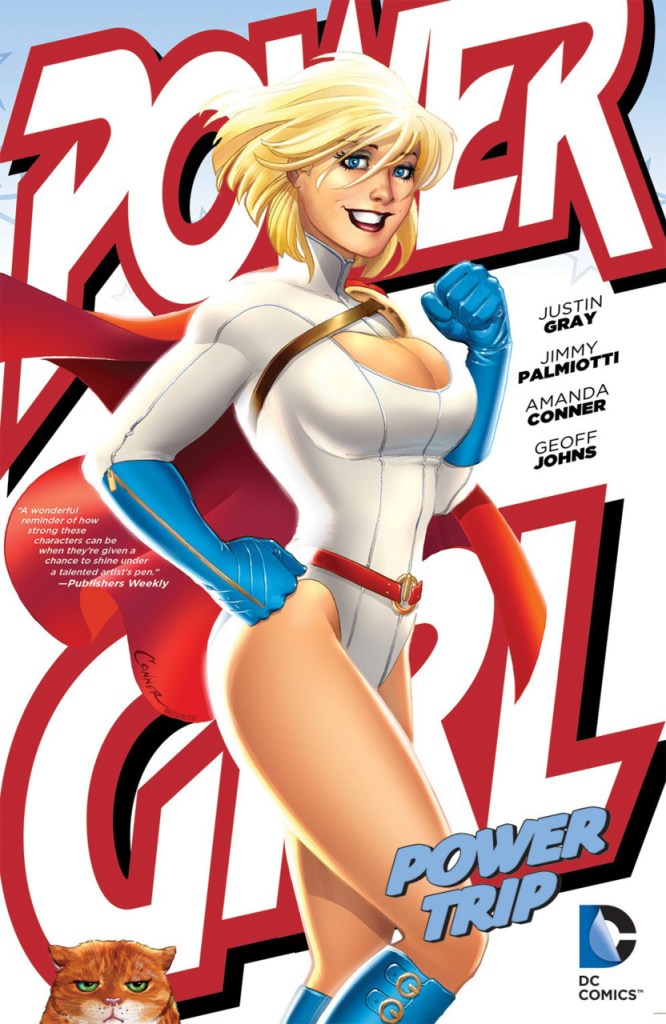
I view the DC superhero Power Girl as being almost doomed by her appearance. If you ask anyone with even a passing familiarity with Power Girl about what defines her character, you’re very likely to get the response “boob window.” This is despite numerous attempts to revamp her character, emphasize her personality, and make her more than just eye candy first, superhero second.

This is not to say that Power Girl is an inherently bad or sexist character, whether she’s supposed to be an adult Supergirl (her original origin) or something else entirely. I don’t even think the boob window necessarily has to go. But what fascinates me about Power Girl’s situation is that, for whatever reason, it seems especially difficult for her to escape being seen almost as a character attached to a pair of breasts.

In contrast, when it comes to characters who have overcome a highly sexualized appearance, one need look no further than Kiryuin Satsuki from the anime Kill la Kill. In spite of the fact that her battle uniform looks like a sling bikini on steroids, her personality overwhelms even the sheer and unbridled sexuality of her clothing. Despite her breasts and buttocks often being in full display in numerous scenes what first comes to mind are her other attributes: scowl (with enormously imposing eyebrows), her ambition, and the fact that she literally radiates an aura of light that symbolizes her power.

I find myself wondering, what is the difference between Satsuki and Power Girl, or indeed Power Girl and other female superheroes who have been successfully redefined as more than just their eroticism (note that I did not say more than just their looks—appearance is just an essential part of superheroes, male and female)?

There are two major context points that separate Satsuki and Power Girl. First, unlike Power Girl, Satsuki is introduced in Kill la Kill in her full-body school uniform rather than in her skimpier attire. Second, whereas Satsuki’s existence is defined solely by one television series, Power Girl has been a part of comics for decades. While the circumstances of 2010s Japan and 1970s United States are substantially different, I suspect that Power Girl would be remembered very differently if she arrived on the scene the way Satsuki does in Kill la Kill: as someone grandiose and powerful. Perhaps it would even be possible for her to keep the boob window and still be thought of primarily for her superheroics and feats of strength.

Or perhaps my view of Satsuki is too charitable. Maybe the imprint she’s left on anime and its fandom, especially those who know Kill la Kill only from images, is just her near-naked body in a battle bikini.

Power Girl appears to be a victim of historical inertia. No matter what is done with her character to turn her away from a primary emphasis on her breasts, focus always returns to her iconic cleavage cut. Whether it’s possible to overturn this might require not just an amazing creative team where artist and writer are working towards this goal, but a comics fandom willing to accept this change.


Best Anime Characters of 2014

BEST MALE CHARACTER

Iori Sei (Gundam Build Fighters)

Much like last year’s winner, Armin Arlert, Iori Sei is a character whose skills come from forethought, patience, and preparation. Unlike Armin, however, Iori Sei is in fact the protagonist of his own series, reflecting a more general trend as of late where those who would normally be considered side characters are entering the limelight. In this respect, Sei’s talents, designing and building exquisite plastic Gundam models to use in holographic simulated battles, are best seen when his designs are utilized in the hands of his teammate Reiji. His gentle personality both contrasts with and complements his dedication to honing and refining his craft, and while he eventually becomes a skilled “pilot” as well, it feels like a very natural progression. Also, his innocent romance with Kousaka China is adorable.

BEST FEMALE CHARACTER

Kiryuuin Satsuki (Kill la Kill)

The main rival in Studio Trigger’s popular series of 2013-2014, in order to understand Satsuki’s strength as a character it’s necessary to also be aware of the surface impression that Kill la Kill often first creates. The main motif of Kill la Kill is clothing and nudity, and Satsuki herself is no exception as early on in the series she dons her Kamui Junketsu, a sentient battle uniform, and proceeds to fight in an extremely skimpy and revealing outfit. At many points in the series, her body is on full display, and it is portrayed as very sensuous in its own right. However, when thinking of the character Kiryuuin Satsuki, what first comes to mind is not what she’s wearing (or not wearing), but her commanding presence, her ambition, her radiant confience, and ultimately her redemption. One of the strongest moments in the series has to be when Satsuki apologizes, taking a deep bow that humbles her yet also elevates her to even greater heights as a human being of iron-clad will and determination that nevertheless has room for love and compassion.

BEST DUO

Andy and Frank (Yowamushi Pedal)

Andy and Frank (pictured left and right) support, advise, and push Hokane Academy’s 1st-year sprinter Izumida Touichirou to strive for victory. Developing their strength throughout his training, one has to wonder where Izumida would be without the help of Andy and Frank; it’s almost impossible to picture him without them. Though they seem quite similar, what’s also remarkable is how each of them have their own unique yet complementary personalities. It’s what makes them such an incredible team.

Final Thoughts

While there’s nothing that clearly links these characters together (though Andy and Satsuki might have something in common), I found that my choices this year were surprisingly not that difficult. Especially in the case of Satsuki, while there are plenty of great female characters this year, such as Anetai Toyone from Saki: The Nationals, Koizumi Hanayo from Love Live! School Idol Project, or even her fellow Kill la Kill characters, Satsuki’s sheer presence dominated them all in my mind. Perhaps the most notable thing is how different Sei and Satsuki are in terms of personality, and that their paths during their series lead them in what might be called opposite directions. Sei, though talented, learns confidence, while Satsuki learns humility and the value of friendship. At the same time, both remain true to themselves and their convictions.

I Didn’t Go to AnimeNEXT 2014 But I Have Some Thoughts on the Studio Trigger Panels

I was unable to go to AnimeNEXT this year, but thanks to the Reverse Thieves and their con report, I’ve learned that the Studio Trigger panels were fantastic and I’m totally jealous of them for being there. Obviously I can’t write about the experience, but there are two points in their post on Trigger that I find interesting to look further into.

The first aspect I want to talk about is in regards to them having an initial version of Kill la Kill with five episodes already planned out in full, but decided to scrap it and start over again with something they felt was stronger. Back when I wrote my review of Kill la Kill I got some comments from a particular poster that criticized Kill la Kill‘s writer for making numerous revisions to the script, as if it had hacked together haphazardly, but with this clarification it’s now obvious that the drastic changes came from the planning stage and were less about cobbling together a frankenstory and more about trying to find the right direction no matter what.

The second little factoid that caught my attention is the fact that the staff at Studio Trigger is really into American superhero comics, which is sort of obvious if you’ve watched all of Inferno Cop. What I find funny about this is the fact that for American comics, superheroes are increasingly seen as this bland, boring, mainstream yet niche thing that we need to move past, while Studio Trigger has this reputation for being a new and cutting-edge anime studio, and they take inspiration from superhero comics.

Making Sense with Nonsense: Overall Thoughts on Kill la Kill

!!!SPOILER WARNING!!! THIS POST ASSUMES YOU’VE SEEN ALL OF KILL LA KILL

Kill la Kill has been a fairly controversial show since its start. Back in the early episodes I remember seeing a great deal of questions suspicious of what I’d call the anime’s “integrity.” Does this story have any legs or is is just a random assortment of wacky and violent things? Is there a solid sense of character development at work, or is it all style and flash? Are the ridiculously skimpy outfits there to titillate or to make a point?

In other words, is the show smart or stupid?

For those who’ve watched through to the end, I think the answer is pretty clear: much like the question of whether Ryuko and Senketsu are human or clothing, Kill la Kill is neither smart nor stupid, yet it’s also smart and stupid.

I’m oversimplifying the point in the hope of expressing my thoughts succinctly, so let me elaborate.

A lot of features of Kill la Kill simultaneously buck and conform to convention. Traditionally, when we think of narrative in anime, we think of it as the visual style serving the plot, but in a lot of cases Kill la Kill shifts between which facet, narrative or style, takes priority, and sometimes they act as equals. In this last regard, I think one of the best moments to showcase this in Kill la Kill is Satsuki’s apology to Ryuko, where her characteristic blinding aura takes on new meaning.

Kill la Kill also encompasses both of anime-as-animation’s dual personas. Is anime a detailed and expressive medium which breathes life into its characters, or is it a series of creative money-saving cheats honed through decades to become a craft all of its own? In Kill la Kill, while it’s easy to tell which moments are which, often the scenes which exemplify the latter quality of anime are so smart and effective that I wouldn’t be surprised if people preferred them to be “static” shortcuts.

When it comes to anime and pop culture references, the series is rife with them. Yet, there’s no need to “get” them to enjoy the show, or to take meaning from it. I’m 90% sure that Ryuko and Senketsu’s decent to Earth is a reference to the ending to Zambot 3, only the show takes the extremely bittersweet conclusion of Zambot 3 and turns it into something more sweet than bitter.

(Pay attention to the last 6 minutes or so. Also, Zambot 3 spoilers of course).

What about the theme of clothing? Did it truly serve the show in the end? When Senketsu burns up in the atmosphere and tells Ryuko that all girls stop wearing their school uniforms eventually, while it doesn’t explain everything in the show, it does highlight one of the consistent themes of the series, which is that it’s about girls growing into women. The moments of embarrassment, the rebelliousness and desire to make up for lost time, there are a lot of different threads at work here (pardon the pun), which may not be entirely consistent, but it doesn’t feel like the ideas presented by the series are any lesser for that. Ryuko’s motto, that she’s all about not making sense, comes to the fore here. While what she says is true in a sense, her ability to embrace nonsense, to swing wildly in terms of her emotions, and to come to conclusions which are less about solving problems and more about coming to terms with things in ways which fit her, all of that has its own logic.

What works, works, and who’s to say anyone has to follow the template laid out for them? Though, even that isn’t wholly consistent because the “purpose” of Senketsu has a clear arc, at least in terms of utility. Of course, the real purpose of Senketsu was to bond with Ryuko in more ways than one.

As for one of the main controversies, that of the show’s depictions of female characters, I find that we’re left with a surprisingly complex situation as well. All of the major female characters in Kill la Kill are strong in significantly different ways, and they each bear their own distinct personalities and personas which celebrate their broad archetypes but also encourage viewers to think about those differences as more than just “uniqueness points.” Ryuko’s strength is her passion, Satsuki’s is her indomitable will, and Mako’s is her relentlessness. This extends to a certain degree to the rest of the cast as well, for both men and women, notably the Elite Four. With respect to the tendency for the series to dress its central characters up in absurdly revealing outfits, it’s a curious thing that often the way that Ryuko and Satsuki carry themselves drives attention away from their curves and towards their intensity. It’s not even entirely a matter of personality over looks, as Senketsu and Junketsu themselves also sometimes help to, in a somewhat contradictory fashion, put the focus on themselves and not on the bodies to which they’re clinging.

kamuisenketsu-small


While I find that the initial criticism of Kill la Kill came from a place of fear (oh boy, it’s anime at it again!), I think those who were initially wary of Kill la Kill also had every right to be. There was no definitive sign that the differences and the “stupid” elements wouldn’t transform the show into an Ikkitousen or some other show where the girls are action figures placed into awkwardly sexual poses. There was no definitive sign that its setting would be any different from Baka and Test or any number of series where the idea of “high school” is pushed to the “extreme.” What Kill la Kill manages to do, however, is give these inclinations teeth. It shows that these tropes and “vapid elements” have more power in them than simply their ability to distract and excite, that they can be engaged and utilized to express something I would dare call truly artistic.


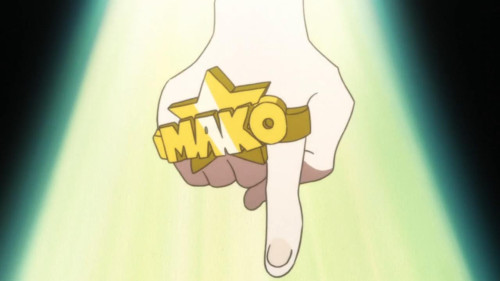
Explaining the Mankanshoku Mako Puns in Kill la Kill 23

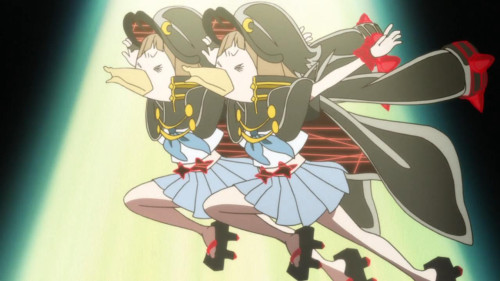
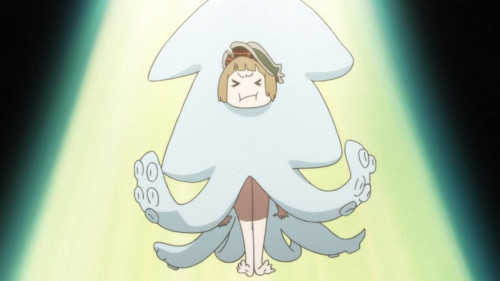
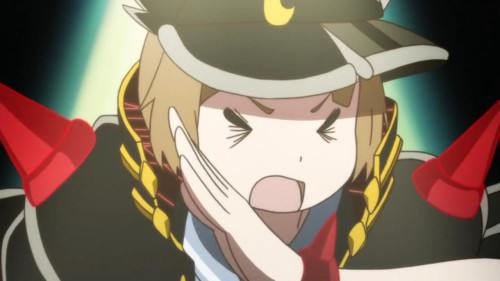
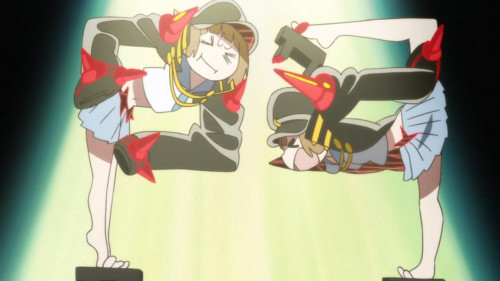
Mako in Episode 23 of Kill la Kill gives a speech where she exclaims, “But I can’t be beaten here! I have to protect this ship!” The visual accompaniment actually consists of a rapid-fire sequence of puns, which I thought I’d break down here.

1) “But I can’t be beaten here!”

Koko de taoreru wake niwa ikanai mon!

killlakill-makopun-taoreru

Taoreru can mean ‘”to be defeated” but it’s also used when saying someone has fallen ill or worse. Mako is posed as if she were a corpse.

killlakill-makopun-wa

killlakill-makopun-ke

Wake is broken up into its syllables: wa (輪) means ring, hence the loop made with her fingers, ke (毛) means hair.

killlakill-makopun-niwa

Niwa is represented by Mako dressed as two birds because niwa (二羽) is how you count two birds.

killlakill-makopun-ika

Ika means squid (烏賊), a familiar pun for all you Squid Girl fans.

killlakill-makopun-nai

Nai is used as a negative conjugation in Japanese verbs, so we get the familiar image of Mako shaking her head. Ikanai means cannot, but more in the sense of “I musn’t.”

killlakill-makopun-mon

Mon is a way to emphasize one’s emotional investment. Mako is posing in the shape of the kanji 門, pronounced mon, which means gate.

2) “I have to protect this ship!”

Kono fune mamorenai to

killlakill-makopun-kono

Kono means “this,” Mako is pointing down at “this.”

killlakill-makopun-fune

Fune means boat, Mako is in a sushi boat, simple enough.

killlakill-makopun-mamore

killlakill-makopun-naito

Mamorenai to means “have to protect,” which is split up into mamore, “protect,” and nai to, which is also how you pronounce “knight” in Japanese.

Hope you learned something!

Two of My Favorite Moments in Kill la Kill Episode 22

This post is about a week late to the “Kill la Kill episode 22 was awesome” meeting, but Kill la Kill episode 22 was awesome. As far as I’ve seen, this has been the general consensus among fans of the show, and it’s no surprise given the fact that many of the show’s narrative threads reached their turning points in this episode. While 22 was packed with a ton of impressive moments (like the Evangelion reference with Ryuuko hunched over and covered in blood like EVA-01), I’d like to talk about ones that I enjoyed in particular.

1) The Glory of Mako and More

The return of Fight Club Mako will forever be one of the glorious highlights of Kill la Kill, but in that triumphant return there is also a serious Ira x Mako moment. I’ve been a fan of that particular pairing and of course as the show has progressed it’s turned very real and I’ve enjoyed every minute of it. While people will talk about the fact that Gamagoori eats Mako-shaped croquettes in the episode as the Ira x Mako moment of the episode, I actually turn to Fight Club Mako’s appearance instead.

At the end of the episode, the heroes are attacked by a giant COVERS monster when out of a sky drops a dresser. As we know now, Mako in her banchou outfit is in there, but how does she introduce herself? Mako’s over-sized fist comes flying out of the dresser door and socks the giant monster, a feat of comedic spatial distortion the show normally associates with Gamagoori.

You can keep your croquettes.

2) Satsuki’s Radiance

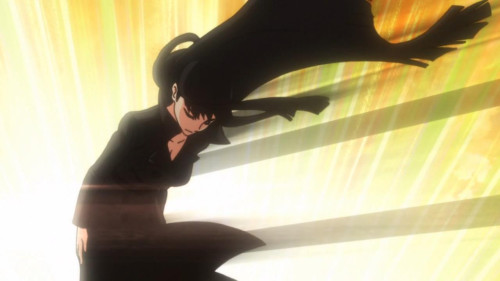
In episode 22, Satsuki finally comes clean with her entire plan, and how she intended to use Ryuko as an x-factor in her rebellion against her mother’s global domination scheme, but realizes that manipulating others to serve her needs was the wrong way to go about it. Satsuki then apologies and takes a deep bow (the lower you go, the more humble and respectful you’re being, see Barack Obama), and then begins to emit a blinding light.

One of the visual icons of Satsuki throughout the series has been her literal radiance. When Satsuki appears, a blinding light shines forth from her, as if to say that she is simply that much more amazing than everyone else around her. It is as much a part of her character as her indomitable will and her giant eyebrows, but when you think about it, it hasn’t been around for quite a few episodes. To have the moment where Satsuki sets aside her pride also be the point at which she is at her most brilliant encapsulates the character so wonderfully that in an episode of great things it’s an absolute high-point.

In other words, to see the visual style of Kill la Kill match up so well with its narrative is just a rewarding experience.

The “Character Development” Crutch

In response to recent shows such as Kill la Kill and even Dokidoki! Precure I’ve been seeing a particular criticism thrown around lately:

“These characters are bad because they have no character development.”

In a way, it’s pretty much the go-to question for a lot of things, because when we traditionally think of a character-driven narrative, a character starts off in one place and ends up in another. Sometimes it’s a physical displacement, sometimes it’s an emotional one, and often times the two go hand in hand. When it comes to basic storytelling, it’s about as reliable a structure as it gets.

Reliable, yes. The formula by which all characters should be judged, no.

I understand that character development can be a powerful thing, and seeing a character grow can be a tremendously satisfying experience, but when “character development” is bandied about as doctrine it comes across as a Beginner’s Guide to Criticism. People end up being so eager to establish the “right way” to construct a story that they effectively throw out the baby with the bath water. “Static” characters, or even static elements of characters, have their own place, and are capable of being part of great stories. However, the narrative arc need not be about them in particular.

There are many ways to portray characters, and not all of them need to have the hero go through the typical kind of character progression. Does anyone watch Akagi asking, “Where’s Akagi’s character development?” Is Kenshiro an issue because he doesn’t have “character progression” beyond getting angrier and sadder as the series goes along? Raoh’s “development” is more a retcon which turned him from just an Evil Guy to someone who wanted to bring order to chaos. Yet all their characters work for what they are and what they need to be. That’s not to say that character development shouldn’t ever matter at all (and both Kill la Kill and Dokidoki! Precure have more character development than either Akagi or Fist of the North Star), but it shouldn’t be held up as holy doctrine that a story can only succeed if its character progression is sufficient.

I think this is why people are so often eager to point out that some character is a “Mary Sue.” This character who is on some level larger than life or a product of wish fulfillment is assaulted by the big book of how narrative tropes are “supposed” to work, and the attackers don’t care about anything but the idea that stories should adhere to it.

I Heart Ira x Mako

I’m not really a big “shipping” sort of person, but I love the idea of having the giant Gamagoori Ira and the hyperactive Mankanshoku Mako from Kill la Kill as a couple. So far, the show’s featured various interactions between them, and the surprising level of respect Ira shows for Mako as well as Mako’s own ability to catch Ira off guard makes them come across to me as “equals” even if you can’t call them opposites. They do both operate heavily on loyalty, so maybe they have some similarities after all.

If only Mako had kept her 2-star uniform and its delightful delinquent-ness, they’d be a pretty fearsome combination. Of course there’s always still hope for them to bring it back.

Though, don’t ask me how that masochism stuff is supposed to fit in.

Kill la Kill = Exploitation + Empowerment?

Kill la Kill for all of its visual creativity is a pretty controversial show, if only for its main heroine’s outfit and how it’s used in the series.  Whether Ryuko’s uniform (or lack thereof) is a symbol of feminine power or yet another case of women being objectified in media is the point of contention. I find that it can be difficult to navigate the intersection between “exploitation” and “empowerment” in Kill la Kill, partly because when we think of those ideas we usually find them mutually exclusive to the extent that one can only grow at the expense of the other, whereas I actually believe Kill la Kill is honestly and genuinely trying to do both at once.

Kamui_Senketsu

One of the key examples of this duality is in Ryuko’s transformation sequence, which ends in the pose shown above. Her uniform is ridiculously skimpy, but her actual stance exudes power and confidence, sharing more in common with the type of posing done by a tokusatsu hero rather than the almost fashion model-esque poses common to magical girl shows (and also JoJo’s Bizarre Adventure). It’s showing her body off to the world at the same time it shows off her will and determination.

Outside of Kill la Kill, of all the series I’ve seen which attempt this combination the one that tries the hardest is probably Shinkon Gattai Godannar. There, the fanservice is arguably more extreme and pretty impossible to avoid in its own right, but I find that its ideas and themes resonate with a desire for women to be the heroes of their stories. With either Kill la Kill or Godannar, it’s possible to “look past” the sexualization (or not), but neither the image of exploitation nor empowerment are necessarily merely in service to the other, as if one is an “excuse” and the other is the underlying true meaning.

It’s easy to think of the people who made Kill la Kill as perverts, and it’s maybe even true, but I wonder if the show is actually saying something along the lines of, “Hey, perverts can be feminists too!” Whether this approach is okay or not is of course still up for debate, and differs from show to show, or perhaps even episode to episode. Personally, I’m pretty okay with it but recognize the potential, positive or negative, in combining this imagery in that it can be appropriate and used according to the viewer’s wishes.