

My Hero Academia by Horikoshi Kohei is a manga that has stood out thanks to its gorgeous art, variety of memorable characters, and exploration on what it means to “do good” and “be a hero.” It ties together the popular genre of the shounen battle manga with the classic American trope of the superhero, and provides a simple but profound setup that evokes the best of both. Now, after 10 years, the series has concluded, and the reception to its ending seems to be rather mixed. While that is likely a case of “the loudest voices” in online discussion, it’s also a reflection of how MHA has long attracted a variety of readers with values that conflict a great deal.
Warning: Spoilers for the entirety of My Hero Academia
Plot and Circumstances
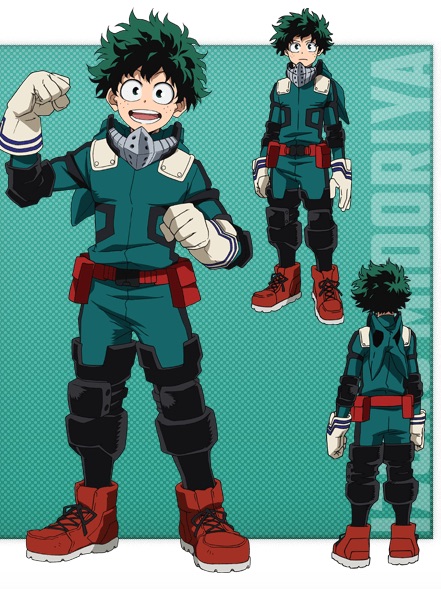
My Hero Academia is the story of a boy named Midoriya Izuku, also known as Deku. In a world where superhuman powers referred to “quirks” are commonplace, Deku dreams of becoming like his idol, the #1 hero All Might. Unfortunately, he discovered at a young age that he is entirely quirkless, all but dashing his hopes. But a chance encounter with All Might leads to the living legend transferring his power to Deku, making the boy the latest in a long line of individuals to carry a mysterious power called “One for All.” This sets Deku on a path towards entering UA Academy, Japan’s most prestigious school for aspiring heroes. Over the course of the series, Deku and his friends learn the ins and outs of being a hero, but also the fact that there are profound disagreements as to what that entails.The emergence of villains, including ones with ties all the way back to All Might’s prime years, adds a thread of history that connects past to present.
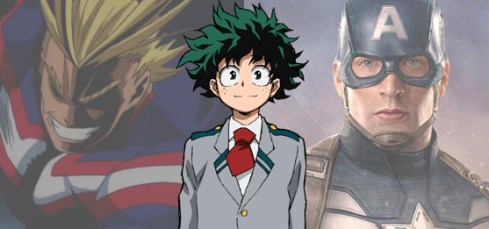
So much of MHA reflects the period and circumstances in which it ran. In 2014, titans of Shounen Jump like Naruto and Bleach were in their sunset years, and these series had helped popularize massive casts of uniquely powered characters through which readers can find their own favorites. MHA is cut from this cloth, with all of Deku’s friends and teachers providing a veritable smorgasbord of possibilities. Then there’s Deku himself, with his pure heart and humble desire to help others, who was one of the vanguards of a generation of “good boy” leads. And back when the series began, the Marvel superhero movies were truly a global phenomenon; I suspect that their cultural penetration in Japan is part of why readers gave MHA a chance.
But a lot changes over the course of a decade. The Marvel Cinematic Universe has dragged on and suffered from all the problems that plagued the overly convoluted comics. Antiheroes never fell entirely out of fashion, and there has always been a contingent of readers who see Deku as boringly naive and someone who needs to learn how dark and difficult the world actually is. His rival Bakugo, a former friend turned bully, is hotheaded and violent, and one of those characters whom certain fans saw as the real star.
A big question surrounding Bakugo’s popularity was the degree to which fans liked him because they saw him as someone who could change (particularly in regards to personal redemption for his terrible behavior towards Deku), and to what extent people liked him precisely because he’s an asshole. When the series then brings a more extreme version of this dynamic, the question of whether someone deserves forgiveness or a second chance becomes a lot more fraught: The hero Endeavor has a history as an abusive father, for instance, and the villain Shigaraki (responsible for many evils) is himself a product of generational trauma and manipulation. MHA seems to touch directly and indirectly on many cultural flashpoints of the past decade by virtue of being a series that 1) wants to portray a bunch of powerful and attractive guys and girls, 2) is very much centered around different ideas of hard work, camaraderie, and justice, and 3) is a long-running shounen series with lots of plot threads, which means pacing becomes an issue at some points.
The Ending
So when the final chapter came out, it was perhaps inevitable that the reaction would be mixed. There are too many different people with their own perspectives reading this series in their own ways. Even so, it still surprised me how much disappointment seemed to resonate through the fandom. Some interpreted his new life as a quirkless UA Academy teacher to be a bittersweet outcome. They saw it as unfair that a guy who saves the world gets little fanfare and legacy, especially because he loses his powers leading the charge to defeat the ultimate villain of the series, All-for-One. Even All-for-One apparently falls short as a major villain. Other criticismsI’ve seen include the lack of resolution for romantic shops, that outside of a brief period as a vigilantes, Deku never develops a “dark side,” and that having his old classmates develop a Batman/Iron Man–esque super suit for him is a cop-out ending.
Yet the ending is so appropriately Deku. It’s fitting that he would accomplish arguably the greatest feat his world has ever seen and then recede from the spotlight, only to be pulled back into it by the people whose lives he changed. Deku goes through a great many ordeals throughout the entire story, and while he learns that the world presents some complex moral quandaries, those tribulations also reinforce Deku’s inherently kind nature. He sacrifices All Might’s gift to him, One-for-All, to get through to his primary nemesis and rival, Shigaraki. He ultimately reconciles with a changed Bakugo, but not without taking many lumps in the process. In the aftermath of the final battle, he even encourages a villain to write a book about his perspective on why Shigaraki was the greatest, because Deku wants to hear the story he has to tell. And while Deku isn’t holding hands with Ochako (the #1 romantic prospect in the series) by the end, he does call her “his hero.” Even if they’re not officially together in the final chapter, they’re still only in their early 20s, with plenty of life ahead of them.
It reminds me of the backlash against the ending of Gurren-Lagann, which was also a series where fans loved seeing the hero reach ever greater heights that all seemed to lead to a perfect happy ending, only for a slight twist at the end to break the tidal wave of endorphins the series had been generating at the end. I saw fans at the time its last episode aired express such anger and frustration at its ending, while missing the fact that the hero’s actions signify that the errors of past generations won’t be made by him.
Other Thoughts
I know that some of the problems were caused by questionable fan translations that made Deku seem a lot sadder than he actually was. But even taking all that into consideration, it’s strange to me that “teacher at UA Academy” is joked about as being some kind of perverse punishment. It allows Deku to apply one of his greatest strengths—his love of studying and analyzing quirks—in a way that connects to his inherent desire to help others. Deku’s humble nature is central to his being, and while I don’t wish to analyze the readers themselves, I can’t help but wonder how many people dream of being showered with praise for doing something great, and feel at odds with Deku’s values. If Deku has any great flaw, it’s his willingness to sacrifice himself at any moment, and even that is turned on its head by the fact that his friends found a way to make him a superhero again.
It also juxtaposes him against All-for-One, who is ultimately shown to be a lifelong sociopath and the embodiment of selfishness. Speaking of whom, I can understand why readers might be disappointed that All-for-One turns out to have pretty uncomplicated motivations instead of those of a true mastermind, but I also think that contrast makes for an important point. For all his power and influence, he was ultimately no better than an emotionally stunted individual whose infamy and accomplishments masked an otherwise naked avarice. “Wasn’t he just a big baby in the end?” Yes, both figuratively and literally, and I can think of a couple real world examples who are exactly this way. The idea that great evil doesn’t need great motivation is deceptively simple.
Final Thoughts
With a series like My Hero Academia, it’s impossible to satisfy everyone who read it, especially because so many disparate groups came to this series. For some, it was a breath of fresh air in manga and comics. For others, it was their introduction to anime and manga. It was a mix of two of the world’s biggest genres with a few others thrown into the pot, and it went on for 10 years. Did it drag at times and leave some plot threads untied? For sure—that was almost inevitable. Yet I do feel that My Hero Academia successfully kept its core intact. There is growth, but growth doesn’t have to mean tossing away everything that made you who you are. For all the ups and downs, I think Horikoshi stuck the landing by remaining true to the hero he created.




 OGIUE MANIAX