An Acquired Taste that Gets Better with Time: Mysterious Joker

This is a sponsored post. If you’re interested in submitting topics for the blog, or just like my writing and want to be a patron of Ogiue Maniax, check out my Patreon.

mysteriousjoker-crunchyroll

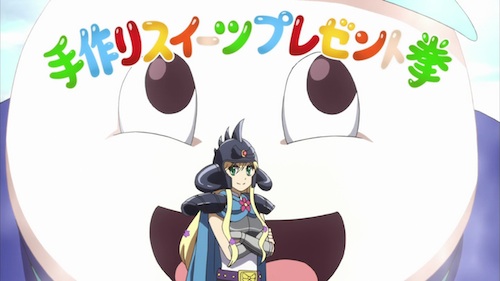
A comedy/adventure anime about a phantom thief named Joker and his bumbling ninja sidekick, Mysterious Joker (also known simply as Joker) is one of many anime derived from the Arsene Lupin-inspired archetype. In fact, this anime began the same season as a similar show, Magic Kaito 1412, and in that respect Mysterious Joker initially seems pretty unremarkable. Having watched the first 4 episodes, however, I noticed a couple of interesting qualities about the series. First, is that the visual designs of its characters are really indicative of a comics lineage that gets somewhat less attention from English-speaking audiences. Second, is that each episode has been better than the last.

mysteriousjoker-v11

In regards to the first point, I’m referring to the fact that Mysterious Joker was originally a children’s manga. However, when people talk about a category like “shounen,” they probably think of series like Dragon Ball or Naruto. Though titles like those are indeed meant for children, what some might be unaware of is that there are also manga magazines dedicated to very young kids, and chief among them is Corocoro Comics. This is where Mysterious Joker (created by Takahashi Hideyasu) comes from, and while the anime cleans up the look of the characters for consistency (generally a must when it comes to commercial animation), their appearances remain colorful and bombastic, with large facial features beyond even what people typically expect out of anime.

The reason why I bring all of this up is that I think it can make Mysterious Joker feel somewhat odd even for those who are accustomed to most other anime that are targeted towards children, as many of them, even if they do not expect an additional older readership, have qualities that almost inherently appeal to a roughly 15-21 demographic. This is not to say that Mysterious Joker is a show that can only be enjoyed by kids, as it can be quite clever in how its mysteries and puzzles play out, and the humor is delightfully crass at times without being crude, but it requires on some level an acknowledgement that it is indeed a kids’ show and that older viewers may not even be taken into consideration. I think this can be a sticking point for a lot of anime fans, particularly teenagers, and so enjoying Mysterious Joker, even on a basic level, requires something of an open mind.

mysteriousjoker-diamond-small

As for the second point, which is about how the show seems to improve with every episode, it’s as if each episode adds a bit more to the story and the world of its characters, and motivates viewers to keep watching. I originally planned on stopping at Episode 3, but then saw the reveal of a female rival phantom thief, which compelled me to see how that turns out. Episode 4 doesn’t feature her in any way, but it explores the friendly rivalry between the main character and another established in the previous episode, and in doing so gives even more reason to keep watching.

mysteriousjoker-jokerspade-small

I looked up the staff for Mysterious Joker and was surprised to see that Satou Dai of all people is responsible for series composition. While I can’t say how much of the story’s quality comes from the original manga and how much Satou himself is a factor, from my experience with his work I think you get a true sense of what it means to be responsible for series composition. Eureka Seven, another show of his, builds upon itself beautifully. Satou wasn’t around for the sequel, Eureka Seven AO, and it really shows. A more relevant work of his Battle Spirits: Shounen Toppa Bashin, which took the humble card game anime and made it into something more substantial and mature, yet still very attuned to its young audience. While I’ve not seen all of Mysterious Joker, I would not be surprised if it ends up developing in a similar way.


We Don’t Need No Stinkin’ Holograms (At Least Not All the Time): Voca Nico Night

This post was sponsored by Johnny Trovato. If you’re interested in submitting topics for the blog, or just like my writing and want to be a patron of Ogiue Maniax, check out my Patreon.

As part of my Patreon rewards, I was recently asked to write about “Voca Nico Night,” a series of concerts celebrating Vocaloid music broadcasted over the Japanese streaming site Nico Nico Douga. This topic is somewhat outside of my normal purview, as I will admit to not being especially knowledgeable about Vocaloids or the scene surrounding them (I enjoy the music and recognize the characters but would not call myself a devoted Vocaloid fan), but as I watched recordings of Voca Nico Night I found that the performances seen at Voca Nico Night can be viewed as a reminder that, at the end of the day, talented human creators are an integral part of the success of Vocaloids and the music that is created using them.

The story of how virtual idol Hatsune Miku became an international sensation is the kind of tale that can cause some to proclaim the green-haired, leek-twirling, robot-voiced “singer” as the sign of a glorious future, and others to describe her as the death of music. For years the music company Yamaha had put out a voice synthesis program, but with some improvements to the software and the use of a cute girl in chic, futuristic clothing, things changed. Suddenly it was embraced by composers, musicians, music enthusiasts, artists, and writers both amateur and professional, and you can find countless examples of Vocaloid music, art, and more on sites such as Youtube, Pixiv, and Nico Nico Douga.

All of this has culminated in Vocaloid live concerts, where holographic projections of the Vocaloids sing and dance as live crowds cheer them on. This presents a fascinating contrast in the “life” of the Vocaloid. At the same time that Miku and the others become more “real”, their artificiality becomes even more pronounced. After all, even if she were to be brought into reality, Miku still has the appearance of an anime character, and that stylization and abstraction cannot be divorced from her even they’re re-drawn and individualized by various creators.

This can be viewed as a strength, as Miku’s self, constructed from the effort and desires of millions, makes no illusions about the synthesized elements of her music (as opposed to the auto-tuning that regularly occurs in popular music these days), but for those who believe that music comes from the soul, that way of thinking is certainly difficult to swallow. While I’m more of the former opinion, the latter I think is something worth keeping in mind.

This is where I think Voca Nico Night really shines, because without the expensive holograms, without the explicit desire to see Hatsune Miku or Megurine Luka or the Kagamine Twins, what’s left are the DJs, the musicians, the performers at center-stage, engaging with their audience both online and in the flesh. You can still hear the distinctly robotic tones of the Vocaloids, but their images are not taking all of the attention. Instead, the Vocaloids’ role as tools for producing music comes to the forefront, and while talking about the “functionality” of an actual musician would be crass and unfair, the origins of the Vocaloids means that they can be as “useful” or as “soulful” as one needs them to be. Voca Nico Night exists somewhat opposite the live concerts that get all of the attention, and while I hesitate to use a “yin-yang metaphor,” I do think that having both is for the better.

In many ways it reminded me of the times I’ve attended chiptunes concerts (another scene where I have interest but cannot call myself a true fan). Like the Vocaloid scene, chiptunes creators and fans embrace a type of music often associated historically with a visual component that arguably puts less emphasis on the music or the musicians (video games in the case of chiptunes), but people who love chiptunes use concerts to show their appreciation and their talents outside of what is typically expected out of a “performance.” I have to wonder if Vocaloid concerts and the like are at an intersection between the rock concert where band members are sometimes viewed as gods, the orchestra where the relative significance of the individual musicians versus the composers’ original scores can be argued, and the club where a DJ combines beats and melodies together to form something new.

New Requests and (Writing) Desires Fulfilled: Ogiue Maniax Status Update for May 2015

This month I’m happy to say that the Ogiue Maniax Patreon is currently at almost $100, thanks to my generous patrons both new and old. Even getting close to the three-digit mark is kind of like a dream, and I hope to continue to provide interesting content for my readers.

This past month, I’ve gotten around to making a number of posts I’ve been planning for a while, most notably my review of the fujoshi friendship manga Fujoshissu!, my first look at DLC character Mewtwo in Super Smash Bros. for Nintendo 3DS & Wii U, and my review of the anime about anime, SHIROBAKO. In the case Fujoshissu! I’d been anticipating writing the review of years.

This month’s special Patreon sponsors are:

Ko Ransom

Alex

Johnny Trovato

anonymous (not Capital A “Anonymous”)

One of my contributors wanted to remain anonymous, but because they fulfilled the “Decide My Fate” tier, I wanted to mention them as I am writing a special post this month. As always, if you’d like to request a topic for me to write, you can pledge $30 or more to my Patreon.  If you don’t want to or can’t contribute that much every month, you can always change the amount to something lower, or force a maximum limit on how much you give.

For this month, I’d like to ask what people want to see out of my rewards and goals. I understand that my goals and sponsor rewards aren’t exactly world-shattering, and while I’m certainly not willing to sell myself out, I’m curious as to what people would like to see. Perhaps Skype conversations once a week on any topic? Post requests with unique twists? Drawing requests? I’m not sure if I’d be able to do everything, but I’d like to at least offer more.

In terms of milestones, I’m open to suggestions. How would people feel about a tongue-in-cheek negative review of Genshiken and/or the character review of Ogiue?

The 2020 Tokyo Olympics, Otaku Culture, and the Specter of Censorship

This post was sponsored by Johnny Trovato. If you’re interested in submitting topics for the blog, or just like my writing and want to sponsor Ogiue Maniax, check out my Patreon.

The 1964 Tokyo Olympics are considered to be one of the most significant moments in Japanese history in terms of symbolism. Having lost World War II a couple of decades prior, and having experienced military occupation by the US as a result, the Olympics were an opportunity to show the world that Japan had gotten back on its feet and climbed out of poverty. One of symbols of this transformation is the famous bullet train, which came into service in time for the Tokyo Olympics.

It’s no surprise then that the 2020 Tokyo Summer Olympics are kind of a big deal. While Japan no longer has issues with proving itself to be a first-world country even in a decades-long economic recession, the government still wants to further its integration in international economy, culture, and politics. The subject of 3.11 will also still be relevant, and if Japan has not “proven” to the world that they have managed to overcome that disaster by 2020, they will certainly assert it by then. However, one particularly large and visible target for cleanup is Japan’s otaku culture, and they’ve already begun their move.

As I’ve learned from a series of public lectures at Temple University’s Japan Campus (thanks to Veef for the link), one of their targets is anime and manga, given their focus on using Japanese pop culture as a form of “soft power” over the past decade. As the Tokyo Olympics get closer, just the fact that the image of Japan as a haven for illegal pornography still persists to some degree means that the Japanese government, or perhaps groups trying to influence the government, will be pushing for lasting change on what can and cannot be depicted in anime and manga. This has a very likely chance of affecting otaku culture in Japan, though the degree to which these changes will last depends on how much creators and supporters of anime and manga can push back.

Any government will naturally want to present itself and what it represents in the best light possible, though keep in mind this does not automatically mean censorship; it is possible for such behavior to only affect media that comes from the government itself. However, because Cool Japan is government-backed, this can create a contradiction. Namely, what has attracted people to anime and manga culture in the first place has been its willingness to be subversive, degenerative, and controversial, both in the context of other cultures and in Japan. Concerns over anime being not just pornography but child pornography in the US and Canada are nothing new at this point, and more recently in Japan has passed the Tokyo Metropolitan Ordinance Regarding the Healthy Development of Youths.

I think one possible scenario is that the worlds of doujinshi and industry works will separate a bit more, maybe regress back to how it was a few decades ago. These days Comic Market is a big deal for both amateurs and professionals, with fan parodies being sold right next to videos displaying promos for the latest upcoming anime. A lot of names working professionally, including Satou Shouji (Highschool of the Dead, Triage X) and Naruco Hanaharu (Gargantia on the Verdurous Planet, Kamichu!) are artists who not only work in the (relatively) mainstream industry but also still produce both professional erotic manga and erotic doujinshi. While I don’t think many creators will go away, they might very well have to pick what side of the die they fall on.

Censorship levels tend to ebb and flow, and are even a bit hard to control even as laws exist in the books. While artist Suwa Yuuji got in serious trouble in the early 2000s for publishing Misshitsu, an erotic manga that was deemed insufficiently censored, Frederik Schodt, in his classic book Manga! Manga! The World of Japanese Comics, explains how Japanese artists in the 1970s and 80s got around the censorship of genitalia through the use of creative visual metaphors through very “trains going through tunnels”-type affairs. Even the use of mosaics in Japanese pornography has changed over the years to be less prominent. Artists find ways. As somewhat of an aside I do think it’s interesting that the series Denkigai no Honya-san features a government censor as a character who is also a fujoshi.

However, although I believe that manga creators are imaginative enough to find loopholes, I think what we’ll see is a serious effort to keep things from reaching this level on the part of the industry itself and otaku as well. In many ways, this situation goes well beyond the subjects of anime, manga, games, and otaku because Japan has a very real history with censorship.

Leading up to and during World War II, dissenters could get arrested or even killed for publishing material that was seen as unfavorable to the Japanese government. This has of course changed, but just as the memory of the war continues to be an influence on the 2020 Olympics due to the connection to the 1964 Olympics and the role it had in showing how Japan had “moved on,” so too does has the danger of censorship remained in the culture of Japan.

While this might seem to contradict the fact that Japanese pornography is indeed censored, that sort of thing is often just lip-service that some take more seriously than others. After all, unlike other countries where pornography is banned, this is an adjustment to the work itself and assumes that making things less visible also draws less attention to them. There’s a strange relationship between forbidding ideas and forbidding images, because at some point one transforms into the other, and with anime and manga we’re seeing one arena in which this ambiguity comes to the forefront. This is why people from manga creators Takemiya Keiko (Toward the Terra) and Akamatsu Ken (UQ Holder) to the maids at the maid cafe Schatzkiste have discussed the subject of censorship and what it can mean.

In the end I can’t predict what will become of otaku culture, but I think that we’ll see that it’s not as passive as is often assumed. People will fight for their right to consume and create the anime and manga that they want, and it will certainly not be a sad joke.

Up and at Them: Ogiue Maniax Status Update for March 2015

This past month I lost one Patreon sponsor while gaining another. While in business this might be called stagnation, I’m actually very grateful that so many of my patrons have decided to continue to stick with me. Of course I can’t hit it out of the park for everyone all the time, so I’m thankful for even one-time contributors.

Speaking of thanks, shoutouts to the following fine folks for being especially awesome patrons.

Ko Ransom

Alex

Johnny Trovato

There are also a few others, but they’ve chosen to remain anonymous, and I can appreciate that.

Last month’s most popular post was Smash Bros. vs Traditional Fighters and What Lies at the Core of Fighting Games, where I wrote about different philosophies concerning simplicity vs. complexity between different fighting game communities. Part of the reason it got so many hits is that I posted it to Reddit myself, but I do think it’s some of my better work. I know I’m more of an anime and manga blogger, but I do have interest in video games and other things as well, and I hope, even if you’re not quite into everything I enjoy, that I can at least make you think.

A few questions for my readers to end off:

1) What kinds of rewards do you think would be interesting for Patreon sponsors of Ogiue Maniax?

2) What do you think of review posts that cover more of the middle point of an anime as it’s airing, as opposed to ones that wait until the very end? They kind of serve two different functions, with the former being more “in-the-moment,” and the latter being more retrospective. I’m aware that some anime fans like to keep up with the new season as much as possible, while others prefer to wait and build up a back catalog, and I’m curious as to which type reads Ogiue Maniax more.

It Just Works Better: Tantei Opera Milky Holmes TD

This post was sponsored by Johnny Trovato. If you’re interested in submitting topics for me to write about, or just like my writing and want to sponsor me, check out my Patreon.

milkyholmestd-milkyholmes

The original Tantei Opera Milky Holmes is an anime I viewed as largely a disappointment. Ostensibly about a group of cute female detectives with superpowers, the premise is more window dressing for moe comedy and reference humor. That combination can be okay, but in Milky Holmes the jokes are very hit or miss (mostly the latter). The majority tend to be rather one-dimensional (That’s from that anime! Haha!), though every so often there would be a truly impressive gag. Case in point, I fondly remember the “Baritsu” gag, which spent an entire episode setting up the name of a semi-fictional martial art found in the Sherlock Holmes novels in order to deliver a pun based on the climax of Laputa: Castle in the Sky. However, because the show felt so flimsy and the humor fell flat so often, when it came to the next one, Futari wa Milky Holmes, I felt little need or desire to check it out even if there were some brighter moments.

I’ll be honest when I say that, if it weren’t for my Patreon sponsor Johnny Trovato, I probably would not have given the franchise a second look. As wide as my tastes are in anime, and as willing as I am to give shows a second chance, I had ignored it in favor of other current series. That’s why I was rather surprised to find that the third and latest anime, Tantei Opera Milky Holmes TD, is pretty much an improvement all around compared to its original predecessor.

milkyholmestd-jojo

While the humor continues to be a mixed bag of weak, one-note references and stronger, more developed jokes, what makes Milky Holmes TD work better is that its story provides just enough stability that the anime doesn’t live or die by its gags alone. The four main characters, Sherlock, Nero, Cordelia, and Hercule (all named after famous fictional detectives), must solve a rather bizarre missing “persons” case. An idol, whose songs are powered by fairies that have been a part of her since birth, have gone missing, and nobody knows who is responsible. What makes this mystery even more difficult is that the fairies end up in the bodies of people who are unassociated with the original crime, and so the girls of Milky Holmes work towards finding them one by one, with the ultimate goal being to find the original culprit. Though not much actual detective work goes into the series, it’s enough to get a sense of progress from one episode to the next, and to inspire a viewer to feel invested.

Essentially, as the girls find each of the fairies, there is this general forward movement where they move one step closer to accomplishing something. In contrast, although the first anime starts off somewhat similarly with the Milky Holmes girls themselves losing their powers and by extension their positions as the best detectives in school, that storyline doesn’t go anywhere until the last episode (which admittedly was an enjoyable finale). I doubt that existing fans of Milky Holmes care too much for that sort of thing, at least within the context of Milky Holmes itself, but I think it gives an “in” for those who might otherwise pass it up. It might not seem that significant, but I believe this is the sort of thing that can expand a franchise’s fanbase, if only a little.

milkyholmestd-raohmarshmallow

Speaking of abilities and reputation, I like the fact that the Milky Holmes girls are re-introduced in Milky Holmes TD with a kind of reverence. I think it’s meant to show just how far the Milky Holmes media franchise has come, and that while they were “rookies” of sorts in the original, now they’re back and better than ever. Also, because they have their powers and at least try to make use of them, you can believe that they’ve actually had past success in helping others out. It’s a fine line, I think, because it’s not like the girls show powerful deductive reasoning, and for the most part that is barely even a consideration in Milky Holmes. However, having capable yet humorously hopeless characters appeals to me more than just having them be all but useless.

From my perspective, you can more than easily skip the original series and go straight to Tantei Opera Milky Holmes TD. It certainly isn’t for everyone, but I think it stands a better chance of drawing in an audience beyond those who think “cute girls and anime references” are enough content. Now if they start to better utilize their detective and phantom thief motifs better, then it’ll really turn some heads.

PS: Akechi is the best character.milkyholmestd-akechi

A New Banner! Ogiue Maniax Status Update for February 2015

It’s been a little under a month since I’ve began my Patreon, and I’ve been very pleasantly surprised to see so many people interested in Ogiue Maniax.

I’d like to thank the following patrons for their support:

Ko Ransom

Alex

Johnny Trovato (don’t worry, your patreon reward post is on the way!)

In all honestly, I thought I would receive $10 a month tops, and it’s now six times that amount. This means a new banner for the blog, which hasn’t been changed since Ogiue Maniax began in 2007.

I designed and drew the whole thing myself. You can see it above now, but just in case it ever changes, I’ve also included it below, as well as the original banner:

ogiuemaniax-50banner61.png

2015-present

ogiuemaniax-banner1j.png

2007-2015

I hope that I can continue to show some good work that will make you think, laugh, and maybe sometimes groan.

Finally, I’d like to ask a question to everyone. I recently posted a translation of an article by Japanese blogger Tamagomago. Do people want to see more translations, at the possible expense of other content?

Ogiue Maniax on Patreon

Ogiue Maniax is a part of my life. Over the past 7+ years, I like to think that I’ve made a reputation for myself as consistently providing insightful commentary on anime and manga. I’ve never tried to monetize this blog, but am trying something out with a site called Patreon.

Patreon is sort of like Kickstarter, except rather than donating one time towards a singular goal, you would essentially be sponsoring me every month as a way to show your appreciation. You can give as much or as little as you want, and you can stop at any time or even set an upper limit in case you’re worried about spending money you don’t have. I also have some rewards for those who would like to contribute more, including the chance to tell me what to write about.

If you’re interested, head on over to my Patreon and take a look.

I want to stress that Ogiue Maniax will continue to be free. I genuinely love exploring and analyzing Japanese popular media, and that won’t ever stop.