“The Fantastic Four: First Steps” Is a Move in the Right Direction

Adapting the Fantastic Four to film has long been a tricky proposition. The characters are neither the biggest nor the most iconic, yet they are meant to stand tall as titans of superhero history because they are the faces that essentially launched Marvel Comics as we know it. Indeed there have been films in the past, but for one reason or another, they don’t have the most stellar reputations. 

The Fantastic Four: First Steps is the latest attempt, and on top of the inherent challenges described above, it’s also had to contend with Marvel Cinematic Universe fatigue that has built up in its audience ever since Avengers: Endgame—a fatigue I have keenly felt myself. I think what ultimately brought me to watch this is 1) I really wanted to see what a Fantastic Four movie looks like in an era when superheroes have actually become mainstream instead of trying to cater to skeptics, and 2) the 1960s retro setting seemed interesting. In the end, I came out of the theater feeling that this was definitely a step in the right direction for Marvel, but that it still suffers from some of the issues that have plagued its releases for the past five years. 

The film takes place in a 1960s New York City in a universe different from the main timeline, where the Fantastic Four are a beloved superhero team. Reed Richards, aka Mister Fantastic, is a phenomenally brilliant scientist and can stretch himself like rubber. His wife, Sue Storm, is the Invisible Woman, able to cloak herself and others, as well as create invisible force fields. Johnny Storm, Sue’s younger brother, is known as the Human Torch. Ben Grimm is the Thing, a physical powerhouse with rock-like skin. They’re treated as celebrities for their contributions to science and their protection of NYC from villains of all stripes. However, when a threat from beyond in the form of the world-devouring Galactus tries to make them choose between family and the rest of the world, the four have their bonds tested both with one another and the very people they protect.

One of the things that made the Fantastic Four such a milestone in superhero history was the complexity of their relationships. While they were very close, there was also a good deal of interpersonal tension. I find that this movie does a really solid job of portraying this kind of dysfunction in a way that doesn’t feel quaint or two-dimensional. Reed, for example, comes across as someone whose immense genius can be alienating at times for those he loves, and his behavior makes him seem like he might be somewhere on the autism spectrum. Sue has to still give it her all as a member of this elite team despite the challenges that come with pregnancy, highlighting all the extra work women have to do. Johnny is something of a jock, but the unintended dismissal of him as a thinking human being clearly bothers him. Grimm takes his appearance in relative stride, but the guilt Reed feels about failing to properly shield his loved ones from those transformative cosmic rays colors their interactions.

Speaking of Reed and Sue’s child, First Steps is definitely a play on his inclusion. It’s also surprising that they decided to take two big storylines from two very different periods in Fantastic Four history and combine them together, but it works pretty well. However, it also feels like they’re trying to speedrun the Fantastic Four’s story to get them ready for the next big crossover. That pace is also part of what I consider to be the ongoing flaws of the Marvel Cinematic Universe—namely the need to try to cram and fit everything together for the Next Event—alongside some really awkward acting and action that seems to be the result of too many green-screen shenanigans.

I normally don’t care about the box office (and I still don’t), but it’s been news that Superman kind of ate The Fantastic Four’s lunch. While I do think Superman is the better film and carries the more powerful and relevant message overall, the two works also have a great deal of synergy. They emphasize loving family as well as treating humanity as family, and pushing back against those who want to force us into false dichotomies meant to divide us and make us suffer under bizarre and dehumanizing ultimatums. While it might seem a bit redundant, I think we need all the voices we can right now to fight the increasing levels of hate and fascism that we’re seeing.
I, Too, Think Highly of the 2025 Superman Movie

Since 2021, I’ve had superhero movie fatigue. I was tired of Disney’s constant attempt to force us to watch nothing but Marvel, and the way DC films trafficked in the edgy. There were definitely some gems during this time, but I could find myself losing interest. Even long after the height of the COVID-19 pandemic, I hadn’t seen a superhero movie in the theaters in a long time.

That changed with James Gunn’s Superman. As a fan of Gunn’s Guardians of the Galaxy movies, I had a degree of faith that he would make something at least entertaining. But much like another recent box office and critical success, Sinners, I started seeing comments online from happy viewers. The buzz (both positive and negative) convinced me to watch it right away rather than wait for streaming.

From jump, the 2025 Superman stands out for not being an origin story despite acting as a franchise reboot. A quick and basic text exposition catches the audience up to an established Superman in the middle of his latest peril, and the story assumes that even if you don’t already know who the Last Son of Krypton is, you’ll soon understand what he’s all about: a man of godlike power who nevertheless pushes his own limits out of compassion for his fellow living beings.

Gunn’s Superman stands in pleasant contrast to Zack Snyder’s Man of Steel, and I say that as someone who thought well of the latter. While I understand the complaints about Clark killing or allowing innocent people to be harmed when that goes against his whole ethos, I think both Gunn and Snyder emphasize a similar point: Despite what people assume, it’s actually not easy to be Superman. The difference is that Snyder’s version experiences more tragedy, has less experience, and fights by himself against a superior opponent. Gunn’s iteration benefits from having a community, and I think there’s a powerful message there about how even Superman can’t go it alone when it comes to making the world a better place for all.

This Superman also bucks the trends of trying to make superhero films more palatable to a presumed audience skeptical of comics. Instead, it embraces the more absurd elements that have emerged over many decades, whether it’s Silver Age shenanigans or the irony of the 1980s and 1990s. Along with the message about how doing good doesn’t necessarily come easily but you do it anyway, everything and it communicates the idea that superheroes (and human beings) have room to be both silly and earnest. 

At the same time, this film does anything but play it safe. One of the major antagonistic forces in the story is a country supported by the US government that aims to take over a neighboring country through military force and conspiracy, and the parallels to that Palestine situation (and to a degree Ukraine) are hard to avoid. Superman’s simple refrain when told to stay out of it is simple yet profound: “People are dying!!” Whatever complexities undergird this situation, the reality of starving and shooting at defenseless civilians, especially children, is hard to ignore.

The 2025 Superman dares to be a ray of hope in a bleak world, breathing new life into one of the US’s most well known fictional characters. It shows that a movie doesn’t have to be all serious business to have a serious message, and that valuing life and humanity is anything but corny. 

Back to Basics: The Blue Beetle Film

On a whim, I decided to watch the recent superhero movie, Blue Beetle. I’ve been feeling a little burned out by the Marvel Cinematic Universe, so I figured I’d try something from DC. It also stars Xolo Maridueña (who I’ve enjoyed in Cobra Kai) as the main hero, Jaime Reyes.

The basic structure of the movie is standard hero-origin fare, but at the very least, it ends up being better than a lot of the recent Marvel stuff. I think where Blue Beetle succeeds (and where the MCU increasingly fails) is that it feels very human and doesn’t get lost in the weeds of a “superhero universe” or its tropes. In the case of Blue Beetle, the emphasis on Jaime’s Latin American background is what holds the entire film together. 

Jaime’s family is Mexican, and they are shaped by both the struggles and triumphs they’ve had to face making a life in the US, ranging from some members being undocumented immigrants, to enduring years of backbreaking labor, to a rather surprising detail about his doting old grandma. Blue Beetle asks how a person like Jaime, the very first member of his family to graduate from college, gains a lot of his strength from his upbringing and the values of his culture. The generational and cultural gap felt by Jaime as a first-generation American feels very authentic. And all through this, the story of the Reyes family delivers a complex message about what it’s like to aim for the American dream in an America that doesn’t see you as equal.

Blue Beetle isn’t spectacular, but it’s still a pretty entertaining feature with some solid legs. It frames the superhero aspects of its story through an exploration of a multigenerational immigrant experience, and manages to cross a finish line that many of its peers have been unable to reach.

The Real Diversity of Street Fighter 6 and Across the Spider-Verse

WARNING: SPOILERS FOR SPIDER-MAN: ACROSS THE SPIDER-VERSE (and I guess Street Fighter 6?)

I’ve had the pleasure lately of experiencing two of the finest works of media this year: Street Fighter 6 and Spider-Man: Across the Spider-Verse. Both are at the pinnacle of their respective genres (fighting games and superhero movies) and seem to draw all the right lessons from the past. But one thing both titles really have in common—and which I think is so indicative of their approach—is strong character designs that are profoundly respectful of their casts’ diversity in terms of culture, background, and circumstances. 

The idea of an international roster far predates both works and even their respective origin points, i.e. Street Fighter the arcade game and the Spider-Man comics. Often, these past portrayals end up being flawed, if well-intentioned. Be it a manga like Kinnikuman featuring heroic wrestlers built entirely on stereotypes or having the brilliant detective Charlie Chan played by an actor in yellowface, it’s historically a mixed bag. These instances frequently betray a lack of exposure to other cultures by ones that consider themselves the default.

SF6 and AtSV know that their audiences aren’t limited mainly to one ethnic group anymore, and either have people from more diverse cultures on staff, or at least people eager to listen to people from other groups. Both SF6 and AtSV had to meet the challenge of revamping many existing designs—the former because many returning characters are supposed to be older, and the latter because it draws from so many different portrayals of Spider-Man. In this regard, both succeed in spades.

Here are a few examples:

In SF6, Chun-Li’s update conveys through her mannerisms and outfit that she has matured while still being undoubtedly recognizable as the queen of fighting games. Her clothes draw directly from Chinese culture without bordering on parody, and some of her animations have been changed to draw from actual Chinese kung fu styles. Her new standing medium kick, for example, is actually the Separation Kick from tai chi.

Zangief still looks like a hulking wrestler, but they actually changed his body type. In previous games, Zangief has more of a body builder’s physique—extremely chiseled all around—but in SF6, he exchanges that appearance for one with a bit more fat around his massive muscles. In other words, he looks more like he trains for practical strength, and the fact that the developers did this actually goes a decent way in diversifying the bodies in the game while remaining true to Zangief’s character.

Similarly, AtSV had Pavitr Prabhakar, an Indian Spider-Man whose costume feel less like symbols of India added to Spider-Man and more like what a Spider-themed superhero might look like if they grew organically out of Indian culture. Moreover, the writers of AtSV actually consulted with Indian and Indian American writers as well as Pavitr’s voice actor, Karan Soni, because they wanted greater cultural specificity and authenticity.

And even with all of this consideration for ethnicity, gender, sexuality, etc., all these characters are attractive in their own right. People like to see good-looking characters, but there’s no one standard of beauty. Both creative teams seem to understand that.  

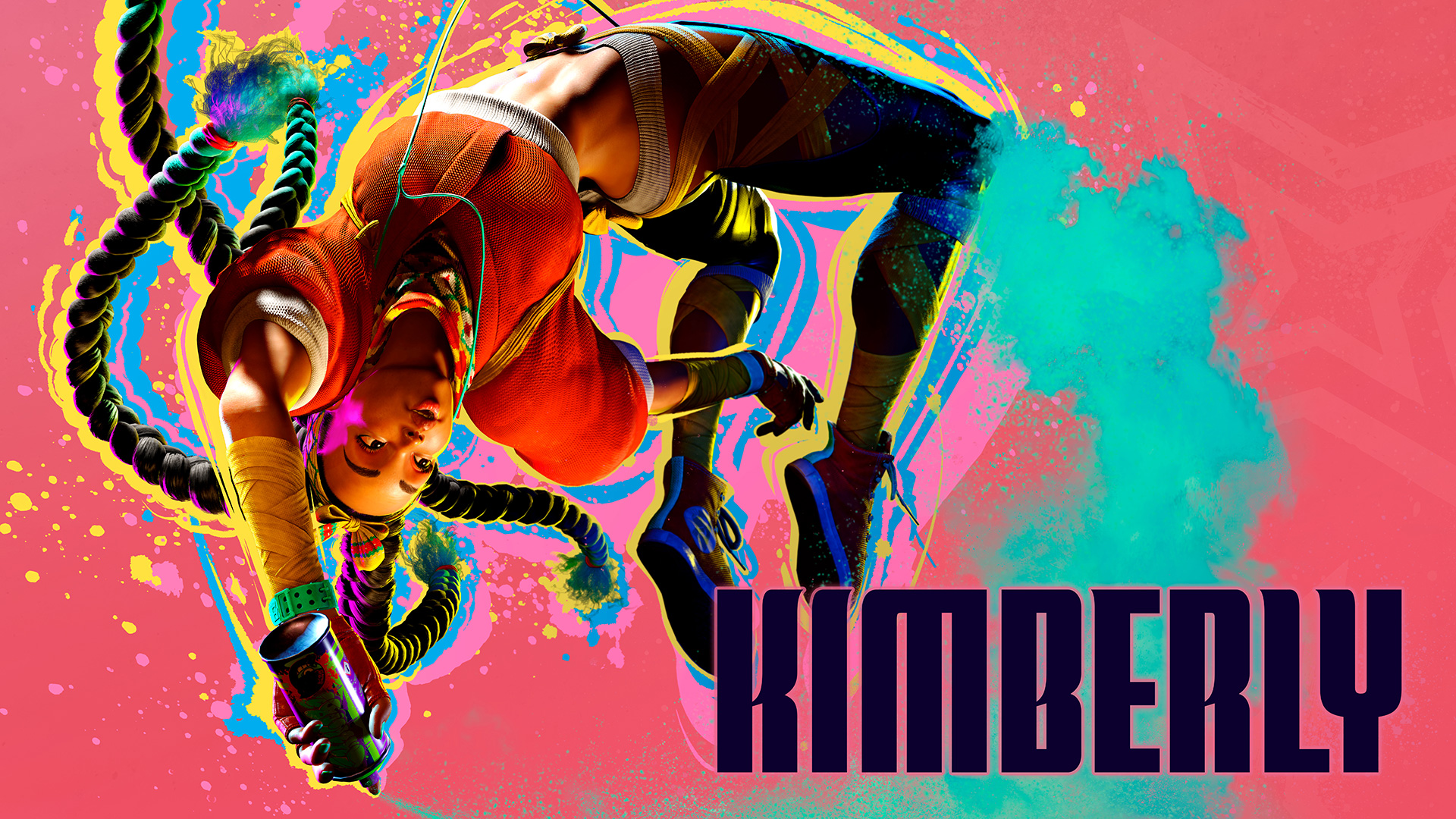
A major factor in both works’ success is starting from the understanding that not just one group of people are going to enjoy it. Kimberly Jackson in SF6 is black and one of the three most prominent heroes, and the only one with a story that ties directly to the main antagonist. The protagonist of the Spider-Verse movies, Miles Morales, is Black and Puerto Rican—and he reflects many of the aspirations and anxieties of those who grow up in non-White households in the US.

It can be easy to forget that the first Miles Morales film, Into the Spider-Verse, came out in 2018—before the murder of George Floyd and the increased mainstream awareness of the deeply rooted problems with police in the US. In 2023, however, I couldn’t help but notice the views expressed on that topic in AtSV. Both Miles and another character, the Spider-Woman Gwen Stacy, have dads who are on the force. They’re officers of the law who honor and respect the people, and having them be positive role models is part of the Spider-Man lore, but making the police and unalloyed good would never be compatible with the lived experience of so many black and brown people, not to mention other groups.

At one point, Stacy (a white girl) outright states that the reason her dad took on the role of captain is because he would inevitably be replaced by someone worse than him. In other words, contrary to the idea that cops like the one who murdered George Floyd are simply “bad apples,” it is the tree itself that is rotten, and the occasional good apple is the exception rather than the rule. While perhaps the film could have stated it more directly, it goes to show just how much AtSV is trying to express perspectives beyond what is comfortable. 

The greatest strength of Street Fighter 6 and Across the Spider-Verse is that both works come across as genuinely wanting to engage with as many cultures as possible from all sides. They’re not just paying lip service to the notion of diversity but actually making it happen in a satisfying way. I hope that both Capcom and Marvel continue to draw inspiration from the world in all its glory and shame, and in turn, encourage others to do the same.

The Kids Are All Right—Batman and Superman: Battle of the Super Sons

Recently, I did something I haven’t done in a long time: I watched an in-flight movie. I used to love using my time traveling to check out the new and unfamiliar, and it was refreshing to experience that again. Given a short flight time, there was only so much I could fit in, and the movie I landed on was Batman and Superman: Battle of the Super Sons

Somewhat reflecting developments in DC Comics over the past few years, it’s an animated feature film about Superman’s son, Jon Kent, teaming up with Batman’s son, Damian Wayne. How this compares and contrasts with the comics is convoluted in ways I don’t fully understand myself, so I’m treating this mostly as a standalone thing. In that regard, it’s probably fine to watch on its own as long as you’re familiar with Superman and Batman in a general sense. Maybe the fact Robin (Damian) is a pint-sized assassin who calls Batman “father” might throw some people off.

The story: Jon thinks he’s a regular kid with boring parents who are both journalists. Soon, though, he discovers the truth about his dad, and his entire perspective changes. When the starfish-like alien conqueror Starro begins to take over the adult superheroes, it’s up to him and Damian, whom he befriends (?) after meeting Batman, to save the world.

There’s something about the past decade of fiction that has brought to the forefront the challenge of heroes having to raise their own children. While plenty of comparisons can be made between Jon and Son Gohan from Dragon Ball, I think it’s more apt to look at other works, like Boruto, the Star Wars sequel trilogy, and even Avatar: The Legend of Korra to some extent. The gap between the stories focused on the parents and those focused on the children can vary from a few years to many decades, but they all land in the same space, wherein the legacies of the old heroes still persist in the hearts of the fans. 

Because of this, portraying these adults as loving but flawed parents can be a tricky balancing act, and a common source of conflict in these stories is the struggle between maintaining one’s duty and being there for their kids. What’s more, these works are often meant to have the old good guys step out of the limelight and allow their kids to take center stage, which can create complicated feelings among fans.

In that regard, it’s actually kind of comforting to see the literal most perfect superhero, Superman, have trouble with this. If even the Last Son of Krypton has days where it’s hard to be a dad, then who wouldn’t? Sure, he’s ultimately the Best Dad Ever (and Lois an equally amazing mom in her own right), but Battle of the Super Sons successfully conveys the idea that we can have faith in the next generation to do things their way if we communicate to them the importance of love and justice. 

Transformative Ties: Shang-Chi and the Legend of the Ten Rings

Shang-Chi and the Legend of the Ten Rings has a tricky balancing act it strives to achieve. As the first Marvel film with an Asian protagonist as well as having a majority Asian cast and creative team, it must consider the audience in the US, the audience in Asia, and the Asian diaspora around the world that sits in between and among the first two. As an American of Asian descent myself, I can only speak to two of the three, but I found myself really connecting with the film and its characters’ struggles, while also enjoying it as a high-quality mainstream superhero action film.

Shang-Chi puts a heavy emphasis on family. I think it’s because family is such a common thread that connects Asia to its diaspora, and thus the most surefire way to have a story that resonates across the divides that exist between the two, and even between Asian cultures. It’s the relationships of Shang-Chi—between spouses, parents and children, siblings, and friends—that really spoke to me on a personal level.

My father, who I’m pretty sure is not a thousand-year-old magical conqueror, is nothing like Xu Wenwu (aka the Mandarin)—and I am certainly no Shang-Chi. However, the story of a person chafing against the upbringing his father tried to instill in him feels incredibly real, especially the fact that the characters’ emotions regarding these experiences is so complex. Shang-Chi was raised to be the ultimate deadly martial artist by Wenwu after losing Shang-Chi’s mother, and the situation basically forces Shang-Chi to run away from his home and his family. In a way, Shang-Chi is both the story of an immigrant trying to start a new life and one of someone who has to reconnect with his estranged past, and this makes the character capable of connecting to multiple generations of Asian viewers. 

The fight scenes are probably the best we’ve ever seen in the Marvel Cinematic Universe, drawing from a long history of martial arts movies. Their execution is what tells me that the creators have the utmost respect for the films that paved the way and the actors in them, as they’re easy to appreciate on both storytelling and choreography levels. Shang-Chi is supposed to be the “master of kung fu,” and actor Simu Liu makes for a strong performance. 

But as solid as Liu is in the role of Shang-Chi, I’m in agreement with virtually everyone who saw the film that Hong Kong legend Tony Leung stole the show. One might even say that it was a very good Shang-Chi film but a fantastic Mandarin film. Leung is so utterly convincing as a multifaceted antagonist with conflicting emotions and a deep sense of pain that it strikes right at the soul. A common criticism of the Marvel films is that the villains tend not to be terribly memorable, but Shang-Chi is practically the opposite. If there’s one thing that lingers in the mind after the film is over, it’s Leung’s Wenwu. Much like Mr. Freeze from Batman: The Animated Series, I wouldn’t be surprised if he has permanently influenced all future portrayals of the Mandarin even in the comics. In other words, we’re quite removed from the entertainingly bombastic yet still kind of offensive Mandarin from the 1990s arcade game Captain America & the Avengers.

Having Wenwu/the Mandarin as Shang-Chi’s father is a significant change from the source material, where his father was Fu Manchu, the face of the highly racist Yellow Peril portrayals in American media. But the Mandarin was not exactly free of that racist tinge, and the steps taken by the film and by Leung go an incredibly long way towards freeing that character—and by extension many of the Asian characters in Marvel—from the stereotypes that plague them. The film even pokes fun at the clumsy results of how the Iron Man films attempted to tie in the Mandarin’s character, and it’s Leung’s delivery of the US’s fear of a pale imitation of the real deal (i.e. himself) that makes this self-referential mockery feel less like a halfhearted apology and more like a genuine understanding of Asian culture. 

Shang-Chi also gives a lot of attention to the women portrayed in the film, and while the push to show them as equals to the men of the story can be somewhat hamfisted, it’s still appreciated. Key to this being more than a shallow “girl power” demonstration is the degrees of difference each female characters have in comparison to one another—things that either hint at or reflect specific aspects of how and where they were brought up, and how they see the world.  

Overall, Shang-Chi and the Legend of the Ten Rings truly feels to me like a film that tried its very best to be a respectful representation of an Asian hero that celebrates Asian culture without overly burdening it with the need to show everything. The very personal stories that unfold between Shang-Chi, Wenwu, Katie, and all the others already captures so much of the Asian/Asian diaspora experience that it makes everything feel satisfyingly real. This is ultimately what helps make Shang-Chi, a B-tier hero in terms of the Marvel pantheon, feel like a worthy equal to those who came before him.

Childhood Meets Adulthood: Guardians of the Galaxy Vol. 2

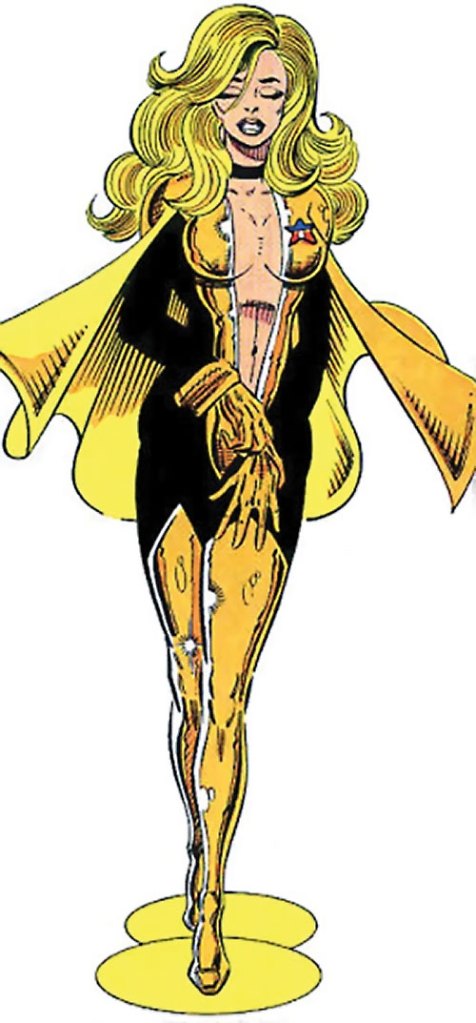
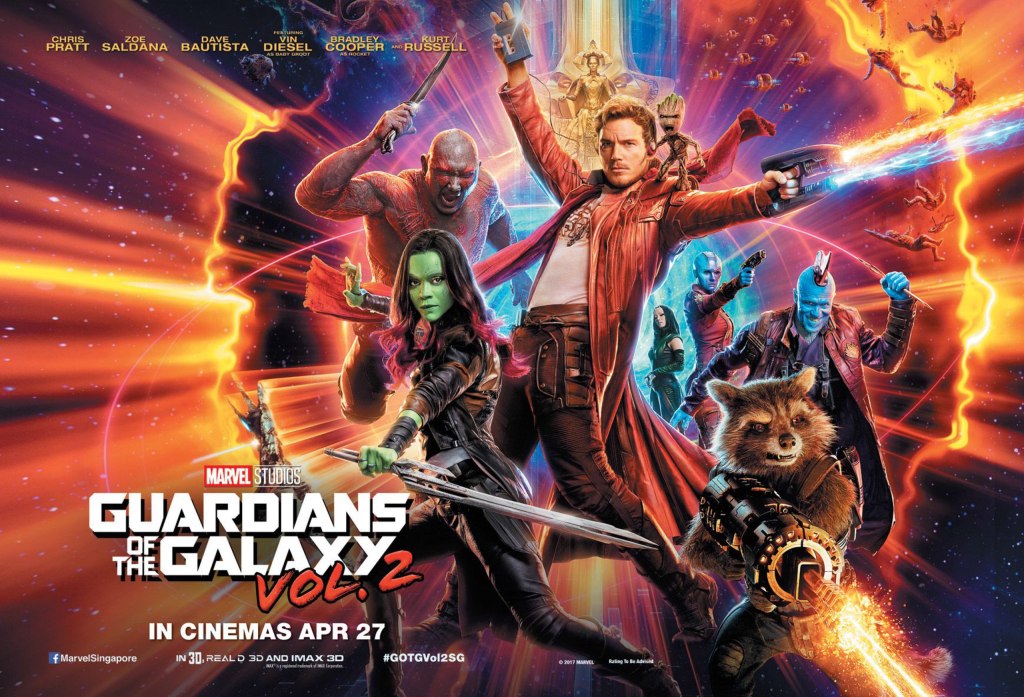
Watching the Guardians of the Galaxy films fills me with a mix of nostalgia, fondness, and appreciation. As a kid, I loved the 1990s comic series. I was amazed at how it explored the Marvel Universe in the 31st century, and I had a huge crush on the golden-clad Guardian known as Aleta (see below). While the films are based more on the 2008 Guardians of the Galaxy (starring Peter Quill and based in the present), I found both the newer comics and the films to be solid works that succeed in bringing action, levity, and even sprinklings of drama. However, because I feel a more personal connection to Guardians of the Galaxy, one aspect of the films that stands out greatly in my eyes is how different some of the characters are compared to their comics counterparts.

In the films, Yondu is a rough-around-the-edges mercenary with a telepathic connection to specially designed arrows. In the 90s comics, he was a highly religious member of a shamanistic alien race who used an actual bow and arrow. Stakar, played by Sylvester Stallone, is the tough-as-nails leader of the group to which Yondu belongs, the Ravagers. Comics Stakar is Starhawk, the One who Knows, a being of light whose cycle of death and rebirth traverses time. To say that these characters drastically different is an understatement. Even Taserface, the secondary antagonist of Guardians of the Galaxy Vol. 2 has a major change. While in the film Taserface states that his name is “metaphorical,” in the comics he can actually shoot tasers from his face. As someone who instantly recognized the name of Taserface as being one of the 90s Guardians‘ earliest villains, I felt just the slightest twinge of disappointment at a lack of face beams.

These changes are not necessarily bad. In the interest of making the Marvel Cinematic Universe more streamlined, the members of a cast as large as the one in Guardians of the Galaxy need to be unique and avoid overlapping roles. For some characters, this is simple. No one else is Groot, the giant tree alien. The gun-toting Rocket Raccoon is self-explanatory. Yet when we get to Dave Bautista’s portrayal of a powerful yet amusingly humorless Drax, that portrayal means Gamora, a character who is similar to Drax in the comics, finds herself in need of a new personality. Instead of a green Amazonian-type, Gamora is more a battle-hardened soldier. Elements of her Conan-esque “warrior speech” still exist, like when she refers to Knight Rider as a “magic boat,” but Gamora retains only about 50% of what she is in the comics, for better or worse.

Guardians of the Galaxy Vol. 2, like its predecessor, is a highly entertaining film that succeeds by being more fun than serious. However, whereas characters such as Captain America and Iron-Man are iconic figures in comics history that cannot be altered too extensively, the fact that Guardians of the Galaxy is a lesser, more obscure franchise (a description that may very well have changed thanks to the films) means its minor characters are fair game. I can’t help but wonder which classic Guardian will show up next and be someone completely different from what they were in the comics. This approach can lead to some great and memorable characters, but perhaps at the expense of losing the memory of the original.


Save

Save

Save