“The Fantastic Four: First Steps” Is a Move in the Right Direction

Adapting the Fantastic Four to film has long been a tricky proposition. The characters are neither the biggest nor the most iconic, yet they are meant to stand tall as titans of superhero history because they are the faces that essentially launched Marvel Comics as we know it. Indeed there have been films in the past, but for one reason or another, they don’t have the most stellar reputations. 

The Fantastic Four: First Steps is the latest attempt, and on top of the inherent challenges described above, it’s also had to contend with Marvel Cinematic Universe fatigue that has built up in its audience ever since Avengers: Endgame—a fatigue I have keenly felt myself. I think what ultimately brought me to watch this is 1) I really wanted to see what a Fantastic Four movie looks like in an era when superheroes have actually become mainstream instead of trying to cater to skeptics, and 2) the 1960s retro setting seemed interesting. In the end, I came out of the theater feeling that this was definitely a step in the right direction for Marvel, but that it still suffers from some of the issues that have plagued its releases for the past five years. 

The film takes place in a 1960s New York City in a universe different from the main timeline, where the Fantastic Four are a beloved superhero team. Reed Richards, aka Mister Fantastic, is a phenomenally brilliant scientist and can stretch himself like rubber. His wife, Sue Storm, is the Invisible Woman, able to cloak herself and others, as well as create invisible force fields. Johnny Storm, Sue’s younger brother, is known as the Human Torch. Ben Grimm is the Thing, a physical powerhouse with rock-like skin. They’re treated as celebrities for their contributions to science and their protection of NYC from villains of all stripes. However, when a threat from beyond in the form of the world-devouring Galactus tries to make them choose between family and the rest of the world, the four have their bonds tested both with one another and the very people they protect.

One of the things that made the Fantastic Four such a milestone in superhero history was the complexity of their relationships. While they were very close, there was also a good deal of interpersonal tension. I find that this movie does a really solid job of portraying this kind of dysfunction in a way that doesn’t feel quaint or two-dimensional. Reed, for example, comes across as someone whose immense genius can be alienating at times for those he loves, and his behavior makes him seem like he might be somewhere on the autism spectrum. Sue has to still give it her all as a member of this elite team despite the challenges that come with pregnancy, highlighting all the extra work women have to do. Johnny is something of a jock, but the unintended dismissal of him as a thinking human being clearly bothers him. Grimm takes his appearance in relative stride, but the guilt Reed feels about failing to properly shield his loved ones from those transformative cosmic rays colors their interactions.

Speaking of Reed and Sue’s child, First Steps is definitely a play on his inclusion. It’s also surprising that they decided to take two big storylines from two very different periods in Fantastic Four history and combine them together, but it works pretty well. However, it also feels like they’re trying to speedrun the Fantastic Four’s story to get them ready for the next big crossover. That pace is also part of what I consider to be the ongoing flaws of the Marvel Cinematic Universe—namely the need to try to cram and fit everything together for the Next Event—alongside some really awkward acting and action that seems to be the result of too many green-screen shenanigans.

I normally don’t care about the box office (and I still don’t), but it’s been news that Superman kind of ate The Fantastic Four’s lunch. While I do think Superman is the better film and carries the more powerful and relevant message overall, the two works also have a great deal of synergy. They emphasize loving family as well as treating humanity as family, and pushing back against those who want to force us into false dichotomies meant to divide us and make us suffer under bizarre and dehumanizing ultimatums. While it might seem a bit redundant, I think we need all the voices we can right now to fight the increasing levels of hate and fascism that we’re seeing.

I, Too, Think Highly of the 2025 Superman Movie

Since 2021, I’ve had superhero movie fatigue. I was tired of Disney’s constant attempt to force us to watch nothing but Marvel, and the way DC films trafficked in the edgy. There were definitely some gems during this time, but I could find myself losing interest. Even long after the height of the COVID-19 pandemic, I hadn’t seen a superhero movie in the theaters in a long time.

That changed with James Gunn’s Superman. As a fan of Gunn’s Guardians of the Galaxy movies, I had a degree of faith that he would make something at least entertaining. But much like another recent box office and critical success, Sinners, I started seeing comments online from happy viewers. The buzz (both positive and negative) convinced me to watch it right away rather than wait for streaming.

From jump, the 2025 Superman stands out for not being an origin story despite acting as a franchise reboot. A quick and basic text exposition catches the audience up to an established Superman in the middle of his latest peril, and the story assumes that even if you don’t already know who the Last Son of Krypton is, you’ll soon understand what he’s all about: a man of godlike power who nevertheless pushes his own limits out of compassion for his fellow living beings.

Gunn’s Superman stands in pleasant contrast to Zack Snyder’s Man of Steel, and I say that as someone who thought well of the latter. While I understand the complaints about Clark killing or allowing innocent people to be harmed when that goes against his whole ethos, I think both Gunn and Snyder emphasize a similar point: Despite what people assume, it’s actually not easy to be Superman. The difference is that Snyder’s version experiences more tragedy, has less experience, and fights by himself against a superior opponent. Gunn’s iteration benefits from having a community, and I think there’s a powerful message there about how even Superman can’t go it alone when it comes to making the world a better place for all.

This Superman also bucks the trends of trying to make superhero films more palatable to a presumed audience skeptical of comics. Instead, it embraces the more absurd elements that have emerged over many decades, whether it’s Silver Age shenanigans or the irony of the 1980s and 1990s. Along with the message about how doing good doesn’t necessarily come easily but you do it anyway, everything and it communicates the idea that superheroes (and human beings) have room to be both silly and earnest. 

At the same time, this film does anything but play it safe. One of the major antagonistic forces in the story is a country supported by the US government that aims to take over a neighboring country through military force and conspiracy, and the parallels to that Palestine situation (and to a degree Ukraine) are hard to avoid. Superman’s simple refrain when told to stay out of it is simple yet profound: “People are dying!!” Whatever complexities undergird this situation, the reality of starving and shooting at defenseless civilians, especially children, is hard to ignore.

The 2025 Superman dares to be a ray of hope in a bleak world, breathing new life into one of the US’s most well known fictional characters. It shows that a movie doesn’t have to be all serious business to have a serious message, and that valuing life and humanity is anything but corny. 

Deku and a Culture in Conflict: The End of My Hero Academia

My Hero Academia by Horikoshi Kohei is a manga that has stood out thanks to its gorgeous art, variety of memorable characters, and exploration on what it means to “do good” and “be a hero.” It ties together the popular genre of the shounen battle manga with the classic American trope of the superhero, and provides a simple but profound setup that evokes the best of both. Now, after 10 years, the series has concluded, and the reception to its ending seems to be rather mixed. While that is likely a case of “the loudest voices” in online discussion, it’s also a reflection of how MHA has long attracted a variety of readers with values that conflict a great deal.

Warning: Spoilers for the entirety of My Hero Academia

Plot and Circumstances

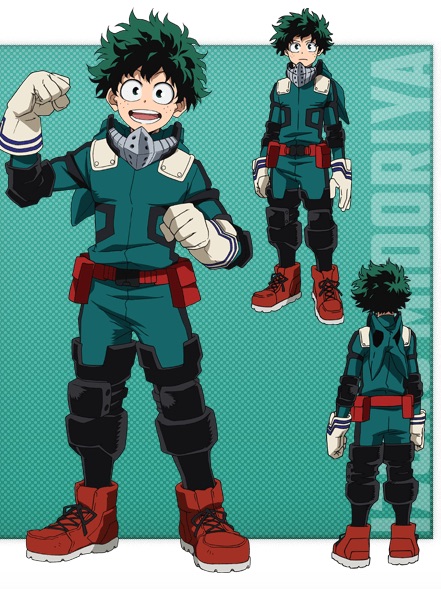
My Hero Academia is the story of a boy named Midoriya Izuku, also known as Deku. In a world where superhuman powers referred to “quirks” are commonplace, Deku dreams of becoming like his idol, the #1 hero All Might. Unfortunately, he discovered at a young age that he is entirely quirkless, all but dashing his hopes. But a chance encounter with All Might leads to the living legend transferring his power to Deku, making the boy the latest in a long line of individuals to carry a mysterious power called “One for All.” This sets Deku on a path towards entering UA Academy, Japan’s most prestigious school for aspiring heroes. Over the course of the series, Deku and his friends learn the ins and outs of being a hero, but also the fact that there are profound disagreements as to what that entails.The emergence of villains, including ones with ties all the way back to All Might’s prime years, adds a thread of history that connects past to present.

So much of MHA reflects the period and circumstances in which it ran. In 2014, titans of Shounen Jump like Naruto and Bleach were in their sunset years, and these series had helped popularize massive casts of uniquely powered characters through which readers can find their own favorites. MHA is cut from this cloth, with all of Deku’s friends and teachers providing a veritable smorgasbord of possibilities. Then there’s Deku himself, with his pure heart and humble desire to help others, who was one of the vanguards of a generation of “good boy” leads. And back when the series began, the Marvel superhero movies were truly a global phenomenon; I suspect that their cultural penetration in Japan is part of why readers gave MHA a chance. 

But a lot changes over the course of a decade. The Marvel Cinematic Universe has dragged on and suffered from all the problems that plagued the overly convoluted comics. Antiheroes never fell entirely out of fashion, and there has always been a contingent of readers who see Deku as boringly naive and someone who needs to learn how dark and difficult the world actually is. His rival Bakugo, a former friend turned bully, is hotheaded and violent, and one of those characters whom certain fans saw as the real star. 

A big question surrounding Bakugo’s popularity was the degree to which fans liked him because they saw him as someone who could change (particularly in regards to personal redemption for his terrible behavior towards Deku), and to what extent people liked him precisely because he’s an asshole. When the series then brings a more extreme version of this dynamic, the question of whether someone deserves forgiveness or a second chance becomes a lot more fraught: The hero Endeavor has a history as an abusive father, for instance, and the villain Shigaraki (responsible for many evils) is himself a product of generational trauma and manipulation. MHA seems to touch directly and indirectly on many cultural flashpoints of the past decade by virtue of being a series that 1) wants to portray a bunch of powerful and attractive guys and girls, 2) is very much centered around different ideas of hard work, camaraderie, and justice, and 3) is a long-running shounen series with lots of plot threads, which means pacing becomes an issue at some points.

The Ending

So when the final chapter came out, it was perhaps inevitable that the reaction would be mixed. There are too many different people with their own perspectives reading this series in their own ways. Even so, it still surprised me how much disappointment seemed to resonate through the fandom. Some interpreted his new life as a quirkless UA Academy teacher to be a bittersweet outcome. They saw it as unfair that a guy who saves the world gets little fanfare and legacy, especially because he loses his powers leading the charge to defeat the ultimate villain of the series, All-for-One. Even All-for-One apparently falls short as a major villain. Other criticismsI’ve seen include the lack of resolution for romantic shops, that outside of a brief period as a vigilantes, Deku never develops a “dark side,” and that having his old classmates develop a Batman/Iron Man–esque super suit for him is a cop-out ending.

Yet the ending is so appropriately Deku. It’s fitting that he would accomplish arguably the greatest feat his world has ever seen and then recede from the spotlight, only to be pulled back into it by the people whose lives he changed. Deku goes through a great many ordeals throughout the entire story, and while he learns that the world presents some complex moral quandaries, those tribulations also reinforce Deku’s inherently kind nature. He sacrifices All Might’s gift to him, One-for-All, to get through to his primary nemesis and rival, Shigaraki. He ultimately reconciles with a changed Bakugo, but not without taking many lumps in the process. In the aftermath of the final battle, he even encourages a villain to write a book about his perspective on why Shigaraki was the greatest, because Deku wants to hear the story he has to tell. And while Deku isn’t holding hands with Ochako (the #1 romantic prospect in the series) by the end, he does call her “his hero.” Even if they’re not officially together in the final chapter, they’re still only in their early 20s, with plenty of life ahead of them. 

It reminds me of the backlash against the ending of Gurren-Lagann, which was also a series where fans loved seeing the hero reach ever greater heights that all seemed to lead to a perfect happy ending, only for a slight twist at the end to break the tidal wave of endorphins the series had been generating at the end. I saw fans at the time its last episode aired express such anger and frustration at its ending, while missing the fact that the hero’s actions signify that the errors of past generations won’t be made by him.

Other Thoughts

I know that some of the problems were caused by questionable fan translations that made Deku seem a lot sadder than he actually was. But even taking all that into consideration, it’s strange to me that “teacher at UA Academy” is joked about as being some kind of perverse punishment. It allows Deku to apply one of his greatest strengths—his love of studying and analyzing quirks—in a way that connects to his inherent desire to help others. Deku’s humble nature is central to his being, and while I don’t wish to analyze the readers themselves, I can’t help but wonder how many people dream of being showered with praise for doing something great, and feel at odds with Deku’s values. If Deku has any great flaw, it’s his willingness to sacrifice himself at any moment, and even that is turned on its head by the fact that his friends found a way to make him a superhero again. 

It also juxtaposes him against All-for-One, who is ultimately shown to be a lifelong sociopath and the embodiment of selfishness. Speaking of whom, I can understand why readers might be disappointed that All-for-One turns out to have pretty uncomplicated motivations instead of those of a true mastermind, but I also think that contrast makes for an important point. For all his power and influence, he was ultimately no better than an emotionally stunted individual whose infamy and accomplishments masked an otherwise naked avarice. “Wasn’t he just a big baby in the end?” Yes, both figuratively and literally, and I can think of a couple real world examples who are exactly this way. The idea that great evil doesn’t need great motivation is deceptively simple.

Final Thoughts

With a series like My Hero Academia, it’s impossible to satisfy everyone who read it, especially because so many disparate groups came to this series. For some, it was a breath of fresh air in manga and comics. For others, it was their introduction to anime and manga. It was a mix of two of the world’s biggest genres with a few others thrown into the pot, and it went on for 10 years. Did it drag at times and leave some plot threads untied? For sure—that was almost inevitable. Yet I do feel that My Hero Academia successfully kept its core intact. There is growth, but growth doesn’t have to mean tossing away everything that made you who you are. For all the ups and downs, I think Horikoshi stuck the landing by remaining true to the hero he created.

Back to Basics: The Blue Beetle Film

On a whim, I decided to watch the recent superhero movie, Blue Beetle. I’ve been feeling a little burned out by the Marvel Cinematic Universe, so I figured I’d try something from DC. It also stars Xolo Maridueña (who I’ve enjoyed in Cobra Kai) as the main hero, Jaime Reyes.

The basic structure of the movie is standard hero-origin fare, but at the very least, it ends up being better than a lot of the recent Marvel stuff. I think where Blue Beetle succeeds (and where the MCU increasingly fails) is that it feels very human and doesn’t get lost in the weeds of a “superhero universe” or its tropes. In the case of Blue Beetle, the emphasis on Jaime’s Latin American background is what holds the entire film together. 

Jaime’s family is Mexican, and they are shaped by both the struggles and triumphs they’ve had to face making a life in the US, ranging from some members being undocumented immigrants, to enduring years of backbreaking labor, to a rather surprising detail about his doting old grandma. Blue Beetle asks how a person like Jaime, the very first member of his family to graduate from college, gains a lot of his strength from his upbringing and the values of his culture. The generational and cultural gap felt by Jaime as a first-generation American feels very authentic. And all through this, the story of the Reyes family delivers a complex message about what it’s like to aim for the American dream in an America that doesn’t see you as equal.

Blue Beetle isn’t spectacular, but it’s still a pretty entertaining feature with some solid legs. It frames the superhero aspects of its story through an exploration of a multigenerational immigrant experience, and manages to cross a finish line that many of its peers have been unable to reach.

The Real Diversity of Street Fighter 6 and Across the Spider-Verse

WARNING: SPOILERS FOR SPIDER-MAN: ACROSS THE SPIDER-VERSE (and I guess Street Fighter 6?)

I’ve had the pleasure lately of experiencing two of the finest works of media this year: Street Fighter 6 and Spider-Man: Across the Spider-Verse. Both are at the pinnacle of their respective genres (fighting games and superhero movies) and seem to draw all the right lessons from the past. But one thing both titles really have in common—and which I think is so indicative of their approach—is strong character designs that are profoundly respectful of their casts’ diversity in terms of culture, background, and circumstances. 

The idea of an international roster far predates both works and even their respective origin points, i.e. Street Fighter the arcade game and the Spider-Man comics. Often, these past portrayals end up being flawed, if well-intentioned. Be it a manga like Kinnikuman featuring heroic wrestlers built entirely on stereotypes or having the brilliant detective Charlie Chan played by an actor in yellowface, it’s historically a mixed bag. These instances frequently betray a lack of exposure to other cultures by ones that consider themselves the default.

SF6 and AtSV know that their audiences aren’t limited mainly to one ethnic group anymore, and either have people from more diverse cultures on staff, or at least people eager to listen to people from other groups. Both SF6 and AtSV had to meet the challenge of revamping many existing designs—the former because many returning characters are supposed to be older, and the latter because it draws from so many different portrayals of Spider-Man. In this regard, both succeed in spades.

Here are a few examples:

In SF6, Chun-Li’s update conveys through her mannerisms and outfit that she has matured while still being undoubtedly recognizable as the queen of fighting games. Her clothes draw directly from Chinese culture without bordering on parody, and some of her animations have been changed to draw from actual Chinese kung fu styles. Her new standing medium kick, for example, is actually the Separation Kick from tai chi.

Zangief still looks like a hulking wrestler, but they actually changed his body type. In previous games, Zangief has more of a body builder’s physique—extremely chiseled all around—but in SF6, he exchanges that appearance for one with a bit more fat around his massive muscles. In other words, he looks more like he trains for practical strength, and the fact that the developers did this actually goes a decent way in diversifying the bodies in the game while remaining true to Zangief’s character.

Similarly, AtSV had Pavitr Prabhakar, an Indian Spider-Man whose costume feel less like symbols of India added to Spider-Man and more like what a Spider-themed superhero might look like if they grew organically out of Indian culture. Moreover, the writers of AtSV actually consulted with Indian and Indian American writers as well as Pavitr’s voice actor, Karan Soni, because they wanted greater cultural specificity and authenticity.

And even with all of this consideration for ethnicity, gender, sexuality, etc., all these characters are attractive in their own right. People like to see good-looking characters, but there’s no one standard of beauty. Both creative teams seem to understand that.  

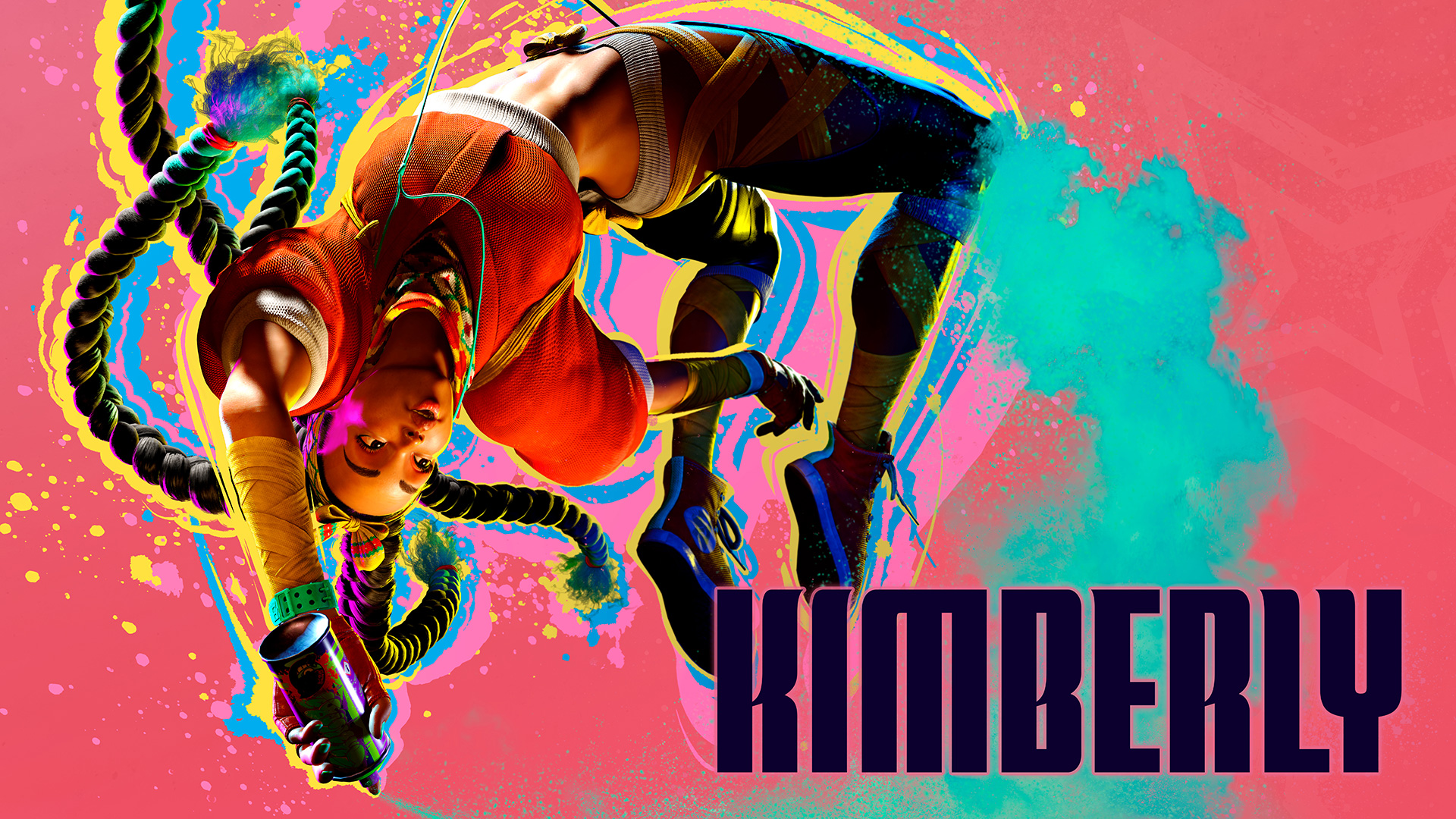
A major factor in both works’ success is starting from the understanding that not just one group of people are going to enjoy it. Kimberly Jackson in SF6 is black and one of the three most prominent heroes, and the only one with a story that ties directly to the main antagonist. The protagonist of the Spider-Verse movies, Miles Morales, is Black and Puerto Rican—and he reflects many of the aspirations and anxieties of those who grow up in non-White households in the US.

It can be easy to forget that the first Miles Morales film, Into the Spider-Verse, came out in 2018—before the murder of George Floyd and the increased mainstream awareness of the deeply rooted problems with police in the US. In 2023, however, I couldn’t help but notice the views expressed on that topic in AtSV. Both Miles and another character, the Spider-Woman Gwen Stacy, have dads who are on the force. They’re officers of the law who honor and respect the people, and having them be positive role models is part of the Spider-Man lore, but making the police and unalloyed good would never be compatible with the lived experience of so many black and brown people, not to mention other groups.

At one point, Stacy (a white girl) outright states that the reason her dad took on the role of captain is because he would inevitably be replaced by someone worse than him. In other words, contrary to the idea that cops like the one who murdered George Floyd are simply “bad apples,” it is the tree itself that is rotten, and the occasional good apple is the exception rather than the rule. While perhaps the film could have stated it more directly, it goes to show just how much AtSV is trying to express perspectives beyond what is comfortable. 

The greatest strength of Street Fighter 6 and Across the Spider-Verse is that both works come across as genuinely wanting to engage with as many cultures as possible from all sides. They’re not just paying lip service to the notion of diversity but actually making it happen in a satisfying way. I hope that both Capcom and Marvel continue to draw inspiration from the world in all its glory and shame, and in turn, encourage others to do the same.

The Kids Are All Right—Batman and Superman: Battle of the Super Sons

Recently, I did something I haven’t done in a long time: I watched an in-flight movie. I used to love using my time traveling to check out the new and unfamiliar, and it was refreshing to experience that again. Given a short flight time, there was only so much I could fit in, and the movie I landed on was Batman and Superman: Battle of the Super Sons

Somewhat reflecting developments in DC Comics over the past few years, it’s an animated feature film about Superman’s son, Jon Kent, teaming up with Batman’s son, Damian Wayne. How this compares and contrasts with the comics is convoluted in ways I don’t fully understand myself, so I’m treating this mostly as a standalone thing. In that regard, it’s probably fine to watch on its own as long as you’re familiar with Superman and Batman in a general sense. Maybe the fact Robin (Damian) is a pint-sized assassin who calls Batman “father” might throw some people off.

The story: Jon thinks he’s a regular kid with boring parents who are both journalists. Soon, though, he discovers the truth about his dad, and his entire perspective changes. When the starfish-like alien conqueror Starro begins to take over the adult superheroes, it’s up to him and Damian, whom he befriends (?) after meeting Batman, to save the world.

There’s something about the past decade of fiction that has brought to the forefront the challenge of heroes having to raise their own children. While plenty of comparisons can be made between Jon and Son Gohan from Dragon Ball, I think it’s more apt to look at other works, like Boruto, the Star Wars sequel trilogy, and even Avatar: The Legend of Korra to some extent. The gap between the stories focused on the parents and those focused on the children can vary from a few years to many decades, but they all land in the same space, wherein the legacies of the old heroes still persist in the hearts of the fans. 

Because of this, portraying these adults as loving but flawed parents can be a tricky balancing act, and a common source of conflict in these stories is the struggle between maintaining one’s duty and being there for their kids. What’s more, these works are often meant to have the old good guys step out of the limelight and allow their kids to take center stage, which can create complicated feelings among fans.

In that regard, it’s actually kind of comforting to see the literal most perfect superhero, Superman, have trouble with this. If even the Last Son of Krypton has days where it’s hard to be a dad, then who wouldn’t? Sure, he’s ultimately the Best Dad Ever (and Lois an equally amazing mom in her own right), but Battle of the Super Sons successfully conveys the idea that we can have faith in the next generation to do things their way if we communicate to them the importance of love and justice. 

Transformative Ties: Shang-Chi and the Legend of the Ten Rings

Shang-Chi and the Legend of the Ten Rings has a tricky balancing act it strives to achieve. As the first Marvel film with an Asian protagonist as well as having a majority Asian cast and creative team, it must consider the audience in the US, the audience in Asia, and the Asian diaspora around the world that sits in between and among the first two. As an American of Asian descent myself, I can only speak to two of the three, but I found myself really connecting with the film and its characters’ struggles, while also enjoying it as a high-quality mainstream superhero action film.

Shang-Chi puts a heavy emphasis on family. I think it’s because family is such a common thread that connects Asia to its diaspora, and thus the most surefire way to have a story that resonates across the divides that exist between the two, and even between Asian cultures. It’s the relationships of Shang-Chi—between spouses, parents and children, siblings, and friends—that really spoke to me on a personal level.

My father, who I’m pretty sure is not a thousand-year-old magical conqueror, is nothing like Xu Wenwu (aka the Mandarin)—and I am certainly no Shang-Chi. However, the story of a person chafing against the upbringing his father tried to instill in him feels incredibly real, especially the fact that the characters’ emotions regarding these experiences is so complex. Shang-Chi was raised to be the ultimate deadly martial artist by Wenwu after losing Shang-Chi’s mother, and the situation basically forces Shang-Chi to run away from his home and his family. In a way, Shang-Chi is both the story of an immigrant trying to start a new life and one of someone who has to reconnect with his estranged past, and this makes the character capable of connecting to multiple generations of Asian viewers. 

The fight scenes are probably the best we’ve ever seen in the Marvel Cinematic Universe, drawing from a long history of martial arts movies. Their execution is what tells me that the creators have the utmost respect for the films that paved the way and the actors in them, as they’re easy to appreciate on both storytelling and choreography levels. Shang-Chi is supposed to be the “master of kung fu,” and actor Simu Liu makes for a strong performance. 

But as solid as Liu is in the role of Shang-Chi, I’m in agreement with virtually everyone who saw the film that Hong Kong legend Tony Leung stole the show. One might even say that it was a very good Shang-Chi film but a fantastic Mandarin film. Leung is so utterly convincing as a multifaceted antagonist with conflicting emotions and a deep sense of pain that it strikes right at the soul. A common criticism of the Marvel films is that the villains tend not to be terribly memorable, but Shang-Chi is practically the opposite. If there’s one thing that lingers in the mind after the film is over, it’s Leung’s Wenwu. Much like Mr. Freeze from Batman: The Animated Series, I wouldn’t be surprised if he has permanently influenced all future portrayals of the Mandarin even in the comics. In other words, we’re quite removed from the entertainingly bombastic yet still kind of offensive Mandarin from the 1990s arcade game Captain America & the Avengers.

Having Wenwu/the Mandarin as Shang-Chi’s father is a significant change from the source material, where his father was Fu Manchu, the face of the highly racist Yellow Peril portrayals in American media. But the Mandarin was not exactly free of that racist tinge, and the steps taken by the film and by Leung go an incredibly long way towards freeing that character—and by extension many of the Asian characters in Marvel—from the stereotypes that plague them. The film even pokes fun at the clumsy results of how the Iron Man films attempted to tie in the Mandarin’s character, and it’s Leung’s delivery of the US’s fear of a pale imitation of the real deal (i.e. himself) that makes this self-referential mockery feel less like a halfhearted apology and more like a genuine understanding of Asian culture. 

Shang-Chi also gives a lot of attention to the women portrayed in the film, and while the push to show them as equals to the men of the story can be somewhat hamfisted, it’s still appreciated. Key to this being more than a shallow “girl power” demonstration is the degrees of difference each female characters have in comparison to one another—things that either hint at or reflect specific aspects of how and where they were brought up, and how they see the world.  

Overall, Shang-Chi and the Legend of the Ten Rings truly feels to me like a film that tried its very best to be a respectful representation of an Asian hero that celebrates Asian culture without overly burdening it with the need to show everything. The very personal stories that unfold between Shang-Chi, Wenwu, Katie, and all the others already captures so much of the Asian/Asian diaspora experience that it makes everything feel satisfyingly real. This is ultimately what helps make Shang-Chi, a B-tier hero in terms of the Marvel pantheon, feel like a worthy equal to those who came before him.

Our Better Angels: Superman Smashes the Klan

When I was more actively into superhero comics, the prevailing sentiment about Superman was that he’s a “boring” character whose nigh-invulnerability and moral uprightness were far less interesting than the grim and gritty Batman or what Marvel Comics had been doing. But I think that was as much a reflection of the kinds of people who called themselves comics fans as well as a kind of blindness towards the very fact that Superman is a reflection of both the ideals and the shortcomings of the United States. It’s a country built upon both racism and opportunity, and Superman as the “ultimate immigrant” stands at that crossroads. 

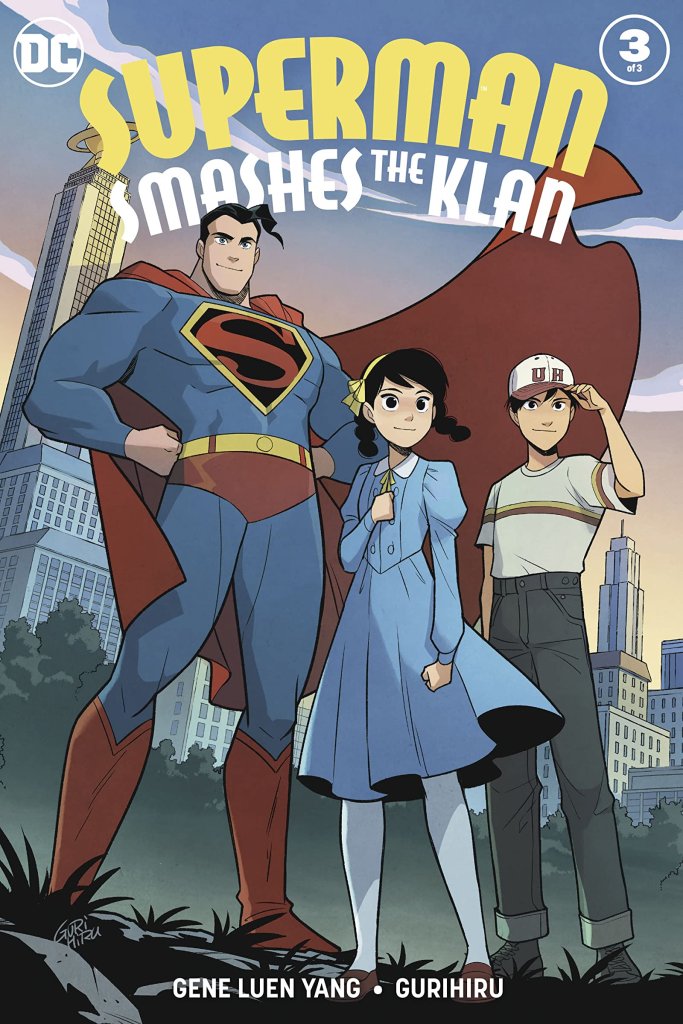
Plenty of works about Superman have helped to showcase his humanity, from All-Star Superman to Smallville to the 1990s’ Superman: The Animated Series to even the controversial Man of Steel, but Superman Smashes the Klan by writer Gene Luen Yang and artists Gurihiru that I think presents an especially poignant story about Superman’s internal conflict through his own status as an immigrant.

Superman Smashes the Klan is an adaptation/re-imagining of one of the most famous stories ever told in the old 1940s radio show, The Adventures of Superman, in which Superman faces off against a Ku Klux Klan analogue. The catch: the show had actual KKK secrets and code words, and helped to expose them to a greater American audience, weakening their ability to recruit new members. Where Yang makes his mark as the writer This particular arc also includes the Chinese Lee family as minor characters, and that’s where Yang—whose previous comics focus heavily on the Chinese experience in the US—makes his mark by giving them extra attention. The topics of racism and the immigrant experience are portrayed with an incredible amount of nuance that leads to far more than just a “racism is bad” moral lesson.

The Lee family, for example, is portrayed as each having different relationships with the concept of “Americanizing.” Tommy, the son, loves baseball and will even make jokes about his Chinese-ness as a way to befriend the white kids around him. Roberta, Tommy’s inquisitive sister, sees his behavior as incredibly fake, and doesn’t want to have to put on a show or play into stereotypes. Their father is so intent on presenting himself as a model minority that he tries to dress the part of the professional scientist even in dire emergencies. Their mother gets fed up with her husband’s insistence on speaking English instead of Cantonese even though it’s a much more comfortable language for her to express herself. Even though all four characters are Chinese and even related to one another, they’re shown to be influenced by the tension between their Chinese background and American life in different ways. 

The white characters are given a similar treatment, where Tommy’s baseball rival, Chuck Riggs, is shown to have both good and ill within him. He worships Superman and the righteousness he embodies but also has a white supremacist upbringing that influences how he sees others. It’s the conflict between these two aspects of him that defines Chuck’s own development throughout.

Superman’s part in this story mirrors that of the Lees. He actively tries to portray himself as a Good American just like any other—albeit with superhuman strength and speed—but has to deal with knowing that he’s not human like everyone assumes he is. One antagonistic character even assumes that Superman is white, and asks how Superman could betray his own race, a scene that touches upon those with non-white backgrounds who are able to pass as “white” in American society, and reap the benefits as a result. There’s even an acknowledgement of Superman’s parallels to the Nazi idolization of Nietzche’s concept of the “Die Ubermensch” by having a Nazi villain constantly call him “The Superman.”

There’s one aspect of Yang’s writing of Asian characters that I must praise, and that’s his willingness to portray them as having their own problematic beliefs. After the Lee home is attacked by the Klan, a group of black men driving by stop to help them out. However, Roberta and Tommy’s father immediately sees them as a threat and treats them as such. Here, his racism and stereotypical assumptions of black people reveal themselves, even as he himself tries to fight racism towards himself and his family. As an Asian-American myself, the capacity for Asians to both bristle at the discrimination inflicted upon them while being complicit in racism against other peoples is one of my greatest frustrations in life, and I am glad to see Superman Smashes the Klan showing both the fact that this happens and the complexity it carries. It’s very much in line with the kind of well-rounded yet complicated depictions seen in Yang’s previous works such as American Born Chinese and The Shadow Hero.

While I focused mostly on the writing aspect for this review, I want to give credit to Gurihiru’s excellent art. As always, their work feels both approachable yet filled with a sense of quiet grandeur. The care they give to showing the differences between the characters through their body language ends up enhancing the greater themes and important points of the comic overall.

Superman Smashes the Klan feels ever more relevant as the United States is seeing the rise of hate groups and increased violence towards non-white groups of all stripes. It is an accessible book that is worth reading by kids and adults alike, and I think it would especially resonate with Asians living in the US. It’s worth not just a look, but also a close examination of how America succeeds and fails at the ideals it presents to the world.

[APT507] The Best Shounen Superhero: Why It’s Easy to Love Deku from My Hero Academia

Main characters in shounen fighting series tend to get written off as generic and boring, but I find Midoriya from My Hero Academia to be a strong exception. I’ve written a post on Apartment 507 exploring why I think he’s so effective.

Beyond the Brokeback Pose: Don’t Meddle with My Daughter

It’s obvious from the very first page that the manga Don’t Meddle with My Daughter! (“Uchi no Musume ni Te o Dasuna!” in Japanese) is 1) based on American superhero comics 2) a vehicle for constant fanservice. One aspect I’d like to talk about is how it can bring to the front of our minds the very idea of heroines as sexual ideals for men and its entrenchment in our ideas of superheroes.

Before that, a couple of points. First, to reiterate something I said in an old post, I am not against characters being drawn as sexually desirable in comics, and I’m even okay with works that are pretty much thinly veiled pornography. This is not a criticism of having everyone be unrealistically hot in fictional portrayals. Second, I am well aware of the recent steps that have been taken in American superhero comics to show women neither as strong or weak but as human and capable of growth, such as the Ms. Marvel from Marvel Comics series starring Kamala Khan and Batgirl from DC. These are not the points of this post. Rather, what I want to say is that a work like Don’t Meddle with My Daughter! can help contextualize some of the discussion that surrounds the portrayal of women in comics.

Don’t Meddle with My Daughter! comes from Tamaki Nozomu, the artist who brought us Dance in the Vampire Bund. Whereas his previous work featured a dangerously underage-looking vampire girl, this one focuses on a mother and daughter, both of whom have superpowers. The mother, who in her heyday fought as the “Eighth Wonder,” has now retired, only to find that her daughter has taken up her mantle. If you think this is basically like The Incredibles and has the room for the same sort of kid-friendly family bonding, keep in mind that not only are they drawn in really, really skintight outfits, but the good guys are called “N.U.D.E.” (like S.H.I.E.L.D.) and the bad guys are actually called “Blowjob.” It’s a work that wears its intent on its sleeve.

I think it’s safe to say that most superhero comics that are actually published in the US aren’t quite this blatant and gratuitous in its depiction of the female body. However, many are also not that far off; in a way, it’s as if the manga is actively pursuing the brokeback pose, but achieves this fanservice more through “convenient” camera angles and the refusal of tact. The reason I bring this up is because when you have discussion about the portrayal of women in comics, one common argument I’ve seen is that it’s “just the way things are.” In other words, this is simply how women are drawn in comics. However, Don’t Meddle with My Daughter!, as a manga, lacks that sort of cultural context, and is more a reflection of superheroes as cultural import. Thus it draws into question that very idea of explaining it all away with “tradition.”

It’s true that styles get replicated and imitated because of popularity, tradition, and a number of other reasons that don’t really get thought through extensively. A person new to shoujo manga might see all of these character with tiny noses and sparkles in their enormous eyes and wonder why everything looks the same, and the answer in part is indeed that it’s simply how it is. At the same time, there is room for discussion as to why that turned out to be the case, as well as an opportunity to discuss how this impacts people’s view of shoujo manga and what steps might potentially change this for the better or the worse. It’s not likely going to be the example people turn to in order to show the influence of American comics on the world, but the fact is that the fanservice Don’t Meddle with My Daughter! is clearly a choice working not from an unconscious tradition but from an active decision. This re-contextualization of superhero cheesecake can help to highlight that it’s not as simple as ignoring the highly sexual poses that have been found in comics just because it’s an established style.