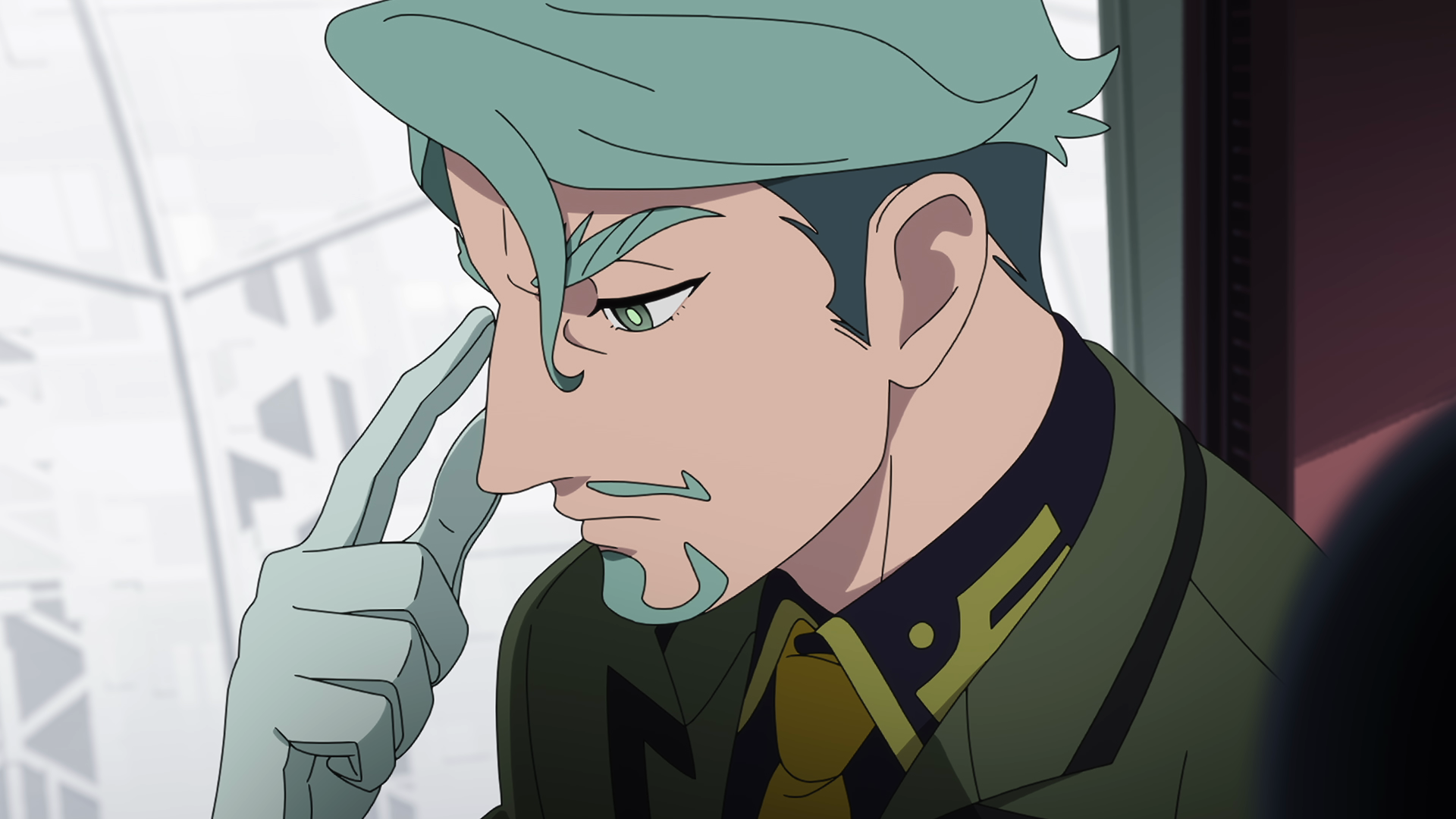
Who would have thought 2025 would turn a one-off Enemy of the Week from the original 1979 Mobile Suit Gundam into one of the coolest characters in anime in 2025? Challia Bull didn’t even get to appear in the Gundam movie trilogy! But now he’s seen in a whole new light as a force to be reckoned with, not only for his Newtype powers but also his shrewd mind and wealth of experience. Even his Mobile Armor, the Kikeroga in the GQuuuuuuX universe, became one of the most interesting mecha designs of the year.
Best Aspiring Scholar
Jolenta (Orb: On the Movements of the Earth)
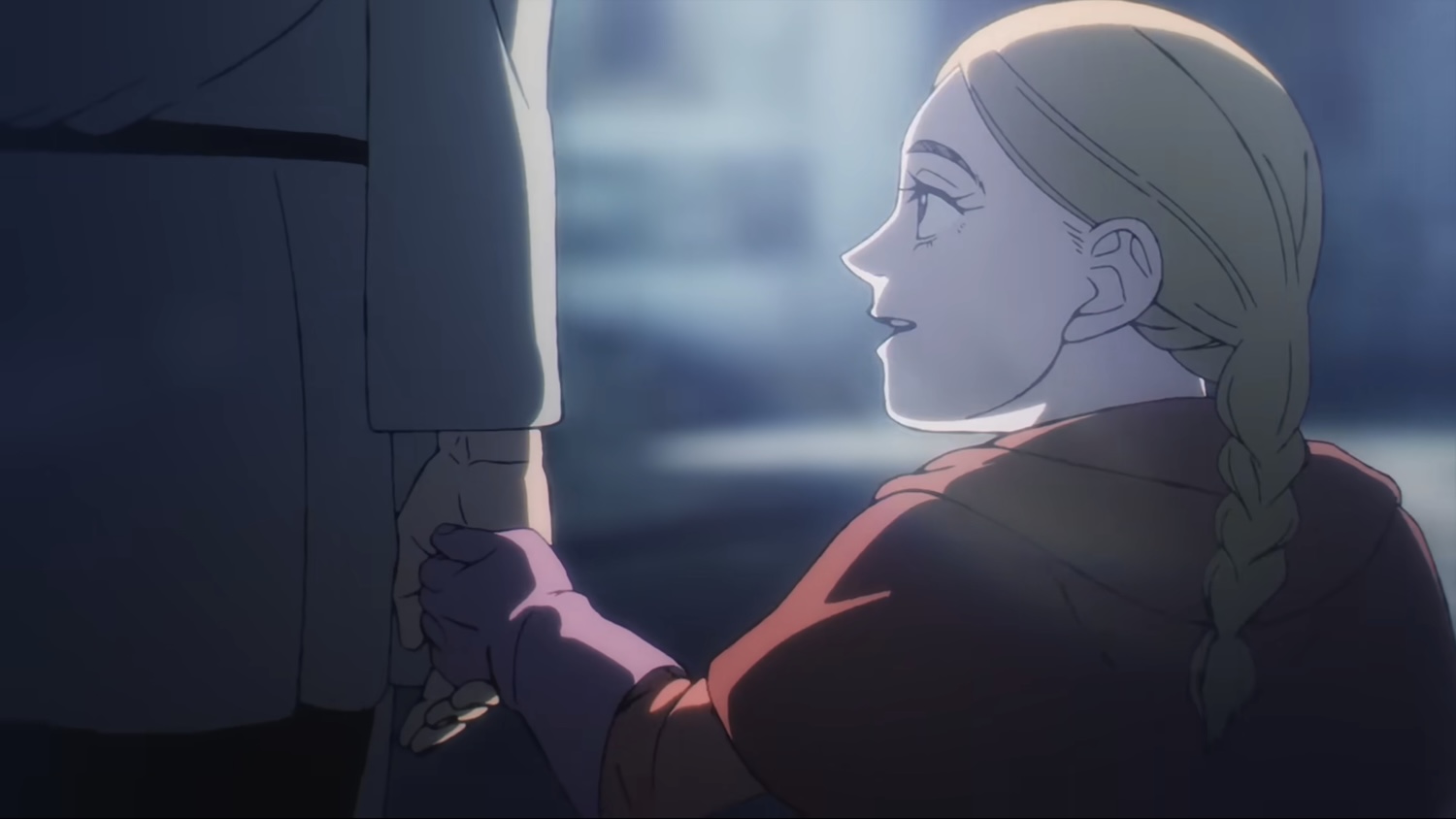
The entire cast of Orb: On the Movements of the Earth is worthy of praise as richly defined characters who reflect the complexity of humanity and its relationship with knowledge. I’ve decided to highlight Jolenta in particular, however, because of her added challenge of being an intelligent and inquisitive young girl who was stymied not only by the prevailing religious beliefs of her time but also the sexism that permeated even the sacred halls of scholarly thought and education. Yet she defies those barriers, puts her life and well-being on the line for the sake of expanding human knowledge, and becomes something unexpected yet far greater: a revolutionary figure.
Best Puppet Protagonist
Shāng Bú Huàn (Thunderbolt Fantasy)
They don’t make ’em quite like Shang Bu Huan, both literally and figuratively. Not only is he the face of a Taiwanese-Japanese co-production for a fantasy-genre puppet-theater series, but he also calls to mind the stoic and witty action heroes and manga protagonists of decades past like John Matrix and Kenshiro. I think what’s ultimately really impressive about the so-called Sword-Plundering Nemesis is that in a series full of charismatic and memorable characters like Thunderbolt Fantasy, Shang never got lost in the shuffle or any less intriguing. His humility and quiet confidence put him on par with the greats.
Best Dance Partners
Wanda Hikari and Kotani Kaboku (Wandance)
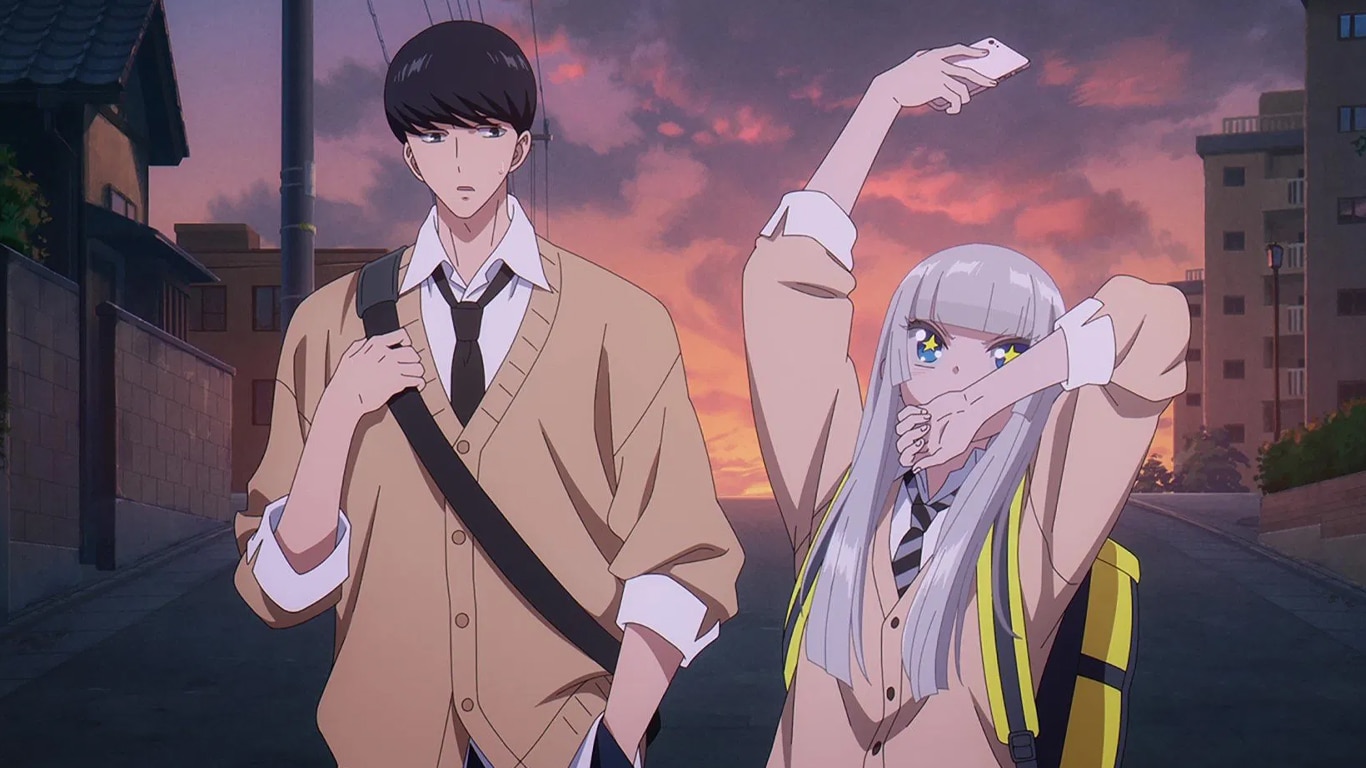
I’ve been following the Wandance manga for many years, so I was glad to see the series get an anime adaptation. While it hasn’t quite lived up to the manga in terms of its visuals, the incredible bond between Wanda and Kabo still shines through.
It’s a classic problem in anime romances that male-female pairings often don’t have that feeling of “equal partners and rivals” that is so common and exciting in BL or yuri pairings, but that’s exactly what we get from these two and their ever-growing love of dance. They’re sweet, wonderful, and supportive of each other…and when they’re together, they feel unstoppable.
Final Thoughts
I decided to mix things up this year and get rid of specific gendered categories in the hopes of not boxing myself or the characters in.
Overall, my picks don’t have a great deal in common, whether in personality or actions taken. If I had to pick a point of convergence, though, it would be that they all bring something unexpected to the table within their stories and worlds. They invite us to re-think how we view things, whether they have to do with revision and revival, science and education with respect to politics and cultural norms, what goes into making a main character, or expectations of what a “conventional” romance looks like.
It’s anniversary month for the blog again! I’m mentioning it here in the hopes that I don’t forget to write a milestone post in time (like I did a few times in recent years).
I’ve also been enjoying the new anime season. I feel conflicted about Tojima Tonzaburo Wants to Be a Kamen Rider, though. Great show so far, but as a big fan of Shibata Yokusaru’s previous work 81 Diver, the anime art isn’t ugly enough to capture his full power. I’ll still probably keep watching it, though.
As for the Patreon, here are my sponsors for the month. Many thanks to them all.
Also, V4Mirai’s DJing, retro game–loving VTuber turns out to be a Genshiken fan. Check the video!
Closing
I have been considering doing Patreon-exclusive or at least early previews/rough drafts of posts on Patreon. Is that something readers would be interested in?
PS: People shouldn’t go hungry because the powerful want to escape accountability.
At Anime Central 2025, I received an opportunity to interview Pili, the Taiwanese studio that co-produced Thunderbolt Fantasy. I hope that fans of Thunderbolt Fantasy, fans of Pili, and anyone curious about unique media and entertainment can learn from the in-depth answers they gave.
1) Taiwan has a celebrated tradition of puppet theater, something that is likely unfamiliar to much of the English-speaking audience. What are some of the special aspects of Taiwanese puppetry, and how do you incorporate them into your work?
Pili puppetry has a unique advantage: puppets have no facial expressions. This means that all emotions are conveyed through the atmosphere of the scene, the performance of the voice actors, and the impact of the music. As a result, regardless of culture or language, emotions can still be conveyed through the puppets.
About how we incorporate them into our work, we can share how Thunderbolt Fantasy entered the Japanese market as the example. Although the genre is Wuxia fantasy, Urobuchi-san naturally incorporated various elements of Wuxia into the story, which allowed Japanese audiences to easily understand and appreciate it.
2) Given that Thunderbolt Fantasy has both Japanese and Taiwanese dubs, have you found it a challenge to work with two different languages and styles of speech?
The production of Pili puppet performance always begins with the audio. The puppeteers always perform based on the pre-recorded voices. For Thunderbolt Fantasy, once the Japanese script was delivered to Pili, it first had to be translated into Chinese, then dubbed in Taiwanese. The puppeteers would then perform based on the audio data.
However, because there are language differences between Chinese and Japanese, Urobuchi-san would need to revise the script and communicate with every voice actor about how the characters should be performed after watching the filmed version. For example, in puppet theater there are many actions similar with Japanese Kabuki movements and gestures. To voice properly for such movements, Urobuchi-san had to discuss with voice actors to provide guidance and suggestions in person.
3) Do the puppeteers treat their performance as akin to live theater when recording, or is it more like a movie or television show production?
Our production now is closer to that of films and TV dramas. The biggest difference is that traditionally Pili puppet performance was live on stage. In this case, the puppets’ heads must face the audience. However, now in a studio setting, the puppets’ heads must face the camera, so the concentration and ways of expression become different. In addition, we use narration, jump cuts, and other techniques to change settings and transition the scenes.
4) I must ask, how did a giant robot end up in Thunderbolt Fantasy? It was an unexpected choice, but speaks to the fun and unpredictability of the series.
Robots are one of Urobuchi Gen’s personal interests. He is also a big fan of Kamen Rider and Tokusatsu, so he came up with the idea of including them and designed that robot. Pili also filmed similar things before, such as scenes where puppets battled a giant gorilla. In our Su Huan-Jen movie, we collaborated with Japanese studios to create the monster Qilin. We really enjoy Tokusatsu filming style, so Urobuchi-san took the opportunity to design and incorporate more of these elements into the work to make it fun.
5) Are there any plans to bring more of your shows to English-speaking audiences? I ask simply because I would love to see more.
Of course, we do have plans. We are working with Urobuchi-san on other projects, and both now and in the future, we will be working on scriptwriting and concept design for works that appeal to a wider fanbase, especially to those who are not fans of the Wuxia genre.
6) I’ve read that one thing you had to learn from making Thunderbolt Fantasy is that Japan is more accustomed to a slower pace for action scenes. Could you elaborate on how you changed things to accommodate this?
From the very beginning, we have been constantly adjusting the pace. Especially when shooting the first episode of the first season, we studied how to present the puppets’ body movements in greater detail so that the audience could better appreciate their performance. We knew that the fight scenes in puppetry always switch too quickly, like in seconds, and the puppets have no facial expressions. The audience would need more time to process the information and understand the plot. That’s why we kept adjusting the pace. I must say that we rely on puppeteers’ live performance and improvisation as well as the director’s guidance and arrangement.
7) How do you puppet the characters relative to the voices? Does voice come before the puppetry, or vice versa? Or perhaps there’s a back-and-forth process between the two stages?
First, we record a reference track in Taiwanese, and the puppeteers perform based on that. Next comes the official dubbing. Since the official dubbing could involve various adjustments and changes, we need to reshoot and revise the makeup. This back-and-forth adjustment continues until everything is finalized. Once finalized, we proceed to the last phase of handling Japanese dubbing.
8) Are there unique aspects of specific characters that require puppeteering them in special ways? For example, is controlling Shang different from controlling Lin?
One of the biggest advantages of Thunderbolt Fantasy is that the script and character designs were developed simultaneously. This allowed our puppeteers to imagine the personalities of the characters more concretely and design unique gestures based on the script since there was sufficient information. For example, Shang scratching his nose, or Lin carrying a smoking pipe in his mouth, which looks humorous. Because we had enough prerequisites and Urobuchi-san could provide explanations in time, the puppeteers were able to enrich the characters as best as they could.
9) Is there anything unique to the technical process of making Thunderbolt Fantasy that differs from your other series?
At this point, Pili’s puppet drama series updates every week, like Shonen Jump in Japan, so the production schedule is extremely tight.
During the technical process, for example, creators often need to design characters based on only a few lines of description, while voice actors must imagine the voices of the characters before even seeing the actual designs. When these two processes run at the same time, mismatches are likely to occur. Just imagine they designed an old lady, but voice was like Rie Kugimiya’s tsundere tone.
Producing weekly episodes is very demanding. Ding Bi, who is sitting beside me, works on the weekly-updating drama. His team often found that even after finishing filming and wrapping up, they would still discover parts that needed reshooting, which was stressful and frustrating.
On the other hand, Thunderbolt Fantasy is different. Since both the script and pre-production details were ready in advance, everything was clear, which made filming much easier. Moreover, our Pili team has developed such a strong teamwork spirit over the years that we can almost instinctively know the best way to shoot a scene, so the whole process was quite smooth.
10) How involved was PILI with the overall story and the character personalities in Thunderbolt Fantasy? What was it like to work creatively with NITRO PLUS?
Pili’s involvement is very high. Although most of the character designs from NITRO PLUS are for protagonists, we are in charge of classifying characters by levels of importance. Pili also contributed a lot to the character design. For example, many of the demon realm generals and lieutenants and other organizations were designed by us after internal discussions.
NITRO PLUS trusted in Pili’s puppet-making, so their feedback was generally positive with few comments on things that need to be corrected. For the process of converting 2D character designs into 3D character models, we also communicated with NITRO PLUS frequently, so our interaction with them has been very close.
NITRO PLUS is a highly disciplined and experienced company. Even though its core business is gaming, its creative strength and design framework are astonishing. Pili really needs to learn from them because our style in designing sometimes tends to be loose and irregular, so working creatively with NITRO PLUS was previous experience.
11) Looking back on your long history with Thunderbolt Fantasy, are there any important lessons you’ve learned from making it?
To be honest, ten years have not been easy. Collaborating with Japan was a huge challenge for Pili.
The first lesson is cultural differences in language. For example, in Japanese texts or messages, expressions like sumimasen can sound indirect or ambiguous for us considering the seriousness, but they could be a very clear refusal from the Japanese side. We might think the level of that dislike from them was not strong at all, but in fact their rejection was much stronger than we expected. What’s more, when we said something like “Okay, we can consider this proposal and maybe give it a try”, the Japanese cast sometimes understood it as a clear decision to move forward along this plan.
Another big lesson is in the character market and community management. In Japan, these aspects, as well as production details, are treated with great importance, while Pili had not given them as much consideration before. After we started working together with Japanese people, we learned a lot from them in these areas.
About technical skills, we also learned tremendously. Through Thunderbolt Fantasy, we had the opportunity to learn from Japanese creators and companies other than NITRO PLUS, such as monster design just mentioned, sound production, etc. In particular, the sound director Miwa Iwanami gave us invaluable advice on how to strengthen the use of voice performance to make puppet theater characters more powerful.
Once the interview was over, one of the puppeteers demonstrated the way they control the puppet of yandere princess Cháo Fēng.
The staff also asked me how I got into Thunderbolt Fantasy. And then they even gave me the chance to hold Cháo Fēng’s puppet myself!
It’s literally one of the best things I’ve ever gotten to do.
Anime Central 2025 was home to the United States premiere of the final Thunderbolt Fantasy movie. I reviewed the film, but because there was so much other stuff, I didn’t want to cram it all into one post. So here we are with Part 2, which covers things that happened both before and after the screening. Note that much of what’s written below contains SPOILERS for the finale.
Red Carpet Gala
Before the screening, ACen actually set up a red carpet of sorts and allowed photographs of the puppets. Some cosplayers were also there—one who later turned out to be PILI puppeteer Osmond Pi Ting, and a couple who were just really dedicated fans.
Live Demonstrations
After the screening, the staff also put on demonstrations of the puppets as they went around the room. Music and sound of different characters played, and the puppeteers moved the puppets with grace and beauty.
Osmond (cosplaying as the Enigmatic Gale) also participated, and at one point even “fought” the Demon Lord.
Panel Q&A Notes
PILI also provided lots of fascinating information about their process in a Q&A section.
Audio is recorded first, and then the puppeteers at according to the voices and sounds
The giants and monsters (such as the gorilla mecha and the emperor made of magical swords) are played by live actors in suits
They actually only use one camera to film for the most part. Two cameras are utilized for explosions and such, though.
The sage who created the swords is actually based on a famous character from PILI’s shows. One of his appearances is in the 2000 film Legend of the Sacred Stone, where he was voiced by Koyasu Takehito in the Japanese dub. Koyasu reprised the role for Thunderbolt Fantasy.
Some puppets are heavier and can be harder to puppet. In some action scenes, three people might be needed to puppet
Traditionally, PILI lets the sculptors do the creating and go straight into making the puppets. Thunderbolt Fantasy was different because they got the designs from Japan. Simple puppets like Shāng might need two weeks, while more complex ones like the yandere princess might need two months because of all the 3D printing for her accessories.
There were two puppeteers among the guests. One was Osmond (the aforementioned cosplayer and puppeteer), who is one of their newest recruits. He likes to handle the female characters because he’s adept at conveying softer movements. The other was Yu-Che Hsieh, a 30-year veteran. He likes to puppet action scenes.
Who decides the signature gestures of characters? They’re designed by the puppeteers based on the script, and then go about trying to get their personality down.
TM Revolution definitely liked working on the series. In one of his music videos, he had Làng come out to interact with him. Làng allowed him to play a character who actually survived [as opposed to dying quickly like his Gundam SEED characters], which he was happy about.
PILI staff sometimes had to come out covered in fake blood when making trips to the convenience store. Bystanders wondered whether they should call the cops.
That’s it for this post! Stay tuned for Part 3: An Interview with the staff of PILI and Thunderbolt Fantasy!
In 2016, I was looking at a preview of the new anime season with friends, as was our custom. We talked about the shows we thought had potential, the ones we were more skeptical about, and anything else of note. But there was one series that seemed to come completely out of left field. A Taiwan-Japan co-production that wasn’t animated but rather performed using puppets, and it was written by Urobuchi Gen of Madoka Magica fame?! Even if we potentially did not end up liking it, we had to at least give this Thunderbolt Fantasy a chance.
Nine years later, and this series has become one of my absolute favorite works of fiction ever. The novelty of its puppetry never actually wears off, and it’s backed by solid writing and charismatic voice actors giving some of their best performances, as well as a sense of tension and excitement that had me coming back for more. So when I found out that they would be doing the North American premiere of the feature-length Thunderbolt Fantasy: The Final Chapter, I made it my mission to attend the convention.
This is my review of the movie, but since then, the movie has come out on Crunchyroll under the name Thunderbolt Fantasy -The Finale-. I recommend you just get straight into watching it, but feel free to proceed if you want my thoughts. Note that there will be a MAJOR SPOILERS section at the bottom.
The Basics
Thunderbolt Fantasy is set in a world once ravaged by a war against demonkind, which humanity barely won thanks to the help of a series of divine weapons. In the long years since this War of Fading Dusk, the weapons have been sought after by the righteous and the evil alike.
When we first see the two main characters of our story—no-nonsense vagrant swordsman Shāng Bú Huàn and white-haired pain-in-the-ass illusionist Lǐn Xuě Ya—they have just met each other for the first time, and both are holding their own respective secrets. At the end of the first season, we learn that Shāng is not only a ridiculously powerful swordsman who can wield a wooden stick like it was real steel, but that he’s also in possession of the Sorcerous Sword Index: a special scroll designed to house all sorts of supernaturally powerful weapons. Shāng carries it to prevent the weapons from falling into the wrong hands, notably the Order of the Divine Swarm, a clandestine organization seeking to conquer the world.
But Lǐn the “Enigmatic Gale” has been far more, well, enigmatic. Throughout the prior seasons, he appears to just be an elusive trickster who finds joy in aggravating the powerful. But in the penultimate chapter, we finally learn a truth even he didn’t know: Lǐn is actually a kind of “offshoot” of the Demon Lord who rules the Demon Realm, cast away and abandoned to remove any of the leader’s weakness. Lǐn thus has a revelation that the greatest target to torment would be essentially none other than himself.
Three other major plot points help create the backdrop for the end. First, the leader of the Divine Swarm, Huò Shì Míng Huáng, turns out to be the Emperor of Xī Yōu, the land which Shāng was trying to leave. This means the emperor was playing both sides of the law the entire time. Second, one of Shāng’s old allies, a bard named Làng Wū Yáo (voiced by rock star TM Revolution!) is actually half demon and is being forcibly transformed into an infernal god by his long-lost father. Third, the armies of Dōng Lí and Xī Yōu (the East and the West) are on the verge of coming together to fight a new war against the demons, though the former doesn’t know a thing about the latter’s true identity.
The Final Chapter
I’ll admit that I don’t have the most rigorous grasp on the full story of Thunderbolt Fantasy. There’s a lot I’ve forgotten over the years among all the different plot threads, and I suspect many coming into this movie would be in a similar situation. However, I actually don’t think you need to have an encyclopedic knowledge of all that has transpired to enjoy the film. In addition to just being incredibly entertaining, the characters all have such bombastic designs and larger-than-life personalities that it’s easy to identify what roles they each serve in the overall narrative, even if the details are a little fuzzy.
That said, the movie is (as expected) not meant to be watched without any prior exposure to the show, and it does little in the way of actively filling in the blanks for the uninformed. It feels very much like the conclusion of a long-running TV series than a work meant to stand entirely on its own legs. Things happen fast and furious, not only in terms of the pace of the storytelling but also the action. The fights are more complex and relentless compared to what is typically seen in Thunderbolt Fantasy, and rivals even the greatest martial arts fight scenes in history.
In a certain sense, this is PILI taking off its weighted clothes and unleashing its full potential. The studio has a four-decade history of creating action-oriented puppet TV shows in Taiwan, and if you compare Thunderbolt Fantasy to their other works, the latter often turn into such never-ending frenzies of stylized violence that the notion of “breathing room” is a suggestion at best. But action in Thunderbolt Fantasy is slower and more deliberate, emphasizing the drama over a fight choreography built on countless details. In The Final Chapter, we get the best of both worlds.
Battles truly feel like the characters are fighting with everything they have, while the narrative and the characters’ individual motivations provide context to give their movements meaning and weight. Lǐn fights his doppelganger, the Demon Lord, and they naturally match each other move for move. Làng’s travel companion, a sentient pipa, has turned human and fights with strings befitting a former instrument. When he runs into a yandere princess puppeting two magical corpses at the expense of her own life force in order to take on Làng’s demonic father, the three-way back-and-forth is nonstop but also relatively easy to follow. And when Shāng finally gets the chance to wield a non-wooden sword after nine years of avoiding it, his assault is all the more special.
The plot twists and dramatic turns are all really satisfying in a way that screams “epic finale,” and the respective fates of all the big villains provide perfect bookends to all their stories. The film even touches on the origins of Shāng himself, and it was the last thing I could have ever predicted. That being said, I want to discuss some of the details of the ending.
SPOILERS SECTION
There are three major spoilers I wanted to write about in greater detail.
The first thing is Shāng being in the same company as Marty McFly (Back to the Future), John Connor (Terminator), and Philip J. Fry (Futurama). Essentially, he turns out to be the son of Lāng and the blind harpist Mù Tiān Mìng, both with whom he fought side by side before the start of Thunderbolt Fantasy. They realize their baby is somehow the Shāng they know, and the couple gives him up to the sentient pipa-turned-human, who apparently comes to raise him in another realm so that he will be ready to fulfill his destiny.
I definitely did not expect that, and based on the audience reaction, I don’t think anyone did. I also genuinely thought he had romantic feelings for Mù, but I guess it turned out to be more filial. They hinted at Shāng being a time traveler of sorts in Season 4, and possibly before that as well, but it implies the source of Shāng’s unparalleled swordsmanship: the fact that the man has trained across time and space and dimensions since he was a child. So he was the child who saved everyone, and also got his own parents together, to an extent. At least he did not sleep with his own grandmother.
The second thing is the way the leader of the Divine Swam is defeated, and the aftermath of his loss. There’s something a little hokey but absolutely wonderful about him using all the divine weapons of the Sorcerous Sword Index to transform into a gigantic armored demigod. A part of me wishes he was vanquished in a more conventional manner, but I think what happens fits the story incredibly well.
Shāng uses the one remaining blade, and while it seems to have no effect on Huò, it seems to be opening up a rift in the sky. Realizing the true nature of the weapon in his hand, Shāng proceeds oto summon Bái Lián, the sage who originally created the weapons (and whom he met in Season 3). Bái Lián proceeds to forcibly bring the emperor into the void beyond and back home to his own world where the weapons came from, and where they are now rusted and lifeless. The emperor tries to use his dark magic to threaten Bái Lián but finds that he can’t form spells. Bái Lián tells him that had he arrived in this realm as himself, he would have retained his powers, but by tying his very being to the weapons, he is now as inert as they are, and the only thing he can do is live like any other average person. His precipitous fall from world conqueror to commoner breaks him.
I love this so much. Not only is it rather cathartic given the state of the actual world right now, but I really find pleasure in seeing someone who believed they were untouchable be laid low and made to feel vulnerable. The villain really thought he was inherently superior and deserving of ruling over his entire world, and the fact that he can’t handle the idea of fending for himself the way everyone else does is the justest of deserts. (See also JoJo’s Bizarre Adventure Part 5: Golden Wind). Bái Lián is also based on a popular recurring character in PILI’s Taiwanese puppet shows, so his presence at the climax is also a way to pay homage to the studio that made all this possible.
The third thing is Lǐn taking over as Demon Lord. Hilarious. We get that silly moment where Shāng sees through his disguise and refuses to duel to the death with the Enigmatic Gale (“Of course it’s you. I’ve never even met the Demon Lord, so why would he want to fight me?). We also get to think about just how a Demon Realm ruled by the most egregious troll in all of existence would turn out.
SPOILERS OVER
Concluding Thoughts…and More
What a fantastic ride. I’ve been told that this movie was originally supposed to be a full season, and it does show to a degree, but I still think this was a wonderful way to close the book on Thunderbolt Fantasy. It was the essence of this whole international creative endeavor boiled down to a clean 90-ish minutes, and had me coming away grateful to have learned about it nearly a decade ago.
So those are my thoughts on the movie, but this is actually just the first part of my Thunderbolt Fantasy coverage from ACen 2025. There was a “red carpet gala” to show off the puppets before the screening, as well as a Q&A afterwards with some live puppet demonstrations. Even more exciting, I got the chance to interview the PILI staff and even try out one of the puppets!
Thunderbolt Fantasy 4 aired a few months ago, with Crunchyroll making the series available to English speakers after it concluded. The season is the penultimate entry before the movie finale, and I wanted to just get some thoughts out before I finish it all. Everything I said in my first and second reviews still applies, and Thunderbolt Fantasy is still something that I hope everyone checks out, whether in spite of its medium (epic puppets) or because of.
More eyeballs on it! More!
Thunderbolt Fantasy is the story of Shāng Bù Huán, a mysterious wandering swordsman who is trying to collect and seal the mystical weapons that once helped humanity beat back an invasion from the Demon Realm, but are now dangerous remnants that are sought after. He meets many eclectic (and often dangerous) personalities—some friends and some foes, but always larger than life. This most recent season finally brings the story to the Demon Realm itself, and while it’s as eerie and dreadful a place as one might expect, there are some surprising twists about what it’s really like, and the powerful figures who run it. Reunions and revelations are plentiful, but there are also new characters who make a hell of an impression (pun only somewhat intended).
Without going into spoilers, this is a series where truly anything is possible and it hits on so many different levels of entertainment. You’re mainly interested in shounen battle anime? The fights in this series are amazing and the characters are some of the coolest I’ve ever seen. Oh, you love witty reparté by a large cast of charismatic characters? This is writer Urobuchi Gen (Madoka Magica, Saya no Uta) at his very best. How about a narrative with robust world building that rewards viewers but doesn’t take itself too seriously? Ample opportunities for shipping both queer and het? Great portrayals of characters not limited by gender stereotypes? All satisfyingly covered. Heck, are you really into yandere? Take your pick, because there’s more than one.
Thunderbolt Fantasy may be over in Japan, which means now is a great time to just sit down and watch through it. I hope to see you on the other side!
Let’s say you’re watching an episode of Raven of the Inner Palace in Japanese. Or maybe it’s Thunderbolt Fantasy. A new character appears and introduces themselves, but the voice seems to say one thing and the subtitles another. Is the eponymous heroine Raven “Ryuu Jusetsu” or “Liu Shouxue?” Is the hero of Thunderbolt Fantasy “Shang Bu Huan” or “Shou Fu Kan?”
They look kind of similar but also not. It feels discordant to read and hear two different things that are supposed to be the same, so you might be wondering why such a decision was made.
What you’re running into is the legacy of how the Chinese language came to influence the Japanese language.
I am no expert when it comes to to Chinese-Japanese linguistic history, but I believe I can sum it up very briefly as follows. The Japanese language originally did not have a writing system, eventually began importing Chinese between the 3rd and 7th centuries AD to deal with that problem despite the fact that the language structures are dramatically different. Japanese began to use Chinese written characters (kanji), in some cases choosing to adopt Chinese pronunciations of words as well. Yet, because the languages are so far apart in fundamental ways, these pronunciations had to be approximated. The word for wood (木) was pronounced as muk in Chinese (specifically what’s called Middle Chinese by linguistic scholars), but due to the lack of ending consonants in Japanese, this became moku. Such onyomi, as the Chinese-approximate pronunciations came to be known, were codified into Japanese and are still used today.
But the Chinese languages continued to transform in China, and many pronunciations changed over the centuries. Various factors, from the rise and fall of dynasties to physical barriers creating pockets and enclaves of peoples meant that not only did the language end up different from its 7th century form, but also resulted in regional variations that can often be mutually unintelligible. While the Cantonese word for “wood” retains the “k” sound at the end (similar to how it was said in Middle Chinese), Mandarin Chinese (what is today the official language of China and the most common throughout the world) pronounces it as mu. This is because most of the ending consonants disappeared from Mandarin.
So when you have a hero or heroine with a Chinese name in an anime, that name can generally be written in Japanese through kanji. But when it comes to pronouncing these kanji, the default in Japanese is to use the old onyomi pronunciations. This is why Sun Wukong becomes Son Goku, and why Kongming (like in Ya Boy, Kongming!) becomes Koumei. But then, if these characters are ethnically Chinese or have origins in Chinese stories, might it be better to write their names out as if they were being pronounced in Chinese? The question is whether an anime based on Chinese culture should go Chinese -> Japanese -> English with names, or make it Chinese -> English. And if it’s a manga or novel, and there is no issue of text and audio disagreeing, is it still an issue?
There are many other factors that can complicate this decision. While many anime and manga are set in China, some series take place in a world that is merely Chinese-folklore-inspired. Twelve Kingdoms, for example, is a fantasy series where all the countries have names that would make sense in China, but would translating the names into Chinese be too far removed from the source material, given that the series is originally Japanese and the world of the Twelve Kingdoms isn’t technically China? And even if a story is set in China, what if it takes place in the 5th Century AD or any other time when even “official” Chinese sounded substantially different from its modern form? Or what if a story takes place in a region of China where Mandarin Chinese isn’t the dominant form? What if there’s a Chinese character living in Japan, and everyone pronounces their name as if it’s Japanese but they refer to themselves internally with their Chinese pronunciation? In English, we’re increasingly at a point where the right thing to do is to respect the person’s own desire for how to pronounce their name, but the context of onyomi in Japanese complicates that decision.
The toughest thing is that there is no right or wrong answer because it’s not even a matter of Japanese vs. English but rather Japanese vs. English and the point at which to insert the inherent Chinese cultural aspect into a translation. Whatever choices are made, it‘s important to understand that “accuracy” and “faithfulness” are not so simple.
This originally began as a review of Thunderbolt Fantasy Season 3, only for me to realize that I never reviewed Season 2 after talking up Season 1. Between that fact and an official confirmation of the next part, I’ve decided to just write about why Thunderbolt Fantasy is still one of the best shows ever. Every time a new season comes out, it is a must-watch.
Thunderbolt Fantasyis an Asian-fantasy puppet-theater TV show, and is a Japanese/Taiwanese co-production featuring writer Urobuchi Gen (Madoka Magica) and the Taiwanese company PILI International Multimedia. There has long been a debate as to whether it should be considered “anime,” but I think it qualifies in spirit, if not entirely in letter. Just the openings alone convey an energy that’s hard to match
Opening 1:
Opening 2:
Opening 3:
While I’m not typically into puppets, and have no particular attachment to series like Thunderbirdsor StarFleet, Thunderbolt Fantasy just succeeds on so many different levels, from the witty dialogue to the charismatic characters to the overall plot to the exciting visual presentation to the catchy music. Season 1 is overall one of the greatest viewing experiences I’ve ever had, and while there’s something magical about that first story that the sequels have never quite reached, they still get incredibly close. Even when one aspect of the series falters, though, the other factors run on all cylinders. I’m never not entertained while watching. Crucially, Thunderbolt Fantasy continues to deliver on the big moments, and it’s amazing at building up suspense and then delivering a satisfying payoff.
Thunderbolt Fantasy truly feels like a series that never fails. Even when you think there’s a moment where it jumps the shark, it ends up going so far beyond expectations that the shark jumps over the rider instead. If you haven’t watched it already, I highly recommend starting as soon as possible. It’s an unforgettable experience.
The latest great anime isn’t even animated. Thunderbolt Fantasyis a Japanese-Taiwanese co-production that is best described as a puppet show that combines Wuxia martial arts, fantasy anime, and tokusatsu. As someone who doesn’t watch that many martial arts films, isn’t terribly into Super Sentai or Kamen Rider, and was never a big fan of old action-oriented puppet shows like Thunderbirds, it surprises me that this series has actually become my favorite of the season.
I’ve been thinking of Thunderbolt Fantasy as a kind of 2.5D show. It has a lot of the flash and flair of anime, and one might even say the detail-oriented anime-inspired games such as BlazBlue, but of course it’s all intricate puppetry, miniature set design, with a smattering of CG special effects. What strikes me about the series is that the standards by which one judges the quality of a show like this doesn’t quite fit into the criteria of anime or live-action series. It’s not like there’s “animation quality” to consider, or the idea that the series might be cheaping out during dialogue scenes. Because they’re puppets, it’s not like typical notions of “good acting” necessarily apply either. It ends up falling somewhere along the lines of a tokusatsu show, or perhaps even pro wrestling, where subtleties are conveyed through exaggerated gestures.
As a result, I find that while the fight scenes are intense and entertaining, even entire episodes of characters standing around and talking to each other have much to be impressed by. When the characters are speaking, their mannerisms come out in the puppets’ actions. When they’re fairly stationary, then that invites the opportunity to really admire how amazingly the puppets are designed. The show just has a lot to visually chew on, and that’s on top of charismatic characters, a story that moves at a brisk yet comfortable pace, and interesting lore.
Another aspect of the series I’ve been considering is the idea that Japanese animation has sort of come full circle with Thunderbolt Fantasy. Some of the earliest attempts at Japanese animation were more akin to puppet shows. The late director Ishiguro Noboru (Yamato, Macross) was influenced by Czech puppet shows, while the also-late director Nagahama Tadao had his start in puppet theater as well. However, I’m saying this not just because Thunderbolt Fantasy utilizes puppets, but also because so much of its aesthetics comes from contemporary hyper-stylized anime akin to Madoka Magica or Fate/Zero. This shouldn’t be too much of a surprise, as the co-production is by Nitro Plus, creators of those two series, as well as Good Smile Company, creators of Nendoroids and Figmas.
The last piece of the puzzle is PILI International Multimedia, the Taiwanese company that actually makes the show. I don’t know nearly enough about them yet, so I don’t want to just spout nonsense. That being said, the making-of episode on Crunchyroll is very insightful, and it makes me want to learn more.
—
If you liked this post, consider becoming a sponsor of Ogiue Maniax through Patreon. You can get rewards for higher pledges, including a chance to request topics for the blog.




 OGIUE MANIAX