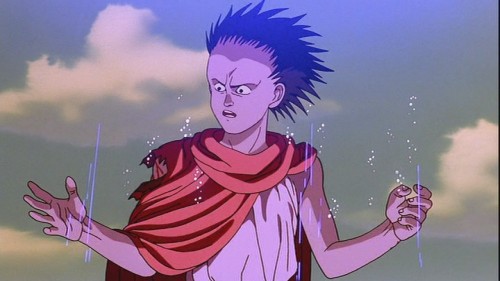
Waiting in line, drawing the Ogi

This is something I did while occupying time yesterday.

Vifam is a Tomino Show Alright

3 episodes in and we already have a kamikaze attack.

Ogiue Maniax Wins Bronze at the Anime Blog Awards

Ogiue Maniax wins 3rd place for the Bloggers’ Choice Rookie of the Year at the Anime Blog Awards. Congratulations to Borderline Hikikomori and Animanachronism for winning Gold and Silver, as well as all the other winners.

I’d like to thank Shingo of Heisei Democracy and Shiro of Toward Our Memories for giving me the opportunity to make guests posts on their blogs many months prior to starting my own. I’d also like to thank One Great Turtle of Anime wa Bakuhatsu Da! for blogging alongside me the whole way.

I’d also like to thank everyone who nominated and voted for me, and in fact everyone who reads Ogiue Maniax. There’s plenty of new blogs out there and I’m honored that you consider me among the best.

And of course I’d like to thank this blog’s namesake for being Ogiue and for letting me be a Maniac for her.

I started Ogiue Maniax back in November and it’s really been fun. This blog has challenged me to think harder about the anime and manga I enjoy, the industry which runs it, and the community in which I participate, and I’m all too grateful for it. This blog has introduced me to new friends and created opportunities above and beyond what I have deserved.

I hope that along with everyone in the community and beyond that we can every day reach a greater understanding of anime and manga through not only intelligent discourse but simply passion for the things we love.

Which in my case is Ogiue.

Misunderstood Shows

Well-known shows tend to gain reputations, good or bad, that dictate how people view those shows. Often times, these reputations are deserved, but there are some instances where the general impression of that show is primarily because of a lack of understanding. Two easily misunderstood series that come to mind are “Hokuto no Ken” and “Lucky Star.”

These examples, Hokuto no Ken and Lucky Star, don’t have to do with whether or not I think a show is good or bad. I like Maria-sama Ga Miteru but I can generally understand why some people don’t like it and their reasoning tends to be justified. Dragon Ball Z is another one where the reasons behind its popularity/anti-popularity tend to be very transparent. I don’t think the same thing applies 100% to either of the two titles.

Hokuto no Ken is one of the most popular shounen series of all time and the archetype of the shounen manga that we know today in the form DBZ, Saint Seiya, Naruto, Bleach, One Piece, and so on. Its most famous feature is most definitely the various methods through which Kenshiro causes severe cerebral (and bodily) hemorrhaging in his opponents. While this image is certainly not undeserved, it’s also the leading cause of why people are mystified as to its popularity. Some people even mistake it as “silly” or “comedic,” not understanding that the real appeal behind HnK is the way in which passion is imbued into every single situation. The 90s release of the Fist of the North Star movie in the US by Streamline Pictures is partly to blame for all of this, as the movie pales in comparison to the original manga or the tv adaptation. Kenshiro is not just a skilled assassin, he is a compassionate human being who fights for the downtrodden and wishes to save the world, and it’s this conviction which carries the entire story. Exploding heads are merely there to display Kenshiro’s amazing power, which certanly impresses the boys reading it, but also is contrasted with his kindness and humanity.

Lucky Star is sometimes called the “Anime Version of Family Guy.” The problem here is that people do not see beyond the use of references and into the differences in the way humor is delivered. Lucky Star almost never uses non-sequiturs in its jokes, and most of the time the jokes are either observational or involve some sort of set up. The references used, no matter how obscure, relate strongly to the situation at the time, rather than employing the cut-aways that make Family Guy famous and derided by Eric Cartman. As to why Lucky Star is popular, references alone would not be enough as plenty of shows for otaku employ references. The real reason why Lucky Star is popular is that it’s an incredibly self-aware show. It knows otaku are watching and it does more than wink and nod, it outright asks fans to interact with the show itself.

I think it is up to us fans to try and accurately convey what a show is like to new viewers. I know it isn’t easy, and I personally find it difficult to explain most anime to people because the way stories are set up tends to be very different from how stories can be summarized in the American culture of which I am a part. Professional attempts tend not to fare much better either after all (the Chobits manga ad, for example). I just hope that people are able to like or dislike a show for actual reasons rather than simply misunderstandings.

The Multiple Perspectives of Triangler

“Triangler,” the opening theme to Macross Frontier, is supposed to be about not the relationship between Alto, Sheryl, and Ranka but rather that of Hikaru, Minmei, and Misa. WIth that in mind, I tried to figure out just whose perspective the song was written from.

Initial logic would dictate that the song was written fron Minmei’s perspective, seeing as she was the singer in the love triangle, but some of it didn’t make any sense. Slowly I realized that the song is written from all three perspectives, with certain lines attributed to certain characters.

“Dragging a weak crybaby along with me, I decide to keep going on.”
This is probably Hikaru, with the crybaby being Minmei

“I’m frustrated with myself because it’s easier to distrust than it is to love or desire.”
Misa was initially distant and overly rigid when it came to following the rules.

“You say you’ll protect me, yet you’re not by my side.”
I believe this to be Minmay, whose relationship with Hikaru gradually fell apart.

And of course the big one:

“Who will you kiss, me or that girl?”
If I had to wager a guess, I would say this is almost definitely a Misa line, because Misa was very insecure about her relationship with Hikaru, and this kind of nervousness and doubt about oneself is very much like Ms. Hayase.

I wonder if “Do You Remember Love?” will be sung at some point in the series.

Not Plagiarism: Robot Taekwon V

“Robot Taekwon V” is a cartoon that captivated children’s imaginations in the 1970s, and had numerous sequels and remakes through the years. Recently, it was remastered for its 30th anniversary thanks to a lucky discovery of an undamaged print. If you’ve never heard of the Japanese anime Taekwon V, don’t be alarmed.

Because it’s Korean.

Looking at Taekwon V itself, “Mazinger Z” is probably the first thing that pops into your head. The resemblance is unmistakable, and it could easily fit into Nagai Go’s Giant Robot Pantheon. I’ve seen people online, mostly aggressive Japanese posters, decrying Taekwon V as a rip-off, a sign of plagiarism and uncreativity. The director Kim Cheong-gi has gone on the record stating the obvious influence that Mazinger Z had on his design. At the time, Mazinger Z was very popular in Korea and Kim wanted to created a Korean Super Robot so that kids would appreciate Korean culture. The likely scenario is that at the time he thought Mazinger Z was what all super robots should look like, so it’s no wonder that they look similar. That isn’t the reason why I say it’s not plagiarism though.

Taekwon V fights using its namesake, Taekwondo, and its animation reflects this fact. Mazinger Z and in fact every other super robot has never used Taekwondo. While Taekwon V resembles Mazinger Z heavily, its poses, mannerisms, and actions set it apart. Taekwon V is able to follow the movements of its pilot, a Taekwondo champion himself, two years before Daimos. It even has unique attacks, most notably its Rocket Chop (I don’t know the actual name for this), where Taekwon V makes a horizontal, back-handed chopping motion while simultaneously launching its hand to give it some added destructive momentum.

If it looks like a duck, but doesn’t walk like a duck, and it quacks in Korean, then it is Taekwon V.

By the way, this reasoning does not necessarily apply to other Korean Giant Robot shows. I’m looking at you, Space Gundam V.

Fan-generated Fiction as some call it

I recently listened to the Ninja Consultant podcast concerning the sexualization that occurs among fangirls, and the fact that this has become more prominent in recent times, with not only yaoi becoming a common sight at conventions but also modern works such as Dr. Who and Avatar: The Last Airbender being consciously aware of this fanbase. The topic of fanfiction comes up in the discussion, which is to be expected given that fanfiction and fangirls practically go hand in hand, but it reminded me of the fact that at the beginning of my own internet-based fandom I too was into fanfiction.

When I first began using the internet, my first fandom was a NiGHTS into dreams fanfiction site. I loved the Sega Saturn game to death (and still do), and I sought out other fans of NiGHTS. It was there that I found a site called “Nightopia on the Net” which would later change its name a few more times. It was here that I not only discovered other people with a passion for NiGHTS, but also stories that expanded upon the few plot details we were given as players of the game into a rich and vibrant (at least in my young eyes) universe. I’ve never read the Star Wars Extended Universe books, but I suspect the feeling was similar to anyone who is a fan of those, a feeling that the world given to us in these initial stories is so vast and unexplored that one can’t help but wonder what else is out there.

At some point, a few years down the line, I read fanfiction less and less. By this point I had been checking out fanfiction from various sources based on all sorts of series and would even actively seek out more unusual titles and concepts. Something in me began to sour, and I could no longer take fanfiction until I almost stopped reading it entirely. Back then, my reasoning was that I disliked the stories being produced for my fandoms, feeling that more than any sort of technical errors the problem was that the writers did not understand the characters. The characters’ actual personalities as displayed in their respective shows were nothing like the personalities displayed in fanfiction, and I asked (no one), “What’s the point of using these characters if you’re not going to actually use them?”

As mentioned in the Ninja Consultant discussion, it seems as if some works these days are simply there as fan fodder. Characters are given basic traits which appeal to the “shipping” side of fandom, and fans are free to ignore or cultivate any “evidence” as to whether or not their “One True Pair” could thrive. Setting aside any original creators’ desires to actively engage this line of thought, by all rights these are the people who are responsible for me leaving fanfiction in the first place.

But really was I, and am I, all that different?

Why do people enjoy pairing unreasonable characters together? To put it simply, it’s because they find the pairing to be hot. No big mysteries there. It’s what makes the Zutara pairing in Avatar so popular: a conflict of emotions, the fire/water dynamic, the idea that “if only they would get together, they would be great.” Of course, the conflict comes from actually getting them together.

Is there something wrong with this? Wanting to dive deeper into a world, to prove through fanfiction that there is so much more to a story, one can say that trying to find deeper subtext in the relationships presented is its own form of exploration. Hell, I can somewhat relate to making unreasonable pairings. I have a rather straight-laced friend who I would like to see date girls that would be all over him 24/7. Why? Because it would entertain me to no end.

Perhaps there is a threshold, and it is crossed when fans begin to believe that their opinions constitute the truth about a work, or even what should be true. This isn’t about creator’s vision vs spectator’s vision or anything of that sort, but rather to what extent people and groups begin to believe their own hype. Other than that, I think people are free to believe in whatever they want.

Even then, such a statement borders on the idea that there’s such a thing as a “right” fan and a “wrong” fan, and really, even if I find certain fans or their reasoning distasteful, I am just one person and I am not a judge of fanfiction. More importantly, I am not a judge of the heart.

After all, as Sasahara once said to Ogiue, no one can stop you from liking something.

Your Doujin Work Sucks

Hiroyuki, author and creator of Doujin Work, is not exactly a common name among anime fans. In some cases, I’d suspect that mentioning it would get more people thinking about To Heart than anything else. No, Hiryoyuki is probably better known around the internet for his comic involving a bespectacled teenager with a troubled past trying to get it on with a feline familiar. In other words, “A Cat is Fine Too.”

So here we have a man firmly rooted in the doujinshi “industry” making a comic about creating doujinshi. The story centers around a girl named Osana Najimi and her quest to create doujinshi. However, unlike Kazuki of Comic Party, who draws because he finds it incredibly fun, or Ogiue of Genshiken, who draws because she can’t help it, Najimi dives into the world of doujinshi for one reason and one reason only: profit. Her friends Justice and Tsuyuri are able to sell well at doujinshi events, so with a little practice the money-loving Najimi feels that she too can rake it in.

The only problem is that she sucks at drawing. Najimi has no natural talent, and effort does not seem to reward her much either. The work she creates sells mainly for the so-bad-it’s-good factor.

Hiroyuki’s style, born out of drawing doujinshi, makes much sense for a comic revolving around doujinshi. Overall, the manga (which is presented in 4-panel-style) is well-drawn and entertaining. The same cannot be said of the anime.

The anime adaptation of Doujin Work suffers from poor animation, though much of it is forgiven when taking into account the (presumably) low budget and fairly simple designs of the characters. There were also rumors floating around 2ch and the internet in general that working on the animation with Hiroyuki was a bit of a nightmare, and not in the good way. Even if this is just a rumor, the result is still a show that could have looked better and been better.

But that’s what makes it so interesting.

Here you have someone drawing a comic about a person who tries to get into the world of doujinshi with lackluster results. This comic is then adapted into an anime…with lackluster results. In a sense, the mediocre showing of the Doujin Work anime adaptation is the best possible outcome for it.

“Oh, but that wasn’t intended by the creator!” you might be saying. Well, not everything intended by the creator defines a work. Kind of like when an anime becomes a cult classic in spite of its quality and not because of it.

PS: I know the anime adaptation has a section which shows the voice actors of the anime trying to make and sell doujinshi, but for some reason no one ever bothered to include those parts in the available episodes. A sad loss.

Anime as context for learning Japanese

I’ve previously discussed using anime to support one’s Japanese studies, where I pointed out that it is very possible to do so.

Recently, this topic of discussion came up with a friend who also studies Japanese, and we determined that context can be very useful for learning any language, and in the case of Japanese that context may very well be the anime you watch. Just remembering a scene where a word is used can be enough to recall the meaning of something.

It might be looked down upon, but hey, whatever works, right?

Actually, more than anime and remembering vocabulary, I feel that making mental connections can be very useful in learning kanji. As an example, while studying with the help of flash cards I came across the word 油断 or “to be off-guard” and I immediately recognized it for one reason and one reason only.

Yuuda S(hi)ta!

Of course, don’t rely totally on anime, and don’t let it be the sole focus of your studies.

Shut Up! I Know What I’m Doing!