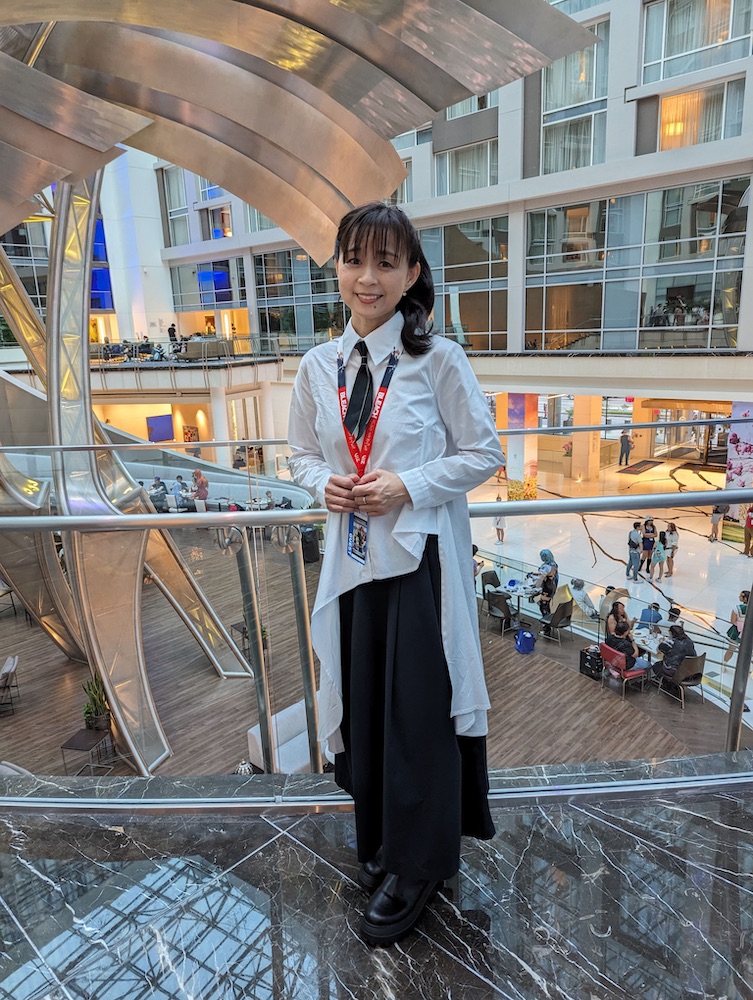
Ogiue Maniax at Anime Central 2023

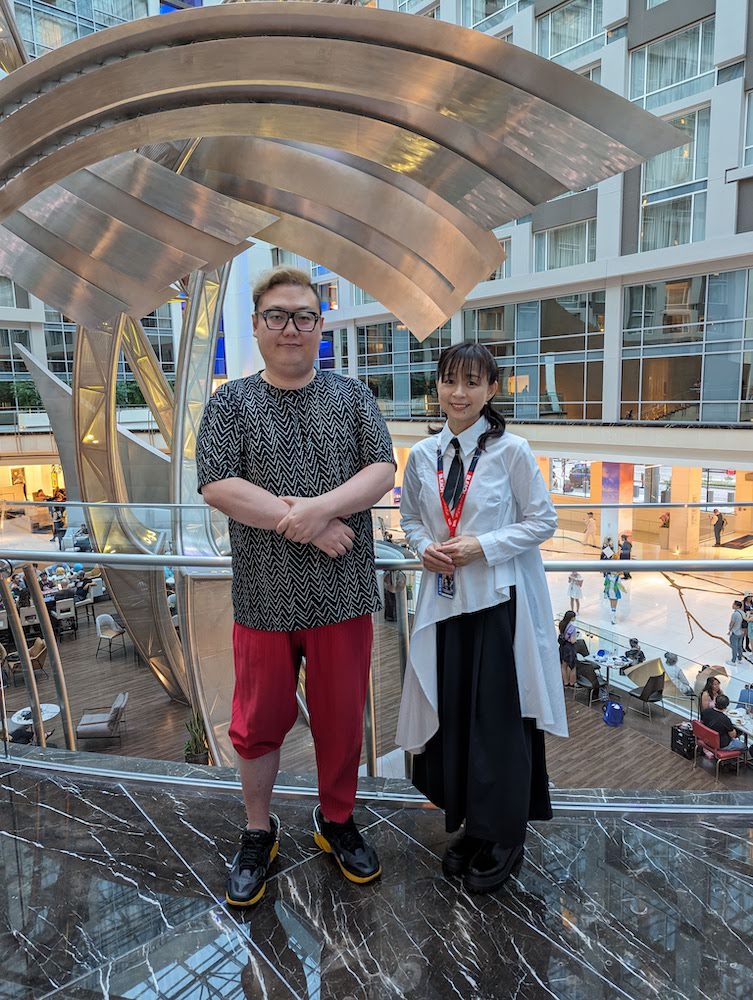
This is just a short post to say that I will be attending my very first Anime Central this May 19–21! Motivated by my wish to see Kubo “Koizumi Hanayo” Yurika, I have decided to dip my toes into the Chicago area.

I am doing zero panels, and will be attending them instead. I’ll also be trying to conduct interviews with guests. I hope to have a good time regardless—and I plan to make that happen even if the con doesn’t go as planned by scarfing down many hot dogs and Italian beef sandwiches.

To all those attending, stay safe! COVID is definitely still a thing, and I encourage everyone to wear good-quality masks. You will most likely not see me without one.

The 2023 Writers’ Strike vs. AI: Fighting Creative Bankruptcy

Even the most uncreative, awful stories are better than a world where AI scripts are the default.

The Writers Guild of America officially declared a strike recently—their first in 15 years. The Writer’s Strike of 2007 incidentally also began the very same month as Ogiue Maniax, so while this blog isn’t directly related to their cause, I feel a kind of connection to them. This is a form of writing, after all, even if it isn’t the kind that gets made into TV shows or movies on Netflix. 

I’m in full support of this strike, but one thing I want to focus on is their preemptive motive to restrict the use and crediting of AI software like ChatGPT, and to emphasize that all writers need to be human. The worry, as far as I can tell, is that studios and media companies will try to use AI to churn out basic scripts and then have the writers clean them up for less pay than they’d normally get. In the highly capitalist United States of America, we’re accustomed to seeing cost-cutting measures that punish the workers and reward the executives, so this would hardly be a surprising development.

My stance on this particular issue is that the writers are justified in their concern and are totally in the right. I’m not inherently against AI providing some form of entertainment. I spent many years enjoying the hell out of VGCW, which basically pit AI wrestlers against one another in a video game and then wrote a story around it. However, that pretty much amounts to using AI as an improvisational prompt not unlike Who’s Line Is It, Anyway?, and the majority of the creative output comes from actual people.

The human connection to writing is paramount, and I think this is something that should concern all writers and fans of media regardless of skill, ethics, or political beliefs. Someone could make the most derivative and poorly written story, and that would still be preferable to an AI script precisely because it is someone’s work that they put out through their own effort, even if it’s “bad.” I occasionally see arguments that using AI can stick it to the liberal Hollywood media or whatever. However, it’s a mistake to think this would only affect people on one side of the political spectrum. This will bite people in the ass regardless of their beliefs—no one wants to have their work trivialized.

The thing I find most insidious about the push for using AI for writing and other areas is that the assumption of cost-cutting implies the notion that writers, artists, etc. are somehow paid too much. Creative fields are notoriously unstable, and acting as if they’re the biggest cost sink is either disingenuous or horrendously shortsighted. I hope the strikers win this one, and that we have a media landscape where writers can feel like they are both fairly compensated and not treated like nannies for AI chat programs.

Oshi no Ko vs. Getter Robo: A Hot-Blooded Killer Combo

Sometimes it takes a meme to put a giant robot anime in the minds of the people. Hot on the heels of “Is this a pigeon?” comes the Perfect and Ultimate Getter mashup. 

For those who don’t quite get the joke, this is a mashup of the anime opening themes for 2023’s [Oshi no Ko] and 2000’s Shin Getter Robo vs. Neo Getter Robo. The two songs, “IDOL” and “STORM,” share a similar build-up during their respective choruses that makes one transition into the other almost seamlessly, with only a tweek to the tempo being necessary.

As a fan of both (the latter of which I watched during my formative years as an otaku), it makes me happy to see these two shows and their respective theme songs getting love. More than that, it made me think about a few things. 

First, I’m actually kind of surprised that so many people have a fondness for Shin vs. Neo. I know Getter Robo is just part of the bedrock of anime and the mecha genre, but I had always assumed Shin vs. Neo was just known in the little corner of the fandom I had occupied. Glad to see people have a sense of nostalgia for it, though that does make me feel old.

Second, if this is how newer anime fans discover Shin vs. Neo, then so be it. I hope they enjoy seeing a shirtless man beat a dinosaur soldier into submission, in addition to all the robot action. At the very least, the fact that this joke incorporates more footage of the anime means it’s able to show itself off better than Fighbird and the aforementioned pigeon meme.

Third, it’s a bittersweet reminder that one of the singers of “STORM,” Mizuki Ichiro, passed away earlier this year. IAs one of the elder statesmen of anime music, he might have very well leaned into this, and we might have legitimately gotten a cover of this. At the very least, Kageyama Hironobu and the rest of JAM Project are all around, and they are definitely game to perform memes (see their cover of “Okkusenman.”)

I think what I ultimately really like about Getter no Ko is that it showcases both series well. Their original content doesn’t get lost in layers of obfuscation, and I hope anime fans are able to experience and appreciate both.

I Finished Reading the Saint Seiya Manga

Five teenage boys all clad in extremely ornate, shining armor, joining fists while shouting, "Time to unite our lives and cosmos, and strike at Hades!!"

I can finally say that I am hip to the trends of 20th-Century South American anime and manga fandom, as well as other fandoms worldwide. I have continued my reading of the original Saint Seiya all the way to the end, and I now know who the characters are, where their appeal lies, and what makes the series so memorable. At least, I think I do.

Saint Seiya (also known as Knights of the Zodiac) is a 1980s Shounen Jump manga about Seiya, a teen orphan who earns the power of a mystical armor called the Bronze Pegasus Cloth in order to find his missing sister. However, taking this path results in him having to fight rival Saints, before eventually teaming up with them to take on greater threats—including the forces of Greek gods. The series takes a while to find its footing, but once it all coalesces, the result is a work full of passionate pretty boys with intense camaraderie whose many battles take readers through a roller coaster of emotions as one shocking development leads continuously to the next.

It’s very clear to me that the series plays things by ear rather than possessing a more concrete long-term plan. Many seemingly important plot points fall by the wayside, as if the author, Kurumada Masami, wasn’t always sure what Saint Seiya should be. It takes a circuitous path to becoming the tales of Athena’s Saints protecting the Earth, and even after that, many arcs conclude feeling like they might be the last. Characters frequently come back to life or have their armor seemingly irreparably broken only to be restored in some never-before-seen way. According to George Horvath, a big Kurumada fan, the author actually let the readers decide who would join the team, and the series does really feel like it was built in part off fan input in a manner similar to pro wrestling.

But what carries the manga through is just the sheer spectacle and excitement built around its core cast, the Bronze Saint, all of whom have very distinct personalities and appeal. Pegasus Seiya is brave and clever, as is befitting a shounen protagonist. Dragon Shiryu is wise and righteous like a kung fu master. Cygnus Hyoga is cool yet fierce. Andromeda Shun is gentle and compassionate. Phoenix Ikki is headstrong and stoic, his sparse appearances akin to a much less merciless and infinitely more effective Tuxedo Mask who throws traumatic hallucinations instead of roses. Every time one of them gets to shine, their most prominent qualities are on full display and add to the drama of the moment.

One thing that increasingly stood out to me is how every character is extremely willing to sacrifice themselves for others. Again and again, warriors both major and minor try to throw their bodies into the jaws of doom to help save the day. At one point, in what’s called the Poseidon Arc, a critical moment goes from Seiya willing to attack in a way that could cost him his life; to the female character Eagle Marin using her body to shield Seiya; to Seiya trying to shield Marin instead; to Shiryu shielding both; to Shiryu, Hyoga, and Shun forming a wall. It’s a whole lot of wreckless selflessness.

Saint Seiya is the origin of the once-notable “boys in armor” genre, but its reach extends beyond that immediate purview of Samurai Troopers and Brave Command Dagwon. The series is known for being huge with BL fans in the 1980s, and was a major force in the doujinshi scene at that time. It really is no wonder, what with all these fit-looking guys with expressive eyes acting passionate and emotional as they get bloodied and bruised in combat. Without even knowing beforehand, Shun and Shiryu would seem incredibly popular in this regard, the former with his soft and feminine aura, and the latter with his sharp features and long black hair. I don’t know for sure how aware Kurumada was about this fandom, but there are multiple times where Saint Seiya seems to try to get more hetero (are those sparks flying between Seiya and Athena???)—though it always ends up receding into the distance. Call it a template for future works in shounen.

Famously, the manga artist group CLAMP got their start drawing Saint Seiya BL doujinshi. When I think about that fact, I feel like I can tell that the CLAMP aesthetic owes itself in some part to the look of Saint Seiya. Especially in something like RG Veda, the handsome and beautiful characters, the detailed yet confusing full-page attacks, and the general atmosphere evoke the struggles of Seiya and his allies to a certain degree. 

Speaking of art style, I know that there is some debate among the fandom about Kurumada’s art style, which tends to be less conventional than the anime adaptation’s character designs. I can see why this divide exists, but I think there’s a certain charm to the manga’s look—an extension of its overall nonstop intensity. Even if the characters’ faces look kind of lopsided, it still carries an energy befitting Saint Seiya.

Although it rushes to wrap up a few dangling plot threads, Saint Seiya ends pretty decisively, making the reading experience satisfying overall. As is the case when I check out big titles from the past, it’s both entertaining and helps give me greater context for both manga history and manga fandom. As both a standalone work and a series that would inspire so much, it stands the test of time.

If You Love ’em, You’ll Let ’em Go: Eureka Seven Hi-Evolution Full Review

Eureka Seven is an anime I love to death. Nearly two decades later, I still hold it up this TV series as one of the best ever. The sequels and spin-offs, however, have not been as hot. A film (Eureka Seven: Good Night, Sleep Tight, Young Lovers) basically reused footage from the TV series to tell a wildly different story where the characters look the same but are different people. A sequel TV series (Eureka Seven AO) damaged the story and visited gratuitous amounts of tragedy on the original heroes. And most recently, we have Eureka Seven Hi-Evolution, a trilogy that is similar to both previous continuations while embodying neither the best nor the worst of the franchise as a whole. 

Hi-Evolution consists of three films each focusing on a different major character: Renton, Anemone, and Eureka. However, much like Good Night, Sleep Tight, Young Lovers, they‘re seemingly not the same people as in the TV series. Whether it’s having different parents or literally being from another world, details great and small are out of alignment. Hi-Evolution also follows the pattern of intersplicing old footage with new, but again with drastic changes in context that make it unrelated. 

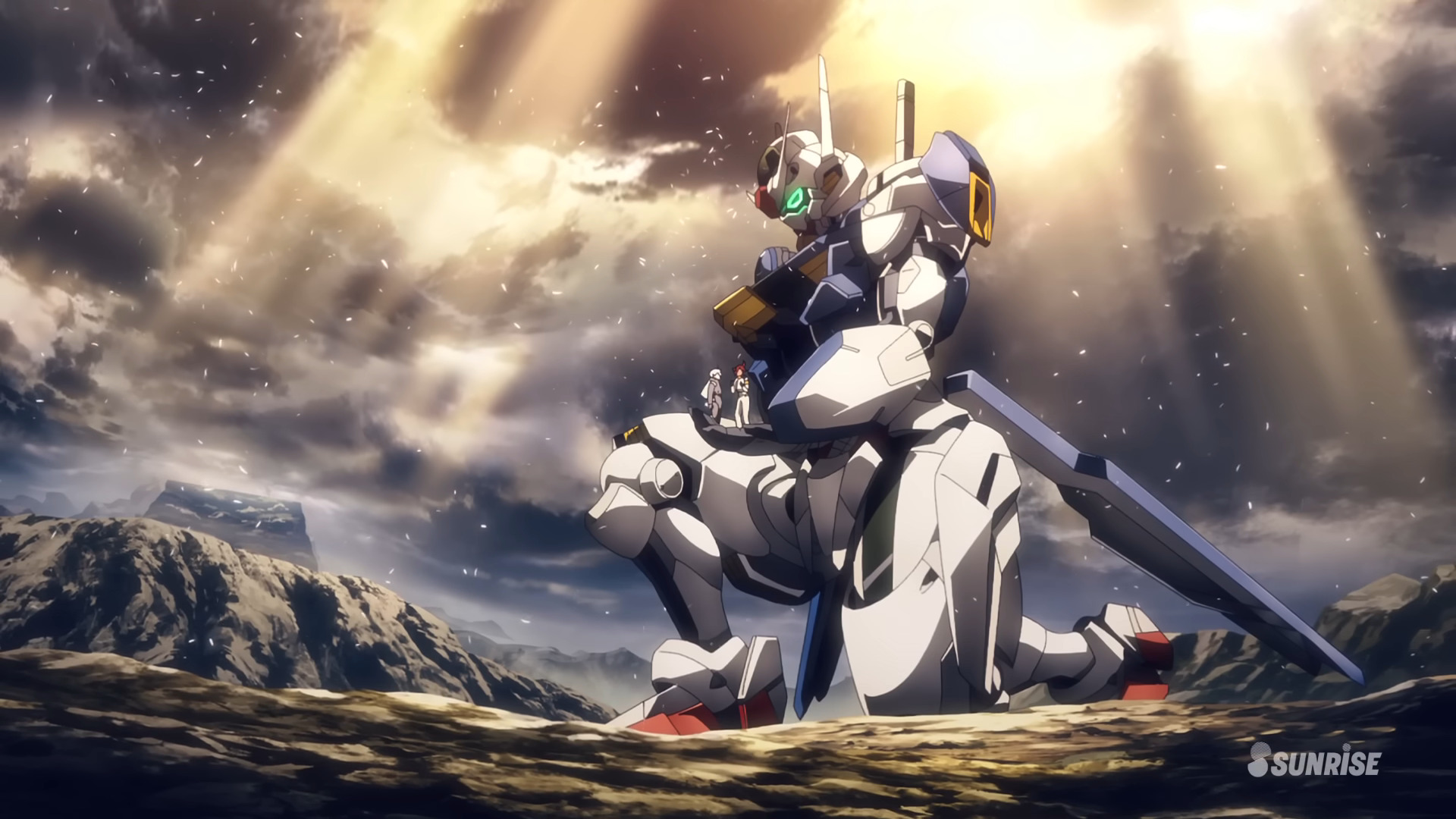
Or is it? Another aspect of the Hi-Evolution films is that they might actually be sequels to the original TV series, as well as possibly everything else in a sort of Turn A Gundam sense. It could be a unifying sequel, or a reboot, or an alternate universe, but it’s not very clear because so many things are so unlike what has come before. Or maybe it is obvious and I refuse to accept the possibility that this might be “canon” as it were. 

Hi-Evolution as a sequel would be saying something along the lines of “this is the real story you couldn’t see,” and my response is “eh.” As a remix or an alternate track, however, it has more legs. It contains solid narratives regarding relationships between parents and children and between people in general, the way humankind struggles with thinking of everything as a zero-sum game, and a look into dreams and possibilities. The issue is that I’m not sure why it had to be in the guise of Eureka Seven. I actually think if it had been conceived as an original project, it would be a lot less shaky overall, and wouldn’t invite such comparison.

I worry that the director and staff on Eureka Seven might be too attached to the aesthetics of the franchise, and it holds them back from being able to do more. As much as I adore that first anime, it might be an anchor dragging everyone down. Better to free everyone and let them soar with new ideas.

You May Dream: Ogiue Maniax Status Update for May 2023

I find myself in a constant state of worry that I’m not doing enough with anime and manga. It’s not like I’m avoiding it entirely, but I think my very focused consumption of it has receded slightly both in an attempt to do things I’ve never tried before and to make up for time lost in other categories.

There’s an entire Breath of the Wild sequel coming out this month, and I’ve only just gotten the glider in the first game! I want to build my language skills in Japanese as well as in others. I worry about being the person chasing two rabbits, but at the same time am perpetually unable to pursue just one without regretting losing the other.

In the meantime, shout-outs to my Patreon subscribers, including a new supporter among the Sue Hopkins fans.

General:

Ko Ransom

Diogo Prado

Alex

Dsy

Sue Hopkins fans:

Serxeid

Philippe Nguyen

Hato Kenjirou fans:

Elizabeth

Yajima Mirei fans:

Machi-Kurada

Blog highlights from April:

Inugami Korone, Taira Isao, and My Fandom History

I seriously did not expect the singer of Braiger and Ideon to show up.

The Safe Yandere

For when you want the taste but not the full buffet.

Randori Acts of Friendship: “Ippon” Again!

You might have missed this delightful judo anime.

Kio Shimoku

Kio made something that the kids would call yabai.

Apartment 507

Looking back on the end of Love Live! School Idol Festival.

Closing

I’m actually going to Anime Central this month for the first time! I’m hoping to get to see Kubo Yurika (aka the voice of Hanayo).

And you probably have heard about this, but the Writers Guild of America has gone on strike to protest unfair wages from streaming and the threat of companies potentially trying to use AI to hamstring writers. Funnily enough, the last time a writers strike started was on November 5, 2007—the same month as the birth of Ogiue Maniax.

I wonder if we’ll get any Dragonball Evolutions out of this.

Kio Shimoku Twitter Highlights April 2023

Kio Shimoku announces the release of his first original 18+ doujinshi in his tweets this month.

Kio made these cool photo/drawing composites featuring his characters sitting on the manga they’re from.

Kio drew his first original 18+ doujinshi, called It’s All Your Fault, Sensei, which is now available on FANZA and DLSite under the circle name ぼたん堂. Content note: It is futanari on cis girl, and in terms of depictions of sex goes well beyond anything shown in Spotted Flower.

Those who have been following Kio’s Twitter account might recognize one of the girls, as he drew an earlier version of her around the New Years in a bunny outfit.

New side chapters of Spotted Flower on the Rakuen website.

Kio mentions that had he wanted to draw what happens between Sasahara and Ogiue on the couch, it would have been “something similar,” though the original tweet has been deleted, so it’s not clear if he’s referring to his doujinshi or the fact that Not-Sasahara and Not-Ogiue are in bed together in the side chapters. 

Video of Kio’s tortoise eating!

Kio learned the trick of modifying model kit boxes to make them smaller in order to store completed kits.

A doujinshi cover of Ritsuko from Genshiken Volume 1.

From Genshiken Volume 4, reviews of different routes in the Kujibiki Unbalance visual novel. Madarame reviewed Renko’s, Sasahara Ritsuko’s, Tanaka Izumi’s, Kugayama Kasumi’s. Kio agrees with a commenter that Ootani Ikue (voice of Pikachu) fit the character perfectly.

Good weather for the tortoise.

Kio sometimes finds model kits he forgot he bought, and then gets in the mood to want to build them.

According to Kio, drawing ero manga is sort of the opposite of regular manga, and that’s what made it tough for him when planning it. In regular stuff, his thought process is paneling -> text -> art, but for pornographic stuff it’s art -> text -> paneling.

Kio is shocked by the developments in Princess Principal: Crown Handler Part 3.

The tortoise stepped outside to rest, despite it not being all that sunny.

A rough manuscript of Kio’s 18+ doujinshi. It was originally 20 pages but became 50 in the final product. 

Kio recalls a special on Do You Like Wednesdays? called “Butt Rhambutan.” A commenter finds a screenshot of the title screen.

Kio shares a drawing he made of the school doctor from his doujinshi.

Kio tells everyone to visit his Pixiv via the link on his Twitter profile.

The doujinshi manuscript is also on Pixiv.

Kio brought his tortoise outside and checked to see how it was doing, only to find it flipped over. He went out himself and flipped the tortoise back.

Art of Tokino from Kujibiki Unbalance from Genshiken Volume 1. Kio mentions that he actually forgot to post this in previous months.

Mecha, Isekai, and the Changing Image of Anime

A while ago, a thought popped into my head: isekai is the mecha of the past decade and change. 

The comparison is not perfect by any means, but what I see in isekai today is a position in Japanese pop culture that’s not so different from where giant robots were in the 1980s. Namely, they have their roots in power fantasies, rely heavily on visual and conceptual tropes around that power, and are pretty niche genres that are ubiquitous enough to be considered mainstream nevertheless. In other words, where giant robots were assumed to be part and parcel with anime as a whole, being transported or reincarnated to another (extremely game-like) world is now the de facto stereotype for many fans of anime.

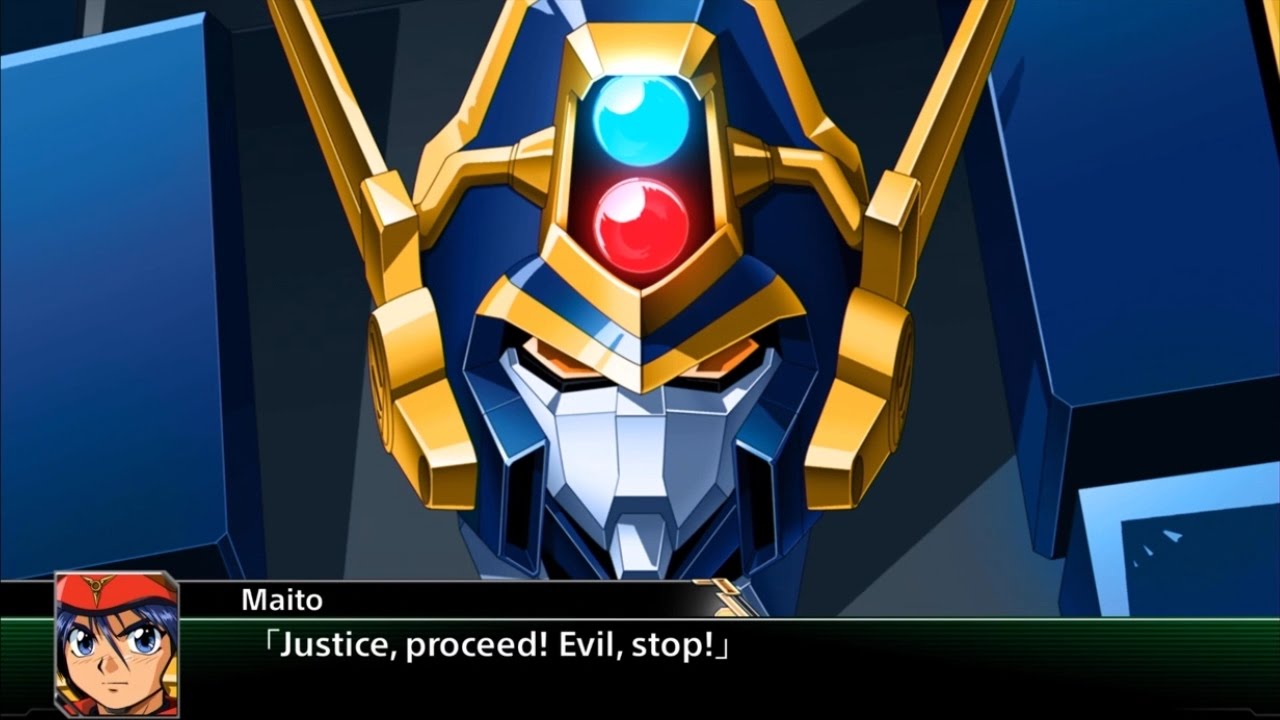
Another important similarity is that derivative titles have had to find a place in their respective media landscapes, navigating the desire to be different enough to stand out while looking comfortably familiar enough to appeal to genre fans. Only, instead of it being God Mars and Armored Trooper VOTOMS, and Aura Battle Dunbine (itself an earlier incarnation of isekai) nudging the envelope, it’s The Hero is Overpowered But Overly Cautious, So I’m a Spider, So What?, and My Next Life as a Villainess. Also, of course, there’s Knights & Magic, the modern isekai that is also a mecha series and even starred in Super Robot Wars 30.

And like mecha, I expect isekai will have a downswing at some point, as people and cultures change. In that future, what I’m looking forward to is having people who are fans of isekai not so much as a way to live vicariously through these stories but in the sense of academic and anthropological fascination. Just as mecha fans like myself like to explore the history of giant robots, warts and all, I want to see enthusiasts looking at every obscure and major 2010s-2020s isekai title out of genuine curiosity over the genre as a whole.

As a final aside, I’ve been thinking about the legacy of Amuro Ray’s character and its influence on anime protagonists as an “otaku” before the term was even coined. Perhaps that’ll be for another post.

The Safe Yandere

I’ve been thinking about what I call “safe yandere,” or alternately “yandere aesthetic.”

Yandere character fetish feeds off many things. The notion of a character who’s so in love with another that she turns into a crazed axe murderer (and that this is a good thing!) is at the same time obvious and complex. It’s a realm of fantasy that, in my estimation, works by essentially being so hyper exaggerated as to feel real—like how food for astronauts is made extra spicy because the sense of taste is dulled in space.


Because yandere characters come primarily from media like anime, manga, and visual novels, there are many visual shortcuts to convey that quality. The thousand-yard stare, the creepy smile, the icons of sadism, and so on make portraying a yandere in a single drawing perfectly possible. What this also means is that this aesthetic can be extracted and placed onto characters who aren’t necessarily trying to trap their significant others in cement so that they can be together forever.

The first example that stands out to me is Jabami Yumeko in Kakegurui. She has all the visual hallmarks of a yandere, except she directs that primal energy towards the art of gambling instead of a person. She doesn’t take pleasure in hurting others so much as she does mutually experiencing the torrent of emotions that stir when everything is on the line. 

Another is the teasing girl. They’re not exactly yandere—more like a midway point between that and tsundere—but they can serve a somewhat similar function. Nagatoro might be the most well known at this point, and her sneers evoke a kind of pain/pleasure combo that aligns with the general yandere for vibe. 

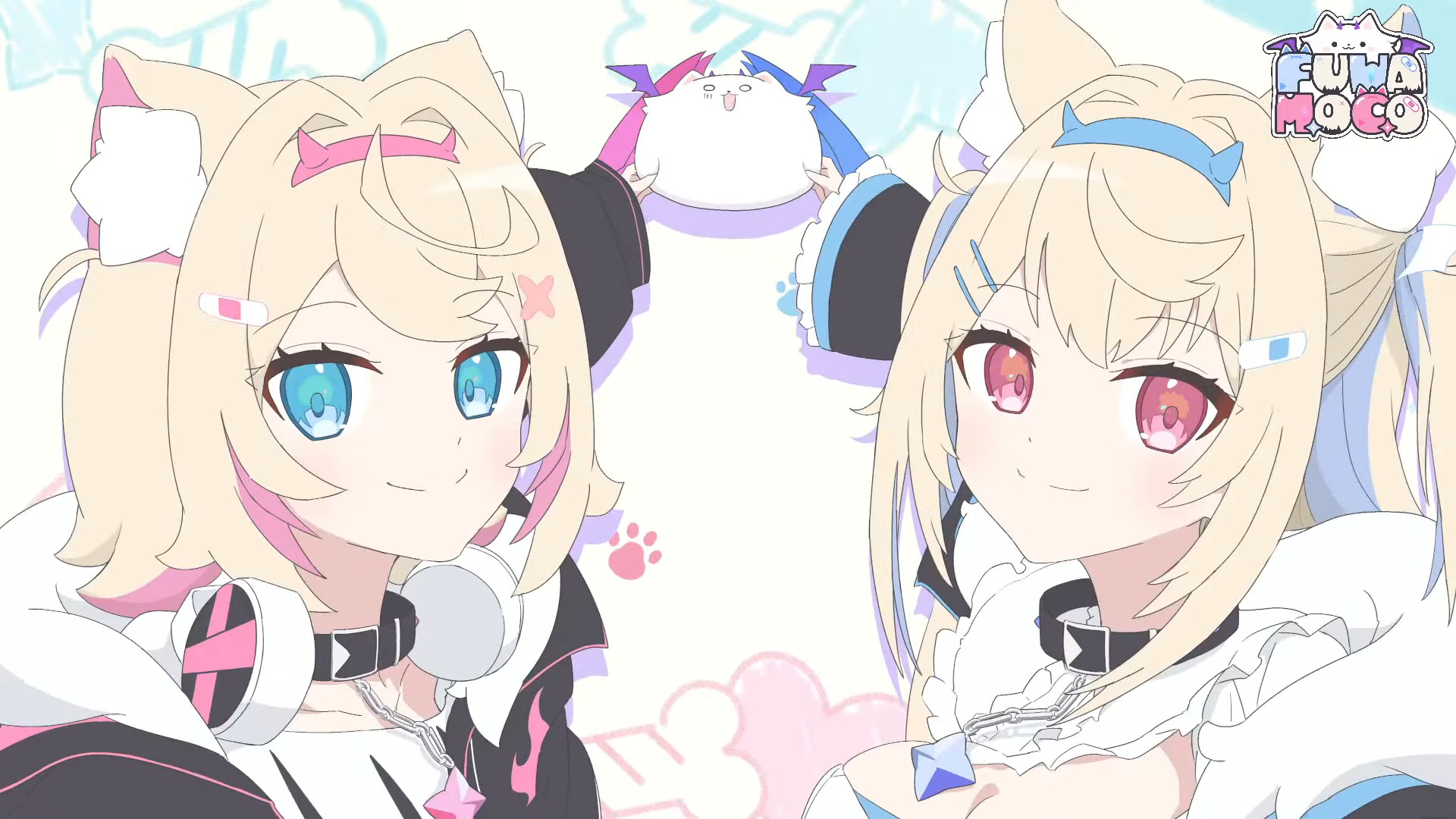
The last example actually comes from the world of VTubers. The Hololive zombie girl Kureijii Ollie has a visual presentation that is very reminiscent of yandere, especially in the eyes, but her personality is far from it. I suspect that this contrast is part of her charm, though, and a reason she’s so popular. Incidentally, another Hololive member, Ceres Fauna is sort of the opposite: Her appearance is gentle but her words and demeanor can get yandere, especially in ASMR streams.

I don’t think separating out the visual component of yandere is a bad thing—far from it, in fact. It gives people the opportunity to assess themselves and what they enjoy, allowing for greater personal discovery. It also reminds me a bit of what has happened to the concept of vampires. Some people just want a specific sub-flavor of hotness, and that is okay.

I don’t know if we’ll reach a point where the definition of yandere has fundamentally changed and it goes towards the safe yandere. I doubt it, given the continued popularity of characters like Toga Himiko from My Hero Academia. But like so many things, I’d rather people be able to remember that this transformation has occurred rather than wholly adhere to some specific definition. History is important, even that of the yandere.

(And technically, all fictional yandere are safe precisely because they remain in the realm of fiction. Though that does mean VTubers can blur that line…)

Inugami Korone, Taira Isao, and My Fandom History

As a Virtual Youtuber, Inugami Korone has always been known to march to the beat of her own drum. From doing flips and cartwheels during the biggest Hololive events to squealing with glee over a fishing game getting ported to the Switch, you never quite know what to expect from her. Even knowing this, however, nothing could have prepared me for one of the special guests at her 4th Anniversary Concert: mecha anime singer Taira Isao.

I both saw and heard Taira as he came in on the second verse of the Galaxy Gale Braiger opening, and my jaw dropped. In a world where a cameo by a VTuber from a rival company is a big deal in itself (something Korone also included), to have such an established name and fan favorite is a boss move like practically no other. And on top of that, I would have expected at most to see him on the screen behind Korone, but there he was, standing next to her and sounding as amazing as ever.

Taira is not necessarily the biggest name among musicians of giant robot anime, but the songs he has under his belt occupy a sweet spot: somewhat obscure, beloved by hardcore fans, and actually incredible tunes. Other songs he’s performed are the openings to Trider G7, Daiohja, and Ideon, the last of which he also sang with Korone. In fact, Taira first became aware of Korone specifically because she sang “Fukkatsu no Ideon” during her 2022 birthday concert. 

A number of significant names in anime and game music have collaborated with Hololive, but Taira is perhaps the most personally significant thus far. Owing to my love of giant robots and my more recent interests in VTubers, I maintain an unorganized Youtube playlist called the rather self-explanatory “Virtual Youtubers Singing Giant Robot Anime Songs.” 

But my fondness for the singers of Taira’s generation has been with me for 20 years. Back in the mid-2000s before Youtube even was a thing, I was enthusiastically discovering and discussing video clips of live performances of musicians like Mizuki Ichiro, Kageyama Hironobu, and indeed Taira Isao. Through these concert videos, I bonded with friends online; in fact, this is how I first came to know my fellow mecha enthusiast and mahjong partner-in-crime, Dave, before we ever met offline. To see Taira show up with Korone, still snazzily dressed and still looking incredibly good for his age, feels like a culmination of various bits and pieces of my own history as an anime fan.

Even now, I find myself re-watching the 4th Anniversary performances of Braiger and Ideon music, and it actually reminds me of how I felt whenever a really good character trailer happened in Smash Ultimate. I’d watch the reveals over and over again to relive the excitement of the initial reveals, and to just remind myself that they’re real. It makes sense when you think about Tairas’ performance with Korone being a similar kind of hype crossover. 

How will Korone top herself next time? I’m looking forward to seeing what less-traveled road she takes.