Haven’t Done This in a While

Cliff Notes Characterization: Another Moe Discussion Part 3

In my previous two entries in the Another Moe Discussion series, I may have generated some confusion on the topic, particularly because my own choices for characters I find to be particularly moe may seem somewhat unusual. In addition, reading the comments I received,  a question popped up in my head: does the “moe” label imply a certain character depth or a lack thereof? The answer I’ve come up with is that it is both and neither. A seeming cop-out response, but allow me to explain.

Let’s say there’s an anime series you absolutely love, and in it is a character with strong characterization who goes through some trauma, and in the process resonates with you emotionally, possibly sexually, and you want to tell other people how great the character is and how powerfully attractive they are. The best way to try and make them understand would be to get them to watch the series, but if that is an impossibility, the best you can do is summarize the character and try to describe in fewer words just what made the character move you so. If you have to summarize your complex feelings towards the character in a few sentences, you’re going to have to either pick very specific moments or generalize greatly to give a broader view.

Now then, what happens if all copies of the original work fell into the ocean without any chance of salvaging them, and all the world had left was that summary you wrote? To be sure, your summation has its own merits, as does your intent to really get to the core of what makes you love that character so dearly, but what you’re left with now is a record of that depth. It would be like if nearly every book in the world on a subject was destroyed and the only ones left unharmed were Cliff Notes, and then everyone assumed that this is the way things are and also begin to write their own original stories in the Cliff Notes format. The summary becomes the entirety of the work.

Let’s use a famous character who is often argued as both moe and not-moe: Evangelion’s Ayanami Rei. Having watched the entirety of the original Evangelion series, I can say that there is a lot to Rei’s character to the extent that it’s somewhat difficult to summarize her character and do her justice, but if I had to, I would describe her as an expressionless girl who is fully aware of the fact that she is not unlike a human doll, and has to live while being unsure as to whether or not her emotions are real or just facsimiles. Rei often puts herself into danger as she does not regard her own life as more special or important than the task at hand. To abridge that once more, “Rei is a seemingly emotionless human doll who has little regard for her own well-being.”

But what happens if you take that Cliff Notes version and were to simplify it even further? A Spark Notes of the Cliff Notes one might say. What if you were to reduce the element of time down to zero, and attempt to express those aspects of Rei purely in her visual design? Blue hair and pale skin make her appear more doll-like. An expressionless face implies a seeming lack of emotion. The frequent appearance of bandages on her body implies that she often gets injured. These visual elements become symbols with their own power, which then can be isolated, codified, and even fetishized. Rather than looking for a character by their description as a conflicted human doll who struggles with understanding emotion, you can instead look for a character with pale features. And then you can play off of that trope by making a pale character who acts unlike the stereotype. That leads us to where we are now.

Depending on the extent to which you simplify and distill the attributes of a character, moe can be something with plenty of depth or very little, be it an emotional depth, a storytelling depth, or some other kind. I think this also explains why some people can have such a bad reaction towards moe, because it can be seen as a reduction of what should be there, a quick-and-dirty facsimile of storytelling and characterization. However we must also keep in mind that art and fiction itself is often an exercise in summarizing and simplifying ideas and emotions to transmit them more easily.

Static vs Active: Another Moe Discussion Part 2

Yesterday, I made a post about how the “issue” of moe basically came down to whether or not it was personally offensive to someone. I didn’t go into what “is” or “is not” moe, as what was important there was not to get people to agree to any one definition but to point out the fundamentals of why moe can make for such heated debates and arguments. Today though, I want to talk about one of the possible reasons why discussions regarding moe can often seem like the two sides are arguing two entirely different topics. Keep in mind that my goal is not to show one side being right and another wrong, but to help you better understand why it is you, I, or anyone has developed their respective opinions on the topic of moe.

In the past, I’ve defined moe as a strong empathy for a character’s weaknesses, but knew that not everyone would necessarily agree with my interpretation. The more I studied my own definition and others’ however, the more I realized that there was some mix-up as to what different people considered the most important element in defining moe. From there, I thought up two general categories: static moe and active moe.

Static moe is where a character’s design and basic attributes are moe. The character’s voice, personality, unique physical traits, etc. all contribute to static moe. The idea is not to pull a character completely out of their context, but to see them in a stilled moment and gain moe from that.

Active moe is achieved through a character’s actions or what happens to them in the context of an animation. It is in the way they change or interact with their world that creates moe. In a way, this moe lacks concrete evidence, and is built into how the character grows on the viewer.

If we look at Tsukimiya Ayu from Kanon, her love of Taiyaki, tomboyish personality, lack of cooking skills, and penchant for saying “Uguu~” are all elements of static moe. Ayu’s interactions with Yuuichi, the way the two characters grow closer as friends, and the manner in which we learn about her true identity are what comprise Ayu’s active moe. To generalize, static moe is the stationary character, while active moe is the character in motion.

Now, what contributes most to your perception of moe? Whether you like moe or not, do you view moe as primarily static, where the most vital aspect of it is the design of the character, or do you view it as primarily active, with the greatest emphasis on the path the character takes?

Using myself as an example, when I examined the characters I found to be the most moe (Ogiue, Eureka, Hinata, etc.), I realized that my views on moe were shaped mostly by my own emphasis on what they had done as characters. In other words, I was moved strongly by their active moe. Again though, it’s not as if moe as active will make you like it, or thinking of moe as static will make you dislike it, but I think that the view of moe people have shaped in their mind relative to this dichotomy strongly influences their opinion as a whole, whether they realize it or not.

That’s Part 2 of Another Moe Discussion. Is there going to be a Part 3? A likely possibility, as I do have something in mind.

Two Questions: Another Moe Discussion Part 1

Hi kids, it’s time to talk about moe again.

There’s two things I want to address here, the first is what is up with the strong feelings towards/against moe. The second topic I’m going to address tomorrow, so hold onto your hats!

We as anime fans on the internet can argue about moe all we want, whether it’s hurting or helping the industry or anime as an art form, whether it’s a boon or a detriment to storytelling, but when you strip away all of the noble back-and-forth posturing and gesturing, it basically comes down to two “yes” or “no” questions.

Does moe creep you out?

If so, are you okay with that?

And this is based on however you yourself interpret moe to be. Of course I’m generalizing, and there can be other reasons to dislike it, but from what I’ve seen this is the origin of the most vehement opposition to it is from the people who just cannot handle the idea that anyone proper of mind would like moe of all things, and its most ardent supporters are the ones who take offense to the idea that they are somehow developmentally insufficient.

Now it’s okay to be creeped out by moe, as that’s totally your prerogative. I may like moe myself, but it’s not like there hasn’t ever been an instance where I was creeped out by a piece of fiction and I was not okay with that. Specifically, I’m talking about that awful Thundercats comic from a few years back where they had Wily Kit and Wily Kat as bondage slaves to Mumm-Ra. Sure, they were adults in the comic but what the hell. That really weird sexualization of two comic side characters from a children’s cartoon bothered the hell out of me, especially because this was not some guy’s fanart but an actual official comic that was supposed to be like canon to the Thundercats story. In many ways I think it’s similar to the reaction that a lot of its opponents have against moe, replacing Thundercats with anime as a whole.

As to what influences perception of moe, that’s for the next post.

Something’s Wrong with Medaka Box

Every week or so I find myself reading the latest chapter of Medaka Box. The thing is, I don’t like it all that much. It has a number of fine qualities and moments, like when Medaka pulls a Joseph Joestar and imitates someone to a tee, but something about it just doesn’t jive with me. It just doesn’t have that oomph, aside from that one girl on the track team whose design I like.

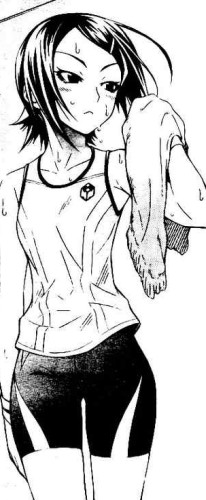
Whoo, she’s nice.

The problem isn’t that I’m not fond of it, but rather that I’m not sure why don’t like it that much, and it’s been bothering me since Chapter 0. It’s not the Nisio Isin-ness of it; I like Bakemonogatari just fine. Is it the visuals with the dialogue? This is further complicated by the fact that there’s plenty of mediocre to bad anime and manga that I do like, and none of them seem to have the unique problem I perceive Medaka Box as having.

I feel like I’m continuing to read it either in the vague hope that it’ll get better and all the pieces will start to come together, or that if I continue with it I’ll be able to better figure out just what my problem with Medaka Box might be.

Ichigo Mashimaro and “Product Placement”

Of all the scenes in Ichigo Mashimaro‘s anime, the one I remember most is the one where young british lass Ana Coppola is out on a hot day.

Ana stops by a vending machine, looks at one of the sodas, and says to herself, “Ghingheru…? Well, as long as it’s cold, it should be fine.”

Then an old man’s voice creeps in.

“G. I. N. G. E. R. A. L. E. It’s called…’Ginger Ale.'”

This sudden information startles Ana, who decides to leave quickly.

And ever since then, that is what I think about whenever I open up a can of Canada Dry or Schweppe’s. In a way, I’m not much different from those guys who bought Akiyama Mio left-handed basses.

“Why Do Attempts to Look Manga-Style Tend to Go Wrong?”

I’ve never been able to pinpoint the exact causes for why drawing “manga” style typically doesn’t look quite right, but there’s some things I’ve noticed that I think point towards why this tends to be the case.

The artists did not grow up in the culture. I had a Japanese teacher who one day as part of a vocabulary exercise brought into class a drawing she made of a “handsome guy.” Now, my teacher was not an artist, but the picture she drew was clearly that of a manga-style character and nothing seemed out of place. It was just, when drawing a cartoon character who’s supposed to look stereotypically handsome, this is how it turns out. While I don’t think not growing up in Japan or Japanese precludes an artist from developing that style, I think you can see how growing up in different environments with different artistic influences can change how even a normal person draws or sees drawings, let alone a professional.

But what then are those stylistic differences? Why is it that a manga artist who draws super realistically can still feel naturally like manga? Why is it that even a lot of the non-Japanese artists who get the basic visuals right (i.e. understanding that it’s not just big eyes and small mouths) still tend to produce works that jar you out of the illusion?

The first big one is the different philosophies in paneling. Traditionally in manga, the flow of panels is very important to the story, with emphasis on the concept of “flow.” That’s not really an official term or anything, but it’s one I like to use. Manga are typically designed to have the readers’ eyes be guided smoothly through the page, from one panel to the next, with everything in the panel, art and word bubbles and all, facilitating this flow. While American comics for example also take care to utilize word bubbles in strategic areas to help move the reader along, traditionally the American comic has been about having self-contained panels, each of which encapsulates everything going on at the time, a perfectly stilled moment. I’m reminded of when Grant Morrison in an interview after Final Crisis said, “We talk about events all the time. Well, why can’t every panel be an event?” In a way, he’s not far off from the tradition of Western-style comics, whether it’s indie, superheroes, or newspaper gag strips. It’s also what I think is the real difference between “compressed” and “decompressed” storytelling.

Basically, think of manga as a river, and American comics as a series of ponds. While of course there’s more to comics than just America and Japan, I’m simplifying for the sake of what little claims to brevity I have left. And while there are exceptions on both sides, take note how a manga with not as much “flow” such as Space Adventure Cobra or Nausicaa do well in the west, particularly Europe where highly illustrative backgrounds tend to be emphasized, or how an American comic with a strong sense of visual “flow” in Little Nemo could be seen fondly in Japan (at least I believe it is, if someone can correct me, please do so).

And then there’s other smaller things. Scott McCloud in Understanding Comics for example talks about how back when romance stories in American comics were more common, they still tended to compose scenes as if all of the characters were figures placed in a room. Contrast this with shoujo manga, which tends to emphasize the emotional over the physical; it’s not as important that you know where characters are standing.

But that only applies to manga, right? What about all those cartoons that try, but don’t quite get it. Your Teen Titans and Totally Spies and what-not. There, I’m not as certain about it, but I think it just has to do with what’s considered common in Japanese Animation to the point of it being ingrained into the system. I think the most prominent example of this might be animating on the 3’s, which means changing the image on every third frame instead of every second one as is common with American cartoons. This was originally one of many necessary money-saving techniques for anime on limited budgets as far back as Astro Boy, and what ended up happening was that stuff like animating on 3’s and using lots of stills and closeups, stuff which had its origins in having scarily low budgets, began to be embraced and improved upon and mastered until it in essence became the style anime is known for. What’s important here is the way in which factors such as these influenced the sense of timing that anime tends to have, and if you don’t understand that sense of timing then it becomes difficult to replicate it. Anime has a unique sense of timing.

To summarize, what makes manga seem like manga and what makes anime seem like anime goes deeper than how the characters or backgrounds look, all the way to how the story is told through the visuals. Another important thing to remember is that this is less about quality, or why one is “better” or “worse” than the other, and more about why things are the way they are from the worst comics to the best ones. If you were to compare X-Men: Misfits, an American comic trying to be manga, and that Japanese X-Men manga I posted about a while back, a Japanese comic trying to be American, you’d see that neither one is able to fully escape their origins. Whether these are the most significant factors, I don’t know, but that’s what I’ve seen.

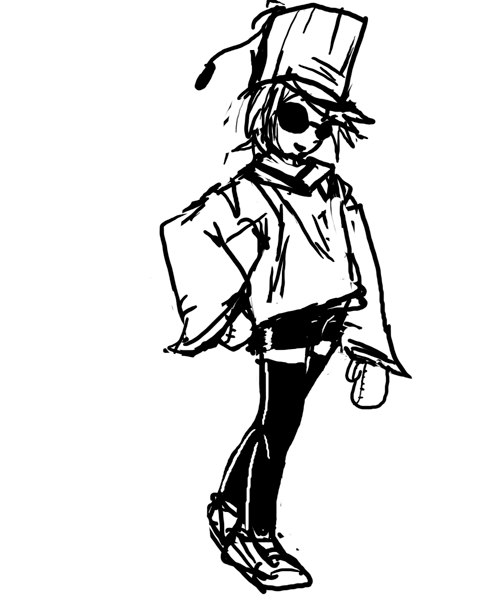
 

I’ve never been able to pinpoint the exact causes for why drawing “manga” style typically doesn’t look quite right, but there’s some things I’ve noticed that I think point towards why this tends to be the case.

The artists did not grow up in the culture. I had a Japanese teacher who one day as part of a vocabulary exercise brought into class a drawing she made of a “handsome guy.” Now, my teacher was not an artist, but the picture she drew was clearly that of a manga-style character and nothing seemed out of place. It was just, when drawing a cartoon character who’s supposed to look stereotypically handsome, this is how it turns out. While I don’t think not growing up in Japan or Japanese precludes an artist from developing that style, I think you can see how growing up in different environments with different artistic influences can change how even a normal person draws or sees drawings, let alone a professional.

But what then are those stylistic differences? Why is it that a manga artist who draws super realistically can still feel naturally like manga? Why is it that even a lot of the non-Japanese artists who get the basic visuals right (i.e. understanding that it’s not just big eyes and small mouths) still tend to produce works that jar you out of the illusion?

The first big one is the different philosophies in paneling. Traditionally in manga, the flow of panels is very important to the story, with emphasis on the concept of “flow.” That’s not really an official term or anything, but it’s one I like to use. Manga are typically designed to have the readers’ eyes be guided smoothly through the page, from one panel to the next, with everything in the panel, art and word bubbles and all, facilitating this flow. While American comics for example also take care to utilize word bubbles in strategic areas to help move the reader along, traditionally the American comic has been about having self-contained panels, each of which encapsulates everything going on at the time, a perfectly stilled moment. I’m reminded of when Grant Morrison in an interview after Final Crisis said, “We talk about events all the time. Well, why can’t every panel be an event?” In a way, he’s not far off from the tradition of Western-style comics, whether it’s indie, superheroes, or newspaper gag strips. It’s also what I think is the real difference between “compressed” and “decompressed” storytelling.

Basically, think of manga as a river, and American comics as a series of ponds. While of course there’s more to comics than just America and Japan, I’m simplifying for the sake of what little claims to brevity I have left. And while there are exceptions on both sides, take note how a manga with not as much “flow” such as Space Adventure Cobra or Nausicaa do well in the west, particularly Europe where highly illustrative backgrounds tend to be emphasized, or how an American comic with a strong sense of visual “flow” in Little Nemo could be seen fondly in Japan (at least I believe it is, if someone can correct me, please do so).

And then there’s other smaller things. Scott McCloud in Understanding Comics for example talks about how back when romance stories in American comics were more common, they still tended to compose scenes as if all of the characters were figures placed in a room. Contrast this with shoujo manga, which tends to emphasize the emotional over the physical; it’s not as important that you know where characters are standing.

But that only applies to manga, right? What about all those cartoons that try, but don’t quite get it. Your Teen Titans and Totally Spies and what-not. There, I’m not as certain about it, but I think it just has to do with what’s considered common in Japanese Animation to the point of it being ingrained into the system. I think the most prominent example of this might be animating on the 3’s, which means changing the image on every third frame instead of every second one as is common with American cartoons. This was originally one of many necessary money-saving techniques for anime on limited budgets as far back as Astro Boy, and what ended up happening was that stuff like animating on 3’s and using lots of stills and closeups, stuff which had its origins in having scarily low budgets, began to be embraced and improved upon and mastered until it in essence became the style anime is known for. What’s important here is the way in which factors such as these influenced the sense of timing that anime tends to have, and if you don’t understand that sense of timing then it becomes difficult to replicate it. Anime has a unique sense of timing.

To summarize, what makes manga seem like manga and what makes anime seem like anime goes deeper than how the characters or backgrounds look, all the way to how the story is told through the visuals. Another important thing to remember is that this is less about quality, or why one is “better” or “worse” than the other, and more about why things are the way they are from the worst comics to the best ones. If you were to compare X-Men: Misfits, an American comic trying to be manga, and that Japanese X-Men manga I posted, a Japanese comic trying to be American, you’d see that neither one is able to fully escape their origins. Whether these are the most significant factors, I don’t know, but that’s what I’ve seen.

Kyoto Animation in the 1800s

Historians have recently discovered that animation fandom has existed in Japan for much longer than originally expected, and that Kyoto Animation, the studio behind Haruhi, Lucky Star, and K-On! was originally founded shortly after the capital of Japan moved from Kyoto to Edo, currently known as Tokyo.

At the time, children and adults alike were entertained by Kyoto Animation and their inventive animation system known as the “moetrope.”

Shugo Chara Party! is a Kids’ Show

You’re probably looking at the title and asking why in the world would Ogiue Maniax be making such an obvious, brain-dead statement. Shugo Chara! was a kids’ show. Shugo Chara!! Doki was a kids’ show. What’s the fuss? Let me clear up something though. While the first two Shugo Chara anime were kids’ shows, Shugo Chara Party! is a KIDS’ SHOW.

The format of Shugo Chara Party! consists of 1/3 live actors introducing the show, 1/3 flash animation starring the Shugo Chara who proceed to engage in hijinks, and 1/3 actual anime episode. This is important to keep in mind.

While shoujo has traditionally been designed to target young girls primarily, there has been for many decades now a desire to implement a degree of storytelling sophistication. This is how the world got works such as Candy Candy and Onii-sama e, and mahou shoujo ends up being no exception. This sophistication is also what manages to draw in additional audiences outside of young girls to magical girls, be it older women, teenage boys, or adult salarymen, and while the manga for Shugo Chara! is running in Nakayoshi, very much a shoujo magazine, it is also written by Peach Pit, manga creators who know a thing or two about appealing to non-female audiences through seemingly feminine stories (Rozen Maiden).

The first Shugo Chara anime is regarded by fans as a very good show (and I would agree), with each sequel being regarded as inferior to the series that came before it. You may have seen back when the second series Doki was airing that people complained about it being significantly worse. They cited the large amounts of filler and lower-quality animation as evidence of the decline, and to some extent that is true, but what the fans of Shugo Chara were truly feeling was actually the sting of them being removed as a relevant demographic. In an old post, I talked about how the characters in Doki tended to talk directly at the audience in a manner reminiscent of Dora the Explorer, and with Party!, it is clearer than ever before that Shugo Chara is being turned into the type of show that kids enjoy at the expense of keeping older viewers and fans of the manga entertained.

Look at Shugo Chara Party! and compare it not so much with shows such as Pretty Cure or even the original Shugo Chara!, but rather Thomas the Tank Engine or Mister Rogers’ Neighborhood. You have live actors talking to you the audience, asking you questions about how you’re feeling. The characters in the animated portions do the same. And while Mr. Rogers can certainly be enjoyable to watch as an adult in its own way, it’s always obvious that 20 year olds are not the target audience here.

In fact, the similarities between Mr. Rogers and Hinamori Amu really come to light when you consider the following famous saying by Fred Rogers.

You’ve made this day a special day
By just your being you
There’s no one in the whole world like you
And I like you just the way you are

From Mew to Arceus: A Discussion of Rare Pokemon Events and Beyond

The Pokemon Who is Also God is available at Toys “R” Us until November 15 this week, and I don’t know about you guys but I am totally gonna get me some divine Pockets Monster and then not use it at all because I haven’t actually played the game in forever. Nobie’s been out of the Pokemon gig for a while now.

As a result of the Arceus giveaway I’ve been thinking a lot about Pokemon as of late, and so if you’ll forgive me I’m going to ramble on while trying to touch on a number of points that I want to discuss.

Arceus is not the first rare pokemon I’ve obtained. I’ve gotten Darkrai and Deoxys through Toys “R” Us and Game Stop by bringing in my DS with my Pokemon Diamond and using Mystery Gift to get eggs from that one shop. However, I also went to the Pokemon Center back when it wasn’t called Nintendo World, and I was even there to get my official Mew for my Generation-1 Pokemon games, as well as at Six Flags to get my Celebi years later. I’ve been at this for a while.

The biggest difference between then and now, is that with the way event Pokemon get sent to you through the Mystery Gift function, you can totally get your Arceus without anyone noticing or wondering why you’re even there. This was not the case with getting that original Mew. You had to stand in a line with your game cartridge in hand while next to people of all ages (mostly kids, obviously) talking about Pokemon, and then you had give it to the Nintendo official who was wearing a bright Pokemon shirt so that they could use a machine to give you your Mew. In other words, there was no way to disguise the fact that you were a Pokemon fan. You had to accept it in order to get your Mew, or you were out of luck. Or you could just Gameshark it, but that’s another issue entirely.

I’m the kind of person who was never afraid to tell people I was into Pokemon, and keep in mind that I was into Pokemon starting in high school, so I was well beyond the target age. So what I liked about the Mew event was that you had to proudly show that you were a Pokemon fan, and while I can definitely say that the current way of obtaining event Pokemon is a lot more convenient for everyone, I do end up missing that aspect of camaraderie where you couldn’t hide in shame. And I’ve known people like that online and off, who were afraid to tell other people they were fans of Pokemon. They in many ways helped to inform my posts about having confidence in yourself as a fan of anime and such. It’s something I want people to come to terms with, no matter who they are.

Going back to the whole “people of all ages” thing, it’s really amazing how Pokemon is able to attract such a wide age group, and it’s a testament to the effectiveness of the game design and the supporting material. The game is easily playable by children 4 and under, and yet the battle system is one of the most robust and entertaining vs modes you will ever find in a video game. With currently almost 500 Pokemon available, 17 types, tons of attacks and items and more, it creates this intricate web of decisions and actions that you have to consider in order to make an effective Pokemon team. If it wasn’t obvious before, I’ll say it now: I love the strategy in Pokemon. Love, love, love it. It’s one of my favorite games of all time as a result, where I focus my efforts on trying to make Pokemon with lesser stats and abilities viable in competitive play while still maintaining what makes them unique. I’ve been a part of Azure Heights, Pokemon Daily, I used the Pokemon Battle Simulator, GSBots, Netbattle, Shoddy, and I even wrote some of the strategy sections on Smogon for some of the lesser-used Pokemon such as Noctowl and Sableye (though they are out of date), and was one of the first to suggest Yawn + U-Turn on Uxie. The only reason I don’t play it more now is that I know how easily it can draw me in.

And the best part is, if you don’t want to be a part of this insane world, you can ride on back to Pokemon just being about going out on adventures with your Pokemon friends and trading and having fun and ignoring all the number crunching that goes on. But if you do choose to stay? Why, there’s a whole plethora of options available to you. You can make a team according to your personality and what you think is important in a game, and you can still be competitive.

I know it can be a very daunting task to try to get into Pokemon multiplayer seeing as how there’s so much information. You’re supposed to memorize the fact that Steel is only weak to Ground, Fire, and Fighting, while also knowing that Ursaring has a very high attack stat. You’re supposed to at the very least know all 17 Pokemon types and most of the Pokemon out there. It’s a lot to commit to memory. But do you know who does commit it to memory? Kids. And they don’t do it by first going, “OKAY, I, GEORGE PEEPANTS, AM GOING TO BE A COMPETITIVE PLAYER.” No, they just absorb all of the media naturally. They learn everything about Pokemon because they love Pokemon, and that’s the true beauty of the Pokemon concept.

I know some people are of the belief that games shouldn’t require you to learn so much before you get to play. To that I say, first off you don’t actually need to know all this stuff to start playing against other people, it just increases your chances of winning. Secondly, I think you are rewarded much more richly for understanding the Pokemon system first. Sure, Pokemon is glorified Rock-Paper-Scissors (and Yu-Gi-Oh is glorified War, but that’s another topic for another day), but it’s that glorification that makes it the solid game that it is, and the complexity of the type chart is not something which people “just know.” And if you want to learn, just do what the kids do, and play.

Wow, are you still with me? In that case, let me share one of my favorite Pokemon to use with you. It’s designed primarily to annoy people who hate it when luck influences a match. I won’t go into stat distributions and what-not, so you can have the opportunity to see what works for you.

Registeel @Leftovers
Substitute
Dynamicpunch
Zap Cannon
Explosion

Both Dynamicpunch and Zap Cannon have 50% accuracy, so you’re essentially fighting with coin flips, until you’ve had enough and you explode on somebody. Have fun with it, and watch as your opponents grow to hate you. You can use it in both the current generation and in the Advance line of games. If you want to apply it to Gold/Silver/Crystal, note that Ampharos can learn both Dynamicpunch and Zap Cannon.

So yeah, Pokemon.