Oh, why here are the fat chicks!

I had once asked where all the fat chicks are in anime, and it turns out that someone has answered my inquiry. It turns out they’re all in a show created by Shirow Masamune, Real Drive.

*Ahem*

Their waists are still a bit tapered, but their faces, waists, and thighs are all greater than average for anime characters, so all that’s left to say is…

Good work, Shirow. Good work, Japan.

Oh, and I’ll actually review this show at some point.

Let Sleeping Dogs Lie: The End of Inuyasha

I’m not a fan of Inuyasha, so I really haven’t kept up with it this whole time. I do recall buying a single issue from a store back when manga was still being sold like monthly comic books, and I did watch Inuyasha at my college’s anime club. When the heads of the anime club decided to stop showing Inuyasha, I wondered why. One of the last episodes we watched had Inuyasha and Sesshoumaru working together to defeat a common enemy while using their respective blades as intended (Inuyasha for destruction, Sesshoumaru for healing), so I thought that it was finally getting somewhere good and would conclude soon after.

Ha.

Many jokes have been made concerning the “never-ending” nature of Inuyasha, but finally we can stop cracking wise about it and switch to humor based on the fact that as of this week, Inuyasha finishes with 558 chapters.

Inuyasha ends with a final battle with the demon Naraku, after which Kagome makes a decision to choose what’s right over her heart’s desire. The battle itself is pretty nice and conclusive, but it’s the kind of final battle you know that Takahashi could have pulled out at any moment and it would have still made sense. Sesshoumaru wielding his Nendou Bakusai Ken Bakusaiga with its endless destructive capabilities, it could have been a cheese wedge forged by destiny instead.

Inuyasha thankfully concludes with an ending and all that, as opposed to the abrupt stop that occurred with its anime counterpart. It’s not the best ending I’ve seen, but I doubt it’ll displease too many people or get accused of being a cop-out/Gainax Ending/any other conclusion-themed perjorative.

Really, Inuyasha will ultimately not be remembered for its plot, so having an actual ending doesn’t hurt or help too much, though I think it leans towards the latter. I’m not a fan of Inuyasha like I said, but I think its fans will continue to have adventures with Inuyasha and friends for a long time.

Inuyasha is finished, but it’s still endless.

In conclusion, I just want to point out that I was the first person to say that Inuyasha is “Dragon Ball Z for girls.” If anyone says otherwise, they’re wrong.

Various Thoughts Concerning American Cartoons in Japan

I recall at some point someone (possibly me) asking my high school Japanese teacher what animation she watched as a child. I think everyone was expecting an answer like Tetsuwan Atom or Candy Candy or something, but her answer was “Tom and Jerry.” She was apparently quite fond of it as a child growing up in Japan.

American cartoons have a long history in Japan, what with Tezuka idolizing Walt Disney, but today we’re at an interesting point in this cartoon exchange. Rather than American cartoons inspiring Japanese ones, or Japanese people being “secretly” responsible for American cartoons, both countries are well aware of the other’s creative exports, with anime becoming a fairly common word in English (is it that Pokeyman stuff?!), and American cartoons making their way to Japanese cable.

According to Craig McCracken, Spongebob Squarepants is a huge success in Japan, doing much better than his own Powerpuff Girls, which necessitated the creation of Powerpuff Girls Z to try and appeal to the Japanese market better. South Park has also found some popularity, and it makes me wonder if the appeal of South Park and Spongebob in Japan is the absurdity of their characters and situations.

I used to joke that I would start subbing “The Boondocks” into Japanese at some point. A lot of the humor of Boondocks, like South Park in its later seasons, is very political, using the (relative) innocence of children to illustrate a point about society, so I thought it’d be amusing to try and translate this aspect for a culture that is not intimately familiar with race relations in a country with so much history and diversity in this regard.  Suffice it to say, I was shocked when I found out that Boondocks had in fact been dubbed into Japanese. Still later, the second season of Boondocks was moved from a Korean studio to Studio Madhouse, one of the most famous animation studios in Japan. To what extent were the people watching on Japanese cable able to understand the deeper meanings involved in Boondocks? While I don’t really have an answer, I can’t help but wonder about this every time I hear Riley say, “Niigaa.”

Cartoon Network has its own station in Japan, and through it many old classics are brought to Japanese viewers, as well as newer shows such as Teen Titans and Samurai Jack, two shows which are inspired by anime to varying degrees. A more recent show to come out in America and to hit the shores of Japan is Ben 10, the cartoon by Man of Action about a 10 year old boy with the power to turn into different aliens who fights menacing aliens with the help of his grandpa Max and his cousin Gwen (pictured above). As far as I can tell, Ben 10 is not widely popular but it does have its fans, and some have even drawn fanart. Not surprisingly, it seems as if most of them are primarily fans of Gwen before anything else. I get the feeling it’s because she is surprisingly moe for a western cartoon character. Some call her “tsundere,” though something about that description doesn’t quite line up. Maybe a new term is needed.

“American Tsundere?”

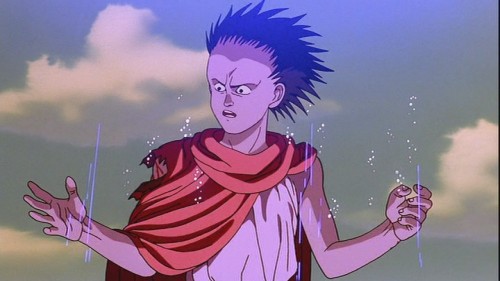
In Control: Understanding Akira

Whenever I think of Akira, the first thing that comes to mind is my sophomore year of high school. There was an anime festival going on in the city, and I was waiting in line to watch Galaxy Express 999 at a small theater. Behind me on the line was a guy, probably somewhere between 16 and 24, discussing anime, talking about how he found Akira to be incredible and the “best movie ever.” This man’s life was changed by Akira. Later that evening, my life would be changed by Galaxy Express 999. Still, I had seen Akira before, and I wondered just what was it that blew this guy’s mind.

Today, years later, I rewatched Akira, and I finally understand it. More importantly, I understand that Akira is actually not that difficult to understand.

Akira takes place 21 years after the end of World War III in the city of Neo-Tokyo, a city with strong police presence, assigned curfews, and the youthful delinquents who constantly ignore that authority. The story focuses on Kaneda, the confident leader of a biker gang (bousouzoku, literally berserkers), and his timid childhood friend Tetsuo, also a member of his gang. Beyond this, describing the plot of Akira is difficult in that ultimately a cohesive story progression where characters get what they deserve and plot threads tie together is not the aim of Akira.

Neo-Tokyo is an advanced city, portrayed as having large, high-tech skyscrapers looming overhead and bright neon colors all around, but it is through this portrayal that Neo-Tokyo is revealed to be a city liable to fall apart any moment. People in Neo-Tokyo live for the moment, unsure of the future. Neo-Tokyo is a city out of control.

“Control” is the theme of Akira. Wanting it, gaining it, and losing it, one leads to the the next. Tetsuo has always been looked after by Kaneda since they were children, which causes Tetsuo to become resentful towards his own inability and gives him the desire to want to surpass Kaneda. Another character, a scientist with good intentions, strives to control a primal force beyond human comprehension. The politicians believe they control everything, but their pointless bickering and lack of understanding as to what is happening in the real world show that the only things they control are their own wallets. It is the illusion of control that ultimately results in one losing it.

Akira is very famous for its visual style and excellent animation. Everything, from explosions to vehicles to environments (as mentioned above) are rendered beautifully with fluid movement, and it is in this hyper-realism that the fragility of the world in which they live becomes most noticeable. The world of Akira is almost so tangible that it may crumble if touched.

Most of the people who I have met who have a fondness for Akira saw it in their teeange years, like the guy waiting behind me on line. It is in our teenage years that our minds and bodies develop most rapidly, and we begin to think that we control of our lives, or perhaps that our lives are out of control. Tetsuo and Kaneda themselves are teeangers. In a sense, Akira is a visualization of the conflict of being a teenager, where the more you learn about the world, the more frightening it can become. Given the theme of Akira, I realize that while it was not a mind-blowing experience for me individually, it is no surprise that it has been one for so many people.

Despite all that I wrote, I still believe Akira is easy to understand. If you’re struggling with trying to make sense of the narrative, it may just be that you’re trying too hard to control it.

The Target of My Obsession Reflects Back Onto Me

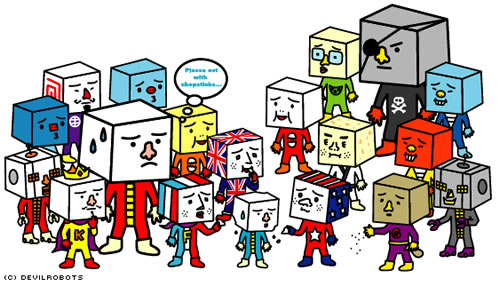
I’m usually okay with it, but there are times when I wonder how to explain my fascination with Ogiue to people who are not otaku, or not familiar with anime and manga. There is perhaps a latent fear that it’s not something easily understood, or that I’ve taken my interest in Ogiue a step too far such that I’d prioritize her over a significant other if I were in a relationship.

…Then I realize that I’m worried about my obsession and sexualization of a manga character who constantly worries about what others think of her obsession and sexualization of manga characters.

Hmm.

Waiting in line, drawing the Ogi

This is something I did while occupying time yesterday.

Vifam is a Tomino Show Alright

3 episodes in and we already have a kamikaze attack.

The Multiple Perspectives of Triangler

“Triangler,” the opening theme to Macross Frontier, is supposed to be about not the relationship between Alto, Sheryl, and Ranka but rather that of Hikaru, Minmei, and Misa. WIth that in mind, I tried to figure out just whose perspective the song was written from.

Initial logic would dictate that the song was written fron Minmei’s perspective, seeing as she was the singer in the love triangle, but some of it didn’t make any sense. Slowly I realized that the song is written from all three perspectives, with certain lines attributed to certain characters.

“Dragging a weak crybaby along with me, I decide to keep going on.”
This is probably Hikaru, with the crybaby being Minmei

“I’m frustrated with myself because it’s easier to distrust than it is to love or desire.”
Misa was initially distant and overly rigid when it came to following the rules.

“You say you’ll protect me, yet you’re not by my side.”
I believe this to be Minmay, whose relationship with Hikaru gradually fell apart.

And of course the big one:

“Who will you kiss, me or that girl?”
If I had to wager a guess, I would say this is almost definitely a Misa line, because Misa was very insecure about her relationship with Hikaru, and this kind of nervousness and doubt about oneself is very much like Ms. Hayase.

I wonder if “Do You Remember Love?” will be sung at some point in the series.

Not Plagiarism: Robot Taekwon V

“Robot Taekwon V” is a cartoon that captivated children’s imaginations in the 1970s, and had numerous sequels and remakes through the years. Recently, it was remastered for its 30th anniversary thanks to a lucky discovery of an undamaged print. If you’ve never heard of the Japanese anime Taekwon V, don’t be alarmed.

Because it’s Korean.

Looking at Taekwon V itself, “Mazinger Z” is probably the first thing that pops into your head. The resemblance is unmistakable, and it could easily fit into Nagai Go’s Giant Robot Pantheon. I’ve seen people online, mostly aggressive Japanese posters, decrying Taekwon V as a rip-off, a sign of plagiarism and uncreativity. The director Kim Cheong-gi has gone on the record stating the obvious influence that Mazinger Z had on his design. At the time, Mazinger Z was very popular in Korea and Kim wanted to created a Korean Super Robot so that kids would appreciate Korean culture. The likely scenario is that at the time he thought Mazinger Z was what all super robots should look like, so it’s no wonder that they look similar. That isn’t the reason why I say it’s not plagiarism though.

Taekwon V fights using its namesake, Taekwondo, and its animation reflects this fact. Mazinger Z and in fact every other super robot has never used Taekwondo. While Taekwon V resembles Mazinger Z heavily, its poses, mannerisms, and actions set it apart. Taekwon V is able to follow the movements of its pilot, a Taekwondo champion himself, two years before Daimos. It even has unique attacks, most notably its Rocket Chop (I don’t know the actual name for this), where Taekwon V makes a horizontal, back-handed chopping motion while simultaneously launching its hand to give it some added destructive momentum.

If it looks like a duck, but doesn’t walk like a duck, and it quacks in Korean, then it is Taekwon V.

By the way, this reasoning does not necessarily apply to other Korean Giant Robot shows. I’m looking at you, Space Gundam V.

Fan-generated Fiction as some call it

I recently listened to the Ninja Consultant podcast concerning the sexualization that occurs among fangirls, and the fact that this has become more prominent in recent times, with not only yaoi becoming a common sight at conventions but also modern works such as Dr. Who and Avatar: The Last Airbender being consciously aware of this fanbase. The topic of fanfiction comes up in the discussion, which is to be expected given that fanfiction and fangirls practically go hand in hand, but it reminded me of the fact that at the beginning of my own internet-based fandom I too was into fanfiction.

When I first began using the internet, my first fandom was a NiGHTS into dreams fanfiction site. I loved the Sega Saturn game to death (and still do), and I sought out other fans of NiGHTS. It was there that I found a site called “Nightopia on the Net” which would later change its name a few more times. It was here that I not only discovered other people with a passion for NiGHTS, but also stories that expanded upon the few plot details we were given as players of the game into a rich and vibrant (at least in my young eyes) universe. I’ve never read the Star Wars Extended Universe books, but I suspect the feeling was similar to anyone who is a fan of those, a feeling that the world given to us in these initial stories is so vast and unexplored that one can’t help but wonder what else is out there.

At some point, a few years down the line, I read fanfiction less and less. By this point I had been checking out fanfiction from various sources based on all sorts of series and would even actively seek out more unusual titles and concepts. Something in me began to sour, and I could no longer take fanfiction until I almost stopped reading it entirely. Back then, my reasoning was that I disliked the stories being produced for my fandoms, feeling that more than any sort of technical errors the problem was that the writers did not understand the characters. The characters’ actual personalities as displayed in their respective shows were nothing like the personalities displayed in fanfiction, and I asked (no one), “What’s the point of using these characters if you’re not going to actually use them?”

As mentioned in the Ninja Consultant discussion, it seems as if some works these days are simply there as fan fodder. Characters are given basic traits which appeal to the “shipping” side of fandom, and fans are free to ignore or cultivate any “evidence” as to whether or not their “One True Pair” could thrive. Setting aside any original creators’ desires to actively engage this line of thought, by all rights these are the people who are responsible for me leaving fanfiction in the first place.

But really was I, and am I, all that different?

Why do people enjoy pairing unreasonable characters together? To put it simply, it’s because they find the pairing to be hot. No big mysteries there. It’s what makes the Zutara pairing in Avatar so popular: a conflict of emotions, the fire/water dynamic, the idea that “if only they would get together, they would be great.” Of course, the conflict comes from actually getting them together.

Is there something wrong with this? Wanting to dive deeper into a world, to prove through fanfiction that there is so much more to a story, one can say that trying to find deeper subtext in the relationships presented is its own form of exploration. Hell, I can somewhat relate to making unreasonable pairings. I have a rather straight-laced friend who I would like to see date girls that would be all over him 24/7. Why? Because it would entertain me to no end.

Perhaps there is a threshold, and it is crossed when fans begin to believe that their opinions constitute the truth about a work, or even what should be true. This isn’t about creator’s vision vs spectator’s vision or anything of that sort, but rather to what extent people and groups begin to believe their own hype. Other than that, I think people are free to believe in whatever they want.

Even then, such a statement borders on the idea that there’s such a thing as a “right” fan and a “wrong” fan, and really, even if I find certain fans or their reasoning distasteful, I am just one person and I am not a judge of fanfiction. More importantly, I am not a judge of the heart.

After all, as Sasahara once said to Ogiue, no one can stop you from liking something.