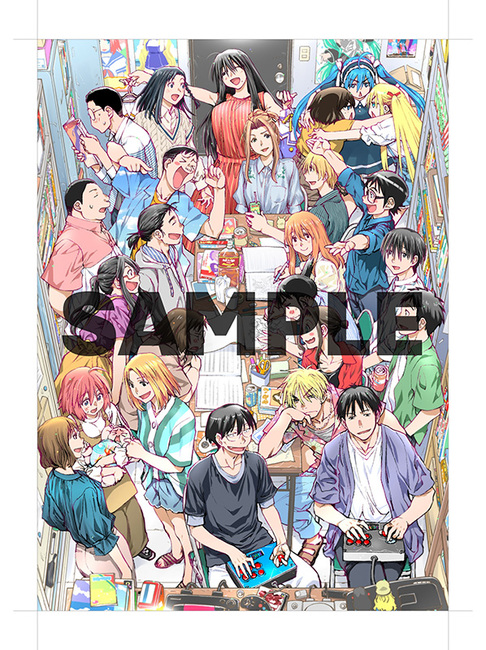
Kio Shimoku, author of Genshiken, recently announced that he’s going to be releasing an artbook collecting his work from across his 30-year career! It will also include an interview with him.
The book is titled Kio Shimoku Gashuu: Mata Ashita, Bushitsu de—Kio Shimoku Art Collection: See You Tomorrow in the Clubroom. It’s being released by Fukkan, a Japanese publisher that specializes in niche specialty books and reviving out-of-print titles.
While the book is available for pre-order on other Japanese sites, pre-ordering on Fukkan’s site will get you a set of A4-sized replica illustrations of Kio’s work. And if you do it by July 16 (JST), then you can enter to win an autograph from the man himself!
Unfortunately, Fukkan will only ship domestically, so if you live outside of Japan, you’ll need to use a third party. Just keep in mind that with the pre-order bonus, shipping might be pretty killer!
On my trip to Japan last year, I stayed briefly at Meigetsuso, a hot spring ryoukan located in the city of Kaminoyama in Yamagata Prefecture. The reason I picked Yamagata is that it’s Ogiue’s home prefecture. No, really—I specifically started with “I want to visit where my favorite character is from,” and worked backwards. Based on that, as well as availability, I landed on Meigetsuso, which translates roughly to “Tomorrow’s Moon Inn.”
A ryoukan, or Japanese-style inn, embodies the notion of “traditional Japanese aesthetics,” between the paper-screen doors, the tatami mats, and the traditional cuisine. It provides the sort of experience one typically doesn’t get as a foreigner otaku who’s prioritizing anime and manga, but I’ve found that on the rare occasion that I get to stay at a ryoukan (particularly if it’s attached to a hot spring!), the experience is worthwhile. And by taking the effort to neither essentialize or exoticize the culture, I believe I can comfortably appreciate the way these inns give their guests the red-carpet treatment, so to speak.
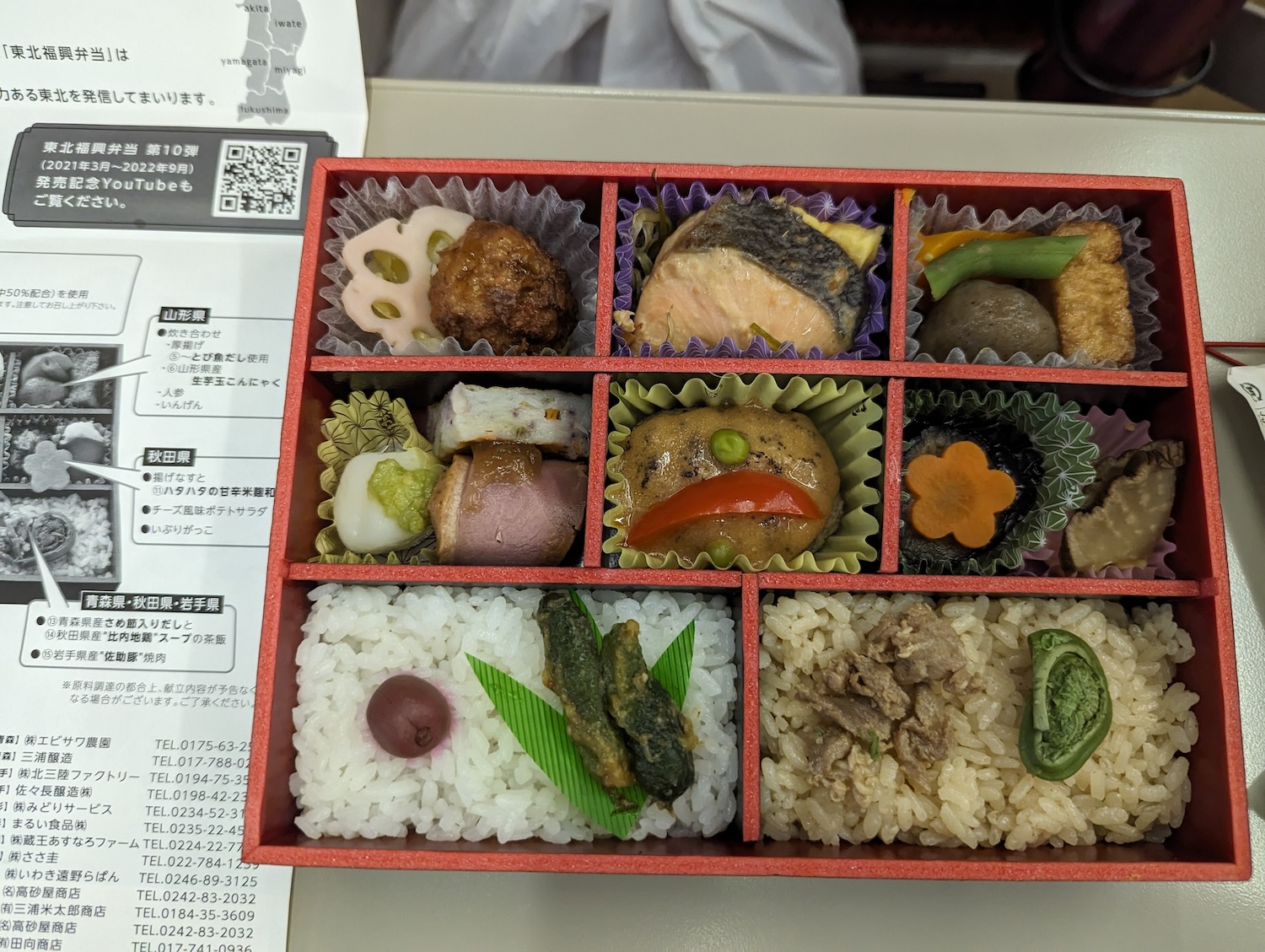
I arrived in the city via shinkansen on a snowy winter day after eating a special Tohoku-themed train bentou. While public transportation can get close to the inn, I decided to travel by foot in order to explore the area a bit.
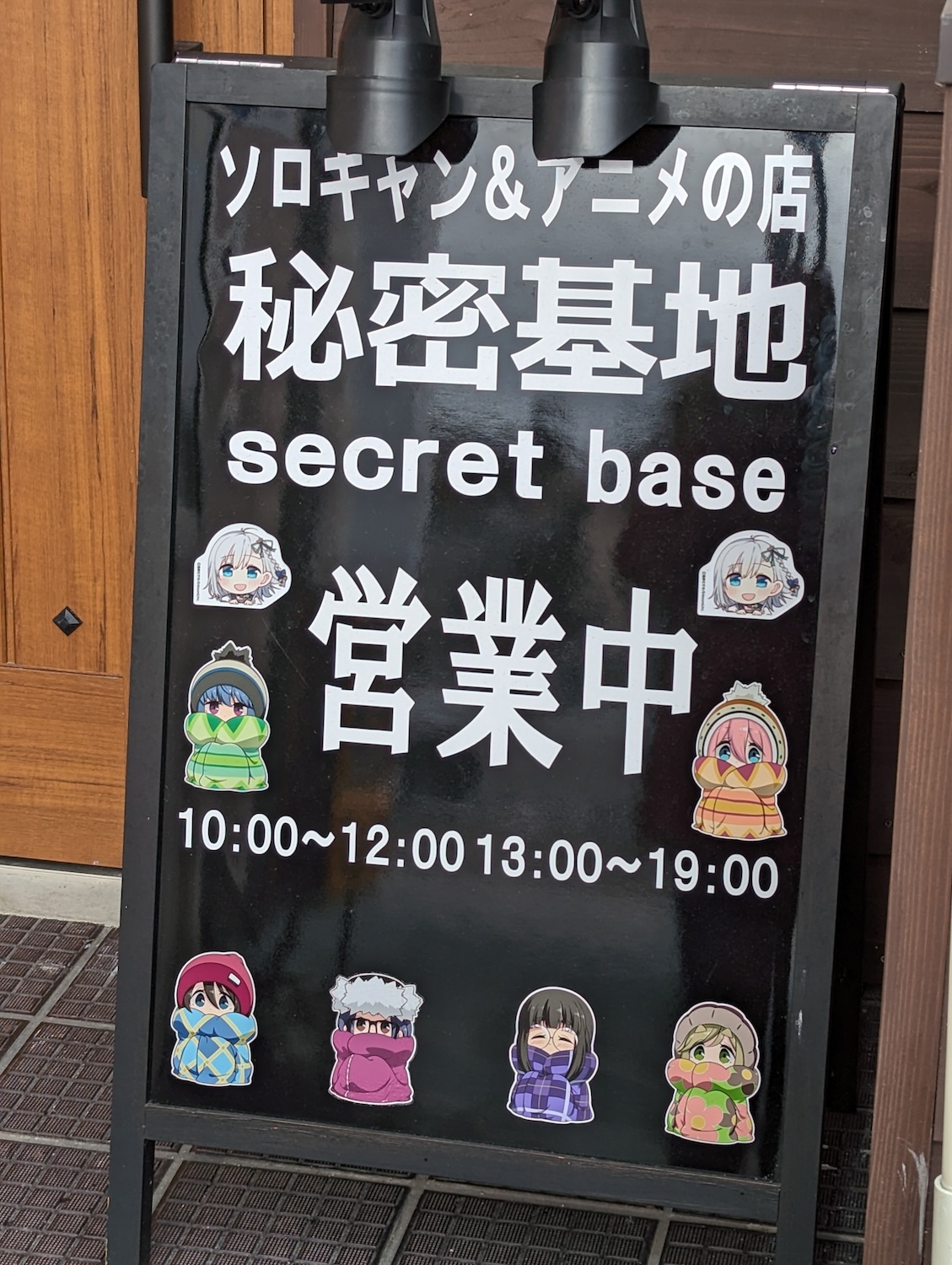
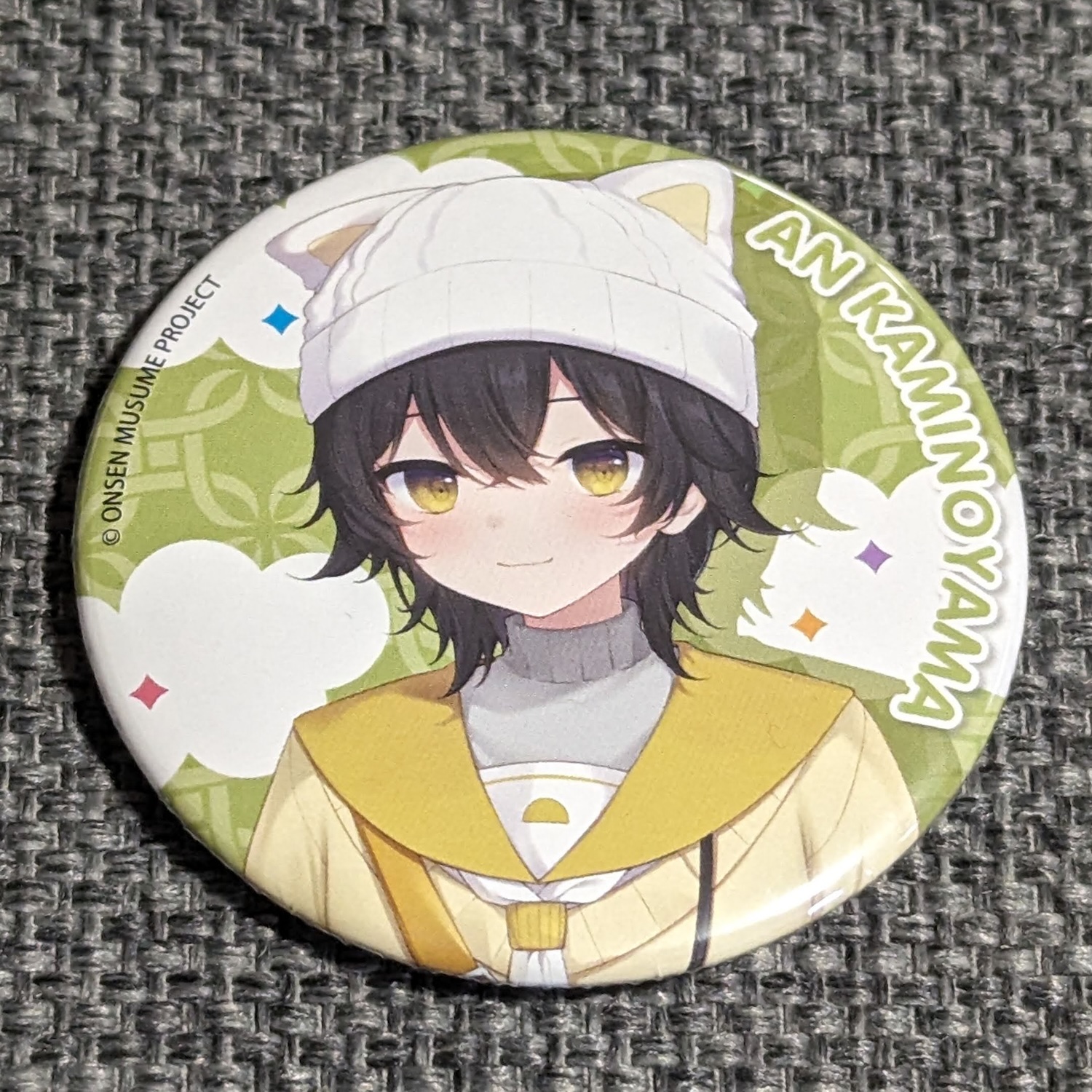
One fun find was a small anime store called Himitsu Kichi, or “Secret Base.” It was charming in a way that reminds me more of a humble local comic book shop back home, the kind that’s far less prevalent today. The most prominent series at Himitsu Kichi was definitely Laid-Back Camp, and a Love Live! Nozomi tapestry greeted me at the entrance. I bought a button featuring Kaminoyama An, a character who represents the region in the Onsen Musume franchise.
After some time traversing uphill, I eventually made it to Meigetsuso, which was a little ways up the mountain. It wasn’t an ultra-challenging climb or anything, but my legs definitely got a workout.
The Meigetsuso building itself is gorgeous both inside and out. It did indeed look a lot like my animes, but even setting aside the associations with tradition and all that, I couldn’t help but be in awe at how relaxing it felt just to walk around. The room itself was similarly beautiful and pleasant, and the hot spring was naturally amazing to the point of being downright addictive. I don’t know if any of the purported healing properties of hot springs are real, but I definitely felt better after jumping in one.
There was a room called the Sasa room (written with the same kanji as “Sasahara.”) Naturally, I had to take a picture of it with Ogiue.
The staff treated me like a VIP, and while it cost a pretty penny to get that luxury (more on that later), I can’t deny that I got my money’s worth. Most of them did not speak English, but a combination of my relative fluency in Japanese and their occasional use of translation apps helped smooth things over. I suspect that for those who don’t know any Japanese, that app ends up getting a lot more work.
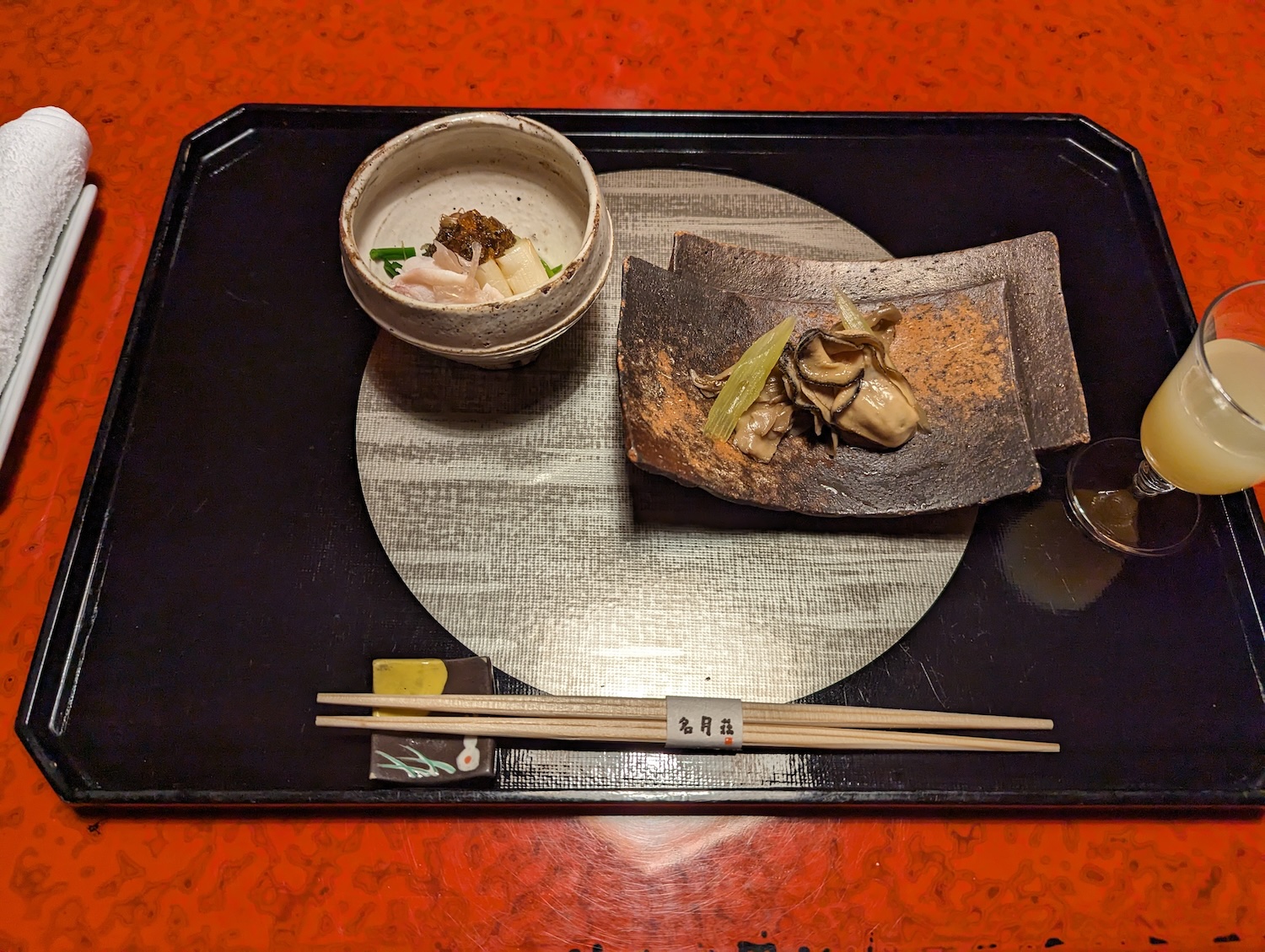
As for food (aka one of my favorite subjects), I loved the fact that much of what they serve is either local dishes or made from local ingredients.
Upon settling in the room, the attendant served a small set of assorted snacks that included fruit, jelly, their own house-made senbei rice crackers, and other things I didn’t entirely recognize. Nothing was super sweet (as expected of Japanese food), but it was all quite pleasant.
There was also a large pot of conjac jelly balls available in a lounge area through the afternoon, with a side of spicy mustard also available. It was actually my first time having conjac, and it turns out that I’m quite a fan of its gelatinous texture. If I didn’t have a large meal that evening, I probably would have kept eating them!
That dinner was kaiseki, a type of dinner with multiple courses of small servings, and one of the fancier ways to eat in Japan. The only times I’ve had them is at ryoukan, where it was included with the cost, and part of what makes them a good deal if you can afford to stay in the first place. It was a wonderful experience that included some of the best steak I ever had, fresh sashimi, a unique form of wide udon noodles, and even my first time eating fugu! In the last case, a part of me was worried about the whole lethal poison thing, but here I am, alive.
Rice is apparently a source of regional pride in Yamagata, and dinner came with their most famous breed: Tsuyahime, which had a chewy texture and a subtle sweetness that really stood out to me. It was one of the last parts of dinner, after I was absolutely stuffed, but they offered to make the leftovers into rice balls for snacking at a later time. I happily obliged.
The morning brought a breakfast that also consisted of many small dishes, such as a burdock root dipping sauce for vegetables, rolled omelets, grilled fish, and Yukiwakamru rice (instead of Tsuyahime). The rice could be served as a plain bowl or as a porridge, but you can (and I did) ask for both. This one is apparently famous for being popular with people who just like to eat heaping helpings of rice unadorned, and I’m inclined to agree.
All in all, I was the proud owner of a very satisfied belly.
I won’t deny that this was a very pricey excursion, and that for many, including myself, it’s definitely something you need to save up for. Even so, the quality of service and the blissful atmosphere provided is really worthwhile for how much it costs. Meigetsuso ended up being less expensive compared to a similarly luxurious resort or hotel. The currently strong dollar to yen ratio also helped tremendously, but even if that weren’t the case, I think Meigetsuso was a fantastic place to stay and even come back to. The only reason I wouldn’t return is because I don’t make trips to Japan often, so I might want to share the love elsewhere. But if I did live in Japan, I could see myself making annual trips to Kaminoyama to enjoy their hospitality.
When the Virtual Youtuber group “hololive English Advent” debuted last summer, something in particular caught my eye: The twin demon guard dogs known as FUWAMOCO listed Genshikenas one of their favorite anime. As a fan of the series (in case you haven’t noticed), it was exciting to know there were a couple of VTubers with a fondness for Genshiken. But it left me wondering, who is their favorite character?
Last month, Fuwawa and Mococo did one of their popular karaoke streams—one that later turned out to be a special stream to announce their move to Japan. As if to call back to some possible younger days as otaku,, lot of the song selections were from the 2000s, including “Soul Taker” and “DANZEN! Futari wa Pretty Cure.” Then, they said the magic words: “Kujibiki Unbalance.”
While regular readers of Ogiue Maniax probably already know this, Kujibiki Unbalance is the name of the fictional series-within-a-series in Genshiken, as well as the title of its opening by Under17. As FUWAMOCO began to sing the theme song, I sent a superchat asking about their favorite character, knowing there was always a possibility that they wouldn’t notice. To my pleasant surprise, they responded.
The answer: Madarame. As arguably the most iconic character of Genshiken, he deserves it.
The only caveat is that only Mococo answered, so I don’t know if it’s Madarame for both of them or just her. If I ever get the full answer, I’ll be sure to make an update.
Spotted Flower has a voiced manga version now! …Unfortunately, I can’t seem to register for the site no matter how many times I try. If anyone has better luck, let me know!
Kio decided to try drawing with a physical pencil again, but it’s a lot more difficult than he remembers. He feels like he’s gotten too used to drawing digitally.
Kio left a comment on the A-Koe page for the Spotted Flower voice comic, talking about how shocked he was to hear the spicy lines he wrote being brought to life. He wonders how powerful it’d be if it were ever animated.
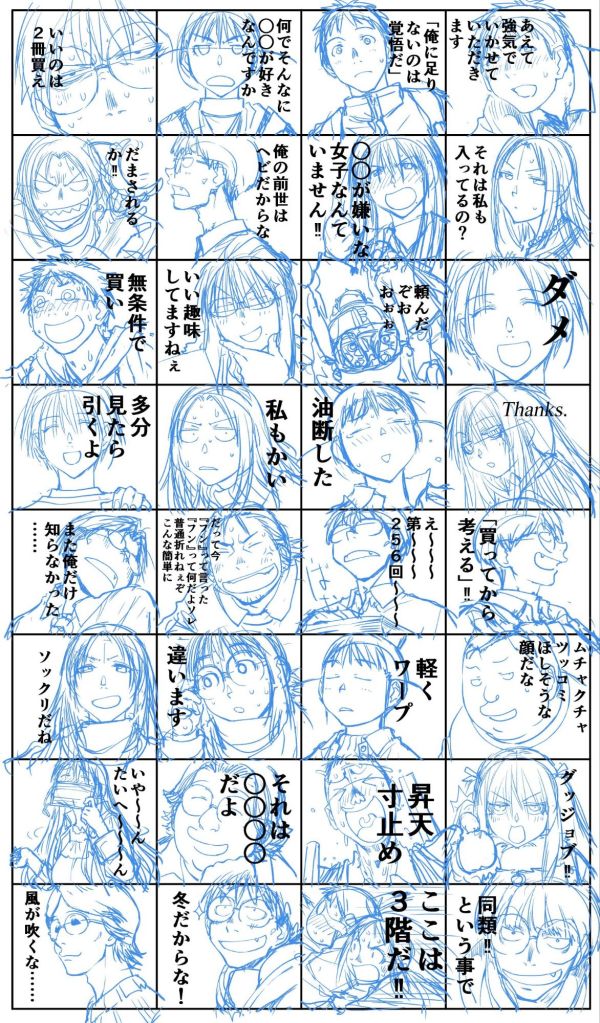
Kio Shimoku just released a set of Genshiken LINE stickers! Best of all, they’re available outside of Japan (unlike so many others).
He recently went through a process of deciding which lines from the manga to include, and had even asked fans for suggestions. All of them are from the original series, rather than Nidaime.
Interestingly, rather than just using his old art, Kio actually drew them anew:
Note that there are certain words that have been censored, I assume to conform to LINE’s policies.
Do you have any favorite stickers? Naturally, mine are all the Ogiue ones.
Kio discovers late that there was a Sayonara Zetsubou Sensei talk event and exhibition featuring the anime’s voice actors as well as the author Kumeta Kouji. Tsuchiyan, a person involved with Sayonara Zetsubou Sensei’s manuscripts replies to Kio and thanks him. Apparently they’ve met before, back when stuff was original airing.
Kio enjoys a Sayonara Zetsubou Sensei afternoon movie, and plans to watch the evening one as well. (I think this has to do with the SZS exhibit mentioned above?)
A person who is staff for anime radio shows realizes Kio follows her, and gets excited. They’re a big fan of Genshiken. Kio replies that he followed her on Twitter to make sure he doesn’t miss another event like the SZS stuff.
Kio’s ideas for most of the Genshiken LINE stickers, with him asking for suggestions. I asked him if he was planning on having them available internationally, but he said he didn’t even know that was possible.
Kio drew the belly band art for Volume 2 of the manga Oshibana. He’s a fan and retweets the author Shima Tokio’s work quite often. Shima thanks Kio, and Kio mentions really liking the main heroine and wanting to draw her.
Kio got the new Panpanya manga collection, titled Yuriika. He wasn’t able to read the comics in it when they were first being published, but he still take his time and get through them now.
Halfway through Elden Ring. Kio thinks the game is amazing because when you first start out, becoming the Elden Lord seems unthinkable, but as you progress, the notion starts to feel real.
With his work for Rakuen magazine out of the way, Kio concentrates on trying to finish his ero manga manuscript. He originally wanted to get it done and ready to sell by the end of the year.
Kio finally finished the manuscript for his next erotic work, and it turned out to be a whopping 134 pages. Someone likens his output to Ogiue’s, which Kio denies.
Whenever Kio listens to the boss music from the Elden Ring soundtrack, he feels like he makes good progress while working on manga. He’s also 50% through the story but hasn’t fought a lot of the second-half bosses yet.
Kio saw the Japanese animated film TheImaginary, which exceeded his expectations. He couldn’t help but view Rudger and Tot through the eyes of a parent.
There are some surprises with Rudger’s voice, as the character seems to change gender in the movie. [Note: I’m not familiar with the film myself]
Kio talks about the fact that he’s been using Twitter for a few years now, and if it were to go away, he’d probably return to having no internet presence. He also calls “X” a stranger/kid he doesn’t know.
Kio bought a copy of It’s All Your Fault, Sensei. While he normally skips straight to the action, this time, he watched the whole thing and enjoyed it.
He mentions that there are certain limitations to showing internal climaxes in live-action stuff compared to manga.
The Kuma Miko manga is ending, and Kio gives his thoughts. It’s a series where after every chapter is over, he feels a need to express something difficult to say. He’s not sure how he’s going to feel after it concludes, given how many laughs he’s gotten out of the series.
Kio realizes he’s been mixing up the Bastole and the Botune Aura Battlers from Dunbine, despite having both model kits as a kid. He’s not the only one either.
Influential Japanese author Sakemi Ken’ichi passed away on November 7 at age 59. Kio remarked that it was too soon. Sakemi won the 1st Japan Fantasy Novel Award in 1989.
Kio finds himself losing concentration more easily than he used to, and worries that he wouldn’t be able to do a normal serialization like he used to. He follows this by attempting to work at the speed he used to when doing monthly titles and succeeds, but doesn’t know if he could do the same the next day.
Kio saw The Birth of Kitaro: The Mystery of Gegege. He liked the detail that Kitaro’s dad is actually tall (normally in the series, Kitaro’s dad is only an eyeball on top of a small body.)
After seven years, Kio’s PC is starting to make funny noises. He had it just for making manga, but he’s considering getting something that can handle 3D, and that he can play games on.
We’re at November already?! I really can’t believe it’s this close to the end of the year when the summer months felt like forever. New York Comic Con is in the rear-view mirror, Anime NYC is up ahead, and I’m still struggling to keep up with the anime that’s out this season—including the long-anticipated Pluto (aka one of the best manga ever).
Due to a combination of a busy schedule and my silly brain, I’ve actually been struggling more than usual to write about anime and manga. I can’t seem to read manga fast enough to satisfactorily write about series I’ve been reading, but maybe I should just deal with it and write even after reading just a single volume.
It might also be because I’ve been diversifying my media choices (and watching a bunch of VTubers), but I feel it important to keep Ogiue Maniax as primarily an anime and manga blog.
Thanks so much to my Patreon subscribers for November:
Not much to speak of this month, but I did post this right before Halloween, so there might be something interesting in the next few days (that I’ll be posting in November).
Kio defeated a Gargoyle outside the Bestial Sanctum in Elden Ring, and also is 33% through the story after beating Radahn. At first, he thought it’d be too strong, but managed to pull it off using the Watchdog’s Staff.
Kio wanted to re-read the vale tudo arc of the karate manga Shura no Mon (Asura’s Gate), which made him want to re-read the Showa arc of the similarly named but unrelated manga Shura no Toki (Time of Asura).
When asked if his next manga’s going to be fighting-based, Kio denies it.
Kio saw the movie Undercurrent, and thought it was a really good adaptation of the original.
Kio plans to watch the “Jungle Revenge” special for How Do You Like Wednesdays, but only got four hours of sleep, and is thinking he might doze off partway. Seems like this special is a follow-up to a DVD that was released six years ago.