I Comied, I Ketted, I Con-quered: Ogiue Maniax Status Update for January 2024

Welcome to 2024!

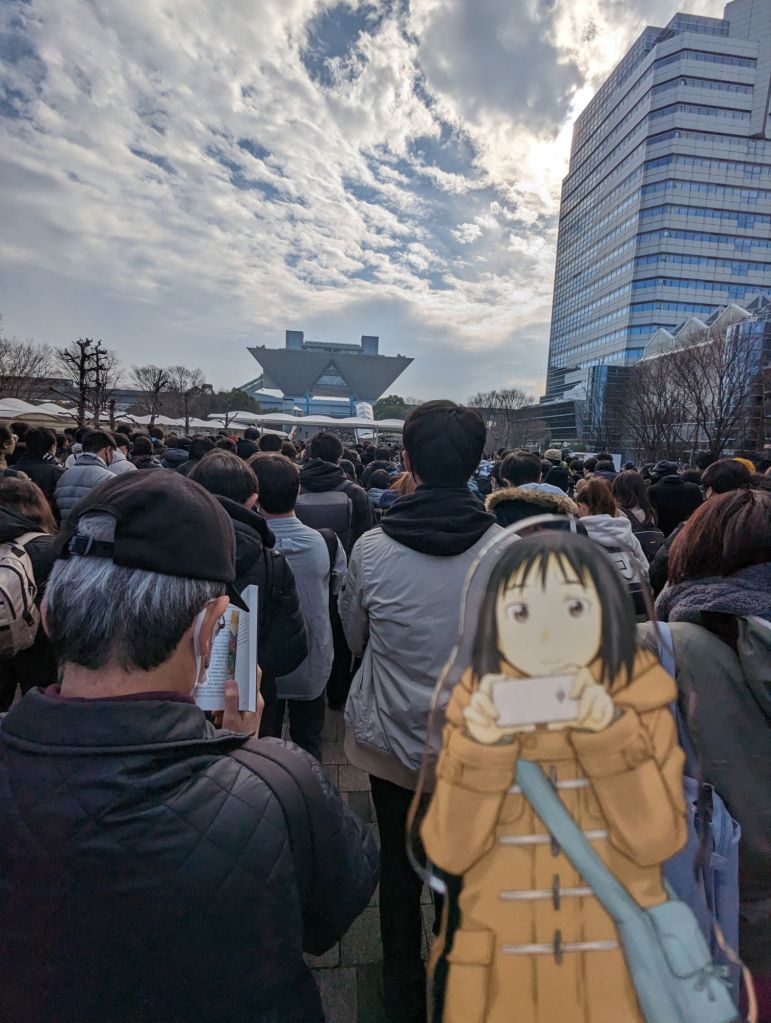
I mentioned having some fun surprises last month, and I let the cat out of the bag on Twitter a few days ago: I attended Comic Market for the first time!

While I don’t have a schedule fully planned out, you can expect the next couple months to have at least a few blog posts about my experience at Comiket, as well as other bits of my trip to Japan. I’m actually a bit worried about them overshadowing other topics, including the new anime season, but hopefully it’ll all work out.

May the Year of the Dragon bring fortune to everyone, but especially my Patreon subscribers:

General:

Ko Ransom

Diogo Prado

Alex

Dsy

Sue Hopkins fans:

Serxeid

Hato Kenjirou fans:

Elizabeth

Yajima Mirei fans:

Machi-Kurada

Blog highlights from December:

Best Anime Characters of 2023

The annual tradition continues.

The Role of Unique Voices in VTubing, K-Pop, and More

Some thoughts I’ve been having about how singers are presented in various media.

Anime NYC 2023 Was a hololive Bonanza

My con report, at least for all the hololive content that was there.

Kio Shimoku

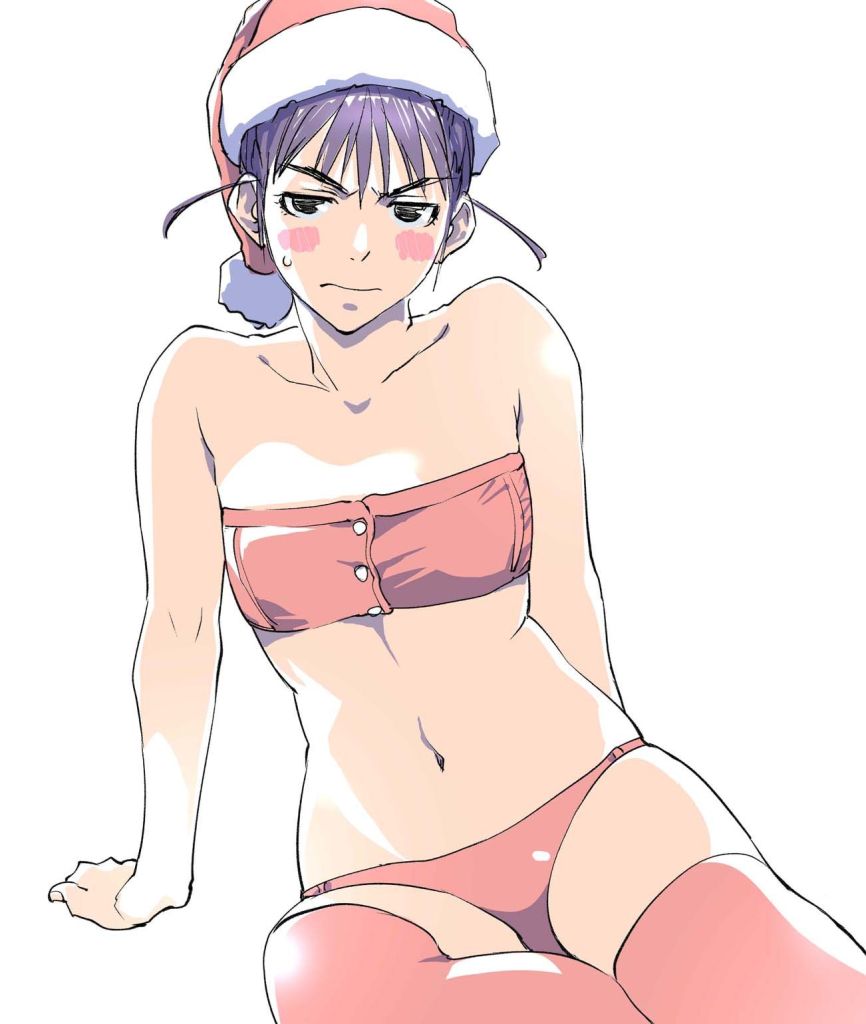
Kio drew a special Christmas Ogiue!

Closing

I did experience the earthquake that hit Ishikawa Prefecture, but fortunately only from a great distance. I know there have been some tragic losses, but I hope everything gets up and running for those most affected.

Kio Shimoku Twitter Highlights December 2023

A round of tweets by Kio Shimoku to end the year, including a special illustration of Ogiue!

Kio wishes the manga author Hayamira Senjin a happy 52nd birthday.

In regards to Not-Sasahara, Kio mentions that he seems to be weak to girls with talent.

Halfway through Elden Ring. Kio thinks the game is amazing because when you first start out, becoming the Elden Lord seems unthinkable, but as you progress, the notion starts to feel real.

Kio watched his DVD copy of a How Do You Like Wednesday special that was filmed in the US.

Kio looks forward to the live-action version of his 18+ doujinshi.

Kio is impressed that the two women who will be playing the characters in that adaptation are so beautiful.

With his work for Rakuen magazine out of the way, Kio concentrates on trying to finish his ero manga manuscript. He originally wanted to get it done and ready to sell by the end of the year.

Kio went walking with his tortoise in the park, but the wind was strong and cold.

Each time Kio watches Gothicmade, it gets more interesting. He particularly likes the scene where the Kaiserin is activated.

Showing some The Five Star Stories model kits he built.

Kio admiring the Five Star Stories work of renowned modeler Tani Akira.

Kio mentions owning the manga Great Curve by Hinirasu Kanta.

Kio finally finished the manuscript for his next erotic work, and it turned out to be a whopping 134 pages. Someone likens his output to Ogiue’s, which Kio denies.

The illustrator Yagumo Kengou had to be taken to the hospital by ambulance due to poor physical condition. Kio asks Yagumo to show some self-love.

Whenever Kio listens to the boss music from the Elden Ring soundtrack, he feels like he makes good progress while working on manga. He’s also 50% through the story but hasn’t fought a lot of the second-half bosses yet.

Kio saw the Japanese animated film The Imaginary, which exceeded his expectations. He couldn’t help but view Rudger and Tot through the eyes of a parent.

There are some surprises with Rudger’s voice, as the character seems to change gender in the movie. [Note: I’m not familiar with the film myself]

Another attempt to walk the tortoise, despite the cold weather.

Kio drew a small comic about being at the recording session for the It’s All Your Fault, Sensei adult video. NSFW.

Kio talks about the fact that he’s been using Twitter for a few years now, and if it were to go away, he’d probably return to having no internet presence. He also calls “X” a stranger/kid he doesn’t know.

Kio bought a copy of It’s All Your Fault, Sensei. While he normally skips straight to the action, this time, he watched the whole thing and enjoyed it.

He mentions that there are certain limitations to showing internal climaxes in live-action stuff compared to manga.

A promotional drawing of the above.

A drawing of Ogiue agreeing to a ridiculous request to wear a Santa outfit [Merry Christmas to meeee.]

Kio was having some trouble installing Clip Studio Paint and getting his tablet to work on his new computer.

The Kuma Miko manga is ending, and Kio gives his thoughts. It’s a series where after every chapter is over, he feels a need to express something difficult to say. He’s not sure how he’s going to feel after it concludes, given how many laughs he’s gotten out of the series.

Kio realizes he’s been mixing up the Bastole and the Botune Aura Battlers from Dunbine, despite having both model kits as a kid. He’s not the only one either.

Walking the tortoise again on a warmer day.

Chainsaw Man’s Quarterlife Crisis

WARNING: CHAINSAW MAN MANGA PART 2 SPOILERS

I recently read the book Quarterlife: The Search for Self in Early Adulthood by therapist Satya Doyle Byock, which talks about the concept of the “quarterlife crisis.” According to Doyle, it is when someone in early adulthood feels a sense of dissatisfaction from a certain imbalance—in the pursuit of either meaning or stability, the other is never developed. People typically tend toward one side, and if they fail to teach a degree of balance, it can eventually turn into a midlife crisis. While the book is primarily aimed towards actual flesh-and-blood people, that struggle between meaning and stability also made me think of the hero of a current popular manga: Denji from Chainsaw Man.

From the start, what we know of Denji is that he basically has nothing, and even his highest aspirations come from scarcity: He wants to eat jam on toast, and he wants to touch a boob. While he comes across as shallow and horny (and he is both), this is Denji seeking the stability he’s never had, symbolized in the freedom to eat whatever he wants and to be with a girl. Thanks to his Chainsaw Devil powers, he starts to get that life, but it’s also clear that things aren’t hitting quite right. “This isn’t what I expected it to be” is a common thought by Denji, as if all that stability brings him is a search for meaning.

However, when Denji pursues meaning, including embracing the public image of Chainsaw Man as a dark hero, he instead starts to wonder, “Is this really all there is?” The comfort of stability calls to him—a life where he doesn’t have to be Chainsaw Man anymore. Even as others try to force a sense of meaning onto Denji, he resists because he’s trying to see how he really feels.

This vacillating between stability and meaning occurs across Part 1 of the manga. It also extends into Part 2, where I find Denji’s to be even more intense. The addition of the character Nayuta shows a side of him we had only barely glimpsed before—now a big brother/dad of sorts, he tries to provide for her a comfortable life full of opportunities that he himself never had. My heart actually feels joy when I see Nayuta take after Denji’s odd mannerisms, or when she enthusiastically and aggressively participates in class. I suspect there might be an answer for him in their relationship.

Denji is not an “early adult,” but rather a teen. What he experiences is not that period in which society tells us that people are supposed to be in their prime. However, I do think Denji’s plight in this area is part of why Chainsaw Man has been such a phenomenon. The typical shounen hero does not have anything resembling a quarterlife crisis. They usually have an ambition that drives them, and is the presumed end goal of the story. The fact that Denji struggles as much as he does, on top of being both vapid and profound at once, is eminently relatable.

Of course, I highly doubt that the author Fujimoto has been thinking specifically of quarterlife crisis. Even if he was, there’s a good chance Denji just ends up in a worse place by the end. But I now see a painful and at times conflicting search for meaning and stability that is ever present in Chainsaw Man, and I think it gives the series a powerfully profound psychological quality absent in so many of its peers.

Holy Moly Holidays: Ogiue Maniax Status Update for December 2023

Whenever I get around to December, I begin to think about my annual tradition, where I post about my favorite characters of the year. I’ve had one in mind all year long, but there’s another who’s a bit of a late entry of sorts.

I’ve also been enjoying the heck out of the holoX 2nd Anniversary streams, especially La+’s (naturally). I highly recommend them all, but want to draw particular attention to La+’s performance with HimeHina.

Happy holidays to all my Patreon subscribers for December:

General:

Ko Ransom

Diogo Prado

Alex

Dsy

Sue Hopkins fans:

Serxeid

Hato Kenjirou fans:

Elizabeth

Yajima Mirei fans:

Machi-Kurada

Blog highlights from November:

Attack on Titan: The Final Conclusive Ending Denouement

My thoughts on the controversial ending and the equally controversial main character

I Imported Japanese Curry Because of a VTuber

Spoilers: The curry is good, and you should check out Sena Aimi.

The Unbearable Weight of the Past: Space Battleship Yamato 2202

Reviewing the sequel to a remake, one that poses some tough questions.

Kio Shimoku

Kio will have one of his works adapted to live-action, but probably not the one you’re thinking of.

Apartment 507

Yohane the Parhelion

Closing

In other news, I’ll be doing a bit of traveling at the end of the year, and I hope I can come back with some worthwhile stories to share.

Kio Shimoku Twitter Highlights November 2023

A fairly light month of tweets by Kio, but a doozy right at the end.

Spotted Flower Chapter 44 came out at the beginning of the month.

Kio saw Godzilla -1 and thought it was a masterpiece in terms of entertainment.

Influential Japanese author Sakemi Ken’ichi passed away on November 7 at age 59. Kio remarked that it was too soon. Sakemi won the 1st Japan Fantasy Novel Award in 1989.

Kio finds himself losing concentration more easily than he used to, and worries that he wouldn’t be able to do a normal serialization like he used to. He follows this by attempting to work at the speed he used to when doing monthly titles and succeeds, but doesn’t know if he could do the same the next day.

Another preview image of the latest chapter of Spotted Flower.

Kio saw The Birth of Kitaro: The Mystery of Gegege. He liked the detail that Kitaro’s dad is actually tall (normally in the series, Kitaro’s dad is only an eyeball on top of a small body.)

After three days, Kio has beaten Mohg, Lord of Blood, in Elden Ring.

After seven years, Kio’s PC is starting to make funny noises. He had it just for making manga, but he’s considering getting something that can handle 3D, and that he can play games on.

His 18+ original doujinshi is being made into live-action porn. It’s definitely a first for him!

Attack on Titan: The Final Conclusive Ending Denouement

“Why I Like Eren Jaeger.” That’s the title of a post I wrote 10 years ago. 

A lot of things sure have happened since then.

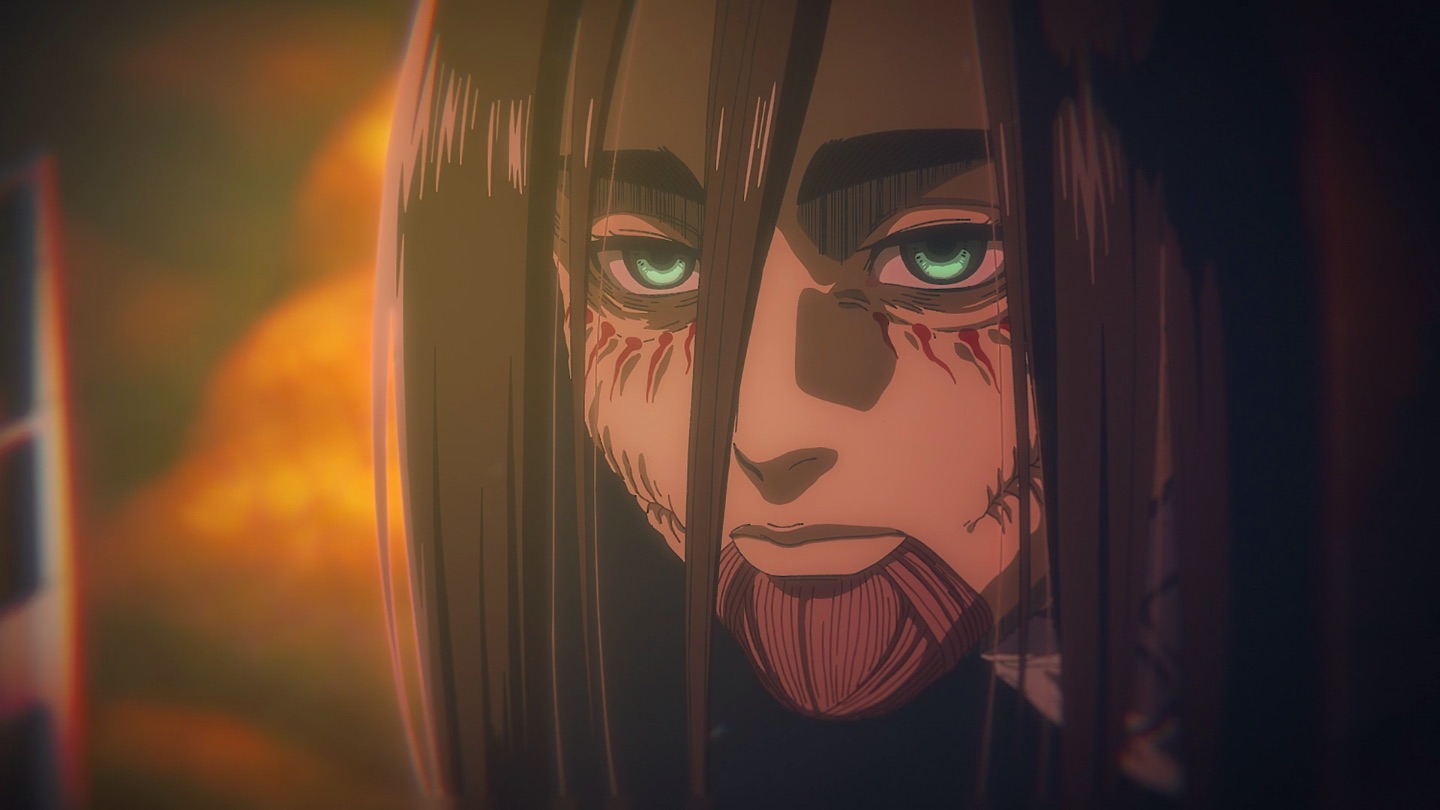
The anime Attack on Titan recently concluded after what seemed like an eternity, and we the viewers have been left to interpret Eren in his entirety, from the hotheaded protagonist he was at the beginning to the apocalyptic villain he becomes by the end. Given all that has transpired, not least of which includes mass genocide, can I still say that I “like” Eren?

WARNING: SPOILERS OF THE END OF ATTACK ON TITAN AHEAD

Obviously, I can’t condone genocide no matter how it might have come from a place of wanting to protect his friends, or even if the alternative was a different form of genocide. But the reasons I was fond of Eren as a character ten years ago had little to do with anything like moral and ethical values or good decision-making. Instead, it was because he’s a deeply flawed character with some genuinely positive traits—namely his ability to motivate others through the sheer force of his ceaseless drive to press ahead. 

In 2013, this is what I had to say:

I see Eren as the kind of guy who makes people better than him feel worse for not accomplishing as much…. This is mainly what drives his relationship with Jean, as Jean is clearly smarter, wiser, and comparable in physical ability to Eren, but lacks his ability to throw himself into danger. On the other hand, Eren’s narrow-mindedness is the reason he can’t accomplish everything on his own, and…if he were a leader of men…he would probably send them all to their deaths just by being himself….

The result is that the Scout Regiment (or Survey Corps), a group infamous for being full of eccentrics with death wishes, gains and benefits from one of the most rational and reasonable individuals. At the same time, it means Eren has always been someone who needs others to keep him from being a living train wreck.

This is not a defense of Eren but an understanding of his relationships and the effects he has on people who are better than him. He inspires others to do what they thought impossible or inconceivable. Nowhere is this more relevant than with his closest friends, Armin and Mikasa. He pushes them to achieve greater heights through the example of his will, and this remains true even as Eren turns them against himself.

Eren, Mikasa, and Armin are parts of a whole, and it’s a relationship that persists even in opposition. I think that Eren purposely pushes his friends away because he knows they have what it takes to stop him. Similar to Dr. Manhattan in Watchmen, Eren becomes able to move in four dimensions, and this ironically makes him unable to challenge fate. But Mikasa and Armin are not beholden to such cursed omniscience, and they ultimately defeat him and help remove the titan ability from the entire world.

Mikasa killing Eren is not only one of the most powerful scenes of the finale, but a key moment in the series as a whole. The presence of titans in their world for 2000 years is because Ymir, the Founding Titan, is trapped by her undying and contradictory love for King Fritz, her longtime master and abuser. Despite knowing how much Fritz saw Ymir as nothing more than property, her feelings keep her loyal out of a desperate need for human connection. Seeing Mikasa behead the love of her life for the sake of the world shows Ymir that it’s possible to break the mental and emotional chains binding her. And all of it comes back to what made Mikasa fall for Eren in the first place, back when they were children: When others would have said to run, Eren implored her to fight. He pushes others to not give up, even if it means he himself becomes the enemy. 

So the answer is yes: I still like Eren Jaeger for the mess that he is. I can’t support the consequences of his actions, but the story of Attack on Titan is very much about the ugliness of humanity, and in many ways, Eren exhibits some of its worst qualities. However, much like how there are glimmers of hope that flicker in and out amid despair, he casts a light on others and gives them power, however great or small, to do more—even as he himself is subsumed by darkness. Ultimately, he ends up being a unique protagonist turned antagonist, a child given far too much responsibility and burden, a cautionary tale of why you don’t have to automatically cheer for someone just because they’re the main hero, and a figure remarkably complex because of his profound limitations.

Happiness vs. Greatness: Hasegawa Kokoro in Smile Down the Runway

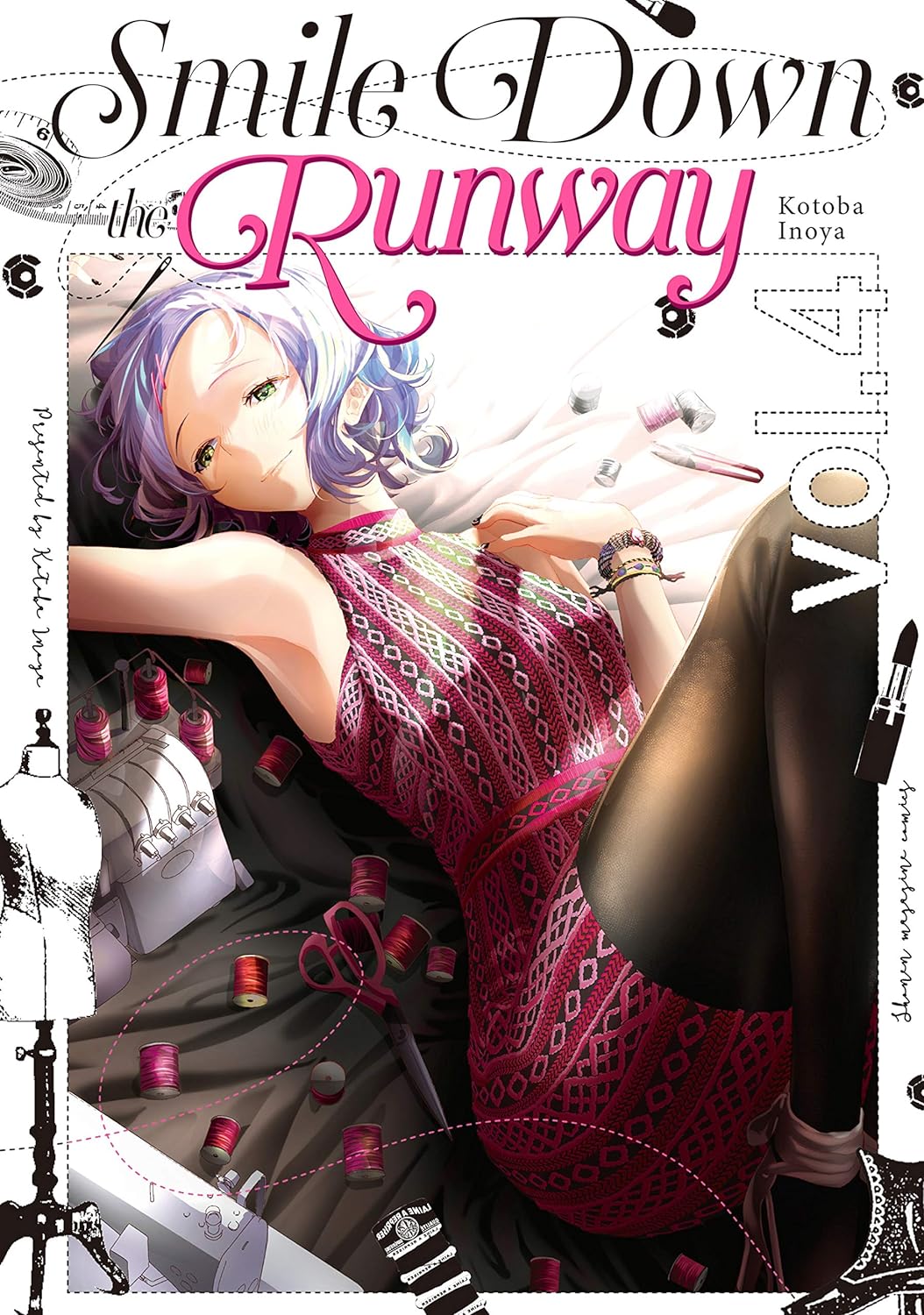
Smile Down the Runway is a manga and anime series about pursuing dreams that are supposedly impossible. Whether it’s an aspiring fashion model whose short stature is seen as too high a hurdle to reach the upper echelons of the industry, or a hobbyist clothing maker up against the biggest names in the business, part of the appeal is seeing them strive against the odds and change how the world sees them. Outside of the main characters, though, there’s another whose plight intrigues me, as it speaks to the classic divide of talent vs. hard work, but not in the typical way: Hasegawa Kokoro is a generational talent in the modeling world whose true passion actually lies in fashion design.

The character of Kokoro presents a number of interesting problems in terms of how we view whether a person’s endeavors are worthwhile. Many people in the world can only reach a decent level of competence in whatever field they work in, while Kokoro just naturally excels at her job. If she’d be a top 1% model but only a top 20% designer at best, going with the latter might be seen as a sheer waste of talent. And with a natural height and an unmistakable aura that make her the envy of her peers, wanting to instead pursue a different path that she enjoys more can come across as a luxury few would ever have the opportunity to utilize. It can sound like the plight of the privileged.

However, it all leads to the question of what makes a person happy, and how much we value that feeling. It’s common advice that if a job is making you miserable, you should quit if you can afford to, or at least look for opportunities to begin breaking away from whatever hellscape you’re chained to. But what if you find your current job—one you excel in—to be pretty okay? Is it worth your while to transition to a field where you’d potentially be an also-ran? Do we value immense skill so much that small sacrifices of personal contentment are okay? We presume that being at the summit is the ultimate satisfaction, but Kokoro and people like her might obtain bliss just climbing a path they’ve found rather than one bestowed upon them. 

In this sense, Kokoro reminds me of Hololive Virtual Youtuber Calliope Mori, who has spent the past year and change taking herself in different directions that challenge the initial image she presented as she rose to prominence. There are differences—Calli continues to embrace her initial persona for the most part—but the decision has brought on supporters and detractors alike for all the reasons detailed above. 

When it comes to the notion of talent vs. hard work, stories like the ones found in manga often focus on one area. How does the genius compare to the grinder? But to have both in the same character—as is the case with Kokoro—adds wrinkles to the juxtaposition that make me think about what people, both individually and as a whole, see as important to a good life.

When Am I?: Ogiue Maniax Status Update for November 2023

We’re at November already?! I really can’t believe it’s this close to the end of the year when the summer months felt like forever. New York Comic Con is in the rear-view mirror, Anime NYC is up ahead, and I’m still struggling to keep up with the anime that’s out this season—including the long-anticipated Pluto (aka one of the best manga ever).

Due to a combination of a busy schedule and my silly brain, I’ve actually been struggling more than usual to write about anime and manga. I can’t seem to read manga fast enough to satisfactorily write about series I’ve been reading, but maybe I should just deal with it and write even after reading just a single volume.

It might also be because I’ve been diversifying my media choices (and watching a bunch of VTubers), but I feel it important to keep Ogiue Maniax as primarily an anime and manga blog.

Thanks so much to my Patreon subscribers for November:

General:

Ko Ransom

Diogo Prado

Alex

Dsy

Sue Hopkins fans:

Serxeid

Hato Kenjirou fans:

Elizabeth

Yajima Mirei fans:

Machi-Kurada

Blog highlights from October:

Reminiscing About Right Stuf in Its Final Days

Farewell to the best online anime and manga shop ever.

New Frontiers with Old Lessons: Hololive Advent and ReGLOSS

Some thoughts on the recent Hololive groups that have debuted.

The Emergency Heteronormative Character

Thinking about a longstanding trend in the world of anime and manga.

Kio Shimoku

More Kio playing Elden Ring.

I also dedicated a post to his Star Wars parody!

Closing

I am actually extremely excited to watch Pluto. Even if you know nothing about it, it’ll probably be worth checking out.

Kio Shimoku Twitter Highlights October 2023

Not much to speak of this month, but I did post this right before Halloween, so there might be something interesting in the next few days (that I’ll be posting in November).

High-quality version of the color art from Chapter 26.

Kio responds to my tweet about the Genshiken pop-up store merch I procured.

Kio rewatched Girls und Panzer: das Finale Part 3 in anticipation for Part 4.

Before seeing Part 4, Kio was looking forward to seeing how the first-year team would do. Now that he’s seen it, he seems satisfied.

Kio defeated a Gargoyle outside the Bestial Sanctum in Elden Ring, and also is 33% through the story after beating Radahn. At first, he thought it’d be too strong, but managed to pull it off using the Watchdog’s Staff.

He had a tough time with Crucible Knights, but thinks they have cute tails.

Kio wonders if he can play The Last Guardian on PS5, and is informed that the PS4 version should be compatible. 

Kio defeated Astel and moved on to Liurnia.

He wants to beat everything, DLC included, but doesn’t know if he’ll be able to.

Kio wanted to re-read the vale tudo arc of the karate manga Shura no Mon (Asura’s Gate), which made him want to re-read the Showa arc of the similarly named but unrelated manga Shura no Toki (Time of Asura).

When asked if his next manga’s going to be fighting-based, Kio denies it.

Kio saw the movie Undercurrent, and thought it was a really good adaptation of the original.

Kio plans to watch the “Jungle Revenge” special for How Do You Like Wednesdays, but only got four hours of sleep, and is thinking he might doze off partway. Seems like this special is a follow-up to a DVD that was released six years ago.

In Elden Ring, Kio got a Dark Moon Greatsword.

A super-spicy curry for lunch followed with some Häagen Dazs.

Kio drew 100 pages of his ero manga, but still doesn’t feel that the end is in sight. He’s dumbfounded that he drew what he has, though.

Watching an “intense” turtle race on iZoo. Kio mentiones that there are even crashes.

Kio was having some trouble starting Twitter on his PC, but it was just because Microsoft Edge updating broke the start menu shortcut.

High-quality version of the cover to Genshiken Volume 7.

The Emergency Heteronormative Character

There is an archetype in anime and manga that I’ve begun calling the “Emergency Heteronormative Character.” 

In the beginning, many manga creators do not know where their comics will end up. Rose of Versailles was supposed to focus a lot more on Marie Antoinette than Oscar. Kinnikuman famously began as a superhero parody before it turned into a full-on wrestling manga—and all because its authors, Yudetamago, really got into the latter. A single storyline in Yu-Gi-Oh! about a trading card game permanently altered its entire trajectory. I think the same thing happens with series where character relationships are important.

Some love triangles know exactly who the end girl will be, whereas others might not arrive at an answer immediately (or ever). But I have also seen series where a particular character, usually a minor one, seems to exist just in case, as if above them is a message that reads “Break Glass if Heternormative Romance is Necessary.” 

I have never read Slam Dunk, but I’ve heard about Akagi Haruko: the female love interest of the protagonist, Sakuragi Hanamichi. She is a fairly important character at the start (being the one to spark Hanamichi’s entry into basketball), and she’s even the focus of the anime’s extremely beloved first ending sequence. But over time, she recedes into the distance because the dynamics between the players themselves are what really draw people in. 

The appeal of shounen sports series for shippers plays right into this pattern. Whether it’s Prince of Tennis or Yowamushi Pedal, there often seems to be a girl character who is like an anchor on the port of heteronormativity, allowing a manga creator to double back if need be. Even Saki has some of this energy in the earliest volumes. The character of Koutarou began as the sole male member of the mahjong club, acting as a potential male audience stand-in to witness the girls in their nonchalantly risque glory.

BL and yuri potential often drive a good deal of the relationship interest in series like the ones mentioned. However, the Emergency Heteronormative Character can even exist in series that are pretty heterosexual too. In Rokudo’s Bad Girls, you have Tsuyukusa Mizue, the only non-delinquent girl in the series. She’s meek and cute, and always worried about how the main character Rokudo seems to be turning to the dark side. And while the anime is on an accelerated timeline, the early part of the manga makes it pretty clear that she could have been Rokudo’s “saving grace” if the series had gone a little differently.

Emergency Heteronormative Characters aren’t automatically bland, and they can be fun and charming in their own right. That said, they often feel like the product of an author hedging their bets, and they typically shine less brightly because they are simply not meant to be in the spotlight as much. I also have to wonder if these characters exist on some level for in case a title needs a quick romantic conclusion should things need to wrap up quickly. However, as we further leave the era where nice and neat heterosexual relationships are seen as necessary, maybe the archetype will have to evolve into something else entirely.