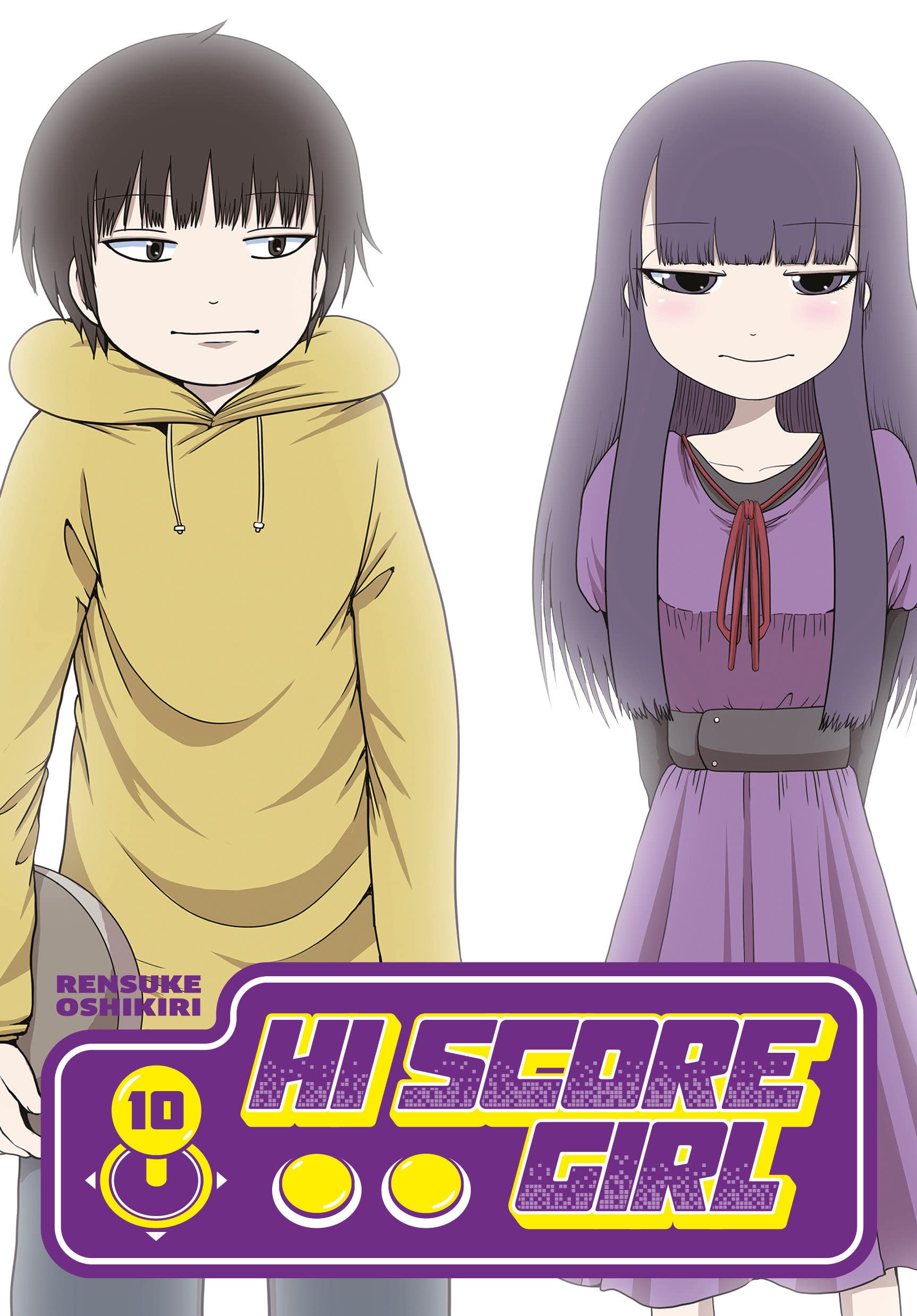
I’m happy and grateful that the full Hi Score Girl manga series by Otoi Rekomaru is out in English. It’s one of those manga where, once upon a time, a US release would have been a pipe dream. A nostalgic nerd love story premised around Street Fighter II and the 90s Japan arcade scene? As significant as that era was in Japanese gaming history, it’s a niche among niches. And yet, here we are.
I first discovered the series eight years ago, and was immediately won over by two things. First, there was the eccentric nature of its main duo: the obnoxiously loud gamer kid Haruo and his friend/rival/love interest, the reticent and rampaging Akira. They initially meet at an arcade and feud over a Guile vs. Zangief matchup, and though they never stop butting heads, it’s silly and sweet how they essentially communicate through gaming. That’s not metaphorical either; Akira pretty much never talks. Second, the portrayal of the 90s games and the way Haruo based his very outlook on life on them could have only come from a genuine place. Otherwise, jokes like “messing up the secret select code for Akuma” and “Akira having sympathy for big grappler characters because she feels bad about how little they get chosen” wouldn’t land so well.
The characters age over the course of the 11 volumes, going from elementary to high school and growing alongside the rapid developments in gaming technology. Their transition into adulthood is concurrent with continuous upgrades to Street Fighter II, the advent of 3D fighting games like Virtua Fighter, and so on. A nice narrative device to be sure, but it’s actually surprising seeing how much Haruo actually matures as he comes to understand responsibility in his own way. He’s not the sharpest tool in the shed, but his convictions are real.
Hi Score Girl reminds me a lot of one of my all-time favorites, 81 Diver. The art is similarly rough, and the core relationship is as much a rivalry as it is a love story (if not moreso). That’s actually pretty rare in manga focused on het romance, and is usually the domain of fujoshi-adjacent works. But it’s convincing here because of how Otoi portrays the genuine desire for connection, and the way that gap is bridged through gaming. Sure, the premise of a boy meeting an ultra rich mega gamer girl is unrealistic in many ways, but the portrayal makes me want to believe in their love.
In addition to the authenticity of the passion for fighting games, I think what ultimately makes Hi Score Girl work is that while Haruo kind of exists primarily in his gaming-obsessed mental space, the life lessons he draws from games are ultimately his own. He’s a guy with an imaginary friend who gives him pep talks and acts as his conscience, and that friend is often just Guile. Haruo and Akira imbue greater meaning into games, and the games reciprocate by providing them the thrill of victory, the agony of defeat, the comfort of friendship, and the joy of love.
It’s not uncommon for people to dwell on what might have been. “If only I could get back what I lost, then everything would be better.” The Tunnel to Summer, the Exit of Goodbyes is an anime film that explores this feeling, told through the lens of a summer romance with a spark of the fantastical.
The Tunnel to Summer explores the lives and relationships of two teenagers, a boy named Touno Kaoru and a girl named Hanashiro Anzu, who end up finding an actual urban legend: the Ryuuguu Tunnel that is said to give you your greatest desire but at the price of losing everything. Touno has to deal with an abusive father who blames him for all their troubles and trauma. Hanashiro has something to prove and an attitude to match—one that says, “I have neither the time or patience to deal with stupid crap.” The pair discover that time passes much more quickly in the tunnel, and even a few seconds in there translates to hours in the real world. But the two have wishes they want to fulfill, and so they work together to figure out its secrets, all the while growing closer.
Time dilation isn’t a new premise in Japanese fiction. Both Aim for the Top! Gunbuster and Voices of a Distant Star explore how human relationships can be affected by the uneven passage of time within science fictional settings. Even beyond anime, the Ryuuguu Tunnel itself is a reference to the fairy tale Urashima Tarou, which is about a guy who visits the underwater Ryuuguu-jou (Dragon Palace) for what he perceives as three days but is actually 300 years. As a trope, I actually enjoy time dilation quite a bit because of how it messes with our minds so simply and easily—and The Tunnel to Summer adds another emotional dimension because it’s not just about how they are passively affected by it but also how their active decisions have consequences. The characters must consider how the past (or future) they long for might very well be distracting them from finding happiness in the present.
Something else that stands out to me is the central relationship between Touno and Hanashiro because of how much the two feel like equals. It sort of brings to mind BL shipping in shounen series, and how often it happens simply because all the boys are involved in the same competition—which often engenders visibly greater passion than whatever interaction the hero has with a female love interest. Here, Touno and Hanashiro feel very much like they’re in it together as they learn and experiment about the Ryuuguu Tunnel. In terms of how this plays out in the overall story, I like how each character is very invested in their mutual endeavor in their own way. The similarities and differences between the two ultimately enriches their relationship and gives the film a nice emotional anchoring.
Because of the subject matter and the seasonal setting, The Tunnel to Summer, the Exit of Goodbyes ends up having a very nostalgic feel while at the same time questioning the value of nostalgia itself. It’s more than just another summer-themed anime movie, carrying a memorable identity all its own.
Introduction: “Gattai Girls” is a series of posts dedicated to looking at giant robot anime featuring prominent female characters due to their relative rarity within that genre.
Here, “prominent” is primarily defined by two traits. First, the female character has to be either a main character (as opposed to a sidekick or support character), or she has to be in a role which distinguishes her. Second, the female character has to actually pilot a giant robot, preferrably the main giant robot of the series she’s in.
For example, Aim for the Top! would qualify because of Noriko (main character, pilots the most important mecha of her show), while Vision of Escaflowne would not, because Hitomi does not engage in any combat despite being a main character, nor would Full Metal Panic! because the most prominent robot pilot, Melissa Mao, is not prominent enough.
—
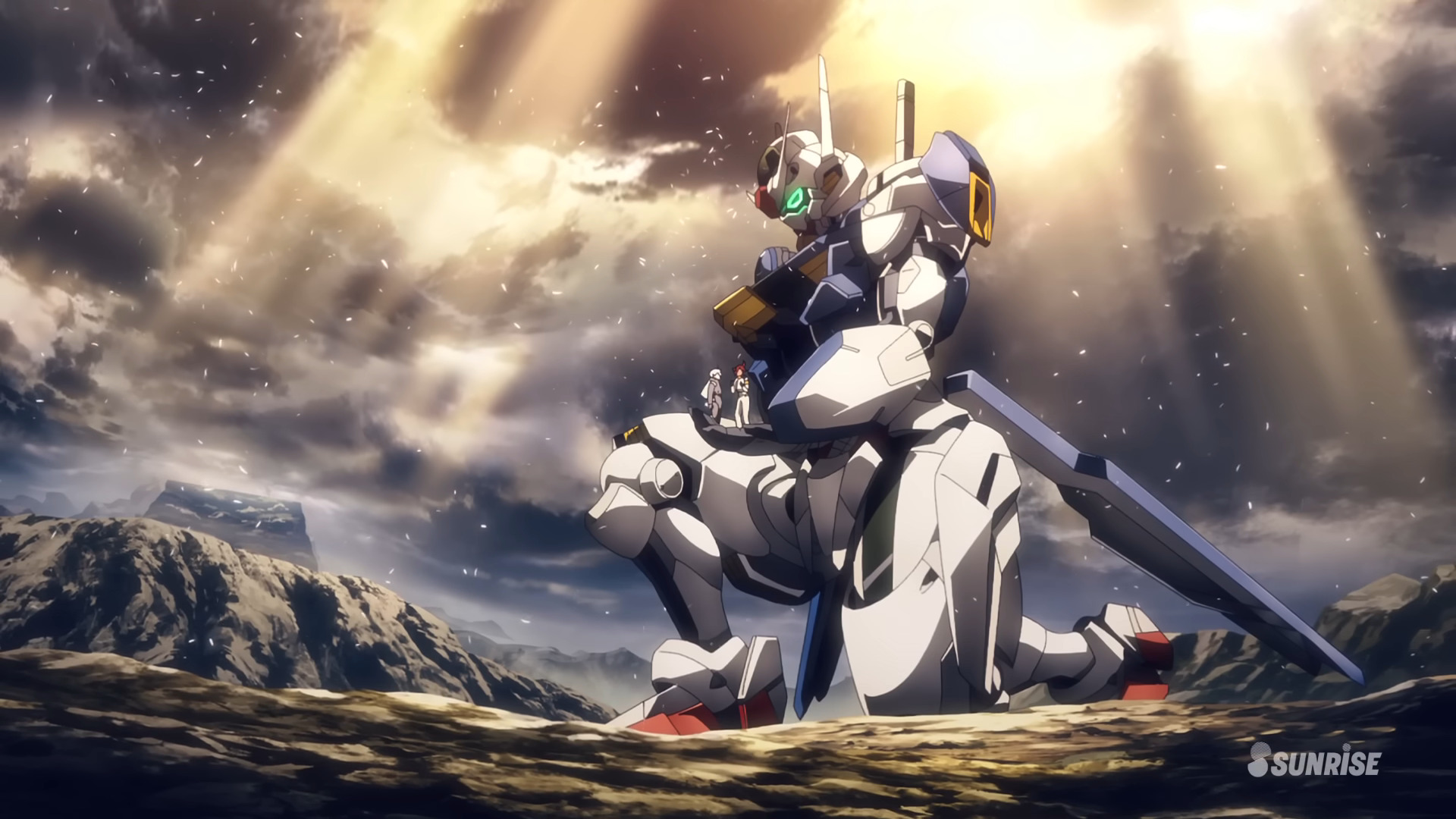
I truly believe that Mobile Suit Gundam: The Witch from Mercury will go down as a pivotal work in anime history. There are the surface reasons, of course: It has the honor of being the first mainline Gundam anime to feature a female protagonist with a same-sex primary romantic interest. It’s also the first main Gundam to be only 24 episodes when even the next shortest series still got 39. But the core of why I think Witch from Mercury is a game changer is that it ncludes many elements unfamiliar or in defiance of Gundam that manage to tell a compelling and thought-provoking story that carries both idealism and realism in its narrative.
Witch from Mercury takes place in a world where Gundams are forbidden, even though they were originally based on research to help people with disabilities. Years after the banning of Gundams and the seeming purge of all involved, a shy and awkward girl named Suletta Mercury arrives at Asticassia Academy, a mobile suit school for the elite where student matters are officially resolved through giant-robot duels. Suletta wins a match in her Definitely-Not-a-Gundam, Aerial, ends up engaged to the daughter of the school’s owner, Miorine Rembran, and in doing so inadvertently steps into the complex corporate, social, and political forces at play.
The anime starts off reminiscent of both Revolutionary Girl Utena and G Gundam, but ends its first half throwing the relatively isolated nature of Asticassia into stark relief with the world at large, whether it’s the crushing disparity between Earthians and Spacians, the specter of war and how the parents of all the kids have a hand in perpetuating military conflict, or the realization that Suletta’s naivete isn’t merely an innocent quirk but points to an unusual and possibly even disturbing past.
The second half seems to calm down, only to ramp up even harder and throw the established order into further disarray. Things that other series might have left linger for 10 episodes are brought to bear in a fraction of the time. The anime can actually feel pretty rushed as a result, but in certain ways, I think this actually works out in its favor. Gundam series often meander and plod as they get into the latter 25-ish episodes as they try to incorporate extraneous characters and merch-friendly elements, whereas this one cuts out a lot of the fat, albeit with some of the flesh as well. The outcome of all this is a Gundam where I would get genuinely surprised and shocked, especially in terms of character deaths)—feelings that were often missing from my viewings of Gundam anime that have come out in the past 15 years.
The characters, especially the women, are memorable and one the best parts of Witch from Mercury. Suletta is a unique protagonist, both in comparison to her Gundam predecessors and in general due to the way she has to grapple with her own upbringing and the way she ends up establishing her own identity. She takes the viewers on a rollercoaster of a personal journey that makes her position as first heroine much more than a cynical decision for the sake of diversity. Similarly, Miorine’s aggressiveness makes for a great companion and foil, and the way she navigates her privilege and her desire to do more for humanity is wonderful. And Suletta’s mom Prospera is not only the best Char Aznable in ages, but shows the quiet fury of a woman who will do anything for her child.
As for minor characters, there are plenty of examples regardless of genders. Chuatury “Chuchu” Panlunch is refreshingly no-nonsense in a way rarely seen in anime. Guel Jeturk, a rival/potential love interest of Suletta, goes from annoying dude to endearing guy—something that actually happens more often than not with the cast. A number of characters are on the larger side but are not treated as jokes. And while Secelia Dote only has seven minutes of screen time across the entire series, her snarkiness manages to steal the show every time. I could keep going.
One of the more amazing things about Witch from Mercury is how well it strikes a balance between having ubiquitous mobile suits and incorporating them into the story and setting. They’re also very aesthetically pleasing, particularly the Aerial. It’s identifiably a Gundam, but its proportions and flourishes give a slight feminine feel without going straight into Nobel Gundam territory. I also enjoy the way it contrasts with other mecha, as it makes the Aerial come across more something that will disrupt the status quo. Moreover, Aerial is also a rare instance of a mobile suit basically being a character unto itself—something that has serious consequences as the series progresses.
A common criticism of Gundam as a whole is that while it generally contains anti-war messaging, the cool factor of the mobile suits can end up drowning it out. Although the designs in this particular series are indeed among the best ever, Witch from Mercury is also the first to establish that the technology did not begin as a military endeavor, and this helps throw the use of mobile suits as weapons into stark relief. It’s also part of a greater look at the inequalities and inequities suffered by those who lack the financial and familial might to make the world care—a world where even the children of those in power feel the burden of having to deal with their parents’ bullshit.
On that note, corporations play a major role inthe series, and I’ve seen people get extremely confused with all the different alliances and factions. While I won’t say it’s simple to keep track of everything, one way to navigate that web is to understand that many adult decisions are the result of corporate greed, and trying to find positions to have the best profits with the least accountability. This is what makes Miorine’s ultimate decision all the more satisfying, as she throws that structure off kilter using the means available to her. Gundam series often feature politics because of how they take place on grander scales.
These two elements together help Witch from Mercury’s politics feel very contemporary and relevant to our times, instead of coming across as dated or tepid.
Witch from Mercury brings a new sense of what Gundam can be. It possesses many of the franchise’s well-worn tropes without being beholden to them. It breaks boundaries of all kinds, whether through its unique cast of characters, its central same-sex romance, or its perspectives on conflict and humanity. I truly feel that what we have is a turning point in Gundam and anime as a whole, and I’m hopeful it’ll be for the better. Suletta is the first main Gundam heroine, but she won’t be the last.
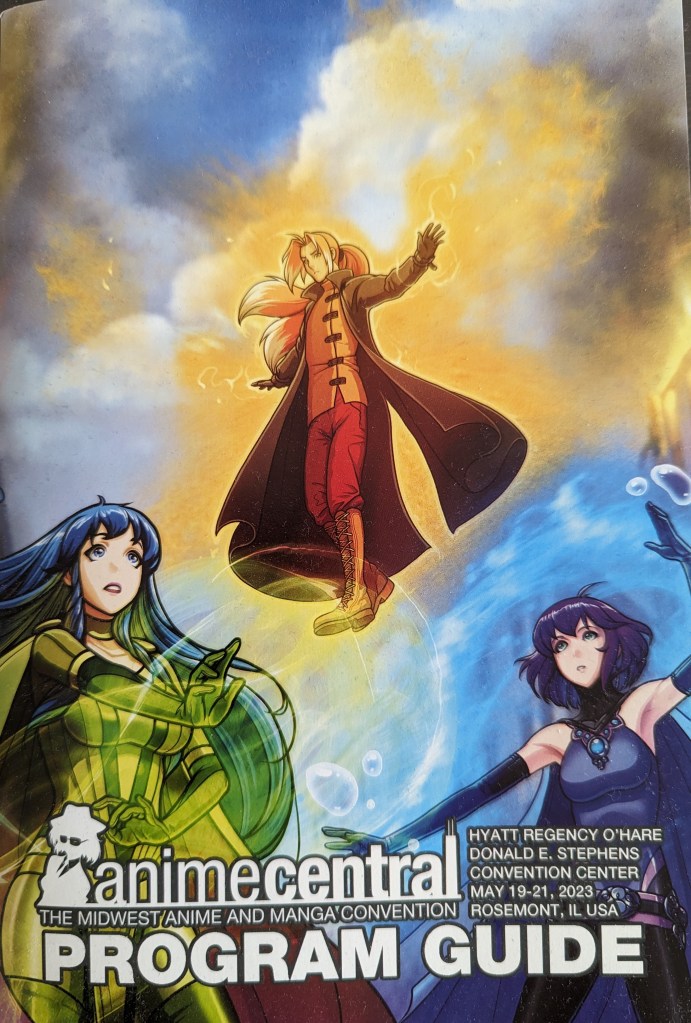
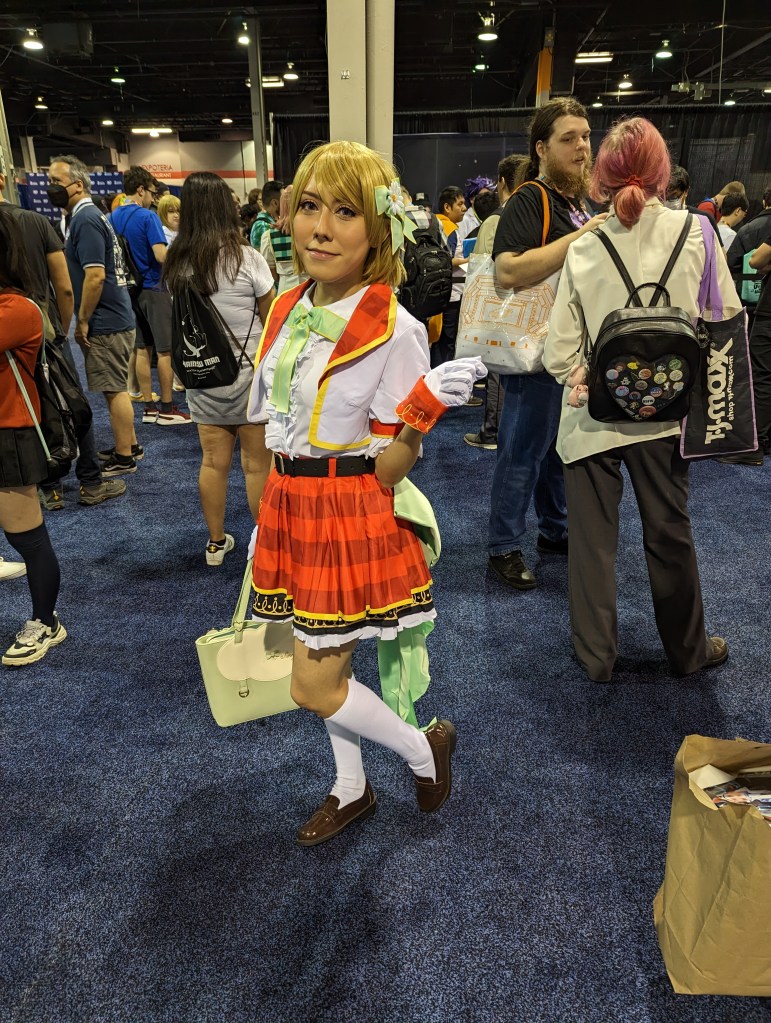
I’ve been to my fair share of US anime conventions—on the east coast and the west coast and even some international ones—but never in the Midwest. When I heard the news that Kubo Yurika (the voice of Hanayo in Love Live! ) would be attending Anime Central 2023, I decided I had to be there. Call it paranoia, but after one of my favorite character designers and animators, Kimura Takahiro, passed away this year, I’ve started feeling that I shouldn’t let opportunities pass me by.
What I did not expect was to have COVID-19 while at the event—a fact that I wouldn’t find out until later. While my throat was feeling uncomfortable, I had tested negative multiple times before flying out, so I figured it was just a mild cold or something similar that could be contained with good masking. Unfortunately, it turned out to be worse than I thought.
I mention all this for two reasons:
First, as far as I know, I did not spread COVID to anyone at the con—not even my convention roommate who had to hear me coughing and hacking into the night and had to fly next to me. This means that good respiratory masks (KN95, N95, KF94) really, truly work. You are doing yourself and everyone else a favor at conventions and other crowded places.
Second, because I wasn’t feeling great, my experience at Anime Central 2023 was not ideal. Nevertheless, I had a good time, and I think it has to do with the fact that Anime Central still maintains a pretty down-to-Earth feel for a convention.
Basics
Anime Central 2023 took place May 19–21 at the Donald E. Stephens Convention Center in Rosemont, Illinois, just a 35-minute car ride from Chicago O’Hare airport. With multiple hotels connected to the convention center through a system of enclosed overpasses, you can easily get to the convention center itself without stepping outside. Putting aside my own hopelessness when it comes to directions, plenty of signage makes it difficult to get lost in those above-ground tunnels.
The con had a certain feel I would describe as very 2006. That’s not an insult either, as I actually prefer my conventions to not be polished to the point of rubbing out any quirks. The way Anime Central manages to get big guests while still feeling very fan-run is reminiscent of my favorite anime cons.
The Kubo Yurika Experience
One of the big highlights of the con is the fact that I got to interview Kubo. That came with a caveat: Talking with her had to be under the pretense that we would be focusing on the game A Light in the Dark, for which she and Ichinose Kana (Suletta Mercury from Gundam: The Witch from Mercury) provided voices. The result still provided a good deal of insight into their careers and approaches to voice work.
I also attended her panel, and it was a joy to see her interacting with the audience as fans gushed over her. One person in particular mentioned that having an earbud accidentally get stuck in her ear while watching Love Live! inadvertently helped her doctor realize that she had a tumor—which means Love Live! saved her life. The biggest takeaway I had from all this is that it’s wonderful to see such a large gathering of Hanayo fans.
Kubo was also doing a couple signing sessions and meetings with fans, but my condition that weekend basically made it impossible for me to wait the hours needed to get something. While I have some regrets about that, the positives outweigh the negatives.
Interviews
You can find my Q&As with guests at Anime Central, including with Kubo and Ichinose, here:
I didn’t get to attend as many panels as I would have liked, but the ones I saw were all good in their own ways. Tadokoro Azusa made for a lively guest eager to answer questions from the audience, and I was glad to hear people ask her about her time as Kiriya Aoi in Aikatsu!Helen McCarthy’s panels on the late Matsumoto Leiji and the history of cosplay both took deep dives into humble origins, and I recommend sitting in on any of her talks if you have the chance. And then there was “Kani-me 2: Crabs of Anime,” which struck a decent balance between crowd-pleasing antics and being informative. As someone who once co-ran a panel called “Such Dog, Much Anime, Wow,” I felt a connection.
Food Scarcity
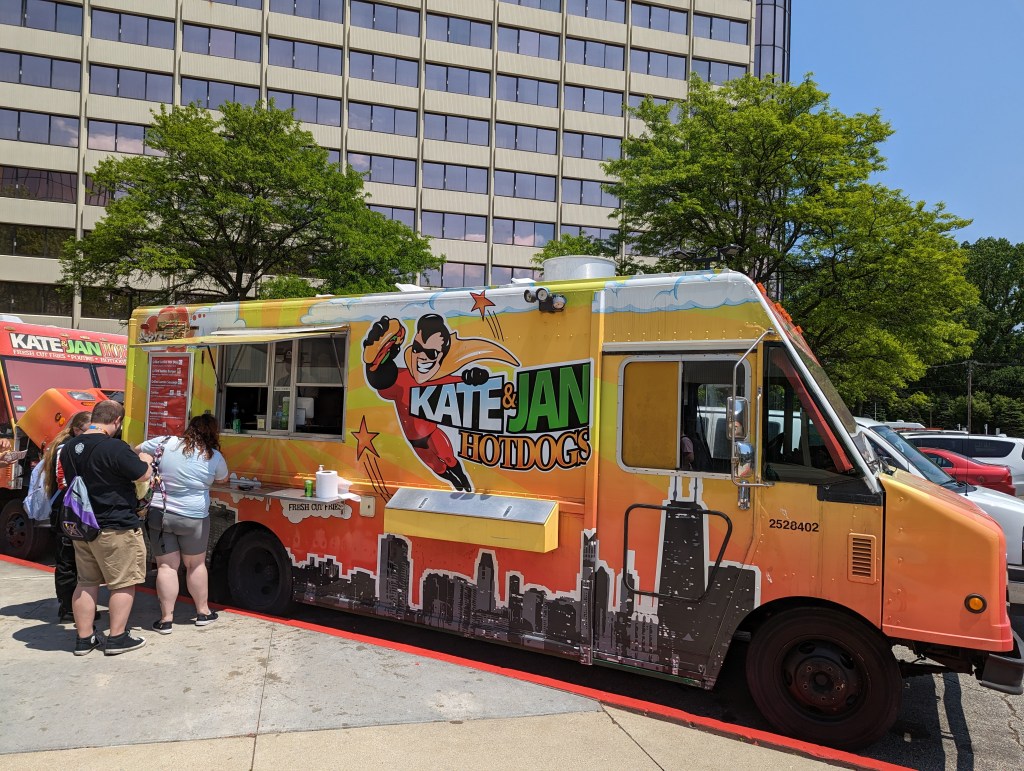
Now here’s a downside: Compared to other cons I’ve been to, getting meals can be inconvenient. While there is an entertainment area nearby that has a number of restaurants, there aren’t a ton of options for quick eats or delivery. Normally, I wouldn’t mind traveling to Chicago proper to get my fill, but because I didn’t have the stamina, I had to make do with what was available. The food truck situation was pretty dire, in that there were literally only two, and they were run by the same people. The different hotels provide options at hotel prices, and the Convention Center “ramen” was more like a lo mein cosplaying its Japanese cousin. Supermarkets and grocery stores are also hard to come by without a car. In other words, it’s best to pack some snacks and more nutritious options in your luggage if you plan to go.
Final Thoughts
Attending Anime Central 2023 was an exception of sorts for me, and regardless of the quality of the event itself, I can’t say if I’ll be able to go back next year. However, it gave me plenty of reasons to consider the possibility, and hopefully I’m not suffering from a once-in-a-lifetime plague by then.
For those in and around the Chicago area, it might just become your go-to regional con, but I get the feeling that you already know that better than I do.
WARNING: SPOILERS FOR SPIDER-MAN: ACROSS THE SPIDER-VERSE (and I guess Street Fighter 6?)
I’ve had the pleasure lately of experiencing two of the finest works of media this year: Street Fighter 6 and Spider-Man: Across the Spider-Verse. Both are at the pinnacle of their respective genres (fighting games and superhero movies) and seem to draw all the right lessons from the past. But one thing both titles really have in common—and which I think is so indicative of their approach—is strong character designs that are profoundly respectful of their casts’ diversity in terms of culture, background, and circumstances.
The idea of an international roster far predates both works and even their respective origin points, i.e. Street Fighter the arcade game and the Spider-Man comics. Often, these past portrayals end up being flawed, if well-intentioned. Be it a manga like Kinnikuman featuring heroic wrestlers built entirely on stereotypes or having the brilliant detective Charlie Chan played by an actor in yellowface, it’s historically a mixed bag. These instances frequently betray a lack of exposure to other cultures by ones that consider themselves the default.
SF6 and AtSV know that their audiences aren’t limited mainly to one ethnic group anymore, and either have people from more diverse cultures on staff, or at least people eager to listen to people from other groups. Both SF6 and AtSV had to meet the challenge of revamping many existing designs—the former because many returning characters are supposed to be older, and the latter because it draws from so many different portrayals of Spider-Man. In this regard, both succeed in spades.
Here are a few examples:
In SF6, Chun-Li’s update conveys through her mannerisms and outfit that she has matured while still being undoubtedly recognizable as the queen of fighting games. Her clothes draw directly from Chinese culture without bordering on parody, and some of her animations have been changed to draw from actual Chinese kung fu styles. Her new standing medium kick, for example, is actually the Separation Kick from tai chi.
Zangief still looks like a hulking wrestler, but they actually changed his body type. In previous games, Zangief has more of a body builder’s physique—extremely chiseled all around—but in SF6, he exchanges that appearance for one with a bit more fat around his massive muscles. In other words, he looks more like he trains for practical strength, and the fact that the developers did this actually goes a decent way in diversifying the bodies in the game while remaining true to Zangief’s character.
Similarly, AtSV had Pavitr Prabhakar, an Indian Spider-Man whose costume feel less like symbols of India added to Spider-Man and more like what a Spider-themed superhero might look like if they grew organically out of Indian culture. Moreover, the writers of AtSV actually consulted with Indian and Indian American writers as well as Pavitr’s voice actor, Karan Soni, because they wanted greater cultural specificity and authenticity.
And even with all of this consideration for ethnicity, gender, sexuality, etc., all these characters are attractive in their own right. People like to see good-looking characters, but there’s no one standard of beauty. Both creative teams seem to understand that.
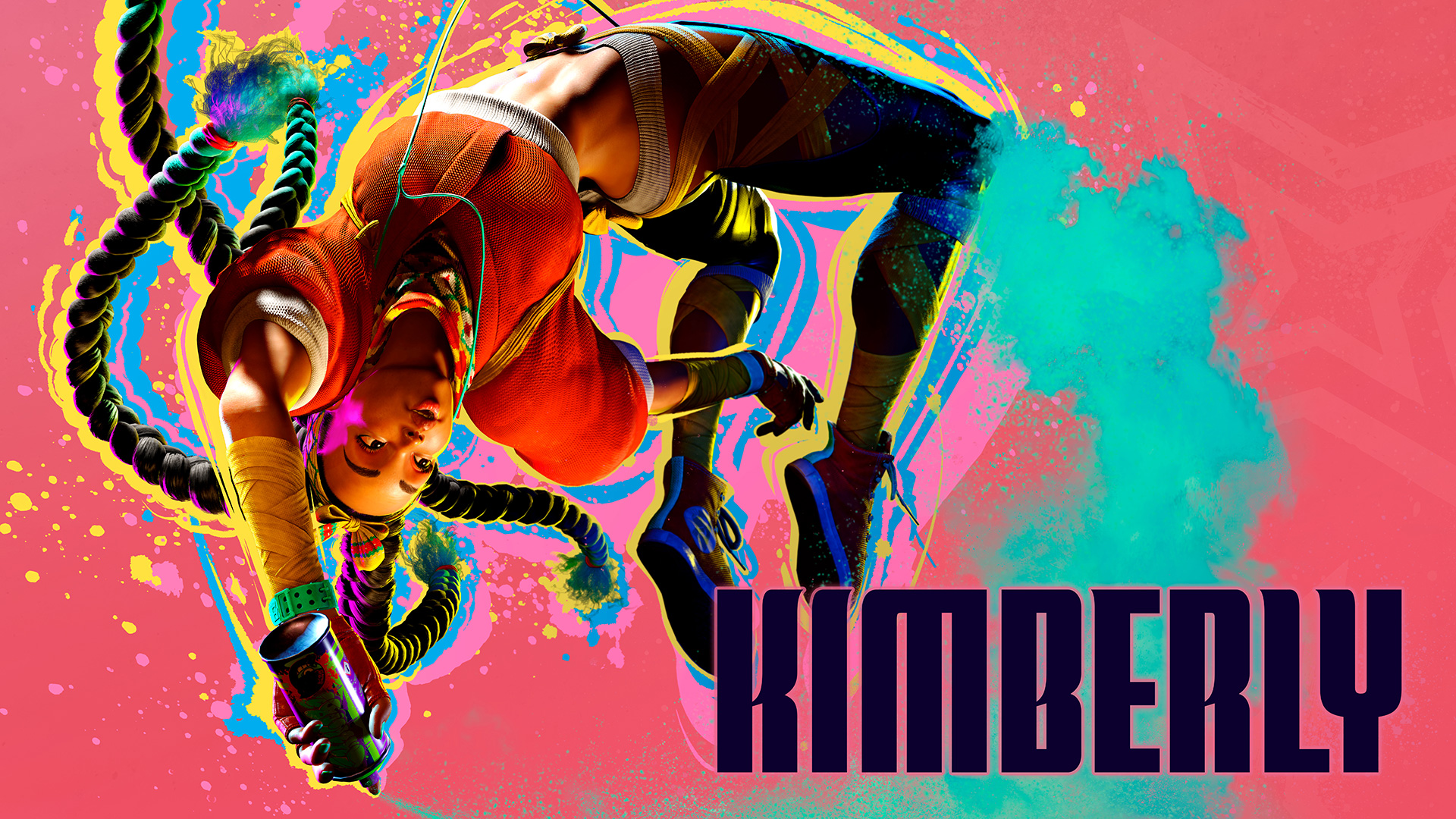
A major factor in both works’ success is starting from the understanding that not just one group of people are going to enjoy it. Kimberly Jackson in SF6 is black and one of the three most prominent heroes, and the only one with a story that ties directly to the main antagonist. The protagonist of the Spider-Verse movies, Miles Morales, is Black and Puerto Rican—and he reflects many of the aspirations and anxieties of those who grow up in non-White households in the US.
It can be easy to forget that the first Miles Morales film, Into the Spider-Verse, came out in 2018—before the murder of George Floyd and the increased mainstream awareness of the deeply rooted problems with police in the US. In 2023, however, I couldn’t help but notice the views expressed on that topic in AtSV. Both Miles and another character, the Spider-Woman Gwen Stacy, have dads who are on the force. They’re officers of the law who honor and respect the people, and having them be positive role models is part of the Spider-Man lore, but making the police and unalloyed good would never be compatible with the lived experience of so many black and brown people, not to mention other groups.
At one point, Stacy (a white girl) outright states that the reason her dad took on the role of captain is because he would inevitably be replaced by someone worse than him. In other words, contrary to the idea that cops like the one who murdered George Floyd are simply “bad apples,” it is the tree itself that is rotten, and the occasional good apple is the exception rather than the rule. While perhaps the film could have stated it more directly, it goes to show just how much AtSV is trying to express perspectives beyond what is comfortable.
The greatest strength of Street Fighter 6 and Across the Spider-Verse is that both works come across as genuinely wanting to engage with as many cultures as possible from all sides. They’re not just paying lip service to the notion of diversity but actually making it happen in a satisfying way. I hope that both Capcom and Marvel continue to draw inspiration from the world in all its glory and shame, and in turn, encourage others to do the same.
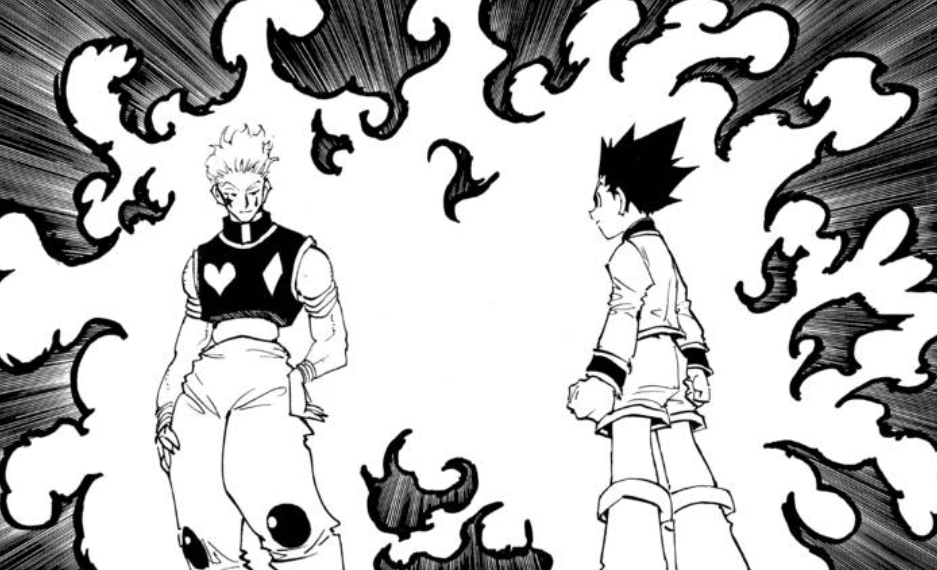
Hunter x Hunter has long been one of those series that I defined by the enthusiasm of its fans. Without knowing much about the series, I would often see it regarded as one of the best shounen action manga ever, and arguably a cut above author Togashi Yoshihiro’s other major work, YuYu Hakusho. The only thing that seemed to stifle its relentless charge was the fact that Togashi has very serious medical issues that have inevitably resulted in numerous stops and starts. But with the series getting some new chapters last year and VIZ putting all previous chapters on their Shonen Jump app to read for free, I’ve decided to jump on board this bumpy ride called Hunter x Hunter and see what the hype is all about.
The world of Hunter x Hunter is one where the most revered but challenging career is that of a “hunter.” A hunter of what? The answer is “anything and everything.” Gourmet foods, cultural artifacts, criminals—everything is fair game. Our hero, a boy named Gon, has long heard that the father he never knew was actually a hunter, and he seeks to follow in his footsteps so that he can meet his dad. Few are able to pass the arduous and deadly test, but Gon’s combination of kindness, cleverness, athleticism, and perseverance that friends and rivals alike take notice of.
I have read around 70 chapters of Hunter x Hunter, which for all I know is only scratching the surface of what makes it so renowned. From this limited experience, though, I can begin to understand why fans of shounen fight manga love it so much, even if it hasn’t captivated me in quite the same way. This is because Hunter x Hunter feels both more advanced than the typical formula but well within its boundaries.
There are two common action formulas for what I call “structured” shounen fighting, that is to say battles that have some sort of in-story framework governing it. The first is the tournament arc, where everyone ostensibly fights to figure out who’s #1. The second is the Bruce Lee’s Game of Death–style fight to the top, where the heroes must vanquish one “boss” after the next before being able to reach the goal, like in a video game. Hunter x Hunter, at least from what I’ve read, is the formulas distilled down to their essences and mixed together so that everything is one or the other or both. But working off a formula doesn’t necessarily mean it’s formulaic, and where Hunter x Hunter shines is by emphasizing that the solution to fights isn’t always sheer strength or a passionate heart. It’s cleverness that often wins the day.
At the same time, I feel like anyone who isn’t in love with shounen fighting might have a difficult time with the series, unless they’re maybe really dedicated to shipping the characters. I think the most helpful comparison might be to JoJo’s Bizarre Adventure, which has a similar focus on fights that require wits and ingenuity, but the highly eccentric and over-the-top nature of JoJo’s gives it a level of spectacle I haven’t seen in Hunter x Hunter. It’s like JoJo’s loves to break rules while Hunter x Hunter prefers to at most bend them.
It’s very possible that I’m on the cusp of the series getting turned on its head, and that I’m just one step away from the series transforming into something I love rather than merely enjoy. It’s happened before, but I can’t say I’m there yet.
Recently, I did something I haven’t done in a long time: I watched an in-flight movie. I used to love using my time traveling to check out the new and unfamiliar, and it was refreshing to experience that again. Given a short flight time, there was only so much I could fit in, and the movie I landed on was Batman and Superman: Battle of the Super Sons.
Somewhat reflecting developments in DC Comics over the past few years, it’s an animated feature film about Superman’s son, Jon Kent, teaming up with Batman’s son, Damian Wayne. How this compares and contrasts with the comics is convoluted in ways I don’t fully understand myself, so I’m treating this mostly as a standalone thing. In that regard, it’s probably fine to watch on its own as long as you’re familiar with Superman and Batman in a general sense. Maybe the fact Robin (Damian) is a pint-sized assassin who calls Batman “father” might throw some people off.
The story: Jon thinks he’s a regular kid with boring parents who are both journalists. Soon, though, he discovers the truth about his dad, and his entire perspective changes. When the starfish-like alien conqueror Starro begins to take over the adult superheroes, it’s up to him and Damian, whom he befriends (?) after meeting Batman, to save the world.
There’s something about the past decade of fiction that has brought to the forefront the challenge of heroes having to raise their own children. While plenty of comparisons can be made between Jon and Son Gohan from Dragon Ball, I think it’s more apt to look at other works, like Boruto, the Star Wars sequel trilogy, and even Avatar: The Legend of Korra to some extent. The gap between the stories focused on the parents and those focused on the children can vary from a few years to many decades, but they all land in the same space, wherein the legacies of the old heroes still persist in the hearts of the fans.
Because of this, portraying these adults as loving but flawed parents can be a tricky balancing act, and a common source of conflict in these stories is the struggle between maintaining one’s duty and being there for their kids. What’s more, these works are often meant to have the old good guys step out of the limelight and allow their kids to take center stage, which can create complicated feelings among fans.
In that regard, it’s actually kind of comforting to see the literal most perfect superhero, Superman, have trouble with this. If even the Last Son of Krypton has days where it’s hard to be a dad, then who wouldn’t? Sure, he’s ultimately the Best Dad Ever (and Lois an equally amazing mom in her own right), but Battle of the Super Sons successfully conveys the idea that we can have faith in the next generation to do things their way if we communicate to them the importance of love and justice.
I can finally say that I am hip to the trends of 20th-Century South American anime and manga fandom, as well as other fandoms worldwide. I have continued my reading of the original Saint Seiya all the way to the end, and I now know who the characters are, where their appeal lies, and what makes the series so memorable. At least, I think I do.
Saint Seiya (also known as Knights of the Zodiac) is a 1980s Shounen Jump manga about Seiya, a teen orphan who earns the power of a mystical armor called the Bronze Pegasus Cloth in order to find his missing sister. However, taking this path results in him having to fight rival Saints, before eventually teaming up with them to take on greater threats—including the forces of Greek gods. The series takes a while to find its footing, but once it all coalesces, the result is a work full of passionate pretty boys with intense camaraderie whose many battles take readers through a roller coaster of emotions as one shocking development leads continuously to the next.
It’s very clear to me that the series plays things by ear rather than possessing a more concrete long-term plan. Many seemingly important plot points fall by the wayside, as if the author, Kurumada Masami, wasn’t always sure what Saint Seiya should be. It takes a circuitous path to becoming the tales of Athena’s Saints protecting the Earth, and even after that, many arcs conclude feeling like they might be the last. Characters frequently come back to life or have their armor seemingly irreparably broken only to be restored in some never-before-seen way. According to George Horvath, a big Kurumada fan, the author actually let the readers decide who would join the team, and the series does really feel like it was built in part off fan input in a manner similar to pro wrestling.
But what carries the manga through is just the sheer spectacle and excitement built around its core cast, the Bronze Saint, all of whom have very distinct personalities and appeal. Pegasus Seiya is brave and clever, as is befitting a shounen protagonist. Dragon Shiryu is wise and righteous like a kung fu master. Cygnus Hyoga is cool yet fierce. Andromeda Shun is gentle and compassionate. Phoenix Ikki is headstrong and stoic, his sparse appearances akin to a much less merciless and infinitely more effective Tuxedo Mask who throws traumatic hallucinations instead of roses. Every time one of them gets to shine, their most prominent qualities are on full display and add to the drama of the moment.
One thing that increasingly stood out to me is how every character is extremely willing to sacrifice themselves for others. Again and again, warriors both major and minor try to throw their bodies into the jaws of doom to help save the day. At one point, in what’s called the Poseidon Arc, a critical moment goes from Seiya willing to attack in a way that could cost him his life; to the female character Eagle Marin using her body to shield Seiya; to Seiya trying to shield Marin instead; to Shiryu shielding both; to Shiryu, Hyoga, and Shun forming a wall. It’s a whole lot of wreckless selflessness.
Saint Seiya is the origin of the once-notable “boys in armor” genre, but its reach extends beyond that immediate purview of Samurai Troopers and Brave Command Dagwon. The series is known for being huge with BL fans in the 1980s, and was a major force in the doujinshi scene at that time. It really is no wonder, what with all these fit-looking guys with expressive eyes acting passionate and emotional as they get bloodied and bruised in combat. Without even knowing beforehand, Shun and Shiryu would seem incredibly popular in this regard, the former with his soft and feminine aura, and the latter with his sharp features and long black hair. I don’t know for sure how aware Kurumada was about this fandom, but there are multiple times where Saint Seiya seems to try to get more hetero (are those sparks flying between Seiya and Athena???)—though it always ends up receding into the distance. Call it a template for future works in shounen.
Famously, the manga artist group CLAMP got their start drawing Saint Seiya BL doujinshi. When I think about that fact, I feel like I can tell that the CLAMP aesthetic owes itself in some part to the look of Saint Seiya. Especially in something like RG Veda, the handsome and beautiful characters, the detailed yet confusing full-page attacks, and the general atmosphere evoke the struggles of Seiya and his allies to a certain degree.
Speaking of art style, I know that there is some debate among the fandom about Kurumada’s art style, which tends to be less conventional than the anime adaptation’s character designs. I can see why this divide exists, but I think there’s a certain charm to the manga’s look—an extension of its overall nonstop intensity. Even if the characters’ faces look kind of lopsided, it still carries an energy befitting Saint Seiya.
Although it rushes to wrap up a few dangling plot threads, Saint Seiya ends pretty decisively, making the reading experience satisfying overall. As is the case when I check out big titles from the past, it’s both entertaining and helps give me greater context for both manga history and manga fandom. As both a standalone work and a series that would inspire so much, it stands the test of time.
Eureka Sevenis an anime I love to death. Nearly two decades later, I still hold it up this TV series as one of the best ever. The sequels and spin-offs, however, have not been as hot. A film (Eureka Seven: Good Night, Sleep Tight, Young Lovers) basically reused footage from the TV series to tell a wildly different story where the characters look the same but are different people. A sequel TV series (Eureka Seven AO) damaged the story and visited gratuitous amounts of tragedy on the original heroes. And most recently, we have Eureka Seven Hi-Evolution, a trilogy that is similar to both previous continuations while embodying neither the best nor the worst of the franchise as a whole.
Hi-Evolution consists of three films each focusing on a different major character: Renton, Anemone, and Eureka. However, much like Good Night, Sleep Tight, Young Lovers, they‘re seemingly not the same people as in the TV series. Whether it’s having different parents or literally being from another world, details great and small are out of alignment. Hi-Evolution also follows the pattern of intersplicing old footage with new, but again with drastic changes in context that make it unrelated.
Or is it? Another aspect of the Hi-Evolution films is that they might actually be sequels to the original TV series, as well as possibly everything else in a sort of Turn A Gundam sense. It could be a unifying sequel, or a reboot, or an alternate universe, but it’s not very clear because so many things are so unlike what has come before. Or maybe it is obvious and I refuse to accept the possibility that this might be “canon” as it were.
Hi-Evolution as a sequel would be saying something along the lines of “this is the real story you couldn’t see,” and my response is “eh.” As a remix or an alternate track, however, it has more legs. It contains solid narratives regarding relationships between parents and children and between people in general, the way humankind struggles with thinking of everything as a zero-sum game, and a look into dreams and possibilities. The issue is that I’m not sure why it had to be in the guise of Eureka Seven. I actually think if it had been conceived as an original project, it would be a lot less shaky overall, and wouldn’t invite such comparison.
I worry that the director and staff on Eureka Seven might be too attached to the aesthetics of the franchise, and it holds them back from being able to do more. As much as I adore that first anime, it might be an anchor dragging everyone down. Better to free everyone and let them soar with new ideas.
When Studio Orange announced that they were making Trigun Stampede, I was pleasantly surprised. Trigun is a title that a lot of anime and manga fans around the turn of the 21st century cut their teeth on—I myself remember seeing it thanks to my school’s anime club. However, aside from a singular film in the form of 2010’s Trigun: Badlands Rumble, it hasn’t gotten much love, and it also isn’t as enduring in the general fandom consciousness as Cowboy Bebop. To be fair to both, they’re only vaguely similar, but they did come out around the same time and were anime convention staples together for years.
But here was a new Trigun TV series, and what’s more, it was clear that Trigun Stampede was going for an updated aesthetic. Anyone who’s familiar with the manga or anime remembers the iconic look of hero Vash the Stampede in his signature red trench coat and ultra-spiky hair—and both have been significantly altered for this remake. As I watched it, one thing became clear: While a lot of elements are similar to the 1990s anime, the story had been rearranged in noticeable ways. Where the previous iteration has a 50/50 balance of slapstick comedy via larger-than-life personalities and twist-filled science-fiction drama, Stampede is a lot more focused on telling a serious story. That said, I didn’t mind the changes, and was able to take all the changes in stride and appreciate them on their own terms.
But as I was going over how I feel about Stampede, a thought occurred to me. Why is it that I was able to easily accept a different Trigun, yet the very idea of a new anime remake of Cowboy Bebop feels wrong? I’m not even someone who reveres Cowboy Bebop as a sacred cow, though I think it’s excellent in many ways. (I know there’s the live-action Cowboy Bebop, but I consider adaptations like that their own separate topic regardless of quality, so I‘m setting that aside.)
What I think the difference comes down to is just the way each series generally approaches storytelling. Cowboy Bebop is like a finely tuned machine, intricate and delicately balanced to give a very specific experience. Removing even one or two gears can throw the entire thing off, and overhauling it entirely feels pointless. Trigun, on the other hand, comes across as more of a scrapbook. Narratives can still be formed, but the strengths of the individual elements are more important, and they can be rearranged in different ways.
This brings to mind an old favorite topic of mine: the contrast between “character” and “kyara” as written about by manga scholar Ito Go. Essentially, character is how a figure exists within their greater story, whereas kyara is how much of their identity can be maintained if divorced from their original context. I think neither Cowboy Bebop nor Trigun are severely lacking in either category, but the former has a relatively stronger emphasis on character, while the latter focuses more on kyara.
It’s why Trigun Stampede can be this more somber experience wholly lacking in things like a wacky black cat who makes cameos and meows a lot, yet still identifiably be Trigun. In fact, this new series can often feel like Trigun leaning in the direction of Cowboy Bebop without thoughtlessly aping it. So even though there’s a sequel to Stampede on the way that will actually incorporate more of the 1990s Trigun look, the new groundwork laid out makes me look forward to seeing both how similar and how different things get. And despite the fact that the franchise has its origins in the 1990s, I can’t help but wonder if the pacifist nature of Vash might actually resonate harder among fans today.






 OGIUE MANIAX