The Musician and the Mastermind: Ya Boy Kongming!

Ya Boy Kongming! is an anime with the most absurd, yet perfect premise: What if legendary Chinese Three Kingdoms–era tactician Zhuge Liang was reincarnated in modern-day Shibuya, and became the manager of a fledgling musician? The concept is relatively succinct and easy to envision, though it feels like it could lose steam pretty quickly. But that’s why Ya Boy Kongming! is all the more impressive: Where it truly shines is in taking what could be a one-note gimmick and executing it in a way that feels fun, uplifting, and never stale.

Based on a manga, the Japanese title for this series is Paripi Koumei. The former word is short for “Party People,” i.e. people who like to get out and live it up, and the latter is the Japanese pronunciation of “Kongming,” Zhuge Liang’s courtesy name.

There’s a basic formula to Ya Boy Kongming!: Tsukimi Eiko—the aspiring singer—faces a challenge that can further her career or sink it. There are rival musicians looking to get ahead of themselves, and they seemingly have Eiko outgunned in every way. However, Kongming’s brilliance comes through, and using tactics inspired by his most brilliant ideas as found in Records of the Three Kingdoms, he helps Eiko overcome all obstacles. It’s reminiscent of a series like the mahjong manga Akagi, both in getting to see a genius on display and the fact that prior knowledge of the central focus (Chinese history in this case) isn’t required. It’s also charmingly lighthearted: Seeing one of Kongming’s famed stratagems in the context of exploiting the architecture of a Shibuya night club, for instance, is a great blend of silly and compelling. 

If it remained rigid in its format, Ya Boy Kongming! would be a quirky little thing that people can point to as an example of how wacky anime can get. But what the series also does to remain engaging is to give its characters a real sense of growth. This applies not only to Eiko and others she meets in her journey, but also to Kongming himself. Whereas Eiko is on a journey to stand on bigger stages and sing her heart out, Kongming is all about wanting to change the world in a time of peace rather than war. 

The show also just looks and sounds good. The art style is conventional, yet still charming. Eiko’s songs are beautiful and properly convey her as a hidden gem to whom Kongming is rightfully devoted. The themes are actually covers of popular club songs, which fits the series to a tee, and has helped Ya Boy Kongming! reach beyond a niche audience.

Applying war tactics to a music career reminds me of something I’ve heard often, which is that all businessmen should read Sun Tzu’s Art of War. The difference is that CEOs reading about how to be brutally efficient in war sounds like everything that is wrong with the world we live in, whereas Kongming’s gentle applications of theory in this specific context are fun and never void of human decency. It’s that gentleness and purity of premise that allows Ya Boy Kongming! to be both eminently memeable and fully capable of standing on its own legs. It possesses both fluff and substance, and watching it makes me feel better about the world.

Dance Dance Danseur, Ted Lasso, and Healing Masculinity

There’s a problem when it comes to toxic masculinity, and I don’t just mean that it exists. Rather, the recurring issue is the fact that it gets easily misconstrued by detractors as meaning “masculinity is inherently toxic,” which then gets extrapolated to be an insult towards men as a whole and an attempt at widespread emasculation. The counter to that erroneous view is to point towards non-toxic examples of masculinity, but often they exist in the abstract. Recently, however, I’ve watched two shows, one anime and one American live-action, that go beyond toxic masculinity or even non-toxic masculinity, all the way to what I’d call “healing masculinity.” Those are Dance Dance Danseur and Ted Lasso.

To clarify a key definition to start, toxic masculinity mainly refers to the damage done to men and those around men by the dread of not living up to societal standards of manhood. “Boys don’t cry” is the classic example, as is the general reluctance to open up to others emotionally out of fear of being vulnerable. Dance Dance Danseur and Ted Lasso each address this in somewhat different ways, but the result is encouragement for guys to not be held back by what men are “supposed” to be like.

Dance Dance Danseur takes a more overt approach to addressing toxic masculinity. Its main character, Murano Jumpei, is a boy who fell in love with ballet when he was little. However, a combination of seeing other boys ridicule the style and his own wish to live up to the memory of his martial arts actor father leads him to suppress this passion—and take up Jeet Kune Do instead. It’s only after a female classmate notices that Jumpei’s supposedly kung fu–influenced spins look suspiciously like ballet moves that he sets back on the path of his true love. Even after starting practice, Jumpei initially tries to keep his training a secret for fear of his friends knowing, but he’s forced to confront the fact that maybe they’re just close-minded, and directly deal with their preconceived notions.

Jumpei carries a lot of classically “manly” traits. He’s loud and aggressively outgoing, and he’s very athletic. His love of ballet is expressed the same way a guy might get excited about his favorite sports team or band. However, instead of trying to play off these emotions, he embraces them even to the point of tears—all while his peers remain in their proverbial boxes.

Ted Lasso addresses toxic masculinity less directly, but arguably provides a more robust counterexample to it. Its eponymous protagonist is a successful small-time American football coach who gets hired to instead work with a soccer/association football team despite his utter lack of experience or knowledge in the latter. The English team he ends up with is full of all the expected problems: egos, lack of mutual respect, and a recent history of failure. But rather than trying to whip them into shape like a drill sergeant, Ted Lasso encourages his players to share their feelings and to develop camaraderie through emotional bonding—even the most hypermasculine among them.

Ted’s own personality is cheerful, laid-back, and optimistic to a fault (which does come into play as a point of contention). When it comes to leading by example, though, he excels and gradually changes the way his players see themselves, the sport of soccer, and their world. And while his attitude might appear to make him a pushover, Ted is anything but. He will step up to others, not out of excessive tough-guy pride, but instead a desire to lift up others in pain. This applies to his coaching style as well: Ted’s main drive isn’t wins and losses, but to make everyone on the team the best versions of themselves.

Both Jumpei and Ted remind me a bit of Guy Fieri, a figure who helped make cooking “okay” for a lot of guys. Beyond that kind of “dude-safe” presentation, however, what I think contributes to them being strong models for a less damaging conception of masculinity is that they try to aid others find their own ways out of their own trauma, all the while being far from infallible. Their approaches to life don’t come without setbacks: Jumpei’s hot headedness gets him into plenty of trouble, and Ted’s American Midwestern positivity can sometimes leave certain problems unanswered. Yet, both are able to help others by being supportive, defiant, imperfect, and vulnerable. They provide a form of masculinity that isn’t just neutral but actually heals.

Hololive Alternative, TakaMori, and the Speed of Memes

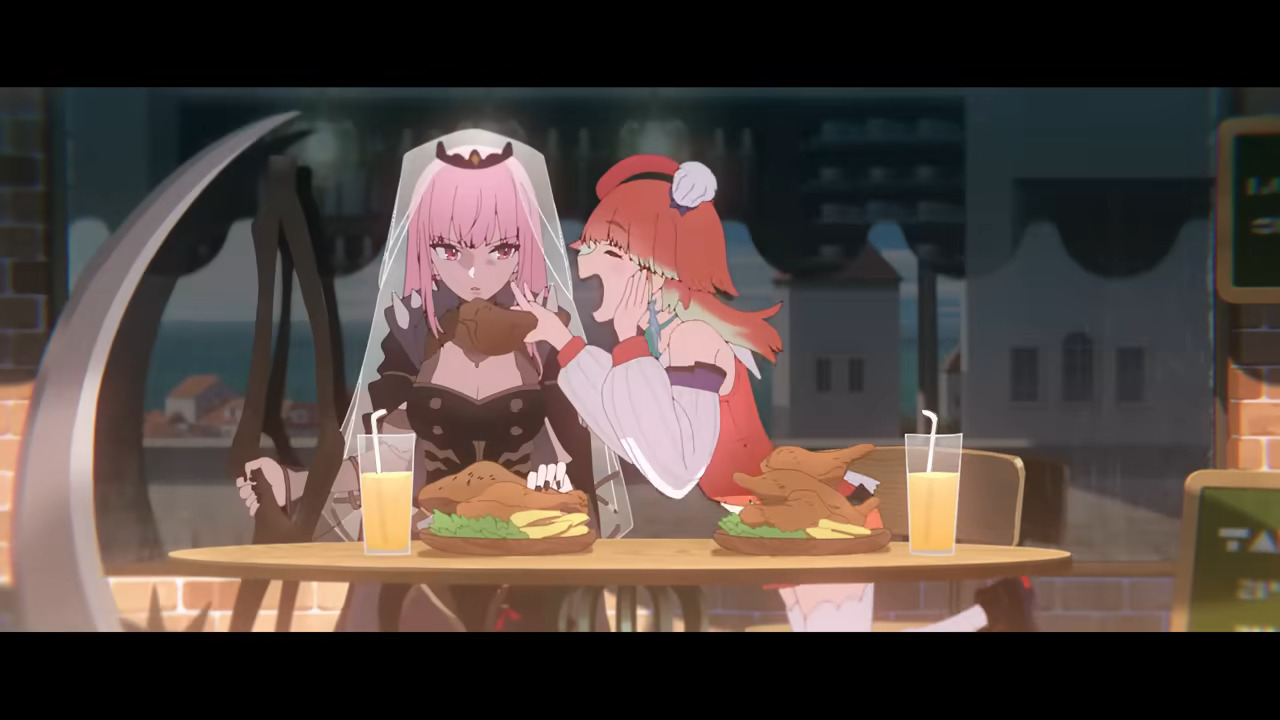
Hololive Alternative is a 2d animation project depicting the Virtual Youtubers of Hololive as active characters within a world. Two “teasers” are out currently, and they’re a treat for fans and newcomers alike. But while watching the second, the depicted interaction between Takanashi Kiara and Mori Calliope made me hyper-aware of how internet culture and its memes evolve at lightning speeds.

Kiara the Phoenix and Calliope the grim reaper are both part of HoloMyth, the Hololive brand’s first foray into the English-speaking market. Early on in their careers, they were known for having a rather flirtatious and tsundere-esque relationship, which in turn spawned the ship known as TakaMori. It was a prominent part of both character identities—even making it into Can You Do the Hololive?, a song based on all the members’ signature greetings. In it, Kiara states, “Of course the two of us come together,” and Calli responds, “Shut your mouth, Kusotori [Stupid Chicken].” 

Similarly, the second Hololive Alternative teaser shows the two eating together. Kiara eagerly takes photos of everything (Calli included), and the reaper responds by grabbing her scythe and taking swipes at Kiara. The whole interaction describes the original basis for TakaMori to a tee. 

The only problem: the nature of the pairing has changed over time. It still has fans, of course, and the two even recently had an in-person stream together that was made all the more impressive by the fact that one had to travel from Japan to Austria. However, both Kiara and Calli have talked about the fact that they decided to emphasize their solo identities more. The fans in the Youtube comments for that collaboration have remarked even on how the duo’s dynamic has changed (and arguably for the better).

Granted, this isn’t quite the same as a meme naturally morphing into something unrecognizable. The fact is, one can point to a conscious decision as the reason TakaMori isn’t quite the same as it used to be: a purposeful shift in direction. Nevertheless, it feel indicative of the rapid pace at which VTuber in-jokes are formed feels indicative of the general speed of the current internet. In contrast, elaborate animations—even short ones like the teasers for Hololive Alternative—take time to be made. In that gap, the ground shifted underneath TakaMori, and its depiction in animated form can feel like a relic of the past. In reality, it’s only been a little over a year, but the fact that a year sounds like forever in VTuber time makes that difference all the more stark. Online empires rise and fall in less time, and I have to wonder what else might end up coming across as a “yesteryear meme” by the time the next teaser is done.

If You Love Literature and Violence, Gimme a Hell Yeah—Hibiki: How to Become a Novelist

Hibiki: How to Become a Novelist is one of my favorite manga of the past few years. Sure, it doesn’t have the mind-blowing thrills or soul-reverberating energy of other works. The art is also decidedly mediocre. But what Hibiki does have is ridiculous humor, unpredictability, and a protagonist I would describe as “spiritually akin to Stone Cold Steve Austin.”

The series follows a teenage girl named Akui Hibiki, who one day submits a novel manuscript on a whim. As a result, she winds up on a journey that brings Hibiki in contact with titans of the field, struggling aspiring authors, an eccentric but enthusiastic school literary club, and a whole host of other unique personalities. But while Hibiki’s quiet and thoughtful personality evoke images of a bookworm archetype or perhaps a demure “literature girl,” she also refuses to take shit from anyone. Whether it’s high school bullies, dismissive fellow writers, nosy paparazzi, or even a kid getting in the way of customers at the bookstore, they’re all met immediately with unexpected violence from this skinny girl. Hibiki isn’t particularly strong or fast, and she isn’t trained to fight in any way, but she will not let anyone try to use the trappings of civility and etiquette to take advantage of her.

Hibiki is not a malicious person. She respects creative passion in all its forms, and will go out of her way to encourage everyone to try their hand at writing so that they might express what’s inside of them, be they friends or enemies. Her fellow members of the literature club run the gamut—from the granddaughter of a famous author, to a childhood friend she knows is stalker-level obsessed with her, to a girl who likes cheesy light novels—but Hibiki supports them all. She cares little about celebrity and glamor, or the aesthetics of fame, as it’s the love of craft that motivates her. What she hates possibly more than anything else is people who shower her with praise but who clearly haven’t actually read her work. Hibiki honestly engages with the creations and feelings of others, and she expects the same in return.

That unabashed authenticity is why I liken Hibiki to one of the most popular wrestlers ever. While pro wrestling is a staged performance and everyone pretty much knows this to be the case, Steve Austin is famous for feeling incredibly genuine every time he walks into the arena as the sound of shattering glass marks his arrival. Austin’s appeal was that he 1) felt convincingly real, and 2) he would constantly kick the ass of his nasty boss, Mr. McMahon, who kept trying to humiliate him. That’s Hibiki to a tee—minus the Stone Cold Stunners, but still keeping the kicks to the gut and the chair shots (really). Though, if I were to describe her exclusively with anime characters, she’s like a cross between the eerily capable mind of mahjong prodigy Akagi Shigeru and the also-aggressive Taniguchi Mio from 22/7.

As I think about the appeal of Hibiki, I’m reminded of a series of tweets I saw by translator Dan Kanemitsu. In them, he expresses the idea that the reason Japanese culture places so much value on stories about middle and high school years is because they’re assumed to be filled with potential and agency. After you grow up, things change, and it just doesn’t come across the same way when a story is about a defiant adult. I feel that the character of Hibiki speaks to this sentiment on a very visceral level, and much of the satisfaction she provides is that she won’t let anything get in the way of that agency. In fact, the last couple of volumes of Hibiki even bring up this idea that the passion of youth can’t be maintained relative to her career. Without going into spoilers, the resulting answer is worth seeing.

Simplicity that Works: Multiversus Alpha Review

Thanks to an old friend, I managed to get into the Multiversus alpha. As a long-time fan of Smash Bros. and someone with a general interest in platform fighters, this new Warner Bros. crossover had me reasonably intrigued by its level of polish and its emphasis on 2v2 battle. While a lack of free time meant that I could only play briefly, I came away from the game with a positive impression, albeit somewhat tempered by its free-to-play (i.e. inevitably loot-based) model.

Gameplay-wise, two things stick out to me. First, is that it feels like the developers put a lot of thought as to how each character’s gameplay would reflect their identity. Second, the simplicity of the controls make Multiversus quite accessible and might even be a boon to its team focus.

The signature character flourishes are indeed all there, but it’s even baked into the mechanics. Of course Bugs Bunny would dig holes and generate objects out of thin air to complement his slapstick nature. Of course Velma from Scooby-Doo would act as range-focused support, and also gather clues like Phoenix Wright in Marvel vs. Capcom 3. Arya Stark has her sword, but also a “pie-making” mechanic that occurs when she KOs someone—which implies that she turned them into pie. The game successfully celebrates its crossover nature visually and through its controls.

The only exceptions might be Shaggy and Reindog. The former leans completely into the Ultra Instinct Shaggy meme and winds up being like a mix between Goku, Captain Falcon. The latter is an original character (in the same crossover-universe vein as Ruby Heart and Cybaster), and thus has no basis.

In terms of the controls, Multiversus does not have shields or grabs. It also does not rely on analog movement. Unlike Smash Bros., there are no distinctions between walking vs. running, or tilts vs. smash attacks. Simple as controls are in Smash, I’ve seen this granularity be a sticking point for less experienced players, and I think this move helps accessibility. The leniency of aerial movement also makes me think of a more refined and varied Brawlhalla: another free-to-play platform fighter that, unlike Multviersus, suffers a bit from feeling samey across its cast.

While there’s an argument to be made that this might oversimplify things in the competitive realm, I think this won’t be the case. In fact, the pared-down controls actually feel more conducive towards the chaotic environment of a 2v2 match. They give both players and spectators potentially less to concentrate on so they can pay attention to the match as a whole.

I can easily see the competitive scenes for Smash Bros. and Multiversus coexisting, if only because they have different emphases. Smashers overwhelmingly prefer singles over doubles, while the developers of Multiversus specifically designed it for 2v2. To wit, some of the biggest proponents of the game are those who have great love for doubles Smash, and I hope they end up having a game that can reward that passion. 

The Tools to Express Yourself: Blue Period

When I was in art school, I often heard a recurring sentiment from my fellow students: “If people can understand even 10% of the message my piece conveys, I would be happy.” Though we differed in style, talent, skill, and experience, there was a mutual desire to have we put into our work to make it to those viewing it. So when I began reading the fine arts–themed manga Blue Period, and the main character starts to cry after his friends “get” his drawing of Shibuya at dawn, it brought me back to those younger days. It also told me that this manga really understands the struggle that artists have with themselves and their work.

Blue Period is the story of Yaguchi Yatora, a contradictory “academically successful delinquent” whose social and school careers are both solid. However, Yatora is prone to being the person others want him to be, and he lacks personal motivation. When a chance encounter with an older female classmate’s large-canvas artwork fills him with inspiration to try making something himself, it leads Yatora to start down the path of applying to art school despite his parents’ wishes. As a total beginner with certain expectations placed upon him by friends and family, the walls he must surmount are tremendous.

It’s rare for manga and anime about artists to actually be about art; most of the time, it’s really just a motif to convey drama and/or comedy. This is a fine approach, and some of my favorite series fall under this umbrella—Hidamari Sketch and Honey and Clover stand out. But like Blank Canvas, Blue Period takes a more serious approach, delving deep into the “art” of art, so to speak. From theory and experimentation to the emotional roller coaster that comes from thinking you’re hot stuff one day and hot garbage the next, I can speak from personal experience that what’s portrayed is all too real.

While Blue Period does approach the subject of art very seriously, this doesn’t mean it’s a dry and boring instruction manual. The characters and their stories are some of the best parts of the series, and I find myself drawn to most of them. Yatora himself is quite rare in terms of protagonist types because being a successful yet directionless individual is not the kind of conflict you see too often, and the rest of the cast feels like three-dimensional individuals living their lives, whether they appear a lot or a little. Whether it’s Yuka’s gender-nonconformity riling their parents up, Kuwana being pressured by the artistic pedigree of her family, or even Yotasuke’s reasons for being an artist clashing with Yatora’s, their world and their emotions feel real.

Blue Period is the kind of series I enjoy most: one where character interactions are robust and powerful. In that sense, it reminds me of Kio Shimoku’s work in certain ways. Notably, Blue Period is actually serialized in Monthly Afternoon (home to Genshiken and Hashikko Ensemble), which makes me think the similar vibes are less a coincidence and more a general editorial emphasis.

I’ve both watched the anime and read the manga, and while they largely tell the same story, they each have a particular feeling that makes them not quite 1:1. The anime has the advantage of portraying things in color instead of black and white, which makes the artwork feel more like how you’re “supposed” to see it. The pacing is also such that the human drama is emphasized. The manga has one obvious edge in that it goes past the anime, but even putting that aside, there’s more to it. The manga lingers more on the art and its characters’ internal worlds more, and the rougher artwork has an appeal all its own. In short, the anime feels like it emphasizes the interpersonal more, whereas the manga is more about the internal. 

One theme that comes up in Blue Period is the way that making art can be very revealing about oneself, and willingly exposing your deepest self to the world can be intimidating. Seeing Yatora and the others so hard at work reminds me about my own journey and process, namely that I wasn’t half as dedicated as these characters are. Blue Period may be making me confront my own inadequacies and regrets, and I can’t help but feel that itch to start making art again, if only to address those unresolved emotions.

Lots of Brain with a Bit of Heart: Combat in Girls und Panzer das Finale

After years of waiting, I finally got the chance to watch Girls und Panzer das Finale: Part 2 thanks to a sweet sale from Sentai Filmworks. The second in a planned six-part film series to wrap up the “girls in tanks for sport” franchise, Part 2 is definitely not a standalone movie. It introduces no new characters, doesn’t have any real major revelations, and is probably better thought of as an extra-long TV episode. Even so, I don’t mind one bit. What I’ve come to remember just from sitting down with this second movie is that there is something inherently joyful to Girls und Panzer, and I think it comes down to how it handles the portrayal of combat.

Whether by fists or by vehicles, I find that fights in action-oriented anime largely fall under two categories: brain-oriented and heart-oriented. “Brain-oriented” means ones where characters win or lose because of strategic or tactical circumstances. They don’t necessarily have to be “realistic;” there just has to be an internal logic. Stand battles in JoJo’s Bizarre Adventure, which focus on overcoming an enemy’s specific strengths and weaknesses, are a prime example. “Heart-oriented,” on the other hand,” comes down to essentially “they won because they wanted it more.” Most battles in Fist of the North Star are this way, even though the series ostensibly is a clash of different martial arts—ultimately, it’s about Kenshiro’s righteous anger. It’s also not uncommon to see hybrids that aim to achieve satisfaction in both. Gaogaigar is a notable example of a hybrid, especially because it involves taking a heart-based skill (“bravery”) as a power source for brain-based decisions while fighting (“the G-Stone is powered by bravery.”)

Girls und Panzer revels in its battle scenes. But while Girls und Panzer has a good deal of heart to it, that’s really not what side its bread is buttered on. Its tank battles are brain-oriented through and through, and what I find interesting is just how much the series avoids expository dialogue to convey that focus. Whether it’s JoJo’s Bizarre Adventure or Legend of the Galactic Heroes, brain-oriented fare often revels in that verbosity, and while I don’t worship at the altar of “show, don’t tell,” Girls und Panzer does make for a very compelling experience. In das Finale: Part 2, concepts like positioning are conveyed mostly visually without the need for diagrammatic maps. While I most definitely don’t have any sort of practical combat experience (in tanks or otherwise), the film makes you feel like you’re both an outside observer and in the thick of it. 

Of course, brain-oriented battles assume brains, and that it’s not just a bunch of empty tanks on autopilot. In this respect, characters in Girls und Panzer serve an important function. Aside from being cute girls whose personalities satirize cultures around the world (including Japan), their behaviors provide windows into how they think and approach both competition and life in general. For example, the first fight in das Finale: Part 2 comes down to exploiting underlying intrateam rifts by utilizing commonalities in certain tank designs, and it is incredibly silly while also making total sense.

A part of me can’t believe that Girls und Panzer is coming up on its 10-year anniversary. But every time it shows back up, I know that it’s going to deliver. The love and effort poured into the franchise is hard to deny, and the sheer amount of earnest fun is virtually palpable. Its breed of brain-oriented combat is still rare in this day, and as it gradually rolls to the finish line, I hope others take up the mantle.

Making and Sharing Lemonade: Princess Connect! Re:Dive Season 2

The first season of Princess Connect! Re:Dive was a surprise hit for me. In a seemingly endless field of mobile game adaptations, this one manages to achieve a nice balance between plenty of irreverent hijinks among its core characters with a bit of intrigue surrounding its greater plot and world. Season 2 flips the ratio, leaning more heavily into the overarching narrative, but I find it still enjoyable in its own right. In a certain sense, having the former take a more episodic approach gives more dramatic weight to the latter.

One thing I find particularly fascinating about Re:Dive is the way it connects to the original Princess Connect (sans Re:Dive) by giving the “player character,” Yuuki, more dimensions through turning his story into a redemption arc. It’s established throughout the anime that the world portrayed in the anime is something of a “redo” after a final battle against a great villain went horribly wrong, which renders Yuuki initially amnesiac. “Having things happen to you” is not the same thing as having a personality, but in giving this origin story to Yuuki, it lets him feel like a character all his own instead of an automatic audience stand-in. Takasaki Yu from Love Live! Nijigasaki High School Idol Club shares a similar circumstance, and like Yuuki, is there in part to show how great everyone else is.

Making the vanilla Princess Connect the backstory for a bigger and better sequel turns out to be a solid idea, and it actually reminds me of another game franchise: Street Fighter. The very first game is widely regarded as the worst one just by virtue of awkwardly imprecise controls and the lack of a large playable character roster, but the roots were there. And like Princess Connect, it’s the sequel that would become more of a gold standard—and the sprinkling of story from Street Fighter would become the exciting backdrop for Street Fighter II. After all, how much more awesome is the rivalry between Ryu and Sagat when the canon says Ryu scarred Sagat with a Shoryuken and drove the former champion to develop his own leaping uppercut? 

For that matter, the way that various characters in Season 2 of the Re:Dive anime show up to reward their fans without overshadowing the Big Plot feels like how a fighting game anime would ideally work if adapted into a TV series. I never finished Street Fighter II V, so I can’t say how that one goes.

Princess Connect! Re:Dive Season 2 gets around to more or less wrapping up the big threads established from Season 1, but given that it’s a mobile game, there’s inevitably going to be some more story. I hope it can keep up the general joy and excitement that made me a fan in the first place. 

Redefining Traditions and Expectations: Turning Red

Turning Red is Disney Pixar’s latest theatrical animation, and its focus on life as an Asian middle schooler hits close to home. Like many Asians from North America, I was a kid who took overachieving to heart due to my upbringing. I wasn’t dedicated as some of my peers, mind, but it was enough that getting a B+ used to summon deep and gut-wrenching dread. But when I looked at TV and movies, it was clear that characters who were like me were few and far between, and the ones who did appear were often relegated to support characters even when factoring out physical appearance. 

This has changed over time, with the mainstream rise of the “nerd” and protagonists like Twilight Sparkle from My Little Pony: Friendship is Magic carrying a similar energy, but that particular cocktail of emotions shared by so many of Asian descent remained a rarity. That’s why I was so taken by the heroine of Turning Red, Meilin Lee. A 13-year-old Chinese-Canadian from Toronto, her story is the latest in a line of works addressing generational trauma—and one of those symptoms is the way that Asian kids are expected to get those straight A’s, learn piano and violin, get into a good college, have a successful career, have a family and kids, and on and on. 

Yet, the key is that the pressure placed upon us does not come from malice, neglect, or simple fear of ruining family reputation, but rather from what is practically the opposite. For our elders who had to endure unbelievable hardship, they do not want us to suffer as they did, yet the context in which many of us are raised is so fundamentally different that it creates inherent tensions.

The way Turning Red pursues this complex relationship through Meilin is nothing short of brilliant and powerfully relatable. Within her is a turbulent embrace of both 2002 North American pop culture (boy bands!) and the traditional culture of her parents, and the way they merge and split and get thrown into the blender feels so much like what I experienced as a kid and still do today. It’s a film where I instantly saw myself—not simply because it’s about Asians but because it tells a personally familiar story in a way that assumes that such experiences are natural and common.  

Not a Circle, but a Sphere of ’Em: The Orbital Children

I’m not the kind of anime fan who thinks having specific names on a project is the be-all, end-all. That said, as soon as I saw that there was a new anime by the director of Dennou Coil, Iso Mitsuo—with character designs by Yoshida Ken’ichi (Eureka Seven, Gundam Reconguista in G), no less—I knew I had to watch it. The Orbital Children (also known as Extraterrestrial Boys & Girls) is in many ways a spiritual successor to Dennou Coil, but rather than elementary school kids’ experiences in a world where augmented reality is commonplace, it’s about young teens in a world where humanity has to grapple with the consequences of “rogue” artificial intelligence and failed space colonization.

Orbital Children is set in 2045 aboard a space station and follows five kids ages 12–14. Three of them are from Earth, having won a promotional trip to the station, while the other two are the last surviving members of an attempt to bear and raise children on the moon. When an asteroid hits, the emergency forces them into a fight for their lives, but also into a confrontation with how they view the world, humanity, and themselves. Underlying all of this is the fact that the failure to create and sustain life in space is the result of a defunct artificial intelligence known as “Seven,” which was the most powerful ever before being shut down for going out of control.

Advertisements for The Orbital Children do not shy away from making associations with Dennou Coil. In comparing the two, I prefer Dennou Coil, but this has largely to do with format differences. Whereas the latter is a 26-episode TV series given time to both meander and slow-build its narrative, The Orbital Children is only six episodes and originally released in Japanese theaters as two 3-episode “movies” before becoming available on Netflix. I also am a bigger fan of the character conflicts and the eerie quality of AR as experienced by kids, but I also really appreciate the earnest confrontation with science and technology through the lens that The Orbital Children provides. In many ways, it feels like a spiritual successor to Dennou Coil precisely because it better conveys the concerns of children who are older but while still grounding it in this science fictional setting. 

Ultimately, the series asks the audience whether we’re too afraid of how things might turn out to be that we shield the young and try to keep them from learning more about the world in the ways that make sense to them. Rather than forcing them to go one direction while trying to hide all the bad stuff out there, isn’t readier access to more information and faith in their intelligence and reasoning the better way to go? When I think about this, I can feel my own fear influencing my beliefs, but there’s an element of realization that has hit every generation: Try as you might, you can’t truly control how kids think, so it’s better to foster learning.