I’ve often wondered why, in the realm of shipping, one ship is particularly popular or even more popular than another. I understand that taste is subjective and we all have our reasons for liking some characters (or combinations of characters), but to my eyes, there’s not much difference between them.
But recently, it clicked: Sometimes, it’s simply about imagining what sex between these characters would be like.
“Well, obviously,” you might be saying, but I feel like my approach to pairings is such that this didn’t occur to me for a long time. The way I grow to like a particular relationship in fiction comes from thinking about how characters complement each other, and how they’d be for each other if they were together. While physical attraction is a factor, it’s the emotional and interpersonal dynamic that I mainly think about, and in a way that doesn’t automatically translate to me as behavior in bed.
But now that I realize this, I can sometimes see a ship and have a better sense as to what makes it and its fandom tick. And I think this has given me a bit more empathy for fans I don’t understand right away.
There’s something I find really funny about the current state of shounen anime and manga fandom.
On the one hand, you have an online fandom that loves battles and action scenes. “Who comes out on top in a 1v1?” is a perennially popular question, and I understand the appeal. You have all these powerful warriors around, be they awe-inspiring heroes or dreadful villains or something in between, and you want to either support your favorites or genuinely think through the question of who’s superior. Beyond the immediate domain of Shounen battle manga, there’s an entire cottage nerd industry built around exploring this idea: Who would win a Death Battle?
On the one hand, a lot of the big series in recent years, particularly the ones that have been finishing up, have emphasized themes surrounding group effort. While “the power of friendship and teamwork” is a longstanding staple of shounen anime and manga, titles like Demon Slayerand My Hero Academiafeel more about collective action and understanding that even if you’re not the strongest, your contributions matter. What makes someone the greatest isn’t how hard they hit or how many foes they can take down single-handedly, but conviction and a desire to help.
You end up having this combination of fans who care a lot about who’s the biggest badass around trying to mine stories where that’s of diminished importance. It would sometimes make more sense to ask who wins in a 1v1 between romance manga heroines. Certainly not all shounen fans think this way, and even those who love the big fights aren’t necessarily obsessed with ranking characters in a tier list. But just the fact that these two aspects exist, and they are almost in direct conflict with each other, both amuses and frustrates me.
PS: Who wins in a fight between Sawako from Kimi ni Todoke and Hachi from Nana?
Fanfiction was a major part of my earliest online fandoms, and it was a way for me to explore my interests and meet fellow fans. While I no longer read them, I sometimes still think about the things that drove me: how it felt until then like no one else liked what I liked, and how so many works I loved had the most barebone details.
In the years since, fanfiction has become such a major force in nerd media. Putting aside the whole matter of fanfics transforming into wildly successful books and media franchises, there’s just no lack of titles to use for inspiration. What’s more, a lot of popular titles are so obsessed with continuity that there is no shortage of canon to mine. Things like Star Wars and superhero movies just love to fill in every last detail.
I think this is part of why AU fics might be so popular: There’s so much “official” information that it might be overwhelming. By putting something in an AU, perhaps you’re extracting the essence of what you care about most without having all the extra baggage of a messy storyline or a convoluted universe. It’s not really my speed, personally speaking, but I do find it fascinating just how this is almost the opposite of why I pursued fanfiction as a young person. I used to suffer from a dearth of source material, where shows might not even have a real ending, or games might not have any story details other than what was in the instruction manual.
Lately, I’ve had a bit of an itch to do some fiction writing. Maybe I should try it on some fanfiction first. Though if I do end up doing anything, I might decide to create a new pen name.
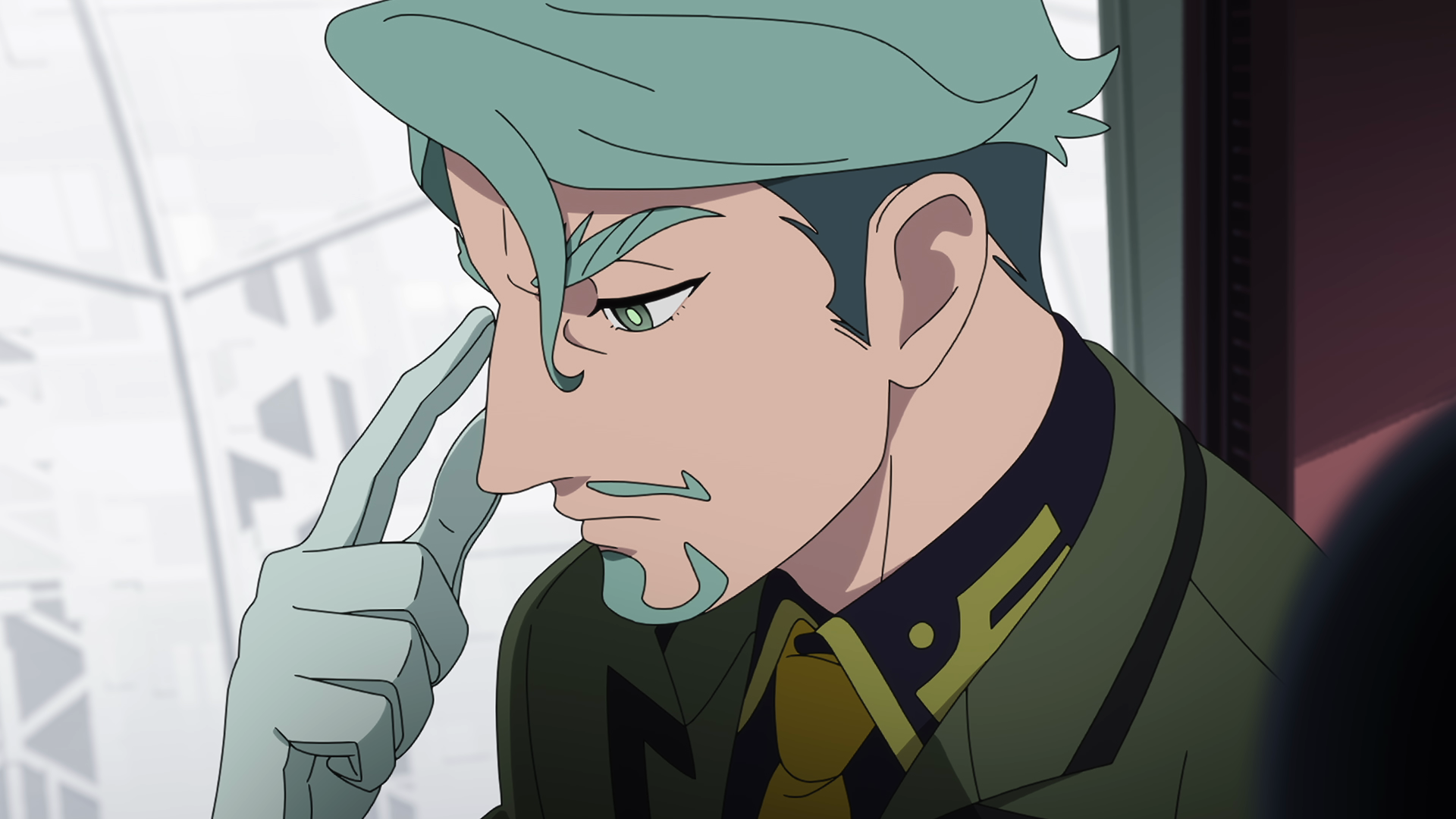
Who would have thought 2025 would turn a one-off Enemy of the Week from the original 1979 Mobile Suit Gundam into one of the coolest characters in anime in 2025? Challia Bull didn’t even get to appear in the Gundam movie trilogy! But now he’s seen in a whole new light as a force to be reckoned with, not only for his Newtype powers but also his shrewd mind and wealth of experience. Even his Mobile Armor, the Kikeroga in the GQuuuuuuX universe, became one of the most interesting mecha designs of the year.
Best Aspiring Scholar
Jolenta (Orb: On the Movements of the Earth)
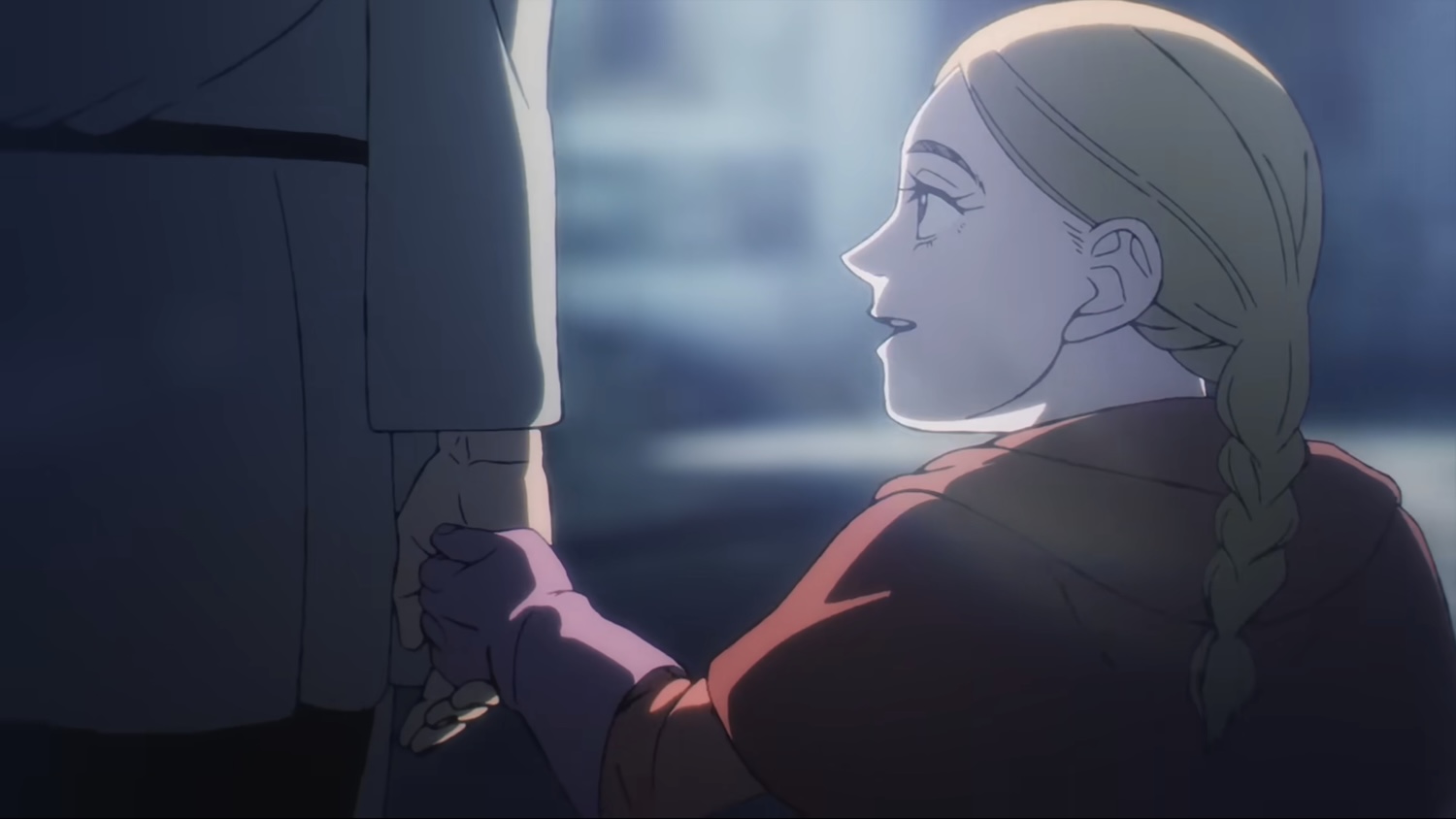
The entire cast of Orb: On the Movements of the Earth is worthy of praise as richly defined characters who reflect the complexity of humanity and its relationship with knowledge. I’ve decided to highlight Jolenta in particular, however, because of her added challenge of being an intelligent and inquisitive young girl who was stymied not only by the prevailing religious beliefs of her time but also the sexism that permeated even the sacred halls of scholarly thought and education. Yet she defies those barriers, puts her life and well-being on the line for the sake of expanding human knowledge, and becomes something unexpected yet far greater: a revolutionary figure.
Best Puppet Protagonist
Shāng Bú Huàn (Thunderbolt Fantasy)
They don’t make ’em quite like Shang Bu Huan, both literally and figuratively. Not only is he the face of a Taiwanese-Japanese co-production for a fantasy-genre puppet-theater series, but he also calls to mind the stoic and witty action heroes and manga protagonists of decades past like John Matrix and Kenshiro. I think what’s ultimately really impressive about the so-called Sword-Plundering Nemesis is that in a series full of charismatic and memorable characters like Thunderbolt Fantasy, Shang never got lost in the shuffle or any less intriguing. His humility and quiet confidence put him on par with the greats.
Best Dance Partners
Wanda Hikari and Kotani Kaboku (Wandance)
I’ve been following the Wandance manga for many years, so I was glad to see the series get an anime adaptation. While it hasn’t quite lived up to the manga in terms of its visuals, the incredible bond between Wanda and Kabo still shines through.
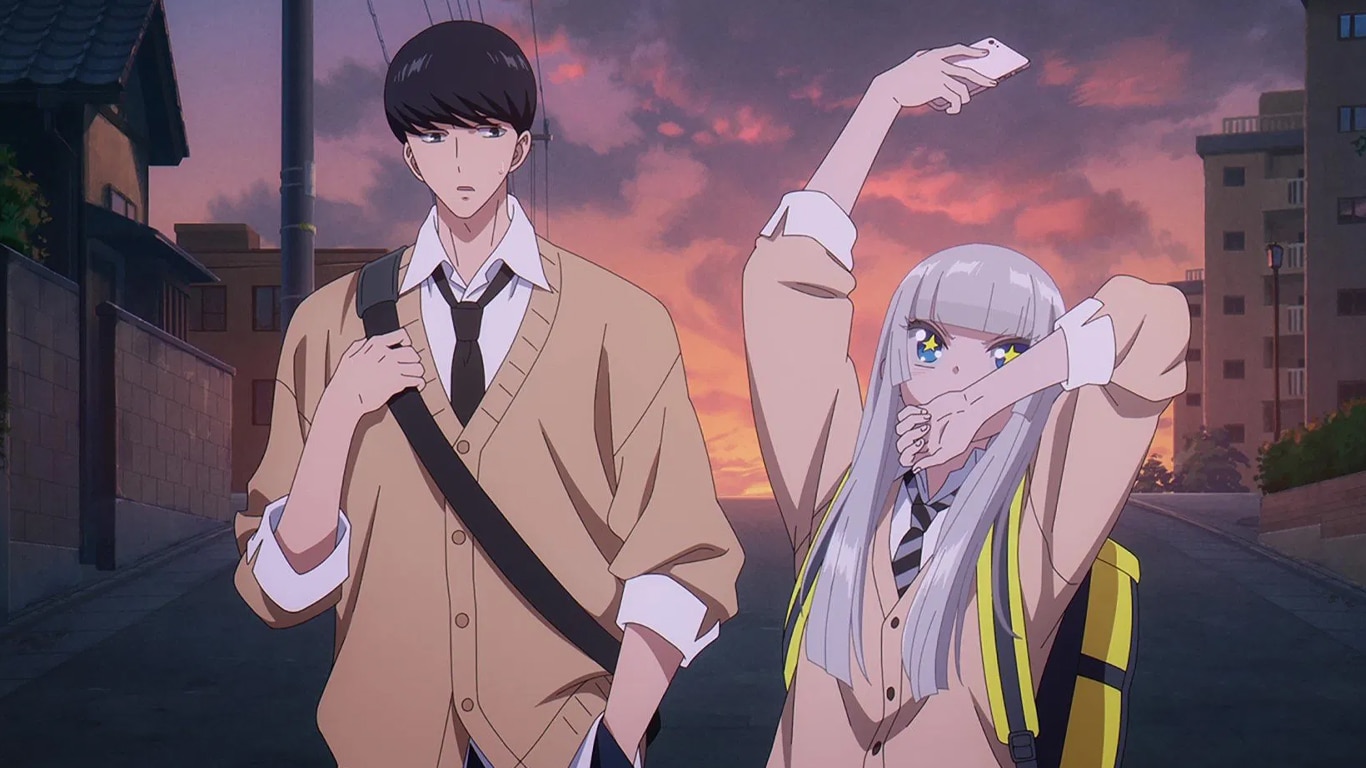
It’s a classic problem in anime romances that male-female pairings often don’t have that feeling of “equal partners and rivals” that is so common and exciting in BL or yuri pairings, but that’s exactly what we get from these two and their ever-growing love of dance. They’re sweet, wonderful, and supportive of each other…and when they’re together, they feel unstoppable.
Final Thoughts
I decided to mix things up this year and get rid of specific gendered categories in the hopes of not boxing myself or the characters in.
Overall, my picks don’t have a great deal in common, whether in personality or actions taken. If I had to pick a point of convergence, though, it would be that they all bring something unexpected to the table within their stories and worlds. They invite us to re-think how we view things, whether they have to do with revision and revival, science and education with respect to politics and cultural norms, what goes into making a main character, or expectations of what a “conventional” romance looks like.
I’ve been avidly watching VTuber concerts both online and offline this year, and I just wanted to give my brief thoughts on a variety of events from 2025 that I didn’t write about otherwise.
holoX and La+ Darknesss
holoX celebrated their anniversaries around the start of December. While we have no shortage of talented dancers now, there’s still something that stands out about La+ Darknesss’s dancing. In particular, I find the way she moves her arms to be very appealing, and I suspect it’s because she really knows how to move her arms from her torso/core, rather than from her hands.
I also have been listening to Takane Lui’s recently released album, Lapis Lazuli, and kind of regret not getting the physical release. And of course, I’m beyond excited for holoX’s first live venue concert next year!
Myth
I think Kiara can get lost in the shuffle a bit, but what I’ve come to realize is that she’s very good at fully leaning into a particular quality. Some talents are always going to be cool even when they’re trying to be cute, or vice versa, but Kiara can go 100% in being cute, cool, silly, sexy, etc. in a given situation. Her concerts throughout the year really showcased this facet. Her performance of Fake Heart with La+ is my personal highlight (see above), though I need to mention the fact that she brought Ame for a guest appearance.
I’m looking forward to seeing her March concert with Ina, who’s been improving in her own right.
Rewinding things back to the beginning of the year, I’m also glad that people showed up for Calliope Mori’s second solo live in Los Angeles, despite the deadly wildfires that were plaguing the area. Also, what I’m about to say isn’t new information at this point, but I’m glad she continues to carve out a unique sound for herself.
REM Kanashibari and Roca Rourin
I plan on writing about her more in the New Year, but REM has quickly become one of my favorite VTubers. In addition to some convention concert appearances, she also had her first online concert, called Sleepover Stage. I find myself listening to their cover of “Murder on the Dancefloor” with Roca Rourin regularly. The two sound really good as a duet, and I hope to hear more of them in the future.
Flow Glow
Flow Glow, a hip-hop and pop–themed generation from the hololive branch known as “DEV_IS,” made a hell of an impact with their 3D debuts. Isaki Riona’s probably the best in the entire company at singing and dancing. Mizumiya Su is small but has very powerful moves that literally give her the most air time in hololive when she leaps. Kikirara Vivi backs her cute movements with clear dance experience too. And while Rindo Chihaya and Koganei Niko appear to be not as skilled, they’re both quite athletic in their own right, keeping up with the others and even bringing a lot of strength in terms of singing. Even more than their direct predecessors ReGLOSS, they are focused heavily on music and performance, and it’s clear how much experience they have.
ReGLOSS
Speaking of ReGLOSS, they had their first live concert this month, titled Flashpoint! It’s a great achievement, and you can really tell how much they worked on it. Ririka and Raden have noticeably improved in their weakest areas (dancing and singing, respectively), and while straining her voice in some places, Kanade is still the vocal center of the whole group. Hajime’s solo performance was amazing, and felt like a reminder to everyone that she’s no less amazing a dancer compared to her juniors in Flow Glow.
I do miss Ao’s sound, though. She was the only one with a deeper voice, and it provided a nice contrast to the rest of the girls. During an encore performance of their first single, “Shunkan Heartbeat,” the current members of ReGLOSS actually left a silent space where Ao would usually sing for one line, as if to pay tribute to their friend.
Vroom Boom Duo (Baelz Hakos and Todoroki Hajime)
This year was also when we finally got to see the two marquee dancers of hololive join forces. Bae’s Non-Birthday celebration featured them doing the song “Gingiragin” together, which was followed by a performance of “Bareru” for Hajime’s own birthday. The latter was one of the most impressive things all year because they were filmed with one continuous shot. Creative camera cuts can cover up flubs, and here they were, showing the world that they didn’t need any editing magic.
HIMEHINA
Hime and Hina really make clear just how comfortable they are as veterans of this space. At their 7th Anniversary concert, their ability to just match up with each other and harmonize is maybe second to none. Also, I mistakenly thought La+ would be singing with them, but she simply did a bit of MCing.
Suisei and AZKi
As the two former members of the now-defunct INNK music group, these two have had a specific and unique connection. It almost goes without saying that these two are among the best singers in hololive and VTubing, but when they perform together, they just work so incredibly well. AZKi’s almost flawless execution and Suisei’s powerful voice balance each other out nicely. Suisei these days is more popular, but AZKi is so subtly and deceptively good to the point that I feel like it can be easy to gloss over her. However, once you pay attention, you realize how incredible she is.
Tokoyami Towa
Towa’s husky voice continues to stand out in a sea of many talented singers, and I hope she can
Nekomata Okayu
Seeing Okayu go in so many different directions is pretty amazing. It’s one thing to get a solo live as someone who started off dedicated to making music, but to transition into it and then get a second solo live is downright astounding.
Phase Invaders Wish
I was glad to see the first gen of Phase Invaders get a group concert because they were my introduction to Phase Connect. The resulting event, First Transmission, successfully highlighted each of their strengths, even when some were clearly more practiced hands at performance than others. Lumi’s singing ability and Ember’s dancing skills made themselves apparent, and Jelly came across as comfortable on stage despite being inexperienced. Dizzy is the least stage-inclined of the four, but she found an answer in the form of sensual choreographies that took advantage of her fitness and flexibility.
Tomorrow is the 18th annivesary of Ogiue Maniax. My little blog is all grown up now.
I believe 18 years is supposed to be the point where you look at your child and realize that they’re not the same person—or rather, website—anymore.
If Ogiue Manaix could vote, what would it decide? Sure, it’s entirely a product of my own output, but I wonder if it would hold certain ideals or approaches to the world that are stronger because they are housed within this structure of written posts that continue to vividly reflect where I was, where I am now, and where I might end up in the future. I can’t remember my earliest memories as a newborn baby, but I can look back and see what I was writing about in 2007, even if it might be a little cringey.
That’s actually something I’ve wanted to be part of Ogiue Maniax all along, though. If I do have beliefs and ways of thinking that have shifted over the course of almost two decades, I wanted to have that documented as well. I also recall all those people I’ve talked to online who mentioned that you will end up hating anime you used to love because your standards will have changed. I don’t know if the first part has happened, even though the latter definitely has.
Blogging for 18 years has been less about prestige and more about stubbornness. I don’t want to give it up if I don’t have to. It helps keep my heart in my fandoms, even as I add other things to it (e.g. VTubers) and my post rate drops further. I’m nowhere near enough to be considered a notable veteran fan of anime and manga, especially as I get a mere fraction of the readership I used to have. Though, I have gotten more hits lately for some reason. I chalk that up to not understanding how WordPress (or any other site) tracks visits anymore.
Is 18-year-old Ogiue Maniax now entering college and joining the Society for the Study of Modern Visual Culture? Will I actually change this blog again so that its template isn’t stuck in the past? Probably not, but who knows what the next year holds?
One of the ideas I keep revisiting over the years (and decades!) is a Super Robot Wars game focused away from Japan. It’s a thought exercise that actually predates this blog!
With the release of Super Robot Wars Y, I’ve once again started devoting actual mental and creative energy towards this idea. What titles would appear in, say, an SRW focused around the history of the mecha genre in the US? And how would the different plots and settings be reconciled into a (relatively) cohesive universe?
I asked on Bluesky if people were actually interested in seeing this bit of fan wankery from me, and more than a few people actually said “Yes,” to my surprise. So here we go.
Also, I was inspired by some ideas for others, such as the cool fanart by Chase Burns below:
I drew this a while back, and I will forever regret not adding the Mighty Orbots or Robot God Akamatsu.How many can you recognize? The tags will name three of them, but I'll leave the rest up to you.#superrobotwars #srw #pacificrim #megasxlr #lancer
In terms of criteria for titles, I wanted mainly to have works that either originated outside of Japan and was available in the West…or anime that were significantly altered to be their own thing, and became hugely influential in the process. So while anime is increasingly part of mainstream culture, things that reached North America relatively untouched don’t count for this sort of thing.
Working from this, I think the biggest title to focus the overall setting would have to be Voltron. In combining the two anime Golion and Dairugger XIV into Voltron, World Events Productions created the notion of a Voltron stationed far from Earth and close to Earth respectively, and this creates a good opportunity to divide the titles involved into “Far Universe” and “Near Universe” plotlines to kick things off. The idea would be that you would follow each side separately, and then the two would merge together down the road when the stakes are higher.
A lot of series take place in the future (albeit with different ideas of what the “future” looks like), so it’s not too much of a stretch to set them all in a vaguely advanced era of humanity. However, there are a few series I’d want to include that are specifically tied explicitly to certain periods—namely prehistoric times and the mid-20th century. For that reason, I’d place those works under “Time Displacement.”
And I’m leaving out Robotech because eh.
So here’s how I’d break down the above three categories.
Far Universe
Lion Voltron: The Galaxy Alliance is the main governing body in this SRW. The Lion Voltron is sent to protect from threats on the other side of the galaxy, and focuses on Planet Arus. This Voltron is special because of the fact that the enemy Robeasts are magical, which is actually pretty uncommon in this universe.
Transformers: This has to be G1 Transformers, and the appearance would focus on the series around Unicron and the animated movie and through to the return of Optimus Prime (because you gotta have the Autobot Matrix of Leadership as an ultimate attack, right?) Cybertron is under Decepticon control and so it cannot be part of the Galaxy Alliance, but the Autobots do help the Alliance out. Optimus doesn’t necessarily die, and Megatron doesn’t necessarily turn into Galvatron, depending on how the missions go.
Challenge of the GoBots: Unlike Cybertron, Planet GoBotron is part of the Galaxy Alliance. The Gobots are actually cyborgs—humans who converted their bodies to transforming machines—and they were inspired to take this path by the robots of Cybertron. In this setting, the Transformers have been fighting for a long time, while the GoBots are just now leaving for Earth.
Bionicle: I will admit that I don’t know much about this series, and would need help making sense of it. What I have so far is: Some (but not all) planets in the Sol Magnis System are part of the Galaxy Alliance. However, they tend not to interact very heavily with others. The legend of Mata Nui either directly or indirectly inspired a lot of other worlds to create giant robots.
Super Robot Monkey Team Hyperforce Go!: Planet Shuggazoom is also part of the Galaxy Alliance. However, various factors keep the other mecha from intervening in its battles normally. The monkeys do eventually become very fond of Optimus Primal from Beast Wars, however.
Mighty Orbots: The Galactic Patrol is one of the peacekeeping forces of the Galaxy Alliance, and Mighty Orbots was made to deal with threats that the Voltrons can’t get to. While based on Earth, they’re currently in the Far Universe to mount an offensive against Umbra. Unicron tried to devour Umbra but was actually repelled; the two don’t get along.
Near Universe
Vehicle Voltron: Defends Galaxy Alliance HQ on Earth. “Entrusted with the secret of how to form Voltron.”
The Bots Master: Ziv Zulander is a brilliant robot AI developer, and this attracts nefarious forces, including the Decepticons. Jungle Fiver is made because Blitzy is inspired by Mighty Orbots and Devastator, and Blitzy becomes friends with Daniel from Transformers. Characters from other series are very fascinated by the boost the BOYZZ get from “Laser Time.”
Sym-Bionic Titan: Actually not part of the Galaxy Alliance, and comes from even further away. However, their planet was visited in the past by Mata Nui, and helped inspire the combination of heart, mind, and body to combine as one (the technology is different from what Voltron uses.)
Megas XLR: Coop built Megas XLR in New Jersey, like usual. He is actually friends with Spike Witwicky as some blue-collar dudes. Thinks Ziv is a super genius, but doesn’t know him very well. He’s always getting inspired to put new weapons into Mega thanks to all the robot shenanigans going on, and this only grows when Near and Far universe plotlines merge. Evil Coop has to appear at some point, especially with the time displacement/time travel parts of the story.
Big Guy and Rusty: Big Guy was a hero who helped the fight against aliens and the Decepticons in the past. He fought for the US as part of the Earth Galaxy Alliance HQ. Ziv Zulander is very well informed about Rusty, but doesn’t know the secret of Big Guy. Rob Simmons from Mighty Orbots and Dwayne Hunter strongly suspect each other of being the Orbots Commander and Big Guy respectively, but haven’t explicitly confirmed it.
Pacific Rim: Jaegers were developed purely by humans back when other technology hadn’t been discovered, and they needed two people to pilot. The passing of the secret of how to form Voltron helped alleviate this and lead to other less dangerous possibilities, but Jaegers still remain the best defense against Kaiju in particular.
Gen:Lock: I admittedly don’t know anything about this series, other than that it has a lot of big names for voice actors and that it ended up disappointing pretty much everyone. However, I’d like to see it get the SRW plot fix treatment. While the series takes place on a dystopian Earth, I could see a world where it doesn’t get quite that bad because of all the other things going on. Here, the setting of Gen:Lock would take place on a part of the planet rather than the entire thing.
Time-Displaced
Dino-Riders: Yes, I am counting dinosaurs wearing armor as essentially giant robots. Originally, the Valorians were working together with the Maximals in the far future, but were flung back in time by a joint attack from the Rulons and Predacons. At some point in the story, they manage to fix the Step Crystal, but the interactions with the dormant Transformers in prehistoric times causes them to jump forward. Inadvertently, their effects on the past inspire the creation of the Dinobots.
Beast Wars: Because of their nature as Transformers, they don’t need to commandeer the local dinosaurs and other animals to fight. However, they’re still inspired by those forms. Maximals and Valorians work together on prehistoric Earth, and they form a real bond before they’re all brought forward into the future to meet Gigantor and the Iron Giant.
Gigantor:While Tetsujin 28 explicitly takes place in Post-WWII Japan, Gigantor is originally set in the “future year 2000.” However, for the purpose of this SRW, Gigantor still takes place in the relative past as an early attempt at building giant robots on Earth, and it still retains the plot element of being a weapon meant for destruction that instead becomes a protector of the peace. Big Guy is essentially a government project meant to replicate the success of Gigantor. The time travel vortex drags Jimmy Sparks and Gigantor along.
Frankenstein Jr: Frankenstein Jr. and Gigantor were built around the same time. Professor Conroy was familiar with Jimmy Sparks’s father, and began his work on Frankenstein Jr. to counter Gigantor. Jimmy and Buzz Conroy are glad they’re on the same side. The Impossibles are included, and are part of a specific attack that Frankenstein Jr. can use. They are not swept up by the time displacement, but build a time machine to actively chase after Gigantor, knowing that trouble is afoot.
The Iron Giant: When flying away as Superman, the warping of the space-time continuum causes the Iron Giant to sense a similar mechanical being in Gigantor (a robot made to be a weapon), and another sentient robot in Frankenstein Jr. This causes the Iron Giant to warp forward in time as well.
I’m Open to Other Ideas
Obviously this is all just a bit of fandom thought exercise, and nothing about this really matters. I’m also less familiar with some series, so any sort of feedback is A-OK by me. Heck, anyone who wants to use this as a base for their own ideas—or tear it to shreds and do something they find better—is welcome to take a swing.
In July this year, I attended the Dokibird birthday concert at Anime Expo—the same one that was just uploaded to her YouTube. It had a lively atmosphere, and a group of fans had assembled in front of a screen to do their wotagei performances. Others shouted with excitement. But next to me was a guy who remained silent throughout. It was clear he was a fan. He just wasn’t expressing it loudly.
The contrast had me thinking about how there are challenges to being a quiet fan. So much of how we “show” fandom these days is through very visible and very vocal gestures. Online, we have react videos and social media platforms that thrive on “virality.” Offline, we have enthusiastic crowds drawing the cameras to them. It makes sense that they would get so much attention, much in the same way that cosplayers are the most photographed element at conventions. But it can create this notion that this is the way fans “should” be, when that’s not true.
I think it’s important to remember that being quiet doesn’t make you less of a fan. You might not get all the positive affirmation or even the attention that more vocal fans do, but that doesn’t mean the passion inside you is somehow not as vibrant. I’m not a terribly expressive person myself, and it’s probably part of why I started blogging—I’m full of thoughts and emotions, but they just don’t necessarily come out through pronounced physical actions.
At the same time, the fans who do go out there and make their presence known are expressing themselves in their own way. Unless they’re disruptive to the point of ruining the experience entirely for others, it shouldn’t be an issue. Everyone is their own person. There’s no specific “right” way to be a fan, and I salute my fellow quiet types because I know the passion is there.
When Baelz Hakos of hololive made a promotional video for a convention appearance in Hong Kong earlier this year, she gave an abbreviated version of her standard self-introduction. Naturally, it was subtitled in Cantonese, and the word used for “chaos” was wandeon—or hundun in Mandarin Chinese.
English: I am Chaos, the End of Ends.
Cantonese: 我喺混沌、萬物終結。
Cantonese Jyutping: Ngo hai Wandeon, Maan Mat Zung Git.
Literal translation: I am Chaos/Hundun, the Termination of All Creation
Hundun (混沌) refers to primordial chaos, but it can also be the name of a legendary creature from Chinese mythology that existed before the universe was created. It’s typically depicted as a faceless beast with many wings and feet. Incidentally, I became aware of it myself through the anime Lazarus, where it’s a plot point for a certain character.
The Hundun from Lazarus
Bae is Cantonese, and the fact that her original lore also describes her as Chaos itself makes the similarities between Bae and the Hundun more striking—both are “chaos” as concept as well as being. So I got to thinking: What if in the lore of hololive, Baelz Hakos is the Hundun under a different guise?
The backstories of Bae and her fellow members of hololive EN Promise updated a couple years ago to be simpler. All of them are essentially about how these representatives of primal forces (chaos, time, hope, etc.) have integrated more thoroughly into the human world, with Bae in particular focusing on her desire to perform on new and different stages.
Playing off this, I could see some kind of written piece about how Baelz Hakos is what the Hundun became out of a desire to interact more directly with the mortal realm. Dance (Bae’s specialty) is also a creative art that feels both controlled and chaotic, and perhaps her multiple wings and feet could manifest through her amazing dance moves.
This has just been some random fanfic-tier speculation on my part. I’m looking forward to the Promise 2nd year 3D concert in a few hours:
I occasionally enjoy watching martial arts Youtubers. They run the gamut from professional fighters to dedicated practitioners to, well, scam artists, so they can easily devolve into a whole lot of nonsense. I’m the furthest thing from a competent fighter, though, and my interest goes more towards those who exhibit a desire to actually spread knowledge and understanding while avoiding macho posturing.
One person I watch is Adam Chan, and while I don’t agree with some of his beliefs about how the world works, he comes across as someone who tries to check his ego at the door. He tries to communicate that a martial art is not “a way of fighting” in itself but rather a recipe or set of tools that should be adjusted for the situation or goal you desire. Self-defense is not sport fighting, and neither are combatives: The first is about escaping harm, the second is about a mutually agreed contest, and the last is about prioritizing maximum force and even concealing your weapons (both metaphorically and literally).
The categories can be easily conflated, and they commonly are. In the past, I wrote about out how the series Mashlehighlights these distinctions. However, there’s actually another example that demonstrates these differences even better, and it can be found in the anime The Daily Lives of High School Boys, of all things.
The Daily Lives of High School Boys is a comedy about dumb teenagers, and it occasionally has a spinoff at the end of episodes called High School Girls Are Funky. These shorts feature a trio of girls: two loud and mean-spirited girls named Yanagin and Ikushima along with Habara, the meeker one. But it’s revealed that Habara used to be an absolute terror who had to be subdued by an alliance of the strongest kids in school. In one short, Yanagin and Ikushima decide to see who’s stronger in a fight. Habara tries to get them to stop, only to have her plea ignored.
However, when they try to establish the parameters for their bout, the “normal” Habara earnestly asks them why they would need rules in the first place for a fight. In this moment, the two realize what a mistake they’ve made: While they’re trying to compare skill in a fair contest, Habara doesn’t comprehend the very notion of limiting one’s violence. The other girls back down, anxiously claim it was all a joke, and avoid disaster in the end. Right as the third girl breathes a sigh of relief, though, the other two notice her tossing aside a large rock.
In this scene, you have the two girls approaching the situation with a sporting mindset, trying to agree upon the rules of engagement. You have the third girl thinking purely in terms of combatives and looking for ways to inflict maximum violence without compromise, including hiding a crude but effective weapon. And when the two de-escalate the situation, you have self-defense of a less flashy kind.
Even the best martial arts anime and manga tend to assume that all fighting and conflict is essentially the same, so it’s funny to see a gag series represent such subtle yet profound distinctions.




 OGIUE MANIAX