Miss Nagatoro and the Teasing Girl as Goldilocks Archetype

The anime adaptation of Don’t Toy with Me, Miss Nagatoro has put the “teasing character” back in the spotlight, and what I find interesting is how strongly this archetype draws fans in. I see the teasing character as a sort of middle ground between different preferences (and fetishes), and this positions it to hit a variety of targets simultaneously.

In a sense, the “teasing character” can be viewed as the grandchild of tsundere and the direct offspring of the yandere. The tsundere is all about the prickly personality, often portrayed as a character who tries to deny their own feelings or reluctantly develop them. They might attack the love interest, but they’re typically built as reactive or passive characters in the realm of romance. The yandere, however, is the twisted mirror image of the tsundere: an obsessive and dangerous love whose thrills border on horror. The teasing character, then, is a sort of a compromise between the two by being more aggressive than the tsundere but lacking the morbid violence and emotional intensity of the yandere. They actively pressure their possible love interest, throwing them off their game and rendering them helpless. Any romantic feelings are covered in layers of snark and smugness, but unlike the tsundere, the power resides primarily in the teaser. 

If tsundere is too tepid and yandere is too scalding, then the teasing character might be just right. Even then, it should be noted that there are differing degrees of teasing characters. Nagatoro’s bullying isn’t quite the same as the heroines of Teasing Master Takagi-san or Uzaki-chan Wants to Hang Out, who are more prankster and brat, respectively. 

I also find that the “Goldilocks”-esque nature of the teasing character extends beyond the tsundere-yandere spectrum and into other territories. So much like how the teasing character is like “tsundere but more aggressive” and “yandere but without the obsessive physical/psychological violence,” you can describe the archetype in similar ways relative to other fetishes. It’s NTR (a form of cuckolding, for the unfamiliar) but without the betrayal aspect—the powerlessness of the audience character is there, only not in as soul-crushing a manner. It’s S&M but primarily emotional and without cold contempt, meaning that all the pain and pleasure isn’t in the realm of physical pain—and it’s not the Blend S-style distanced masochism. A lot of relationships in storytelling are about power dynamics, and the teasing character is right in the thick of it.

I’m actually not that into the teasing character type (or everything I’ve mentioned beyond possibly tsundere), so my observations are limited by my lack of personal connection. If there’s more insight to be had, I’m interested in hearing from the true fans. 

The “Essence vs. Fill” Priorities Tier List in Smash Bros. Ultimate and Beyond

Tier lists are a staple part of discussions in any competitive gaming community. No matter the approach or philosophy, they’re an attempt to make sense of a game’s elements, and a well thought out tier list can be an opportunity for fruitful discussion. A few months back, I watched a video by Super Smash Bros. Melee player/commentator Toph, in which he goes over a Melee “tier” list by another player named Ginger. Much like how it blew Toph’s mind, I found it really fascinating myself. 

Ginger ranks the characters not by how strong they are, how likely they are to win a tournament, overall matchup spread, or any of the standard conceptions of tier lists. Instead, it’s about where characters fall on a spectrum between what he calls “essence” and “fill.” The video mostly explains what those terms mean, but they’re not obvious upfront. Actually, they’re pretty obtuse, but I’m sticking with them so as not to further introduce new vocabulary. 

Basically, “essence” means characters who mainly play by aiming towards certain central win conditions or moves, whereas “fill” means sort of “throw the kitchen sink at ’em” characters who try to use smoke and mirrors to win the day. In the context of Melee, Ice Climbers are considered a “pure essence” character because chain grabs (be they infinite or otherwise) are so fundamental to their play. Falco is considered “all fill” at the highest levels of play because he really has to rely on his entire kit to win, but at lower level is considered an “essence” character because his fundamental tools (his power short hop laser and his down b being a combo starter) are so difficult for less skilled and experienced players to deal with. Other terms used to describe this difference used in this video (as well as a follow-up) are essence = meat and potatoes, and filler = smoke and mirrors.

It’s also worth noting that just because a character is more “essence” or more “fill” doesn’t mean they’re only good at one or the other. Fox can do well in both (which is probably why he’s arguably the best character there), but he’s simply even better at “fill” stuff. It also doesn’t say which characters are stronger overall, with top and bottom tiers being strewn throughout each category.

With that in mind, I made a quick chart for how I think characters fall in Super Smash Bros. Ultimate, roughly in order within tiers. Due to fundamental differences in the games, I think there’s a higher percentage of “essence” characters in Ultimate than Melee, but I will be the first to admit that I don’t have the experience to speak for most characters. These are built on my perceptions playing against them here and there, as well as watching many tournaments.

Framing characters along this spectrum has helped me think about why certain characters might appeal to certain types of players regardless of competitive viability. A player who finds more satisfaction out of forcing their opponents to play around a specifically potent and efficient attacks of an essence-based character may not enjoy the constant mix-ups and obfuscations that fill-based characters thrive on. Different match-ups might become more frustrating for some people than others because it might require switching from fill to essence-based play or vice versa. In a way, it could potentially be less of a tier list and more of a psychology test.

The spectrum vs. fill contrast can also help explain how characters may have changed in the transition between games. For example, I consider Mewtwo to be a “mostly fill” character in Ultimate because while it has certain kill confirms and reliable go-to attacks (Shadow Ball), Mewtwo generally has to focus on trying to slowly build up its wins using the full range of its tools. However, I think Smash 4 Mewtwo is more of a “mostly essence” character because its down tilt could combo more easily (thus making it the de facto tool in neutral), the nair into footstool into disable could net KOs so easily, and its powerful air dodge made reversing situations fairly simple.

This way of thinking about characters and players can extend beyond Smash into other competitive games, and even beyond gaming into other areas. For example, I find it to be a great way to categorize different professional wrestlers in terms of their in-ring styles. Who is more “essence” than Hulk Hogan, who famously won most of his matches with a combo of Hulk Up into Big Boot into Leg Drop? On the flipside, AJ Styles is the definition of “fill” because while he has no one devastating move that all but guarantees victory, his character is portrayed as someone who has developed a variety of finishers that can be adapted to virtually any situation.

You can also apply it to the differences between visual artists. A “pure essence” artist would be one who can fully imagine the finished product and then work towards that image, while an “all fill” artist would be one who doesn’t have it fully formed in their mind’s eye but slowly builds up towards something. It doesn’t say anything about skill, talent, or hard work—it’s a difference in how one perceives and interacts with the world on a creative level.

So whether it’s Smash or something else entirely, I think the essence vs. fill spectrum is a useful thought exercise. It’s something I might come back to in the future.

Minmaxer Fiction: The Intersection Between Dungeons & Dragons and Isekai

I saw a tweet recently from someone complaining about isekai series that introduce and highlight stats and numbers the way an RPG would despite ostensibly being set in non-game fantasy worlds. 

In response, I  wrote the above tweet to give my two cents on the appeal of such an approach. However, it also got me thinking in another direction that takes this RPG fantasy game genre all the way back to one of its roots—good ol’ Dungeons & Dragons—and I realized something: these game-esque light novels feel like they’re written by what tabletop RPG players call “minmaxers.”

I was introduced to playing D&D thanks to Alain from Reverse Thieves, and after years of playing with him, I’ve come to learn firsthand that roleplaying is a very different experience compared to prose fiction or a television show. Essentially, it’s more like collaborative interactive storytelling compared to other mediums, and one aspect of this nature is that many different people with different goals come to the same table. You might have someone who’s more into exploring the world. You might have someone who wants the glory of slaying the monster and saving the day. You might have someone who wants a dramatic narrative. Because this dynamic is so important, many people have devoted many hours to categorizing the various D&D player types and thinking about how to best cater to them or even deal with their worst excesses.

Among these player archetypes, a common one is the minmaxer: the person who’s all about designing strong characters from a statistical perspective by minimizing certain scores and maximizing others, often prioritizing power over all else. There are also less extreme versions of this, such as someone simply interested in game systems and how different stats interact with one another, but it falls in the same general space. However, whereas a Dungeon Master running a game might have to take into account all the potentially different priorities of their players, a web novelist or light novelist can write the stories they want without necessarily taking into account an audience composed of varying tastes, and instead tell a story where the “game mechanics” are front and center. Adding to this intentional rigidity is the fact that many of the light novels that fall into these minmaxer worlds are clearly more inspired by video games such as Japanese RPGs and MMORPGs, where mechanics mastery is often highly valued and encouraged by the games themselves—sometimes even over storytelling.

When you look at the typical trends of protagonists within these game-style fantasy worlds, this angle becomes all the clearer. Many isekai heroes are able to peer deeper into the inner workings of the world (So I’m a Spider, So What?), have some kind of special ability that lets them defy stat restrictions (Is It Wrong to Try to Pick Up Girls in a Dungeon?), or just know that there are game-like qualities to their world (My Life as a Villainess: All Routes Lead to Doom!). What these features have in common is that they “break” the rules, and it’s even easier when the rules are just numbers and calculations. If you’ve ever been or seen someone who wants to be praised for an interesting build or stat investment in a game (“Check out how I combine Helmet A with Sword B to deal with Situation C!” “I gave my monster 248 speed instead of 252 so I could add 4 to defense!”), it’s that same energy. When you combine it with the glory-seeking player type, you get the overpowered perfect light novel protagonist who masterfully exploits the mechanics, defeats the villains with ease, and gets the harem.

A picture of the four personalities of Kumoko from So I'm a Spider, So What? All of them are excited in different ways.
So I’m a Spider, So What?

Which isn’t to say that the minmaxer approach to writing stories is inherently bad or incapable of making for good stories. Rather, where I think the disconnect between those who want more classical fantasy stories and what light novels are offering today is that the minmaxer is traditionally very much not the kind of person who gets into writing or reading fantasy novels. To be that way, you have to come from an environment where numbered stats are even a thing in the first place, and that can only be the result of a world where Dungeons & Dragons popularized the notion of codifying fantasy-genre elements into stats with pros and cons for the purpose of gaming—a quality that then became the basis for many of the JRPGs that have influenced a generation of Japanese people, among them the writers of web novels and light novels. It’s a far cry from Lord of the Rings.

This contrast actually reminds me of an episode of the sitcom Home Improvement, of all things. In it, the mother character, Jill Taylor, is asked by her father (a retired colonel) to review his autobiography manuscript. But try as she might, Jill finds it incredibly boring and sleep-inducing because her father mostly writes about battle strategy and military formations, as opposed to dramatic exploits or anything emotionally resonant. Her father clearly values the mechanics of war, but what he wants his book to convey is not appealing to those with little interest in such things. Given this example, it’s also worth noting that D&D itself is descended from a miniature wargame called Chainmail, and one of the ways that D&D would eventually expand its audience was by adding elements that would appeal to those who care about things other than combat.

So while fantasy traditionally caters to those who want to witness a world of swords and sorcery where the sense of the mysterious and unknown is paramount, the minmaxer fiction that is so ubiquitous in fantasy light novels over the past decade or two is almost the opposite. In these worlds, all surprises can be overcome with deeper or prior knowledge. It’s no wonder why the latter approach can be so bothersome to those who seek the former, and there’s no Dungeon Master who can try to cater to both in real time.

Thoughts on Anti-Asian Racism in the US

The recent mass shootings at Asian-owned massage parlors in Atlanta brings to the forefront of our consciousness the increase in hate crimes and violence towards Asians in the United States since 2020. As an Asian-American myself, I have been thinking every day about both the anti-Asian racism that has always been around and the current crisis we are seeing. It forces me to realize how easily sentiments toward people who look like me can flip, as if the respect I’ve experienced has always been paper-thin.

A lot of the attacks against Asians have been against women and the elderly, and it’s clear why: they’re presumed to be easier targets. While there have been stories of Asians fighting back, including a 70-year-old woman who beat her assailant with a cane, the fact that she was assaulted in the first place is cause for concern. I am lucky to be a fairly large cisgender man, and thus not an ideal target for those looking to exact some vague sense of revenge on Asians for supposedly bringing COVID-19 to the US, but I do remember what it was like to be small and a victim of bullying. Before I hit a growth spurt in my teen years, I was perpetually one of the smallest kids in class while living in a neighborhood that was not predominantly Asian. I don’t think the kids who picked on me back then were filled with the exact same mix of emotions as what’s going on today, but it’s pretty close, and I do think that the bullying mentality is still a significant factor in what we’re seeing now. Ultimately, it’s a form of control, and rarely have we seen times where people feel less in-control than during a pandemic that has altered how we go about our lives. That’s not to excuse such behavior, of course.

The rise in anti-Asian crimes also has me thinking a lot about that veneer of respectability that Asians in America supposedly have, and how easily it seems to fall away—as if it’s something granted to us by those in power rather than something we own ourselves. I’m not so naive as to think that courtesy and genuine compassion and love can’t exist in those who are racist. To do so would be to ignore the racism that exists within Asian communities against outsiders, let alone the racism inflicted upon us. But what all this has made me realize is how quickly a little bit of fear of the unknown or an act of othering can quickly swell into a full-blown hatred. Star Wars is not exactly the go-to entity for robust philosophical discussion, but Yoda’s classic line seems to ring true here: ”Fear is the path to the Dark Side. Fear leads to anger. Anger leads to hate. Hate leads to suffering.” That small negative feeling is just looking for an excuse to burst forth, which is why all evidence to the contrary that Asians are somehow primarily or uniquely responsible for COVID-19’s spread can be ignored, and all it takes is a simple association of “China = Chinese = Asian” to trigger deadly violence.

It’s not so much that fear is inherently bad, but even the small amount of fear in one’s heart, especially towards another group, has dangerous potential if that fear is fed a steady diet of scapegoating. And lest it be assumed that I’m primarily criticizing individuals for not behaving well or daring to have negative thoughts, I place much of the blame on both the systemic racism that affects all people, Asian and non-Asian, as well as the foul rhetoric of the previous bigot of a president who sought to give his supporters a target to direct their hatred. His stubborn insistence on referring to COVID-19 as the “China virus” is largely responsible for inflaming anger and resentment in people, and the result has been both tragic and clearly intentional. Hate is a potent unifier, and those in power are insulated from the price we all pay for encouraging it.

If you’d like to learn more about what you can do to help, go to Stop AAPI Hate.

The Perfect Storm of Virtual Youtubers

As the days go by, I increasingly find myself looking into the world of Virtual Youtubers. I watch the clips and highlights that go around, and I sometimes tune into the live streams of my favorites. I wouldn’t consider myself a devotee of the whole concept, but I’m entertained. I know I’m not alone, as the increasing success of VTubers is a sight to behold—Gawr Gura, one of the first members of the Hololive agency’s push into English-language streaming, hit one million subscribers in just a little over a month and has since surpassed two million.

The more I think about it, however, the more I realize that the success of Virtual Youtubers shouldn’t come as a surprise. They’re in many ways a perfect storm of things that appeal to people on the internet, bringing together different groups who tend towards obsession and converging them onto this amalgam of elements.

The first group is weebs. I generally avoid the term, preferring things like “anime and manga fans,” but I feel that its usage is accurate here—it’s not just about being into the media but being into that strain of Japanese pop culture. With few exceptions, Virtual Youtubers go for that anime aesthetic, recruiting famous artists and character designers to create these avatars. In a sense, they’re anime characters come to life, and that gives them a certain charm and universality that comes with being less realistic in terms of appearance. And while VTubers now exist across the world, they’re firmly rooted in that anime/manga/light novel realm, and expectations derive from the tropes found there. 

The second group is gamers. While streaming has had some presence on the internet for decades now, gaming has become one of its absolute pillars. Between the transformation of Justin.tv into Twitch, the prevalence of esports, the enduring popularity of Youtube channels like Game Grumps, and the rise of speedrunning as a spectator activity, there’s no denying the draw. Live streaming your play session is just an easy and reliable way to connect with potential fans, and while streamers usually need some kind of physical or personal charisma to get things going, the sleek designs of VTubers help bridge that gap.

The third group is idol fans. While it’s like every one of them eventually gets their own original songs, what attracts people to idols is that they feel somehow distant yet accessible, and Virtual Youtubers greatly exaggerate both sides of the fantasy by their very nature. The use of character avatars means there’s no mistaking their visual appearances for being the “real” individuals, but that also means being able to project onto them an idealized version. At the same time, unlike Hatsune Miku, they’re real people interacting from behind the curtain. Depending on what level of performativity vs. seeming authenticity a viewer wants, or popularity vs. obscurity (what’s more exciting than seeing your favorite personality grow from small-time to wild success?) there’s probably a VTuber for them. What’s more, the concept of superchats on YouTube allows fans to get instant gratification by giving money to have their messages read and acknowledged.

The fourth group, and there’s plenty of overlap with the other three, is those who are into celebrities. This is a more vague and generalized group, but it’s the same energy that fuels people to follow the goings-on of their favorite movie stars and singers.

A weeb might love all things anime-adjacent but dismiss Western-style game aesthetics. A fan of first-person shooters might love watching anything and everything related to their favorite games but think anime stuff looks weird as hell. But then a Virtual Youtuber who looks like an anime character come-to-life might play Apex Legends, and so now the weebs get their real-life anime girl and the Western-focused gamers get to connect to her through their favorite game. At the same time, even if she isn’t particularly good at what she’s playing, that gives her a kind of element of relatability that an idol fan might be drawn to. And even if someone isn’t an idol fan, seeing someone suffer through a game has an established history of bringing in eyeballs. The crossover appeal is hard to deny.

Thus, when the VTubers branch into areas other than gaming, they can bring all those different groups together. It’s why they can karaoke Japanese, English, and even German songs, all to praise and fanfare. When they do something completely out of the realm of entertainment, like cook, it doesn’t seem out of the ordinary even if the results can range from bizarre to horrifying. The fact that their fans don’t just come from one place also gives the VTubers the flexibility to try new things and see what sticks. Non-virtual streamers who get popular because of one game can sometimes have a hard time playing others because they might not get the viewer counts they normally would, but what makes people want to see Virtual Youtubers goes beyond specific games or titles. 

I think the concept of the VTuber allows it a certain degree of freedom that flesh-and-blood streamers do not. By virtue of their virtual natures (pun intended), they invite viewers into a kind of alternate reality. From there, the ability to take that anime character identity and apply it to various domains or interests means that even activities that normally might not appeal to a person can suddenly seem interesting. It’s a lot like how manga can make certain topics more appealing to those who are unfamiliar, but with Virtual Youtubers you get both the slice-of-life hobbyism and the gutsy competition at the same time. And unlike in manga, the wins and losses are real—even if everything is ultimately made up and the points don’t matter.

Splatsville Spirit: What If Splatoon 3 Features Cantonese Pop?

Splatoon 3 was recently announced for 2022, and one question I have about the new sequel is: who will be the new musical mascots, and what will their style of music be? I have a hope/prediction: I believe that Splatoon 3 should have a sound that incorporates Cantonese pop.

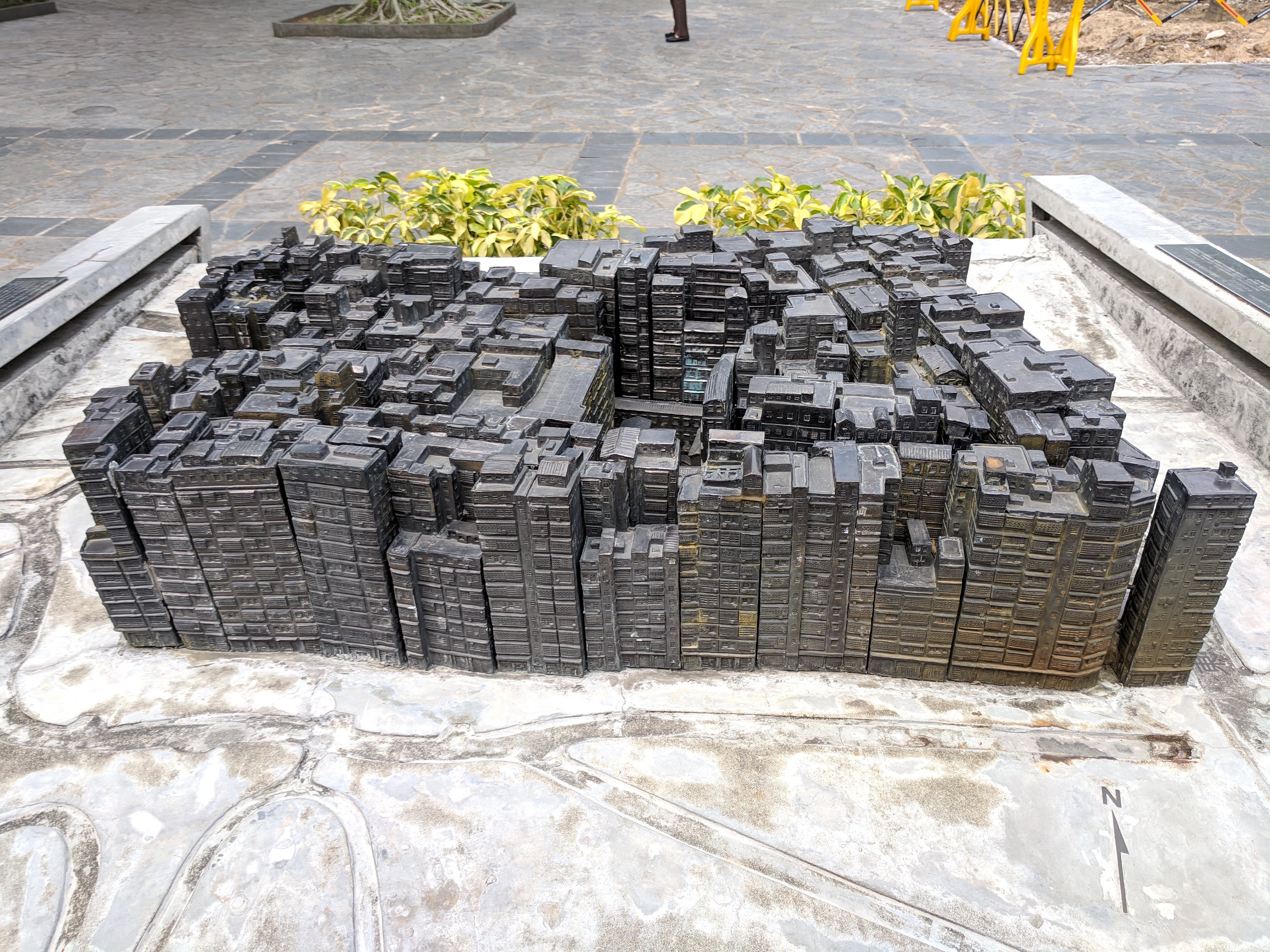
One of the big changes compared to the previous games is the shift away from sleek urban environments and towards what seems to be a more post-apocalyptic one. This can even be seen in the central hubs of all three games. Splatoon’s Inkopolis Plaza is based on the trendy Shibuya area in Tokyo, Splatoon 2’s Inkopolis Square is Times Square in New York City, and now Splatoon 3’s Inksville greatly resembles Hong Kong, particularly the Mong Kok area of Kowloon—the busiest urban center in the world. Given the current controversies going on in the area, I’m actually kind of surprised they went this angle, but the densely packed and awkwardly placed buildings have evoked dystopia in the imaginations of many. It acted as the basis for Ghost in the Shell’s setting, plays a central role in G Gundam, and in terms of the cultural legacy, the lawless nature of the Kowloon Walled City is rather infamous.

A model of Kowloon Walled City located at its former site

The musical mascots of the first two games reflect their urban spaces. The Squid Sisters are patterned after Japanese idols. Off the Hook is a rapper-DJ combo, and NYC is the birthplace of hip hop. Therefore, if Splatoon 3 were to have characters to represent that Kowloon-like setting, few things would fit better than a squid-and-octopus-garbled take on Cantopop. While its star has waned in recent years, Cantopop was once the premier form of Chinese popular music throughout Asia, and Hong Kong was the center of it. And if they wanted to capture both the retro and futuristic aspects of Hong Kong through Splatsville, perhaps they could even take from different eras of the genre.

One potential problem with this approach is that a lot of classic and modern Cantopop songs don’t exactly “feel” like Splatoon, as the genre is primarily known for its love ballads that wouldn’t quite fit the high-pace gameplay. Still, I think there are examples of high-tempo songs that could be inspiration for a soundtrack that captures the spirit of Cantopop and the Kowloon setting without necessarily feeling dated.

“Ji Guang Zhong” by Roman Tam

“Journey to the West” by Dicky Cheung

“Miss Similar” by G.E.M.

Is it a bit of a long-shot to expect Cantonese pop in Splatoon 3? Maybe. I also wouldn’t expect the composers to wholly abandon the sound it’s known for, as the music is one of the best parts of the series. Even so, I think it’d be more than possible to draw influence from one of Asia’s most popular genres of the last 50 years and make something that comes across as unmistakably Splatoon-esque. Most importantly, it would perfectly complement the Mong Kok, Kowloon visual aesthetic that Splatoon 3 is going for.

On De-platforming

As someone who has traditionally valued online discussion, I’ve long believed that de-platforming is something of an extreme measure. However, as multiple social media platforms have banned Donald Trump for inciting further violence akin to the attempted coup on the United States capitol, one thing that’s clear to me is how de-platforming is not about robbing someone of their freedom of expression. Rather, when used properly, it’s about protecting those who would wish to engage in honest discourse from those who seek to use the facade of debate and social interaction as a Trojan horse to further causes that seek to oppress and diminish others.

In far too many cases, “change my mind” ends up simply being a smokescreen. It’s become a running joke. Often, those who throw such statements out are not actually open to ideas but are performing images of strength and indignation in the presence of those who are potentially vulnerable to their posturing. The use of bots to spread disinformation and make an outlandishly dangerous opinion have greater support than is actually there only contributes to this weaponizing of public discourse. To leave social media open to such actors is to invite them to continue to bamboozle people through demagoguery.

I do have concerns when it comes to de-platforming. I fear is that if it’s taken as too default an action, then it can become incredibly easy to label anyone with whom you disagree as “arguing in bad faith” without it necessarily being the case. One of my core beliefs is that people grow at different rates. While there are those who never let go of their hatred, anger, and/or ignorance, there are also those who need the right person or people to communicate with them, and to encourage a level of change that doesn’t meet self-resistance or induce a backlash. I worry that people may be so perpetually drained both mentally and emotionally that they push anyone and everyone into the “bad-faith” category to spare themselves both the pain of having to engage a potentially disingenuous person on the other side and the stress of constantly trying to discern whose minds can be changed and who are lost causes.

But while I encourage people to give others the benefit of the doubt initially, once someone has revealed themselves to be a snake, you don’t let them crawl back into your nest. It might seem like a game without stakes, but it has become painfully clear that there are deadly consequences: COVID-19 is ravaging the world and especially the United States at an unprecedented level that can only get worse, and we just had a mob try to take over the US federal government in order to re-install their hate-filled savior figure. How many lives could have been saved if we had not let Trump and those like him keep their online megaphones for so long?

If anything, the skill that I think needs to be developed most robustly for human beings going forward is being able to discern between those who come to the table actually open to an exchange of ideas and those who are simply pretending to be. In the meantime, while freedom of speech is an inherent right of all Americans, there should be consequences for those who seek to abuse it—especially for the leaders who play games with lives.

Today is January 20, 2021, and a new US president is being sworn into office. I hope that the lessons of these past four years are not in vain.

Chainsaw Man and Women in Refrigerators

WARNING: HEAVY CHAINSAW MAN SPOILERS

The manga Chainsaw Man by Fujimoto Tatsuki recently concluded “Part 1” of its story, and having heard fans both real and virtual praise the series up and down, I decided to marathon through it. Count me as a convert, as I think it’s one of the best things to come out of Shounen Jump in recent years. The narrative turns are compelling and the characters are charming in their foolishness. 

However, there’s a large twist in the series that brings to mind a trope that sparked discussion around superhero comics back in the early 2000s: Women in Refrigerators. Originally coined by Gail Simone (who was still a critic and not a writer of comics at the time), it refers to when characters close to the hero—often a lover or companion—is killed in service of making the villain appear more nefarious. While not automatically bad, its overuse reduces female characters to discardable pawns. Manga, especially male-oriented titles, can have their own instances of fridged women, but Chainsaw Man seems to lean fully into the concept in ways I’ve never seen before.

The protagonist of Chainsaw Man is Denji, a lonely guy who doesn’t think life is worth living, but is given a second chance when a demon he befriends known as the Chainsaw Devil offers him a chance at the normal existence he’s always wanted.  Denji’s discovered by a beautiful female government agent named Makima, who recruits Denji to fight demons as Chainsaw Man. In addition to being a target of Denji’s immature affections, Makima provides him with companions, including a female fiend (half-human, half-devil) with blood-based abilities named Power. Over time, the bond between the two of them grows, and they make a great if chaotic team—like two violent Monkey D. Luffys with bad attitudes but good hearts. Eventually, though, Makima reveals that her motives for recruiting Denji were anything but pure. In an act of cruelty designed to cow Denji and leave him in despair, Makima murders Power in front of Denji with little warning, Power even having been carrying a birthday cake for Denji in anticipation of a celebration. Death of named characters in Chainsaw Man is not uncommon, but Power’s death hits especially hard.

It is undoubtedly a moment where a female character is killed so as to create a psychological impact on the male hero, but what Chainsaw Man also reveals this to have been Makima’s plan from day one. As Makima explains, Denji inadvertently entered a contract with the Chainsaw Devil where Denji is meant to receive a normal life in exchange for their fusing together, and the only way to deny him that basic happiness is to manipulate his life. As such, Makima purposely gave Denji friendships so that she could snatch them away and keep him under her thumb. Unlike many superhero instances of Women in Refrigerators, this is not tacked on as a way to raise the stakes, but is core to the overall story and the truth of Chainsaw Man’s world. The trope isn’t just kind of there thoughtlessly—it’s front and center, and fully exposed. 

To be accurate, Power isn’t completely gone, as her blood-control powers allow her to exist within Denji, and his motivation transforms into finding a way to bring her back. At the climax of the story, Denji also delivers a fatal blow to Makima using a chainsaw made from Power’s blood. Narratively, it’s explained that Power’s blood can prevent Makima from regenerating—Makima’s actually powered by a devil just like Denji, and has come back from death over 20 times—but there’s also a great symbolism in having Power get her payback in essence. Power is neither fully alive or fully dead, and while reducing her physical existence does potentially play into the idea that her role in the story is subordinate to Denji’s, the manga does such a strong job of portraying their relationship as that of equals (albeit two incredibly idiotic equals). The result is that Power looms large over Chainsaw Man as it enters Part 2, and is still one of the most important characters in the manga. She’s also consistently the most popular character in the series among English and Japanese fans.

Part 1 of the manga actually ends with a woman in a refrigerator. After defeating Makima and keeping her from regenerating, he tries to figure out a way to keep her from coming back from the dead. His solution: chop her up, store her in the fridge, and slowly cook and eat her entire body as a way to deny Makima her wish, which is to be eaten by the devil Chainsaw Man due to certain unique properties that Chainsaw Man possesses. Denji actively engages in cannibalism as himself and not his transformed state to prevent this from happening. He also chooses this gruesome route because he sees it not as an act of malice but a perverse way of wanting to be “together.” I don’t believe that this is the author of Chainsaw Man intentionally calling out the trope, but it’s hard to ignore, and it still winds up with a woman being literally fridged in service of a greater goal.

Chainsaw Man is a manga that can come across as brainlessly violent and gross, but it’s proven itself to be the product of extreme thoughtfulness. Even though its characters are often brash and simple, the story itself is not, and the handling of its own Women in Refrigerators does not feel like it detracts from the series other than making readers angry that Makima dare kill the best character. Power’s influence on the series continues to loom large, and it helps avoid the feeling that being fridged trivializes her character, and keeps Chainsaw Man as a whole from being subsumed by the wastefulness of the trope. In an Obi-Wan Kenobi sort of way, striking Power down makes her more powerful than we can possibly imagine. 

The Mandalorian Season 2 Doesn’t Contradict The Last Jedi

WARNING: SPOILERS for Season 2 of The Mandalorian

The Mandalorian has managed to bring Star Wars fans together in ways I never expected. No matter which movie or trilogy is your favorite (or least favorite), or even if Star Wars has never been your cup of tea, The Mandalorian feels faithful to the heart and spirit of the franchise without being too overly bogged and down and reverential to the films. But I’ve seen a strange reaction online, mostly from people irrationally angry at Episode VIII: The Last Jedi, who attempt to use The Mandalorian to draw lines in the sand where there are none. Their goal: to push a narrative that, somehow, The Mandalorian helped fix the “wokeness” that “ruined” The Last Jedi.

The climax of Season 2 of The Mandalorian has the protagonist and his allies trapped in a situation from which there appears to be no escape from a small army of murderous droids, when suddenly a lone X-Wing docks into the Star Destroyer they’ve stormed. Out pops a mysterious hooded figure wielding a green lightsaber, who single handedly wipes out every robot soldier with awe-inspiring ease. When he reaches the Mandalorian, he reveals his face, and it’s the original hero of Star Wars, Luke Skywalker, post-Return of the Jedi and more powerful than we’ve ever seen him in combat.

After this episode, Star Wars fans came out with cries of joy, but among the praises were voices that tried to twist this into some kind of admonishment of The Last Jedi’s director, Rian Johnson. According to this narrative, The Mandalorian succeeded in its portrayal of Luke where The Last Jedi failed, the latter acting more as character assassination than character development. “This is how Luke should have always been.”

The Last Jedi is my favorite of the sequel trilogy, especially because I see Episode VII: The Force Awakens as decent but overly safe and Episode IX: The Rise of Skywalker as the product of abject cowardice. I also do think the stance that The Last Jedi betrayed the franchise is often disingenuous, and partly a way to push a strange right-wing agenda that is bitter at the generally liberal-leaning environment of Hollywood and entertainment media. Even so, I want to address it for one reason: It incorrectly assumes that, for whatever reason, those who enjoyed The Last Jedi would be somehow upset at Luke Skywalker being a badass.

The Last Jedi’s portrayal of Luke as a man scared to repeat his greatest mistake—training someone in the ways of the Jedi who then becomes corrupted—is indeed a stark contrast from the never-give-up attitude of his younger self, and so it’s easy to see why that older Luke can be so jarring. However, I think what Episode VIII smartly does is set up parallels between the reality of the the viewers and the story of that galaxy far, far away: the better days promised to us in decades past have not panned out, and the older generation who were supposed to lead us to prosperity and understanding could not reach that lofty goal because they were ultimately limited by the circumstances of both the world at large and their way of thinking. The idea is that Luke Skywalker is powerful, but he couldn’t do everything, and he had a breaking point.

This personal flaw in no way conflicts with his portrayal in The Mandalorian unless belief in Luke Skywalker requires him to be beyond reproach. He can still be the guy who cut through a squad of Dark Troopers and also the guy who felt such immense guilt that he banished himself to the farthest reaches of space. It reminds me of the anger people feel over criticisms of the US’s founding fathers as marred by their own racism, and it comes from what I think is the way we place our heroes, both fictional and real, onto pedestals that somehow require them to be as perfect as possible. I think it’s no coincidence that similar anger exists over actual Confederate monuments (statues that were cheaply mass-produced to take advantage of ingrained racist beliefs decades after the Civil War), or how treating Donald Trump like a messiah requires an ever increasing—and now deadly—amount of suspension of disbelief.

The Mandalorian itself encourages the idea that one’s deep-seated beliefs may not always align with the truth. When the Mandalorian himself meets others of his kind, he finds out that the sacred vow he took is not one universal to those of Mandalore, but the product of a particular extremist sect. In this respect, while Luke Skywalker does get his moment at the season finale, the greater show also discourages unwavering loyalty purely based on tradition and dogma. Ultimately, the argument that his appearance as symbolic of a push against Rian Johnson is little more than posturing, and is yet another attempt to create outrage at perceived enemies of an archaic and dangerous form of traditionalism.

Best Anime Characters of 2020

BEST MALE CHARACTER

Sorano Appare (Appare-Ranman!)

Having the protagonist of a racing anime be a serendipitous inventor makes for an interesting dynamic. Appare chafes against the cultural norms and restrictions expected of him in his home life in Japan, and an impromptu trip to the US (along with an entry into a transnational motorcar race) allows his eccentric genius to flourish. Above all, there are two main things that make Appare great. The first is that his interactions with others both big and small make for a very convincing portrayal of a protagonist whose way of thinking, priorities, and philosophy run along a different path from everyone around him. The second is that he grows tremendously on his journey—in part due to his initially reluctant racing partner Kosame—and ultimately ends up with both a passion for technology and compassion for his fellow human beings in equal strength.

BEST FEMALE CHARACTER

Kanamori Sayaka (Keep Your Hands Off Eizouken!)

In one of the greatest celebrations of the creative process ever made, the most impressive character is Kanamori Sayaka, the practical-minded “producer” of the main trio. The very fact that she embodies that producer mindset (as opposed to director, artist, or animator) is a rare treat, and while she’s basically the fun police in terms of the narrative, the story portrays her as integral. There’s something downright refreshing about how grounded and logical Kanamori is in contrast to the rampant imaginations of her friends Asakusa and Mizusaki, and it makes a character who would otherwise recede into the background stand out all the more. In certain ways, she reminds me of Kasukabe Saki from Genshiken—always a fine character to be compared to.

Final Thoughts

When I look at my choices for best characters of 2020, the thing I see in common is that both are unorthodox characters who provide windows into the act of creation, be it artistic or mechanical. Funnily enough, Appare and Kanamori play opposite roles in their respective stories, with Kanamori being the straight man to her friends’ disregard for pragmatism and Appare being the unimpeded tinkerer who Kosame has to manage. It would probably make more sense if I had picked two similar characters on each side, but in both cases, the way they upend expectations makes me believe in them.

I’d also like to make an honoroable mention for Kaburagi from Deca-Dence, who was extremely close to being my pick for male character of the year. Kaburagi is an aged combat veteran, but as we learn more about his life and perspective, we can see the inner struggle in him extends beyond merely his loss of zest for life and into what it means for a society to survive versus what it means to prosper.

A turbulent year full of worries and delays has nevertheless seen many wonderful anime come out that both challenge norms and provide hope and inspiration.